
Seventh-day Adventists believe that any human being who accepts God’s free gift of salvation through Jesus will be given eternal life. But what about the eternal fate of those who choose not to accept Jesus?
Our belief about what “hell” really means might be different than you’d expect. First of all, hell is more of an event than a place. And it’s not synonymous with eternal torment—after all, eternal life is only promised to those who accept Jesus Christ (John 17:3).
Rather, hell refers to the ultimate destruction of sin in what’s described as the “lake of fire” in Revelation 20. And as sin is obliterated, so is anything or anyone that holds onto it.
The topic of hell may not be a fun one to discuss, but we can’t deny its involvement in the great controversy between good and evil (God and Satan) that envelops our world. And the way God deals with those who choose against Him tells us a lot about His character.
So let’s not waste any time! Let’s dig into what the Bible tells us about the concept of hell. You’ll learn:
- What the Bible says about hell
- Myths about hell
- How long hell’s fire burns
- The purpose of hell
- If hell is something to worry about
We’ll start by looking at different Bible verses that describe the concept of hell.
What does the Bible say about hell?
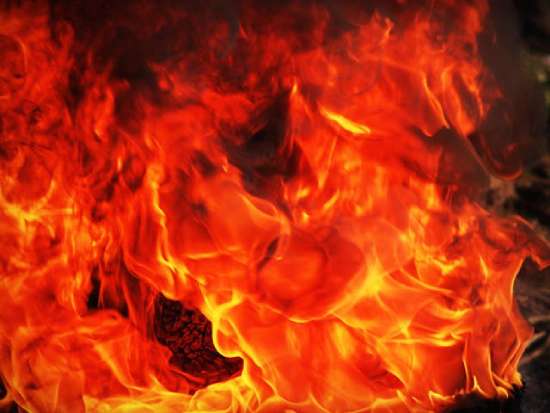
Photo by icon0 com:
Bible passages about hell, when understood in their context within the Bible and within the original languages, indicate that hell is a fire that leads to complete destruction and death rather than a fire that burns continually throughout eternity.
The tricky thing about answering this question, however, is that the word “hell” can sometimes represent more than one idea. And that’s mostly due to the word choices of early translators who converted the Bible from ancient text into English.
The most descriptive references to hell in the Bible call it a “lake of fire” (Revelation 19:20; 20:10), and Revelation 20:14 and 21:8 tells us that this lake of fire “is the second death” (CSB), or eternal separation from God, who gives humans the breath of life.
But there are also several other passages that refer to hell, even if the exact word isn’t used. That’s because the English word “hell” was often used as a translation for multiple Greek or Hebrew words. And sometimes its use was literal, sometimes it was symbolic.
As with all Bible verses, it depends on the context of the passage.
First, let’s look at some of these words from the original languages and find out what they meant.
We’ll start with sheol, which means “the abode of the dead,”1 and hades, which was a term used to refer to “the underground abode of the dead” in Greek mythology.2
There was also the word gehenna, which originally meant “a place or state of misery.”3 It was used in Scripture to refer to places of filth and wickedness where corpses were burnt.4
These definitions refer to the location of the dead, not necessarily including anything about punishment or torment.
Additionally, the mention of a location (and the indication that it’s underground) aligns with the literal location of the dead—in underground graves.
The Bible writers likely used these words not to describe a location for hell, but to provide a metaphor for what hell is, or what it brings about—nonexistence, after destruction by consuming fire.
But how can we be sure? What about the Bible verses that talk about hell in relation to the fate of the wicked?
Again, it’s all about context. That’s why it’s best to study not just one verse, but a whole chapter. Or to look at different passages throughout Scripture that address the same issue or idea.
Getting deep into the nitty gritty of Scripture helps us debunk some common myths about hell—especially since many of these perceptions actually come from ideas held by ancient philosophies, or from classic literature such as Divine Comedy and Paradise Lost.
So let’s look at some of these myths more closely.
Myths about hell—debunked
The devil rules hell
There isn’t a place in the Bible that describes hell as a place to be ruled by anyone. And Satan’s banishment from heaven landed him on earth, but not to a specific location (Revelation 12:9).
When it comes to who would have control over the flames of hell, that would have to be God Himself (Matthew 10:28). In fact, hell’s flames are to be “prepared for the devil and his angels” (Matthew 25:41, CSB). So Satan probably wouldn’t choose to live in a place that is meant to burn him up.
The idea of hell as Satan’s dwelling place was made popular by literature such as Paradise Lost, in which Milton describes hell as a dark, twisted parody of heaven that has a throne for Satan at the center of it.
There are different “levels” of hell
This idea is not found anywhere in the Bible. Instead, it is found in popular literature, such as the Inferno part of Dante’s Divine Comedy. This work also suggests that different types of sinners receive different punishments, which is not supported by the Bible either.
Hell is underground and is actively burning right now

Photo by Ian Stauffer on Unsplash
Every time the Bible mentions hell, it is referring to a state or event in the future. In Revelation 19 and 20, we read about the lake of fire taking place on the surface of a desolate, wicked earth after Jesus’ second coming and after Satan has been “bound…for a thousand years” (Revelation 20:2–6, NKJV).
So after someone dies, they go to “sleep” in the grave (1 Thessalonians 4:14) until Jesus resurrects them—either at the time of His Second Coming, or after the Millennium.
Hell is eternal
This is another belief born from tradition and influenced by Greek culture.5 It came from a prominent idea among Greek thought leaders that the human soul is immortal.6
It wasn’t a belief held by the followers of Jesus or the early Christian church.
Let’s follow this idea to its logical end: If all souls are immortal, then there must be an afterlife destination opposite of heaven to house the souls of those who didn’t repent and accept Jesus. And if they rejected the Savior who would give them eternal peace and joy, then wherever they go must be filled with eternal suffering and sadness.
But looking at Scripture, immortality is only attributed to God (1 Timothy 6:15–16), and the only people who inherit eternal life are those who accept Jesus (John 3:16; 17:3; 1 John 5:11, 20).
While the effects of hell’s flames are eternal and cannot be reversed, the lives of those encountering the flames are not eternal. They will experience the “second death.” Their punishment isn’t continual, but it is “everlasting”—because it’s final (Matthew 25:46). They will forever cease to exist.
Hell is for people—bad people
Hell’s consuming fire is for sin—which would also include anything that is completely corrupted by it. We’re told in Matthew 25:41 that the lake of fire is “prepared for the devil and his angels” (NKJV). It wasn’t intended for the beloved humans that God created.
However, since freedom of choice was allowed, the possibility exists for a human to choose this fate—by not choosing Jesus and opting to hold onto sin.
Sin is destructive. And anything sinful ultimately leads to pain and dissatisfaction. So a person can’t hold onto one “small” sin and expect to be eternally happy in a new earth that has no place for any sin at all.
Satan’s first sin started “small” too—he started to become prideful in his position as a beautiful and powerful angel (Ezekiel 28:17).
And it’s this pride and selfishness that lie at the foundation of every sin—because they are the opposite of the loving spirit of God’s law (Matthew 22:37–40; 25:31–46).
Love is the very essence of who God is, and those who choose to live apart from that love won’t be happy in God’s presence. Destruction will be the natural consequence of the attitude they’ve chosen to live by.
How long will hell burn?
Since hell is more of an event than an underworld, many people wonder—how long will hell burn? The Bible says that hell will only last as long as it takes to destroy the wicked completely (Malachi 4:1).
Everything must burn completely, because after the earth is destroyed by fire, He will re-create the earth just as it was originally supposed to be (Isaiah 65:17; Revelation 21:1).
Annihilationism—forever gone, not forever burning

Photo by Mariana Beltrán on Unsplash
The belief in eternal hell typically cites verses about the wicked being eternally destroyed, such as in 2 Thessalonians and Matthew 25.
“They will pay the penalty of eternal destruction from the Lord’s presence and from His glorious strength” (2 Thessalonians 1:9, CSB).
“Then He will also say to those on the left, ‘Depart from Me, you who are cursed, into the eternal fire prepared for the devil and his angels!’” (Matthew 25:41, CSB).
But this is where it’s especially important to use more parts of the Bible to interpret a single passage. Let’s take a look at other verses that mention the word “eternal.”
Several Bible verses explain the destruction of the wicked cities of Sodom and Gomorrah (Genesis 19:24). God sent “punishment of eternal fire” to destroy these cities eternally (Jude 1:7, CSB).
So, if we’re taking “eternal” to mean that they are burning forever, then Sodom and Gomorrah should be continuing to burn today, right?
If you were to look up the present-day locations of these cities on Google Maps, you’d see that they’re not.
Rather, these cities were destroyed “eternally” in the sense that they were completely destroyed, never to rise again. The same is true for the destruction of the wicked—they’re not burning forever, but they are forever burnt up.
This explains why Malachi 4:3 mentions that the ashes of the wicked will be on the earth after the lost are destroyed.
In fact, numerous Bible verses describe this destruction as something permanent (Psalm 37:20; 68:2). Even the word “destruction” suggests that at some point the wicked will cease to exist (Psalm 10:25; 12:7).
This concept is often called annihilationism. And while not every Christian faith group subscribes to this belief, it can certainly be backed up with Scripture—and it aligns with God’s character, as described throughout the whole Bible.
The results of hell’s destruction are eternal—not the process of destruction.
It’s not uncommon to find people who have rejected Christianity because they’ve been taught that “bad people” will burn in hell forever. They wonder how a loving God could be so cruel as to make people burn for all eternity for the sins they’ve committed in their brief lifetime.
Some even wonder if God takes pleasure in the suffering of the wicked.
What an awful picture of humanity’s Creator.
But we’re told in Scripture that God finds no joy in the destruction of the wicked (Ezekiel 18:23, 32; Isaiah 28:21).
However, since the possibility is available for people to choose against what God offers us, He had to allow for an alternative fate. And the “second death” of eternal destruction is ultimately the most natural balance between justice and mercy.
So the purpose of hell is…?
God will use hellfire to destroy sin—evil, malice, hate, apathy, cruelty, contempt, jealousy, pride, fear…
That’s the real goal.
Jesus’ entire purpose for coming to earth was to show that there is indeed an alternative to sin and selfishness, freeing us from its damaging influence (Hebrews 9:26). God seeks only the welfare of His creation, which is why He has to ultimately eliminate sin.
Sin has had free rein over the earth because, well, we were curious about it. We wanted knowledge of both good and evil. And God knew that if this choice didn’t present itself, our allegiance to Him couldn’t be full. Because we would never have had to choose between Him and an alternative.
So now we are living with the capacity to fully witness and experience this alternative choice—but we are not subject to it. God’s mercy, and the plan of salvation, means that our first choice wasn’t a final choice…it was a choice to see. To experience. Not to change our allegiance outright.
And now we can see.
Sin, while it can be made to look appealing, ultimately causes pain. We read about how people began to turn against their loved ones (Genesis 4:8). And how sin even corrupted the earth itself, causing plants to grow thorny and die (Genesis 3:17–18).
And things grew exponentially worse. During Noah’s lifetime, humanity became so corrupt that “every inclination of the human mind was nothing but evil all the time” (Genesis 6:5, CSB). He saw a need to cleanse the earth of its corruption, so He sent the Flood.
This was His way of purifying the earth to create a new home for His believers—Noah and his family.
In the New Testament, we’re told that God first cleansed the world with a flood and that when He comes again He will cleanse the earth with fire (2 Peter 3: 5-7).
Then, that will be that.
Fire will consume sin and everything with sin still in it (Revelation 20). Then our earth will be created anew (Revelation 21).
Do I need to worry about hell?

Photo by Timothy Eberly on Unsplash
It’s never God’s intention for us to worry about anything (Philippians 4:6–7). He’d rather us give our worries to Him (1 Peter 5:7) so we can move on with the life and purpose He gives each of us.
If we choose Jesus, meaning we also choose compassion, love, empathy, humility, mercy, joy, peace, etc., He assures us that His blood covers us and that we can be reconciled to God (Romans 5:8–10).
Then why is there so much scary language in the Bible about wickedness and destruction and the whole thing about the devil “prowling around like a roaring lion, looking for anyone he can devour” (1 Peter 5:8, CSB)?
Because God has to be straight with us about what sin is, who Satan is, and what hell is. Since we deal with sin and tough choices every day, it’d be pretty messed up if He never truly informed us of sin’s consequences, wouldn’t it?
Don’t you hate it when someone’s trying to tell you something you know is important…but they sugarcoat it and dance around the real truth, just because it might be a little uncomfortable or depressing?
Well, we can thank God for not doing that with us. We are given all kinds of descriptions of what sin is and what it does. And what happens when we allow it to overtake us.
He loves us. So He tells us about hellfire because He doesn’t want that for us. Not because He wants us to be worried or fearful.
Pastor Cody Francis, the Ministerial Director of the Michigan Conference of Seventh-day Adventists, explains that “instead of God receiving some sort of fiendish vindication from hell, the Bible reveals that the fires of hell are a ‘strange act’ that hurts the heart of God more than we can comprehend. Understanding hell for what it is—the last resort of a loving God who is seeking to restore perfection to the universe—gives us an even greater glimpse of the love of God.”
So even when our sins might seem impossible to overcome, know that Jesus is not content to watch us suffer with a “told you so” attitude. He instead promises to help us reject sin—not just to provide us with eternal life in the new earth, but to free us from harmful decisions in the here and now and to bring us closer to Him.
After all, God is “not wishing that any should perish, but that all should reach repentance” (2 Peter 3:9, ESV).
He didn’t create hell as a way to scare sinners into submission. He wants us to choose Him genuinely—not out of fear or guilt or by coercion.
“Knowing that God does not torture people forever illustrates His character in a deeper way,” says Michael Kusarawana, assistant pastor of the Village Adventist Church in Michigan. “It helps me understand that God does not delight in punishing His people, though He has to because of sin. His judgment is woven with love.”
Our God is merciful and just. And even considering His soon judgment, we know that He does all things for our good (Romans 8:28). We can rejoice, knowing that God longs for us to be freed from a life of sin—and we can find peace in that He is willing to offer us that freedom today, simply by choosing to open ourselves up to Him.
Want to learn more about what happens as we draw closer to the end of sin?
Choose an Online Bible Study
Want to keep learning? Find out more about Jesus, humanity, the plan of salvation, and how God loves you enough to sacrifice everything, just to give you a chance to choose Him.
Sometimes it can be hard to know where to start, that’s why we offer free, user-friendly, online Bible study options you can do anytime, anywhere, and at your own pace.
This online Bible school will take you through the major themes of Scripture, breaking down the Bible’s complex concepts into bite-sized pieces, which can lead you toward the answers of life’s more challenging questions.
- https://www.merriam-webster.com/dictionary/Sheol [↵]
- https://www.merriam-webster.com/dictionary/Hades [↵]
- https://www.merriam-webster.com/dictionary/Gehenna [↵]
- “Mark 9:28,” https://www.adventistbiblicalresearch.org/materials/mark-948/. [↵]
- Mackay, Danielle, “Ancient Greek Theories of the Human Soul”, thecollector.com, Accessed Sept. 22, 2022, https://www.thecollector.com/ancient-greek-theories-of-the-human-soul/. [↵]
- “What Jesus Really Said About Heaven and Hell” https://time.com/5822598/jesus-really-said-heaven-hell/[↵]
Related Articles



More Answers

¿Por qué muchos Adventistas del Séptimo Día eligen una dieta vegetariana?
¿Por qué muchos Adventistas del Séptimo Día eligen una dieta vegetariana?Puede que tengas un amigo adventista que sea vegetariano, o tal vez estés asistiendo a una Iglesia Adventista del Séptimo Día por primera vez y notes que en la comida compartida no hay carne....

What is Jesus’ Parable of the Sower About?
The parable of the sower is ultimately about how people responded to Jesus Christ and His message of the kingdom of God—the Gospel.

O que os Adventistas do Sétimo Dia acreditam sobre o Grande Conflito (Bem vs. Mal)?
O “Grande Conflito” é a frase que os Adventistas do Sétimo Dia normalmente usam para descrever o conflito espiritual cósmico entre as forças do bem (Deus) e as forças do mal ou do pecado (Satanás/o diabo).

Was Jesus Ever Hypocritical? Learn What the Bible Says.
Was Jesus Ever Hypocritical? Learn What the Bible SaysMany undesirable traits are associated with hypocrisy. But overall, hypocrites intentionally try to make others believe they uphold or represent a certain belief system, character trait, lifestyle, etc., when in...

Kukatishwa Tamaa Kukuu na Kile Tunachojifunza
Wafuasi wa Miller walitabiri kurudi kwa Kristo Oktoba 22, 1844, lakini Yesu hakuja kamwe. Tukio lingine lilitokea. Gundua kilichotokea kweli na Kukatishwa Tamaa Kukuu kunaweza kutufundisha leo.

When in Doubt: 7 Ways Christians Can Manage Uncertainty
When in Doubt: 7 Ways Christians Can Manage UncertaintyFew things in life are truly certain. And no matter how convinced some people can appear on the surface, no one is immune to doubt. And this isn’t a bad thing. Doubt has a purpose. A role to serve. (Just imagine...
El gran chasco y las lecciones que nos enseña
Los Milleritas predijeron el regreso de Cristo el 22 de octubre de 1844, pero Jesús nunca llegó. Ocurrió otro evento. Descubre lo que realmente sucedió y qué puede enseñarnos hoy El gran chasco.

Is Jesus the Same Being as Michael the Archangel?
Many Christians have wondered at the mysterious identity of Michael the Archangel.
A Grande Desapontamento e Lições que nos Ensina
Os Milleritas previram o retorno de Cristo em 22 de outubro de 1844, mas Jesus nunca chegou. Outro evento ocorreu. Descubra o que realmente aconteceu e o que o Grande Desapontamento pode nos ensinar hoje.

James Springer White, Co-Fundador da Igreja Adventista do Sétimo Dia
James Springer White (1821–1881) foi uma figura chave na Igreja Adventista do Sétimo Dia e marido de Ellen G. White.
James Springer White, cofundador de la Iglesia Adventista del Séptimo Día
James Springer White (1821–1881) fue una figura clave en la Iglesia Adventista del Séptimo Día y el esposo de Elena G. de White.

Kila Kitu Unachohitaji Kujua Kuhusu Chakula cha Siku ya Sabato
Kwa Waadventista Wa Sabato, kushiriki chakula cha Siku ya Sabato pamoja na marafiki na familia ni moja ya sehemu muhimu na ya kumbukumbu ya Sabato.
Nini Maana ya “Mwadventista”?
Waadventista wa Sabato ni dhehebu la Kikristo la Kiprotestanti wanaoshikilia Sabato ya siku ya saba kama ilivyoandikwa katika Biblia.

How to Have a Personal Relationship with Jesus: A 10-Step Guide
How to Have a Personal Relationship with Jesus: A GuideNo matter who you are, you’re surrounded by relationships. Friends, family, colleagues, acquaintances...they all play a part in our lives, for better or worse. So you’re surely aware of a lot of the components...

Biblia Ina Maana Gani Inaposema Yesu ni Mwana wa Mungu?
Biblia inapomwita Yesu Mwana wa Mungu inarejelea uungu wake. Jifunze ni nini kinachofanya hili kuwa muhimu na kinahusianaje na wokovu.

“Go and Sin No More”—What Did Jesus Mean?
These well-known words of Jesus Christ come from two New Testament stories in the book of John—a man healed by the Pool of Bethesda (John 5) and a woman caught in adultery (John 8).

Quais são as Mensagens dos Três Anjos em Apocalipse 14?
As mensagens dos três anjos em Apocalipse 14 advertem o mundo a adorar a Deus, deixar a confusão religiosa e evitar a adoração de tradições humanas em vez dos mandamentos de Deus.

Je! Tunaweza Kuitunza Siku Yoyote ya Wiki Kama Sabato?
Katika sura za kwanza kabisa za Biblia, tunamwona Mungu akianzisha kumbukumbu ya kila wiki na siku ya mapumziko, inayoitwa Sabato (Mwanzo 2:2-3).
¿Cuáles son los mensajes de los tres ángeles en Apocalipsis 14?
Los mensajes de los tres ángeles en Apocalipsis 14 invitan al mundo a adorar a Dios, abandonar la confusión religiosa y evitar la adoración de tradiciones humanas en lugar de los mandamientos de Dios.
Por que muitos Adventistas do Sétimo Dia escolhem uma dieta vegetariana?
Embora nem todo adventista seja vegetariano, muitos evitam completamente o consumo de carne para viver de forma mais saudável, buscando honrar a Deus física, espiritual e mentalmente.

Understanding the Miracles of Jesus Christ
Understanding the Miracles of Jesus ChristWhat do you think of when someone says something is “a miracle”? Maybe you think of an unexpected recovery, surviving a dangerous accident, or getting an answer to a seemingly impossible prayer. Simply put, miracles are...
O que significa “Adventista”?
O que significa "Adventista"?Os Adventistas do Sétimo Dia são uma denominação cristã protestante que observa o sábado bíblico do sétimo dia. A partir dessa crença, eles obtêm a primeira parte de seu nome. Mas e quanto à segunda parte - "Adventista"? “Adventista”...
¿Podemos guardar el sábado bíblico cualquier día de la semana?
En los primeros capítulos de la Biblia, encontramos a Dios estableciendo un memorial semanal y día de reposo, conocido como el sábado (Génesis 2:2-3).
Podemos guardar o Sábado em qualquer dia da semana?
Nos primeiros capítulos da Bíblia, encontramos Deus estabelecendo um memorial semanal e dia de descanso, conhecido como o Sábado (Gênesis 2:2-3).
O que significa a Bíblia quando chama Jesus de Filho de Deus?
Quando a Bíblia chama Jesus de Filho de Deus, está se referindo à Sua divindade. Saiba o que torna isso tão significativo e o que tem a ver com a salvação.
¿Qué creen los Adventistas del Séptimo Día acerca de la Biblia?
La Biblia forma la base de todo lo que los Adventistas del Séptimo Día creen y enseñan.

Legado Duradouro de Ellen G. White
Ellen G. White é um nome bem conhecido entre os Adventistas do Sétimo Dia, mas ela também teve um impacto em muitas outras partes da história, além de ser co-fundadora da Igreja Adventista.

What Does it Mean to Have Faith in Jesus?
What Does it Mean to Have Faith in Jesus?To have faith in Jesus means we place our spiritual hope, trust, belief, and priority in Him as our loving Savior. And that sounds great as an idea. That’s our goal, right? But when we go through difficult times, face...
James Springer White, Mwanzilishi wa Kanisa la Waadventista Wa Sabato
James Springer White (1821–1881) alikuwa mtu muhimu katika Kanisa la Waadventista wa Sabato na mume wa Ellen G. White.
Didn’t find your answer? Ask us!
We understand your concern of having questions but not knowing who to ask—we’ve felt it ourselves. When you’re ready to learn more about Adventists, send us a question! We know a thing or two about Adventists.