
Seventh-day Adventists believe that the biblical Sabbath is a beautiful gift of rest that God gave to us at Creation and that remains valid to this day. Falling on the seventh day of the week—Saturday—it connects us to God in a special way and offers us a weekly opportunity to be physically, mentally, and spiritually refreshed.
So let’s learn a little more about the Sabbath and how it became so important to Adventists.
We’ll cover:
- What is the Sabbath?
- Why do Adventists celebrate Sabbath on Saturday?
- How did the Sabbath become so important to us?
- What do we love about the Sabbath?
Let’s start by defining the Sabbath a little further.
What is the Sabbath?
According to the Merriam-Webster Dictionary, Sabbath is a day of rest and worship. The Jews and some Christians observe it from Friday evening to Saturday evening. Most Christian denominations observe it on Sunday, and various religious groups have it on other days.1
The word “Sabbath” comes from the Hebrew verb shabat which means “to rest from labor,” “to stop,” or “to pause.”2
Seventh-day Adventists also observe the Sabbath from Friday evening to Saturday evening and go to church on Saturday as a way to celebrate it.
Here’s our official statement on it:
“The gracious Creator, after the six days of Creation, rested on the seventh day and instituted the Sabbath for all people as a memorial of Creation.
The fourth commandment of God’s unchangeable law requires the observance of this seventh-day Sabbath as the day of rest, worship, and ministry in harmony with the teaching and practice of Jesus, the Lord of the Sabbath.
The Sabbath is a day of delightful communion with God and one another. It is a symbol of our redemption in Christ, a sign of our sanctification, a token of our allegiance, and a foretaste of our eternal future in God’s kingdom.
The Sabbath is God’s perpetual sign of His eternal covenant between Him and His people.
Joyful observance of this holy time from evening to evening, sunset to sunset, is a celebration of God’s creative and redemptive acts.”
But this statement only brushes the surface of why we keep the Sabbath.
Why do Seventh-day Adventists celebrate Sabbath on Saturday?
Adventists celebrate the Sabbath on Saturday for many reasons, but especially these four:
- God established it at Creation (Genesis 2:2–3, NKJV).
- The Ten Commandments remind us to keep it (Exodus 20:8–10; Deuteronomy 5:12–15, NKJV).
- God hasn’t changed the Sabbath to any other day (Matthew 5:17, NKJV).
- Celebrating the Sabbath offers physical, mental, and spiritual benefits (Mark 2:27, NKJV).
We’ll expand on these biblical principles.
God established the Sabbath at Creation

Photo by Luke Vodell on Unsplash
The holiness and uniqueness of the seventh day goes all the way back to the first week of Creation. It started right after God created the world and everything in it in just six days, as depicted in Genesis 1.
And after six days, what happened next?
God created the seventh day and declared it special.
“Thus the heavens and the earth, and all the host of them, were finished. And on the seventh day God ended His work which He had done, and He rested on the seventh day from all His work which He had done. Then God blessed the seventh day and sanctified it, because in it He rested from all His work which God had created and made” (Genesis 2:1–3, NKJV).
The sacredness of the Sabbath was built right into the Creation of the earth.
God gave it to us so that we could take a day off from our work, pause from day-to-day stresses, focus on Him, and enjoy the world He created.
As the Creator of the universe, He loved us so much that He made the whole world just for us. And even made a day for us to pause and reflect on His great goodness to us.
The Sabbath brings us back to our roots, pointing us to our Creator, origins, purpose, and value.
The Ten Commandments remind us to keep the Sabbath

Photo by Adrian Curiel on Unsplash
The fourth commandment of the Ten Commandments describes the importance of the Sabbath and how it should be kept:
“Remember the Sabbath day, to keep it holy. Six days you shall labor and do all your work, but the seventh day is the Sabbath of the Lord your God. In it you shall do no work: you, nor your son, nor your daughter, nor your male servant, nor your female servant, nor your cattle, nor your stranger who is within your gates” (Exodus 20:8–10, NKJV).
Right up there with all the other nine commandments is one that reminds us to keep God’s chosen day of rest holy. And the day is specified as the seventh day of the week.
But God’s law isn’t arbitrary. He gave it to us as a recipe for a loving, compassionate, fulfilling life.
And it’s not hard to see why.
Just think how much greater our world would be if people kept even some of the commandments by not lying, stealing, or murdering.
It’s the same with the Sabbath commandment—it’s intended for our good.
In the Bible, Moses told his people “to keep the commandments of the Lord and His statutes which I command you today for your good” (Deuteronomy 10:13, NKJV).
And, truly, what better than the privilege of a full day off for time with God and loved ones?
But many today give various reasons for not keeping the Sabbath as outlined in the Bible—or for not keeping it at all.
Some bring up Ephesians 2:15, saying that the Ten Commandments—including the Sabbath—were done away at the cross.
But the laws discussed in that verse are the ceremonial laws and rituals that pointed forward to the life, death, and resurrection of Jesus. It’s not about the moral law of the Ten Commandments, which Jesus Himself said He didn’t come to destroy but to fulfill (Matthew 5:17–20).
And as we’ve seen in the previous section, God established the Sabbath at Creation—way before the Ten Commandments were given.
God hasn’t changed the Sabbath to any other day

Adventists keep the Sabbath on Saturday because we don’t find any evidence in the Bible that God changed it to Sunday.
Instead, we trace the change to a time in the early centuries of Christianity when some believers started to keep Sunday instead of Saturday.
The change was gradual. Adventist scholar Kenneth Strand explains it as follows:
“Sunday observance did not originate as a substitute for the Sabbath. Not until the fourth century did Sunday begin to replace the Sabbath as a rest day; until then the weekly Christian Sunday had been a work-day, with time set aside for special worship.”3
Some believe that since the Jews were very unpopular in the Roman Empire due to their frequent revolutions, the Christians wanted to disassociate from them.
Because nothing was more Jewish in the public eye than keeping the seventh-day Sabbath, the majority of the Christian church determined to distance themselves from it.4
Adopting Sunday became easy as the church started to deviate from its biblical beliefs to align with the surrounding culture.
And finally, a full shift happened when the emperor Constantine converted to Christianity and decreed Sunday (or the day of the sun) as the day of worship in the Roman Empire. Sunday was meant to honor the sun god of the Romans.
As the Roman Catholic Church became the official church of the Roman Empire in the Middle Ages, it adopted Sunday as its day of rest and called it the “Lord’s Day.”
Adventists, in their desire to obey God and stick with the truths of the Bible, choose to follow the biblical seventh-day Sabbath rather than the first-day Sabbath that became a Christian tradition throughout the Middle Ages.
We see that the Sabbath was celebrated on Saturday in both the Old Testament and New Testament. Even Jesus Christ kept it on the seventh day (Luke 4:16).
Though many believe that Jesus abolished the Sabbath or declared its observance as unimportant, Adventists don’t find any evidence in the Bible to support this belief.
It’s true that the gospels show that Jesus had conflict with the religious leaders over the Sabbath.
But a closer look shows that the confrontations were never about whether or not to keep the Sabbath, or even when to keep it—but rather how to keep it.
This was because the religious leaders hoisted man made traditions and rules onto the Sabbath, which ended up making it more of a burden than a blessing (Matthew 12:1–13, NKJV; John 9:1–41, NKJV). So you can imagine why Jesus would be against that.
(The Pharisees also did this with several other Scriptural principles, which provided them more concrete and visible ways to appear more pious and holy than others.)
So throughout the Bible, there’s no indication that anything was changed regarding the significance, timing, or practice of keeping the Sabbath.
But even though Sunday is not the rest day depicted in the Bible, is going to church on that day wrong?
Is it sinful to go to church on Sunday?
Seventh-day Adventists don’t believe it’s sinful or wrong to go to church on Sunday.
In fact, we hold a lot of religious events, like Bible studies, prayer meetings, and evangelistic meetings on Sundays.
So, what then would be a sin?
The Bible defines sin as violating the Ten Commandments of God (1 John 3:4), which would include not keeping the Sabbath holy as God asks us to.
In order for us to have the most refreshing Sabbath experience, He asks us to set aside our regular duties of the week and take time to rest on this day.
Thus, the issue is ignoring the sacredness of Saturday as God’s Sabbath.
Saturday often gets crowded with all the casual errands that got left out of the week or that need to be done to prepare for Sunday as “church day.” Treating the Sabbath in this way goes against what the fourth commandment asks. It’s the same as breaking any other commandment.
In fact, even if someone keeps all the other nine but intentionally does not keep the Sabbath, the Bible says that it’s as if they violated all of them:
“For whoever shall keep the whole law, and yet stumble in one point, he is guilty of all. For He who said, ‘Do not commit adultery,’ also said, ‘Do not murder.’ Now if you do not commit adultery, but you do murder, you have become a transgressor of the law” (James 2:10–11, NKJV).
But here’s the heart of the matter: We may keep all the other nine commandments wholeheartedly, and that’s wonderful.
But if we choose to ignore the Sabbath, we are showing we don’t trust that God knows what’s best for us. We’re in essence saying we know better than He does. And this attitude is the spirit behind sin.
By having this attitude, we’re at risk of missing out on some amazing benefits of the Sabbath.
Celebrating the Sabbath offers physical, mental, and spiritual benefits
In our harried world of work and endless business, who doesn’t need some rest?
The good news is that without exception, God’s seventh-day Sabbath comes to each of us every week. This reminder of God as our creator and redeemer is so important that instead of us going to it, it comes to us.
It comes to us as certainly and regularly as the sunset.
And God knew right from the beginning we would need this break. In the New Testament, Jesus declared that “the Sabbath was made for man, and not man for the Sabbath” (Mark 2:27, NKJV).
For our physical health, we get to rest our weary bodies from our labors and toils (Deuteronomy 5:12–15).
Spiritually, we experience a retreat of communing with God as we experience what He calls “My Holy Day” (Isaiah 58:13, NKJV). Jesus Himself said:
“Come unto Me, all you that labor and are heavy laden, and I will give you rest…and you will find rest for your souls” (Matthew 11:28–29, NKJV).
The Sabbath is a time set aside to truly enjoy the world God has made.
It’s also a day to rest our minds from the stress of life and strengthen relationships with our loved ones.
To learn more about the blessings of making time for rest, check out our page on the many health benefits of Sabbath.
How did the seventh-day Sabbath become so important to Seventh-day Adventists?

Photo by Aaron Burden on Unsplash
Adventists learned about the Sabbath from Seventh-day Baptists in the mid-19th century. As they studied the Bible and asked for the Holy Spirit’s guidance, they realized its significance as part of God’s Ten Commandments and as His way to connect with us more deeply.
Though most Protestant Christian denominations had left the Catholic Church after the Reformation, they continued to keep Sunday as the Sabbath.
But a few denominations, like the Seventh-day Baptists in England rediscovered the Bible Sabbath and began to keep it on Saturday.5
Due to persecution, they crossed the Atlantic and settled in America, where they eventually shared their beliefs with people in the Advent Movement.
The Advent Movement consisted of a group of people who expected the soon return of Jesus in the mid 1800s. They were followers of William Miller and were therefore called Millerites for the time being. But when Jesus didn’t come on October 22, 1844, as they had expected, the Millerites went through what came to be known as the Great Disappointment.
After the Disappointment, a small group of remaining believers met together regularly, studying the Bible to understand where they’d gone wrong. In the process, they uncovered beautiful truths. This little group would eventually grow into the Seventh-day Adventist Church.
Before joining the Adventist movement, most of the founders of the Seventh-day Adventist Church kept Sunday as their day of worship, just as they’d done all their lives as members of various Christian denominations in America.
The first recorded Adventist to accept the seventh-day Sabbath was a preacher by the name of Fredrick Wheeler. He shared the Sabbath truth with another Adventist minister, Thomas Preble, who published a tract on the Sabbath.6
Preble’s tract reached a very influential Adventist named Joseph Bates, who after much prayer and study, was convinced of the Sabbath truth. Then he also wrote a tract called The Seventh-day Sabbath, a Perpetual Sign.
It’s through this tract and his personal effort that he brought the Sabbath truth to more Adventists.
At first, many of them were skeptical.
Then slowly but surely, they realized that the Bible did show that the seventh day was the Sabbath and should be kept.
Among the first ones to adopt it were key pioneers of Seventh-day Adventism, Ellen G. White and her husband, James White.7
Ellen White herself wrote: “In the autumn of 1846, we began to observe the Bible Sabbath, and to teach and defend it.”8
They didn’t keep the Sabbath in order to be saved, of course, but as a loving response to the salvation they already had in Jesus.
This aligns with what the Bible says:
“For this is the love of God, that we keep His commandments. And His commandments are not burdensome” (1 John 5:3, NKJV).
By 1855, they found that the Bible teaches Sabbath observance from sundown on Friday to sundown on Saturday. And that’s how Adventists keep it to date.9
At first, their congregations were referred to as Sabbatarian Adventists. Then they decided to organize themselves into a denomination in 1860, and they included “Seventh-day” as part of their name.
They were officially registered as the General Conference of Seventh-day Adventists in 1863. This name etched their belief in the significance of the Sabbath into their very identity.
Later, as they put together their fundamental beliefs as a denomination, the Sabbath was one of them.
Adventists also came to believe that the Sabbath will be a key subject in the end times. Bible prophecy shows that in the struggle between God and Satan, obedience to God’s commandments will be a distinguishing characteristic of God’s people (Revelation 12:17; 14:12).
What do Seventh-day Adventists love about the Sabbath?
There’s so much to love about the Sabbath as it provides time to get closer to God and to other people in our lives. Adventists love it because it enriches our lives in many ways, just as God meant it to be when He established it at Creation.
It provides time for rest, time with family, and freedom from the strain of work, school, and business.
And best of all, we get to spend more time with God, marveling at the world He created for humanity to enjoy.
Following Christ’s example of how He ministered to the needs of the hurting on the Sabbath, many Adventists also use their time on Sabbath to bless others.
As Jesus Himself said, “It is more blessed to give than to receive” (Acts 20:35, NKJV).
And Sabbath is a day that offers us time for experiencing this promise.
Adventists love the Sabbath because it also deepens our trust in God. By keeping the Sabbath and not working on that day, we show our trust in God to provide for and take care of us.
Keeping the Sabbath is a loving and grateful response to our Creator and Redeemer.
But in order to really understand the joys of the Sabbath, it’s best to experience it yourself. As Scripture says, “Oh, taste and see that the Lord is good; blessed is the man who trusts in Him!” (Psalms 34:8, NKJV).
The good news is that each week provides you with a special opportunity to do just that!
To learn more about the Sabbath,
Choose an Online Bible Study
Want to keep learning? Find out more about Jesus, humanity, the plan of salvation, and how God loves you enough to sacrifice everything, just to give you a chance to choose Him.
Sometimes it can be hard to know where to start, that’s why we offer free, user-friendly, online Bible study options you can do anytime, anywhere, and at your own pace.
This online Bible school will take you through the major themes of Scripture, breaking down the Bible’s complex concepts into bite-sized pieces, which can lead you toward the answers of life’s more challenging questions.
- It Is Written, Amazing Facts, and ADRA International [↵]
- Adventist WholeHealth Network and Loma Linda Campestre [↵]
- Handbook of Seventh-day Adventist Theology, (Review and Herald Publishing Association, 2000), p. 517. [↵]
- Bacchiocchi, Samuele, From Sabbath to Sunday, (Gregorian Pontifical Press, Rome, Italy, 1977), pp. 165–180. [↵]
- Kenneth A. Strand, The Sabbath in Scripture and History, Review and Herald Publishing Association, Washington DC: 2012, pp. 240,243. [↵]
- Ibid., pp. 239, 244-255. [↵]
- Herbert E. Douglas, Adventist Pioneer Biographical Sketches, (Pacific Press Publishing Association, 1998), pp.1-23. [↵]
- White, Ellen G., Testimonies for the Church Vol.1, (Pacific Press Publishing Association, 1855), p. 75. [↵]
- Strand, pp. 135-255. [↵]
More Answers

¿Por qué muchos Adventistas del Séptimo Día eligen una dieta vegetariana?
¿Por qué muchos Adventistas del Séptimo Día eligen una dieta vegetariana?Puede que tengas un amigo adventista que sea vegetariano, o tal vez estés asistiendo a una Iglesia Adventista del Séptimo Día por primera vez y notes que en la comida compartida no hay carne....

What is Jesus’ Parable of the Sower About?
The parable of the sower is ultimately about how people responded to Jesus Christ and His message of the kingdom of God—the Gospel.

O que os Adventistas do Sétimo Dia acreditam sobre o Grande Conflito (Bem vs. Mal)?
O “Grande Conflito” é a frase que os Adventistas do Sétimo Dia normalmente usam para descrever o conflito espiritual cósmico entre as forças do bem (Deus) e as forças do mal ou do pecado (Satanás/o diabo).

Was Jesus Ever Hypocritical? Learn What the Bible Says.
Was Jesus Ever Hypocritical? Learn What the Bible SaysMany undesirable traits are associated with hypocrisy. But overall, hypocrites intentionally try to make others believe they uphold or represent a certain belief system, character trait, lifestyle, etc., when in...

Kukatishwa Tamaa Kukuu na Kile Tunachojifunza
Wafuasi wa Miller walitabiri kurudi kwa Kristo Oktoba 22, 1844, lakini Yesu hakuja kamwe. Tukio lingine lilitokea. Gundua kilichotokea kweli na Kukatishwa Tamaa Kukuu kunaweza kutufundisha leo.

When in Doubt: 7 Ways Christians Can Manage Uncertainty
When in Doubt: 7 Ways Christians Can Manage UncertaintyFew things in life are truly certain. And no matter how convinced some people can appear on the surface, no one is immune to doubt. And this isn’t a bad thing. Doubt has a purpose. A role to serve. (Just imagine...
El gran chasco y las lecciones que nos enseña
Los Milleritas predijeron el regreso de Cristo el 22 de octubre de 1844, pero Jesús nunca llegó. Ocurrió otro evento. Descubre lo que realmente sucedió y qué puede enseñarnos hoy El gran chasco.

Is Jesus the Same Being as Michael the Archangel?
Many Christians have wondered at the mysterious identity of Michael the Archangel.
A Grande Desapontamento e Lições que nos Ensina
Os Milleritas previram o retorno de Cristo em 22 de outubro de 1844, mas Jesus nunca chegou. Outro evento ocorreu. Descubra o que realmente aconteceu e o que o Grande Desapontamento pode nos ensinar hoje.
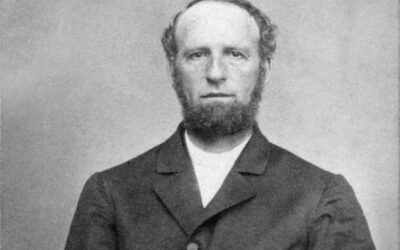
James Springer White, Co-Fundador da Igreja Adventista do Sétimo Dia
James Springer White (1821–1881) foi uma figura chave na Igreja Adventista do Sétimo Dia e marido de Ellen G. White.
James Springer White, cofundador de la Iglesia Adventista del Séptimo Día
James Springer White (1821–1881) fue una figura clave en la Iglesia Adventista del Séptimo Día y el esposo de Elena G. de White.

Kila Kitu Unachohitaji Kujua Kuhusu Chakula cha Siku ya Sabato
Kwa Waadventista Wa Sabato, kushiriki chakula cha Siku ya Sabato pamoja na marafiki na familia ni moja ya sehemu muhimu na ya kumbukumbu ya Sabato.
Nini Maana ya “Mwadventista”?
Waadventista wa Sabato ni dhehebu la Kikristo la Kiprotestanti wanaoshikilia Sabato ya siku ya saba kama ilivyoandikwa katika Biblia.

How to Have a Personal Relationship with Jesus: A 10-Step Guide
How to Have a Personal Relationship with Jesus: A GuideNo matter who you are, you’re surrounded by relationships. Friends, family, colleagues, acquaintances...they all play a part in our lives, for better or worse. So you’re surely aware of a lot of the components...

Biblia Ina Maana Gani Inaposema Yesu ni Mwana wa Mungu?
Biblia inapomwita Yesu Mwana wa Mungu inarejelea uungu wake. Jifunze ni nini kinachofanya hili kuwa muhimu na kinahusianaje na wokovu.

“Go and Sin No More”—What Did Jesus Mean?
These well-known words of Jesus Christ come from two New Testament stories in the book of John—a man healed by the Pool of Bethesda (John 5) and a woman caught in adultery (John 8).

Quais são as Mensagens dos Três Anjos em Apocalipse 14?
As mensagens dos três anjos em Apocalipse 14 advertem o mundo a adorar a Deus, deixar a confusão religiosa e evitar a adoração de tradições humanas em vez dos mandamentos de Deus.

Je! Tunaweza Kuitunza Siku Yoyote ya Wiki Kama Sabato?
Katika sura za kwanza kabisa za Biblia, tunamwona Mungu akianzisha kumbukumbu ya kila wiki na siku ya mapumziko, inayoitwa Sabato (Mwanzo 2:2-3).
¿Cuáles son los mensajes de los tres ángeles en Apocalipsis 14?
Los mensajes de los tres ángeles en Apocalipsis 14 invitan al mundo a adorar a Dios, abandonar la confusión religiosa y evitar la adoración de tradiciones humanas en lugar de los mandamientos de Dios.
Por que muitos Adventistas do Sétimo Dia escolhem uma dieta vegetariana?
Embora nem todo adventista seja vegetariano, muitos evitam completamente o consumo de carne para viver de forma mais saudável, buscando honrar a Deus física, espiritual e mentalmente.

Understanding the Miracles of Jesus Christ
Understanding the Miracles of Jesus ChristWhat do you think of when someone says something is “a miracle”? Maybe you think of an unexpected recovery, surviving a dangerous accident, or getting an answer to a seemingly impossible prayer. Simply put, miracles are...
O que significa “Adventista”?
O que significa "Adventista"?Os Adventistas do Sétimo Dia são uma denominação cristã protestante que observa o sábado bíblico do sétimo dia. A partir dessa crença, eles obtêm a primeira parte de seu nome. Mas e quanto à segunda parte - "Adventista"? “Adventista”...
¿Podemos guardar el sábado bíblico cualquier día de la semana?
En los primeros capítulos de la Biblia, encontramos a Dios estableciendo un memorial semanal y día de reposo, conocido como el sábado (Génesis 2:2-3).
Podemos guardar o Sábado em qualquer dia da semana?
Nos primeiros capítulos da Bíblia, encontramos Deus estabelecendo um memorial semanal e dia de descanso, conhecido como o Sábado (Gênesis 2:2-3).
O que significa a Bíblia quando chama Jesus de Filho de Deus?
Quando a Bíblia chama Jesus de Filho de Deus, está se referindo à Sua divindade. Saiba o que torna isso tão significativo e o que tem a ver com a salvação.
¿Qué creen los Adventistas del Séptimo Día acerca de la Biblia?
La Biblia forma la base de todo lo que los Adventistas del Séptimo Día creen y enseñan.

Legado Duradouro de Ellen G. White
Ellen G. White é um nome bem conhecido entre os Adventistas do Sétimo Dia, mas ela também teve um impacto em muitas outras partes da história, além de ser co-fundadora da Igreja Adventista.

What Does it Mean to Have Faith in Jesus?
What Does it Mean to Have Faith in Jesus?To have faith in Jesus means we place our spiritual hope, trust, belief, and priority in Him as our loving Savior. And that sounds great as an idea. That’s our goal, right? But when we go through difficult times, face...
James Springer White, Mwanzilishi wa Kanisa la Waadventista Wa Sabato
James Springer White (1821–1881) alikuwa mtu muhimu katika Kanisa la Waadventista wa Sabato na mume wa Ellen G. White.
Didn’t find your answer? Ask us!
We understand your concern of having questions but not knowing who to ask—we’ve felt it ourselves. When you’re ready to learn more about Adventists, send us a question! We know a thing or two about Adventists.