
Vacation Bible School (VBS) is a weekday summer program organized by churches to help kids make friends in a positive environment, participate in constructive activities, and learn more about Jesus and the Bible.
As part of their regular outreach efforts, most denominations of Christian churches offer a VBS program each year for kids in the community. But if you haven’t had a chance to observe or experience one, you might be curious about how this program works, what types of activities it usually includes, or if it will be a good fit for your kids.
So let’s take a look at:
- How VBS works
- How it started
- What it’s like today
- How it aims to benefit kids
- How to find one near you
Let’s start with a walkthrough.
VBS Quick Info:
For typical Vacation Bible School programs:
- It runs for one week during the summer.
- Programming is designed for children ages 4 to 12, although some could extend to older children and teens.
- Most run from 2-3 hours in the daytime or early evening.
- Most VBS programs are free.
- You can find information about local VBS programs by checking local church websites, online event listings or community pages, or local social media accounts. You can also ask members of local churches or look for signs or flyers around town.
- You don’t have to be a church member to attend.
- VBS activities involve singing, crafts, skits and fun presentations, and group games.
How does VBS work?

Image by freepik
Vacation Bible School is held during the summer at various Christian churches. Most VBS curriculums are designed for children ages 4 through 12, but some programs also extend to older children and teens. Operated by volunteers from the congregation, VBS programs typically last 2-3 hours each day throughout the selected week. Some programs run in the early evenings, some churches do day programs, and some may offer other types of scheduling options, depending on their community.
Most programs are free, though some churches with smaller budgets might ask for donations, or some larger churches with more extensive programs might charge a small sign-up fee per child.
To ensure the safety and well-being of the children attending, volunteers and staff must complete background checks and child safety courses.1
Parents typically drop off their children before the program starts and pick them up afterward, though they are welcome to accompany their child if they make arrangements ahead of time (but they will not be permitted to lead out or supervise the other kids in the program without going through the same checks and training as the volunteer leaders).
Vacation Bible Schools welcome every child, no matter their religious background or denominational affiliation. So you don’t have to be a member of a church to send your kids to their program. Part of the fun is meeting new people and allowing everyone to learn more about Jesus Christ.
The programming content is typically non-denominational and focuses on common principles, topics, and stories that are most relevant to a wide range of kids. So you might find programs that revolve around well-known Bible stories or topics like “the goodness of God” or “how to serve others” or “what faith means,” etc.
Many churches opt to purchase the program design and curriculum plans from professional companies run by children’s ministry specialists, such as Group.com or Lifeway.
This is appealing to many congregations because they can get the whole package—the schedule, activities, materials, and content—in one step, and at a bundled cost, so they don’t have to come up with everything from scratch or purchase everything separately.
(And that’s why you might see the same artwork or program names advertised at multiple churches.)
But that doesn’t mean that a church can’t make modifications or expand upon a pre-made program. And some churches do indeed create their own. They might also recruit church members to help design or construct sets, costumes, props, and activity materials.
Each program has a fun theme to frame the curriculum content. So while the lessons and activities might be about helping others, following Jesus, or memorizing Scripture, the overall VBS theme might be jungle explorers, Arctic adventures, under the sea, outer space, a well-known Bible hero, ancient Rome, time travel, or all kinds of creative ideas.
Some popular VBS programs of recent years include:
- Wonder Junction: Teaches kids about praising Jesus as they explore the Wild West.
- Ocean Commotion: Reveals the story of Noah and the flood as it takes kids on an underwater journey.
- Maker Fun Factory: Teaches kids that everyone has unique talents that can be used for God, all while they learn about creativity, crafts, and how ideas turn into inventions.
- Magnified: Teaches kids about God’s creation to magnify God’s greatness and love.
- True North: Takes kids on a journey through Alaska while revealing how they can always depend on Jesus.
Program plans include songs, skits, lesson plans, passages for related Bible stories, decor kits, instructions for crafts and science experiments, and ideas for snacks and games. Each day the content focuses on one specific takeaway, such as God’s love, God’s creativity, how forgiveness works, etc.
Since its earliest days, VBS has always been about helping children form a deeper connection with God’s Word.
How did VBS begin?
VBS arose from the efforts of a Sunday School teacher, Mrs. Walker Aylett Hawes.2
In 1898, Mrs. Walker rented a beer hall in the East Side of New York to conduct summer Bible school sessions.3
She wanted to create an activity to help children grow spiritually and inspire personal Bible study while simultaneously giving them something constructive to do (i.e., to keep them from playing in the dangerous streets of New York).4
The New York City Baptist Mission Society took up this idea, creating multiple summer Bible school programs.5 One member named Robert G. Boville spearheaded the spread of the program to other states, as well as Canada and other countries.6
Other denominations, like the Presbyterian and Northern Baptist churches, adopted the program as well.7
By the 20th century, on top of teaching kids a Bible lesson, VBS programs offered games and music to make the program more interactive and fun.8
Today, we can find VBS programs hosted by almost all Christian denominations around the world.
What is VBS like today?

Image by freepik
While many Vacation Bible Schools use a pre-made program, it may look different from church to church.
Most programs will take place on the grounds of the church that hosts it, although some churches with limited space might reserve part of a local community center or park area. Some even offer virtual or hybrid options for those who can’t attend in person.
The curriculum is typically designed to last one week, but some churches have adapted programs to last for two or three. A few might even host campout events over a weekend.
Some may offer more activities or take-home goodies, depending on how many volunteers are available, how many children they’re serving, what budget they’re working with, and so on.
The schedule of different programs will also vary depending on the availability of the volunteers and the community families.
With this in mind, here’s how an average day of VBS might look:
First, you’ll register your child by filling out the church’s registration form, which will likely be online. Most churches will have a registration deadline, which could be a few days to a week before the program starts. That way they can have an accurate headcount for volunteer coordination, activities, and materials.
If the program is being hosted at the church, the check-in could be out front or right inside the entryway. The registration volunteers will give your child a name tag and likely assign them to a group based on age, although the group divisions may vary depending on the size of the program.
Once inside, you’ll probably see colorful decorations relating to this year’s theme. This might look like colorful fish and bubbles for a deep-sea adventure, or cut-outs of monkeys and parrots with vine-like streamers hanging from the ceiling for a jungle setting.
If the program is being hosted in the church, volunteers may start the program by directing your child to the main worship area for the opening program. While the kids will probably be grouped up already, all groups attend this part of the program together. This is when the leaders will go over announcements and rules, and then introduce the theme, motto, and daily Bible verse. There may also be videos and skits to watch, and then a song or two to learn.
Then, your child’s group may be led to another room for the next activity, such as Bible story time. Volunteers might act out the daily Bible story and enlist the help of some of the kids. (For example, in a story about the fall of Jericho, some might be asked to build a wall out of boxes or blocks, while the rest sing and shout on cue to show how Joshua won the battle—before knocking everything down.)
From there, each group of children will likely rotate through activities like:
- Crafts/Experiments: Volunteers will introduce and explain a craft or science experiment relating to the day’s lesson. This might be something like making Noah’s Ark out of popsicle sticks, making a fish out of paper cups, or painting small garden pots. Science experiments may involve watering seeds until they sprout or creating baking soda volcanoes.
- Music Station: Children will practice the program’s theme song and might sing other praise songs as well. Or they might learn hand motions to songs, as well as other interactive ways to participate in the music.
- Missions Station: Children will discover the value of mission work as they hear stories about real-life missionaries and engage in various games, songs, and projects. They may make cards to send to active missionaries and participate in mission fundraisers. They may even learn interesting facts about the culture—and try the foods—of the countries those missionaries serve.
- Games/Outdoor Recreation: Volunteers will guide children through organized outdoor games or allow supervised free play. The games may also tie into the day’s lesson, like a scavenger hunt where kids try to gather as much “manna” as they can (Exodus 16), or a relay race where each kid has to put on a different piece of “the armor of God” (Ephesians 6: 10-20).
- Snack Time: Even the snacks are often designed to match the lesson or Bible story. They might be given animal crackers if they’ve been learning about Noah’s ark, bread and goldfish if they talked about the miracle of multiplying loaves and fish, or crosses made out of pretzel sticks. (And most churches offer nut-free, dairy-free, or gluten-free options as well.)
After the activity rotations are finished, your child will be led to the final stop, which will probably be back in the main worship area for the closing program. This may include a review of the song(s) they’re learning, a recap of the main message of the day, and sometimes distributing bags of goodies like coloring book pages, wristbands with a Bible verse, packaged themed snacks, etc.
Though the execution of a VBS program can certainly vary, the goal of every single one is the same—to teach kids that God loves them and has a plan for their lives.
Why should I enroll my kids in VBS?
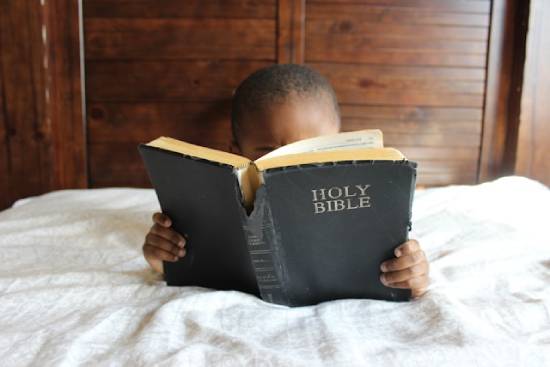
Photo by Samantha Sophia on Unsplash
Aside from giving them something positive to do during the summer, VBS is designed to help kids learn who Jesus is, and how they can begin or strengthen their relationship with Him. All while offering the support and encouragement of a faith community.9
While VBS aims to include kids who might not have a home church, it’s not for the sake of impressing specific denominational beliefs on them or to gain their family’s membership.
At its core, VBS is about bringing the community together, giving kids a chance to make friends and learn new things, and showing them that learning about Jesus can be fun.10
VBS can be a positive and encouraging addition to a child’s summer activities and have a lasting effect on them. It can help shy kids make friends. It can help kids with low self-esteem see that a whole community cares about them. And it can ignite interest in the Bible at a young age, helping kids understand the love of Jesus in a personal way.
It’s just as 2 Timothy 3:15 tells us—learning about Jesus early on is important because it establishes a strong foundation of faith:
“…and that from childhood you have known the Holy Scriptures, which are able to make you wise for salvation through faith which is in Christ Jesus” (NKJV).
VBS also helps people by:
- Getting the church community involved in children’s ministry
- Bringing families together
- Providing a safe and fun place for children to learn, make new friends, and make memories
Every year, across thousands of different churches, parents of VBS attendees have appreciated the fun programs and kind volunteers. But most of all, parents are happy that VBS has given their children a love for learning about the Bible.
Want to give Vacation Bible School a go? Here are some ways you can learn more about the programs in your area.
Find a VBS near you
There are lots of places you can look for local VBS programs:
- While on your daily commute, look for signs or banners in front of churches you pass by
- Look for ads in the classifieds or online community event listings
- Google local churches and check their websites
- Check local church social media posts
When in doubt, you can always contact a nearby church to ask any questions you have.
All in all, Vacation Bible School is a great fit for a kid who has energy to expend and wants to make friends, have fun, and watch the stories and values of the Bible come to life.
Want to learn about more church programs for young people?
Read about Christian summer camps or Pathfinders and Adventurers programs.
- Bartlett, Anna, “Vacation Bible School Safety Toolkit,” Adventist Risk Management, Inc., May 13, 2019. [↵]
- “The Evolution and Impact of Vacation Bible School,” Christianbook.[↵]
- Beaty, Willie R., “VBS: An Historical Perspective,” New Horizons in Vacation Bible School. Nashville, TN: Convention Press, 1993. [↵]
- Ibid; “The Evolution and Impact of Vacation Bible School.” [↵]
- Beaty. [↵]
- Ibid. [↵]
- Ibid. [↵]
- “The Evolution and Impact of Vacation Bible School.” [↵]
- “The Crucial Role of Vacation Bible School: Nurturing Faith and Community,” Christianbook. [↵]
- “Preparing Yourself for Your First Vacation Bible School (VBS) as a Kids’ Ministry Leader,” Christianbook. [↵]
More Answers
What Is Vespers?
Friday rolls around, and you’re spending time with your Adventist friends or relatives when they mention they’re going to vespers tonight.

Adventist Pastors
What is the role of a pastor in the Adventist Church? The position itself, at least as far as a local congregation is concerned, is not much different from that of pastors in other protestant denominations.

The Leadership Structure of the Seventh-day Adventist Church
The Seventh-day Adventist Church has a representative form of structure that connects its 90,000-plus congregations across the globe and gives its members a part in decision-making. Though the Church was incorporated in 1863, this system came about during the church’s reorganization from 1901 to 1903. It includes four levels of organization.
What to Expect When You Go to an Adventist Church
If you’re attending an Adventist church for the first time, you may wonder what it’s really like. While each Adventist church is unique in its collective personality and local culture, Adventist church services are generally similar to most other Protestant church services.

Adventist Education
Seventh-day Adventists have historically upheld the importance of a well-rounded, high-quality education. Instead of a one-size-fits-all approach to teaching and learning, the Adventist Education system operates on the principle of educating the “whole” person.
Evangelism
Evangelism is simply sharing the truths of the Bible with someone else. And Adventists are all into it.

Everything You Need to Know About an Adventist Church Potluck
Every so often, usually on a schedule ranging from once a week to once a month to once a quarter, an Adventist church will have “fellowship dinners,” often casually referred to as potlucks.

The Seventh-day Adventist Hymnal
The Seventh-day Adventist Hymnal is a songbook used worldwide by many Adventist congregations during their worship services. Since its publication in 1985, it has helped foster praise to God while reminding church members of our mission and drawing them closer to Jesus.

What Are Seventh-Day Adventist Sermons Like?
In nearly every Seventh-day Adventist Church, the sermon is the focal point of the main service—similar to many Protestant Christian denominations. It is a time of biblical instruction by the pastor, who shares what they’ve been studying in the Bible and preparing over the previous week.
Who Are Adventists
The Seventh-day Adventist Church—“Adventists” for short—is a Christian denomination of ordinary people who seek to follow Jesus and live out His mission in this world. Established in 1863, we hold to the Protestant principle of sola scriptura, which means the Bible guides everything we do.
Why is the Great Controversy in my mailbox?
Every year, households across North America receive free copies of a 150-year-old book, The Great Controversy. Millions more are shared around the world.

How do Adventists choose what to eat?
Food blogs overwhelm the internet; food fads are all the rage; and copycat and healthy versions of food are the subject of many a get-together.