
The Seventh-day Adventist Church—“Adventists” for short—is a Christian denomination of ordinary people who seek to follow Jesus and live out His mission in this world. Established in 1863, we hold to the Protestant principle of sola scriptura, which means the Bible guides everything we do.
We are a global family with over 20 million members across 215 countries and territories. We have one of the largest healthcare systems in the world, as well as about 9,000 Adventist schools and universities.1
So maybe you’re hearing about Adventists for the first time.
You might have recently learned that your friend, neighbor or co-worker is an Adventist. Maybe a family member attended an Adventist event or church service. Maybe you drove past an Adventist school, college or hospital.
Whatever the case, you might be curious, and we get it. You want to better understand Adventists so that you know how to relate with us.
Don’t worry! You’ll find that we’re not that different from anyone else. We know what it’s like to experience real struggles—stressing over finances, dealing with tension in relationships, or trying to raise children in today’s world.
But we find our hope in a personal relationship with Jesus. His strength helps us to live a life that honors God.
So let’s answer some questions you may have:
- How did the Adventist Church start?
- What does the name Seventh-day Adventist mean?
- What does it mean to be an Adventist?
- What makes Adventists different from others?
- How do Adventists live?
How did the Adventist Church start?
The Adventist Church started in the United States during the 1840s. It came after the Millerite Movement, which preached the imminent second coming of Jesus. In fact, they thought Jesus was supposed to come in 1844. When that didn’t happen, a group of believers began studying their Bibles again to see where they went wrong. The insights they discovered led them to eventually form the Adventist Church in 1863.
 Bible students like Ellen and James White, Joseph Bates, Hiram Edson, and other former Millerites pored over the Scriptures. As they did so, they discovered new insights into its prophecies and the messages of the three angels in Revelation 14.
They saw these messages as God’s means to prepare the world for the Second Coming (Revelation 1:7; 14:14–16).
In short, those messages are:
- An announcement of the judgment and a call to glorify and worship the Creator (Revelation 14:6–7)
- A call to come out of religious confusion and unbiblical teaching (verse 8)
- A call to be loyal to the commandments of God and the faith of Jesus (verses 9–11)
This mission spurred the movement and caused it to grow, and in 1863 the General Conference of Seventh-day Adventists was officially organized in Battle Creek, Michigan.2 At that time, it had 3,500 members and 125 churches.
Today, with over 20 million members and 90,000 churches,3 it still remains committed to God’s Word and sharing the hope and inspiration of the three angels’ messages.
What does the name Seventh-day Adventist mean?
The name Seventh-day Adventist is divided into two parts—each with its own significance. It refers to our belief in the Seventh-day Sabbath and our expectation of the soon-coming of Jesus Christ.
Let’s look at each part more.
Seventh-day means we believe Saturday, the seventh day of the week, is God’s Sabbath. We believe in keeping the fourth commandment—as well as the other nine commandments—because God’s laws do not change. And we do this not to earn salvation but out of love for God; it’s sacred time that we get to spend with God and acknowledge Him as Creator.
Adventist shows that we await the second coming of Jesus—it’s the grand hope we’re living for. In Christian theology, the word advent means “coming” or “second coming of Christ.” If Christ were not coming again, we’d have no hope of escape from sin, suffering, and death. That’s why we keep His return as our focus.
What does it mean to be an Adventist?
Being Adventist, at its very core, is about loving Jesus and His Word, the Bible. In fact, Seventh-day Adventists are known as “people of the Book” because this book—the Bible—is the base for every one of the church’s 28 fundamental beliefs. They highlight how God is restoring our relationship with Him so we can experience the beautiful life He intended for us—now and forever.
Here’s an overview:
In the beginning of earth’s history, Adam and Eve doubted God’s character of love and chose to learn about what evil was (Genesis 3:1–6). This broke the relationship they had with Him, causing sin—selfishness—to enter our world.
 Adventists believe that God sent Jesus to reveal the true character of God to the world and to heal the rift caused by sin. Through His life, death, and resurrection, we can be forgiven and freed from sin’s eternal consequences (1 Peter 2:21–25). He gives us eternal life (John 3:16).
We accept this gift of Jesus, believing we are saved by grace through faith (Ephesians 2:8–9). Though we can never do anything to earn that gift on our own strength, Jesus’ grace through the Holy Spirit empowers us to live out His love (Romans 8:3–5).
It all starts with knowing Jesus.
Adventists study both the Old Testament and New Testament because they reveal who Jesus is (John 5:39). We believe that the Holy Spirit inspired the Bible for the benefit and instruction of people across time and culture. Through its stories and teachings, we find overarching principles that guide us in living out our love for God (2 Timothy 3:16–17; 1 John 5:2–3).
As we recognize how much Jesus has done for us in saving us from our sins, our love for Him grows and becomes the motivating factor in our lives. It leads us to keep God’s commandments (John 14:15), which are simply the boundaries for healthy relationships with Him and one another (Matthew 22:37–40; Galatians 5:14).
Adventism boils down to knowing Jesus and living to glorify Him.
But you may be wondering:
What makes us unique from other Christian denominations?
What makes Adventists different from others?
As we’ve already seen, Adventists have many similar beliefs to other Protestant Christians—beliefs about the life, death, and resurrection of Jesus, salvation, the Godhead, the Holy Spirit, and the Bible’s importance, to name a few. But there are some differences too. Here are a few:
- A literal six-day creation
- Humans as holistic beings
- The seventh-day Sabbath
- Free will
- The sanctuary in heaven
- In-depth study of Bible prophecy
- Hell as nonexistence, rather than eternal torment
Let’s look at each one.
 Literal six-day creation
Adventists look to Genesis 1 and 2 for the earth’s origin. We believe that God created the world in six literal days, an evening and a morning, instead of long expanses of time.4
Humans as holistic beings
God created human beings with an interconnected mind, body, and spirit. Genesis 2:7 says that God formed Adam’s body and then “breathed into his nostrils the breath of life, and the man became a living being” (NKJV).
The word for “being” is the same word translated “soul” in other versions. Instead of humans having souls that are separate from their bodies, the body and breath together make a soul.
This understanding of the soul shapes the way that we view death. When a person no longer has the breath of life, that person ceases to exist (Ezekiel 9:5–6) and rests in the grave (John 11:11–14, 43) until Jesus returns at the Second Coming.
The Sabbath
 When God finished Creation, the Bible says that He “blessed the seventh day and sanctified it” (Genesis 2:3, NKJV). Later, He repeats the Sabbath in the fourth commandment (Exodus 20:8–11) as a reminder of Creation and salvation (Deuteronomy 5:15).
Adventists keep the Sabbath out of their love for God and their desire to draw closer to Him. By faith, they rest one day a week, just as they rest in God’s saving power each day.
Free will
The freedom to choose whether to serve God is a vital part of Adventist beliefs. God has always provided this freedom, starting with the Tree of the Knowledge of Good and Evil in the Garden of Eden (Genesis 2:16–17).
Why is it so important?
As a relational God (1 John 4:7–8), He longs for a real relationship with His creations, based on love and willing service. This is not possible without freedom of choice. People can choose to follow Him, and they can choose to walk away from Him.
This belief fuels our relationship with God and our emphasis on religious liberty.
 The heavenly sanctuary
The Old Testament sanctuary is like a roadmap for salvation, showing how God is restoring His relationship with us (Exodus 25:8). It reflects the heavenly sanctuary or temple—which is God’s very throne room in heaven. Each of the symbols points to Jesus Christ’s sacrifice, as well as what He is currently doing in heaven (Hebrews 8:1–6; 9:11–12).
Study of Bible prophecy
 The study of Bible prophecy, particularly the books of Daniel and Revelation, has been part of Adventism since its beginnings. We believe that the Bible’s prophecies can be understood (Daniel 12:9; Revelation 1:3) and that studying them helps us see the big picture of our world and Jesus’ plan to restore it.
We also see the Adventist Church as being part of the remnant church in Bible prophecy as mentioned in Revelation 12:17:
“And the dragon was enraged with the woman, and he went to make war with the rest of her offspring, who keep the commandments of God and have the testimony of Jesus Christ” (NKJV).
The word remnant refers to a small remaining quantity of something, and this passage describes a small remaining group of people that will keep the commandments of God and have the testimony of Jesus Christ.
Hell as nonexistence, not eternal torment
We believe that eternal torment in hellfire is not consistent with the character of God and His desire for us to have freedom of choice. What’s more, Scripture tells us that only those who choose Christ will receive eternal life.5
But sin cannot exist in God’s presence. In order for Him to live with us face to face once again, He must put an end to it.
Before God re-creates the earth, it will temporarily become a lake of fire in which sin and those who choose to hold onto it will be permanently destroyed—known as “the second death.” Death, sickness, sadness, and evil will vanish away too (Revelation 20:14–15; 21:1).
These differences are a brief summary of what Adventists believe. To learn more, check out our fundamental beliefs.
How do Adventists live?
The Adventist lifestyle is simple, allowing us to focus on our mission to help others. Instead of prescribing specific behaviors, we allow the Bible’s principles and our love for Jesus to guide every part of our lives:
- Personal spirituality
- Church involvement
- Sabbath keeping
- How we appear to others
- Stewardship
- Health decisions
- Serving Others
Because we don’t look that different from other people, you may already know an Adventist and not even realize it!
But here are some principles we try to live by.
Personal spirituality and fostering a faith community
 A personal relationship with God is central to our lifestyle. We take time for personal devotion, which may look like Bible study, prayer, worship, or journaling.
Church community and worship are also important to us (Hebrews 10:24–25). Most Adventists attend church services and Sabbath School (the equivalent of Sunday School) weekly, while some go to midweek small groups or prayer meetings too.
And don’t forget food! Adventists love to gather for meals, especially after services on Sabbath. These these gatherings are often potlucks-style and are sometimes called “fellowship dinner”
Speaking of Sabbath, how do Adventists keep Sabbath?
Sabbath keeping
Sabbath starts at sundown on Friday evening and continues to sundown Saturday (Leviticus 23:32). During this time, we set aside secular work and avoid conducting business. Often, we welcome the Sabbath with a time of worship that we call “vespers.”
Though convictions about Sabbath activities vary, Adventists agree that it is a day to focus on God and people. After all, it’s a day God originally set aside to stop and enjoy Creation. So we seek to do the same.
After church service, families might take walks or go on hikes, sing for nursing home residents, serve food at a homeless shelter, or other activities that serve others or that allow intentional enjoyment of nature.
How we appear to others
When it comes to clothing choices, we encourage modesty and simplicity (1 Peter 3:3–4), so that the focus is on character and not just getting noticed by what we wear. But because we see clothing as a matter of conscience between each individual and God, we don’t wear any special clothing or religious jewelry.
 Stewardship of time and money
We believe in being good stewards of what God has given us. Thus, we use our time and money in ways that honor God (1 Corinthians 10:31) and reveal Jesus.
We also desire to be good stewards of our bodies (1 Corinthians 6:19–20). Let’s look at that next.
Health decisions
You may have heard that Adventists live an average of seven to ten years longer than the general population because of their lifestyle.
 What’s the secret?
We take a holistic approach to health, using nature’s simple means for optimal physical, mental, and spiritual health.
For one, we completely avoid alcohol, smoking, and unclean meats (Leviticus 11).
Second, we follow lifestyle principles that include eating a healthy diet (often vegetarian), exercising, drinking plenty of water, spending time outdoors, resting, and much more!
In fact, because of our health practices, researchers at Loma Linda University began the Adventist Health Study, which has become well-known in research circles.
But health benefits aside, the Adventist lifestyle flows from our desire to be close to Jesus and honor Him. It helps us fulfill our mission and experience a better life here on this earth.
Serving others
Adventists are people who love to serve others. We do this on a local level through simple activities, such as helping someone in the community with yard work or delivering holiday meals to people in need. Some churches also run food and clothing banks.
On a global scale, Adventists operate an agency called ADRA (Adventist Development and Relief Agency) that assists people who have been in disasters both overseas and in the U.S.
Thus, on a small and large scale, we’re all about allowing God to use us to care for the people around us.
Adventists look to Jesus and His Word.
 Started by a group of believers who prioritized the study of the Bible, the Adventist Church has upheld this legacy. Its members and church leaders continue to seek Jesus through His Word.
Yes, we struggle; but we’re always looking to be more like Him and help others know Him.
Because we are a global movement, the Adventist lifestyle doesn’t look the same for everyone. Instead, each member follows the Holy Spirit in applying the Bible’s principles.
But one thing is constant:
The importance of the Bible and God’s mission to restore us through Jesus Christ. This shapes each one of Adventism’s fundamental beliefs.
And it shapes our lives too.
Find a Church
If you’re interested in finding a local Adventist church near you, you can use the Adventist Locator provided by the General Conference of Seventh-day Adventists.
Related Articles




- “Seventh-day Adventist World Church Statistics 2020,” Seventh-day Adventist Church, adventist.org. [↵]
- Maxwell, C. Mervyn, Tell It to the World, (Pacific Press, Nampa, ID, 1977), p 145. [↵]
- “Seventh-day Adventist World Church Statistics 2020,” Seventh-day Adventist Church, adventist.org. [↵]
- Genesis 1:5, 8, 13, 19, 23, 31 (ESV) [↵]
- Romans 6:23; John 17:3; Matthew 19:16-22, 29; John 3:16, 36; 6:40, 47; Romans 5:21; 1 John 3:15; 5:11; Jude 1:21 [↵]
More Answers

¿Por qué muchos Adventistas del Séptimo Día eligen una dieta vegetariana?
¿Por qué muchos Adventistas del Séptimo Día eligen una dieta vegetariana?Puede que tengas un amigo adventista que sea vegetariano, o tal vez estés asistiendo a una Iglesia Adventista del Séptimo Día por primera vez y notes que en la comida compartida no hay carne....

What is Jesus’ Parable of the Sower About?
The parable of the sower is ultimately about how people responded to Jesus Christ and His message of the kingdom of God—the Gospel.

O que os Adventistas do Sétimo Dia acreditam sobre o Grande Conflito (Bem vs. Mal)?
O “Grande Conflito” é a frase que os Adventistas do Sétimo Dia normalmente usam para descrever o conflito espiritual cósmico entre as forças do bem (Deus) e as forças do mal ou do pecado (Satanás/o diabo).

Was Jesus Ever Hypocritical? Learn What the Bible Says.
Was Jesus Ever Hypocritical? Learn What the Bible SaysMany undesirable traits are associated with hypocrisy. But overall, hypocrites intentionally try to make others believe they uphold or represent a certain belief system, character trait, lifestyle, etc., when in...

Kukatishwa Tamaa Kukuu na Kile Tunachojifunza
Wafuasi wa Miller walitabiri kurudi kwa Kristo Oktoba 22, 1844, lakini Yesu hakuja kamwe. Tukio lingine lilitokea. Gundua kilichotokea kweli na Kukatishwa Tamaa Kukuu kunaweza kutufundisha leo.

When in Doubt: 7 Ways Christians Can Manage Uncertainty
When in Doubt: 7 Ways Christians Can Manage UncertaintyFew things in life are truly certain. And no matter how convinced some people can appear on the surface, no one is immune to doubt. And this isn’t a bad thing. Doubt has a purpose. A role to serve. (Just imagine...
El gran chasco y las lecciones que nos enseña
Los Milleritas predijeron el regreso de Cristo el 22 de octubre de 1844, pero Jesús nunca llegó. Ocurrió otro evento. Descubre lo que realmente sucedió y qué puede enseñarnos hoy El gran chasco.

Is Jesus the Same Being as Michael the Archangel?
Many Christians have wondered at the mysterious identity of Michael the Archangel.
A Grande Desapontamento e Lições que nos Ensina
Os Milleritas previram o retorno de Cristo em 22 de outubro de 1844, mas Jesus nunca chegou. Outro evento ocorreu. Descubra o que realmente aconteceu e o que o Grande Desapontamento pode nos ensinar hoje.
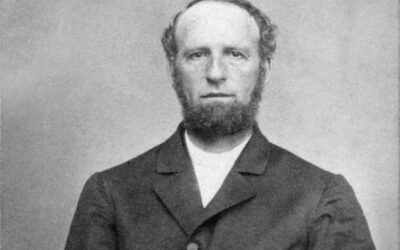
James Springer White, Co-Fundador da Igreja Adventista do Sétimo Dia
James Springer White (1821–1881) foi uma figura chave na Igreja Adventista do Sétimo Dia e marido de Ellen G. White.
James Springer White, cofundador de la Iglesia Adventista del Séptimo Día
James Springer White (1821–1881) fue una figura clave en la Iglesia Adventista del Séptimo Día y el esposo de Elena G. de White.

Kila Kitu Unachohitaji Kujua Kuhusu Chakula cha Siku ya Sabato
Kwa Waadventista Wa Sabato, kushiriki chakula cha Siku ya Sabato pamoja na marafiki na familia ni moja ya sehemu muhimu na ya kumbukumbu ya Sabato.
Nini Maana ya “Mwadventista”?
Waadventista wa Sabato ni dhehebu la Kikristo la Kiprotestanti wanaoshikilia Sabato ya siku ya saba kama ilivyoandikwa katika Biblia.

How to Have a Personal Relationship with Jesus: A 10-Step Guide
How to Have a Personal Relationship with Jesus: A GuideNo matter who you are, you’re surrounded by relationships. Friends, family, colleagues, acquaintances...they all play a part in our lives, for better or worse. So you’re surely aware of a lot of the components...

Biblia Ina Maana Gani Inaposema Yesu ni Mwana wa Mungu?
Biblia inapomwita Yesu Mwana wa Mungu inarejelea uungu wake. Jifunze ni nini kinachofanya hili kuwa muhimu na kinahusianaje na wokovu.

“Go and Sin No More”—What Did Jesus Mean?
These well-known words of Jesus Christ come from two New Testament stories in the book of John—a man healed by the Pool of Bethesda (John 5) and a woman caught in adultery (John 8).

Quais são as Mensagens dos Três Anjos em Apocalipse 14?
As mensagens dos três anjos em Apocalipse 14 advertem o mundo a adorar a Deus, deixar a confusão religiosa e evitar a adoração de tradições humanas em vez dos mandamentos de Deus.

Je! Tunaweza Kuitunza Siku Yoyote ya Wiki Kama Sabato?
Katika sura za kwanza kabisa za Biblia, tunamwona Mungu akianzisha kumbukumbu ya kila wiki na siku ya mapumziko, inayoitwa Sabato (Mwanzo 2:2-3).
¿Cuáles son los mensajes de los tres ángeles en Apocalipsis 14?
Los mensajes de los tres ángeles en Apocalipsis 14 invitan al mundo a adorar a Dios, abandonar la confusión religiosa y evitar la adoración de tradiciones humanas en lugar de los mandamientos de Dios.
Por que muitos Adventistas do Sétimo Dia escolhem uma dieta vegetariana?
Embora nem todo adventista seja vegetariano, muitos evitam completamente o consumo de carne para viver de forma mais saudável, buscando honrar a Deus física, espiritual e mentalmente.

Understanding the Miracles of Jesus Christ
Understanding the Miracles of Jesus ChristWhat do you think of when someone says something is “a miracle”? Maybe you think of an unexpected recovery, surviving a dangerous accident, or getting an answer to a seemingly impossible prayer. Simply put, miracles are...
O que significa “Adventista”?
O que significa "Adventista"?Os Adventistas do Sétimo Dia são uma denominação cristã protestante que observa o sábado bíblico do sétimo dia. A partir dessa crença, eles obtêm a primeira parte de seu nome. Mas e quanto à segunda parte - "Adventista"? “Adventista”...
¿Podemos guardar el sábado bíblico cualquier día de la semana?
En los primeros capítulos de la Biblia, encontramos a Dios estableciendo un memorial semanal y día de reposo, conocido como el sábado (Génesis 2:2-3).
Podemos guardar o Sábado em qualquer dia da semana?
Nos primeiros capítulos da Bíblia, encontramos Deus estabelecendo um memorial semanal e dia de descanso, conhecido como o Sábado (Gênesis 2:2-3).
O que significa a Bíblia quando chama Jesus de Filho de Deus?
Quando a Bíblia chama Jesus de Filho de Deus, está se referindo à Sua divindade. Saiba o que torna isso tão significativo e o que tem a ver com a salvação.
¿Qué creen los Adventistas del Séptimo Día acerca de la Biblia?
La Biblia forma la base de todo lo que los Adventistas del Séptimo Día creen y enseñan.

Legado Duradouro de Ellen G. White
Ellen G. White é um nome bem conhecido entre os Adventistas do Sétimo Dia, mas ela também teve um impacto em muitas outras partes da história, além de ser co-fundadora da Igreja Adventista.

What Does it Mean to Have Faith in Jesus?
What Does it Mean to Have Faith in Jesus?To have faith in Jesus means we place our spiritual hope, trust, belief, and priority in Him as our loving Savior. And that sounds great as an idea. That’s our goal, right? But when we go through difficult times, face...
James Springer White, Mwanzilishi wa Kanisa la Waadventista Wa Sabato
James Springer White (1821–1881) alikuwa mtu muhimu katika Kanisa la Waadventista wa Sabato na mume wa Ellen G. White.
Didn’t find your answer? Ask us!
We understand your concern of having questions but not knowing who to ask—we’ve felt it ourselves. When you’re ready to learn more about Adventists, send us a question! We know a thing or two about Adventists.