
Joseph Bates was a sailor-turned-preacher who joined the Millerite Movement and waited for the Second Advent of Jesus to happen in 1844. Despite being disappointed when this didn’t occur, Bates held onto his faith and played an integral part in starting the Seventh-day Adventist Church.
Let’s explore how God used this energetic and sincere-hearted Christian.
We’ll learn about:
- His early life
- How he became a Christian
- His involvement in the Millerite Movement
- His role in the Adventist Church
His early life

Photo by Diego Catto on Unsplash
Joseph Bates was born in Rochester, Massachusetts, on July 8, 1792. About a year later, his family moved to New Bedford, a port town known for whaling. Being so close to the sea stirred in Joseph the desire to be a sailor.1
At 15 years of age, Bates convinced his parents to allow him to go as a cabin boy on a voyage. This experience was the beginning of his sailing career and countless adventures and hardships.
One time, Danish privateers captured Bates and the rest of the ship’s crew. When the crew was finally set free, they were penniless. Bates managed to make his way to Liverpool, England, where another hardship awaited him. This time, the British authorities seized him and forced him to join their navy. He attempted to escape but failed.2
After two and a half years with the British navy, Bates became a prisoner during the War of 1812 because he refused to fight against his own country. This refusal landed him in the infamous Dartmoor Prison, from which he was finally released in 1815—five years after being forced into the navy.3
Despite these calamities early in his sailing career, Bates wasn’t deterred. After marrying Prudence Nye in 1818, he sailed for another ten years, eventually becoming a sea captain.
During that time, a small act of kindness by his wife would begin to change captain Joseph Bates’ life.
How did Joseph Bates become a Christian?4
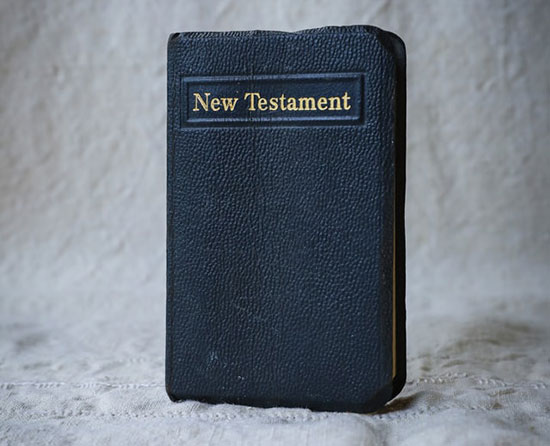
Photo by Mick Haupt on Unsplash
Joseph Bates’s heart softened towards God thanks to the kindness and foresight of a ship’s cook as well as Bates’s wife.
Though religion had been part of his life while growing up, he lost sight of God during his time as a sailor—that is, until a terrible storm at sea and the prayer of the ship’s cook convinced him that God had saved his life.5 Not long after, before setting out on another voyage, his wife slipped a pocket New Testament into his travel trunk.
When Bates went to grab one of his novels to read, he picked up the New Testament and read a poem that had been written on its front page. This poem, called “The Hour of Death,” impressed on him the fragility of life and convicted him of his need for God.
Forgetting about the novels he had packed, Bates became engrossed in the Bible.
One day, he realized that he needed to confess his sins and pray to God—for the first time. Finding a private place on the ship was not easy, but he managed to fit in a crawl space under the ship’s dining table.
Over time, he discovered the peace he had been seeking and committed to following God all the way.
The change in his life was noticeable. When Bates arrived home, he began attending the Christian Connection Church weekly and worshiping with his family each day. He also became an advocate for abolition (ending slavery) and temperance (urging people to abstain from alcohol).
Life on board Bates’s ship was different too. He didn’t allow alcohol or profanity and required his men to keep the Sabbath (Sunday at the time). At the beginning of the voyage, he would kneel and pray—an action that he later found out led some of the crew to become Christians.6
Joseph Bates and the Millerite Movement
Bates retired from sailing in 1828 and decided to farm while continuing to serve God. In the fall of 1839, he heard a Millerite preacher proclaim that the Second Coming would take place in 1843 or 1844. Intrigued, Bates got a hold of some of William Miller’s lectures and read them. Soon, he accepted the message and promised to support it.7
He joined together with Joshua V. Himes, a leader in the Millerite Movement, whom he had known from his work with temperance. Bates was soon a leader also, helping organize one of the Millerite general conferences in 1840.
In preparation for Jesus’ coming, Bates sold his farm and paid off his debts. Then, he committed to traveling and preaching to everyone who would listen.
When Jesus didn’t come on October 22nd, 1844, Bates and his wife were disappointed, but they didn’t lose their faith. He continued to travel and encourage the disheartened Millerites.
As a small group of believers began learning new truths in the Bible, Bates too made some discoveries.
How Joseph Bates became a Seventh-day Adventist

Photo by Priscilla Du Preez 🇨🇦 on Unsplash
After the Great Disappointment, Bates stayed connected with many of the Millerites who were trying to make sense of October 22nd. Bible study helped them find answers. As their doctrines became more developed, they founded the Adventist Church.
Bates’s greatest contributions to Adventism include:
- Discovering the Sabbath truth
- Holding leadership roles with Seventh-day Adventism
- Promoting a healthy lifestyle
- Publishing articles and tracts about the Bible
We’ll look at each one in more detail.
Discovering the Sabbath truth8
The Millerites who awaited Jesus’ coming in 1844 were Sunday keepers, but this would change when Bates learned about the seventh-day Sabbath through a Millerite preacher named Frederick Wheeler. After this, Bates began sharing the Sabbath truth with early Adventists.
But here’s how it got to Bates in the first place.
At the beginning of 1844, Rachel Oaks, a Seventh-day Baptist, heard a sermon by Frederick Wheeler.
Afterward, she confronted him: “While you were speaking, Elder Wheeler, I could scarcely contain myself. You said that we must observe all of the Ten Commandments, and yet you yourself constantly break one of them!”
Wheeler must have been a little stunned.
“Why, Sister Oaks, whatever do you mean?”
“I mean that the fourth commandment says, ‘The seventh day is the Sabbath of the Lord thy God,’ but you keep the first day.”
Mrs. Oaks was bold, for sure. But it worked.
Frederick Wheeler became the first Sabbath-keeping minister in North America. He passed on this truth to a man named Thomas Preble, who wrote an article about the Sabbath in February 1845.
When Bates came across that article, he immediately began the 140-mile trip to visit Wheeler (remember—people couldn’t just hop in their cars and go places!). Though arriving late at night, Bates woke Wheeler up, and the two men discussed and studied the rest of the night.
On the way home, Bates decided he would keep the seventh-day Sabbath. He became an avid promoter of it to the other Millerites.
Here’s one example:
In 1846, Bates read an article by O.R.L. Crosier, which gave a biblical explanation for what had happened on October 22nd, 1844. Instead of returning to the earth, Jesus had begun a work of judgment in the Most Holy Place of the sanctuary. Upon reading this, Bates set off to meet Crosier, Edson, and other Millerites. Even as he learned from them, he convinced them of the Sabbath too.
That same year, he wrote his booklet The Seventh-day Sabbath, A Perpetual Sign, which gave biblical and historical evidence for the Sabbath. He shared a copy with James White and Ellen White, co-founders of the Adventist Church, leading them to accept it as truth.
Holding leadership roles within Seventh-day Adventism
As the small group of Advent believers grew, Bates became more involved in its leadership meetings and helped to found the Adventist Church.
Though he didn’t hold any official titles in the church, he traveled and preached all throughout the East Coast. He also often chaired the Sabbath-keeping Bible conferences.9 And in 1860 he chaired a meeting in Battle Creek, Michigan, that brought about the official organization of the Adventist Church.
Promoting a healthy lifestyle
In the 1860s, Ellen White, one of the leaders of the Adventist Church, began speaking more on the subject of a healthy lifestyle. Joseph Bates recognized health reform principles that he had already been following for many years, so he began to share them with others as well.
Back in the 1820s, Bates had decided to give up tobacco and alcohol completely. By 1844, he also quit drinking coffee and became a vegetarian.10
Not to mention that he was physically active, walking many miles throughout his years of travel!
And his lifestyle decisions paid off. At the age of 75, he was able to say, “I am entirely free from aches and pains!” He lived to be 80 years old and still preached 100 times in his last year of life.11
His example inspired the other Adventists and helped shape Adventist beliefs about health today.
Publishing articles and tracts about the Bible

Photo by micheile henderson on Unsplash
Even with all his traveling and speaking, Bates found time to write. He authored two booklets that gave biblical and historical evidence for the Sabbath as well as many articles for the Review and Herald, an Adventist periodical.
When Bates decided to write his first booklet, it was a faith venture because he had very little money at the time. In fact, he was so broke that he spent his last money to buy his wife four pounds of flour.12 But he trusted that the Lord would provide for them.
That same day, he went to the post office and found a surprise letter waiting for him.
The contents?
Money to provide for his family and write the booklet. The Lord did provide!
Because of Bates’s faith, his publications directed people to the truths of the Bible and shaped Adventist doctrine.
Joseph Bates: A powerhouse in the Adventist Church
Joseph Bates was one of the many earnest, Christ-centered founders of the Adventist Church.
Dying in 1872, he left behind a life of energy, drive, and unstoppable faith—both as a captain and an Adventist Christian. He never grew weary in sharing the truth and pointing people to Jesus. He is buried in Monterey, Michigan, and is asleep until Jesus’ soon return.13
We are thankful to Bates for the way he promoted and established many of our Bible-based beliefs, including the Sabbath and a healthy lifestyle.
Related Articles



- Bates, Joseph, Life of Joseph Bates: An Autobiography (Review and Herald, 1927), p. 13. [↵]
- Maxwell, C. Mervyn, Tell It to the World, (Pacific Press, Nampa, ID, 1977), p. 77. [↵]
- Bates, pp. 64, 71. [↵]
- Ibid., pp. 135–137. [↵]
- Maxwell, p. 77. [↵]
- Bates., pp. 169–170. [↵]
- Ibid., p. 180. [↵]
- Maxwell, pp. 74–76. [↵]
- Ibid., p. 80. [↵]
- Ibid. [↵]
- “Joseph Bates,” The Ellen G. White Estate. [↵]
- Ibid., p. 81–83. [↵]
- “Joseph Bates,” Ellen G. White Estate. [↵]
More Answers

Where Do We Go When We Die?
For those of us who’ve lost loved ones or faced serious health issues, we can’t help but wonder about life after death.

What is the Difference Between Grace and Mercy in the Bible?
Even in day-to-day life, we can see glimpses of grace and mercy—like when someone offers an angry, impatient person their spot in a line or when a parent hugs their child after a heated argument.

Waadventista Wasabato Wanatafsiri Vipi Unabii wa Biblia?
Jifunze zaidi kuhusu jinsi Waadventista wanavyotafsiri unabii katika Biblia—hasa katika vitabu kama Danieli na Ufunuo.
Urithi wa Kudumu wa Ellen G. White
Urithi wa Kudumu wa Ellen G. WhiteEllen G. White ni jina linalojulikana sana miongoni mwa Waadventista wa Sabato, lakini pia aliathiri sehemu nyingi za historia, mbali na kuwa mwanzilishi wa Kanisa la Waadventista wa Sabato. Ndiyo maana Jarida la Smithsonian...

¿Cómo interpretan la profecía bíblica los Adventistas del Séptimo Día?
Aprende más sobre cómo los Adventistas interpretan la profecía en la Biblia, especialmente en libros como Daniel y Apocalipsis.
Como os Adventistas do Sétimo Dia interpretam a profecia bíblica?
Saiba mais sobre como os Adventistas abordam a interpretação da profecia na Bíblia—especialmente nos livros como Daniel e Apocalipse.

Lo que necesitas saber sobre la tentación y cómo resistirla
¿Alguna vez has sentido que enfrentas la misma tentación día tras día? ¿La tentación que siempre parece resurgir?
What Jesus Meant by “Take Up Your Cross”
Whether you’ve spent a day or a decade around Christian circles, you’ve probably heard the phrase, “Pick up your cross.”

Je, Waadventista Wasabato Wana “Sheria”?
Tunashikilia kanuni tunazoamini zitasaidia kuweka uhusiano wa karibu na Yesu na Neno lake. Jifunze jinsi kanuni hizi zinavyo-ongoza mtindo wa maisha wa Waadventista.
El legado de Elena G. de White
El legado de Elena G. de WhiteyElena G. de White es un nombre muy conocido entre los Adventistas del Séptimo Día, pero también tuvo un impacto en muchas otras partes de la historia, además de ser cofundadora de la Iglesia Adventista. Por eso, la revista Smithsonian la...

All of Jesus’ Warnings and Encouragements in the Bible
Here’s a comprehensive list of every warning and encouragement from the words of Jesus, as well as how they can benefit our lives today.
¿Los Adventistas del Séptimo Día tienen “reglas”?
Sostenemos principios que creemos que nos ayudarán a mantener una relación más cercana con Jesús y su Palabra. Aprende cómo estos principios guían los estilos de vida adventistas.
Os Adventistas do Sétimo Dia têm “regras”?
Defendemos princípios que acreditamos nos ajudar a manter um relacionamento mais próximo com Jesus e com Sua Palavra. Saiba como esses princípios orientam o estilo de vida adventista.

Películas Adventistas: donde la fe y el cine se encuentran
La misión de la Iglesia Adventista del Séptimo Día desde el principio ha sido compartir la verdad de Dios en la Biblia.
Filmes Adventistas: Onde a Fé e o Cinema se Encontram
A missão da Igreja Adventista do Sétimo Dia desde o início tem sido compartilhar a verdade de Deus na Bíblia.

¿Por qué algunas Biblias tienen más libros que otras?
Los cristianos consideran la Biblia como sus escrituras sagradas. Pero dentro del cristianismo, diferentes denominaciones utilizan Biblias con cantidades diferentes de libros.
Por que algumas Bíblias têm mais livros do que outras?
Os cristãos consideram a Bíblia como suas escrituras sagradas. Mas dentro do Cristianismo, diferentes denominações usam Bíblias com números diferentes de livros.
O que você precisa saber sobre a tentação e como resistir a ela
Já se sentiu como se enfrentasse a mesma tentação dia após dia? Aquela tentação que sempre parece ressurgir?
O que os Adventistas do Sétimo Dia acreditam sobre a Bíblia?
A Bíblia forma a base de tudo o que os Adventistas do Sétimo Dia acreditam e ensinam.

Waadventista Wa Sabato wanaamini nini kuhusu Ubatizo?
Kama Wakristo wengi wa Kiprotestanti ulimwenguni kote na katika historia, Kanisa la Waadventista wa Sabato linaamini katika ubatizo, sherehe ambapo watu huzamishwa ndani ya maji kudhihirisha hadharani “kufa kwa maisha ya zamani” na “kuanza kwa maisha mapya katika Kristo”.

Jinsi Waadventista Wanavyoshughulikia Kifo na Mazishi
Mazishi mengi ya Waadventista wa Sabato yanafanana na yale ya madhehebu mengine ya Kiprotestanti, kama vile Wamethodisti, Wabatisti, au Wapresbiteri, lakini unaweza kupata tofauti chache au taratibu za pekee.
O que os Adventistas do Sétimo Dia acreditam sobre o batismo?
Assim como muitos cristãos protestantes em todo o mundo e ao longo da história, a Igreja Adventista do Sétimo Dia crê no batismo por imersão
¿Qué creen los Adventistas del Séptimo Día sobre el bautismo?
Al igual que muchos cristianos protestantes en todo el mundo y a lo largo de la historia, la Iglesia Adventista del Séptimo Día cree en el bautismo por inmersión

Does Jesus Really Care About Me?
Does Jesus Really Care About Me?Short answer: yes, Jesus really does care about you, specifically (1 Peter 5:7, ESV). But if you’re wondering whether Jesus Christ really, truly cares about you, you aren’t alone. Gideon, Abraham and Sarah, Job, Jeremiah, Elijah, even...
Filamu za Kiadventista: Mahali Imani na Filamu Zinapokutana
Tangu mwanzo, lengo la Kanisa la Waadventista wa Sabato limekuwa kueneza kweli ya Mungu katika Biblia.
Kwanini Baadhi ya Biblia Zina Vitabu Vingi Kuliko Zingine?
Wakristo wanachukulia Biblia kama maandiko yao matakatifu. Lakini ndani ya Ukristo, madhehebu tofauti hutumia Biblia zenye idadi tofauti ya vitabu.
Fe y obras: ¿Importan ambas en la vida de un cristiano?
En tantas religiones a lo largo del tiempo, los individuos trabajan hacia la iluminación, la salvación o el favor de una deidad.
Cómo los Adventistas manejan la muerte y los funerales
La mayoría de los servicios funerarios Adventistas del Séptimo Día son similares a los de otras denominaciones protestantes, como los metodistas, bautistas y presbiterianos, pero podrías encontrar algunas diferencias o matices únicos.
Didn’t find your answer? Ask us!
We understand your concern of having questions but not knowing who to ask—we’ve felt it ourselves. When you’re ready to learn more about Adventists, send us a question! We know a thing or two about Adventists.