
Joseph Bates was a sailor-turned-preacher who joined the Millerite Movement and waited for the Second Advent of Jesus to happen in 1844. Despite being disappointed when this didn’t occur, Bates held onto his faith and played an integral part in starting the Seventh-day Adventist Church.
Let’s explore how God used this energetic and sincere-hearted Christian.
We’ll learn about:
- His early life
- How he became a Christian
- His involvement in the Millerite Movement
- His role in the Adventist Church
His early life

Photo by Diego Catto on Unsplash
Joseph Bates was born in Rochester, Massachusetts, on July 8, 1792. About a year later, his family moved to New Bedford, a port town known for whaling. Being so close to the sea stirred in Joseph the desire to be a sailor.1
At 15 years of age, Bates convinced his parents to allow him to go as a cabin boy on a voyage. This experience was the beginning of his sailing career and countless adventures and hardships.
One time, Danish privateers captured Bates and the rest of the ship’s crew. When the crew was finally set free, they were penniless. Bates managed to make his way to Liverpool, England, where another hardship awaited him. This time, the British authorities seized him and forced him to join their navy. He attempted to escape but failed.2
After two and a half years with the British navy, Bates became a prisoner during the War of 1812 because he refused to fight against his own country. This refusal landed him in the infamous Dartmoor Prison, from which he was finally released in 1815—five years after being forced into the navy.3
Despite these calamities early in his sailing career, Bates wasn’t deterred. After marrying Prudence Nye in 1818, he sailed for another ten years, eventually becoming a sea captain.
During that time, a small act of kindness by his wife would begin to change captain Joseph Bates’ life.
How did Joseph Bates become a Christian?4
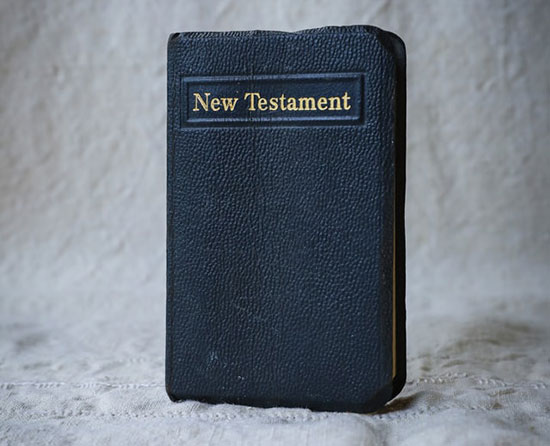
Photo by Mick Haupt on Unsplash
Joseph Bates’s heart softened towards God thanks to the kindness and foresight of a ship’s cook as well as Bates’s wife.
Though religion had been part of his life while growing up, he lost sight of God during his time as a sailor—that is, until a terrible storm at sea and the prayer of the ship’s cook convinced him that God had saved his life.5 Not long after, before setting out on another voyage, his wife slipped a pocket New Testament into his travel trunk.
When Bates went to grab one of his novels to read, he picked up the New Testament and read a poem that had been written on its front page. This poem, called “The Hour of Death,” impressed on him the fragility of life and convicted him of his need for God.
Forgetting about the novels he had packed, Bates became engrossed in the Bible.
One day, he realized that he needed to confess his sins and pray to God—for the first time. Finding a private place on the ship was not easy, but he managed to fit in a crawl space under the ship’s dining table.
Over time, he discovered the peace he had been seeking and committed to following God all the way.
The change in his life was noticeable. When Bates arrived home, he began attending the Christian Connection Church weekly and worshiping with his family each day. He also became an advocate for abolition (ending slavery) and temperance (urging people to abstain from alcohol).
Life on board Bates’s ship was different too. He didn’t allow alcohol or profanity and required his men to keep the Sabbath (Sunday at the time). At the beginning of the voyage, he would kneel and pray—an action that he later found out led some of the crew to become Christians.6
Joseph Bates and the Millerite Movement
Bates retired from sailing in 1828 and decided to farm while continuing to serve God. In the fall of 1839, he heard a Millerite preacher proclaim that the Second Coming would take place in 1843 or 1844. Intrigued, Bates got a hold of some of William Miller’s lectures and read them. Soon, he accepted the message and promised to support it.7
He joined together with Joshua V. Himes, a leader in the Millerite Movement, whom he had known from his work with temperance. Bates was soon a leader also, helping organize one of the Millerite general conferences in 1840.
In preparation for Jesus’ coming, Bates sold his farm and paid off his debts. Then, he committed to traveling and preaching to everyone who would listen.
When Jesus didn’t come on October 22nd, 1844, Bates and his wife were disappointed, but they didn’t lose their faith. He continued to travel and encourage the disheartened Millerites.
As a small group of believers began learning new truths in the Bible, Bates too made some discoveries.
How Joseph Bates became a Seventh-day Adventist

Photo by Priscilla Du Preez 🇨🇦 on Unsplash
After the Great Disappointment, Bates stayed connected with many of the Millerites who were trying to make sense of October 22nd. Bible study helped them find answers. As their doctrines became more developed, they founded the Adventist Church.
Bates’s greatest contributions to Adventism include:
- Discovering the Sabbath truth
- Holding leadership roles with Seventh-day Adventism
- Promoting a healthy lifestyle
- Publishing articles and tracts about the Bible
We’ll look at each one in more detail.
Discovering the Sabbath truth8
The Millerites who awaited Jesus’ coming in 1844 were Sunday keepers, but this would change when Bates learned about the seventh-day Sabbath through a Millerite preacher named Frederick Wheeler. After this, Bates began sharing the Sabbath truth with early Adventists.
But here’s how it got to Bates in the first place.
At the beginning of 1844, Rachel Oaks, a Seventh-day Baptist, heard a sermon by Frederick Wheeler.
Afterward, she confronted him: “While you were speaking, Elder Wheeler, I could scarcely contain myself. You said that we must observe all of the Ten Commandments, and yet you yourself constantly break one of them!”
Wheeler must have been a little stunned.
“Why, Sister Oaks, whatever do you mean?”
“I mean that the fourth commandment says, ‘The seventh day is the Sabbath of the Lord thy God,’ but you keep the first day.”
Mrs. Oaks was bold, for sure. But it worked.
Frederick Wheeler became the first Sabbath-keeping minister in North America. He passed on this truth to a man named Thomas Preble, who wrote an article about the Sabbath in February 1845.
When Bates came across that article, he immediately began the 140-mile trip to visit Wheeler (remember—people couldn’t just hop in their cars and go places!). Though arriving late at night, Bates woke Wheeler up, and the two men discussed and studied the rest of the night.
On the way home, Bates decided he would keep the seventh-day Sabbath. He became an avid promoter of it to the other Millerites.
Here’s one example:
In 1846, Bates read an article by O.R.L. Crosier, which gave a biblical explanation for what had happened on October 22nd, 1844. Instead of returning to the earth, Jesus had begun a work of judgment in the Most Holy Place of the sanctuary. Upon reading this, Bates set off to meet Crosier, Edson, and other Millerites. Even as he learned from them, he convinced them of the Sabbath too.
That same year, he wrote his booklet The Seventh-day Sabbath, A Perpetual Sign, which gave biblical and historical evidence for the Sabbath. He shared a copy with James White and Ellen White, co-founders of the Adventist Church, leading them to accept it as truth.
Holding leadership roles within Seventh-day Adventism
As the small group of Advent believers grew, Bates became more involved in its leadership meetings and helped to found the Adventist Church.
Though he didn’t hold any official titles in the church, he traveled and preached all throughout the East Coast. He also often chaired the Sabbath-keeping Bible conferences.9 And in 1860 he chaired a meeting in Battle Creek, Michigan, that brought about the official organization of the Adventist Church.
Promoting a healthy lifestyle
In the 1860s, Ellen White, one of the leaders of the Adventist Church, began speaking more on the subject of a healthy lifestyle. Joseph Bates recognized health reform principles that he had already been following for many years, so he began to share them with others as well.
Back in the 1820s, Bates had decided to give up tobacco and alcohol completely. By 1844, he also quit drinking coffee and became a vegetarian.10
Not to mention that he was physically active, walking many miles throughout his years of travel!
And his lifestyle decisions paid off. At the age of 75, he was able to say, “I am entirely free from aches and pains!” He lived to be 80 years old and still preached 100 times in his last year of life.11
His example inspired the other Adventists and helped shape Adventist beliefs about health today.
Publishing articles and tracts about the Bible

Photo by micheile henderson on Unsplash
Even with all his traveling and speaking, Bates found time to write. He authored two booklets that gave biblical and historical evidence for the Sabbath as well as many articles for the Review and Herald, an Adventist periodical.
When Bates decided to write his first booklet, it was a faith venture because he had very little money at the time. In fact, he was so broke that he spent his last money to buy his wife four pounds of flour.12 But he trusted that the Lord would provide for them.
That same day, he went to the post office and found a surprise letter waiting for him.
The contents?
Money to provide for his family and write the booklet. The Lord did provide!
Because of Bates’s faith, his publications directed people to the truths of the Bible and shaped Adventist doctrine.
Joseph Bates: A powerhouse in the Adventist Church
Joseph Bates was one of the many earnest, Christ-centered founders of the Adventist Church.
Dying in 1872, he left behind a life of energy, drive, and unstoppable faith—both as a captain and an Adventist Christian. He never grew weary in sharing the truth and pointing people to Jesus. He is buried in Monterey, Michigan, and is asleep until Jesus’ soon return.13
We are thankful to Bates for the way he promoted and established many of our Bible-based beliefs, including the Sabbath and a healthy lifestyle.
Related Articles


- Bates, Joseph, Life of Joseph Bates: An Autobiography (Review and Herald, 1927), p. 13. [↵]
- Maxwell, C. Mervyn, Tell It to the World, (Pacific Press, Nampa, ID, 1977), p. 77. [↵]
- Bates, pp. 64, 71. [↵]
- Ibid., pp. 135–137. [↵]
- Maxwell, p. 77. [↵]
- Bates., pp. 169–170. [↵]
- Ibid., p. 180. [↵]
- Maxwell, pp. 74–76. [↵]
- Ibid., p. 80. [↵]
- Ibid. [↵]
- “Joseph Bates,” The Ellen G. White Estate. [↵]
- Ibid., p. 81–83. [↵]
- “Joseph Bates,” Ellen G. White Estate. [↵]
More Answers

Como os Ensinos de Ellen White Podem Melhorar Sua Saúde
Como os Ensinos de Ellen White Podem Melhorar Sua SaúdeAssistência médica no século XIX era dito deixar "mais doenças do que levava embora" com o uso de sangrias e "remédios" como mercúrio e arsênico.1 À medida que as pessoas questionavam esses métodos, novas...
Cómo las enseñanzas de Elena G. de White pueden mejorar tu salud
La atención médica en el siglo XIX se decía que dejaba “más enfermedades de las que eliminaba” con su uso de sangrías y “medicamentos” como el mercurio y el arsénico.

All About the Gospel of Matthew
The Book of Matthew is one of the four Gospel narratives in the Bible
Descanso e Reconexão: O Que Realmente Significa Guardar o Sábado
A Bíblia nos diz que guardamos o Sábado evitando o trabalho. Deus fez essa lei porque sabia que ela nos fortaleceria e nos traria alegria, além de nos dar tempo para nos reconectar com Ele e recarregar das nossas vidas ocupadas.
Descanso y reconexión: lo que realmente significa guardar el sábado
La Biblia nos dice que guardamos el sábado evitando el trabajo. Dios hizo esta ley porque sabía que nos fortalecería y nos traería alegría, además de darnos tiempo para reconectarnos con Él y recargar energías de nuestras vidas ocupadas.

Todo lo que necesitas saber sobre la Escuela Sabática
La Escuela Sabática es el componente de estudio bíblico del programa de la iglesia en la mayoría de las Iglesias Adventistas del Séptimo Día.
O que os Adventistas do Sétimo Dia acreditam sobre a autoridade da Bíblia?
Saiba como um livro realmente antigo (a Bíblia) é o único fundamento para todas as crenças dos Adventistas do Sétimo Dia.
¿Qué creen los Adventistas sobre la autoridad de la Biblia?
Puede hacerte sentir intimidado o frustrado. Podrías pensar en un líder de iglesia que parecía arruinar toda tu diversión cuando eras niño, o un jefe que supervisa cada uno de tus movimientos en el trabajo…

¿Qué es un médico misionero adventista?
Un médico misionero en la Iglesia Adventista es alguien que cuida de las necesidades médicas de las personas como una forma de mostrar el amor de Jesús. Pueden viajar a otro país, o incluso simplemente servir en su ciudad natal.
Ni nini Mtaalam wa Matibabu wa Kiadventista?
Mmishonari wa matibabu katika Kanisa la Waadventista ni mtu anayejali mahitaji ya matibabu ya watu kama njia ya kuonyesha upendo wa Yesu.
O que é um missionário médico adventista?
Um missionário médico na Igreja Adventista é alguém que cuida das necessidades médicas das pessoas como uma forma de mostrar o amor de Jesus. Eles podem viajar para outro país, ou até mesmo servir em sua cidade natal.

Guía definitiva para el estudio personal de la Biblia
¿Alguna vez has sentido que estudiar la Biblia es un desafío y simplemente no estás seguro de por dónde empezar? ¿O estás buscando ideas nuevas para mejorar tus hábitos actuales de estudio bíblico?
O Guia Definitivo para o Estudo Pessoal da Bíblia
Já sentiu que estudar a Bíblia é desafiador e não tem certeza por onde começar? Ou está procurando ideias novas para melhorar seus hábitos atuais de estudo da Bíblia?
¿Los Adventistas del Séptimo Día observan festividades relacionadas con la Pascua?
La resurrección de Jesús, celebrada en muchas festividades relacionadas con la Pascua, es central para las creencias de la Iglesia Adventista del Séptimo Día.

10 Bible Teachings Adventists Believe About the Devil
10 Bible Teachings Adventists Believe About the DevilSeventh-day Adventists believe the devil (or Lucifer-turned-Satan) is real and active. He is the sole adversary of God and humanity (1 Peter 5:8), making him the opposing force in the cosmic conflict between good...

¿Los Adventistas del Séptimo Día creen que solo ellos irán al cielo?
No, los adventistas definitivamente no creen que son los únicos que irán al cielo. De hecho, no creemos que la admisión al cielo se base en la iglesia o denominación a la que pertenecemos.
Waadventista Wa Sabato Wanaamini Nini Kuhusu Mamlaka ya Biblia?
Jifunze jinsi kitabu kimoja cha zamani sana (Biblia) kilivyo msingi pekee wa imani zote za Waadventista wa Sabato.
Mwongozo Bora Katika Kujifunza Biblia Binafsi
Umewahi kuhisi kwamba kusoma Biblia ni jambo gumu, na hujui uanzie wapi? Au unatafuta mawazo mapya ya kuboresha tabia yako ya usomaji wa Biblia.
Je, Waadventista Wasabato Wanasherehekea Siku Kuu Zinazohusiana na Pasaka?
Kufufuka kwa Yesu, kunakoadhimishwa katika siku kuu nyingi zinazohusiana na Pasaka, ni muhimu katika imani za Kanisa la Waadventista wa Sabato.
Je, Waadventista Wasabato Wanaamini Wao Pekee Ndiyo Watakao Kwenda Mbinguni?
Hapana, Waadventista hakika hawaamini kwamba wao ndio pekee watakao kwenda mbinguni. Kwa kweli, hatuamini kwamba kupokelewa mbinguni kunategemea kanisa au madhehebu tunayohusiana nayo.

Chakula cha Pamoja Katika Kanisa la Kiadventista: Mahali Ambapo Chakula na Urafiki Vinakutana
Mara nyingi, kawaida kwenye ratiba inayotofautiana kutoka mara moja kwa wiki hadi mara moja kwa mwezi hadi mara moja kwa robo, kanisa la Waadventista litakuwa na “karamu za ushirika,” mara nyingi zikiitwa chakula cha mchana cha pamoja.

Je, Waadventista Wa Sabato Wanaamini Nini Kuhusu Uumbaji Katika Biblia?
Waadventista Wa Sabato wanaamini kwamba Mungu ndiye Muumbaji wa ulimwengu. Wanafikia hitimisho hili kutoka kitabu cha kwanza cha Biblia—Mwanzo.

Jinsi Ellen White Alivyochangia Ujumbe wa Afya wa Waadventista
Jinsi Ellen White Alivyochangia Ujumbe wa Afya wa WaadventistaWaadventista wa Sabato wanajulikana kwa kusisitiza maisha yenye afya bora. Na Ellen G. White alikuwa na ushawishi mkubwa katika maendeleo ya kipaumbele hiki na utekelezaji wake miongoni mwa Waadventista....
Os Adventistas do Sétimo Dia observam feriados relacionados à Páscoa?
Os Adventistas do Sétimo Dia observam feriados relacionados à Páscoa?A ressurreição de Jesus, celebrada em muitos feriados relacionados à Páscoa, é central para as crenças da Igreja Adventista do Sétimo Dia. E isso significa que buscamos todas as oportunidades para...
Os Adventistas do Sétimo Dia acreditam que apenas eles irão para o Céu?
Não, os Adventistas definitivamente não acreditam que são os únicos que irão para o céu. Na verdade, não acreditamos que a admissão no céu dependa de qual igreja ou denominação pertencemos.

Ellen White anasema nini kuhusu Maombi?
Je, umewahi kuwa na mzigo ambao ulihitaji kumwambia mtu, lakini uliogopa kuhukumiwa ikiwa ungefanya hivyo?

Nani Aliyebadilisha Sabato kwenda Jumapili?
Nani Aliyebadilisha Sabato kwenda Jumapili?Ikiwa Biblia haijawahi kutaja mabadiliko ya Sabato, kwa nini leo wengi wanaenda kanisani Jumapili? Nani alibadilisha siku hiyo? Lakini hilo sio swali sahihi la kuuliza. Sabato haijabadilika. Kilichobadilika ni uamuzi wa...

Is It Okay to Worship On Sunday Instead of Saturday?
If there’s no wrong time to worship God, why are there different ideas on the day churches meet?

Ellen G. White au Biblia—Kipi ni Muhimu Zaidi kwa Waadventista?
Biblia—bila shaka—ndiyo kitabu muhimu zaidi. Ni kipimo tunachotumia kupima maandishi mengine yote, ikiwa ni pamoja na yale ya Ellen White.
Didn’t find your answer? Ask us!
We understand your concern of having questions but not knowing who to ask—we’ve felt it ourselves. When you’re ready to learn more about Adventists, send us a question! We know a thing or two about Adventists.