
The Seventh-day Adventist Church, founded on May 21, 1863, in Battle Creek, Michigan, began as a grassroots movement in the 19th century, following the Second Great Awakening.
Early founders named it “the Seventh-day Adventist Church” to highlight their beliefs in the seventh-day Sabbath and the Second Advent, or Second Coming of Jesus Christ.
Once the Church started to gain more momentum, its headquarters were moved from Battle Creek, Michigan, to Silver Spring, Maryland, in 1989.1
Today, the Adventist Church is a worldwide Protestant Christian denomination with nearly 22 million baptized members. It has churches of all sizes, as well as schools, hospitals, media and publishing houses, relief agencies, and various service ministries around the world.
But how did we get to this point?
Seventh-day Adventism has a rich history of sincere Bible study and a collective ambition to share the profound hope that is only found in Jesus Christ.
To give you an overview of its origins and growth, we’ll highlight the major milestones:
- The Advent Movement that paved the way
- Ellen White and the growth of Seventh-day Adventism
- Mission work and global expansion
- Our official statement of belief
To get the full picture of how the Adventist Church began, we have to go back a few decades before it started.
The Advent Movement that paved the way

Photo by Priscilla Du Preez 🇨🇦 on Unsplash
Before there was Seventh-day Adventism, there was the Second Great Awakening and the Millerite Movement. The latter was started in the 1830s by William Miller, a farmer, military veteran, and eventual preacher. Miller wanted to deepen his understanding of the Bible after he returned from war, and he was intrigued by what he found in the prophetic passages in the book of Daniel.
Though William Miller never became a Seventh-day Adventist himself, his study of the Bible encouraged others to do the same, including those who later started the Adventist Church.
Here’s how:
A close call during the War of 1812 turned Miller’s thoughts toward the fragility of life. Convinced that he should have died but didn’t, he became interested in God and the Bible and searched for new purpose.
As he read through Daniel and compared its prophetic passages to those in Revelation, he determined that the Second Coming of Jesus Christ would be a physical, literal event…and it might be happening much sooner than many had thought.
Not wanting to lead anyone astray, Miller didn’t speak up right away. He studied for nine more years until he could no longer stifle his conviction.2 It was time to tell the world.
Learn more about William Miller’s experience with God and study of the Bible.
The Millerite Movement
Miller’s study of the 2300-day prophecy in Daniel 8 and 9 convinced him that the Second Advent (the Second Coming of Christ) was right around the corner—in 1843 or 1844. Eventually, his follower Samuel Snow set a more specific date: October 22nd, 1844.3
This prediction gained traction, and the movement grew in both size (possibly even up to one million4) and enthusiasm. Followers mostly came from existing churches. They were Methodists, Presbyterians, and Episcopalians.
Their belief in the soon coming of Christ was radical at the time because most churches believed in postmillennialism, the idea that Jesus would return to earth after a thousand years of peace. As a result, many of the existing churches removed Miller’s followers from their membership.
So they came together and called themselves the Millerites, and they excitedly anticipated the predicted date.
As the morning of October 22nd approached, each believer had been preparing for the Second Coming.
They spent time in prayer, they sold their properties, and some even left their farms’ harvests sitting in the fields. They eagerly awaited the first sight of Jesus and a host of angels. Many probably stayed up late, waiting for the clock to strike midnight, thinking Jesus might make His appearance at the very last second.
Find out more about the Millerite Movement of the 1830s and 40s.
The Great Disappointment
But midnight passed. The hours had slowly ticked by, but nothing happened.
That’s why October 22nd, 1844, has since become known as the Great Disappointment.
It’s true that the Bible gives us incredible insight about the future of humanity. But when we’re tempted to go overboard in trying to figure everything out, right down to the last detail, Scripture includes some warnings—even specifically about predicting the exact date and time of the Second Coming:
“But of that day and hour no one knows, not even the angels of heaven, but My Father only” (Matthew 24:36, NKJV).
“Therefore, you also be ready, for the Son of Man is coming at an hour you do not expect” (Matthew 24:44, NKJV).
These truths didn’t stand out to the Millerites, or they were interpreted differently. But that changed after the Great Disappointment. With time, many disheartened but persevering Christians recognized where they went wrong.
Those who were committed to diving back into Scripture found a way forward.
Carrying on in faith

After the Disappointment, many Millerites gave up their newfound hope and returned to their normal lives. Some felt they had been wrong about the October 22nd date, including William Miller. He continued to believe Jesus would return soon but didn’t set a date.
Others felt that the October 22nd date had been correct, but the event was wrong. They dove into their Bibles, wondering where they went wrong—and they found answers.
They learned that the Bible passage in Daniel 8:14 didn’t point to the Second Coming of Jesus but to His ministry in the Most Holy Place of the sanctuary in heaven. It also marked the beginning of the investigative judgment for all professed believers throughout history.
While they maintained their belief in Jesus’ soon return, they also embraced the new truth about the heavenly sanctuary.
Then, an influential Millerite named Joseph Bates found out that according to the Bible, the Sabbath is on Saturday, not Sunday. He learned this from Seventh-day Baptists (who had been in the United States since the 1600s). And after much Bible study, he was convinced and went on to share the truth by writing a booklet about it. He gave the booklet to many fellow Millerites, including James and Ellen White.5
Soon, they too were convinced of the biblical seventh-day Sabbath. Later, these three would become some of the leading founders of Seventh-day Adventism.
As they shared the Sabbath truth among the scattered groups, those who accepted it came to be known as Sabbatarian Adventists.
Further Bible studies during a series of 20 meetings from 1848 to 1850 led to the discovery of other biblical teachings like6:
- The dead are asleep until the Second Coming
- In the last days, Christians will be called back to biblical truth, and a small group of believers will answer the call (Revelation 14)
- Many will display the prophetic gift in the last days and proclaim the good news about Jesus to the world (Joel 2:28; Acts 2:17)
These beliefs were quite different from what other Christian denominations of the time taught. But Adventists believe in what we call present truth—truths from the Bible that are relevant to a specific time and context and may not have been known in earlier times.
And since this new understanding of the Bible often set the members of the movement at odds with other churches, they ended up forming their own denomination in 1860 with the name “Seventh-day Adventist.”
Three years later, in 1863, the denomination was officially organized as the General Conference of Seventh-day Adventists.
The Church started out in North America with its headquarters in Battle Creek, Michigan.
But soon, it grew beyond North America, and an elaborate church structure developed.
Let’s see how that growth happened.
Ellen G. White and the growth of Seventh-day Adventism
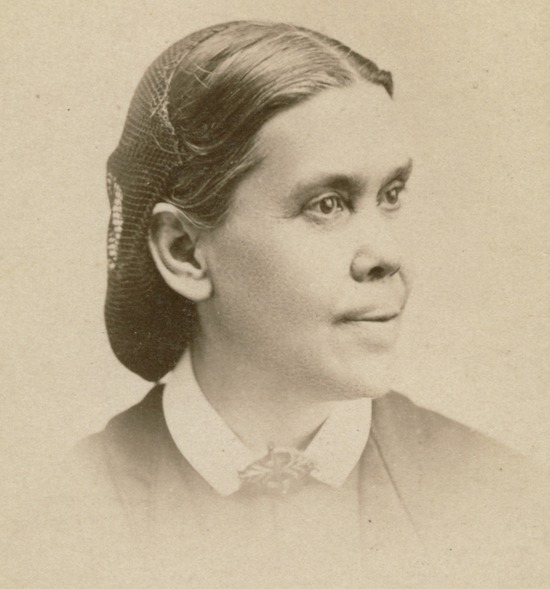
Courtesy of the Ellen G. White Estate, Inc.
Two of the most influential founders of the Seventh-day Adventist Church were Ellen G. White and her husband, James White.
She is recognized by the Church as one who exhibited the prophetic gift (Romans 12:6; 1 Corinthians 14), although she did not claim the title of “prophet” for herself.7
Find out whether Ellen White was truly a prophet.
She helped shape the early years of Adventism by writing and speaking the things God impressed her with.
Through guidance and wisdom from the Holy Spirit, Ellen White spearheaded several initiatives in the Adventist Church like:
- The publishing work—beginning with the Present Truth periodical that started in Rochester, New York, under the leadership of James White (1849)
- The health work—beginning with the Battle Creek Sanitarium under the leadership of John Harvey Kellogg (1866)
- The Adventist educational system—beginning with Goodloe Harper Bell’s school in Battle Creek (1872)
Inspired by the Great Commission in Matthew 28:19-20, Adventists grew from these humble beginnings to the worldwide denomination that we know today.
But to get to that point, they engaged in widespread evangelistic initiatives and overseas missions.
Discover more about the life of Ellen White.
Mission work and global expansion
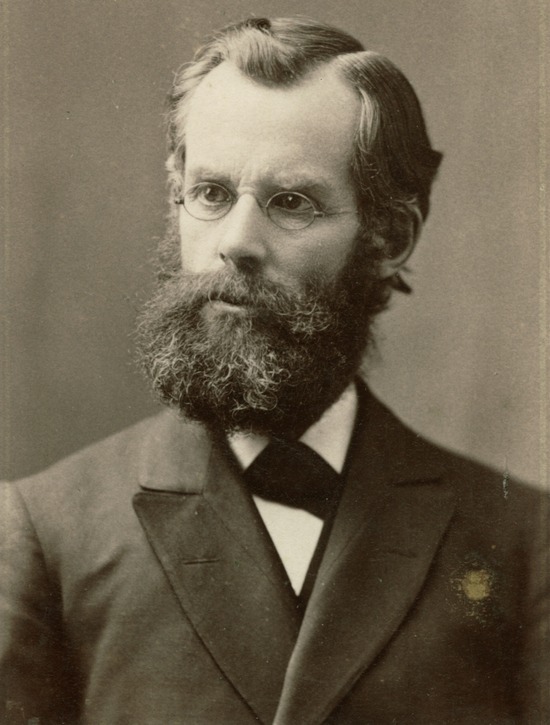
Courtesy of the Ellen G. White Estate, Inc.
In 1874, the church decided to sponsor the very first Adventist overseas missionary to Europe: J. N. Andrews.
There, he established a publishing house in Switzerland, planted congregations, and put together an organizational structure for the church in Europe.
This began Adventist overseas missions. Soon, missionaries were sent out to share the Gospel. And the church spread all over Europe, South America, Australia, Africa, Asia, and other parts of the world.
And wherever the church’s missionary work went, the publishing, health, and educational work also did.
As part of their mission to share the love of Jesus with the world, Adventists provided education, healthcare, and other essential infrastructure to support local communities. The result was an extensive network of Adventist institutions around the world.
By 1901, there were 75,000 church members worldwide. In addition, the church had established two colleges, a medical school, 12 secondary schools, 27 hospitals, and 13 publishing houses.
With the growing numbers and geographical scope of Adventism, it became necessary to reorganize the administrative structure of the church.
That’s how we ended up with the structure that exists today.
We have the General Conference (GC) as the highest administrative level, overseeing the global church. The GC has various departments like Communications, Education, Sabbath School, Religious Liberty, and Youth Ministries.
The GC consists of divisions that cover different world regions. And the divisions are made up of union conferences, which are made up of local conferences. At the lowest level, we have local churches within those conferences.
After this structural reorganization, the church’s headquarters, together with the first denominational publishing house (the Review and Herald Publishing Association), was moved from Battle Creek to Takoma Park, Maryland, near Washington, DC. Today, it’s located in Silver Spring, Maryland.
As of 2022, there are 97,811 Adventist churches worldwide with a total of 22,234,406 church members.
See more about the Adventist Church’s current population and demographics.
Overview timeline of the early Adventist Church

- 1790-1840: Second Great Awakening in the United States
- 1831: War-veteran-turned-preacher William Miller deepens his studies and begins preaching about his new discoveries in Scripture
- 1839: Joseph Bates joins William Miller’s movement, the Millerites, focusing on how the “Second Advent,” or Second Coming of Jesus, is near
- 1844, October 22: The Great Disappointment—William Miller misinterprets prophetic statements in Daniel and Revelation, thinking Jesus would return on this date
- 1845: J. N. Andrews (namesake of Andrews University) accepts Miller’s teachings on the seventh-day Sabbath
- 1846: Joseph Bates publishes an article on the biblical seventh-day Sabbath, which convicts James and Ellen White
- 1849: James White begins publishing a periodical that’s now called the Adventist Review
- 1851: Ellen White publishes her first book: A Sketch of the Christian Experience and Views of Ellen G. White
- 1852: First Adventist printing press is established in Rochester, New York
- 1855: Biblical research supports the Sabbath timing, beginning sunset Friday and ending sunset Saturday
- 1860, October 1: Delegates name the denomination “Seventh-day Adventist”
- 1863: General Conference of Seventh-day Adventists is established
- 1866: First Adventist-owned and operated medical institution is established
- 1868: First Adventist camp meeting is held
- 1872: Opening of first Adventist-sponsored school
- 1874: Opening of first Adventist college
- 1874: General Conference launches their educational society
- 1874: J. N. Andrews leaves on his first mission trip to Europe
- 1879: Adventist membership reaches 16,000
- 1888: The Great Controversy is first published
- 1901: Adventist membership reaches 75,000
Adventism’s official statement of beliefs
Adventism’s early history focuses on some specific biblical beliefs that made it stand out from other Christian churches at the time. But it’s important to remember that our beliefs rest on Jesus Christ as our Savior and the truth found in the Bible.
Our goal is to share Jesus’ love throughout the world so we can all joyfully anticipate His soon return.
In 1980, the General Conference produced the church’s first official statement of beliefs, voted by members from across the world. It became known as the 27 Fundamental Beliefs.
This statement of beliefs was not established as a “creed,” which is an established teaching or interpretation by an authoritative church body. Instead, its purpose is to summarize how Adventists interpret the key themes of Scripture and to leave room for God to reveal more truth through Bible study.
These beliefs are reviewed at each General Conference session. And in 2005, a new belief (#11) was added to the list.
- The Holy Scriptures
- The Trinity
- God the Father
- God the Son (Jesus Christ)
- God the Holy Spirit
- Creation
- Nature of Humanity
- The Great Controversy
- The Life, Death, and Resurrection of Christ
- The Experience of Salvation
- Growing in Christ
- The Church
- The Remnant and Its Mission
- Unity in the Body of Christ
15. Baptism
16. The Lord’s Supper (Communion)
17. Spiritual Gifts and Ministries
18. The Gift of Prophecy
19. The Law of God
20. The Sabbath
21. Stewardship
22. Christian Behavior
23. Marriage and the Family
24. Christ’s Ministry in the Heavenly Sanctuary
25. The Second Coming of Christ
26. Death and Resurrection
27. The Millennium and the End of Sin
28. The New Earth
Learn more details about each Adventist fundamental belief.
Adventist history still in the making
What a journey we have been on together! Starting out in 1830 with a humble farmer who found renewed hope in Scripture, we’ve tracked Adventism’s progress to the present day. Who would’ve thought that it would come so far in such a short time?
From the beginning, the Adventist faith has been rooted in the study of the Word of God. Every foundation was studied thoroughly and prayerfully by the founders of our church.
They would’ve never imagined just how much of an impact their discoveries have made in people’s lives.
As a group of humans, we have had our fair share of conflicts, but God every step of the way. And as we continue to move forward, we pray that our church leaders will continue to seek wisdom from Jesus and the Bible, just as our founders did.
Our work isn’t finished yet. Many people across the world are still longing for God’s love and the assurance that He is coming back for us.
So our history has not and will not end until the moment we’re all waiting for—when Jesus returns to the earth, when sin and Satan will be destroyed, and when we can live with God for eternity.
Related Articles



- Knight, George, R., A Brief History of Seventh-day Adventists, p. 120. [↵]
- Hale, Apollos, and Bliss, Sylvester, Memoirs of William Miller, J.V. Himes, 1853., p. 81. [↵]
- Maxwell, C. Mervyn, Tell It to the World, pp. 30-31. [↵]
- McNamara, Robert, “History of the Millerites,” ThoughtCo, Sep. 1, 2021. [↵]
- White, A. L., Ellen G. White: The Early Years: 1827-1862, vol. 1, p. 121. [↵]
- Fortin, Denis, “Ellen G. White and Seventh-day Adventist Doctrines: Her role in the development of distinctive beliefs,” Andrews University.[↵]
- White, Ellen, Selected Messages, book 1, p. 31-32. [↵]
More Answers

How Adventists View the End of the World
The end of the world is no fun to think about. But here’s how we can actually find hope and comfort in what’s to come.

What Is an Adventist Medical Missionary?
A medical missionary in the Adventist Church is someone who cares for the medical needs of people as a way of showing the love of Jesus. They may travel to another country, or even just serve in their hometown.

Is the Seventh-day Adventist Church Protestant?
With so many Christian denominations, it can be hard to keep track of which ones share which beliefs. Let’s look at the core Protestant beliefs of Adventism.

The True Events Surrounding the Birth of Jesus
Jesus’ birth involved many strange events: a pregnant virgin, a stable birth, angels appearing to shepherds, and wealthy visitors. These help us understand His supernatural yet incredibly humble life.

Are Seventh-day Adventists Evangelicals?
According to its origins and definition, evangelicalism is about following Jesus and the Bible and sharing the Gospel through the way we live our lives. Adventists wholeheartedly harmonize with these principles.

Could Anything Keep Me from Becoming an Adventist?
We are each saved through Christ. But when it comes to church membership, are there certain beliefs or expectations to become an Adventist?

Do Seventh-day Adventists Have “Rules”?
We uphold principles we believe will help us maintain a closer relationship with Jesus and His Word. Learn how these principles guide Adventist lifestyles.

Your Comprehensive List of Ellen G. White’s Visions
Ellen White—an author, health-reform advocate, Bible scholar, and one of the most influential founding figures of the Seventh-day Adventist Church—was blessed by the Holy Spirit with the spiritual gift of prophecy (1 Corinthians 14; Romans 12:6-8). During her lifetime, she received direct guidance and inspiration from God in several different ways.

Do Seventh-day Adventists Have “Rules” For Marriage?
Around the world, many cultures and religions have various marriage traditions, expectations, or even rules when it comes to choosing a partner, planning the wedding, extended family logistics, or a number of other things.

An In-Depth List of the Prophecies About Jesus
How many prophecies of Jesus are in the Old Testament?

Can a Seventh-day Adventist Marry a Non-Adventist?
Yes. Seventh-day Adventists are not under any official rules that dictate who they can or cannot marry. This is a personal, life-altering decision between the couple and God.

What Adventists Believe About Alcohol and Tobacco Use
The Seventh-day Adventist Church has historically discouraged the use of alcohol and tobacco. Even before the church started in 1863, its leaders were realizing the negative effects of these substances.

What Does the Bible Say About Aliens and UFOs?
In 1938, aliens and UFOs were the subject of a mass prank. Around Halloween, Orson Welles performed a radio adaptation of H.G. Wells’ War of the Worlds. This ended up causing a panic throughout the United States—many people took it to mean that aliens had really attacked New Jersey.

What Do Adventists Believe About the Authority of the Bible?
Learn how one really old book (the Bible) is the sole foundation for all Seventh-day Adventist beliefs.

Is the Soul Immortal? Exploring What Adventists Believe
Based on the way the Bible describes humanity in comparison to God and angels, Seventh-day Adventists believe souls are not something you have, but something you are.

Jewelry—Why Do Many Seventh-day Adventists Choose Not to Wear It?
If you walk into a Seventh-day Adventist church service, you might notice that many people aren’t wearing earrings, bracelets, necklaces, or sometimes even wedding rings.

How the Bible Defines Love
Everyone talks about it, but do we really know what it means?

Why Does God Allow Suffering?
Poverty, genocide, a school shooting. A tsunami or earthquake that wipes out thousands of lives and leaves behind mourning family members.

International Pathfinder Camporee
Youth aged 10-15 in the Adventist Church’s global Pathfinder program look forward to the International Camporee every 5 years. This event brings together Pathfinders from around the world for exciting activities.

What Is Peter’s Ladder of Virtues, and How Does It Work?
Peter’s ladder of virtues is a phrase that refers to eight characteristics to be developed as a person grows in their relationship with Jesus Christ. It can be found in 2 Peter 1.

How Adventists interpret Bible prophecy
Bible prophecy conjures up a variety of emotions in people. For some, it feels exciting or mysterious.

What Counts as “Work” on the Sabbath?
God designed the Sabbath day to be a 24-hour period when we could pause and enjoy the goodness of His creation. We do this by putting aside our regular work so we can focus on spending time with Him and appreciating what He’s created (Exodus 20:8-11).

Moviegoers’ Guide to The Hopeful: The Facts Behind the Film
Learn where and when you can watch The Hopeful and how to get tickets. Already seen it? We’ll uncover the real story that inspired this film.

Protestant Reformation
Martin Luther. The 95 Theses. The Reformation. The Protest. Maybe you’ve heard these terms and wondered, What’s the big deal?

Ellen G. White’s Lasting Legacy
Ellen G. White is a well-known name among Seventh-day Adventists, but she also made an impact in many other parts of history, aside from being a co-founder of the Adventist Church.

Ellen G. White’s Challenging Health Journey
When it comes to lifelong struggles with health, Ellen White is no stranger. In fact, health challenges set the tone for her life early on—years before she was involved in co-founding the Seventh-day Adventist Church.
“What Was Ellen and James White’s Marriage Like?”
Ellen and James White, cofounders of the Seventh-day Adventist Church, met and married under somewhat unusual circumstances. But it’s a sweet story of partners in ministry becoming partners in life. And their married life continued to center on furthering the spread of the gospel together.

What Do Adventists Believe About the Mark of the Beast and 666?
It’s a popular topic, especially during tumultuous times. When everything around you feels chaotic, it’s easy to wonder about the end of the world, and topics like the mark of the beast, as mentioned in Revelation 13, can stir up uneasiness.

What is the Ellen G. White Estate?
What is the Ellen G. White Estate?Ellen G. White’s contributions to the formation and growth of the Seventh-day Adventist Church are an integral part of its history. As a significant co-founder of the denomination, her writings provided millions of people with...
Didn’t find your answer? Ask us!
We understand your concern of having questions but not knowing who to ask—we’ve felt it ourselves. When you’re ready to learn more about Adventists, send us a question! We know a thing or two about Adventists.