
The Great Disappointment and Lessons It Teaches Us
On October 22, 1844, thousands of Christians in the Northeastern United States eagerly watched the skies for what they believed would be the Second Coming of Jesus Christ.
These believers were known as “Millerites” because they were currently following the Scriptural interpretations of a farmer and veteran soldier turned Baptist minister, William Miller. These interpretations focused on the 2300-day prophecy in Daniel 8:14.
Miller believed the Second Coming of Christ to be literal and imminent. And one of his most zealous followers was convinced that the very date of Jesus’ return would be October 22, 1844. Then Jesus’ followers would go to heaven, and the earth would be cleansed of sin by fire.
But when Jesus didn’t appear as expected, the Millerites became understandably discouraged. Many of them gave up on their faith in Christianity altogether.
This day was such a blow to the Millerite Movement that it became known as the Great Disappointment.
On the other hand, this day is also an important marker in pre-Seventh-day Adventist history. Pioneers of what would soon become the Advent Movement, such as James and Ellen G. White and Hiram Edson, responded to the Great Disappointment by going back to Scripture to better understand why or how October 22, 1844, might have been significant.
These same diligent students of Scripture—through prayerful, Spirit-led study—laid the foundation for the Seventh-day Adventist Church (organized in 1863).
So let’s unpack the prophecy surrounding the year 1844, as well as what it means to Seventh-day Adventists and other Christians. You’ll learn about:
- What people thought would happen in 1844
- What happened after the Great Disappointment
- What happened on October 22, 1844
- Why 1844 is significant and what we can learn from it
What did people think was going to happen in 1844?

Photo by Sincerely Media on Unsplash
Millerite Christians believed Jesus was going to return to earth as the Bible describes in 1 Thessalonians 4:16-18. They expected Him to appear in the sky, resurrect believers who had died, take His followers to heaven, and cleanse the earth by fire in judgment upon evil and sin. They chose this date based on a prophecy in Daniel 8:14, which spoke about God “cleansing” the sanctuary, which they believed to be the earth.
To understand why, let’s look at the events that led up to the Millerite Movement.
Years before 1844, William Miller began fervently studying the Bible, with a special interest in prophecy and what was in store for eternity.1 He took into consideration all parts of the Bible, tying together visions from Ezekiel, verses from Numbers, prophecies of Daniel, and the apocalyptic book of Revelation to discover what he called the 2300-day prophecy.2
This prophecy is complex enough for an entire article. But in summary, Daniel 8:14 was its cornerstone:
“And he said to me ‘For two thousand three hundred days; then the sanctuary shall be cleansed.” (NKJV).
Miller believed that cleansing the sanctuary meant cleansing the earth, or purifying it, by fire. He noted that “‘sanctuary,’ in the Scripture, generally means the place where God is worshipped and adored, and where He or His glory dwells, when it has reference to God or holy things; but when it has reference to man, it means his house, or dwelling-place, city, or defence.” He then referenced passages from all over the Bible to support this thought, such as Psalm 114:2 and Isaiah 9:13.3
Then, his study of verses like Ezekiel 4:6 and Numbers 14:34 led him to realize that in apocalyptic and prophetic biblical literature, a mention of a day actually symbolized a year.4
This meant that the 2300 days of Daniel 8:14 would have meant 2300 years, a span that started in 457 BC with Artaxerxes’ decree to rebuild Jerusalem (Daniel 9:25).5
With this knowledge, Miller felt that Jesus would return sometime between March 21, 1843, and March 21, 1844. But he didn’t set a specific date.
However, when Jesus didn’t return by March 21, 1844, one of his followers suggested that maybe they shouldn’t have made their calculations using the rabbinical Jewish calendar. They set the date April 18-19, 1844, which was based on the Karaite Jewish calendar.
Discouragement began to set in when this date also failed, but a later date—October 22, 1844—was adopted after a follower of Miller, Samuel Snow, gave a lecture at an August camp meeting about the starting date of the prophecy.
This date was based on the belief that Jesus’ Second Coming would fulfill the Jewish feast called the Day of Atonement that foreshadowed God’s judgment. It fell on the tenth day of the seventh month (Leviticus 23:27). In 1844, that day was October 22.6
Miller’s followers, the Millerites, enthusiastically clung to the prediction and prepared themselves for Jesus’ soon return.
So, when October 22, 1844, came and went, many were so disappointed that they left the movement.
Not all of them lost their faith, however. (More on this later.)
What happened after the Great Disappointment?

Photo by Julia Florczak on Unsplash
On October 22, 1844, Millerites all across North America waited expectantly for Jesus to return. But as the final hours of the day ticked away, nothing happened.
The disappointment the believers experienced caused many of them to abandon the movement. The anger and sadness they felt when Jesus didn’t return were simply too much.
Many went back to their previous congregations and traditions. Those who had sold all of their possessions, including their homes, in preparation for the Second Coming were left with nothing.
They also experienced ridicule and violence from those who didn’t believe in the Millerite message. Several churches were vandalized, and opponents taunted them with questions like “Have you not gone up?”
For others, the Great Disappointment pushed them to dive back into the Scriptures and discover what they had misunderstood. And so, a small group of Advent believers, or believers who believed in the Second Coming of Christ, banded together.
One Advent believer who felt a particular need to dig deeper into the Bible after the Great Disappointment was Ellen White (then Ellen Harmon).
Ellen White and her family were among the Millerites who believed Christ’s return would be on October 22nd.
She recalls that day:
“It was hard to take up the vexing cares of life that we thought had been laid down forever. It was a bitter disappointment that fell upon the little flock whose faith had been so strong and whose hope had been so high. … We were disappointed but not disheartened.”7

Eventually, through further Bible study and guidance from the Holy Spirit, Ellen White and the Advent believers were given a clearer understanding of the Second Coming.
This insight encouraged them and helped them dispel some common misunderstandings that came out of the Great Disappointment.
Some still believed Jesus’ return would happen in a matter of weeks or months. So, Ellen White helped them understand that though they might not know the future or the timing of Jesus’ coming, it was worth taking every opportunity to do God’s work.
She and other Advent believers also spoke against a popular teaching among people at the time: the shut-door theology.
This theology stated that after October 22, 1844, those who hadn’t accepted William Miller’s message couldn’t be saved. The door of salvation was “shut.”
But in studying the Bible, Ellen White and the other believers realized that salvation was still available for every person God created.
In the end, this realization would bring hope to many and play a role in reshaping early Adventist ideas about salvation.
The believers’ study of the Bible also helped them uncover other Bible teachings including the seventh-day Sabbath and what happens to people after they die.
Though the early believers’ experience with the Great Disappointment may have been discouraging, the long-term impact of this event led them to engage in deeper Bible study.
It even led them to learn what really happened on October 22, 1844.
What happened on October 22, 1844?
Many who experienced the Great Disappointment didn’t believe anything happened that day. They simply chalked it up to a false religious excitement and gave up on the teachings of the Millerite Movement.
In the months after the Disappointment, though, some became certain something had happened. But what could it have been?
Jesus began cleansing the sanctuary
Some Advent believers, including a New York farmer named Hiram Edson, continued to hold onto the hope of Jesus’ Coming. These believers were committed to understanding Bible truth, especially regarding what had really happened in 1844.
And eventually, God gave them an answer.
The Review and Herald, an Adventist publication, recounts the miraculous story of how God revealed the truth of the 2300-day prophecy to Hiram Edson:
“After breakfast I said to one of my brethren, ‘Let us go to see and encourage some of our brethren.’ We started, and while passing through a large field, I was stopped about midway in the field. Heaven seemed open to my view, and I saw distinctly and clearly that instead of our High Priest coming out of the most holy place of the heavenly sanctuary to this earth on the tenth day of the seventh month, at the end of the 2300 days, He, for the first time, entered on that day into the second apartment of that sanctuary, and that he had a work to perform in the most holy place before coming to the earth; that He came to the marriage, or in other words, to the Ancient of days, to receive a kingdom, dominion, and glory; and that we must wait for His return from the wedding.”8
Edson, along with other Advent believers, Hahn and Crosier, studied the Scriptures together and discovered that Miller had misinterpreted Daniel 8:14. The “sanctuary” of that verse wasn’t a reference to the earth.
Instead, they realized that the cleansing of the sanctuary of Daniel 8 was a heavenly event (Daniel 7:9-10; 1 Peter 4:17; Revelation 20:12; Matthew 22:1-14).9

Photo by Chris Brignola on Unsplash
This means that in 1844, Jesus began the final phase of His ministry in heaven: cleansing the heavenly sanctuary, a process of judgment that must occur before Jesus can return again. This involved Jesus moving from the Holy Place to the Most Holy Place, where He began the process of reviewing the names and examining the hearts of those who profess to be believers (Hebrews 8:1-5; Daniel 7:9-27).
Jesus does this by reviewing a record of our lives, including every sin and every decision for Christ (Ecclesiastes 12:14). In this way, the judgment—or “cleansing”—that is happening in heaven right now is the cleansing of the records of those who have chosen God and accepted the salvation of Jesus.
While the word “judgment” can have a negative or fear-inducing connotation, the teaching of the Investigative Judgment actually offers us hope.
When we accept Jesus as our savior, the record of our sinful deeds is covered and removed by His perfect sacrifice. In this way, instead of allowing us to be condemned by the record of our sinful lives, Jesus presents His perfect and holy life in our place, freely giving salvation to all who choose Him. He also frees us from those sins and begins to cleanse our lives, helping us become more like Him.
This way, we will be ready to someday live in the New Earth—free from the sin, suffering, and evil we see in the world today.
This understanding helped Advent believers find new hope in Jesus and His plan of salvation. And the teaching about the cleansing of the heavenly sanctuary, paired with the concept of the Day of Atonement, eventually became a distinct doctrine (the Investigative Judgment, or Pre-Advent Judgment) of the Advent Movement which was passed on to the Seventh-day Adventist denomination.10
The Advent believers’ studies also helped them realize that Scripture never supported the idea of trying to pinpoint the exact date of Jesus’ return. Indeed, the Bible says that “no one knows the day or the hour” of the Second Advent (Matthew 24:36, NKJV).
Though the Millerites were wrong about setting a date, God was able to use them to remind the world of the importance of Christ’s Coming. And He continued to work through the Advent believers as they rediscovered the value of sincere and prayerful Bible study, learning to trust in God over human calculations.
Dependence on God and the Bible for guidance
Those who lived through the Great Disappointment learned firsthand how important it is to back up theological claims with the Bible and prayerful study.
The pioneers of the Seventh-day Adventist Church displayed this kind of dependence on the Bible and on God. Through their study and prayer, they helped establish the Seventh-day Adventist Church and guided believers to new perspectives on salvation and the heavenly sanctuary.
The Great Disappointment also teaches us that…
God’s timing is not like our timing

Photo by Aron Visuals on Unsplash
The Bible highlights the importance of waiting on the Lord:
“Wait on the Lord; Be of good courage; and He shall strengthen your heart; Wait, I say, on the Lord” (Psalm 27:14, NKJV).
October 22, 1844, really puts verses like this one into perspective. Human beings have a limited perspective of time. We are finite beings, while God is infinite. His timing is perfect. When we put our faith in His timing, He will guide us and strengthen us.
Be perpetually ready for Jesus’ Second Coming
Admittedly, it’s easy to become an alarmist as soon as it seems the world is in crisis. When something bad happens, it’s natural to want it to mean something more than just another manifestation of sin. Sometimes people still try to set a time period for Jesus’ return, only to be disappointed when years pass and He doesn’t come.
Rather than being swayed by human opinion and anxiety, we can maintain a daily relationship with Jesus. This helps us always stay ready for His return, allowing us to live our lives in peace and trust in God’s plan for us.
We can follow Paul’s advice:
“Rejoice in hope, be patient in tribulation, be constant in prayer” (Romans 12:12, ESV).
No matter what’s happening in the world, we can find hope in the Second Advent, just like the Advent believers did in the wake of the Great Disappointment.
As we wait for the Second Coming, let’s prayerfully read the Bible and learn about the wonder of God’s love and His plan of salvation for us.
If you’re interested in learning more about the plan of salvation, prophecy, or the beliefs of the Seventh-day Adventist Church, check out our Bible study page.
Choose an Online Bible Study
Want to keep learning? Find out more about Jesus, humanity, the plan of salvation, and how God loves you enough to sacrifice everything, just to give you a chance to choose Him.
Sometimes it can be hard to know where to start, that’s why we offer free, user-friendly, online Bible study options you can do anytime, anywhere, and at your own pace.
This online Bible school will take you through the major themes of Scripture, breaking down the Bible’s complex concepts into bite-sized pieces, which can lead you toward the answers of life’s more challenging questions.
Related Articles



- Loughborough, J.N. The Great Second Advent Movement, Adventist Pioneer Library, 2016. p. 102. [↵]
- Ibid., p. 94. [↵]
- Miller, William. On the Cleansing of the Sanctuary, Joshua V. Himes, 1842. [↵]
- Pfandl, Gerhard. “In Defense of the Year-Day Principle,” Journal of the Adventist Theological Society, 2012. [↵]
- Maxwell, Mervyn. Tell It to the World, Pacific Press Publishing Association, Nov. 1, 2002. p. 26. [↵]
- Ibid. p. 28–31. [↵]
- White, Arthur Lacey. Ellen G. White: The Early Years: 1827-1862 (vol. 1), Review and Herald Publishing Association, 1985. p.54. [↵]
- “The Spirit of 1844,” Review and Herald, June 23, 1921, Review and Herald Publishing Association, June 23, 1921. [↵]
- Damsteegt, P. Gerard. “The Sanctuary and Adventist Experience,” Ministry, 1994. [↵]
- “What Adventists Believe About Christ’s Ministry in the Heavenly Sanctuary,” General Conference of Seventh-day Adventists. [↵]
More Answers

¿Por qué muchos Adventistas del Séptimo Día eligen una dieta vegetariana?
¿Por qué muchos Adventistas del Séptimo Día eligen una dieta vegetariana?Puede que tengas un amigo adventista que sea vegetariano, o tal vez estés asistiendo a una Iglesia Adventista del Séptimo Día por primera vez y notes que en la comida compartida no hay carne....

What is Jesus’ Parable of the Sower About?
The parable of the sower is ultimately about how people responded to Jesus Christ and His message of the kingdom of God—the Gospel.

O que os Adventistas do Sétimo Dia acreditam sobre o Grande Conflito (Bem vs. Mal)?
O “Grande Conflito” é a frase que os Adventistas do Sétimo Dia normalmente usam para descrever o conflito espiritual cósmico entre as forças do bem (Deus) e as forças do mal ou do pecado (Satanás/o diabo).

Was Jesus Ever Hypocritical? Learn What the Bible Says.
Was Jesus Ever Hypocritical? Learn What the Bible SaysMany undesirable traits are associated with hypocrisy. But overall, hypocrites intentionally try to make others believe they uphold or represent a certain belief system, character trait, lifestyle, etc., when in...

Kukatishwa Tamaa Kukuu na Kile Tunachojifunza
Wafuasi wa Miller walitabiri kurudi kwa Kristo Oktoba 22, 1844, lakini Yesu hakuja kamwe. Tukio lingine lilitokea. Gundua kilichotokea kweli na Kukatishwa Tamaa Kukuu kunaweza kutufundisha leo.

When in Doubt: 7 Ways Christians Can Manage Uncertainty
When in Doubt: 7 Ways Christians Can Manage UncertaintyFew things in life are truly certain. And no matter how convinced some people can appear on the surface, no one is immune to doubt. And this isn’t a bad thing. Doubt has a purpose. A role to serve. (Just imagine...
El gran chasco y las lecciones que nos enseña
Los Milleritas predijeron el regreso de Cristo el 22 de octubre de 1844, pero Jesús nunca llegó. Ocurrió otro evento. Descubre lo que realmente sucedió y qué puede enseñarnos hoy El gran chasco.

Is Jesus the Same Being as Michael the Archangel?
Many Christians have wondered at the mysterious identity of Michael the Archangel.
A Grande Desapontamento e Lições que nos Ensina
Os Milleritas previram o retorno de Cristo em 22 de outubro de 1844, mas Jesus nunca chegou. Outro evento ocorreu. Descubra o que realmente aconteceu e o que o Grande Desapontamento pode nos ensinar hoje.
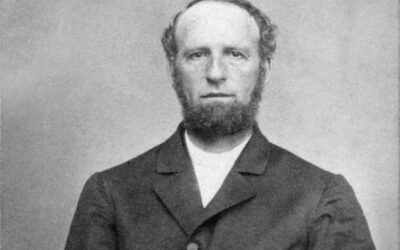
James Springer White, Co-Fundador da Igreja Adventista do Sétimo Dia
James Springer White (1821–1881) foi uma figura chave na Igreja Adventista do Sétimo Dia e marido de Ellen G. White.
James Springer White, cofundador de la Iglesia Adventista del Séptimo Día
James Springer White (1821–1881) fue una figura clave en la Iglesia Adventista del Séptimo Día y el esposo de Elena G. de White.

Kila Kitu Unachohitaji Kujua Kuhusu Chakula cha Siku ya Sabato
Kwa Waadventista Wa Sabato, kushiriki chakula cha Siku ya Sabato pamoja na marafiki na familia ni moja ya sehemu muhimu na ya kumbukumbu ya Sabato.

Nini Maana ya “Mwadventista”?
Waadventista wa Sabato ni dhehebu la Kikristo la Kiprotestanti wanaoshikilia Sabato ya siku ya saba kama ilivyoandikwa katika Biblia.

How to Have a Personal Relationship with Jesus: A 10-Step Guide
How to Have a Personal Relationship with Jesus: A GuideNo matter who you are, you’re surrounded by relationships. Friends, family, colleagues, acquaintances...they all play a part in our lives, for better or worse. So you’re surely aware of a lot of the components...

Biblia Ina Maana Gani Inaposema Yesu ni Mwana wa Mungu?
Biblia inapomwita Yesu Mwana wa Mungu inarejelea uungu wake. Jifunze ni nini kinachofanya hili kuwa muhimu na kinahusianaje na wokovu.

“Go and Sin No More”—What Did Jesus Mean?
These well-known words of Jesus Christ come from two New Testament stories in the book of John—a man healed by the Pool of Bethesda (John 5) and a woman caught in adultery (John 8).

Quais são as Mensagens dos Três Anjos em Apocalipse 14?
As mensagens dos três anjos em Apocalipse 14 advertem o mundo a adorar a Deus, deixar a confusão religiosa e evitar a adoração de tradições humanas em vez dos mandamentos de Deus.

Je! Tunaweza Kuitunza Siku Yoyote ya Wiki Kama Sabato?
Katika sura za kwanza kabisa za Biblia, tunamwona Mungu akianzisha kumbukumbu ya kila wiki na siku ya mapumziko, inayoitwa Sabato (Mwanzo 2:2-3).
¿Cuáles son los mensajes de los tres ángeles en Apocalipsis 14?
Los mensajes de los tres ángeles en Apocalipsis 14 invitan al mundo a adorar a Dios, abandonar la confusión religiosa y evitar la adoración de tradiciones humanas en lugar de los mandamientos de Dios.
Por que muitos Adventistas do Sétimo Dia escolhem uma dieta vegetariana?
Embora nem todo adventista seja vegetariano, muitos evitam completamente o consumo de carne para viver de forma mais saudável, buscando honrar a Deus física, espiritual e mentalmente.

Understanding the Miracles of Jesus Christ
Understanding the Miracles of Jesus ChristWhat do you think of when someone says something is “a miracle”? Maybe you think of an unexpected recovery, surviving a dangerous accident, or getting an answer to a seemingly impossible prayer. Simply put, miracles are...
O que significa “Adventista”?
O que significa "Adventista"?Os Adventistas do Sétimo Dia são uma denominação cristã protestante que observa o sábado bíblico do sétimo dia. A partir dessa crença, eles obtêm a primeira parte de seu nome. Mas e quanto à segunda parte - "Adventista"? “Adventista”...
¿Podemos guardar el sábado bíblico cualquier día de la semana?
En los primeros capítulos de la Biblia, encontramos a Dios estableciendo un memorial semanal y día de reposo, conocido como el sábado (Génesis 2:2-3).
Podemos guardar o Sábado em qualquer dia da semana?
Nos primeiros capítulos da Bíblia, encontramos Deus estabelecendo um memorial semanal e dia de descanso, conhecido como o Sábado (Gênesis 2:2-3).
O que significa a Bíblia quando chama Jesus de Filho de Deus?
Quando a Bíblia chama Jesus de Filho de Deus, está se referindo à Sua divindade. Saiba o que torna isso tão significativo e o que tem a ver com a salvação.
¿Qué creen los Adventistas del Séptimo Día acerca de la Biblia?
La Biblia forma la base de todo lo que los Adventistas del Séptimo Día creen y enseñan.

Legado Duradouro de Ellen G. White
Ellen G. White é um nome bem conhecido entre os Adventistas do Sétimo Dia, mas ela também teve um impacto em muitas outras partes da história, além de ser co-fundadora da Igreja Adventista.

What Does it Mean to Have Faith in Jesus?
What Does it Mean to Have Faith in Jesus?To have faith in Jesus means we place our spiritual hope, trust, belief, and priority in Him as our loving Savior. And that sounds great as an idea. That’s our goal, right? But when we go through difficult times, face...
James Springer White, Mwanzilishi wa Kanisa la Waadventista Wa Sabato
James Springer White (1821–1881) alikuwa mtu muhimu katika Kanisa la Waadventista wa Sabato na mume wa Ellen G. White.
Didn’t find your answer? Ask us!
We understand your concern of having questions but not knowing who to ask—we’ve felt it ourselves. When you’re ready to learn more about Adventists, send us a question! We know a thing or two about Adventists.