
John Nevins Andrews (1829–1883) was an influential leader in the early days of the Seventh-day Adventist Church. He was a Bible scholar who helped shape several Adventist beliefs and juggled many roles in the Church. Most notably, he was the first official missionary for the Adventist Church outside North America.
Today, his most famous legacy is Andrews University, an Adventist college in Berrien Springs, Michigan, named after him.
In this post, you’ll learn more about who J. N. Andrews was, his contributions to the Adventist Church, and his roles as a theologian, missionary, and ministerial trainer.
We’ll answer the following questions:
- Who was J. N. Andrews?
- What role did he play in forming the Adventist Church?
- What was his significance as a missionary?
- What is his legacy?
Let’s begin with the details of his early life.
Who was J. N. Andrews?
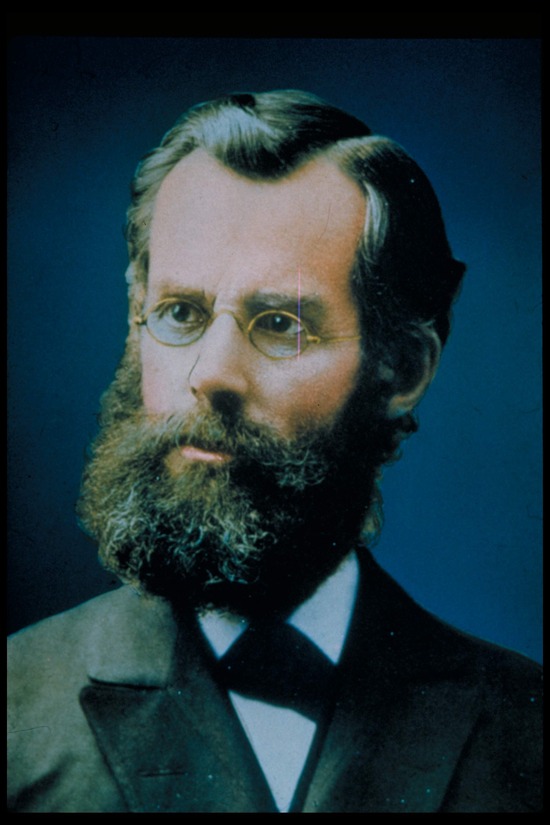
J. N. Andrews was born in Poland, Maine, on July 22, 1829. But soon after, his family moved to Paris Hill, Maine, where he grew up in a farming community.
His only record of formal schooling is six months of secondary school at age 14. But he had an appetite for learning and continued to teach himself.
By his late teens, he could read several languages and had a broad general knowledge. He also had a good understanding of Latin, algebra, and English grammar.
His aunt said that Andrews was a “fine, promising boy—a very fine scholar and strictly moral [with] first-rate common sense.”1
One of his uncles noticed his scholarly potential and offered to pay for Andrews to attend law school. But by this time, he and his family had become Millerites.
And this religious experience led him down the path that he took for the rest of his life.
Conversion and joining the Millerite Movement
J. N. Andrews traced his first religious conviction to the young age of five. That’s when he heard a sermon on Revelation 20:11 at the local Methodist Episcopalian Church.
In 1842, when he was 12, he heard Joshua Himes and other Millerite preachers teach about the Second Advent. This experience led to the day in January 1843 when he said he “found the Savior.”2
His family and several other Millerite families in the neighborhood joined together to form a congregation.
Then came the Great Disappointment of October 22, 1844.
It took a while before he could understand the experience. And he struggled to come to terms with the Disappointment.
But then, in mid-1845, he read a tract by T. M. Preble, a Seventh Day Baptist, on the sacredness of the seventh-day Sabbath. That helped convince Andrews, and he became a Sabbath keeper at the age of 17.
A few years later in September 1849, Ellen White, James White, and Joseph Bates visited Andrews in Paris Hill. They shared a new understanding of Daniel 8:14 as explained in a paper by O.R.L. Crosier, another Millerite. They said that “the cleansing of the sanctuary” refers to Jesus’ new work in the heavenly sanctuary, not His return to earth.
This explained the Millerites’ error which led to the Great Disappointment.
After learning about this new position, Andrews wholeheartedly joined Bates and the Whites in sharing it with other former Millerites.
And at a conference that month, he “felt a call to ministry.” This marked a major turning point in his life.3
From then on, he devoted his entire life and talents to spreading the gospel of Jesus Christ.
But he didn’t do this alone. His family was his great support and encouragement.
His marriage and family

On October 29, 1856, Andrews married Angeline Stevens (1824–1872).
The Stevens and Andrews families were friends in Paris Hill, and by this time, they had both moved to Waukon, Iowa.
John’s first two children were born there: Charles (1857) and Mary (1861).
In 1863, he and his family went to New York, where they had two more children, both of whom died in infancy.
Then sadly, his wife Angeline died from a stroke at age 48 in 1872. In her eulogy, John wrote, “No unkind word ever passed between us, and no vexed feeling ever existed in our hearts.”4
Andrews moved to South Lancaster, Massachusetts, where the children could stay with a family friend. He never remarried.
But despite all the personal tragedy, J. N. Andrews was a strong leader in the early days of Adventism.
J. N. Andrews’ role in the early Seventh-day Adventist Church

Photo by Hannes Wolf on Unsplash
In October 1849, at age 20, Andrews wrote a letter to James White, who was the editor of the Present Truth at the time. That letter began Andrews’ long career as a writer and editor for Adventist publications.
The first Adventist press was set up in Rochester, New York, in 1852. Andrews joined James White and Joseph Bates as a member of the publishing committee. He was only 22.
Just before that, Andrews had begun traveling in the New England area to preach and do pastoral work. Then, he was ordained as an Adventist preacher in 1853.
Because of his skill as a writer and a preacher, and because of his great love for study, he made significant contributions to the Adventist Church. He contributed to the doctrinal understanding, ministerial effort, leadership, and development of church initiatives.
Here are some highlights:
Doctrinal contributions
As mentioned earlier, Andrews was an avid scholar. And he used all his intellectual gifts to study the then-young Adventist Church’s beliefs, such as:
Sunset as the beginning of Sabbath: The Church was not settled on when Sabbath should begin. Some said Friday at midnight. Others, Saturday morning or Friday at 6 p.m.
So, he undertook intense research and published a paper in 1855 that said, according to the Bible, sunset on Friday marks the beginning of the Sabbath.5
Defense of Sabbath’s observance throughout history: In 1861, he published his most prominent book, The History of the Sabbath and the First Day of the Week, which traced the Sabbath throughout history.
Tithing system: He also led a biblical study of systematic benevolence in 1858. It’s what led to the Adventist Church’s current tithing plan.
Health reform: He helped introduce new health reform ideas to the Adventist community during the early 1860s.6 His teachings were based on his and his son’s experiences with health challenges.
Defense of Ellen White’s ministry: As editor of the Review, he wrote an article entitled, “Our Use of the Visions of Sr. White.” In it, he showed from the Bible the place of spiritual gifts in the church and supported the ministry of Ellen G. White.7
Prophetic interpretation of Revelation 13: He pointed out the connection between the two-horned beast of Revelation 13 and the United States of America.8

State of the dead: After the Civil War, Andrews wrote on the doctrine of the non-immortality of the soul.9 This was to help answer questions on life after death and the state of the dead.
And this wasn’t even all he did. He also held leadership positions and spearheaded various initiatives.
Church leadership and organization
Andrews was generally a dedicated hard worker. And if there was something that needed to be done or a role that needed to be filled, he never hesitated to help out.
He served in several capacities in the church. His positions included:
- Organizer of the denominational publishing house (1860)
- Co-founder of the New York and Minnesota conferences (1862)
- Organizer of the General Conference of Seventh-day Adventists (1863)
- Registrar of the denomination so it could own property legally (1863)
- Creator of the Church organization’s bylaws and constitution (1863)
- Advocate of the non-combatant status for Adventist draftees in the Civil War in Washington D.C. (1864)
- Third president of the General Conference (1867–1869)
- Editor of the Review and Herald after James White and Uriah Smith (1869–1870)
And throughout his years in leadership, he put evangelism at the forefront. Let’s look at that next.
Evangelism
When Adventists decided to have annual evangelistic meetings called “camp meetings,” Andrews hosted the very first one in the fall of 1868.
And he proved to be a very gracious host. It’s reported that every night, he went from tent to tent, asking the attendees, “Are you all comfortable for the night?”10
Andrews also pioneered new evangelistic methods. For example, he started long-term pastoral mission efforts in some places, instead of the typical two- or three-week evangelistic meetings.11
Eventually, his love for evangelism took him across the ocean as a missionary.
J. N. Andrews as the first Adventist overseas missionary

Photo by Katherine McCormack on Unsplash
Photo by Katherine McCormack on Unsplash
J. N. Andrews became the first missionary to be sent overseas by the Adventist Church. Together with his teenage children, he left New York for Neuchatel, Switzerland, in September 1874.
This was in response to calls for a minister to be sent to a group of Sabbath keepers that had come together in Switzerland seven years earlier.
Besides his excellent scholarship, evangelistic experience, and love for the gospel, he was chosen for this assignment for two reasons:
- He had been corresponding with this group for more than three years.
- He could read the Bible in French, which was an important language in Europe.
Ellen White was confident of Andrews’ suitability for the task and wrote to church leaders in Europe saying, “We sent you the ablest man in our ranks.”12
He worked to unite the Sabbath-keeping group and organize the mission field.
Then, he established an Adventist publishing press in Basel, Switzerland, and started a French evangelistic periodical called Les Signes des Temps. This was the French version of Signs of the Times, which was published back on the American Pacific coast.
In all this, his children were his support and helpers in the printing and publishing work. The family decided to speak only French at home (except for an hour a day). And in a short while, Mary became the copyeditor and proofreader for the French periodical.
Andrews also led in efforts to:
- Train leaders and young men for evangelistic outreach
- Establish Basel, Switzerland, as the mission base for the rest of Europe
- Convene with the General European Conference at Tramelan (near Basel), Switzerland, along with J. N. Loughborough and other delegates
- Form foundational policies for overseas mission work for the Adventist Church
- Shape and establish the future of Adventist work across national and cultural boundaries by showing the importance of adapting mission efforts to local circumstances
However, due to overwork, an inadequate diet, and poor sanitation, John developed pneumonia, and Mary developed tuberculosis.
In the fall of 1878, John went back to North America to attend the General Conference Session. He took Mary with him in hopes she could receive treatments and recover at the Battle Creek Sanitarium. But she died on November 27, 1878.
Heartbroken again, Andrews returned to Europe.
And after nine years of service in Europe, he died in 1883 at the age of 54. His body was buried in Basel, Switzerland.
But even though he died young, he left a telling legacy.
J. N. Andrews’ legacy

J. N. Andrews was a Seventh-day Adventist minister, pioneer missionary, evangelist, writer, editor, and scholar.
He had a gifted intellect, which he used to advance Adventist theology and minister to others. It is reported that later in life, he was fluent in seven languages and had memorized the whole of the New Testament and parts of the Old Testament.
His book History of the Sabbath and the First Day of the Week continues to persuade thousands about the Sabbath truth to this day. And his writing and evangelism led many to the truth and continue to nurture the Church in North America, Europe, and North Africa.
To honor his contribution to Adventist scholarship and global mission:
- John Nevins Andrews School in Takoma Park, Maryland, was named after him in 1907
- Andrews University in Berrien Springs, Michigan, was named after him in 1960
- A sculpture of John, Mary, and Charles was unveiled in front of the Andrews University Pioneer Memorial Church in 1993
But beyond his achievements, John N. Andrews left us an example of a life of wholehearted service to God, the church, the community, and the world. In his life, we see zest for the gospel and an unwavering love for God.
To learn more about the inspiring lives of others in the Adventist Church,
Related Articles



- Persis Sibley Andrews Black Diary (PSABD), October 8, November 9, 1843, Maine Historical Society, Portland Maine. [↵]
- White, James, “John Nevins Andrews,” The Health Reformer, April 1877, p. 98. [↵]
- White, Ellen, Spiritual Gifts, vol. 2 (Battle Creek, MI: James White, 1860), p. 117. [↵]
- “Death of Sister Andrews,” ARH, April 16, 1872, 124. [↵]
- White, Ellen G., Testimonies for the Church, vol. 1, p. 116. [↵]
- The Health Reformer, June 1877, p. 161. [↵]
- Review and Herald, February 15, 1870. [↵]
- Andrews, J. N., “Thoughts on Revelation XIII and XIV,” Second Advent Review and Sabbath Herald, vol. 1, May 19, 1851, pp. 81–85.[↵]
- Pamphlets such as Thoughts for the Candid (1865), Samuel and the Witch of Endor (1866), Departing and Being With Christ (nd), and The Wicked Dead: Are They Now Being Punished? (1865). [↵]
- Spalding, Arthur W., Origin and History of Seventh-day Adventists, vol. 2 (Review and Herald Publishing Association, 1962), p. 12. [↵]
- Andrews, J. N., “Labors in Maine,” Advent Review and Herald, October 31, 1865, p. 173. [↵]
- White, Manuscript Releases, vol. 5, p. 436. [↵]
More Answers

Where Do We Go When We Die?
For those of us who’ve lost loved ones or faced serious health issues, we can’t help but wonder about life after death.

What is the Difference Between Grace and Mercy in the Bible?
Even in day-to-day life, we can see glimpses of grace and mercy—like when someone offers an angry, impatient person their spot in a line or when a parent hugs their child after a heated argument.

Waadventista Wasabato Wanatafsiri Vipi Unabii wa Biblia?
Jifunze zaidi kuhusu jinsi Waadventista wanavyotafsiri unabii katika Biblia—hasa katika vitabu kama Danieli na Ufunuo.
Urithi wa Kudumu wa Ellen G. White
Urithi wa Kudumu wa Ellen G. WhiteEllen G. White ni jina linalojulikana sana miongoni mwa Waadventista wa Sabato, lakini pia aliathiri sehemu nyingi za historia, mbali na kuwa mwanzilishi wa Kanisa la Waadventista wa Sabato. Ndiyo maana Jarida la Smithsonian...

¿Cómo interpretan la profecía bíblica los Adventistas del Séptimo Día?
Aprende más sobre cómo los Adventistas interpretan la profecía en la Biblia, especialmente en libros como Daniel y Apocalipsis.
Como os Adventistas do Sétimo Dia interpretam a profecia bíblica?
Saiba mais sobre como os Adventistas abordam a interpretação da profecia na Bíblia—especialmente nos livros como Daniel e Apocalipse.

Lo que necesitas saber sobre la tentación y cómo resistirla
¿Alguna vez has sentido que enfrentas la misma tentación día tras día? ¿La tentación que siempre parece resurgir?
What Jesus Meant by “Take Up Your Cross”
Whether you’ve spent a day or a decade around Christian circles, you’ve probably heard the phrase, “Pick up your cross.”

Je, Waadventista Wasabato Wana “Sheria”?
Tunashikilia kanuni tunazoamini zitasaidia kuweka uhusiano wa karibu na Yesu na Neno lake. Jifunze jinsi kanuni hizi zinavyo-ongoza mtindo wa maisha wa Waadventista.
El legado de Elena G. de White
El legado de Elena G. de WhiteyElena G. de White es un nombre muy conocido entre los Adventistas del Séptimo Día, pero también tuvo un impacto en muchas otras partes de la historia, además de ser cofundadora de la Iglesia Adventista. Por eso, la revista Smithsonian la...

All of Jesus’ Warnings and Encouragements in the Bible
Here’s a comprehensive list of every warning and encouragement from the words of Jesus, as well as how they can benefit our lives today.
¿Los Adventistas del Séptimo Día tienen “reglas”?
Sostenemos principios que creemos que nos ayudarán a mantener una relación más cercana con Jesús y su Palabra. Aprende cómo estos principios guían los estilos de vida adventistas.
Os Adventistas do Sétimo Dia têm “regras”?
Defendemos princípios que acreditamos nos ajudar a manter um relacionamento mais próximo com Jesus e com Sua Palavra. Saiba como esses princípios orientam o estilo de vida adventista.

Películas Adventistas: donde la fe y el cine se encuentran
La misión de la Iglesia Adventista del Séptimo Día desde el principio ha sido compartir la verdad de Dios en la Biblia.
Filmes Adventistas: Onde a Fé e o Cinema se Encontram
A missão da Igreja Adventista do Sétimo Dia desde o início tem sido compartilhar a verdade de Deus na Bíblia.

¿Por qué algunas Biblias tienen más libros que otras?
Los cristianos consideran la Biblia como sus escrituras sagradas. Pero dentro del cristianismo, diferentes denominaciones utilizan Biblias con cantidades diferentes de libros.
Por que algumas Bíblias têm mais livros do que outras?
Os cristãos consideram a Bíblia como suas escrituras sagradas. Mas dentro do Cristianismo, diferentes denominações usam Bíblias com números diferentes de livros.
O que você precisa saber sobre a tentação e como resistir a ela
Já se sentiu como se enfrentasse a mesma tentação dia após dia? Aquela tentação que sempre parece ressurgir?
O que os Adventistas do Sétimo Dia acreditam sobre a Bíblia?
A Bíblia forma a base de tudo o que os Adventistas do Sétimo Dia acreditam e ensinam.

Waadventista Wa Sabato wanaamini nini kuhusu Ubatizo?
Kama Wakristo wengi wa Kiprotestanti ulimwenguni kote na katika historia, Kanisa la Waadventista wa Sabato linaamini katika ubatizo, sherehe ambapo watu huzamishwa ndani ya maji kudhihirisha hadharani “kufa kwa maisha ya zamani” na “kuanza kwa maisha mapya katika Kristo”.

Jinsi Waadventista Wanavyoshughulikia Kifo na Mazishi
Mazishi mengi ya Waadventista wa Sabato yanafanana na yale ya madhehebu mengine ya Kiprotestanti, kama vile Wamethodisti, Wabatisti, au Wapresbiteri, lakini unaweza kupata tofauti chache au taratibu za pekee.
O que os Adventistas do Sétimo Dia acreditam sobre o batismo?
Assim como muitos cristãos protestantes em todo o mundo e ao longo da história, a Igreja Adventista do Sétimo Dia crê no batismo por imersão
¿Qué creen los Adventistas del Séptimo Día sobre el bautismo?
Al igual que muchos cristianos protestantes en todo el mundo y a lo largo de la historia, la Iglesia Adventista del Séptimo Día cree en el bautismo por inmersión

Does Jesus Really Care About Me?
Does Jesus Really Care About Me?Short answer: yes, Jesus really does care about you, specifically (1 Peter 5:7, ESV). But if you’re wondering whether Jesus Christ really, truly cares about you, you aren’t alone. Gideon, Abraham and Sarah, Job, Jeremiah, Elijah, even...
Filamu za Kiadventista: Mahali Imani na Filamu Zinapokutana
Tangu mwanzo, lengo la Kanisa la Waadventista wa Sabato limekuwa kueneza kweli ya Mungu katika Biblia.
Kwanini Baadhi ya Biblia Zina Vitabu Vingi Kuliko Zingine?
Wakristo wanachukulia Biblia kama maandiko yao matakatifu. Lakini ndani ya Ukristo, madhehebu tofauti hutumia Biblia zenye idadi tofauti ya vitabu.

Fe y obras: ¿Importan ambas en la vida de un cristiano?
En tantas religiones a lo largo del tiempo, los individuos trabajan hacia la iluminación, la salvación o el favor de una deidad.
Cómo los Adventistas manejan la muerte y los funerales
La mayoría de los servicios funerarios Adventistas del Séptimo Día son similares a los de otras denominaciones protestantes, como los metodistas, bautistas y presbiterianos, pero podrías encontrar algunas diferencias o matices únicos.
Didn’t find your answer? Ask us!
We understand your concern of having questions but not knowing who to ask—we’ve felt it ourselves. When you’re ready to learn more about Adventists, send us a question! We know a thing or two about Adventists.