
William Miller was a farmer in the early 1800s who gave his life to God and began intensely studying his Bible. This study led him to some unexpected conclusions, namely that Jesus Christ’s Second Coming would happen in his lifetime—in 1843 or 1844. As Miller began sharing this news, he sparked a religious revival in North America called the Millerite Movement.
So, who was William Miller and what led him to this conclusion? Let’s look at:
- William Miller’s background
- William Miller and the Millerite Movement
- His life after Jesus didn’t return
- His connection to the Seventh-day Adventist Church
We’ll start with the backstory of a humble man who never intended to start a major religious movement.
William Miller’s background
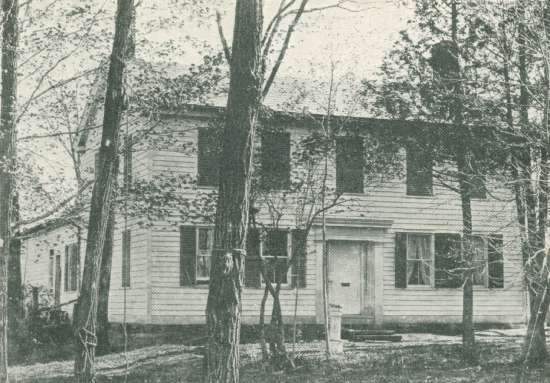 William Miller was born in Pittsfield, Massachusetts, in 1782. He was the first of William and Paulina Miller’s 17 children. Soon after his birth, the family moved to Low Hampton, New York.
Miller’s father, who had served as a captain in the Revolutionary War, was not very religious. His wife, though, was a devout Baptist, whose prayers were not lost on her eldest son.1
As a child, Miller showed intellectual promise and curiosity. As soon as he learned to read, he began to do so every night with books borrowed from neighbors.2
William Miller’s marriage and occupation
In 1803, William Miller married Lucy Smith, with whom he had five children. He continued farming and became involved in the civil matters of his community, serving as constable, deputy sheriff, and justice of the peace.
Despite his busy life, he found time for his favorite pastime—reading. His curiosity sparked some questions about his beliefs.3
Becoming a deist
After their marriage, the Millers settled in Poultney, Vermont, where Miller became acquainted with deists. Deists believed in God but rejected the Bible and viewed Him as a distant deity that left the world to run on its own. This kind of God was not personally involved with His created beings.
Miller had always wondered about some perplexing passages in the Bible and had never received solid answers from preachers. If the Bible didn’t have answers, perhaps deism was the solution.
He began reading books by deistic philosophers, but his mind was not at ease. He struggled with what they believed about the afterlife—that humans cease to exist.4
Questions of eternity and death became even more real when he faced the horrors of war.
Returning to Christianity
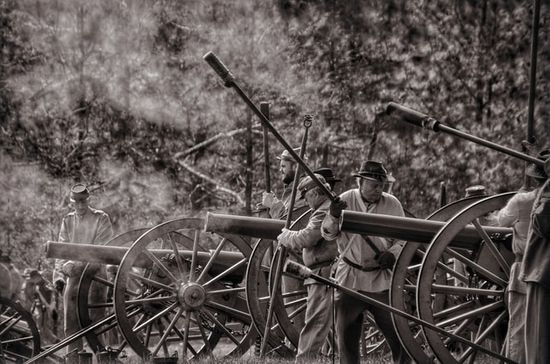
William Miller became a captain in the army during the War of 1812 between the United States and Great Britain. His experiences during that time led him back to Christianity and belief in a personal God.
While he served in the war, the Americans experienced an unexpected victory at the Battle of Plattsburgh.5 They were far outnumbered and should have lost, yet they didn’t. In the same battle, a shell exploded near Miller, barely missing him.6
After the war, his close brush with death caused him to confront his own mortality. He took a special interest in God and wondered what His plan could be for his life.7
Moving back to Low Hampton, New York, he began attending the Baptist Church—but only when his uncle, the church minister, gave the Sunday sermon. When his mother asked him why he didn’t come at other times, he complained about how the deacons read the sermons: “When Uncle’s away, Mother, why don’t they let me read it?”
His mother took his words to heart, and the next time his uncle was away, Miller did read the sermon. And many more times after. As he did so, the words of Scripture began to have an impact on him.8
During one of these sermons, conviction pierced his heart so strongly that he could not finish. That day in 1816, he realized his need for a Savior. He began to spend time specifically reading the Bible to know this personal God.
Here’s how he puts it:
“When [I was] brought almost to despair, God by His Holy Spirit opened my eyes. I saw Jesus as a friend, and my only help. … And the Scriptures, which before were dark and contradictory, now became the lamp to my feet and light to my path.”9
“But how do you know the Bible is the Word of God?” his deist friends challenged him.10
This question caused him to study even more, and then he discovered a prophecy that would lead to a worldwide religious movement.
William Miller and the Millerite Movement
William Miller’s deep dive into the Bible led him to prophecies about the Second Coming of Jesus. The more he studied, the more he became convinced that Jesus was coming soon—most likely in 1843 or 1844.
As he shared this with others, a religious revival, known as the Millerite Movement (also called the Advent Movement), swept across the country.
What exactly did he uncover?
The 2,300-day prophecy
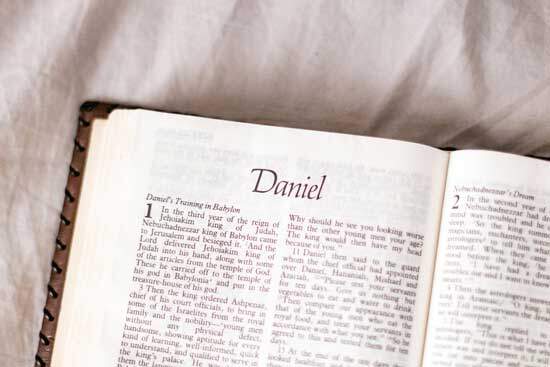
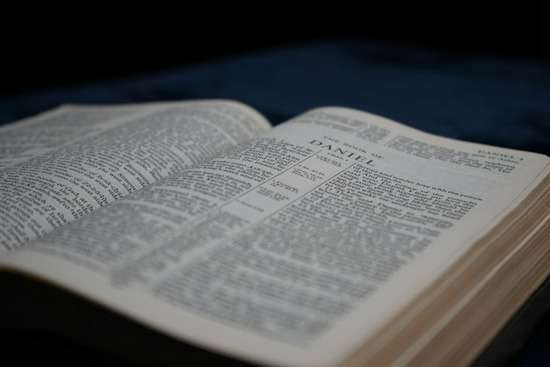
Photo by Sincerely Media on Unsplash
Miller’s biographer, Sylvester Bliss, in Memoirs of William Miller, gives us a look into his Bible study journey.11 Miller began his Bible study to respond to the challenge of his deist friends. He decided he would study verse by verse, using the margin of his Bible and a concordance to find cross-referenced verses. Eventually, he uncovered a prophecy in Daniel 8:14 that seemed to point to the Second Coming of Christ and the judgment day:
“For two thousand three hundred days; then the sanctuary shall be cleansed” (Daniel 8:14, NKJV).
Like other Christians of his time, he thought that the sanctuary referred to the earth. The cleansing, then, had to be its cleansing by fire when Jesus returned, as described in Revelation 21:8.
Miller believed, as did many theologians before him, that a day in Bible prophecy equals one year (Numbers 14:34; Ezekiel 4:6). This meant that this prophecy was referring to 2,300 literal years.
In addition, he realized that Daniel 9 connected with Daniel 8 and provided a starting point for the prophecies in both chapters: 457 BC—the time of the decree to rebuild Jerusalem.
All that remained was a math calculation. Counting 2,300 years from 457 BC, Miller came to 1844.
Could it be that Jesus was coming in less than 25 years? That the end of the world was so close?
Miller wasn’t sure, so he kept it to himself as he continued to study out objections.
The call from God
After about 13 years of study, Miller was growing more convinced in his Bible studies on Daniel 8:14. He wrestled with the message God was giving him: “Go and tell the world of their danger.”
“I can’t go, Lord.” He felt inadequate to speak about the Bible in public since he had little or no theological training and was not ordained as a minister. He was just a farmer who loved to study the Bible.
But to ease his conviction, he decided: “If I should have an invitation to speak publicly in any place, I will go and tell them what I find in the Bible about the Lord’s coming.”12
A sense of peace came over him. He didn’t dream that anyone would actually invite him to preach!
Half an hour later, a young man knocked at the door and asked if Miller would come that Sunday and share about the Second Coming.
Keeping his promise to God, Miller accepted the invitation, and revival took place in the church. Soon another invitation came, and another. So many requests poured in that he couldn’t keep up.
Thinking to solve this problem, he published a book in 1832.13 But this only served to increase interest.
In 1839, he partnered with Joshua V. Himes, a well-known reform leader from Boston, who began promoting his message. One way Himes did this was by starting a periodical called the Signs of the Times.14
Miller also received help from Apollos Hale to create the 1843 prophecy chart that showed the Bible prophecies that ended in 1843.15
Though he had not intended to, he had begun a religious revival, just after the tail end of the Second Great Awakening, that spread across the United States and even the world. Through it all, he remained a humble Bible student and follower of Jesus.
But you may be wondering:
Did he ignore plain passages in the Bible that say no one knows the day nor the hour of Jesus’ coming (Mark 13:32)?
No, he did consider those passages. For this reason, he never set a definite time for the Second Coming but only said that he believed it would happen sometime in 1843 or 1844. Later on, one of
Miller’s followers set the date of October 22, 1844.16
Miller was skeptical of this exact date for Jesus’ coming. It wasn’t until the beginning of October that he became convinced that October 22nd “was at a probable point of time.” He believed it was “a work of God” because of the way people were confessing their sins and earnestly searching their hearts as they waited for Jesus to come.17
Did William Miller claim to be a prophet?
When speaking about Jesus’ coming and the judgment day, William Miller never claimed to be a prophet. He was a genuine Christian who was sharing what he had learned through years of diligent Bible study.
Furthermore, he had no goals to build a following or convert people to a specific denomination. His motives were pure—he wanted people to be ready to meet Jesus.
He wrote:
“My whole object was a desire to convert souls to God, to notify the world of a coming judgment, and to induce my fellowmen to make that preparation of heart which will enable them to meet their God in peace. The great majority of those who were converted under my labors, united with the various existing churches.”18
He showed a similar attitude when Jesus did not return as expected on October 22, 1844.
How did Miller respond to the Great Disappointment?
Naturally, October 22nd, 1844, was a disappointment to Miller. But he remained humble and trusted that God’s plan had not failed. It must have been a human error.
On August 1, 1845, he published a document that became known as William Miller’s Apology and Defence. In it, he admitted that he had been mistaken about the timing of Christ’s return.
But he expressed some confusion. Why had God seemed to be working so clearly in people’s lives during the Millerite Movement right before October 22nd? Why did they experience peace and joy while waiting if the time had been wrong?19
He also traced his line of reasoning and said that he could not find where his calculations were off. He believed that he had followed God’s leading and done the right thing in sharing his convictions:
“I therefore still feel that it was my duty to present all the evidence that was apparent to my mind; and were I now in the same circumstances, I should be compelled to act as I have done.”20
Nonetheless, in the remainder of his life, he took to heart the lesson of not setting dates for the Second Coming.
Miller’s life after the Great Disappointment
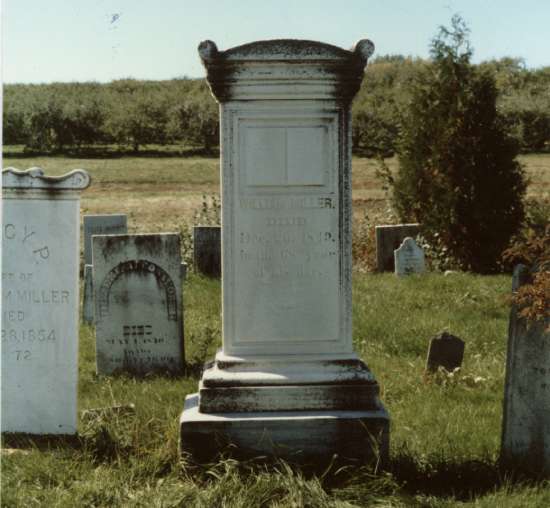 Miller never spoke of a definite time for the Second Advent again, but he continued to hope for that day.21 He formed a group of believers and supported the younger leaders in the movement until he died in 1849.
Many of his followers gave up their faith in God after the Great Disappointment, while those who didn’t split up into three main groups:22
- Those who believed the date was wrong, but that Christ’s coming would take place soon.
- Those who believed that Christ had come, but in a “spiritual” sense, or not as a physical event.
- Those who believed the date was correct, but the anticipated event was not.
Miller was part of the first group, but it “pained [him] to see a spirit of sectarianism [a strong attachment to a religious sect] and bigotry.”23 He was concerned that some of the people in these groups had gone to extremes in their beliefs.
For this reason, he met with some of his followers at a conference in Albany, New York, on April 23, 1845. There they clarified their beliefs and encouraged one another, but never set a new date for Jesus’ return.24
But how about the Seventh-day Adventists? Did he join them?
What is William Miller’s connection to Adventism?
William Miller’s earnest study of the Bible and the resulting movement was a catalyst for starting the Seventh-day Adventist Church. But he was not a founder of the Church and never became involved with it. In fact, he died in 1849, many years before Adventism’s organization in 1863.
But after October 22, 1844, there was a small group of people who believed that the date had indeed been correct. The event, however, was not. Returning to their Bibles and guided by the Holy Spirit, this group—which included individuals like Ellen G. (Harmon) White, James White, and Joseph Bates—realized that Jesus had moved from the Holy Place to the Most Holy Place of the sanctuary to begin a work of judgment instead.
At the same time, they were learning about other things that had either become de-emphasized or forgotten about over time, such as the seventh-day Sabbath. Many years later, they would form the Seventh-day Adventist Church.
But Miller would not be among their ranks since he didn’t agree with them about Jesus’ work in the sanctuary. Ellen G. White, who became one of the founders of the Adventist Church, wrote that Miller also didn’t accept the Bible’s truth about the Sabbath due to the influence of his fellow workers.25
Nevertheless, through what he started, others further pursued the truths of the Bible.
God used Miller despite his misinterpretation
William Miller was a true man of God who looked forward to Jesus’ return. Though mistaken about the timing of that event, he simply wanted others to be ready, and God used him in powerful ways to bring revival worldwide.
Because of the Great Disappointment, a handful of people began studying their Bibles more deeply. What they discovered led to the Seventh-day Adventist Church—a thriving Christ-centered denomination today. In this way, God took William Miller’s mistake and turned it into a blessing.
- Bliss, Sylvester, and Hale, Apollos, Memoirs of William Miller, (J.V. Himes, 1853), p. 4. [↵]
- Himes, Joshua V., Views of the Prophecies and Prophetic Chronology, Selected from Manuscripts of William Miller with a Memoir of His Life (Boston: Moses A. Dow, 1841), p. 7. [↵]
- Maxwell, C. Mervyn, Tell It to the World, (Pacific Press, Nampa, ID, 1977), p. 9. [↵]
- Miller, William, William Miller’s Apology and Defence, p. 3. [↵]
- “The Battle of Lake Champlain,” Naval History and Heritage Command [↵]
- Maxwell, C. Mervyn, Tell It to the World, (Pacific Press, Nampa, ID, 1977), p. 11. [↵]
- Ibid., p. 12. [↵]
- Ibid., p. 12. [↵]
- Himes, Joshua V., Views of the Prophecies and Prophetic Chronology, Selected from Manuscripts of William Miller with a Memoir of His Life (Boston: Moses A. Dow, 1841), p. 7–14. [↵]
- Maxwell, C. Mervyn, Tell It to the World, (Pacific Press, Nampa, ID, 1977), p. 12. [↵]
- Bliss, Sylvester, and Hale, Apollos, Memoirs of William Miller, (J.V. Himes, 1853), pp. 68–69. [↵]
- Bliss, Sylvester, and Hale, Apollos, Memoirs of William Miller, (J.V. Himes, 1853), pp. 92–99. [↵]
- The full title of the book is “Evidences from Scripture and History of the Second Coming of Christ About the Year A.D. 1843, and of His Personal Reign of 1000 Years”. [↵]
- Maxwell, C. Mervyn, Tell It to the World, (Pacific Press, Nampa, ID, 1977), pp. 16–18. [↵]
- Ibid., p. 19. [↵]
- Miller, William, William Miller’s Apology and Defence, pp. 13, 24. [↵]
- Miller, William, William Miller’s Apology and Defence, p. 25; White, James, Sketches of the Christian Life and Public Labors of William Miller, ch. 16. [↵]
- Miller, William, William Miller’s Apology and Defence, p. 23. [↵]
- Maxwell, C. Mervyn, Tell It to the World, (Pacific Press, Nampa, ID, 1977), p. 35. [↵]
- Miller, William, William Miller’s Apology and Defence, p. 33. [↵]
- White, James, Sketches of the Christian Life and Public Labors of William Miller, ch. 16. [↵]
- Douglass, Herbert, Messenger of the Lord, (Pacific Press, Nampa, Idaho, 1998), p. 134. [↵]
- Miller, William, William Miller’s Apology and Defence, p. 26. [↵]
- White, James, Sketches of the Christian Life and Public Labors of William Miller, p. 344. [↵]
- White, Ellen G., Early Writings (Review and Herald, Washington, D.C., 1882), p. 303. [↵]
Related Articles


More Answers

Como os Ensinos de Ellen White Podem Melhorar Sua Saúde
Como os Ensinos de Ellen White Podem Melhorar Sua SaúdeAssistência médica no século XIX era dito deixar "mais doenças do que levava embora" com o uso de sangrias e "remédios" como mercúrio e arsênico.1 À medida que as pessoas questionavam esses métodos, novas...
Cómo las enseñanzas de Elena G. de White pueden mejorar tu salud
La atención médica en el siglo XIX se decía que dejaba “más enfermedades de las que eliminaba” con su uso de sangrías y “medicamentos” como el mercurio y el arsénico.

All About the Gospel of Matthew
The Book of Matthew is one of the four Gospel narratives in the Bible
Descanso e Reconexão: O Que Realmente Significa Guardar o Sábado
A Bíblia nos diz que guardamos o Sábado evitando o trabalho. Deus fez essa lei porque sabia que ela nos fortaleceria e nos traria alegria, além de nos dar tempo para nos reconectar com Ele e recarregar das nossas vidas ocupadas.
Descanso y reconexión: lo que realmente significa guardar el sábado
La Biblia nos dice que guardamos el sábado evitando el trabajo. Dios hizo esta ley porque sabía que nos fortalecería y nos traería alegría, además de darnos tiempo para reconectarnos con Él y recargar energías de nuestras vidas ocupadas.

Todo lo que necesitas saber sobre la Escuela Sabática
La Escuela Sabática es el componente de estudio bíblico del programa de la iglesia en la mayoría de las Iglesias Adventistas del Séptimo Día.

O que os Adventistas do Sétimo Dia acreditam sobre a autoridade da Bíblia?
Saiba como um livro realmente antigo (a Bíblia) é o único fundamento para todas as crenças dos Adventistas do Sétimo Dia.
¿Qué creen los Adventistas sobre la autoridad de la Biblia?
Puede hacerte sentir intimidado o frustrado. Podrías pensar en un líder de iglesia que parecía arruinar toda tu diversión cuando eras niño, o un jefe que supervisa cada uno de tus movimientos en el trabajo…

¿Qué es un médico misionero adventista?
Un médico misionero en la Iglesia Adventista es alguien que cuida de las necesidades médicas de las personas como una forma de mostrar el amor de Jesús. Pueden viajar a otro país, o incluso simplemente servir en su ciudad natal.
Ni nini Mtaalam wa Matibabu wa Kiadventista?
Mmishonari wa matibabu katika Kanisa la Waadventista ni mtu anayejali mahitaji ya matibabu ya watu kama njia ya kuonyesha upendo wa Yesu.
O que é um missionário médico adventista?
Um missionário médico na Igreja Adventista é alguém que cuida das necessidades médicas das pessoas como uma forma de mostrar o amor de Jesus. Eles podem viajar para outro país, ou até mesmo servir em sua cidade natal.

Guía definitiva para el estudio personal de la Biblia
¿Alguna vez has sentido que estudiar la Biblia es un desafío y simplemente no estás seguro de por dónde empezar? ¿O estás buscando ideas nuevas para mejorar tus hábitos actuales de estudio bíblico?
O Guia Definitivo para o Estudo Pessoal da Bíblia
Já sentiu que estudar a Bíblia é desafiador e não tem certeza por onde começar? Ou está procurando ideias novas para melhorar seus hábitos atuais de estudo da Bíblia?
¿Los Adventistas del Séptimo Día observan festividades relacionadas con la Pascua?
La resurrección de Jesús, celebrada en muchas festividades relacionadas con la Pascua, es central para las creencias de la Iglesia Adventista del Séptimo Día.
10 Bible Teachings Adventists Believe About the Devil
10 Bible Teachings Adventists Believe About the DevilSeventh-day Adventists believe the devil (or Lucifer-turned-Satan) is real and active. He is the sole adversary of God and humanity (1 Peter 5:8), making him the opposing force in the cosmic conflict between good...

¿Los Adventistas del Séptimo Día creen que solo ellos irán al cielo?
No, los adventistas definitivamente no creen que son los únicos que irán al cielo. De hecho, no creemos que la admisión al cielo se base en la iglesia o denominación a la que pertenecemos.
Waadventista Wa Sabato Wanaamini Nini Kuhusu Mamlaka ya Biblia?
Jifunze jinsi kitabu kimoja cha zamani sana (Biblia) kilivyo msingi pekee wa imani zote za Waadventista wa Sabato.
Mwongozo Bora Katika Kujifunza Biblia Binafsi
Umewahi kuhisi kwamba kusoma Biblia ni jambo gumu, na hujui uanzie wapi? Au unatafuta mawazo mapya ya kuboresha tabia yako ya usomaji wa Biblia.
Je, Waadventista Wasabato Wanasherehekea Siku Kuu Zinazohusiana na Pasaka?
Kufufuka kwa Yesu, kunakoadhimishwa katika siku kuu nyingi zinazohusiana na Pasaka, ni muhimu katika imani za Kanisa la Waadventista wa Sabato.
Je, Waadventista Wasabato Wanaamini Wao Pekee Ndiyo Watakao Kwenda Mbinguni?
Hapana, Waadventista hakika hawaamini kwamba wao ndio pekee watakao kwenda mbinguni. Kwa kweli, hatuamini kwamba kupokelewa mbinguni kunategemea kanisa au madhehebu tunayohusiana nayo.

Chakula cha Pamoja Katika Kanisa la Kiadventista: Mahali Ambapo Chakula na Urafiki Vinakutana
Mara nyingi, kawaida kwenye ratiba inayotofautiana kutoka mara moja kwa wiki hadi mara moja kwa mwezi hadi mara moja kwa robo, kanisa la Waadventista litakuwa na “karamu za ushirika,” mara nyingi zikiitwa chakula cha mchana cha pamoja.

Je, Waadventista Wa Sabato Wanaamini Nini Kuhusu Uumbaji Katika Biblia?
Waadventista Wa Sabato wanaamini kwamba Mungu ndiye Muumbaji wa ulimwengu. Wanafikia hitimisho hili kutoka kitabu cha kwanza cha Biblia—Mwanzo.

Jinsi Ellen White Alivyochangia Ujumbe wa Afya wa Waadventista
Jinsi Ellen White Alivyochangia Ujumbe wa Afya wa WaadventistaWaadventista wa Sabato wanajulikana kwa kusisitiza maisha yenye afya bora. Na Ellen G. White alikuwa na ushawishi mkubwa katika maendeleo ya kipaumbele hiki na utekelezaji wake miongoni mwa Waadventista....
Os Adventistas do Sétimo Dia observam feriados relacionados à Páscoa?
Os Adventistas do Sétimo Dia observam feriados relacionados à Páscoa?A ressurreição de Jesus, celebrada em muitos feriados relacionados à Páscoa, é central para as crenças da Igreja Adventista do Sétimo Dia. E isso significa que buscamos todas as oportunidades para...
Os Adventistas do Sétimo Dia acreditam que apenas eles irão para o Céu?
Não, os Adventistas definitivamente não acreditam que são os únicos que irão para o céu. Na verdade, não acreditamos que a admissão no céu dependa de qual igreja ou denominação pertencemos.

Ellen White anasema nini kuhusu Maombi?
Je, umewahi kuwa na mzigo ambao ulihitaji kumwambia mtu, lakini uliogopa kuhukumiwa ikiwa ungefanya hivyo?

Nani Aliyebadilisha Sabato kwenda Jumapili?
Nani Aliyebadilisha Sabato kwenda Jumapili?Ikiwa Biblia haijawahi kutaja mabadiliko ya Sabato, kwa nini leo wengi wanaenda kanisani Jumapili? Nani alibadilisha siku hiyo? Lakini hilo sio swali sahihi la kuuliza. Sabato haijabadilika. Kilichobadilika ni uamuzi wa...

Is It Okay to Worship On Sunday Instead of Saturday?
If there’s no wrong time to worship God, why are there different ideas on the day churches meet?

Ellen G. White au Biblia—Kipi ni Muhimu Zaidi kwa Waadventista?
Biblia—bila shaka—ndiyo kitabu muhimu zaidi. Ni kipimo tunachotumia kupima maandishi mengine yote, ikiwa ni pamoja na yale ya Ellen White.
Didn’t find your answer? Ask us!
We understand your concern of having questions but not knowing who to ask—we’ve felt it ourselves. When you’re ready to learn more about Adventists, send us a question! We know a thing or two about Adventists.