
Ellen White was a co-founder and leader in the Seventh-day Adventist Church from its beginning. Adventists believe that she had the prophetic gift (Ephesians 4:14; 1 Corinthians 12:28) and passes the biblical tests of a prophet.
But do we worship her?
No. God alone is worthy of our worship, and while human beings can be used by God to accomplish extraordinary things, nothing can elevate one person’s value, holiness, goodness, or worthiness over another.
However, for those looking in, the idea of a modern-day prophet can be concerning and trigger such questions. We get it, and that’s why we’ll answer the following:
How does the Adventist Church view Ellen White?
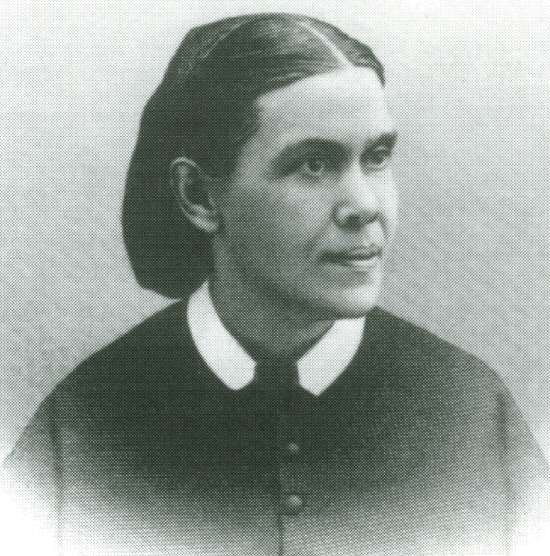 The Adventist Church acknowledges that Ellen White demonstrated the prophetic gift throughout the majority of her life—but only because her ministry harmonizes with that of biblical prophets. She passes each of the tests of a prophet we can find in the Bible:
- Consistency with the Bible (Isaiah 8:20) and its teachings about Jesus Christ (1 John 4:1–3)
- Fulfilled proclamations and predictions (Deuteronomy 18:20–21)
- Fruit of godly character (Matthew 7:16–20)
- Revelations from God, such as in visions or dreams (2 Peter 1:20–21; Numbers 12:6)
- Messages that inspire godly change (Ezekiel 13:10)
- Messages of truth without errors mixed in (2 Peter 2:1–3)
Like prophets in the Bible, prophets today and up until the end of time will encourage, instruct, unify, and protect against false teachings (Ephesians 4:12–14). In line with this, the Adventist Church states the following in its official beliefs:
“[The gift of prophecy] is an identifying mark of the remnant church and we believe it was manifested in the ministry of Ellen G. White. Her writings speak with prophetic authority and provide comfort, guidance, instruction, and correction to the church. They also make clear that the Bible is the standard by which all teaching and experience must be tested.”
It’s true—Ellen White consistently pointed to the Bible as the ultimate standard. She never wanted her teachings to take the place of deep, honest Bible study:
“God’s Word is the unerring standard…. Let all prove their positions from the Scriptures and substantiate every point of truth from the revealed Word of God.1
In addition, she made it clear that she wasn’t revealing new truths. Instead, the Holy Spirit used her messages to bring people back to truths they had neglected.2
Why would people think Adventists worship Ellen White?
Here are three likely reasons people outside Adventism might have thought we worship Ellen White:
- Unbiblical/inaccurate concepts of a prophet
- Ellen White’s involvement in the Adventist Church
- The human tendency to idolize
Unbiblical concepts of a prophet
In actuality, many people don’t understand the role of a true prophet, according to the Bible. In fact, many Protestants assume that God stopped appointing prophets when the Bible was completed. So when a Christian church acknowledges someone as a prophet, it becomes a default assumption that the church members must worship that individual.
They may also look at the way certain religions or cults have overly revered their prophets almost like they are divine themselves. And then assume that Adventists do the same.
But note:
The New Testament tells us that the spiritual gift of a prophet would continue to encourage God’s people and keep them from false teachings down to the Second Coming (Ephesians 4:11–16).
At the same time, it never permits the worship of anyone other than the one true God (Exodus 20:2–5; Matthew 4:10). This includes prophets and even angels (Revelation 19:10). And it makes it clear that His Word is the final authority (John 17:17). Nothing that contradicts God’s Word is from Him (Isaiah 8:20).
Thus, just because the Adventist Church acknowledges that a human being demonstrated the prophetic gift does not mean that its members are relating to that person in a fanatical or unbiblical way.
Ellen White’s involvement in the Adventist Church
Ellen White played an integral role in developing the Adventist Church, and providing counsel for health and lifestyle. This could also lead people to believe that we worship her.
Doctrine. Ellen White was indeed present when many of Adventism’s distinct doctrines were developed. Doctrines such as the heavenly sanctuary, the Sabbath, the state of the dead, and the Great Controversy. But the doctrines were the result of intense Bible study, not her ideas. Her visions only helped confirm what had already been studied.
Healthy lifestyle. Ellen White’s writings on lifestyle topics, such as a vegetarian diet and other health principles, have shaped the way Adventists live today. Because we are known for this lifestyle, some might mistakenly think we follow it in order to honor her.
In reality, we make healthful lifestyle decisions out of a desire to honor God in how we care for our bodies (1 Corinthians 10:31). That was the encouragement within most of her counsel on this topic to begin with.
Adventist institutions. Ellen White helped start many Adventist institutions—from healthcare to education to publishing. But just because she did so doesn’t mean that we worship her. Other church leaders, such as James White, Joseph Bates, and J. N. Andrews accomplished great things, but we don’t worship them either.
The human tendency to idolize

Photo by Pien Muller on Unsplash
Even though the Adventist Church is clear that it doesn’t worship Ellen White, sometimes individuals can give the wrong impression. This is due to the human tendency to idolize.
We can see this general principle everywhere. Look at how highly people regard celebrities, sports figures, politicians, authors, dynamic speakers, or even teachers, coworkers, parents, or friends. Admiring and respecting people is a good thing…but it’s all too easy to put other human beings on a pedestal. And often, we don’t even realize we’re doing it.
So even in religious circles, it’s common for people to go overboard and become enamored with human beings, instead of keeping their eyes fixed on God.
This can happen with individuals who love the Adventist Church and feel that its teachings have saved their lives. They may even become obsessed with Ellen White’s writings or quote her so much that it seems they’re emphasizing her more than the Bible.
But just because it’s a natural tendency doesn’t make it right. The Adventist Church and the Bible don’t support this extreme view of Ellen White.
What is the role of Ellen White’s writings in Adventism today?
We take the Bible as our authority by which everything else—including Ellen White’s writings—must be tested. Because her ministry passes the biblical tests of a prophet, we view her writings as an inspired source of counsel for us today.
Notice this statement from an Adventist General Conference session:
“We reaffirm our conviction that her writings are divinely inspired, truly Christ-centered, and Bible-based.”
“We commit ourselves to study the writings of Ellen G White prayerfully and with hearts willing to follow the counsels and instructions we find there. Whether individually, in the family, in small groups, in the classroom, or in the church…. the study of these writings is a powerful means to strengthen and prepare His people for the glorious appearing of our Lord and Savior Jesus Christ.”
We’ll look at how this statement plays out on a practical level in 5 different ways:
Personal spiritual life

Photo by Thought Catalog on Unsplash
Like the prophets in the Bible, Ellen White provides encouragement and counsel for followers of God (1 Corinthians 14:3–4; Ephesians 4:12). She saw her writings as a lesser light leading to the greater light of the Bible.3 Today, we still turn to her books to enrich our time of personal devotion.
Her Conflict of the Ages series follows the biblical narrative from Genesis to Revelation. Many Adventists read these books alongside their studies of Scripture.
Steps to Christ is also a refreshing devotional that has brought many to a closer walk with Jesus Christ.
But a few things to keep in mind:
- Read her writings for yourself instead of taking someone else’s word about them.
- Interpret them wisely. It’s always important to understand their context and then look for the underlying principles.4
- Be careful about inserting one’s own ideas into her writings or try to use them to prove a point.5
Lifestyle

Photo by Jason Briscoe on Unsplash
We appreciate and value the writings of Ellen White on healthful living. Though written over a century ago, the concepts were far ahead of the popular opinions of that time and are now being validated by science.
Concepts such as:
- The benefits of a plant-based diet
- The dangers of smoking
- The importance of exercise, fresh air, and sunshine
- The mind-body connection
Some books that we turn to for counsel are The Ministry of Healing, Counsels on Health, and Counsels on Diet and Foods.
Even so, she urged people to base their lifestyle decisions on what the Holy Spirit was convincing them to do—not because she said something. She put it this way:
“I have not had meat in my house for years. But do not give up the use of meat because Sister White does not eat it. I would not give a farthing for your health reform if that is what it is based upon. I want you to stand in your individual dignity and in your individual consecration before God, the whole being dedicated to Him.”6
Worship services
Many Adventists use Ellen White’s writings in their worship services, though there is a need for caution when doing so.
Here’s the balance.
Ellen White made it clear that sermons should be supported by Bible texts, not her writings. At the same time, she never said that her writings shouldn’t be referenced—only that the Bible needed to be the ultimate authority.
Adventist speakers are encouraged to quote her wisely, paying attention to their audience’s familiarity with Ellen White. They should never make it seem that she, instead of the Bible, is the foundation of the message.
Evangelism
When it comes to evangelism—sharing the good news about Jesus—Ellen White advised that her writings should not be used to prove our beliefs:
“In public labor do not make prominent, and quote that which Sister White has written, as authority to sustain your positions…. Bring your evidences, clear and plain, from the Word of God.”7
She did, however, intend that her books would be used to draw people to the Bible’s truths. She encouraged the distribution of the following in particular:8
- The Great Controversy, which shows the connection of Bible prophecy to history and last day events
- Patriarchs and Prophets, which follows the story of the Bible from Genesis to the time of David
- The Desire of Ages, a commentary on the life of Christ
- Christ’s Object Lessons, a study on Jesus’ parables
The Church and its institutions

Courtesy of the Ellen G. White Estate, Inc.
Courtesy of the Ellen G. White Estate, Inc. Ellen White’s writings have served as a source of counsel for many Adventist institutions and initiatives. Aside from countless manuscripts, letters, and individual articles, her books and compilations have helped guide the Church’s work in various fields.
For example, people in the healthcare field have consulted her book Medical Ministry, and educators have gleaned principles from her book Fundamentals of Christian Education.
Ellen White wanted people to worship God, not her
Though some have had a false impression that Adventists worship Ellen White, that is not the church’s official attitude or position. We worship God alone with the Bible as our foundation and authority.
Because Ellen White was a humble woman who saw herself as the Lord’s messenger, the idea of people worshiping her would have horrified her! She never boasted about being a prophet nor tried to gain attention for herself.
More than anything, she longed for her ministry to lead people to worship Jesus Christ.
Learn what Adventists believe about the gift of prophecy.
Find a Church
If you’re interested in finding a local Adventist church near you, you can use the Adventist Locator provided by the General Conference of Seventh-day Adventists.
- White, Ellen, Evangelism (Review and Herald, Washington, D.C., 1946), p. 256. [↵]
- White, Ellen, Testimonies for the Church, vol. 5 (Pacific Press, Mountain View, CA, 1882), p. 665. [↵]
- White, Ellen, Colporteur Ministry (Pacific Press, Mountain View, CA, 1953), p. 125. [↵]
- Douglass, Herbert, Messenger of the Lord (Nampa, Idaho, Pacific Press, 1998), p. 373. [↵]
- Douglass, p. 374. [↵]
- White, Ellen, Manuscript Releases, vol. 13 (EGW Estate, Silver Spring, MD, 1990), p. 202. [↵]
- White, Ellen, Selected Messages, book 3 (Review and Herald, Washington, D.C., 1980), p. 29. [↵]
- White, Ellen, Colporteur Ministry (Pacific Press, Mountain View, CA, 1953), p. 129. [↵]
Related Articles



More Answers

What Does the Parable of the 10 Virgins Teach Us?
The story of the 10 virgins found in Matthew 25:1-13 is a well-recognized parable of Jesus, and one with a profoundly important message for all of humanity.

Sabato katika Maisha na Mafundisho ya Ellen White
Sabato katika Maisha na Mafundisho ya Ellen WhiteSabato ni mada muhimu katika Kanisa la Waadventista wa Sabato. Sio jambo la kushangaza, basi, kwamba Ellen G. White, mwanzilishi mwenza wa kanisa, alisoma mafundisho ya Biblia kuhusu Sabato na akaandika kiasi kikubwa...

Una visión general de la educación superior Adventista del Séptimo Día
Una visión general de la educación superior Adventista del Séptimo DíaLa Iglesia Adventista del Séptimo Día tiene alrededor de 118 instituciones de educación superior en todo el mundo.1 Aunque muchas de ellas se encuentran en América del Norte, también encontrarás...
Uma Visão Geral da Educação Superior Adventista do Sétimo Dia
Uma Visão Geral da Educação Superior Adventista do Sétimo DiaA Igreja Adventista do Sétimo Dia tem cerca de 118 escolas terciárias ao redor do mundo.1 Embora muitas delas estejam localizadas na América do Norte, você também encontrará universidades Adventistas em...

Jesús y Juan el Bautista: Su relación y ministerio
Juan el Bautista y Jesús eran primos, amigos y colaboradores cercanos en el ministerio. Aprende la significancia duradera de su relación.

The Parable of the Unforgiving Servant—A Walk-through
Through this somewhat alarming story, Jesus teaches us about forgiveness, mercy, and human nature.

Comprendiendo la vida y el ministerio de Elena G. de White
Comprendiendo la vida y el ministerio de Elena G. de White Ellen Gould White fue una de las cofundadoras de la Iglesia Adventista del Séptimo Día. Y aunque vivió la mayor parte de su vida en el siglo XIX, el impacto de su vida y ministerio continúa hoy. Viviendo su...
Compreendendo a Vida e o Ministério de Ellen G. White
Saiba quem Ellen G. White realmente foi e o papel que desempenhou ao guiar a Igreja Adventista do Sétimo Dia primitiva por meio de seu ministério e escritos inspirados.

Explorando la profecía de las 2300 tardes y mañanas y el juicio investigador
¿De qué se trata la profecía de las 2300 tardes y mañanas? Nos enfocaremos especialmente en qué eventos marcaron su cumplimiento y en qué tiene que ver con el juicio investigador.
Explorando a Profecia dos 2300 Dias e o Juízo Investigativo
Sobre o que se trata a profecia dos 2300 dias? Vamos analisar especialmente quais eventos marcaram o seu cumprimento e qual a sua relação com o Juízo Investigativo.
El sábado en la vida y enseñanzas de Elena de White
El sábado es un tema importante en la Iglesia Adventista del Séptimo Día.
O Sábado na Vida e Ensinos de Ellen White
O Sábado na Vida e Ensinos de Ellen WhiteO sábado é um tópico importante na Igreja Adventista do Sétimo Dia. Não deve surpreender você, então, que Ellen G. White, uma co-fundadora da igreja, tenha estudado os ensinamentos bíblicos sobre o sábado e escrito extensamente...

La armadura de Dios como se describe en Efesios 6
La armadura de Dios como se describe en Efesios 6En Efesios 6, el Apóstol Pablo estaba ayudando a las personas a entender lo que significa defenderse en una guerra espiritual (Efesios 6:10-18). ¿Qué significa eso? Al hacer referencia a la armadura de Dios, Pablo no...

Todo lo que necesitas saber sobre las comidas del Sábado.
Para los Adventistas del Séptimo Día, compartir una comida en sábado con amigos y familiares es una de las partes más especiales y memorables de este día.

What Does the Parable of the Pearl of Great Price Mean?
Here’s what Jesus taught about the kingdom of heaven through this short parable about a merchant who finds a priceless pearl.

¿Qué significa “Adventista”?
¿Qué significa "Adventista"?Los Adventistas del Séptimo Día son una denominación cristiana protestante que sostiene el sábado bíblico que es el séptimo día. De esta creencia, obtienen la primera parte de su nombre. Pero, ¿qué hay de la segunda parte, "Adventista"?...

Ujumbe wa Malaika Watatu Katika Ufunuo 14 Ni Upi?
Ujumbe wa malaika watatu katika Ufunuo 14 unawaonya ulimwengu kuabudu Mungu, kuacha mchafuko wa kidini, na kuepuka ibada za tamaduni za kibinadamu badala ya amri za Mungu.
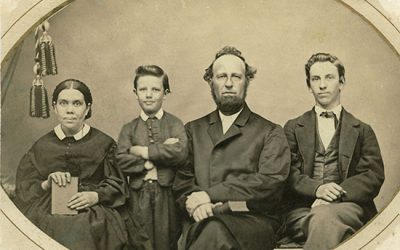
¿Quiénes fueron los hijos de Elena G. de White?
Elena G. de White, probablemente la cofundadora más conocida de la Iglesia Adventista del Séptimo Día, tuvo cuatro hijos con su esposo, James: Henry Nichols, James Edson, William Clarence y John Herbert.

Kwa nini Wadventista wa Sabato Wengi wanachagua Lishe Inayotokana na Mimea?
Ingawa siyo kila Mwadventista anatumia vyakula vya mimea pekee, wengi hujiepusha kabisa na nyama ili kuishi maisha yenye afya katika juhudi za kumheshimu Mungu, kimwili, kiroho, na kiakili.
![Understanding the Book of Mark [An Overview]](https://devsite.askanadventistfriend.com/wp-content/uploads/2026/02/bible-open-to-mark-400x250.jpg)
Understanding the Book of Mark [An Overview]
Understanding the Book of Mark [An Overview]The Book of Mark is one of the four Gospel accounts that begin the New Testament, and its author is widely believed to be John Mark, a relative of Barnabas who worked with both Peter and Paul. It’s the shortest Gospel...
An Overview of Romans: Faith, Righteousness, and Relationships
Here’s a breakdown and background of Paul’s longest epistle.
Tudo o que você precisa saber sobre as refeições do Sábado
Tudo o que você precisa saber sobre as refeições do Sábado.Para os Adventistas do Sétimo Dia, compartilhar uma refeição de sábado com amigos e família é uma das partes mais especiais e memoráveis do sábado. É por isso que queremos compartilhar com você tudo sobre as...
Yesu na Yohana Mbaptisti: Uhusiano Wao na Huduma
Yohana Mbatizaji na Yesu walikuwa ndugu wa damu, marafiki, na wafanyakazi wa karibu katika huduma. Jifunze umuhimu wa kudumu wa uhusiano wao.
Muhtasari wa Elimu ya Juu ya WaAdventista wa Sabato
Muhtasari wa Elimu ya Juu ya WaAdventista wa SabatoKanisa la WaAdventista Wasabato lina takribani shule za sekondari 118 ulimwenguni kote.1 Ingawa nyingi zipo ndani ya Amerika Kaskazini, pia utapata vyuo vikuu vya WaAdventista katika nchi mbalimbali duniani—mahali...
The Book of John: An Overview
Here’s a study companion for the Gospel according to John.

Waadventista wa Sabato Wanaamini Nini Kuhusu Pambano Kuu (Wema na Uovu)?
Pambano Kuu” ni msemo ambao Waadventista wa Sabato kawaida huutumia kuelezea mgogoro wa kiroho wa ulimwengu kati ya nguvu za mema (Mungu) na nguvu za uovu au dhambi (Shetani/iblis).
Silaha Zote za Mungu Kama Ilivyoelezwa Katika Waefeso 6
Katika Waefeso 6, Mtume Paulo alikuwa akisaidia watu kuelewa maana ya kujilinda katika vita vya kiroho (Waefeso 6:10-18).
A Armadura de Deus conforme Descrita em Efésios 6
Em Efésios 6, o Apóstolo Paulo estava ajudando as pessoas a entender o que significa se defender em uma guerra espiritual (Efésios 6:10-18).
¿Qué creen los Adventistas del Séptimo Día sobre el gran conflicto (bien vs. mal)?
El “gran conflicto” es la frase que los Adventistas del Séptimo Día suelen usar para describir el conflicto espiritual cósmico entre las fuerzas del bien (Dios) y las fuerzas del mal o del pecado (Satanás/el diablo).
Didn’t find your answer? Ask us!
We understand your concern of having questions but not knowing who to ask—we’ve felt it ourselves. When you’re ready to learn more about Adventists, send us a question! We know a thing or two about Adventists.