
Medical care in the mid-1800s was primitive, to say the least. Basic concepts we take for granted—such as proper handwashing or recognizing the dangers of bloodletting—were nonexistent. And doctors often had little more than nine months of training!
But Seventh-day Adventists would help raise the standard in healthcare.
God inspired Ellen G. White (1827–1915), one of Adventism’s founders, with a health message that was far ahead of its time—personal hygiene, a healthy diet, the lifestyle-disease connection, and more. She urged the Church to begin its own health clinics, called sanitariums, to put these teachings into practice.
Adventist health institutions today carry the legacy that Ellen White left behind. Let’s get a glimpse of that through the answers to these questions:
Why does the Adventist Church have health care institutions?

Battle Creek Sanitarium, Battle Creek, Michigan
The Seventh-day Adventist Church owes the start of its health centers to Ellen White. During her ministry, the Holy Spirit impressed her with messages about healthful living and the need for Christians to be involved in medical ministry. After her husband, James White, had a stroke and spent time in a health center in New York, she realized the Adventist Church needed its own health centers, too. These places would have a revolutionary approach for their time: combining lifestyle adjustments with biblical principles while offering high-quality care.
That was in 1865. By the following year, the Church began the Western Health Reform Institute in Battle Creek, Michigan. Looking back, Ellen White wrote:
“The Lord years ago gave me special light in regard to the establishment of a health institution where the sick could be treated on altogether different lines from those followed in any other institution in the world. It was to be founded and conducted upon Bible principles…and it was to be in His hands one of the most effective agencies for giving light to the world. It was God’s purpose that it should stand forth with scientific ability, with moral and spiritual power, and as a faithful sentinel of reform in all its bearings.”1
These clinics had a greater purpose than humanitarianism. They were to show that God wants human beings to experience good physical health just as much as spiritual health. And they were to share the hope and healing found in Christ.
What health care institutions did Ellen White help start?
Ellen White helped start at least five health centers for the Adventist Church during her lifetime. These include:
- Battle Creek Sanitarium
- St. Helena Sanitarium
- Avondale Health Retreat
- Paradise Valley Sanitarium
- Loma Linda Sanitarium
She gave specific counsel on what these sanitariums should be like:
- They should be small and home-like.
- They should use natural remedies—such as hydrotherapy, diet, and exercise.
- They should educate their patients on the laws of health, a vegetarian diet, and cooking.
- Spiritual talks and free books should be available for the patients to learn about God and the Bible.
- They should offer training for people to become medical missionaries.
This counsel spurred the development of many health centers. But we’ll look at the five Ellen White was directly involved with.
Battle Creek Sanitarium2
God impressed Ellen White that “our people should have an institution of their own, under their own control, for the benefit of the diseased and suffering among us.”3 As a result, the Western Health Reform Institute was born in 1866—the first of many more to follow.
It started with one patient. But after a month, it had reached its capacity of 12.
John Harvey Kellogg, a young man who Ellen and James White sponsored through medical school, became the superintendent of the sanitarium in 1876. Under his leadership, its name became the Battle Creek Medical and Surgical Sanitarium (Battle Creek Sanitarium, or the “San” for short).
As the first Adventist health center, it was the galvanizing force for many more to come.
St. Helena Sanitarium4

St. Helena Sanitarium, St. Helena, California
In the 1870s, Ellen White urged Adventists to start a sanitarium on the west coast. Her counsel inspired W. A. Pratt to help buy a 10.5-acre property in St. Helena, California, for a sanitarium.
The St. Helena Sanitarium opened in 1878 with Merritt G. Kellogg, half-brother of John Harvey Kellogg, as its first superintendent.
Ellen White lived near this sanitarium in her home at Elmshaven. Its staff cared for her right before she died in 1915.
Today, the institution remains as the St. Helena Hospital—the oldest Adventist hospital in the world.
Avondale Health Retreat5
The Avondale Health Retreat began in 1899 at Ellen White’s prompting. Why the urgency? There was no Adventist health center in that part of Australia (New South Wales), and the nearest hospital was miles away.6 She wanted Adventists to help the community.
Ellen White played a major role in fundraising and sat on the committee that selected the site—a pleasant country location. The location made it different from a typical hospital, as it was to be a “resting place for the overworked…and the sick.”7
For a time, the center also served as a nursing school before the program moved to Sydney Sanitarium in 1903.
The retreat continued for a while, but eventually, its buildings were used for Avondale College and then demolished in 1935.
Paradise Valley Sanitarium8

Paradise Valley Sanitarium, Paradise Valley, California
In 1905, a Doctor Whitelock discovered a country plot in Paradise, California. He told Ellen White about it. Would it make a good location for a health center?
She thought so! She and a woman named Josephine Gotzian decided to buy the property for that purpose.
But obstacle number one: a drought. Where would they get water? A well would have to be dug.
As the well-digger went deeper and deeper, he didn’t find water. But Ellen White assured him that God had led them to this property. He would provide.
And He did—below 80 feet!
The sanitarium remained privately owned until, in 1912, the Southern California Conference of Adventists took ownership.
In 1962, the Sanitarium became the Paradise Valley Hospital, which continued until it was sold in 2007 and closed in 2008.
Loma Linda Sanitarium9
In 1905, God showed Ellen White a property for a sanitarium in southern California.
When she first visited the Loma Linda Sanitarium property, she noted:
“Willie, I have been here before.”
“No, Mother. You have never been here,” he told her.
“Then this is the very place the Lord has shown me, for it is all familiar.”10
She pressed the Southern California Conference of Adventists to purchase the 76-acre property.11 Its fresh air and country environment was ideal for patients to be outdoors and tend gardens.
Both a health center and nursing school were opened on the property. It later expanded to include the College of Medical Evangelists for training physicians.
Today, it operates as Loma Linda University and Medical Center. And today there are many other Adventist institutions like this.
What legacy did Ellen White leave for Adventist healthcare today?
Ellen White left behind a unique philosophy of health reform for Adventists to share with the world. Today, the Adventist health care system carries on this legacy of whole health—treating people as individuals with physical, mental, and spiritual needs. Through its healthcare ethics and practices, its staff aims to live out the healing ministry of Jesus.
The Adventist Church operates 198 hospitals worldwide, plus clinics. Ellen White’s legacy also encouraged Adventists to start private lifestyle centers and do medical missionary work in support of the Church’s mission.
These places are about more than providing basic medical care. Some of these lifestyle centers offer training programs so Adventists can become medical missionaries themselves and serve in their communities or in foreign mission locations.
Here’s a quick overview of Adventist hospitals, clinics, lifestyle centers, and training programs throughout the world.
Loma Linda University Medical Center

Loma Linda University Medical Center, Loma Linda, California
Founded in 1905, Loma Linda University Medical Center is a renowned research center, university, and healthcare system. It has six hospitals, plus clinics, that employ 16,000 workers.
Adventist HealthCare
Adventist HealthCare is a system of five hospitals in Maryland’s Montgomery County. It grew from Washington Sanitarium in Takoma Park, Maryland, which was started back in 1907.
Adventist Health
Adventist Health is a network of 18 hospitals across the west coast and Hawaii. Based out of Roseville, California, it began in 1965 and has been acquiring hospitals since then.
One of its most well-known hospitals is the White Memorial Hospital in Los Angeles. It opened in 1913 as a clinic for medical students from the College of Medical Evangelists (present-day Loma Linda University) to work in.
Kettering Health
Kettering Health is a network of 13 hospitals in southwestern Ohio. Adventists started it in 1964 with the support of Eugene and Victoria Kettering.
Eugene’s father, Charles Kettering, was an inventor. In memory of him, Eugene and Victoria wanted to found a hospital with state-of-the-art technology. Though the Ketterings were not Seventh-day Adventists, they resonated with the Adventist philosophy of whole health and asked the Church to start and manage the hospital.12
AdventHealth
AdventHealth is a hospital network based out of Altamonte Springs, Florida. Begun in 1973, it spans 45 hospitals in nine different states.
AdventHealth is known for its CREATION Life program, which promotes Adventist health principles.
Hospitals and clinics worldwide
As a worldwide movement, the Adventist health system extends beyond the United States. Adventist hospitals, clinics, and medical missionaries can be found on every continent (except perhaps Antarctica).
Adventist Health International and Loma Linda have partnered together with Adventist hospitals throughout Africa, Asia, and South and Central America. To see a full list of the hospitals worldwide, visit the Adventist Directory.
Adventist Mission also helps send doctors and nurses to work in smaller clinics and hospitals in more rural regions of the world. Other mission organizations, such as Adventist Frontier Missions, do the same. Whether a doctor in a hospital in Chad or a nurse at front-porch clinics in the jungles of the Philippines, each volunteer shines the love of Jesus through meeting the physical and spiritual needs of their patients.
Lifestyle centers

Photo by Anupam Mahapatra on Unsplash
Besides hospitals, Adventists have opened private lifestyle centers throughout the world. These centers support the mission of the Adventist Church and provide places for people to learn natural healing methods and simple lifestyle principles.
Rather than being massive institutions, they reflect the home-like sanitariums that Ellen White counseled Adventists to start.
Many of them also have short-term training programs to equip people as medical missionaries.
Here are just a few:
- NEWSTART Lifestyle Center in Weimar, California
- Wildwood Lifestyle Center in Wildwood, Georgia
- Hartland Lifestyle Center in Rapidan, Virginia
- Black Hills Health and Education Center in Hermosa, South Dakota
- Aenon Health Care in Malaysia
- Riverview Wellness Center in Zambia
- Country Life in Austria
God’s principles are the foundation of Adventist healthcare
The Adventist health system began with Ellen White’s counsel to exemplify the healing ministry of Jesus.
That aim has not changed. The global Adventist Church continues to follow His example in meeting the needs of individuals and teaching them a healthy way of life.
And all that happened because God inspired the Church to be on the cutting edge of medical care.
To learn more about the Adventist philosophy of health and well-being, check out the eight health principles we promote.
- White, Ellen, Counsels on Health (Pacific Press, Mountain View, CA, 1923) p. 204. [↵]
- Gomide, Jonathan, “Battle Creek Sanitarium,” Encyclopedia of Seventh-day Adventists, Feb. 27, 2022. [↵]
- White, Ellen, Testimonies for the Church, vol. 1 (Pacific Press, Mountain View, CA 1948), p. 492. [↵]
- “St. Helena Sanitarium and Hospital,” Fortin and Moon, The Ellen G. White Encyclopedia. [↵]
- Skryzpaszek, John, “Avondale Health Retreat, Australia (1899–1935),” Encyclopedia of Seventh-day Adventists. Jan. 29, 2020. [↵]
- White, A. L., Ellen G. White: The Australian Years: 1891–1900, vol. 4, (Review and Herald, Hagerstown, MD, 1983), p. 438. [↵]
- See reference 6. [↵]
- “Paradise Valley Sanitarium,” Fortin and Moon, The Ellen G. White Encyclopedia. [↵]
- “Timeline of Our History,” Loma Linda University. [↵]
- White, A. L., Ellen G. White: The Later Elmshaven Years: 1905–1915, vol. 6, (Review and Herald, Hagerstown, MD, 1982), p. 18. [↵]
- Ibid., p. 20. [↵]
- Our Story | Kettering Health; Kettering Health | Seventh-day Adventist Church. [↵]
Related Articles



More Answers

¿Por qué muchos Adventistas del Séptimo Día eligen una dieta vegetariana?
¿Por qué muchos Adventistas del Séptimo Día eligen una dieta vegetariana?Puede que tengas un amigo adventista que sea vegetariano, o tal vez estés asistiendo a una Iglesia Adventista del Séptimo Día por primera vez y notes que en la comida compartida no hay carne....

What is Jesus’ Parable of the Sower About?
The parable of the sower is ultimately about how people responded to Jesus Christ and His message of the kingdom of God—the Gospel.

O que os Adventistas do Sétimo Dia acreditam sobre o Grande Conflito (Bem vs. Mal)?
O “Grande Conflito” é a frase que os Adventistas do Sétimo Dia normalmente usam para descrever o conflito espiritual cósmico entre as forças do bem (Deus) e as forças do mal ou do pecado (Satanás/o diabo).

Was Jesus Ever Hypocritical? Learn What the Bible Says.
Was Jesus Ever Hypocritical? Learn What the Bible SaysMany undesirable traits are associated with hypocrisy. But overall, hypocrites intentionally try to make others believe they uphold or represent a certain belief system, character trait, lifestyle, etc., when in...

Kukatishwa Tamaa Kukuu na Kile Tunachojifunza
Wafuasi wa Miller walitabiri kurudi kwa Kristo Oktoba 22, 1844, lakini Yesu hakuja kamwe. Tukio lingine lilitokea. Gundua kilichotokea kweli na Kukatishwa Tamaa Kukuu kunaweza kutufundisha leo.

When in Doubt: 7 Ways Christians Can Manage Uncertainty
When in Doubt: 7 Ways Christians Can Manage UncertaintyFew things in life are truly certain. And no matter how convinced some people can appear on the surface, no one is immune to doubt. And this isn’t a bad thing. Doubt has a purpose. A role to serve. (Just imagine...
El gran chasco y las lecciones que nos enseña
Los Milleritas predijeron el regreso de Cristo el 22 de octubre de 1844, pero Jesús nunca llegó. Ocurrió otro evento. Descubre lo que realmente sucedió y qué puede enseñarnos hoy El gran chasco.

Is Jesus the Same Being as Michael the Archangel?
Many Christians have wondered at the mysterious identity of Michael the Archangel.
A Grande Desapontamento e Lições que nos Ensina
Os Milleritas previram o retorno de Cristo em 22 de outubro de 1844, mas Jesus nunca chegou. Outro evento ocorreu. Descubra o que realmente aconteceu e o que o Grande Desapontamento pode nos ensinar hoje.
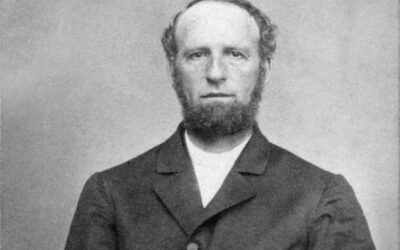
James Springer White, Co-Fundador da Igreja Adventista do Sétimo Dia
James Springer White (1821–1881) foi uma figura chave na Igreja Adventista do Sétimo Dia e marido de Ellen G. White.
James Springer White, cofundador de la Iglesia Adventista del Séptimo Día
James Springer White (1821–1881) fue una figura clave en la Iglesia Adventista del Séptimo Día y el esposo de Elena G. de White.

Kila Kitu Unachohitaji Kujua Kuhusu Chakula cha Siku ya Sabato
Kwa Waadventista Wa Sabato, kushiriki chakula cha Siku ya Sabato pamoja na marafiki na familia ni moja ya sehemu muhimu na ya kumbukumbu ya Sabato.
Nini Maana ya “Mwadventista”?
Waadventista wa Sabato ni dhehebu la Kikristo la Kiprotestanti wanaoshikilia Sabato ya siku ya saba kama ilivyoandikwa katika Biblia.

How to Have a Personal Relationship with Jesus: A 10-Step Guide
How to Have a Personal Relationship with Jesus: A GuideNo matter who you are, you’re surrounded by relationships. Friends, family, colleagues, acquaintances...they all play a part in our lives, for better or worse. So you’re surely aware of a lot of the components...

Biblia Ina Maana Gani Inaposema Yesu ni Mwana wa Mungu?
Biblia inapomwita Yesu Mwana wa Mungu inarejelea uungu wake. Jifunze ni nini kinachofanya hili kuwa muhimu na kinahusianaje na wokovu.

“Go and Sin No More”—What Did Jesus Mean?
These well-known words of Jesus Christ come from two New Testament stories in the book of John—a man healed by the Pool of Bethesda (John 5) and a woman caught in adultery (John 8).

Quais são as Mensagens dos Três Anjos em Apocalipse 14?
As mensagens dos três anjos em Apocalipse 14 advertem o mundo a adorar a Deus, deixar a confusão religiosa e evitar a adoração de tradições humanas em vez dos mandamentos de Deus.

Je! Tunaweza Kuitunza Siku Yoyote ya Wiki Kama Sabato?
Katika sura za kwanza kabisa za Biblia, tunamwona Mungu akianzisha kumbukumbu ya kila wiki na siku ya mapumziko, inayoitwa Sabato (Mwanzo 2:2-3).
¿Cuáles son los mensajes de los tres ángeles en Apocalipsis 14?
Los mensajes de los tres ángeles en Apocalipsis 14 invitan al mundo a adorar a Dios, abandonar la confusión religiosa y evitar la adoración de tradiciones humanas en lugar de los mandamientos de Dios.
Por que muitos Adventistas do Sétimo Dia escolhem uma dieta vegetariana?
Embora nem todo adventista seja vegetariano, muitos evitam completamente o consumo de carne para viver de forma mais saudável, buscando honrar a Deus física, espiritual e mentalmente.

Understanding the Miracles of Jesus Christ
Understanding the Miracles of Jesus ChristWhat do you think of when someone says something is “a miracle”? Maybe you think of an unexpected recovery, surviving a dangerous accident, or getting an answer to a seemingly impossible prayer. Simply put, miracles are...
O que significa “Adventista”?
O que significa "Adventista"?Os Adventistas do Sétimo Dia são uma denominação cristã protestante que observa o sábado bíblico do sétimo dia. A partir dessa crença, eles obtêm a primeira parte de seu nome. Mas e quanto à segunda parte - "Adventista"? “Adventista”...
¿Podemos guardar el sábado bíblico cualquier día de la semana?
En los primeros capítulos de la Biblia, encontramos a Dios estableciendo un memorial semanal y día de reposo, conocido como el sábado (Génesis 2:2-3).
Podemos guardar o Sábado em qualquer dia da semana?
Nos primeiros capítulos da Bíblia, encontramos Deus estabelecendo um memorial semanal e dia de descanso, conhecido como o Sábado (Gênesis 2:2-3).
O que significa a Bíblia quando chama Jesus de Filho de Deus?
Quando a Bíblia chama Jesus de Filho de Deus, está se referindo à Sua divindade. Saiba o que torna isso tão significativo e o que tem a ver com a salvação.
¿Qué creen los Adventistas del Séptimo Día acerca de la Biblia?
La Biblia forma la base de todo lo que los Adventistas del Séptimo Día creen y enseñan.
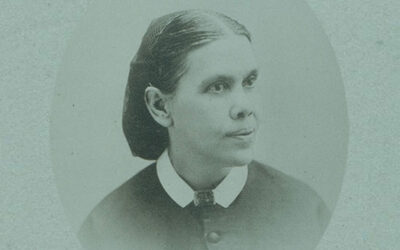
Legado Duradouro de Ellen G. White
Ellen G. White é um nome bem conhecido entre os Adventistas do Sétimo Dia, mas ela também teve um impacto em muitas outras partes da história, além de ser co-fundadora da Igreja Adventista.

What Does it Mean to Have Faith in Jesus?
What Does it Mean to Have Faith in Jesus?To have faith in Jesus means we place our spiritual hope, trust, belief, and priority in Him as our loving Savior. And that sounds great as an idea. That’s our goal, right? But when we go through difficult times, face...
James Springer White, Mwanzilishi wa Kanisa la Waadventista Wa Sabato
James Springer White (1821–1881) alikuwa mtu muhimu katika Kanisa la Waadventista wa Sabato na mume wa Ellen G. White.
Didn’t find your answer? Ask us!
We understand your concern of having questions but not knowing who to ask—we’ve felt it ourselves. When you’re ready to learn more about Adventists, send us a question! We know a thing or two about Adventists.