
Ellen G. (Harmon) White, a significant co-founder of Adventism, is often known for her practical and spiritual guidance for proper childhood education. But she was also significantly involved in the development of Seventh-day Adventist higher education.
Her prayerful counsel even contributed toward the establishment of some of the first Adventist colleges and universities.
So what was it that she had to say about Christian education for young adults about to start their careers? How did her contributions bring about the extensive network of Adventist higher learning institutions we have today?
We’re going to look at:
- The meaning of “true education”
- Ellen White’s writings about higher education
- Colleges she helped to start
- The difference between Adventist colleges and secular colleges
- Prominent Adventist higher learning institutions
Before we get into the specifics about colleges and universities, here’s a refresher of why education was such a priority subject for her.
What is “true education”?
Ellen White saw schools as supplementary to the training children received at home. Ideally, parents would train their children to be followers of Christ and good moral citizens of the community.
Schools were to support those efforts and build upon them, which would help the academic concepts be all the more memorable and applicable. And this all-encompassing approach is what she called “true education.”
“True education means more than the pursuit of a certain course of study. It means more than a preparation for the life that now is. It has to do with the whole being, and with the whole period of existence possible to man. It is the harmonious development of the physical, the mental, and the spiritual powers. It prepares the student for the joy of service in this world and for the higher joy of wider service in the world to come.”1
Through this perspective, education can do so much more than provide children with memorized information. It can build the foundation for who they become as they apply what they learn to their own lives.
And this principle of learning doesn’t only apply to elementary and secondary education. Higher education has an important role in the process of true education as well.
What Ellen White said about college
Among her many guiding principles for Seventh-day Adventist colleges, here are the most prominent areas she wrote about:
Well-rounded education
First and foremost, the concept of true education must be maintained throughout the highest levels of instruction. She made sure to emphasize how colleges must also offer a well-rounded education:
“A more comprehensive education is needed… The character must receive proper discipline for its fullest and noblest development. The students should receive at college such training as will enable them to maintain a respectable, honest, virtuous standing in society.”2
Colleges were to guide the moral compasses of students, as well teach them book knowledge.
Physical work

Photo by Anaya Katlego on Unsplash
As part of that well-rounded education, Ellen White encouraged students to work while attending college.
“It would be well could there be connected with our College, land for cultivation, and also workshops, under the charge of men competent to instruct the students in the various departments of physical labor. Much is lost by a neglect to unite physical with mental taxation.”3
Not only does it benefit students to stay active, but Ellen White wanted to make sure that learning trades, such as farming, manufacturing, or household maintenance was communicated to be just as valuable or as worthy as doctoral degrees.4
Times are different since the days of Ellen White, when the rural population of the United States was more widespread. While many Adventist campuses used to also operate farms, that form of campus industry is much less common today.
But the principle of physical work remains. Adventist colleges make sure students are aware of the benefits of spending time outside of class in active work. This could be exercise, household chores, gardening, woodworking…anything to keep other parts of our brains active while also allowing rest from the rigor of schoolwork.
“The exercise of the muscles as well as the brain will encourage taste for the homely duties of practical life.”5
Physical work is good for more reasons than relief from mental work. Ellen White also attributed having jobs to building up a strong character in students.
“[U]seful occupations…would give legitimate scope for the exuberance of youthful life, and would promote sobriety and stability of character.”6
Occupying learning students with positive, beneficial work helps them form lasting good habits.
Spiritual emphasis
Another element Ellen White wanted to make sure Adventist colleges included was a continuing study of the Bible. By including an emphasis on spiritual matters, students can be more prepared for the complex spiritual questions that inevitably await them as they become more independent.
“No other book [than the Bible] can satisfy the questionings of the mind, and the craving of the heart.”7
Because of this power, the Bible was to be consulted and included in the collegiate curriculum, because “as an educating power, the Bible is without a rival.”8
Location
Ellen White also provided counsel about where Adventist colleges should be located. Ideally, she advised that colleges could best operate in the country. Here, they would have plenty of space to incorporate agriculture and other important trades in their curriculum. They could also start manufacturing shops for sustainability.
She didn’t rule out cities, though. “[I]n the cities there are many children who could not attend school away from the cities; and for the benefit of these, school should be opened in the cities as well as in the country.”9
Additionally, proximity to health clinics, hospitals, or sanitariums is ideal for providing training and exposure to working in the health care industry. Health reform has been an integral part of Adventism from our earliest days, and it was common for colleges to train medical missionaries to serve the underserved in various parts of the world.
The purpose of Adventist colleges
Adventist colleges were originally started to meet the needs of the growing Adventist Church. Already, Adventists had started to establish schools for children’s basic education, beginning with Martha Byington’s home school in 1853.10
But in the 1870s, many began to feel that they needed an institution to instruct young adults to be dedicated workers in the Adventist cause.
Ultimately, these schools would be preparatory for the mission field, whether it be abroad or day-to-day interaction in one’s own community.
And that is what fueled the beginning of Adventist colleges. Being passionate about education, Ellen White was deeply involved in establishing some colleges. Let’s take a look at some of those she helped bring into existence.
Colleges Ellen White helped start

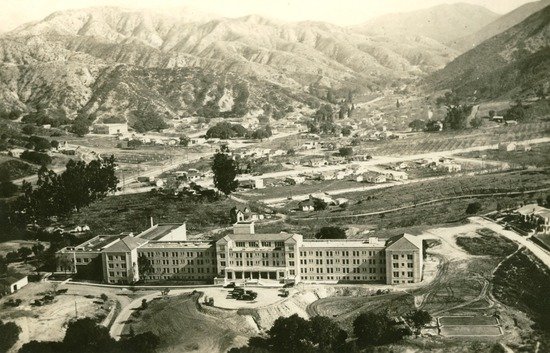
Loma Linda University, Loma Linda, California
Adventist colleges emerged from a variety of situations, but here are a few in which Ellen White played an instrumental role in their establishment.
Andrews University
As the first college in Adventist history, Andrews University had its humble beginnings in 1874 in Battle Creek, Michigan. Adventist leaders felt the need to train people to take the three angels’ message to the world.11 Practical programs were also developed for agriculture and trade work.
Work began, and in January of 1875, Battle Creek College was dedicated. Since then, the university has changed locations, and its name has changed to Andrews University. But it still reflects the original goal to train many young people to serve God in a variety of ways.
Avondale University
For several years in the 1880s and 90s, Ellen White lived in Australia doing missionary work. It was soon apparent that Australia needed its own Adventist college.
Acting on her advice, the committee selected a 1500-acre location in a rural setting. After some inspection, however, the committee began to doubt. Numerous consultants said the soil was no good, and the land would have to be drained.12
But after much prayer, she remained firm. God had shown her that the land did indeed have fertile soil and would yield a good harvest. Seeing her strong convictions, the board finally agreed to buy the land.13
Diligently and tirelessly, they all worked to clear the land and build the school. In 1897, Avondale College opened and has prospered since.14
Loma Linda University
In 1901, God gave Ellen White a vision. In this vision, she saw a “sanitarium near Los Angeles in running order.” 15 Since she had already seen the need for a sanitarium in California, this inspiration from the Holy Spirit provided timely confirmation to start the planning.
She told those in charge of looking for suitable property to watch for “cheap, desirable property in healthful places.”16
Sounds like something too good to be true, right? But after much searching, an ideal location was found.
An abandoned resort hotel 60 miles from Los Angeles, in a place called Loma Linda, had recently been put up for sale. Church leaders examined it and subsequently purchased it.
At the time, Ellen White was living at Elmshaven, in Northern California. When she made the trek to visit Loma Linda, she noticed it was the same place she had seen in her vision. She remarked, “It is one of the most perfect places for a sanitarium that I have ever seen, and I thank our heavenly Father for giving us such a place.”17
In 1906, the sanitarium opened a training school for nurses.18 Their facility expanded to what we know today as Loma Linda University, along with Loma Linda University Medical Center.
Madison College
Madison College’s story is a little different than most other Adventist colleges. About the same time as Loma Linda’s plans were underway, staff from the future Andrews University headed south to establish a manual labor training school. They searched Tennessee but without luck.
Coincidentally, Ellen White happened to be visiting her son in Nashville. The men looking for land contacted her, and a group of them set out to find a property. They finally found a farm just 12 miles from Nashville.
Ellen White loved the place and supported the negotiations strongly, even when the deal nearly collapsed. Finally, the land was purchased and a school was begun in 1904.19
The school was initially called the Nashville Agricultural and Normal Institute—a “Normal institute” being, in those days, a school that trained teachers. The Nashville school worked with a unique purpose.
The Nashville school was a self-supporting school—it didn’t accept funding from the Seventh-day Adventist Church as an administrative entity. Instead, both students and teachers worked half of each day to help support the school.
Madison College parented several other similar-minded schools over the next few decades before its close in 1964. However, it left a lasting legacy. With its network of schools, Madison gave way to the Association of Seventh-day Adventist Self-Supporting Institutions, or ASI. (Today, ASI is named Adventist-Laymen’s Services and Industries.)
All the schools involved in ASI met at Madison regularly. Today, ASI has expanded to include a variety of mission projects.20
Pacific Union College
Ellen White also had a fundamental role in establishing Pacific Union College.
Already, the Adventists in the western United States, with her husband James’ help, had established the Pacific Press Publishing Association in California. Now, they desired a school closer to them.
She began traveling to help the church members look for a suitable piece of property. Several places appealed to them, but she finally settled on a large piece of land in Napa Valley.
At first, they did not know if they wanted to purchase the entire 1900 acres, or only a small portion needed for the school. But Ellen White felt impressed by the Holy Spirit that they needed the whole piece of land.
She wrote later, “ It seemed to me that if the whole tract of land could be obtained, it would be an ideal place; for here the students could find an abundance of outdoor employment, and thus could combine mental and physical training.”21
In the end, the entire piece of land was bought and the school was established. Later, she moved to her house, Elmshaven, in St. Helena, just a few minutes from the college. She loved that she could easily visit the campus to see everything God was doing there.
The difference an Adventist college can make

Photo by Dr Josiah Sarpong on Unsplash
While Ellen White wholeheartedly supported and advocated for Adventist colleges, this didn’t mean she was totally against secular higher learning institutions.
The idea behind Adventist colleges was originally for the purpose of training interested Adventists for a career in ministry and supporting the church, though it can also be a place where people can trust that the idea of “true education” was indeed being applied throughout all subjects of study.
And while there were and still are many excellent secular college campuses all over the world, there’s always the concern about young people staying safe and holding fast to their Christian values during their college experience. It can be a pivotal and defining time in a person’s life. And that’s why she wrote the following:
“It would be perfectly safe for our youth to enter the colleges of our land if they were converted every day; but if they feel at liberty to be off guard one day, that very day Satan is ready with his snares, and they are overcome and led to walk in false paths—forbidden paths that the Lord has not cast up.”22
Ellen White realized that many people attend secular colleges for a variety of reasons. Let’s look at a couple differences between secular and Adventist colleges.
The main difference between the two is the emphasis felt throughout the campus. Adventist universities emphasize God and evangelism throughout the daily college experience. It’s easy to find people praying or reading their Bibles, and campus messaging and materials reflect Christian values. There are also lots of opportunities for Bible study and worship.
There are several other key differences between these two types of higher education institutions, and you can find an in-depth review of them in our article on Adventist universities. Here are just a few:
- Adventist universities have closer-knit campuses. This is because their average enrollment is small compared to the vast numbers of public universities.
- Adventist university graduates feel they are more prepared for a virtuous life. They are introduced to a wide range of values and are encouraged to form their own. These include a meaningful philosophy of life, faith, and action-based morals.23
- Adventist colleges, as stated above, place a strong emphasis on spiritual matters, whereas most public colleges do not.
- Adventist colleges are privately funded, so their tuition tends to be higher than public colleges.
Prominent Adventist colleges
Among the 117 Adventist colleges around the world, these are a few of the most recognized and prominent:
- Loma Linda University (California, United States)
- Newbold College (England)
- Andrews University (Michigan, United States)
- Avondale University (New South Wales, Australia)
- Adventist University of Africa (Kenya)
(See the full list here.)
The broad and stable network of Adventist colleges and universities today is a testament to the prayerful efforts of Ellen White and the early Adventist Church. By following God’s leading, they were able to establish both a spiritual and educational presence in many areas that greatly needed it.
- White, Ellen G., Manuscript Releases, vol. 1, p. 335, White, Ellen G., Education, p. 13 [↵]
- White, Ellen G., Christian Education (International Tract Society, 1894), p. 36 [↵]
- Ibid. [↵]
- Education, p. 218 [↵]
- Christian Education, p. 44 [↵]
- Ibid. [↵]
- Ibid., p. 37 [↵]
- Ibid. [↵]
- White, Ellen G., Testimonies for the Church, vol. 9, p. 221 [↵]
- Reynolds, Jill, “Behold, the Stone! John Byington and the Beginnings of SDA Education,” The Journal of Adventist Education, Summer 1986. [↵]
- “Establishment of Schools,” https://ellenwhite.org/articles/109. [↵]
- Ibid. [↵]
- “Slavery, the Civil War, and Ellen White.” [↵]
- “Avondale College,” https://lineagejourney.com/read/avondale-college. [↵]
- Ibid. [↵]
- Ibid. [↵]
- Ibid., p. 110 [↵]
- https://sbcsentinel.com/2015/05/ellen-gould-white-mother-of-loma-lindas-medical-legacy/ [↵]
- Pettibone, Dennis, A Century of Challenge, https://knowledge.e.southern.edu/booksandpamphlets/3/, p. 28 [↵]
- “Madison College and ASI,” https://lineagejourney.com/read/madison-college-and-asi/. [↵]
- White, Ellen G., Manuscript Releases, vol. 1, p. 335 [↵]
- Cork, William J., “Ellen G. White and the Secular Campus,” https://digitalcommons.andrews.edu/cgi/viewcontent.cgi?article=1113&context=cye-pubs. [↵]
- “Prepared for Life,” https://adventistcolleges.org/prepared-for-life/. [↵]
Related Articles

More Answers

¿Por qué muchos Adventistas del Séptimo Día eligen una dieta vegetariana?
¿Por qué muchos Adventistas del Séptimo Día eligen una dieta vegetariana?Puede que tengas un amigo adventista que sea vegetariano, o tal vez estés asistiendo a una Iglesia Adventista del Séptimo Día por primera vez y notes que en la comida compartida no hay carne....

What is Jesus’ Parable of the Sower About?
The parable of the sower is ultimately about how people responded to Jesus Christ and His message of the kingdom of God—the Gospel.

O que os Adventistas do Sétimo Dia acreditam sobre o Grande Conflito (Bem vs. Mal)?
O “Grande Conflito” é a frase que os Adventistas do Sétimo Dia normalmente usam para descrever o conflito espiritual cósmico entre as forças do bem (Deus) e as forças do mal ou do pecado (Satanás/o diabo).

Was Jesus Ever Hypocritical? Learn What the Bible Says.
Was Jesus Ever Hypocritical? Learn What the Bible SaysMany undesirable traits are associated with hypocrisy. But overall, hypocrites intentionally try to make others believe they uphold or represent a certain belief system, character trait, lifestyle, etc., when in...

Kukatishwa Tamaa Kukuu na Kile Tunachojifunza
Wafuasi wa Miller walitabiri kurudi kwa Kristo Oktoba 22, 1844, lakini Yesu hakuja kamwe. Tukio lingine lilitokea. Gundua kilichotokea kweli na Kukatishwa Tamaa Kukuu kunaweza kutufundisha leo.

When in Doubt: 7 Ways Christians Can Manage Uncertainty
When in Doubt: 7 Ways Christians Can Manage UncertaintyFew things in life are truly certain. And no matter how convinced some people can appear on the surface, no one is immune to doubt. And this isn’t a bad thing. Doubt has a purpose. A role to serve. (Just imagine...
El gran chasco y las lecciones que nos enseña
Los Milleritas predijeron el regreso de Cristo el 22 de octubre de 1844, pero Jesús nunca llegó. Ocurrió otro evento. Descubre lo que realmente sucedió y qué puede enseñarnos hoy El gran chasco.

Is Jesus the Same Being as Michael the Archangel?
Many Christians have wondered at the mysterious identity of Michael the Archangel.
A Grande Desapontamento e Lições que nos Ensina
Os Milleritas previram o retorno de Cristo em 22 de outubro de 1844, mas Jesus nunca chegou. Outro evento ocorreu. Descubra o que realmente aconteceu e o que o Grande Desapontamento pode nos ensinar hoje.
James Springer White, Co-Fundador da Igreja Adventista do Sétimo Dia
James Springer White (1821–1881) foi uma figura chave na Igreja Adventista do Sétimo Dia e marido de Ellen G. White.
James Springer White, cofundador de la Iglesia Adventista del Séptimo Día
James Springer White (1821–1881) fue una figura clave en la Iglesia Adventista del Séptimo Día y el esposo de Elena G. de White.

Kila Kitu Unachohitaji Kujua Kuhusu Chakula cha Siku ya Sabato
Kwa Waadventista Wa Sabato, kushiriki chakula cha Siku ya Sabato pamoja na marafiki na familia ni moja ya sehemu muhimu na ya kumbukumbu ya Sabato.

Nini Maana ya “Mwadventista”?
Waadventista wa Sabato ni dhehebu la Kikristo la Kiprotestanti wanaoshikilia Sabato ya siku ya saba kama ilivyoandikwa katika Biblia.

How to Have a Personal Relationship with Jesus: A 10-Step Guide
How to Have a Personal Relationship with Jesus: A GuideNo matter who you are, you’re surrounded by relationships. Friends, family, colleagues, acquaintances...they all play a part in our lives, for better or worse. So you’re surely aware of a lot of the components...

Biblia Ina Maana Gani Inaposema Yesu ni Mwana wa Mungu?
Biblia inapomwita Yesu Mwana wa Mungu inarejelea uungu wake. Jifunze ni nini kinachofanya hili kuwa muhimu na kinahusianaje na wokovu.

“Go and Sin No More”—What Did Jesus Mean?
These well-known words of Jesus Christ come from two New Testament stories in the book of John—a man healed by the Pool of Bethesda (John 5) and a woman caught in adultery (John 8).

Quais são as Mensagens dos Três Anjos em Apocalipse 14?
As mensagens dos três anjos em Apocalipse 14 advertem o mundo a adorar a Deus, deixar a confusão religiosa e evitar a adoração de tradições humanas em vez dos mandamentos de Deus.

Je! Tunaweza Kuitunza Siku Yoyote ya Wiki Kama Sabato?
Katika sura za kwanza kabisa za Biblia, tunamwona Mungu akianzisha kumbukumbu ya kila wiki na siku ya mapumziko, inayoitwa Sabato (Mwanzo 2:2-3).
¿Cuáles son los mensajes de los tres ángeles en Apocalipsis 14?
Los mensajes de los tres ángeles en Apocalipsis 14 invitan al mundo a adorar a Dios, abandonar la confusión religiosa y evitar la adoración de tradiciones humanas en lugar de los mandamientos de Dios.
Por que muitos Adventistas do Sétimo Dia escolhem uma dieta vegetariana?
Embora nem todo adventista seja vegetariano, muitos evitam completamente o consumo de carne para viver de forma mais saudável, buscando honrar a Deus física, espiritual e mentalmente.

Understanding the Miracles of Jesus Christ
Understanding the Miracles of Jesus ChristWhat do you think of when someone says something is “a miracle”? Maybe you think of an unexpected recovery, surviving a dangerous accident, or getting an answer to a seemingly impossible prayer. Simply put, miracles are...
O que significa “Adventista”?
O que significa "Adventista"?Os Adventistas do Sétimo Dia são uma denominação cristã protestante que observa o sábado bíblico do sétimo dia. A partir dessa crença, eles obtêm a primeira parte de seu nome. Mas e quanto à segunda parte - "Adventista"? “Adventista”...
¿Podemos guardar el sábado bíblico cualquier día de la semana?
En los primeros capítulos de la Biblia, encontramos a Dios estableciendo un memorial semanal y día de reposo, conocido como el sábado (Génesis 2:2-3).
Podemos guardar o Sábado em qualquer dia da semana?
Nos primeiros capítulos da Bíblia, encontramos Deus estabelecendo um memorial semanal e dia de descanso, conhecido como o Sábado (Gênesis 2:2-3).
O que significa a Bíblia quando chama Jesus de Filho de Deus?
Quando a Bíblia chama Jesus de Filho de Deus, está se referindo à Sua divindade. Saiba o que torna isso tão significativo e o que tem a ver com a salvação.

¿Qué creen los Adventistas del Séptimo Día acerca de la Biblia?
La Biblia forma la base de todo lo que los Adventistas del Séptimo Día creen y enseñan.

Legado Duradouro de Ellen G. White
Ellen G. White é um nome bem conhecido entre os Adventistas do Sétimo Dia, mas ela também teve um impacto em muitas outras partes da história, além de ser co-fundadora da Igreja Adventista.

What Does it Mean to Have Faith in Jesus?
What Does it Mean to Have Faith in Jesus?To have faith in Jesus means we place our spiritual hope, trust, belief, and priority in Him as our loving Savior. And that sounds great as an idea. That’s our goal, right? But when we go through difficult times, face...
James Springer White, Mwanzilishi wa Kanisa la Waadventista Wa Sabato
James Springer White (1821–1881) alikuwa mtu muhimu katika Kanisa la Waadventista wa Sabato na mume wa Ellen G. White.
Didn’t find your answer? Ask us!
We understand your concern of having questions but not knowing who to ask—we’ve felt it ourselves. When you’re ready to learn more about Adventists, send us a question! We know a thing or two about Adventists.