
Ellen White traveled to Australia in the later part of her life, and she ended up spending nine years there. In that time, she helped the Australian Seventh-day Adventist Church increase in size and strength.
Much of her time there involved speaking at churches and camp meetings. She also was instrumental in establishing various Adventist institutions, such as health centers, a health-food factory, and an Adventist college.
But what was it that really made this trip so significant in her ministry? Let’s look more closely at:
- Why Ellen White went to Australia
- When she made the trip
- Places she went and things she accomplished
- The impact she had in Australia
Let’s learn a little more about how Ellen White’s efforts affected the “land down under” for the Adventist Church.
Why did Ellen White go to Australia?
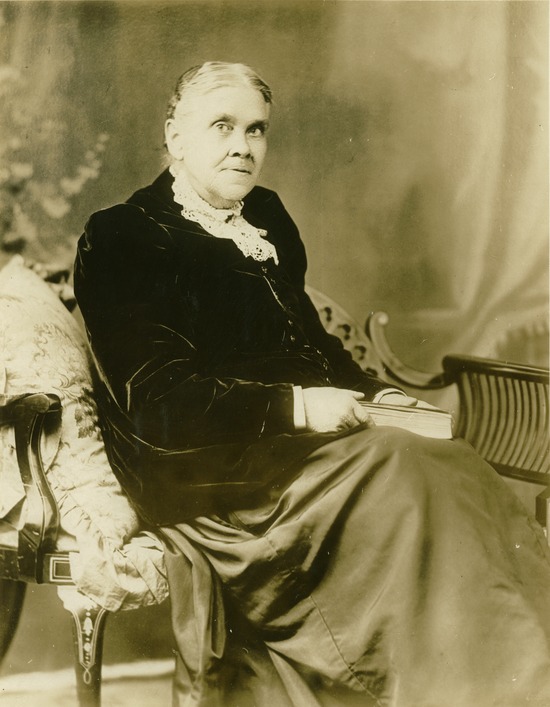
“Courtesy of the Ellen G. White Estate, Inc.”
Ellen White went to Australia at the request of the Foreign Mission Board of the Seventh-day Adventist Church.
Here’s some of the story from her biography, as explained by her grandson, Arthur White.1
The idea to send Ellen White to Australia started at the 29th General Conference Session of 1891. An Adventist missionary named Stephen Haskell was among the first to suggest it. He thought Ellen White’s presence would encourage progress in the church there and wanted her help starting an Australian mission school.
Many conference members agreed with his idea. And eventually, the Foreign Mission Board asked Ellen White if she would be willing to go.
She had often been instructed by the Holy Spirit regarding where she was being called to serve. But this time, He seemed to remain silent on the matter.
Because He didn’t tell her to stay or go, she wondered if she was meant to go at all.
Personally, she hoped she wouldn’t have to go. She had grown weary of travel. She had already traveled through a considerable amount of the United States and also visited Europe as a missionary. Now she was older and struggling with multiple health challenges. She thought she could best serve the Lord by staying home and writing the instruction that could be beneficial to share with the church.
But in the end, she decided she would follow the General Conference’s counsel (as she had done when invited to go to Europe a few years before).
Yet, even as she traveled there, she still faced moments of doubt and depression, wondering whether God really wanted her there.
This just demonstrates that even those with the gift of prophecy sometimes struggle with discerning what God wants them to do. No human is immune to sin’s effects of fear and doubt.
But although God may have seemed silent, Ellen White relied on prayer and her God-given reason to make a decision, trusting Him with the outcome.
God later revealed to her that it had not been His plan for her to go to Australia, but rather the will of the church leaders to send her there. Some reports even suggest that certain church leaders wanted Ellen White to leave for a while because of personal disagreements they had with her.2
But even though church leaders weren’t acting in cooperation with God’s will by asking her to go to Australia, His providence worked through her to accomplish wonderful things. So much so, that she decided to stay in Australia many more years than the two she had been asked to serve. God helped her to meet the great need for mission work and Bible teaching in the area.
Additionally, other things started falling into place. In a vision she was given back in 1875, she saw a printing press that she later ended up seeing in person in Australia.3
And in another vision the previous year, an angel told her the gospel message should be spread to all lands (including Australia):
“You are entertaining too limited ideas of the work for this time…You must take broader views…The message will go in power to all parts of the world, to Oregon, to Europe, to Australia, to the islands of the sea.”4
These two visions may have predicted Ellen White’s unintended but eventual influence in Australia.
Ellen White’s experience regarding her decision to go to Australia was one of the many, many times God demonstrates that even when things don’t pan out like they should, He can still do extraordinary things through those who are willing to follow His leading.
When she made the trip
Ellen White traveled to Australia by boat in 1891, when she was 64 years old. She was joined by her son W.C. White—Willie for short—and her writing assistants (as well as some Adventists who were interested in witnessing to the Australian people).
The trip was 26 days long because of stops in different countries. After leaving San Francisco, the ship stopped in Hawaii, Samoa, and then New Zealand. She arrived in Sydney, Australia, on December 8, 1891.5
And from that day until the day she left, she worked hard to build up the Australian Church.
But despite the success of her work, she also faced some challenges.
For one, shortly after she arrived, Australia descended into an economic depression.6 This made it hard for people to come up with enough money to build Adventist churches, schools, and hospitals. Beyond that, many Australian communities were in need of basic necessities. There were times when Ellen White and her family suffered financially as well.7
Even so, she was willing to forego new clothes and share what little food she had with others.8
Another hardship she faced was more illness. She caught rheumatic fever shortly after arriving in Australia.9
And on top of that, Willie’s wife had passed away only a year before they left for Australia.10
But even so, Ellen White and those with her were able to witness to countless people, establish several Adventist institutions, and spread the gospel through the Australian printing press. Willie even got remarried.11
By 1895, she and her family settled in a house at Cooranbong, New South Wales, which they came to call “Sunnyside.” In the beginning, Ellen White had intended to stay in Australia for only two years, but her trip ended up stretching to nine years.12
During that time, she ministered in several major Australian cities.
Places she went and things she accomplished

“Ellen White sitting on the front porch of her home in Cooranbong, Australia.”
Ellen White traveled to many different towns, cities, and states during her time in Australia. They are well-documented in Arthur L. White’s book, Ellen G. White: The Australian Years: 1891-1900.
A sample of her visits to the most prominent places are:
- Sydney: Soon after her arrival in Australia, she spoke to a group of people about the hope we have in righteousness by faith and was well-received.13 She ended up visiting here often.
- Melbourne: She came here to speak to the publishing house of the Australian Church—the Echo Publishing Company. This is where she recognized the printing presses from her visions. She also spoke at the fourth annual Australian Seventh-day Adventist Conference in Melbourne. In one session, she shared about the importance of creating Adventist schools.14
- Adelaide: She preached at the church here and frequently visited the area to speak with church members and minister to their needs.15
- Brighton: She spoke at a camp meeting where around a hundred people were baptized.16
- Williamstown: She also spoke at a camp meeting here.17 What she said about healthy living may have encouraged the development of an Adventist cooking school.
- Granville: She moved to this location in the northern part of New South Wales. She believed this new location in the countryside was better for her health.18
- Cooranbong: The church decided to plant the Australian school here.19 She approved of the location as God gave her a vision confirming the value of the land.20 And later on, she encouraged them to place a health-food factory and hospital here, too. In 1895, she moved here to a home called “Sunnyside.”
- Tasmania: This is where Ellen White went for her son’s wedding.21 She also attended a convention here.22
- Stanmore: She spoke at a camp meeting here.23
- Newcastle: Spoke at a camp meeting here as well.24
- Brisbane: At this particular camp meeting, she spoke about following God’s calling and living a temperate lifestyle.25
She even visited New Zealand for speaking engagements.26
And besides traveling to speak, she also helped establish key Adventist institutions—ones that still reveal the effects of her contributions.
What impact did Ellen White have in Australia?

“Avondale Adventist School in Australia”
By the end of her time in Australia, Ellen White had made an incredible impact on the Australian Seventh-day Adventist Church. For starters, her presence helped increase church membership. When she first arrived in Australia, there were 445 members of the Adventist Church.27 By the time she left, there were over 2,086!28
But that was only a small part of her legacy. Here are some other ways she left her mark:
- She donated to help build the first Adventist church in continental Australia: During the economic depression, church leaders in Australia were struggling to come up with enough money to build the Parramatta Church. At the same time, Ellen White’s loved ones sent her $75 so she could buy a more comfortable chair to ease her pain when she was ill. But instead of using the money for herself, she donated it to the building funds for the Parramatta Church.29
- She helped locate the Avondale school: Ellen White was responsible for the final location of what is now known as Avondale University in Cooranbong, Australia. At first, many doubted whether it would be a suitable location because land inspectors reported the land to be unfruitful. But in a vision, Ellen White was assured that this was the land God had chosen.30
- She helped establish health institutions: This includes a sanitarium (health center) in Sydney and a hospital in Cooranbong.31
- She encouraged the founding of a health-food factory: This health-food factory, which she advised should be next to Avondale College, was created with the intention of providing healthy food alternatives like vegetarian meat substitutes.32
- She finished her book on the life of Jesus Christ while there: One of Ellen White’s primary concerns in going to Australia was that she wouldn’t have time to work on writing. Despite her concerns, she finished writing The Desire of Ages while she was there.33 This book is among her most popular works.
- She recommended a new organizational structure for the General Conference: Ellen White noticed that the General Conference back in the United States was struggling to handle the concerns of congregations around the world. Australian leadership often had to wait months for a reply from the General Conference (as mail didn’t travel very quickly). She was among one of several who recommended an intermediate conference, which became known as the Australasian Union Conference. Soon, every division of the Seventh-day Adventist World Church adopted this system and structure.34
- She ministered to Australians on a personal level: Despite facing her own financial struggles during Australia’s economic crisis, she provided new clothes and food for those in need.35
Ellen White’s contributions and Christian influence are still affecting Australian communities today.
Take Avondale University for instance. It has continued to expand and now features two campuses—one in its original location in Cooranbong and the other in the Lake Macquarie area. And the Sydney Adventist Hospital has become the largest private hospital in its state!
Ellen White’s time in Australia shows her heart for spreading the gospel of Jesus Christ and making a difference in the lives of individuals, even when it meant taking long journeys and living in a different country for years.
What commitment!
Related Pages


- White, L., Arthur, Ellen G. White: The Australian Years: 1891-1900 (vol. 4), pp. 13–18 [↵]
- Bradley, P. W., “When God Overrules,” Adventist Review, April 1, 1962, p. 8,https://documents.adventistarchives.org/Periodicals/RH/RH19820401-V159-13.pdf. [↵]
- Ibid, p. 12 [↵]
- Ibid. [↵]
- Ibid, pp. 19–21 [↵]
- Douglass, Herbert, Messenger of the Lord, p. 82 [↵]
- Ibid. [↵]
- Ibid. [↵]
- https://lineagejourney.com/read/ellen-white-called-to-australia [↵]
- White, Arthur, p. 18 [↵]
- Ibid., p. 188 [↵]
- Ibid., p. 8 [↵]
- Ibid., p. 22 [↵]
- Ibid., pp. 22-24 [↵]
- Ibid., p. 47[↵]
- Ibid., p. 124 [↵]
- Ibid. [↵]
- Ibid., pp. 138–139 [↵]
- Ibid., p. 148 [↵]
- Ibid., p. 151 [↵]
- Ibid., p. 188 [↵]
- Ibid. [↵]
- Ibid., p. 336 [↵]
- Ibid., p. 371 [↵]
- Ibid., pp. 366–367 [↵]
- Ibid., p. 78 [↵]
- “Report of Seventh-day Adventist Foreign Conference and Mission,” Seventh-day Adventist Yearbook, p. 86 [↵]
- “Summary of the Statistics of Conferences and Missions Year Ending December 31, 1900,” General Conference Bulletin 1901, pp. 162, 164 [↵]
- Douglass, p. 82 [↵]
- Ibid., p. 190 [↵]
- White, Arthur, pp. 430, 437, 452 [↵]
- Ibid., p. 433 [↵]
- Ibid., p. 375 [↵]
- Ibid., pp. 120–121 [↵]
- Douglass, p. 82 [↵]
More Answers

What Do Seventh-day Adventists Believe about the New Earth?
Seventh-day Adventist, like other Christians, believe that after the second coming of Christ, God will cleanse our earth by fire and then restore it back to Eden-like perfection.

What Adventists Believe About the Millennium and the End of Sin
As most Christians, Seventh-day Adventists hope for the time when sin and evil will no longer exist. The Bible teaches that God will bring an end to sin after a thousand-year period of time called the millennium.

What Are Seventh-day Adventists Beliefs on Death and the Resurrection?
The thought of dying can seem scary. And the idea of being resurrected—or coming back to life—can seem a little uncomfortable.

What Do Seventh-day Adventists Believe about The Second Coming of Christ?
The second coming of Jesus Christ is an event the Bible prophesies will occur at the end of this world’s history. It’s called His second coming to distinguish it from His first, when Jesus was born to Mary and lived as a human before dying on the Cross.

What Adventists Believe About Jesus’ Ministry in the Heavenly Sanctuary
The ancient Israelite sanctuary had a daily service and a yearly service. Jesus’ death on the Cross and His ministry in the heavenly sanctuary reflect these services.

What do Seventh-day Adventists Believe about Marriage and Family?
The Seventh-day Adventist Church believes God established marriage and the family unit to be blessings to humanity. They make up a relational structure that can reflect the multifaceted nature of God’s love.

What Seventh-day Adventists Believe about Christian Behavior
The patterns of actions and words that make up behavior are central to any type of belief system because they flow from those beliefs. Seventh-day Adventists look to the Bible, with Jesus as the perfect example, for guidance on shaping our daily behavior.

What do Seventh-day Adventists Believe about the Sabbath?
Seventh-day Adventists believe that the biblical Sabbath is a beautiful gift of rest that God gave to us at Creation and that remains valid to this day. Falling on the seventh day of the week—Saturday—it connects us to God in a special way and offers us a weekly opportunity to be physically, mentally, and spiritually refreshed.

What Seventh-day Adventists Believe about Stewardship (and What Does It Mean?)
Love for God and our fellow humans is the overriding principle of the Seventh-day Adventist faith. And we express that love in an overarching way through how we manage the things—material and immaterial—that God has entrusted to us.

What Do Adventists Believe About the Law of God?
Seventh-day Adventists believe that God’s law reflects His character of love (1 John 4:8; Romans 13:10). It is perfectly summarized in the Ten Commandments given to Moses on Mount Sinai, showing us the practical application of loving God and loving other people.

What Do Seventh-day Adventists Believe About the Gift of Prophecy?
Adventists believe the gift of prophecy is a spiritual gift that the Holy Spirit gives to specific individuals to help the church carry out Jesus’ Great Commission (Matthew 28:16–20). Prophecy helps strengthen, encourage, and comfort His people (1 Corinthians 14:3).

What Seventh-day Adventists Believe About Spiritual Gifts in the Bible
Seventh-day Adventists believe that spiritual gifts are talents that the Holy Spirit gives to believers and followers of Jesus Christ. These gifts are different but complementary, and they often equip followers of Christ with the ability to spread the good news about Jesus and encourage its members.

What do Seventh-day Adventists Believe about the Lord’s Supper (Communion)?
Like many Protestant Christians, Seventh-day Adventists believe in the practice commonly called the Lord’s Supper or Holy Communion. They drink grape juice and eat unleavened bread in obedience to Jesus’ direct instructions to do it in remembrance of Him (1 Corinthians 11:24–25).

What do Seventh-day Adventists Believe about Baptism?
Like many Protestant Christians worldwide and throughout history, the Seventh-day Adventist Church believes in baptism, a ceremony in which individuals go under water to publicly demonstrate dying to an old life and beginning a new life in Christ. We baptize people by immersion, as taught and exemplified in the Bible.

What Do Seventh-day Adventists Believe about Unity in Christ?
Seventh-day Adventists believe in biblical unity—the idea of believers in Jesus being united by the truth of the Bible and the common goal of representing God and His love to the world.

What do Seventh-day Adventists Believe about the Remnant and its Mission?
The “remnant” are a group of faithful believers that have existed throughout history and proclaimed God’s truth, love, and plan to save humanity. They “remain” with God even amid persecution and also when it seems everyone else has rebelled against God or compromised their beliefs.

What do Seventh-day Adventists Believe about the Church?
Seventh-day Adventists believe that the idea of the church is an important biblical concept.

What Adventists Believe about The Experience of Salvation?
The Seventh-day Adventist Church believes that salvation is a gift that anyone can receive through faith in Jesus Christ, the Son of God. When we accept His sacrificial death in our place, He saves us from the penalty and power of sin (or evil), which prevents us from experiencing true freedom.

What do Seventh-day Adventists Believe about the Life, Death, and Resurrection of Jesus?
Jesus Christ, a person who lived in first-century Palestine, is the foundation of the Adventist faith. This is because it’s only through the life, death, and resurrection of Jesus that any of us have hope of life beyond the toil, suffering, and death of this world.

What do Seventh-day Adventists Believe about The Great Controversy?
The “Great Controversy” is the phrase Seventh-day Adventists typically use to describe the cosmic spiritual conflict between the forces of good (God) and the forces of evil or sin (Satan/the devil).

What do Seventh-day Adventists Believe about Creation?
Seventh-day Adventists believe that God is the creator of our world. They come to this conclusion from the first book of the Bible—Genesis. The account there tells us that God took six literal days to form the earth and all it contains, including us humans.

What Do Seventh-day Adventists Believe about the Father?
Like most Protestant Christians, Seventh-day Adventists believe in God the Father as part of the Godhead. We call Him Father because of His role towards Jesus. Jesus Himself encouraged us to also call Him Father.

What do Seventh-day Adventists Believe about Sin and the Nature of Humanity?
Seventh-day Adventists believe that humanity was created perfect and that, at our very core, we crave this kind of perfection and unity with God. But unfortunately, the Bible teaches that we chose to be wise in our own eyes and disobey God, which led to a natural tendency to be sinful, evil, and selfish.

What Do Seventh-Day Adventists Believe about God the Holy Spirit?
Besides believing in the full divinity of God the Father and God the Son, Adventists also believe in the full divinity of God the Holy Spirit. This post will go over what the Bible says about the Holy Spirit. You’ll learn:

What Do Seventh-day Adventists Believe about God the Son?
Seventh-day Adventists believe that Jesus is fully God, being one of the members of the Trinity. And that He plays a central role in it as the Son of God.

What Seventh-day Adventists Believe about the Trinity
How can Father, Son, and Holy Spirit all be one God? Find out as you learn what the Bible has to say about the Trinity.
What Seventh-day Adventists Believe about the Bible
The Bible forms the foundation for all that Seventh-day Adventists believe and teach. It reveals God to us and is our final authority on all issues relating to morals, doctrine, salvation, and the very nature and purpose of life itself (Isaiah 8:20).

Why is the Great Controversy in my mailbox?
Every year, households across North America receive free copies of a 150-year-old book, The Great Controversy. Millions more are shared around the world.

How Important is a Weekly Sabbath as a Day of Rest?
Around the world, different religious groups have had a Sabbath—a day set apart for rest each week. A day to worship together, spend time with loved ones, and to just rest.
Didn’t find your answer? Ask us!
We understand your concern of having questions but not knowing who to ask—we’ve felt it ourselves. When you’re ready to learn more about Adventists, send us a question! We know a thing or two about Adventists.