
Ellen G. White is a well-known name among Seventh-day Adventists, but she also made an impact in many other parts of history, aside from being a co-founder of the Adventist Church. That’s why Smithsonian Magazine recognized her as one of the 100 most influential Americans of all time.
So what was it about Ellen White’s life that brought about this kind of lasting influence and inspiration? Not only did she help guide the Adventist Church in areas of education and health, she also wrote more than 40 books (and about 5,000 journal articles) to guide people toward a closer walk with Jesus Christ.1
And even with her ministry taking place over a century ago, her Spirit-led counsel continues to bless and guide people even in the 21st century.
Let’s look at the different parts of her life that contributed to the legacy she left behind her. We’ll cover:
- Her personal and family life
- The field of education
- Adventist doctrine
- The field of health
- Her writings
And in everything she did, she always gave the glory to God.
Let’s start by looking at how her legacy lives on through her family.
Personal and family legacy

“The White Family”
Ellen White had four sons, but only two of them survived to adulthood.
These two boys, Edson and Willie, would grow to follow in their mother’s footsteps in working for God’s ministry.
Her greatest desire for her children was that they would each accept God as their personal Savior.2
She took painstaking efforts to set a good example for them, reminding them to mold their characters to be like Jesus—compassionate, empathetic, purpose-driven, and most importantly, with their eyes on their Heavenly Father.
Though she was busy caring for their home, writing books, and traveling while serving in various ministry roles, she made sure her children knew they were valued and loved. She often wrote personal letters to each of them while she was away.
It was in these letters that we’re able to catch a glimpse of the kind of mother Ellen White was. She wrote them regularly whenever they were apart, telling them about her journey.3 And she was careful to show a personal interest in the lives of her children, asking about what they’d been involved in and what recent challenges they were up against.4
Like any good mother, she helped advise and lead them. And in her letters she would include a specific reminder to love and follow Jesus.5
From her writings and stories written about her, we can learn a lot about the very different personalities of her sons, Willie and Edson. Willie was generally more obedient and easygoing, while Edson proved to be more stubborn, inclined to do things his own way.6 And she knew God had unique plans for each of them.
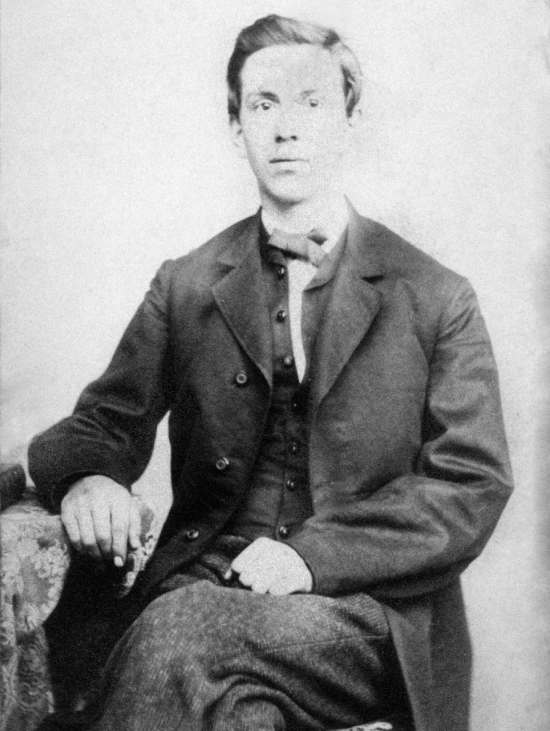
“Edson White”
Often Edson and his father, James White, would argue about the poor decisions Edson would make—particularly how he handled money.7 But she often stood up for Edson, seeing his potential and knowing that God would never give up on him, and neither would she.8
But at one point in his life, Edson had gotten so discouraged that he decided to turn away from God altogether.9
Ellen White agonized over his decision. And while she respected his right to choose, she pleaded with him in her letters to turn back to God.10
It was at this time that God gave her a symbolic dream of Edson drowning in an undertow.11 This represented his dire spiritual situation, and how he needed a helping hand to help him keep his head above water during his tumultuous spiritual struggle.12
She shared this dream with Edson, not in an attempt to frighten him, but to show him the reality of what his decision to reject God would mean.
Contemplating his mother’s perseverance and dedication to his spiritual well-being, this experience eventually convicted Edson that he needed a change of direction in his life. He decided to once again invite God into his heart.13
His conversion was due in part to the tireless efforts of his mother. And together, they rejoiced over the newfound freedom he was able to find in his relationship with God. Edson could sense His holy guidance as he finally fulfilled his ambition to become a sailor.
By witnessing Ellen White’s dedication to God, and to the world and the children He loves, her sons were inspired to also use their talents for God.
With his steamboat, Edson created an educational ministry on the Mississippi River for African Americans.14 In the past he had also worked as a printer, songbook publisher, writer, and also helped with the General Sabbath School Association.15
Meanwhile, Willie became her assistant and traveling companion as she traveled abroad to help establish and encourage additional ministry efforts to help spread the Gospel.16 Throughout his lifetime, Willie was an editor and an administrator, along with other roles such as serving on the Battle Creek College Board and assisting with the Sabbath School Association.17 Some other noteworthy positions include his role as one of the directors for the Health Reform Institute and vice president of the Seventh-day Adventist Publishing Association.18 He even became the president of the Australian Union Conference.19
Ellen White was proud of both her sons’ ministerial careers. She prayed for them constantly and aspired to always be there for them in their struggles, encouraging them to keep doing God’s work.
Overall, she was happy to see the next generation taking over her work for the Lord. She knew it didn’t depend on her. She was just a willing vessel for the Holy Spirit to do His work.
Ellen White passed away in 1915. But she left her children with the memories of her unique ministry and the miraculous ways she was used by God. These were priceless experiences that complemented her genuine love for her sons, and her desire to help everyone learn about Jesus.
Her legacy in the field of education

Marienhohe Adventist College, Darmstadt, Germany
Because of that very desire to help people around the world learn about who Jesus Christ really is, Ellen White contributed to the field of education by encouraging Adventists to develop high-quality schools that included whole-person education and spiritual instruction—something that was quite rare in her day.
Through her diligent Bible study and guidance from the Holy Spirit, she helped establish the Seventh-day Adventist Educational system based on fundamental biblical principles that make a difference in each child’s ability to learn and grow.
Of the denomination’s early founders, Ellen White was one of the strongest supporters of Adventist schools. She saw the need for educational efforts that encouraged godly living and a closer walk with Christ, rather than basic book learning that only focused on the bare necessities.
She envisioned schools that would help students grow mentally, physically, and spiritually.
“True education means more than the perusal of a certain course of study. It means more than a preparation for the life that now is. It has to do with the whole being, and with the whole period of existence possible to man. It is the harmonious development of the physical, the mental, and the spiritual powers. It prepares the student for the joy of service in this world and for the higher joy of wider service in the world to come.”20
She helped Adventist schools pursue these ideals by sharing the instruction God gave her through the spiritual gift of prophecy.
She recorded these principles in her book, Education.
Some of these principles include:
- All subjects should be taught within a biblical framework.21
- Students learn practical skills and participate in manual labor.22
- Teachers should encourage students to think critically.23
- Students should spend more time out in nature.24
- Students should learn how to serve others, and regularly be given chances to do so.25
Ellen White, with the Holy Spirit’s guidance, also helped the Adventist Church determine the location of several Adventist schools, some of which include:
- Andrews University (1874)26
- Pacific Union College (1882)27
- Avondale College (1897)28
- Loma Linda University (1905)29
Most of the educational institutions she helped establish are still in full operation today. And several more schools have been established around the world.
Today there are over 9,000 Adventist schools worldwide.30 This includes 118 colleges, 6,621 primary schools, and 2,731 secondary schools.31
Overall, the Adventist school system is the largest Protestant school system in the entire world.32
It’s thanks to the Holy Spirit working through Ellen White, coupled with the diligent efforts of Adventist teachers and administrators, that this educational dream continues to flourish. Children can not only learn about more of the wonders of God’s creation, they can also learn how to get to know their Creator better and how to follow His leading throughout their whole lives.
Her legacy upholding the importance of studying and following Bible truth

Photo by Priscilla Du Preez 🇨🇦 on Unsplash
And her desire to educate didn’t stop with young children. She knew that everyone, from unbelievers to new believers to long-time followers of Christ, has more to learn about our Creator God and how He works with humanity.
When the Seventh-day Adventist Church was in its early years, Ellen White was deeply involved in the Bible study efforts that eventually formed the Fundamental Beliefs of the denomination. The small but fast-growing group of believers wanted to be very careful that their collective beliefs were firmly based in Scripture. They didn’t want to rely too heavily on tradition or popular philosophies of the time.
Through this study, early Adventists came to understand central concepts like the Sabbath, the Second Coming, and the Investigative Judgement. And because these concepts are complex and dependent on the understanding of other parts of the Bible, sometimes these study efforts would become temporarily stalled when they came across a passage that they weren’t unanimously agreed upon in how to interpret or apply it.33
There were also occasions throughout early Adventist history when church leaders would disagree on some of the core concepts behind Adventist doctrine. One of the most controversial theological discussions was on the topic of salvation by faith.
Ellen White had a lot to say at one of the General Conference sessions when this topic was greatly debated.34
Some delegates were so overzealous about obeying God’s law they de-emphasized the role of God’s grace in the process of salvation, even though it’s emphasized all throughout Scripture.35
Ellen White agreed that people should obey the law. God asks this of His followers in the Bible, and human beings need an understandable framework to live by. But she, along with fellow believers E.J. Waggoner, and A.T. Jones, insisted that we should not lessen the role of God’s grace and His unfathomable love demonstrated by giving His Son, Jesus Christ, to die on the Cross.
They continued to present Bible-based information about righteousness by faith, as well as the fact that our faith is demonstrated through our works by the guidance of the Holy Spirit (James 2:14-26).
Ellen White studied the Bible diligently and was always listening for the prompting of the Holy Spirit. She took a practical approach to studying this complex topic. And as a result, she asked believers to accept salvation by faith, and once they’d done that, to live a life of active faith and service to the Lord as a response to His love, not as a way to “earn” salvation.
In addition to confronting legalism, she also played a significant role in keeping the Adventist Church from being influenced by false or misleading teachings of trending philosophies or belief systems.
One of these philosophies was pantheism, the idea that God is an impersonal force rather than a relational Being, and that this “force” was in everything, particularly expressed through nature. While God certainly created everything and we can see His glory expressed through nature, the big problem with this philosophy was that those who followed it usually ended up essentially worshiping nature itself, as well as other people, as if everything was fully divine all the time. It deterred the focus from having a personal relationship with a loving God, who created everything in nature for us to respect, enjoy, and care for—not to worship.36
Ellen White demonstrated time and time again that the only way to establish sound doctrine is through thorough Bible study under the guidance of the Holy Spirit.
She also followed the Holy Spirit’s prompting to help people apply biblical principles to their daily lives.
The health message

“Courtesy of the Ellen G. White Estate, Inc.”
Ellen White left a considerable legacy in the fields of health and medicine. She did this by emphasizing the connection between physical health, and mental and spiritual health. She also taught people how we can best care for the bodies God gave us, and even helped establish health institutions that still stand today.
The Holy Spirit led Ellen White to encourage the establishment of sanitariums (countryside hospitals that treat specific or chronic illnesses). She was even given guidance on what they should offer and where they should be located. (Some of these include those in Glendale, Paradise Valley, and Loma Linda.37)
Sanitariums are different from your average hospital because they teach patients about preventive care and lean toward natural, lifestyle-based treatments.
In other words, they don’t just patch up their patients and discharge them. The idea is to both help them get better and show them what to do to ensure they stay healthy in the future.
Many of these sanitariums would later become full-fledged hospitals, although some sanitariums still exist today. We now have more than 230 Adventist hospitals and sanitariums around the world.38
These types of health clinics were especially helpful in Ellen White’s day. She lived during the US Industrial Revolution, which was also a time when general health suffered due to poor hygiene practices, exposure to toxins, dangerous working conditions, and little knowledge about proper nutrition. Moved by the Holy Spirit, she recognized the need to improve people’s physical health, so they could better enjoy the lives God gave them and be better able to serve others.39

Photo by Juliane Liebermann on Unsplash
She also wrote several books and many letters to help people live fuller, healthier lives, based on the information God inspired her with. She encouraged people to stop harming their bodies and minds with tobacco and alcohol, and to spend time outside in the sunshine and fresh air, enjoying what nature has to offer.
While this might not seem like revolutionary advice to us today, there was a time when tobacco was used as a go-to remedy for roughly 65 different health conditions.40 And people gave little thought to sanitation methods or the importance of including fruits and vegetables in their regular diets.
Her consistent advice about caring for our bodies in practical ways can be summarized by these key points, which is now known as the NEWSTART system:41
- N = Nutrition
- E = Exercise
- W = Water
- S = Sunlight
- T = Temperance
- A = Air
- R = Rest
- T = Trust in divine power
Sanitarium staff were encouraged to teach their patients about these health principles. And it was considered revolutionary at the time to embrace a plant-based diet, which she pointed out would lead to a healthier body and mind.
This concept, reflecting principles from Daniel 1, has since been proven in studies on Adventist health, to help people avoid getting diabetes, cancer, stroke, and various cardiovascular diseases.
So beyond teaching people about Jesus and creating a Christian school system, Ellen White’s legacy has actually led people to live longer, happier lives. That’s why so many of her books share the importance of whole-person health and how that can complement a life of service to God and others.
Overall, however, her writings cover a wide variety of both theological and practical topics. Even though she only had formal education that ended at age nine, she became the most translated female nonfiction author.42
Ellen G. White’s publishing legacy

Photo by Emmanuel Phaeton on Unsplash
Of all Ellen White’s achievements, the writings she published are the most lasting legacy of her ministry.
At a time when a fledgling Christian movement needed divine leadership and direction, her writings served to point back to biblical principles that were often forgotten, misunderstood, or misapplied in her day. This included essential subjects like health, Christian behavior, servant-leadership, doctrine, evangelism, and spiritual gifts.
According to Tim Poirier, Vice-Director of the Ellen G. White Estate, the most important thing about her writings is that:
“They provide spiritual and practical instruction for living in this world and preparing for the world to come.”
And because these things are written down, we don’t have to worry about forgetting what she taught us. These helpful words are recorded for the benefit and growth of the Adventist Church (particularly books like Testimonies for the Church) and for those wanting to foster a personal relationship with their Savior, Jesus Christ (with books such as Steps to Christ).
Though her writings were written for believers, and sometimes specifically Adventists, everyone can find practical value in her writings. Even though she authored these books over a century ago, the underlying principles are always applicable.
The Ellen G. White Estate owns all of Ellen White’s personal and published writing. They have the responsibility of faithfully preserving and sharing her writings for the world to read.
If you’re interested in reading her writings for yourself, you can access them at egwwritings.org.
(And for those who prefer to listen rather than read, they have digital audiobook versions of her writings.)
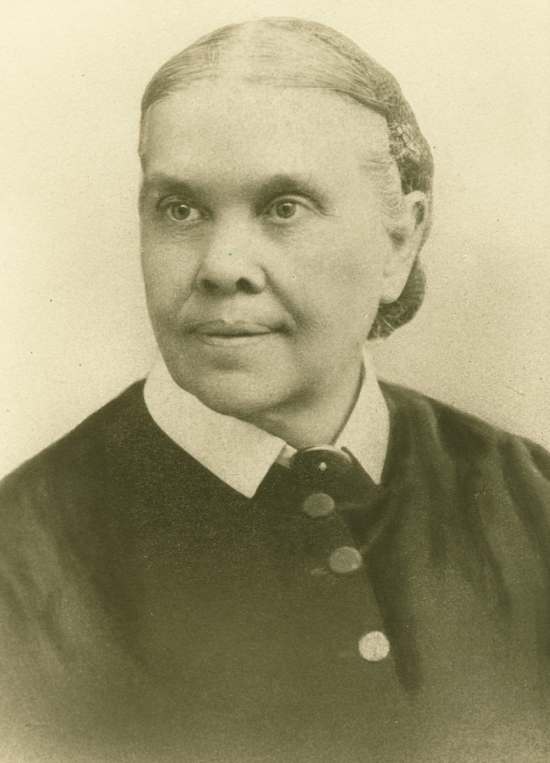
“Ellen White”
Overall, she wrote more than 100,000 pages within her lifetime.43
Some of her most popular works include The Desire of Ages and Steps to Christ, both of which are published by Pacific Press and can be found in every Adventist Book Center, among other places.44
Today, her legacy lives on primarily through her writings, which is how God gifted her to share His love and the Gospel message with the world. Through them we can see both the depth and breadth of her work.
The Impact of Ellen G. White
Ellen White was a devoted wife, mother, friend, messenger, speaker, teacher, health reformer, and humanitarian.
Wherever she went, people generally expressed a favorable impression of her. In fact, whenever God called her to visit a town to speak or meet with people, many of the locals found themselves wishing she would stay.45
And she wasn’t only recognized on a personal level. Big papers soon caught on to the impact she was making on the world.
In fact, shortly after she passed away, the New York Independent, a monthly journal, wrote:
“She was absolutely honest in her belief in her revelations. Her life was worthy of them. She showed no spiritual pride and she sought no filthy lucre. She lived the life and did the work of a worthy prophetess.”46
This is a big part of why she was recognized by Smithsonian Magazine. She helped countless people look to the Bible for answers, and she contributed to the improvement of the general health of Americans. By being a willing vessel for the Holy Spirit to work through her, she accomplished remarkable things.
Want to learn more about one of Ellen White’s most popular books?
Related Articles



- “How many books and articles did Ellen White write?” [↵]
- White, Ellen G., “I’d Like to Ask Sister White,” Ellen G. White Estate, p. 87. [↵]
- Ibid, p. 85-87. [↵]
- Ibid, p. 91. [↵]
- Ibid, p. 90. [↵]
- “Edson White: His Conversion and Work,” [↵]
- Ibid. [↵]
- Ibid. [↵]
- Ibid. [↵]
- Ibid. [↵]
- Ibid. [↵]
- Ibid. [↵]
- Ibid. [↵]
- “Edson White: His Conversion and Work,” [↵]
- Norman, Steve III, “James Edson White: A ‘No Limit’ Man,” [↵]
- Ibid. [↵]
- William Clarence ‘Willie’ White,” [↵]
- Ibid. [↵]
- Ibid. [↵]
- White, Ellen G., Education, p. 13. [↵]
- Ibid., p. 17. [↵]
- Ibid., p. 219. [↵]
- Ibid, p. 231. [↵]
- Ibid., p. 101. [↵]
- Ibid., p. 215. [↵]
- “Andrews Facts,” [↵]
- “About PUC,” [↵]
- “About Us,” [↵]
- “About the University,” [↵]
- “Seventh-day Adventist Education Statistics,” [↵]
- Ibid. [↵]
- “Now more than ever! Adventist Education,” [↵]
- White, Ellen Gould, Selected Messages Book 1, pp. 206-207. [↵]
- Douglass, E. Herbert, Messenger of the Lord, p. 195. [↵]
- Ibid. [↵]
- Ibid, pp. 200-201; White, Ellen G., Testimonies for the Church vol. 8. [↵]
- Douglass, p. 163. [↵]
- “Quick Statistics on the Seventh-day Adventist Church,” [↵]
- Ellen G. White, Counsels on Health, p. 6. [↵]
- anchez-Ramos, R. Juan, “The rise and fall of tobacco as a botanical medicine, ”[↵]
- “The NEWSTART Program,” [↵]
- White, Arthur L., Ellen G. White: A Brief Biography. [↵]
- “How many books and articles did Ellen White write?” [↵]
- “What is Ellen White’s Most Popular Book?” [↵]
- Skrzypaszek, John, “Ellen G. White’s Ministry in the South Pacific,” [↵]
- The Test Results Pt.4,” [↵]
More Answers

Does the Seventh-day Adventist Church Believe in Paying Tithe?
Seventh-day Adventists believe in paying tithe and offerings based on the biblical command and our commitment to being wise stewards of God’s resources. These donations help fund the mission of the Adventist Church by supporting pastors, missionaries, church expenses, and evangelistic projects, among other things.

How Does Jesus Christ Help Us Overcome Sin?
You might have heard the phrase somewhere about “gaining victory over sin” through “the power of Jesus Christ” or “through the blood of Jesus,” etc. But what does that mean exactly, and how does it all work…especially if we’re still having to live out our lives in a world that’s still full of sin?

What Are the Beatitudes (And What Do They Mean)?
What Are the Beatitudes (And What Do They Mean)?The Beatitudes, found at the beginning of Jesus’ Sermon on the Mount in the Gospel of Matthew, are Jesus’ kingdom manifesto. They describe the way His kingdom works and what it means to be one of His followers. Even...

What Is the Fruit of the Holy Spirit in the Bible?
When we cultivate our relationship with Jesus, the Holy Spirit gives us traits that help us in our day-to-day activities and interactions. These are the fruit of the Spirit.

Seventh-day Adventist World Population and Demographics
The Adventist Church has more than 22 million members and 100,000 churches worldwide, plus a large system of hospitals, schools, and publishing houses. Learn more about this diverse church.

Bible Translations
Bible Translations—Which Version is “Best”?The most accurate Bible possible would be one that’s printed in its original languages—Hebrew and Greek. But since most of us are not Hebrew or Greek scholars, the next best option is an English Bible translation that most...

What Is a Seventh-day Adventist Camp Meeting?
Although camp meetings didn’t begin with the Seventh-day Adventist Church, they’re as much an Adventist thing as haystacks.
Camp meeting is an extended event for Adventists (and non-Adventists) of all ages to gather and participate in spiritual seminars and activities. During the event, attendees often camp in tents, campers, or RVs.

What Is the Statue in Nebuchadnezzar’s Dream?
Ever had a dream you couldn’t remember? You know it was disturbing, but the details escape you. Ugh, the frustration!

How to Join the Seventh-day Adventist Church
Whether you heard about the Seventh-day Adventist Church through a traveling evangelist, during your online searches, or through a loved one or relative, you might be considering joining yourself.

What Are the Three Angels’ Messages in Revelation 14?
The three angels’ messages in Revelation 14 warn the world to worship God, leave religious confusion, and avoid worship of human traditions instead of God’s commands.

Is the Old Testament Important for Christians Today?
Yes, the Old Testament is important because it kicks off the story that is continued by the New Testament. Without it, we wouldn’t have the vital background to Jesus’ first coming and the other accounts of the New Testament.
![The Early Christian Church [Overview]](https://devsite.askanadventistfriend.com/wp-content/uploads/2023/01/old-temple-400x250.jpg)
The Early Christian Church [Overview]
The Early Christian Church describes the faith community that developed from followers of Jesus after He returned to heaven (Acts 1) in A.D. 31. Their purpose was to be witnesses of the life, death, and resurrection of Jesus and grow their faith community into a worldwide movement.

Individual or Group Bible Study—Which Is Better?
They’re both great, of course! But depending on where you’re at and what your goals are, it’s worth looking into the different benefits of each.

How Do Adventists Do Baby Dedications?
For Christians, dedication ceremonies for babies, also for older children, are an important time for parents and the church. It’s a special part of the worship service when parents present their young children to God and the church family. Both parents, along with the congregation, regard this as a solemn promise to be a Christ-like example to the child.

What You Need to Know About Temptation and How to Resist It
Ever felt like you face the same temptation day after day? The one temptation that always seems to resurface?
It can be frustrating, yes. But be encouraged—being tempted doesn’t mean you have done anything wrong! And even if you give in to temptation, you are never too imperfect to come before God.

All About the 2300-Day Prophecy and the Investigative Judgment
This page will explain what the 2300-day prophecy is about. We’ll especially be looking at what events marked its fulfillment and what it has to do with the Investigative Judgment.

Was Ellen G. White Really a Prophet?
If you look at what Scripture provides as tests for a true prophet, Ellen White meets all the criteria.

Do Adventists Celebrate Communion and Foot Washing?
Like many Christian denominations, Adventists regularly participate in communion, also referred to as the “Lord’s Supper” or the “Last Supper.” They also practice foot washing (John 13:1-20), or the “ordinance of humility,” during the service—which isn’t as common.

Faith and Works—Do Both Matter in the Christian Life?
In so many religions all throughout time, individuals work toward enlightenment, salvation, or the favor of a deity. People are taught subtly—or not so subtly—that if you only do enough good deeds, you’ll be worthy/ascended/redeemed/approved, etc.

What is the Concept of “Present Truth” and Why is it Important?
Present truth is the principle that certain biblical truths are relevant to God’s people at specific times in history. God sends the Holy Spirit to reveal truths that help us better understand how to interpret and apply His Word in a present moment.
What is the Spirit of Prophecy (Books 1–4) by Ellen G. White?
Applying biblical prophecy to history, recent events, and especially the future, can be a daunting task. Even a little scary for some. But even so, we can’t help but want to know more. We want to be prepared—to feel like we know how to weather the storm.

Do Seventh-day Adventists Celebrate Easter
Yes, many Seventh-day Adventists do celebrate Easter.

Ellen G. White’s Counsel on Christian Education
Ellen White, a co-founder of the Seventh-day Adventist Church, saw that the U.S. educational system during her time was lacking. And as part of her life of ministry, she sought out practical ways to be better stewards of our minds, bodies, and the lives we’re given.

What Does Ellen White Say About Prayer?
Have you ever had a burden you just had to tell someone, but you were afraid of being judged if you did? Ellen G. White, an important figure in the Seventh-day Adventist Church and a prolific writer, described prayer as talking to God in a personal way—He’s the friend we can tell everything to.

Were All Ellen White’s Visions About the Future?
While the visions God gave Ellen White were often about the distant future or last-day events, she had many others that addressed different topics. They may not be discussed as much as her visions about the Second Coming or the End Times, but they tackled some timely topics for her day.

What Did Ellen White Say About End-Time Prophecy?
We can read in Scripture about the series of events and signs that lead up to the second coming of Jesus Christ. And it sounds pretty intense, to say the least. The symbolic nature of the language of prophecy also can make things tricky to understand at first.

Does the Adventist Church Have Youth Ministry Programs?
The Seventh-day Adventist Church has been organizing and operating youth ministry programs since 1879.
In our opinion, youth ministry is one of the most important ministries a church can have.

Were All Ellen White’s Books Inspired?
As the most translated female author in the world, Ellen White wrote numerous books, articles, pamphlets, and more. These writings focused on developing Christian character, emphasizing Bible truth, practical tips for living well and staying healthy, and discussing effective methods of delivering the gospel message to the world.

Do Adventists Celebrate Birthdays?
Yes, most Seventh-day Adventists do celebrate birthdays because we see them as excellent reminders of the life God has blessed us with. And we celebrate them the same way everyone else does—with friends, family, presents, and a special meal.
Didn’t find your answer? Ask us!
We understand your concern of having questions but not knowing who to ask—we’ve felt it ourselves. When you’re ready to learn more about Adventists, send us a question! We know a thing or two about Adventists.