
Ellen White, a co-founder of the Seventh-day Adventist Church, saw that the U.S. educational system during her time was lacking. And as part of her life of ministry, she sought out practical ways to be better stewards of our minds, bodies, and the lives we’re given.
A big part of that stewardship involves properly educating children—realistically preparing them to be balanced, confident contributors to their communities.
But what exactly did she say about how students should be taught? And where did she get these ideas from?
Here’s the full scoop on her counsel for what she called “true education.”
- Why education was so important to Ellen White
- Her philosophy on whole-person education
- How she encouraged individuality
- The insight she was given about Adventist schools
- How her ideas influenced the Adventist school system
- Ellen White’s legacy in Adventist education
Let’s start with some background information.
Why education was so important to Ellen White

Photo by David Straight on Unsplash
Ellen White saw education as a way to train young people to become helpful citizens of their communities and stronger Christians. From pre-K kids to college students, she believed a foundation in Christian education was essential.
This idea echoes Solomon’s advice to “train up a child,” while they’re still young to instill good habits early on (Proverbs 22:6, NKJV).
She knew that upbringing affects a child’s values and subsequently, the choices they make in the future. So, she wanted children to learn that there’s a God they can trust in, and that His Word can be applied to every part of life.
She believed that it’s ideal for much of this “character training” to begin at home. Unfortunately, she saw that in many cases, this wasn’t happening. And for a variety of reasons.
Some parents were more focused on their own lives or societal appearances, so nurturing their children wasn’t on their priority list. And on the other end of the spectrum, some families had to spend all their energy just trying to put food on the table and run the household. But even regardless of income or status, some parents were uneducated themselves, or they never had good character modeled to them in their own upbringing.
So Ellen White saw schools as a source of spiritual nourishment for children, both as a reinforcement to what’s taught at home, and as a foundation for those who didn’t come from spiritually strong homes.
By establishing privately-run Adventist schools, the classrooms could act as additional support to parents who were trying to train their children to follow a Christian lifestyle. While Ellen White certainly believed that students should grow in knowledge and understanding, she saw that alongside “book learning,” children can be taught to grow in their sense of responsibility, love, and unselfish service to others.
“True education does not ignore the value of scientific knowledge or literary acquirements; but above information it values power; above power, goodness; above intellectual acquirements, character. The world does not so much need men of great intellect as of noble character. It needs men in whom ability is controlled by steadfast principle.”1
Ellen White saw how this kind of gradual yet strong character building is essential when considering the big picture. After all, she knew that humanity lives amid the “great controversy,” or the spiritual battle between good and evil that envelops our world.
Even though we can’t always see it, Satan fights against God for our allegiance. While Satan hopes to win our affection in an attempt to destroy us as a way to hurt God, God hopes to remind us of His genuine love in an effort to save us.
This spiritual battle doesn’t involve swords, tanks, or even guns (Ephesians 6:12, NKJV).
It’s not a kind of warfare we’d typically think of. Instead, it takes place inside each one of us.
In fact, Ellen White wrote a book specifically about this subject. Within it, she explains that we demonstrate our allegiance to God or Satan by the decisions we consistently make. Our habits are a demonstration of our character and our priorities.
That’s why it’s so important to establish a good foundation for healthy habits—physically, mentally, and spiritually—early on.
In fact, strengthening our character is probably the most important thing we can do in life, period.
It’s important for education to prepare us for future careers. But that’s only the most basic-level goal of education. It’s even more important that education keeps us focused on the big picture.
We might learn the basic skills needed to become an auto mechanic, an administrative assistant, a construction foreman, or even a CFO. But if our habits and character remain underdeveloped, success in those careers will be difficult.
And Ellen White had the prayerful foresight to advocate that these things should be part of a child’s education, from the early years to near adulthood.
Educating the whole person

Photo by The Tampa Bay Estuary Program on Unsplash
In order to truly build a person’s character, Ellen White saw that a student’s education would need to acknowledge all aspects of their development. This means that schools must encourage intellectual, physical, and spiritual growth.
In her book, Education, she expounded upon the importance of multi-faceted teaching and learning:
“True education means more than the perusal of a certain course of study. It means more than a preparation for the life that now is. It has to do with the whole being, and with the whole period of existence possible to man. It is the harmonious development of the physical, the mental, and the spiritual powers. It prepares the student for the joy of service in this world and for the higher joy of wider service in the world to come.”2
Here’s some more of what she had to say about these areas of development:
Intellectual:
- All courses should have a biblical framework.3
- Students shouldn’t spend all their time learning from textbooks. The human mind also benefits from hands-on learning, and from being outside in nature.4
- Teachers should cultivate the special talents of students. But, they should not neglect to teach them about a wide array of subjects,5 or the “common branches of education.”6
- Rather than over-emphasizing memorization, teachers should also empower their students to think critically.7
Physical:
- It’s healthier for students to spend more time outdoors. Their physical well-being should come before their academic responsibilities.8
- Practical, manual skills and trades should be included in the curriculum.
- Students should receive enough breaks from their studies to exercise. Students should not spend their whole day studying indoors because it can damage their health.9
- She believed students should engage in manual labor for practical training.10
Spiritual:
- Christian education should help the student develop a stronger character modeled after Jesus.11
- Teachers should also model the kind of character they want their students to have.12
- Students should be taught and encouraged to serve others.13
- Teachers should help students seek careers that will enable them to use their talents to serve others.14
These principles helped establish an education system that continues to focus on a student’s intellectual, physical, and spiritual health.
How she encouraged students’ individuality

With these fundamentals in mind, Ellen White also asserted that every child is different. She recognized that some children learn differently than others.15 And she saw that Adventist schools should attend to these personalized needs as much as reasonably possible.
Focusing on a student’s individual talents was a particular concern for Ellen White:
“Many apparently unpromising youth are richly endowed with talents that are put to no use. The true educator, keeping in view what his pupils may become, will recognize the value of the material upon which he is working.”16
Because Adventist schools are private institutions, they usually have smaller classes and a more favorable teacher-student ratio. This allows teachers to structure the class with their students in mind, allowing for varying levels of differentiation in the classroom.
Some Adventists take this a step further by homeschooling their children. This lets their children learn at their own pace and focus on areas of giftedness.17
Ellen White didn’t express any preference between homeschooling or attending Adventist schools, but she did say that parents should give their kids a head start by modeling and teaching character-building habits from an early age.
“It is in the home that the education of the child is to begin. Here is his first school. Here, with his parents as instructors, he is to learn the lessons that are to guide him throughout life—lessons of respect, obedience, reverence, self-control.”18
Much of the advice she gave was like these written words of counsel—practical and to the point.
But we have to remember her advice also depended on the circumstances of a given culture, family, and child. In other words, what works for one child in one place at one time in history might not work for another.
Because of this, she encouraged her readers to use common sense when applying her advice to their lives. One person can never anticipate every possible variable or circumstance, and God endowed us with the freedom to make our own decisions and consider our own options.
This subject brings us to one of Ellen White’s most central beliefs about education.
She fully believed in God’s call for us to reason (Isaiah 1:18). While she agreed children should learn to obey their elders, she did not believe they should blindly follow whatever they were taught.19 She urged them to think critically and ask questions. To test ideas and learn the reasons behind them. She wanted them to be more aware of their free will, which she repeatedly referred to as “individuality.”20
She warned parents and teachers about stifling a child’s individuality, saying:
“The effort to ‘break the will’ of a child is a terrible mistake. Minds are constituted differently; while force may secure outward submission, the result with many children is a more determined rebellion of the heart…This method, sometimes employed in the training of children, makes them little more than automatons. Mind, will, conscience, are under the control of another. It is not God’s purpose that any mind should be thus dominated.”21
In fact, she saw critical thinking as the ultimate work of education:
“Every human being, created in the image of God, is endowed with a power akin to that of the Creator—individuality, power to think and to do. … It is the work of true education to develop this power, to train the youth to be thinkers, and not mere reflectors of other men’s thought.”22
This singular concept drove much of the instruction she passed down to early Adventist educators.
The insight she was given about Adventist schools

Courtesy of the Ellen G. White Estate, Inc.
Much of Ellen White’s counsel came from her own observations and experience with Christian schools. She also received visions from the Holy Spirit on the subject (though not all of them were recorded in writing).
Some of her most influential visions showed her where future schools should be located.23
Some of which included:
- Loma Linda University (1905)24
- Avondale College (1897)25
- Pacific Union College (1882)26
- Andrews University (1874)27
Today, these universities are some of the most prominent Adventist institutions in the world.
God’s divine instruction in leading Ellen White to certain locations has given many Adventists more faith to trust in Ellen White as one of God’s messengers. But in the beginning, not everyone agreed with her location suggestions.
Such was the case of Avondale College.
At that time, many Adventist schools set up school-run businesses to finance the school. So when the founders of Avondale College were looking for a location, they wanted to find good land for farming. They found a good piece of property with Ellen White’s help, but they decided to have it surveyed before they would buy it.28
Ellen White was told in a dream that the surveyors would wrongly claim that the soil was unfit for farming.
Sure enough, the surveyors proclaimed the land unfit. But even as many people doubted the location, Ellen White insisted they buy the land.29 Eventually, Adventist leaders agreed to buy it—and they were able to purchase it much cheaper, because of the surveyors’ findings. And in time, the college (and its farm) prospered.
How her ideas influenced the Adventist school system
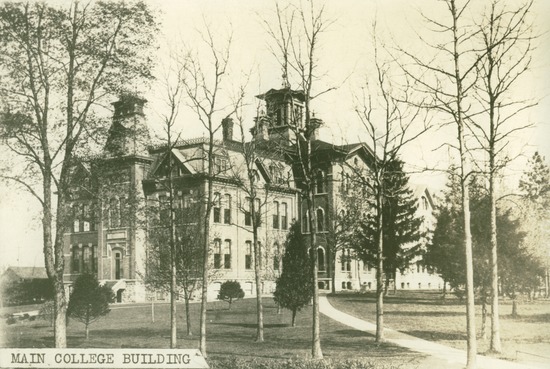
Courtesy of the Ellen G. White Estate, Inc.
Ellen White’s ideas led to the establishment of a new educational system different from the schools at the time, whether public or private. The big difference? Making Bible-based Christian belief and practice the foundation of education.
She wanted schools to produce stronger, healthier, morally-conscious students. That meant she had to show Adventist educators what students should learn about and how they should be taught.
The first official Adventist school, Battle Creek College, was created in 1874.30 It was the church’s first attempt to provide an educational institution for its young people.
Once the school was established, Adventists wanted to know the most effective way to operate it.31 In response, Ellen White released several articles in The Review and Herald, in addition to writing letters directly to church leaders.
By the end of her writing career, she had addressed the following topics:
-
- Curriculum:
- That Jesus Christ be reflected in every part of the curriculum.
- Must include science from a biblical perspective, music, ancient Bible history, and physiology.
- All subjects to be taught within a biblical framework. For example, teaching about science and nature in the context of God’s creation.32
- Students should be taught to study the Word of God, allowing them to discover “the mysteries of the Bible.”
- Find opportunities to point out object lessons found in nature.
- Teaching methods:
- Bringing students outside as much as possible.
- Include hands-on lessons.
- Students should be taught to reason—not solely taught memorization.33
- Seek out opportunities to apply Bible principles to real life.
- Foster cooperation rather than competition.
- Offer loving guidance and be uplifting companions to their students.34
- Using plenty of illustrations and examples in lessons.35
- Teachers should follow Jesus’ example and character as the ultimate teacher, treating everyone with compassion and dignity.
- Location:
- Ideally to be outside the cities and closer to rural areas. The campus would have more space to expand and space to operate an on-campus business or trade, so the students could learn it and find opportunities for part-time work and hands-on learning.
- Countryside locations will benefit the students’ health, providing fresh air and more opportunities for exercise.
- Schools should have gardens and be close to health centers. Both of these additions can encourage the health of students and provide real-world learning environments.
- Curriculum:
Besides creating a new learning program for students, Ellen White suggested students work in after-school programs.36 She wanted students to be able to apply what they learned in a variety of skilled labor opportunities.37
She saw the benefit of teaching technical skills in the areas of manufacturing or agriculture.38 She even explained that basic life skills should not be limited to one gender. She thought everyone should learn to be more self-sufficient in housework and maintenance.39 This idea was revolutionary for her time, since gender roles were more rigid. But in the end, these skills would prepare young people for their future jobs, in addition to helping them live more independently.
These programs would also show students the value of hard work, encouraging them to spend more time serving their community.
The General Conference voted to adopt her advice at the 1891 education convention.40 The Adventist education system grew, becoming one of the most prominent programs for private Christian education.
Many Adventist schools still operate based on Ellen White’s counsel today. The spiritual framework of the curriculum helps many students draw closer to Christ, while the emphasis on hands-on learning has created many service-learning opportunities.
Ellen White’s legacy in Adventist education
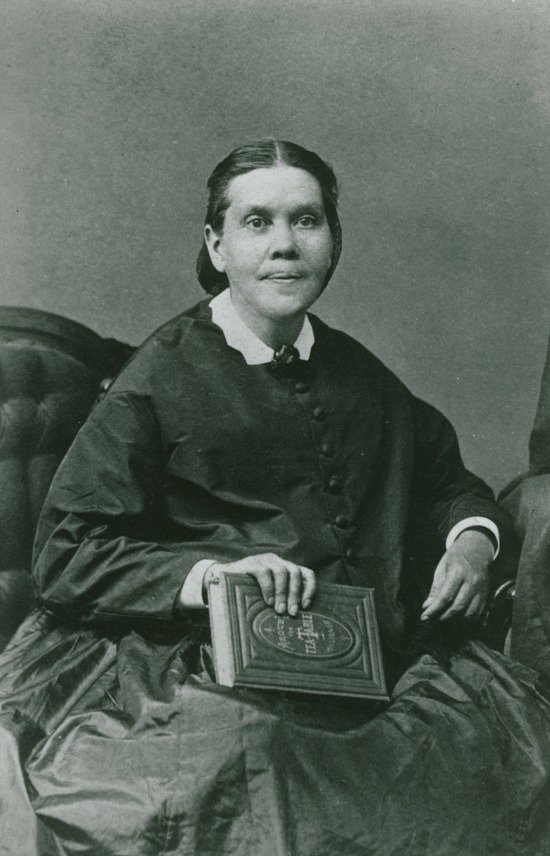
Today, there are more than 9,000 Adventist schools around the world.41 Among these are 6,621 primary schools, 2,731 secondary schools, and 118 colleges, all working to prepare the youth for a life of service today, and for an eternity with Jesus.42
Unlike other schools, Adventist education isn’t all about absorbing as much new information as possible. It’s about learning how to apply important, relevant skills in service to Christ and to others.
Rather than pressuring students to pursue jobs that will make them the most money or earn them the most prestige, they’re encouraged to follow God’s plan for their lives. Each student is uniquely gifted, and the Holy Spirit will lead them toward the most fitting opportunities.
Ellen White also felt a special calling to encourage young people to pursue the mission field. Her thoughts on education were ever-expanding as she learned more from God and from personal experience.43 She decided this revelation was so essential that she rewrote some of her pages on education to include this new information.
Today, it’s not uncommon to find Adventist schools involved in various mission projects or taking mission trips, and most Adventist colleges and universities offer student missionary programs, where they spend a year abroad in a service position.
And even though she encouraged this mission focus, she still upheld the importance of all types of careers. Whether these jobs be in office work, craftsmanship, law enforcement…any position can be an opportunity to model the character of Christ and make a difference in the community.
“A kind, courteous Christian is the most powerful argument that can be produced in favor of Christianity.”44
Today, countless young people are being trained in Adventist schools to follow God’s calling for their lives. But above all, the schools have taught them how to be more like Jesus, and to reach others through their compassion and genuine service.
To make sure her guidance was made helpful and easily referenced, she outlined her counsel in a book titled Christian Education. (Ten years later, this book was replaced by Education, in which Ellen White greatly expanded on the principles of education she advocated.)45
And she didn’t stop there.
She went on to write more books addressing proper education, such as Counsels to Parents, Teachers, and Students.
Her books are all currently owned by the Ellen G. White Estate. They’ve published her writings on their website, and maintain their printing and reprinting for distribution through bookstores.
Want to learn more about the history of Adventist education?
- White, Ellen G., Education, p.225. [↵]
- Ibid., p. 13. [↵]
- Ibid., p. 17. [↵]
- Ibid., p. 101 [↵]
- Ibid., p. 233 [↵]
- White, Ellen G., Ministry of Healing, p. 402 [↵]
- White, Ellen G., Education, p. 231. [↵]
- Ibid., p. 101 [↵]
- Ibid., p. 208. [↵]
- Ibid., p. 219. [↵]
- Ibid., p. 77. [↵]
- Ibid., p. 278. [↵]
- Ibid., p. 215. [↵]
- Ibid., p. 19. [↵]
- Ibid., p. 233 [↵]
- Ibid.[↵]
- https://www.sdahomeschools.org/why-adventist-families-homeschool/.[↵]
- White, Ellen G., Child Guidance, p. 15 [↵]
- White, Ellen G., Education, p. 18. [↵]
- Ibid. [↵]
- Ibid., p. 288.[↵]
- Ibid., p. 17. [↵]
- “Establishment of Schools,” https://ellenwhite.org/articles/109 [↵]
- http://llucatalog.llu.edu/about-university [↵]
- https://www.avondale.edu.au/about/ [↵]
- https://www.puc.edu/about-puc [↵]
- https://www.andrews.edu/about/facts/index.html [↵]
- “Avondale College,” https://lineagejourney.com/read/avondale-college.[↵]
- Ibid. [↵]
- https://encyclopedia.adventist.org/article?id=HB50. [↵]
- Ibid.[↵]
- White, Ellen G., Education, p.101. [↵]
- Ibid., p. 140.[↵]
- Ibid., p. 213. [↵]
- Ibid., p. 234. [↵]
- Ibid., p. 219. [↵]
- “Is Hands-On Learning Better?” https://byf.org/is-hands-on-learning-better/. [↵]
- White, Ellen G., Education, p. 218. [↵]
- Ibid., p. 216. [↵]
- Ibid.[↵]
- “Seventh-day Adventist Education Statistics,” https://www.adventist.education/education-statistics/. [↵]
- Ibid. [↵]
- Skrzypaszek, John, “Education as the Heart of Ellen White’s Missional Vision for the Seventh-day Adventist Schools: The Australian Context,” Avondale College of Higher Education, https://core.ac.uk/download/pdf/234107241.pdf, p. 25 [↵]
- White, Ellen G., Gospel Workers, p. 122. [↵]
- “Study Guide: Education,” https://whiteestate.org/legacy/guides-ed-html/. [↵]
Related Articles



More Answers

¿Por qué muchos Adventistas del Séptimo Día eligen una dieta vegetariana?
¿Por qué muchos Adventistas del Séptimo Día eligen una dieta vegetariana?Puede que tengas un amigo adventista que sea vegetariano, o tal vez estés asistiendo a una Iglesia Adventista del Séptimo Día por primera vez y notes que en la comida compartida no hay carne....

What is Jesus’ Parable of the Sower About?
The parable of the sower is ultimately about how people responded to Jesus Christ and His message of the kingdom of God—the Gospel.

O que os Adventistas do Sétimo Dia acreditam sobre o Grande Conflito (Bem vs. Mal)?
O “Grande Conflito” é a frase que os Adventistas do Sétimo Dia normalmente usam para descrever o conflito espiritual cósmico entre as forças do bem (Deus) e as forças do mal ou do pecado (Satanás/o diabo).

Was Jesus Ever Hypocritical? Learn What the Bible Says.
Was Jesus Ever Hypocritical? Learn What the Bible SaysMany undesirable traits are associated with hypocrisy. But overall, hypocrites intentionally try to make others believe they uphold or represent a certain belief system, character trait, lifestyle, etc., when in...

Kukatishwa Tamaa Kukuu na Kile Tunachojifunza
Wafuasi wa Miller walitabiri kurudi kwa Kristo Oktoba 22, 1844, lakini Yesu hakuja kamwe. Tukio lingine lilitokea. Gundua kilichotokea kweli na Kukatishwa Tamaa Kukuu kunaweza kutufundisha leo.

When in Doubt: 7 Ways Christians Can Manage Uncertainty
When in Doubt: 7 Ways Christians Can Manage UncertaintyFew things in life are truly certain. And no matter how convinced some people can appear on the surface, no one is immune to doubt. And this isn’t a bad thing. Doubt has a purpose. A role to serve. (Just imagine...
El gran chasco y las lecciones que nos enseña
Los Milleritas predijeron el regreso de Cristo el 22 de octubre de 1844, pero Jesús nunca llegó. Ocurrió otro evento. Descubre lo que realmente sucedió y qué puede enseñarnos hoy El gran chasco.

Is Jesus the Same Being as Michael the Archangel?
Many Christians have wondered at the mysterious identity of Michael the Archangel.
A Grande Desapontamento e Lições que nos Ensina
Os Milleritas previram o retorno de Cristo em 22 de outubro de 1844, mas Jesus nunca chegou. Outro evento ocorreu. Descubra o que realmente aconteceu e o que o Grande Desapontamento pode nos ensinar hoje.
James Springer White, Co-Fundador da Igreja Adventista do Sétimo Dia
James Springer White (1821–1881) foi uma figura chave na Igreja Adventista do Sétimo Dia e marido de Ellen G. White.
James Springer White, cofundador de la Iglesia Adventista del Séptimo Día
James Springer White (1821–1881) fue una figura clave en la Iglesia Adventista del Séptimo Día y el esposo de Elena G. de White.

Kila Kitu Unachohitaji Kujua Kuhusu Chakula cha Siku ya Sabato
Kwa Waadventista Wa Sabato, kushiriki chakula cha Siku ya Sabato pamoja na marafiki na familia ni moja ya sehemu muhimu na ya kumbukumbu ya Sabato.

Nini Maana ya “Mwadventista”?
Waadventista wa Sabato ni dhehebu la Kikristo la Kiprotestanti wanaoshikilia Sabato ya siku ya saba kama ilivyoandikwa katika Biblia.

How to Have a Personal Relationship with Jesus: A 10-Step Guide
How to Have a Personal Relationship with Jesus: A GuideNo matter who you are, you’re surrounded by relationships. Friends, family, colleagues, acquaintances...they all play a part in our lives, for better or worse. So you’re surely aware of a lot of the components...

Biblia Ina Maana Gani Inaposema Yesu ni Mwana wa Mungu?
Biblia inapomwita Yesu Mwana wa Mungu inarejelea uungu wake. Jifunze ni nini kinachofanya hili kuwa muhimu na kinahusianaje na wokovu.

“Go and Sin No More”—What Did Jesus Mean?
These well-known words of Jesus Christ come from two New Testament stories in the book of John—a man healed by the Pool of Bethesda (John 5) and a woman caught in adultery (John 8).

Quais são as Mensagens dos Três Anjos em Apocalipse 14?
As mensagens dos três anjos em Apocalipse 14 advertem o mundo a adorar a Deus, deixar a confusão religiosa e evitar a adoração de tradições humanas em vez dos mandamentos de Deus.

Je! Tunaweza Kuitunza Siku Yoyote ya Wiki Kama Sabato?
Katika sura za kwanza kabisa za Biblia, tunamwona Mungu akianzisha kumbukumbu ya kila wiki na siku ya mapumziko, inayoitwa Sabato (Mwanzo 2:2-3).
¿Cuáles son los mensajes de los tres ángeles en Apocalipsis 14?
Los mensajes de los tres ángeles en Apocalipsis 14 invitan al mundo a adorar a Dios, abandonar la confusión religiosa y evitar la adoración de tradiciones humanas en lugar de los mandamientos de Dios.
Por que muitos Adventistas do Sétimo Dia escolhem uma dieta vegetariana?
Embora nem todo adventista seja vegetariano, muitos evitam completamente o consumo de carne para viver de forma mais saudável, buscando honrar a Deus física, espiritual e mentalmente.

Understanding the Miracles of Jesus Christ
Understanding the Miracles of Jesus ChristWhat do you think of when someone says something is “a miracle”? Maybe you think of an unexpected recovery, surviving a dangerous accident, or getting an answer to a seemingly impossible prayer. Simply put, miracles are...
O que significa “Adventista”?
O que significa "Adventista"?Os Adventistas do Sétimo Dia são uma denominação cristã protestante que observa o sábado bíblico do sétimo dia. A partir dessa crença, eles obtêm a primeira parte de seu nome. Mas e quanto à segunda parte - "Adventista"? “Adventista”...
¿Podemos guardar el sábado bíblico cualquier día de la semana?
En los primeros capítulos de la Biblia, encontramos a Dios estableciendo un memorial semanal y día de reposo, conocido como el sábado (Génesis 2:2-3).
Podemos guardar o Sábado em qualquer dia da semana?
Nos primeiros capítulos da Bíblia, encontramos Deus estabelecendo um memorial semanal e dia de descanso, conhecido como o Sábado (Gênesis 2:2-3).
O que significa a Bíblia quando chama Jesus de Filho de Deus?
Quando a Bíblia chama Jesus de Filho de Deus, está se referindo à Sua divindade. Saiba o que torna isso tão significativo e o que tem a ver com a salvação.

¿Qué creen los Adventistas del Séptimo Día acerca de la Biblia?
La Biblia forma la base de todo lo que los Adventistas del Séptimo Día creen y enseñan.

Legado Duradouro de Ellen G. White
Ellen G. White é um nome bem conhecido entre os Adventistas do Sétimo Dia, mas ela também teve um impacto em muitas outras partes da história, além de ser co-fundadora da Igreja Adventista.

What Does it Mean to Have Faith in Jesus?
What Does it Mean to Have Faith in Jesus?To have faith in Jesus means we place our spiritual hope, trust, belief, and priority in Him as our loving Savior. And that sounds great as an idea. That’s our goal, right? But when we go through difficult times, face...
James Springer White, Mwanzilishi wa Kanisa la Waadventista Wa Sabato
James Springer White (1821–1881) alikuwa mtu muhimu katika Kanisa la Waadventista wa Sabato na mume wa Ellen G. White.
Didn’t find your answer? Ask us!
We understand your concern of having questions but not knowing who to ask—we’ve felt it ourselves. When you’re ready to learn more about Adventists, send us a question! We know a thing or two about Adventists.