
The Seventh-day Adventist Church believes that many of Ellen White’s messages were inspired by God. But that doesn’t mean everything she ever said was prophetic, or meant to be taken as direct instruction from God.
Even so, many of us still wonder how we can distinguish between her personal insights and inspired thoughts, or words that were said to her while in vision from the Holy Spirit.
So let’s break down how to identify the nature of her many written messages and quotes.
We’ll explain:
- What it means to be a messenger for God
- How to distinguish between messages of direct inspiration and common observation/wisdom
- Examples of “sacred” messages, or those directly inspired by the Holy Spirit
- Examples of “common” messages, or those based on Ellen White’s life observations and wisdom from years of significant Bible study and Spirit-led ministry
But let’s start by clarifying what it means to be inspired by God with the prophetic gift. We’ll specifically look at how that would apply to different things prophets say, at different times.
What it means to be a messenger for God

Not everything Ellen White said or wrote was given to her by God in a direct manner.
People who say otherwise about Ellen White—or any true prophet—have a misunderstanding of how divine inspiration is given. This thinking leads people to believe everything a prophet ever says is a divine decree.
But this idea is not supported by the Bible.
Ellen White herself addressed this issue when a fellow church member wrote her a letter, telling her he had been taught to believe that everything she ever spoke or wrote was divinely inspired.
She replied:
“My brother, you have studied my writings diligently, and you have never found that I have made any such claims. Neither will you find that the pioneers in our cause have made such claims.”1
Even though Ellen White cleared up this issue, there are still many people that wonder if this is the case.
After all, wouldn’t it make more sense for God to ensure that everything His prophets said came directly from Him, down to the individual word choice? Wouldn’t that help lessen the confusion readers face when trying to distinguish between inspired and uninspired messages?
The answer to this question has two parts.
Not everything a prophet says is inspired because:
- Prophets are individuals with free will.
- Prophets may be given specific words to relay, but usually they are inspired with thoughts that they are instructed to then share with others (what is referred to as “thought inspiration”).
The first reason not every word a prophet says is divine is because God gave every human being the right to free will and free choice.
Even in a spiritual office as noteworthy as a prophet, these human beings are still free to speak their own thoughts and express their own feelings.
Just look at the way Jonah talked about Ninevah in the Old Testament, even though he knew God wanted to save those people (Jonah 4:1-10). Or how John the Baptist resisted baptizing Jesus in the New Testament because he felt unworthy (Matthew 3:14).
Bottom line—Scripture explains that prophets are still people. They’re individuals responsible for making their own choices.
Some people see this individuality as an obstacle to following God’s will. But God values individuality and can still use individuals to further His plan.
In fact, the individuality of God’s prophets (and followers in general) is God’s way of reaching others in relevant, relatable ways.
This is because divine inspiration isn’t a matter of prophets writing down what God dictated to them word-for-word (except in rare instances), but conveying the concepts God gives them using their own choice of words.
And while prophets are careful not to distort the messages they’re given, they are free to write in a way that will help their readers better understand what God wants to tell them. Some of that might involve the kind of language they write it in, the metaphors or idioms they could use, or that prophet’s individual writing style.
This is how thought inspiration is defined.2
As for the Holy Spirit’s part in this process, He gives prophets a message and helps them see things from a heavenly perspective. The Holy Spirit may do this through visions, dreams, the actions or words of other people, the Bible, or by placing divine impressions or convictions in a prophet’s mind.
Prophets are also able to draw upon their experience with the Holy Spirit to offer intelligent, Bible-based counsel, and make informed decisions.
That means even if a prophet is offering advice without specific instruction from the Holy Spirit, chances are, their advice (if applicable) will still benefit you.
In fact, this sentiment is expressed by the apostle Paul in 1 Corinthians 7:25, when he begins a message with, “I have no command from the Lord, but I do give an opinion as one who by the Lord’s mercy is faithful” (CSB).
Even so, it’s still important to draw the line between divine wisdom and human wisdom so we can better understand how to apply it to our lives.
Distinguishing between sacred and common messages

“Courtesy of the Ellen G. White Estate, Inc.”
Even though Ellen White was responsible for sharing the messages God gave her, there were times when she would make observations about everyday life or respond to subjects that weren’t directly related to religion or spirituality.
Even though she had the prophetic gift, she was still a regular person. She had personal reasons for writing and speaking—whether making a grocery list or writing letters to family—just like any person would.
But even in Ellen White’s time, there were some people who misunderstood how divine inspiration worked. They thought that everything she said had to have been a verbatim message from God.
Ellen White addressed this idea by explaining the difference between subjects that were sacred (a religious concept inspired by God), and those that were common (an everyday comment):
“There are times when common things must be stated, common thoughts must occupy the mind, common letters must be written and information given that has passed from one to another of the workers. Such words, such information, are not given under the special inspiration of the Spirit of God.”
“Questions are asked at times that are not upon religious subjects at all, and these questions must be answered. We converse about houses and lands, trades to be made, and locations for our institutions, their advantages and disadvantages.”
“I receive letters asking for advice on many strange subjects, and I advise according to the light that has been given me.3“
The word “sacred” isn’t insinuating that these particular writings are worshipped or revered above the Bible. It simply means that those messages were about important spiritual topics, in which God provided her with the concepts to discuss and points to make.
Distinguishing between common and sacred writings is the first step in figuring out whether one of Ellen White’s messages is inspired or not.
You can do this by looking at the content of the book or article in question.4
You’ll know she’s speaking with divine inspiration…
- If she said she “was shown” something in a vision
- If she spoke on matters she couldn’t have known or predicted herself
- When she spoke as an authority
- When she rebuked sin (Note: This is different than advice or concern. This would be a calling out of harmful sin among a Christian community).
- When she spoke authoritatively on spiritual matters
You’ll know she’s probably sharing her own insights…
- If she explicitly said she was sharing her opinion
- If she said the Lord hadn’t revealed something to her yet
- When she spoke on common subjects (hobbies, chores, travels)
- When she wrote private letters on common subjects
Let’s look at some examples.
Examples of sacred messages
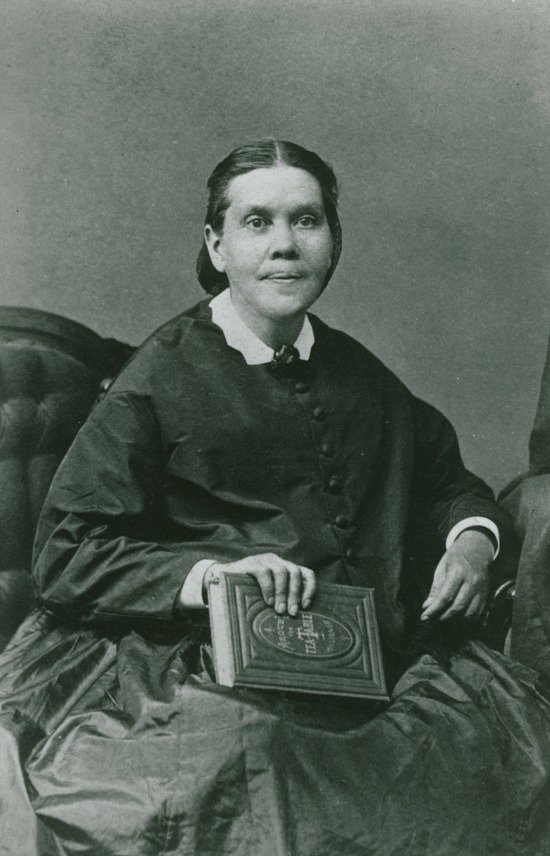
“Courtesy of the Ellen G. White Estate, Inc.”
Most of Ellen White’s writings were inspired by God. This is particularly the case of the books she published in her lifetime. This includes Testimonies for the Church, Acts of the Apostles, The Desire of Ages, Christ’s Object Lessons, and The Great Controversy. Although she also wrote inspired articles for periodicals like the Review and Herald.
One of her most popular books, The Desire of Ages, shares the insight she received about Jesus’ earthly ministry.
Her books also helped people understand more about key biblical figures, such as Paul, Peter, Daniel, David, Paul, and even the Holy Spirit and Satan.
But even though she would write about Bible concepts or people in many different contexts, not all of them were considered to be directly inspired. She would sometimes speak of biblical topics in her personal writings, such as when she wrote to her children, friends, or acquaintances with general news or advice.
This just goes to show that she was constantly thinking of God and looking for ways to actively serve Him and apply His teachings to her life.
But since talking about the Bible isn’t the sole determining factor of whether or not the messages are coming directly from God, we have to look at other indicators of her sacred writings.
Ellen White mostly shared divine counsel that covered the following areas:
- Bible truths: Whenever Ellen White confirmed Bible truths, she did it under inspiration from the Holy Spirit. She carefully used the insight she received to corroborate the Bible studies of early Advent believers.
This was evident in the way she would confirm or deny issues of doctrine by pointing them back to the matching topic in Scripture, sometimes in several different places. In other words, everything she said about doctrine upheld the Bible and stayed aligned with its principles. And this inspiration was what led the early Adventists to revive key Bible teachings like the Sabbath and Jesus as our high priest.
- Spiritual reproofs: One of the most difficult parts of bearing the prophetic gift is having to alert fellow Christians when they were headed down a harmful or fruitless path. Ellen White would sometimes dread giving spiritual reproof because she was very sensitive to the feelings of others.5
- Instruction on health: Ellen White’s writings on health reform demonstrated impressive knowledge about health principles. She lived in the Victorian era—an age where medicines and common household items were filled with toxic, even poisonous materials. Even the most educated doctors would prescribe medicines with harmful substances.6 And yet, she was still able to distinguish between what was healthful and what was hurtful with God’s guidance.
- Counsel on Adventist institutions: There were many occasions when the General Conference, the administrative body for the Adventist Church, would consult with her on administrative questions. One time, church leaders were asking her where they should establish an Adventist school.
The Church had already picked out a particular plot, but the surveyors they asked to look at it described it as an unfruitful land.7 But Ellen White insisted that God had chosen that land.8 Church leaders bought the land and it grew into a successful college (Avondale) that still exists today.
- Prophecies: All the prophecies Ellen White received and wrote about were from God Himself. His word tells us that the gift of prophecy only comes through the Holy Spirit. We know she had the prophetic gift because there were many things she was shown that she couldn’t have otherwise predicted.
For one, she was shown the dangerous effects of intemperance that were not well known at the time.9 She was also shown that the secession of the southern states would lead to the Civil War.10
She prophesied about a variety of other subjects, but the most prominent visions addressed last-day events and signs of the times.11
Of course, we have to be aware that not everything she wrote was intended to be spiritual counsel. Like any person, she had a life outside of ministry—she still had personal reasons for writings and speaking.
Examples of common messages

Image by Margarita Kochneva from Pixabay
While most of Ellen White’s writings resulted from the spirit of prophecy, she did have other reasons for writing. There were some occasions when she would offer her own advice based on her own experiences, studies, or observations.
Here are some areas where it’s likely she was guided by her personal insights:
- Personal letters on common subjects: Ellen White wrote lots of letters to her friends and family. When she was traveling for the Church, she would send her young sons letters of all she saw on her journey.12 When they grew up, she still wrote to them about all sorts of subjects. On one occasion she wrote her son, Edson, about James White’s health condition and her everyday life.13
- Individual reasoning: When Ellen White spoke of everyday life issues, she was using her own common sense. One time her son Willie asked her if she had any advice for a new school location. And in her response, Ellen White didn’t mention receiving insight from God or being shown a specific location. Instead, she gave him a general answer using her individual reasoning. She told him to look for whatever seemed best to him, but to especially look for a property with a creek.14
- Common conversation: Just like everyone else, Ellen White spent time talking about everyday things. She had interests outside of her spiritual life including her family, her garden, sewing, horseback riding, and so much more! While the word of God was one of her favorite things to talk about, she also enjoyed talking with friends and discussing common interests. She was even known for her sense of humor!15
It’s important to know the difference between Ellen White’s sacred and common writings, because there are some who will mistakenly adhere to the advice she gave in her common writings as if they were commands from God.
At the same time, it’s important not to dismiss something Ellen White said as merely “her opinion,” just because it’s something against our own preferences. After all, the Bible warns not to despise the words of true prophets (1 Thessalonians 5:20-21).
That’s why it’s essential to understand the context of Ellen White’s writings and compare them to the Bible for ourselves. That’s what she would have wanted, anyway!
That way we can determine which counsel was based on her own experience, which counsel was given for a specific place or time, and which divine counsel we can carry with us into the modern age.
And as long as you study them for yourself, compare them to God’s word, and ask Jesus Christ for guidance, you won’t need to worry about misunderstanding her messages.
Roger W. Coon, former associate director of the Ellen G. White Estate, once said:
“Common sense and sanctified reason should be our guides to differentiation between the two categories [sacred and common writings].”16
If you’re looking to study Ellen White’s writings for yourself, the Ellen G. White Estate has preserved and digitized all her works. You can search through them at egwwritings.org.
If you’d like to learn more about biblical prophets in general, check out What Makes a Prophet a Prophet or Prophets of the Bible.
Choose an Online Bible Study
Want to keep learning? Find out more about Jesus, humanity, the plan of salvation, and how God loves you enough to sacrifice everything, just to give you a chance to choose Him.
Sometimes it can be hard to know where to start, that’s why we offer free, user-friendly, online Bible study options you can do anytime, anywhere, and at your own pace.
This online Bible school will take you through the major themes of Scripture, breaking down the Bible’s complex concepts into bite-sized pieces, which can lead you toward the answers of life’s more challenging questions.
Related Articles



- White, Ellen G., The Review and Herald, August 30, 1906 [↵]
- Douglass, E. Herbert, Messenger of the Lord, pp. 16-17 [↵]
- Ibid., p. 37 [↵]
- Ibid., p. 174 [↵]
- Ibid., p.157 [↵]
- https://www.mentalfloss.com/article/550867/dubious-victorian-cures-first-merck-manual-diagnosis-and-therapy. [↵]
- Douglass, p. 190 [↵]
- Ibid. [↵]
- Ibid., p. 365 [↵]
- Ibid., p. 158 [↵]
- Ibid. [↵]
- White, Ellen G., I’d Like to Ask Sister White, p. 105 [↵]
- White, Ellen G., Letters and Manuscripts, vol. 8., Letter 201, (1903) [↵]
- White, Ellen G., Letters and Manuscripts, vol. 9., Letter 144, (1894) [↵]
- Douglass, p. 94 [↵]
- Coon, W., Roger, “Distinguishing Between the Sacred and the Common,”https://mail.google.com/mail/u/0/?tab=rm#search/tim/KtbxLxgNNvWTNRXdtpCsXCwdsqhKGJtvlq?projector=1&messagePartId=0.1. [↵]
More Answers

¿Por qué muchos Adventistas del Séptimo Día eligen una dieta vegetariana?
¿Por qué muchos Adventistas del Séptimo Día eligen una dieta vegetariana?Puede que tengas un amigo adventista que sea vegetariano, o tal vez estés asistiendo a una Iglesia Adventista del Séptimo Día por primera vez y notes que en la comida compartida no hay carne....

What is Jesus’ Parable of the Sower About?
The parable of the sower is ultimately about how people responded to Jesus Christ and His message of the kingdom of God—the Gospel.

O que os Adventistas do Sétimo Dia acreditam sobre o Grande Conflito (Bem vs. Mal)?
O “Grande Conflito” é a frase que os Adventistas do Sétimo Dia normalmente usam para descrever o conflito espiritual cósmico entre as forças do bem (Deus) e as forças do mal ou do pecado (Satanás/o diabo).

Was Jesus Ever Hypocritical? Learn What the Bible Says.
Was Jesus Ever Hypocritical? Learn What the Bible SaysMany undesirable traits are associated with hypocrisy. But overall, hypocrites intentionally try to make others believe they uphold or represent a certain belief system, character trait, lifestyle, etc., when in...

Kukatishwa Tamaa Kukuu na Kile Tunachojifunza
Wafuasi wa Miller walitabiri kurudi kwa Kristo Oktoba 22, 1844, lakini Yesu hakuja kamwe. Tukio lingine lilitokea. Gundua kilichotokea kweli na Kukatishwa Tamaa Kukuu kunaweza kutufundisha leo.

When in Doubt: 7 Ways Christians Can Manage Uncertainty
When in Doubt: 7 Ways Christians Can Manage UncertaintyFew things in life are truly certain. And no matter how convinced some people can appear on the surface, no one is immune to doubt. And this isn’t a bad thing. Doubt has a purpose. A role to serve. (Just imagine...
El gran chasco y las lecciones que nos enseña
Los Milleritas predijeron el regreso de Cristo el 22 de octubre de 1844, pero Jesús nunca llegó. Ocurrió otro evento. Descubre lo que realmente sucedió y qué puede enseñarnos hoy El gran chasco.

Is Jesus the Same Being as Michael the Archangel?
Many Christians have wondered at the mysterious identity of Michael the Archangel.
A Grande Desapontamento e Lições que nos Ensina
Os Milleritas previram o retorno de Cristo em 22 de outubro de 1844, mas Jesus nunca chegou. Outro evento ocorreu. Descubra o que realmente aconteceu e o que o Grande Desapontamento pode nos ensinar hoje.
James Springer White, Co-Fundador da Igreja Adventista do Sétimo Dia
James Springer White (1821–1881) foi uma figura chave na Igreja Adventista do Sétimo Dia e marido de Ellen G. White.
James Springer White, cofundador de la Iglesia Adventista del Séptimo Día
James Springer White (1821–1881) fue una figura clave en la Iglesia Adventista del Séptimo Día y el esposo de Elena G. de White.

Kila Kitu Unachohitaji Kujua Kuhusu Chakula cha Siku ya Sabato
Kwa Waadventista Wa Sabato, kushiriki chakula cha Siku ya Sabato pamoja na marafiki na familia ni moja ya sehemu muhimu na ya kumbukumbu ya Sabato.

Nini Maana ya “Mwadventista”?
Waadventista wa Sabato ni dhehebu la Kikristo la Kiprotestanti wanaoshikilia Sabato ya siku ya saba kama ilivyoandikwa katika Biblia.

How to Have a Personal Relationship with Jesus: A 10-Step Guide
How to Have a Personal Relationship with Jesus: A GuideNo matter who you are, you’re surrounded by relationships. Friends, family, colleagues, acquaintances...they all play a part in our lives, for better or worse. So you’re surely aware of a lot of the components...

Biblia Ina Maana Gani Inaposema Yesu ni Mwana wa Mungu?
Biblia inapomwita Yesu Mwana wa Mungu inarejelea uungu wake. Jifunze ni nini kinachofanya hili kuwa muhimu na kinahusianaje na wokovu.

“Go and Sin No More”—What Did Jesus Mean?
These well-known words of Jesus Christ come from two New Testament stories in the book of John—a man healed by the Pool of Bethesda (John 5) and a woman caught in adultery (John 8).

Quais são as Mensagens dos Três Anjos em Apocalipse 14?
As mensagens dos três anjos em Apocalipse 14 advertem o mundo a adorar a Deus, deixar a confusão religiosa e evitar a adoração de tradições humanas em vez dos mandamentos de Deus.

Je! Tunaweza Kuitunza Siku Yoyote ya Wiki Kama Sabato?
Katika sura za kwanza kabisa za Biblia, tunamwona Mungu akianzisha kumbukumbu ya kila wiki na siku ya mapumziko, inayoitwa Sabato (Mwanzo 2:2-3).
¿Cuáles son los mensajes de los tres ángeles en Apocalipsis 14?
Los mensajes de los tres ángeles en Apocalipsis 14 invitan al mundo a adorar a Dios, abandonar la confusión religiosa y evitar la adoración de tradiciones humanas en lugar de los mandamientos de Dios.
Por que muitos Adventistas do Sétimo Dia escolhem uma dieta vegetariana?
Embora nem todo adventista seja vegetariano, muitos evitam completamente o consumo de carne para viver de forma mais saudável, buscando honrar a Deus física, espiritual e mentalmente.

Understanding the Miracles of Jesus Christ
Understanding the Miracles of Jesus ChristWhat do you think of when someone says something is “a miracle”? Maybe you think of an unexpected recovery, surviving a dangerous accident, or getting an answer to a seemingly impossible prayer. Simply put, miracles are...
O que significa “Adventista”?
O que significa "Adventista"?Os Adventistas do Sétimo Dia são uma denominação cristã protestante que observa o sábado bíblico do sétimo dia. A partir dessa crença, eles obtêm a primeira parte de seu nome. Mas e quanto à segunda parte - "Adventista"? “Adventista”...
¿Podemos guardar el sábado bíblico cualquier día de la semana?
En los primeros capítulos de la Biblia, encontramos a Dios estableciendo un memorial semanal y día de reposo, conocido como el sábado (Génesis 2:2-3).
Podemos guardar o Sábado em qualquer dia da semana?
Nos primeiros capítulos da Bíblia, encontramos Deus estabelecendo um memorial semanal e dia de descanso, conhecido como o Sábado (Gênesis 2:2-3).
O que significa a Bíblia quando chama Jesus de Filho de Deus?
Quando a Bíblia chama Jesus de Filho de Deus, está se referindo à Sua divindade. Saiba o que torna isso tão significativo e o que tem a ver com a salvação.
¿Qué creen los Adventistas del Séptimo Día acerca de la Biblia?
La Biblia forma la base de todo lo que los Adventistas del Séptimo Día creen y enseñan.

Legado Duradouro de Ellen G. White
Ellen G. White é um nome bem conhecido entre os Adventistas do Sétimo Dia, mas ela também teve um impacto em muitas outras partes da história, além de ser co-fundadora da Igreja Adventista.

What Does it Mean to Have Faith in Jesus?
What Does it Mean to Have Faith in Jesus?To have faith in Jesus means we place our spiritual hope, trust, belief, and priority in Him as our loving Savior. And that sounds great as an idea. That’s our goal, right? But when we go through difficult times, face...
James Springer White, Mwanzilishi wa Kanisa la Waadventista Wa Sabato
James Springer White (1821–1881) alikuwa mtu muhimu katika Kanisa la Waadventista wa Sabato na mume wa Ellen G. White.
Didn’t find your answer? Ask us!
We understand your concern of having questions but not knowing who to ask—we’ve felt it ourselves. When you’re ready to learn more about Adventists, send us a question! We know a thing or two about Adventists.