
As the most translated female author1 in the world, Ellen White wrote numerous books, articles, pamphlets, and more.2 These writings focused on developing Christian character, emphasizing Bible truth, practical tips for living well and staying healthy, and discussing effective methods of delivering the gospel message to the world.
Some of her most popular works include The Great Controversy, The Desire of Ages, and Steps to Christ.
But what makes these books so treasured by Adventists? And what’s the best way to approach her writings today?
Here this we’ll explain:
- If all of Ellen White’s writings were inspired by the Holy Spirit
- How her writing ministry began
- Her published works
- The role of Ellen White’s Writings in the Adventist Church
- How her writings can still benefit us today
Let’s start with one of the more significant questions people have when learning about Ellen White.
Were Ellen White’s writings inspired?

Photo by Naren Morum on Unsplash
If you read into the history and early development of the Seventh-day Adventist Church, you won’t be surprised to find out why Adventists believe Ellen White to have been used by God through the spiritual gift of prophecy.
Because of this, most of what she wrote in her books is considered to also be inspired by the Holy Spirit. This is because her writings always glorify God and encourage us to follow Him more earnestly, following His Word as our guide.
In the Bible, people that delivered messages from God were known as prophets. Many of these prophets were well-known Bible figures like Daniel and Samuel, though many others also fulfilled a similar role, such as Deborah, Nathan, Nehemiah, Anna, and Huldah.
Scripture also tells us about some people who claimed to be prophets when they really weren’t (Ezekiel 13:1-7, 17-23).
The same is true today. It is such a prevalent issue that the Bible warns people to evaluate prophets carefully—since following a charismatic or influential human just because they sound convincing is easier than we’d like to admit.
But how can we evaluate prophets to be sure that their messages are from God?
Fortunately, the Bible actually provides ten items we can use to test a prophet and determine if they’re truly inspired by God.
The tests of a prophet:3
- That their messages agree with and uplift the Bible (Isaiah 8:20)
- That they have a Christ-like character (Matthew 7:16-20)
- That they glorify God – not themselves (John 16:13)
- That they obey God (Deuteronomy 18:18)
- That they help better God’s church (1 Corinthians 14:3-4)
- That they be honest in addressing sin (Micah 3:5-8)
- That they harmonize with the Bible’s teachings about Jesus and His mission (1 John 4: 1-3)
- That their predictions come true (Jeremiah 28:9)
- That they warn of coming judgment (Isaiah 24:20-21)
- That they don’t present their opinions as Bible truth (2 Peter 1: 20-21)
The Adventist Church has verified that Ellen White meets every standard of these tests:
- She used numerous Bible verses throughout her writing. She always considered her writings as “a lesser light to lead men and women to the greater light,” meaning that her writings were intended to point the reader to the ultimate authority—the Bible.4
- Many people have attested to the positive character of Ellen White. Shortly after her death, a newspaper commented on the humble and dedicated life she lived.5
- She repeatedly asked her readers to put God first in their lives.6 She never attributed her writing success to her own merits.
- She was afraid to take the responsibility of being God’s prophet. She eventually surrendered to His calling, trusting God to help her fulfill His mission.7
- She wrote a book called Testimonies for the Church to specifically aid in the development of the church.8
- She didn’t enjoy the task of correcting others, but she felt it was her Christian duty to address sins that were destroying people’s relationship with Jesus.9
- She addresses both the humanity and the divinity of Jesus on multiple occasions.10
- Ellen White had multiple visions of future events, but one of her most prominent predictions was made in 1902 when she wrote that God’s judgments would soon fall on San Francisco and Oakland. She reported seeing “buildings shaking”—four years before the earthquake in 1906.11
- Her writings spoke of the judgment of God and the second coming of Christ.
- Ellen White encouraged church members to test her writings with the Bible, instead of blindly following her every word.12
These examples provide a little more insight into why the Adventist Church believes her writings were inspired by God (although, we still encourage you to look into this subject for yourself!)
A note about “inspiration”
You might still be wondering what exactly we mean by “inspired”?
When it comes to understanding inspiration, it’s common to think that if God has used someone as a prophet, every word they utter is directly inspired by God. But in actuality, that isn’t even true in the Bible!
God used many ordinary people as prophets. But they still retained their freedom of choice, their personalities, their flaws, etc. If God controlled every word that came out of their mouth, then He wouldn’t be respecting their ability to choose—which He gave them at creation to begin with!
And because being chosen as a prophet of God doesn’t rob someone of their humanity and free agency, that means they are still imperfect humans.
But that’s what’s amazing about God. He can use ordinary, average-joe people to serve Him in mighty ways. And typically, when prophets are delivering a message to their people from God, it’s plain when they’re speaking the message, and when they’re speaking of their own accord.
Some refer to this as “thought inspiration.” God inspires a person’s thoughts, and they communicate it in their own words.13
We believe the Bible was written the same way (2 Timothy 3:16-17).
So, even though God gave them the message, He had them write in their own words to better reach the people of that time. This also helped humans learn to process these complex ideas without every step being dictated by God.
This also meant that the word choices, idioms, or references they made helped the people of that time better understand what they were trying to communicate.
On the flip side, these same specific word choices could be confusing for future generations or different cultures. Just think about it—there are so many words, symbols, and actions that mean different things across different cultures and languages.
This is just as true of the Bible as it is in Ellen White’s writings. There are tons of references in the Bible to Jewish history and customs that may seem confusing to new Bible readers. But instead of rejecting Scripture because something doesn’t make sense, it’s important to research the context of Bible verses so you know what that Bible author was trying to say.
Which is why it’s also crucial to look into the context of Ellen White’s writing. This concept of thought inspiration sets the standard by which we must all study works inspired by the Holy Spirit.
How Ellen White’s writing began
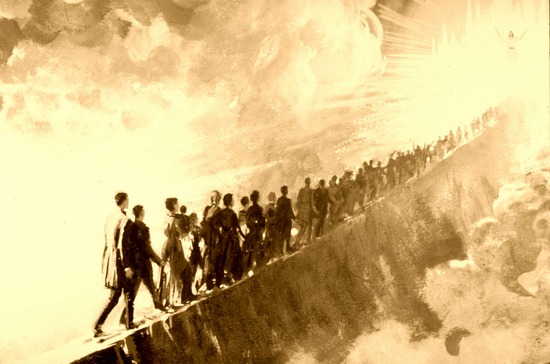
Courtesy of the Ellen G. White Estate, Inc.
Two months after the Great Disappointment in 1844, Ellen White began to receive visions from God—which she later recorded in personal journals.
This was a time of confusion and sorrow for many believers, as they were looking forward to the second coming of Christ.
But they made a grave mistake of setting a date for His coming. Especially since the Bible even says that no one can (or should try to) predict the Second Coming (Matthew 24:35-37).
Many sold their houses and belongings because they truly believed Jesus was coming on a particular date.
But, as you can deduce, the second coming of Christ didn’t happen yet.
It was difficult for many to accept that they had been wrong about the date. Many became so disappointed that they stopped believing in God altogether.
It was at this time that God decided to give His people hope and guidance in the wake of their disappointment. And so, He gave Ellen White a vision to encourage Advent believers that no promises were broken, and He would always be there to guide His believers.
He used the vision to explain that He was coming soon, just not at the time that they thought. He used the image of the Advent believers walking a narrow path to heaven to illustrate how His people need not be discouraged. They can continue on spreading the gospel and serving people in His name.14
God told her to start writing down the visions He gave her. And, just like many prophets at first, she felt unqualified. After all, she was forced to leave school at an early age due to health issues. Having so little education to her name, she didn’t think she was the best candidate for recording God’s messages.
But that’s also a theme with God’s prophets. He rarely chose people that were already experts or high-profile influencers. He used people just like you and me, which glorified Him and demonstrated both His power and the worth of every single human being—regardless of our own earthly methods of determining value.
So God helped her write. And what began as small, scrawled pages became hundreds of books and articles.
Because she wrote down the insights God gave her, she was able to spread it across the world, and throughout the ages. And today, we still have the privilege of learning what God told her to put into writing.
This 17-year-old girl, hardly even able to write, burgeoned into a writing ministry that has touched the lives of billions.
What did Ellen White write?

Courtesy of the Ellen G. White Estate, Inc.
Ellen White wrote books on a variety of subjects including spiritual growth, Bible history, health, the life of Christ, relationships, education, home life, and stewardship.
Her work wasn’t exclusive to books either. She also wrote articles, pamphlets, and letters to individuals or to groups of people.
Her articles were typically aimed at those involved with developing the Adventist Church, and several were published in Adventist magazines like Signs of The Times.15
Her letters were written almost exclusively to church members and family. More often than not, they were written to address a very specific issue. Though some of her more personal letters, written for the purpose of catching up and staying informed, still had valuable counsel in them that people have found inspiring to read.
By the end of her ministry, she had 24 books in print and 100,000 pages of total literary output.16 More of her work was published after her death, which grew to 128 titles.17
Some of her most well-known works include:
- The Great Controversy: This book describes how sin began, and how it became the spiritual battle between good and evil that still rages on today. It also takes the reader through key points of history that line up with Bible prophecy.
- Steps to Christ: This was written with newer believers in mind, introducing them to the love of Jesus and showing what it really means to follow Christ.
- The Desire of Ages: This details the life of Jesus, particularly what He went through and what He taught during His earthly ministry.
- The Ministry of Healing: This book highlights how profoundly Jesus healed people during His ministry. It explains the important connection between body, mind, and spirit. It also talks about how to be an effective witness for Him by seeking to understand people.
- Acts of the Apostles: This work details the experiences of the early church and its members. It draws on the stories from the book of Acts to explain what God’s church should strive to be like.
- Prophets and Kings: This covers the lives of Old Testament heroes and leaders. It describes how they defended their faith in the face of opposing nations and kingdoms.
An organization called the Ellen G. White Estate manages Ellen White’s writings. They digitized all her writings and posted them online so people around the world can access them. They were also responsible for making compilations of her work. In other words, the Estate would take different pages and quotes she had written about the same subject (like stewardship or healthy living) and put all those ideas in one book so people could more easily research her counsel on a given topic.
Some of these include:
- Country Living: This compilation offers advice about how living in the country can be highly beneficial, especially for bringing up children.
- Counsels on Stewardship: This book reminds Christians that everything we have is from God, so a grateful attitude is appropriate. Then it goes on to explain how we can use whatever we have to serve God, and He’ll make sure we have what we need.
- Letter to Young Lovers: This compilation includes letters that Ellen White wrote to advise young couples.
Among her most popular works were The Great Controversy and Steps to Christ. The first, because it sheds light on why suffering exists and the plan God has to stop it. And the second, because it assures countless people Jesus loves them and longs for them, and they can be saved through Him.
What is the role of Ellen White’s writings in the Adventist Church?

Courtesy of the Ellen G. White Estate, Inc.
Ellen White’s writings have been a great source of wisdom for the Adventist Church. In the beginning, her writings encouraged them to move past the Great Disappointment and look toward what else can be learned from Scripture.
And the more she wrote, the more she helped the church grow. She assisted the early church in many diverse ways, from encouraging much-needed health reform to providing principles of church organization and leadership. She offered much of this counsel in the articles she wrote for the church, as well as letters that helped guide church leaders to make better sociological and administrative decisions.
Much of Ellen White’s writings helped Adventists determine what areas to focus on in their ministry.
Her book Education explains how students should prepare for their careers and a life of serving Christ.
On top of that, The Ministry of Healing, explains how to minister to others through medicine and caring for people’s mental health. She also helped provide principles for living a healthier life.
But despite her contributions, some have wondered if Adventists give her counsel too much authority. Some have even wondered if Ellen White’s words are given authority over the Bible.
The Adventist Church believes that Ellen White’s writings do not supersede the Bible.18 Instead, we view the Bible as our ultimate source of belief. Which is why we have used the Bible to test Ellen White’s teaching to make sure they agree with Scripture.19
Ellen White insisted that her writings were meant to point back to the source of all truth—the Bible.20
Of course, there are some people who mistakenly—and often unintentionally—put Ellen White on a pedestal. And others still fall into the trap of using her writings to condemn and judge others.
(It’s common for people to cling to more concrete ideas and create their own internal “checklists” for what they’re supposed to do.)
But it’s important not to get discouraged by the misuse of her writings.
(Just think about how much even the Bible has been misused! And that doesn’t mean it’s worth throwing away the Bible altogether.)
Ellen White’s writings have a lot of valuable information for us today. From discovering how to live a more Christ-centered life to learning about the early church, she has a wealth of information in her writings that anyone can benefit from reading.
How can we best use Ellen White’s writings today?

Photo by Priscilla Du Preez on Unsplash
Ellen White’s writings can be incredibly valuable and beneficial if understood properly.
But the sad truth is that a lot of people have avoided them because they’ve experienced other people who have misunderstood or misused them in some way.
Some of the most common methods of misuse include:
- Taking her counsel to the extreme, or making her advice into rules, rather than principles to guide our choices.
- Accepting her guidance without considering the context or the intended audience.
- Neglecting to study further if encountering something that isn’t easily understood right away.
To avoid these pitfalls, one of the greatest tools we can use is our common sense, alongside a curiosity for the whole picture.
In fact, Ellen White emphasized the importance of using common sense, even while studying uncommon concepts.21 She herself advised that her words, while intending to always uplift God and follow the Holy Spirit, must be taken in with practical reasoning.
The Bible also points out the importance of using common sense, instead of simply taking statements at face value (Isaiah 1:18).
God encourages us to reason with Him! And we don’t ever have to worry about misunderstanding Ellen White’s writings if we ask God to guide us.
But on top of asking for God’s help, there are some things you can do for yourself.
The Ellen G. White Estate has provided a helpful checklist for understanding Ellen White.22 (And, as it turns out, these are helpful principles to keep in mind when studying Scripture, too!)
- Start with an open mind and pray for discernment.
- Focus on the central theme first (i.e., the ultimate goal of her works is to guide the reader closer to Jesus. Focus on the big picture of what she’s saying and how it relates to knowing Jesus. And if for some reason it doesn’t seem to lead that way, that’s a cue for further study!)
- Consider how our own experiences can (and will!) cause us to interpret things with certain biases. (No one is immune to this!)
- Read all her writings on the subject (don’t just pick one or two references—you won’t get a clear picture that way).
- Look for balance, rather than extremes.
- Consider the context (some of her statements may apply differently today).
- Don’t depend on partial quotes (they may not tell the full story).
- Differentiate ideal counsel from realistic counsel (recognize that circumstances affect our choices. Often times Ellen White gives ideal advice, or tells us the best choice we can make. When really, we may not have the option to even make that choice. For example, she might suggest that a reader accept the ideal choice of attending Christian schools when the reader may not have the economic means to attend).
- Interpret using common sense. If something seems wildly radical or extreme, there may be an underlying principle that she’s using certain language to express. And that, of course, just requires some further reading and considering of context.
- Be guided by principle, rather than using blanket statements.
- Remember that prophets are human beings. In other words, prophets have to grow in understanding and wisdom just like everyone else. And she accepted truth as God revealed it to her.
- Don’t twist the words beyond their original meaning, just because they’re close to something you want them to mean. (Again, not even one of us is immune to this tendency!)
- Double-check that Ellen White indeed wrote what you’re reading!
In the end, you’ll know you’re understanding Ellen White’s writings correctly if they’re pointing you back to God’s Word. And remember, Ellen White didn’t intend for her writings to be used as a rule book, but as a source of joy and hope in Jesus Christ.
And what a wonderful hope we have!
Tim Poirier, the vice-director of the Ellen G. White Estate, shared how reading Ellen White’s writings have impacted his own life:
“There are so many ways, but I’ll mention two. On a practical, physical level, her health counsels have greatly influenced my lifestyle choices. Spiritually, every time I read her writings I am reminded both of my own deficiencies and of the all-sufficiency of Christ.”
If you want to know where to find some of Ellen White’s writings freely available, they have been digitally published on egwwritings.org—all her books, letters, and articles.
You can check out the EGW Writings App to access Ellen White’s writings from your phone.
They also offer alternatives to English print. They have a variety of translations including Spanish and Portuguese, as well as audiobook versions.
Want to learn more about Ellen White as a person and the role she played in developing the Adventist Church? Look no further than, “Who is Ellen G. White and Why is She Important to Adventists?”
Ellen White’s Most-Read Books:
- Testimonies for the Church (vol. 1,2,3,4,5,6,7,8,9)
- Spiritual Gifts (vol. 1,2,3,4a, 4b)
- The Spirit of Prophecy (vol. 1,2,3,4)
- Early Writings of Ellen G. White
- The Great Controversy
- Steps to Christ
- The Desire of Ages
- Christ’s Object Lessons
Choose an Online Bible Study
Want to keep learning? Find out more about Jesus, humanity, the plan of salvation, and how God loves you enough to sacrifice everything, just to give you a chance to choose Him.
Sometimes it can be hard to know where to start, that’s why we offer free, user-friendly, online Bible study options you can do anytime, anywhere, and at your own pace.
This online Bible school will take you through the major themes of Scripture, breaking down the Bible’s complex concepts into bite-sized pieces, which can lead you toward the answers of life’s more challenging questions.
- https://www.newworldencyclopedia.org/entry/Ellen_Gould_White [↵]
- Douglass, E. Herbert, Messenger of the Lord, p.108. [↵]
- “10 Tests Of A Prophet,” https://www.ellengwhitetruth.com/her-ministry/10-tests-of-a-prophet. [↵]
- “The Test Results Part 3,” https://www.ellengwhitetruth.com/her-ministry/the-test-results/the-test-results-pt-3. [↵]
- “The Test Results Part 4,” https://www.ellengwhitetruth.com/her-ministry/the-test-results/the-test-results-pt-4. [↵]
- “The Test Results Part 2,” https://www.ellengwhitetruth.com/her-ministry/the-test-results/the-test-results-pt-2. [↵]
- “The Test Results Part 4” [↵]
- “The Test Results Part 3” [↵]
- “The Test Results Part 2” [↵]
- “The Test Results Part 4” [↵]
- White, Ellen G., “Manuscript 114,” 1902 [↵]
- “The Test Results Part 2” [↵]
- Douglass, p.16, https://egwwritings.org/read?panels=p656.264&index=0. [↵]
- White, G. Ellen, Early Writings, https://m.egwwritings.org/en/book/28.197, pp.13-22. [↵]
- White, G. Ellen, The Signs of the Times, https://m.egwwritings.org/en/book/820.1 [↵]
- Douglass, https://egwwritings.org/read?panels=p656.1163&index=0, p. 108. [↵]
- Ibid. [↵]
- “The role of the Ellen G. White writings in doctrinal matters,” https://www.ministrymagazine.org/archive/1980/10/the-role-of-the-ellen-g.-white-writings-in-doctrinal-matters. [↵]
- “The Tests of a Prophet,” https://ellenwhite.org/faq/18. [↵]
- “101 Questions About Ellen White and Her Writings,” https://m.egwwritings.org/en/book/13960.64#68. [↵]
- Douglass, https://egwwritings.org/read?panels=p656.1056&index=0, pp. 95-96. [↵]
- “Some Principles for Correctly Interpreting the Writings of Ellen G. White,” https://whiteestate.org/legacy/issues-herm-pri-html/. [↵]
Related Articles



More Answers
Contáctanos
ContáctanosEnvíanos un mensaje¡Nos encantaría saber de ti! No dudes en hacer una pregunta, solicitar información o hacer una sugerencia.
Contate-Nos
Contate-NosEnvie-nos uma mensagemAdoraríamos ouvir de você! Sinta-se à vontade para fazer uma pergunta, solicitar informações ou oferecer uma sugestão.
Sobre nosotros
Cuando tienes preguntas importantes, quieres respuestas directamente de la fuente. Eso es lo que hemos venido a hacer con AskAnAdventistFriend.com. Este sitio es operado por Adventistas del Séptimo Día dedicados y activos que quieren responder a tus preguntas. La...
Sobre nós
Quando você tem perguntas importantes, você quer respostas diretamente da fonte. É por isso que estamos aqui com AskAnAdventistFriend.com Este site é operado por Adventistas do Sétimo Dia dedicados e engajados que querem responder às suas perguntas A maior parte do...
Maktaba ya Rasilimali
Free Resources to Boost Your Bible StudyLike what you’ve read on our website? You can take the content with you by downloading our FREE Bible study tools below. Each PDF accompanies an article on AskAnAdventistFriend.com, providing you with supplemental content,...
Changia
Tusaidie kuendelea kupata majibu!AskAnAdventistFriend ni mradi unaolenga kuwafikia wengine bila kujipatia faida ambao umejikita katika kujibu maswali yako kuhusu Waadventista wa Sabato, Yesu, Biblia, Pambano Kuu, na mengineyo. Ikiwa ungependa kuchangia kifedha...
Masomo ya Biblia mtandaoni
Chagua Kujifunza Biblia Mtandaoni Want to keep learning? There’s always more to discover within the pages of the Bible. Find out more about Jesus, humanity, the plan of salvation, and how God loves you enough to sacrifice everything, just to give you a chance to...
Tutumie Maombi Yako
Tuma Ombi Lako Tunaweza kukuombea? Maombi yana nguvu. Tunapoomba, tunawasiliana na Mungu, tunasaidiana, tunakaribisha uwepo wa Mungu katika maisha yetu, na tunafungua mioyo yetu kwa uongozi wa Roho Mtakatifu. Biblia inatuambia “Msijisumbue kwa neno lo lote; bali...
Kuhusu Tovuti
Unapokuwa na Maswali Muhimu, Unahitaji Majibu Moja kwa Moja Kutoka Kwenye Chanzo. Hili ndilo tunalofanya katika AskAnAdventistFriend.com. Tovuti hii inaendeshwa na Waadventista wa Sabato waliojitolea na walio tayari kujibu maswali yako. Sehemu kubwa ya maudhui yetu...
Wasiliana Nasi
Wasiliana NasiTutumie UjumbeTungependa kusikia kutoka kwako! Jisikie huru kuuliza swali, kutafuta taarifa, au kutoa pendekezo.

Is Demon Possession Real? Here’s What the Bible Says
Is Demon Possession Real? Here’s What the Bible SaysThe topic of demon possession can be brought to mind from stories, movies, the Bible, or even as a metaphor. And it can include mental images of people behaving in disturbing, erratic, or unnatural ways. Every now...
እንኳን ደህና መጡ ወደ ድህረ ገጻችን
ሰላም እንዴት ነው? ይህ የአማርኛ እትም ነው። እኛ በድህረ ገጻችን ላይ አማርኛ ቋንቋ ለመጠቀም እንፈልጋለን። ይህ ድህረ ገጽ ለመረጃ መስጠትና ለማስተላለፊያ ነው። በአማርኛ እና በእንግሊዝኛ የተጻፉ የጥቅስ አንቀጾችን እንለቀቅበታለን። አማርኛ የኢትዮጵያ አንዱ ከተለመዱ ቋንቋዎች ነው። በአብዛኛው አካባቢ የተናገረ ሲሆን እንዲሁም የመንግስት ቋንቋ ነው። በዚህ ድህረ ገጽ ላይ አማርኛ የተጻፉ ትምህርቶች፣ መመሪያዎችና...

Jesus and the Pharisees and Sadducees (Why They Opposed Jesus)
The Pharisees and Sadducees hated Jesus and wanted Him dead. This page looks at who they were and what motivated them to oppose Jesus.

13 Bible Study Tools to Boost Your Daily Bible Reading
Bible study tools come in all types, including concordances, encyclopedias, downloadables, journaling, atlases, and more. Use these tools to enrich your study for a fuller understanding God’s Word.

A Christian’s Guide to a Joyful Life (Even When It’s Hard)
Joy. It’s something you long for, yet maybe you’re not sure how to truly experience it on a day-to-day basis. Sure, you have moments of joy—but how about the rest of the time?

The Many Names of Jesus in the Bible and What They Mean
The Many Names of Jesus in the Bible and What They MeanThe Bible includes a lot of names for Jesus, and they all reveal different facets of His identity, power, character, and mission. We’ve all had nicknames throughout our lives. They might be shortened versions of...

How Can We Prepare for Sabbath?
How Can We Prepare for Sabbath?Sabbath is a special, consecrated time of rest each week. And to make sure we can fully embrace it, respect it, enjoy it, and “call the Sabbath a delight” (Isaiah 58:13, CSB), it can be helpful to prepare for it ahead of time. These...

What is the Role of Laypeople vs. the Role of Clergy?
The word “laity” comes from the Greek word laikos, which means “of the people.”

Bible Verses For When You’re Discouraged
Life is never easy, but sometimes things become extra difficult, painful, or disheartening.

When Is Jesus Coming Back?
The Bible doesn’t tell us exactly when the Second Coming will occur, but learn about the signs that point to the nearness of the return of Christ.

How Do I Begin Observing the Sabbath?
The Sabbath, which comes on the seventh day of the week, is a special day honoring the fourth commandment and God’s creation.

Understanding The Parable of The Lost Sheep
The parables of Jesus teach object lessons about the kingdom of God. And three parables in particular, the parable of the lost sheep, the parable of the lost coin, and the parable of the prodigal son, specifically teach about God’s unconditional, redemptive love.

All About the Old and New Covenants in the Bible
When God promised a Messiah to Adam and Eve, He established an everlasting covenant that reaches down to us. This includes both the old and new covenants.

Is It Normal For Christians to Experience Doubt?
Yes, it is completely normal for Christians to experience periods of doubt in their spiritual life.

After Jesus’ Ascension: What He Did Throughout the New Testament
After Jesus’ Ascension: His work Throughout the New TestamentWe first get to know Jesus, the Son of God and our Messiah, by reading the Gospel accounts of His earthly ministry. And after He died for our sins and was resurrected, He returned to heaven. This is known as...
How Adventists Developed the Sanctuary Doctrine and What It Means
How Adventists Developed the Sanctuary Doctrine and What It MeansWhen Adventists talk about “sanctuary doctrine,” they’re referring to the concept that the heavenly sanctuary reveals the plan of salvation—both in our personal walk with Jesus and in the work Jesus...

Legalism in the Bible: Definition, Dangers, and Examples
Find out what the Bible says about legalism, why it’s dangerous, and how we can avoid it today.
What Does the Story of the Prodigal Son Really Mean?
The Parable of the Prodigal Son tells the story of a wayward son, a jealous brother, and a father with unconditional love. Let’s see what we can learn from it today.

Who is Mary Magdalene in the Bible
Mary Magdalene was a remarkably dedicated follower and supporter of Jesus Christ during His earthly ministry.
Didn’t find your answer? Ask us!
We understand your concern of having questions but not knowing who to ask—we’ve felt it ourselves. When you’re ready to learn more about Adventists, send us a question! We know a thing or two about Adventists.