
Ellen White, one of the founders of the Seventh-day Adventist Church, believed that education was not complete unless it was founded upon the principles of the Bible.
It’s crucial for giving students a framework through which to understand every other aspect of life.
But what does the Bible have to do with math or science? Is it important to integrate the Bible with schoolwork?
We’ll answer these questions by looking at:
- Why Ellen White cared about education
- Her insights for a Bible-based education
- Where her counsel about education came from
- How to incorporate the Bible into the classroom
Let’s first get some background to Ellen White’s emphasis on education.
Why Ellen White cared about education
Ellen White focused so much on education because she recognized its ripple effect on every other part of life. As Proverbs 22:6 states, the direction of a person’s life is shaped during the training received in the formative years. An education that leads children to know God is vital because it’ll impact them for the rest of their lives—and possibly for eternity.
Ellen White advocated for whole-person education—what she called true education.
This type of education went beyond the three Rs. She emphasized that it “is the harmonious development of the physical, the mental, and the spiritual powers.”1
It also incorporates service, a core principle of Christianity: “It prepares the student for the joy of service in this world and for the higher joy of wider service in the world to come.”2
Taking it one step further, she wrote that education, in its highest sense, is connected to the work of redemption. Both have their foundation in Jesus Christ.3
And if education is so closely tied together with redemption, it makes sense that the Bible would play an important role in both.
Ellen White’s insights for a Bible-based education

Photo by Gift Habeshaw on Unsplash
Ellen White believed in having the Bible as the foundation for education. She wrote, “The Bible is the great educator; for it is not possible prayerfully to study its sacred pages without having the intellect disciplined, ennobled, purified, and refined.”4
Though the Word of God isn’t a comprehensive textbook on every subject, it provides a worldview that can shape how a student thinks about life.
And how does it do this?
For one, the Bible shows us our origin and our ultimate purpose.
It shows us that God created humans to reflect His image. But to a great extent, we lost the image of God when Adam and Eve chose to disobey Him (Genesis 3). A Bible-based education plays a role in restoring us to reflect the character of God again.5
This restoration ties education to the Great Controversy theme in the Bible.6 The Great Controversy is the unseen battle between good and evil—God and Satan—happening at this very moment. Satan has worked hard to skew our understanding of God and turn Him into something He is not.
Educating children within a biblical framework can help them see God’s true character and the way the love of God can transform their lives.
When it comes to the use of the Bible in the classroom, Ellen White offered balanced guidelines. The Word of God couldn’t just be inserted into the curriculum to “flavor” the other subjects.7
She wrote,
“The Bible should not be brought into our schools to be sandwiched in between infidelity. The Bible must be made the groundwork and subject matter of education.”8
In other words, teachers and students shouldn’t treat the Bible like every other textbook that may or may not contradict Christian teachings. Rather, the Bible is the authority for evaluating every other textbook.
But the Bible can’t be the only textbook, either.9 Not every subject is in the Bible.
What Ellen White advocated for is an education through the lens of a biblical worldview. This means that the subject matter of the classes promotes the values of the Bible and points to Jesus. The students learn to evaluate everything by the principles of the Bible.
But what is the purpose of a biblical framework after the child has finished school?
Proverbs 22:6 tells us,
“Train up a child in the way he should go, and when he is old he will not depart from it.”

Photo by Stormseeker on Unsplash
This is what a biblical education seeks to do—to teach students to use the Bible to think and reason for themselves all throughout life. Ellen White said,
“It is the work of true education to develop this power, to train the youth to be thinkers, and not mere reflectors of other men’s thought.”10
As a result, students will have the skills to discern truth with the help of the Holy Spirit and effectively share that truth with others.
This kind of education prepares us to be good citizens and witnesses for Christ.
Here’s how Ellen White described this philosophy:
“The Holy Scriptures are the perfect standard of truth, and as such should be given the highest place in education. To obtain an education worthy of the name, we must receive a knowledge of God, the Creator, and of Christ, the Redeemer, as they are revealed in the sacred Word.”
Now that we have seen her counsels regarding a Bible-based education, let’s see where these counsels came from.
Where Ellen White’s counsel about education came from
Everything Ellen White taught about education is solidly rooted in the Bible and the truths the Spirit of God impressed upon her.
The context in which she lived also played a role in her desire to improve educational practices. So what did education look like in her day?
Education in Ellen White’s time
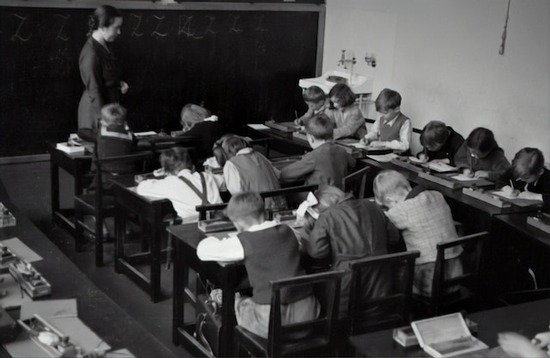
Photo by Austrian National Library on Unsplash
In the mid-to-late 1800s, education in industrialized countries was far from what it is today. In the United States, most schools were one-room country schoolhouses where students were taught the “three Rs” of reading, writing, and arithmetic. Though much of the class material was moral and practical, the main learning method was memorization. Students didn’t have to think critically about what they were studying.11
The schoolhouses were dark, and little physical movement was permitted outside of recess. “Fidgeting” called for severe punishment.
As a result, education was one-sided, focusing on developing mental capacities over physical ones.
The few schools of a higher caliber often taught a classical curriculum.12 Students, mostly young men, learned the arts and studied the writings of classic thinkers, such as Cicero, Plato, and Homer. These authors were steeped in Greek and Roman philosophy, which often contradicted biblical principles.
At this time in America, the Transcendentalist period was also in full swing, and its ideas about humanity’s inherent goodness clashed with the Bible’s teaching that man is sinful and needs a Savior.
Education needed help, and Ellen White stepped in to do what she could for the next generation. While she was also interested in what educational reformers were proposing, the Bible was her principal guide.
The Bible and God’s counsel
The Bible shaped every aspect of Ellen White’s educational counsel. She often quoted passages from Scripture and used their principles when outlining teaching methods.
For example, in her book Education, she traces education from the time of Adam and Eve to the Israelites and gleans principles for today.
Just like the Israelites were instructed to educate their children in a true knowledge of God, she encouraged teachers to make the law of God a practical part of daily life:
“These words that I am giving you today are to be in your heart. Repeat them to your children. Talk about them when you sit in your house and when you walk along the road, when you lie down and when you get up” (Deuteronomy 6:6–7, CSB).
As Ellen White wrote these ideas down, God was guiding her. Though she didn’t record a specific vision on the topic, she wrote that “the subject of education has been presented before me in different lines, in varied aspects, by many illustrations, and with direct specification, now upon one point, and again upon another.”13
Let’s look at how we can make her counsel practical.
How to incorporate the Bible into the classroom
As we addressed earlier, students can be taught to evaluate every subject through a biblical worldview. Here are ways to do this:
Use biblical themes for essay topics
When teaching students how to write, teachers can give them essay prompts on themes that encourage them to look for answers in the Bible. Students could also study a Bible character or topic, such as faith or ambition, and write about their findings.
Give reading assignments based on biographies in the Bible
The Bible is a unique collection of narratives that can make for great character studies.
Ellen White pointed out that because God is the ultimate author of the Bible, its biographies don’t have the human bias common in other stories:
“No part of the Bible is of greater value than its biographies. These biographies differ from all others in that they are absolutely true to life. It is impossible for any finite mind to interpret rightly, in all things, the workings of another. None but [God]…[can] delineate character, or give a faithful picture of a human life.”14
Through reading Bible narratives, students will also learn the principle of cause and effect: actions have consequences. Ellen White puts it this way:
“No truth does the Bible more clearly teach than that what we do is the result of what we are. To a great degree the experiences of life are the fruition of our own thoughts and deeds.”15
Teach science from a biblical perspective, using the story of Creation
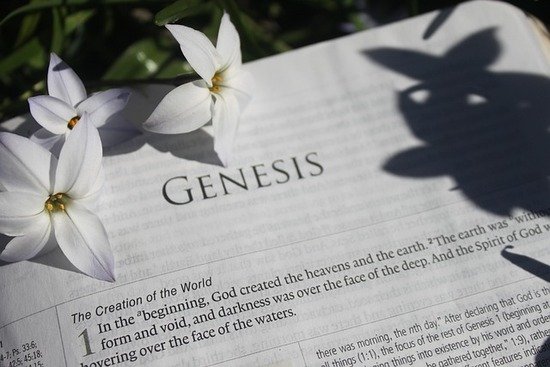
Teachers can use a creationist curriculum, coupled with a study of the Creation story, to establish students in a biblical perspective of our origins.
Study the methods of government in Bible times
While learning about modern types of government, students can also learn about how governments look at various points in Bible history. For example, the special form of government God designed for the Israelites in contrast to those of other nations mentioned in the Bible, such as the Babylonians, Persians, and Romans.
Include the narratives of the Bible in the study of history
We often think of the Bible as a spiritual book, but it’s also a rich repository of ancient history. In fact, the Institute for Creation Research states,
“The Bible has proven to be more historically and archaeologically accurate than any other ancient book. It has been subjected to the minutest scientific textual analysis possible to humanity and has been proven to be authentic in every way.”
So why not use it as a source in your world history curriculum?
A Bible-based education develops individual thinkers
Ellen White summed up her biblical integration ideas in a single quote:
“In [the Bible’s] pages are found history the most ancient; biography the truest to life; principles of government for the control of the state, for the regulation of the household—principles that human wisdom has never equaled.”16
Even if the students aren’t directly participating in Bible study, their teachers can weave those principles into many aspects of the classroom. The Bible can be the standard for testing all other subject matter and activities.
In this way, children carry a solid foundation into adulthood—the ability to think for themselves and evaluate life by the Bible.
- White, Ellen G., Education, p. 13 [↵]
- Ibid. [↵]
- Ibid., p. 30 [↵]
- White, Ellen, Christian Education (International Tract Society, 1894), p. 103 [↵]
- Douglass, Herbert E., Messenger of the Lord, p. 346 [↵]
- Ibid. [↵]
- bid., p. 347 [↵]
- White, Ellen G., Fundamentals of Christian Education, p. 474 [↵]
- Messenger of the Lord, p. 347 [↵]
- Education, p. 17 [↵]
- Knight, George, “The Transformation of Education” in Land, Gary, The World of Ellen White, pp. 162-163 [↵]
- Ibid. [↵]
- Fundamentals of Christian Education, p. 310 [↵]
- Education, p. 146 [↵]
- Ibid. [↵]
- Ibid., p. 125 [↵]
More Answers

What Does the Parable of the 10 Virgins Teach Us?
The story of the 10 virgins found in Matthew 25:1-13 is a well-recognized parable of Jesus, and one with a profoundly important message for all of humanity.

Sabato katika Maisha na Mafundisho ya Ellen White
Sabato katika Maisha na Mafundisho ya Ellen WhiteSabato ni mada muhimu katika Kanisa la Waadventista wa Sabato. Sio jambo la kushangaza, basi, kwamba Ellen G. White, mwanzilishi mwenza wa kanisa, alisoma mafundisho ya Biblia kuhusu Sabato na akaandika kiasi kikubwa...

Una visión general de la educación superior Adventista del Séptimo Día
Una visión general de la educación superior Adventista del Séptimo DíaLa Iglesia Adventista del Séptimo Día tiene alrededor de 118 instituciones de educación superior en todo el mundo.1 Aunque muchas de ellas se encuentran en América del Norte, también encontrarás...
Uma Visão Geral da Educação Superior Adventista do Sétimo Dia
Uma Visão Geral da Educação Superior Adventista do Sétimo DiaA Igreja Adventista do Sétimo Dia tem cerca de 118 escolas terciárias ao redor do mundo.1 Embora muitas delas estejam localizadas na América do Norte, você também encontrará universidades Adventistas em...
Jesús y Juan el Bautista: Su relación y ministerio
Juan el Bautista y Jesús eran primos, amigos y colaboradores cercanos en el ministerio. Aprende la significancia duradera de su relación.

The Parable of the Unforgiving Servant—A Walk-through
Through this somewhat alarming story, Jesus teaches us about forgiveness, mercy, and human nature.

Comprendiendo la vida y el ministerio de Elena G. de White
Comprendiendo la vida y el ministerio de Elena G. de White Ellen Gould White fue una de las cofundadoras de la Iglesia Adventista del Séptimo Día. Y aunque vivió la mayor parte de su vida en el siglo XIX, el impacto de su vida y ministerio continúa hoy. Viviendo su...
Compreendendo a Vida e o Ministério de Ellen G. White
Saiba quem Ellen G. White realmente foi e o papel que desempenhou ao guiar a Igreja Adventista do Sétimo Dia primitiva por meio de seu ministério e escritos inspirados.

Explorando la profecía de las 2300 tardes y mañanas y el juicio investigador
¿De qué se trata la profecía de las 2300 tardes y mañanas? Nos enfocaremos especialmente en qué eventos marcaron su cumplimiento y en qué tiene que ver con el juicio investigador.
Explorando a Profecia dos 2300 Dias e o Juízo Investigativo
Sobre o que se trata a profecia dos 2300 dias? Vamos analisar especialmente quais eventos marcaram o seu cumprimento e qual a sua relação com o Juízo Investigativo.
El sábado en la vida y enseñanzas de Elena de White
El sábado es un tema importante en la Iglesia Adventista del Séptimo Día.
O Sábado na Vida e Ensinos de Ellen White
O Sábado na Vida e Ensinos de Ellen WhiteO sábado é um tópico importante na Igreja Adventista do Sétimo Dia. Não deve surpreender você, então, que Ellen G. White, uma co-fundadora da igreja, tenha estudado os ensinamentos bíblicos sobre o sábado e escrito extensamente...

La armadura de Dios como se describe en Efesios 6
La armadura de Dios como se describe en Efesios 6En Efesios 6, el Apóstol Pablo estaba ayudando a las personas a entender lo que significa defenderse en una guerra espiritual (Efesios 6:10-18). ¿Qué significa eso? Al hacer referencia a la armadura de Dios, Pablo no...

Todo lo que necesitas saber sobre las comidas del Sábado.
Para los Adventistas del Séptimo Día, compartir una comida en sábado con amigos y familiares es una de las partes más especiales y memorables de este día.

What Does the Parable of the Pearl of Great Price Mean?
Here’s what Jesus taught about the kingdom of heaven through this short parable about a merchant who finds a priceless pearl.

¿Qué significa “Adventista”?
¿Qué significa "Adventista"?Los Adventistas del Séptimo Día son una denominación cristiana protestante que sostiene el sábado bíblico que es el séptimo día. De esta creencia, obtienen la primera parte de su nombre. Pero, ¿qué hay de la segunda parte, "Adventista"?...

Ujumbe wa Malaika Watatu Katika Ufunuo 14 Ni Upi?
Ujumbe wa malaika watatu katika Ufunuo 14 unawaonya ulimwengu kuabudu Mungu, kuacha mchafuko wa kidini, na kuepuka ibada za tamaduni za kibinadamu badala ya amri za Mungu.
¿Quiénes fueron los hijos de Elena G. de White?
Elena G. de White, probablemente la cofundadora más conocida de la Iglesia Adventista del Séptimo Día, tuvo cuatro hijos con su esposo, James: Henry Nichols, James Edson, William Clarence y John Herbert.

Kwa nini Wadventista wa Sabato Wengi wanachagua Lishe Inayotokana na Mimea?
Ingawa siyo kila Mwadventista anatumia vyakula vya mimea pekee, wengi hujiepusha kabisa na nyama ili kuishi maisha yenye afya katika juhudi za kumheshimu Mungu, kimwili, kiroho, na kiakili.
![Understanding the Book of Mark [An Overview]](https://devsite.askanadventistfriend.com/wp-content/uploads/2026/02/bible-open-to-mark-400x250.jpg)
Understanding the Book of Mark [An Overview]
Understanding the Book of Mark [An Overview]The Book of Mark is one of the four Gospel accounts that begin the New Testament, and its author is widely believed to be John Mark, a relative of Barnabas who worked with both Peter and Paul. It’s the shortest Gospel...
An Overview of Romans: Faith, Righteousness, and Relationships
Here’s a breakdown and background of Paul’s longest epistle.
Tudo o que você precisa saber sobre as refeições do Sábado
Tudo o que você precisa saber sobre as refeições do Sábado.Para os Adventistas do Sétimo Dia, compartilhar uma refeição de sábado com amigos e família é uma das partes mais especiais e memoráveis do sábado. É por isso que queremos compartilhar com você tudo sobre as...
Yesu na Yohana Mbaptisti: Uhusiano Wao na Huduma
Yohana Mbatizaji na Yesu walikuwa ndugu wa damu, marafiki, na wafanyakazi wa karibu katika huduma. Jifunze umuhimu wa kudumu wa uhusiano wao.
Muhtasari wa Elimu ya Juu ya WaAdventista wa Sabato
Muhtasari wa Elimu ya Juu ya WaAdventista wa SabatoKanisa la WaAdventista Wasabato lina takribani shule za sekondari 118 ulimwenguni kote.1 Ingawa nyingi zipo ndani ya Amerika Kaskazini, pia utapata vyuo vikuu vya WaAdventista katika nchi mbalimbali duniani—mahali...
The Book of John: An Overview
Here’s a study companion for the Gospel according to John.

Waadventista wa Sabato Wanaamini Nini Kuhusu Pambano Kuu (Wema na Uovu)?
Pambano Kuu” ni msemo ambao Waadventista wa Sabato kawaida huutumia kuelezea mgogoro wa kiroho wa ulimwengu kati ya nguvu za mema (Mungu) na nguvu za uovu au dhambi (Shetani/iblis).
Silaha Zote za Mungu Kama Ilivyoelezwa Katika Waefeso 6
Katika Waefeso 6, Mtume Paulo alikuwa akisaidia watu kuelewa maana ya kujilinda katika vita vya kiroho (Waefeso 6:10-18).
A Armadura de Deus conforme Descrita em Efésios 6
Em Efésios 6, o Apóstolo Paulo estava ajudando as pessoas a entender o que significa se defender em uma guerra espiritual (Efésios 6:10-18).
¿Qué creen los Adventistas del Séptimo Día sobre el gran conflicto (bien vs. mal)?
El “gran conflicto” es la frase que los Adventistas del Séptimo Día suelen usar para describir el conflicto espiritual cósmico entre las fuerzas del bien (Dios) y las fuerzas del mal o del pecado (Satanás/el diablo).
Didn’t find your answer? Ask us!
We understand your concern of having questions but not knowing who to ask—we’ve felt it ourselves. When you’re ready to learn more about Adventists, send us a question! We know a thing or two about Adventists.