
Ellen G. White’s contributions to the formation and growth of the Seventh-day Adventist Church are an integral part of its history. As a significant co-founder of the denomination, her writings provided millions of people with practical and spiritual counsel. So to preserve and manage this literary legacy, the Ellen G. White Estate was established as outlined in her last will.
But this organization is more than just an archive or a library. The White Estate also serves as a place of learning about the early history of the Adventist Church. So if you’re ever in Silver Spring, Maryland, you can even stop by to tour the museum inside the Ellen G. White Visitor Center.
A big part of the White Estate’s mission is to be a helpful resource for anyone who wants to understand more about Adventist history, Ellen White, and her extensive, widely-influential ministry.
Let’s learn more about how the White Estate operates and why it’s so highly valued by Adventists. We will cover:
Let’s start with some historical background.
How was the Ellen G. White Estate established?

Photo by Debby Hudson on Unsplash
As she faced the later years of her life, Ellen White considered what might be the best way to manage the preservation of her written works. So when she established her will in 1912, she also laid out the framework for this estate. As specified in her will, the organization would have a four-part purpose:
- Acting as her legal agent by holding custody and copyright of her writings
- Conducting any business related to her writings
- Securing the printing of new translations, whether modernizations of wording or translations into other languages like Spanish, Portuguese, or French
- Printing of compilations from [her] manuscripts, such as books like The Adventist Home1
Ellen White also listed the names of those she wished to be on the first board of trustees: Arthur G. Daniells, William C. White (her son), Clarence C. Crisler, Charles H. Jones, and Francis M. Wilcox.2
When she passed away in 1915, the Estate was established.3
It had its beginnings at Ellen White’s final home, known as “Elmshaven,” in St. Helena, California. The first trustees rented an office building on the grounds to conduct any business.4
The purpose and mission of the White Estate
 Ellen White wanted to be clear that the establishment of this estate was not because of any personal pride, or simply due to familial sentiment. The Estate’s mission statement reflects the true purpose for its existence:
“The Ellen G. White Estate supports the mission of the Seventh-day Adventist Church in uplifting Jesus Christ and His Word by sharing Ellen White’s prophetic ministry and writings throughout the world.”5
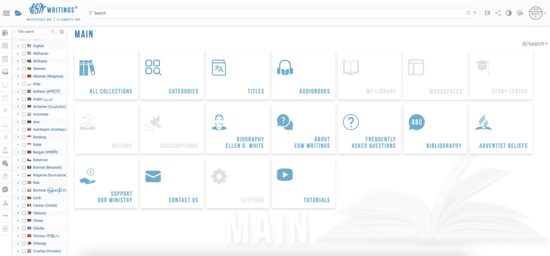
To do that, the White Estate provides digital access to all the published writings of Ellen G. White, as well as some additional letters and manuscripts meant for sharing. These writings, be they books, letters, articles, or pamphlets, can be searched through at egwwritings.org, which is operated by the White Estate. These writings have also been translated into more than 140 languages, and those translations are available on that site as well.
They’ve also developed apps for iOS and Android for users to read on mobile, or listen to as audiobooks.
All of this is in addition to the White Estate’s website, which has several articles that address different aspects of her ministry within the Adventist Church, and how she always sought to point people toward the Bible, the one authoritative standard of all truth.
They also have a question-and-answer section. People have submitted questions about what Ellen White wrote about a certain subject, or if she provided counsel in applying a particular biblical principle to modern life. Then her writings, along with the Bible, are used to answer those questions.
History
Soon after Ellen White passed away, the original five trustees began the work of indexing and publishing compilations of her writings. They also laid the groundwork for keeping the trusteeship self-perpetuating, as she had directed in her will.
This led the trustees to form a corporation to manage the Estate. The corporation would then be the entity that had the legal responsibility of carrying out the provisions of the charitable trust that was also created by Ellen White’s last will and testament.
Additionally, even though the White Estate is a separate entity from the General Conference, the world headquarters of the Seventh-day Adventist Church, they formed a mutually beneficial alliance early on. The General Conference provides financial support for the ministry of the White Estate.
In January 1938, the White Estate moved its office to Washington, DC to be more closely connected to the work of the General Conference.
As the church grew, it became apparent that the White Estate would also have to grow to meet the needs. So in 1950, it increased its number of board members. Although the number has fluctuated over the years, there are currently five lifetime trustees and 10 term-based board members.
Today, the Ellen G. White Estate continues to serve the Adventist Church from its main office in Silver Spring, Maryland.
Operation
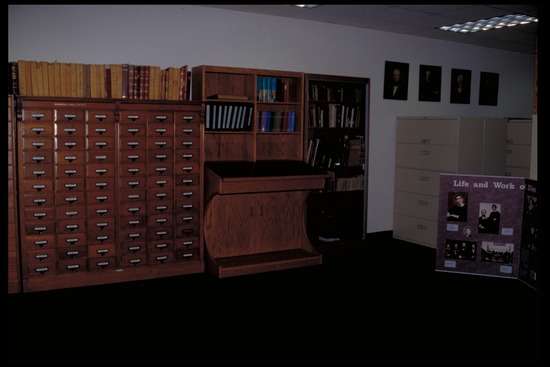
“Courtesy of the Ellen G. White Estate, Inc.”
In addition to the trustees who compose the White Estate board, the day-to-day work of the Estate is managed by several staff members who work at General Conference headquarters. These staff members are in charge of:
- Maintaining the records and indexes entrusted to the Estate
- Handling copyrights for Ellen White’s works
- Researching her works and related historical material when needed
- Answering questions regarding Ellen White’s writings and ministry
- Assembling material for compilations of Ellen White’s writings
- Coordinating the translation of her writings, as well as preparing adaptations or abridgments
- Presentations at churches, events, and ministry offices
- Conducting tours of historical Adventist sites, especially in New England
- Preparing articles, text, and correspondence lessons6
While its main office is in Maryland, the White Estate operates branch offices and research centers all over the world. Its four branch offices are located at:
- Loma Linda University, Loma Linda, California
- Andrews University, Berrien Springs, Michigan
- Adventist University of Africa, Nairobi, Kenya
- Adventist International Institute of Advanced Studies, Cavite, Philippines
Each branch office and research center contains copies of all Ellen White’s letters and manuscripts.
In addition to the branch offices, the White Estate maintains more than 20 research centers at Adventist universities around the world for public use. These centers will gladly assist people who are visiting or looking for information about Ellen White and Adventist history.
These branch offices and research centers are just one more way the White Estate works to fulfill the mission of Ellen G. White and the founders of the Adventist Church.
The Holy Spirit worked through Ellen White in extraordinary ways, primarily through the gift of prophecy (Romans 12:6; 1 Corinthians 12:28). From its inception, the White Estate has sought to continue the blessing of that ministry, seeking to glorify God with the resources they have been tasked to manage.
Related Articles





- “Origins of the White Estate,” [↵]
- Ibid. [↵]
- Ibid. [↵]
- “Organizations of the White Estate,” [↵]
- “Our Mission,” [↵]
- “The Work of the White Estate,” [↵]
More Answers

Como os Ensinos de Ellen White Podem Melhorar Sua Saúde
Como os Ensinos de Ellen White Podem Melhorar Sua SaúdeAssistência médica no século XIX era dito deixar "mais doenças do que levava embora" com o uso de sangrias e "remédios" como mercúrio e arsênico.1 À medida que as pessoas questionavam esses métodos, novas...
Cómo las enseñanzas de Elena G. de White pueden mejorar tu salud
La atención médica en el siglo XIX se decía que dejaba “más enfermedades de las que eliminaba” con su uso de sangrías y “medicamentos” como el mercurio y el arsénico.

All About the Gospel of Matthew
The Book of Matthew is one of the four Gospel narratives in the Bible
Descanso e Reconexão: O Que Realmente Significa Guardar o Sábado
A Bíblia nos diz que guardamos o Sábado evitando o trabalho. Deus fez essa lei porque sabia que ela nos fortaleceria e nos traria alegria, além de nos dar tempo para nos reconectar com Ele e recarregar das nossas vidas ocupadas.
Descanso y reconexión: lo que realmente significa guardar el sábado
La Biblia nos dice que guardamos el sábado evitando el trabajo. Dios hizo esta ley porque sabía que nos fortalecería y nos traería alegría, además de darnos tiempo para reconectarnos con Él y recargar energías de nuestras vidas ocupadas.

Todo lo que necesitas saber sobre la Escuela Sabática
La Escuela Sabática es el componente de estudio bíblico del programa de la iglesia en la mayoría de las Iglesias Adventistas del Séptimo Día.

O que os Adventistas do Sétimo Dia acreditam sobre a autoridade da Bíblia?
Saiba como um livro realmente antigo (a Bíblia) é o único fundamento para todas as crenças dos Adventistas do Sétimo Dia.
¿Qué creen los Adventistas sobre la autoridad de la Biblia?
Puede hacerte sentir intimidado o frustrado. Podrías pensar en un líder de iglesia que parecía arruinar toda tu diversión cuando eras niño, o un jefe que supervisa cada uno de tus movimientos en el trabajo…

¿Qué es un médico misionero adventista?
Un médico misionero en la Iglesia Adventista es alguien que cuida de las necesidades médicas de las personas como una forma de mostrar el amor de Jesús. Pueden viajar a otro país, o incluso simplemente servir en su ciudad natal.
Ni nini Mtaalam wa Matibabu wa Kiadventista?
Mmishonari wa matibabu katika Kanisa la Waadventista ni mtu anayejali mahitaji ya matibabu ya watu kama njia ya kuonyesha upendo wa Yesu.
O que é um missionário médico adventista?
Um missionário médico na Igreja Adventista é alguém que cuida das necessidades médicas das pessoas como uma forma de mostrar o amor de Jesus. Eles podem viajar para outro país, ou até mesmo servir em sua cidade natal.

Guía definitiva para el estudio personal de la Biblia
¿Alguna vez has sentido que estudiar la Biblia es un desafío y simplemente no estás seguro de por dónde empezar? ¿O estás buscando ideas nuevas para mejorar tus hábitos actuales de estudio bíblico?
O Guia Definitivo para o Estudo Pessoal da Bíblia
Já sentiu que estudar a Bíblia é desafiador e não tem certeza por onde começar? Ou está procurando ideias novas para melhorar seus hábitos atuais de estudo da Bíblia?
¿Los Adventistas del Séptimo Día observan festividades relacionadas con la Pascua?
La resurrección de Jesús, celebrada en muchas festividades relacionadas con la Pascua, es central para las creencias de la Iglesia Adventista del Séptimo Día.

10 Bible Teachings Adventists Believe About the Devil
10 Bible Teachings Adventists Believe About the DevilSeventh-day Adventists believe the devil (or Lucifer-turned-Satan) is real and active. He is the sole adversary of God and humanity (1 Peter 5:8), making him the opposing force in the cosmic conflict between good...

¿Los Adventistas del Séptimo Día creen que solo ellos irán al cielo?
No, los adventistas definitivamente no creen que son los únicos que irán al cielo. De hecho, no creemos que la admisión al cielo se base en la iglesia o denominación a la que pertenecemos.
Waadventista Wa Sabato Wanaamini Nini Kuhusu Mamlaka ya Biblia?
Jifunze jinsi kitabu kimoja cha zamani sana (Biblia) kilivyo msingi pekee wa imani zote za Waadventista wa Sabato.
Mwongozo Bora Katika Kujifunza Biblia Binafsi
Umewahi kuhisi kwamba kusoma Biblia ni jambo gumu, na hujui uanzie wapi? Au unatafuta mawazo mapya ya kuboresha tabia yako ya usomaji wa Biblia.
Je, Waadventista Wasabato Wanasherehekea Siku Kuu Zinazohusiana na Pasaka?
Kufufuka kwa Yesu, kunakoadhimishwa katika siku kuu nyingi zinazohusiana na Pasaka, ni muhimu katika imani za Kanisa la Waadventista wa Sabato.
Je, Waadventista Wasabato Wanaamini Wao Pekee Ndiyo Watakao Kwenda Mbinguni?
Hapana, Waadventista hakika hawaamini kwamba wao ndio pekee watakao kwenda mbinguni. Kwa kweli, hatuamini kwamba kupokelewa mbinguni kunategemea kanisa au madhehebu tunayohusiana nayo.

Chakula cha Pamoja Katika Kanisa la Kiadventista: Mahali Ambapo Chakula na Urafiki Vinakutana
Mara nyingi, kawaida kwenye ratiba inayotofautiana kutoka mara moja kwa wiki hadi mara moja kwa mwezi hadi mara moja kwa robo, kanisa la Waadventista litakuwa na “karamu za ushirika,” mara nyingi zikiitwa chakula cha mchana cha pamoja.

Je, Waadventista Wa Sabato Wanaamini Nini Kuhusu Uumbaji Katika Biblia?
Waadventista Wa Sabato wanaamini kwamba Mungu ndiye Muumbaji wa ulimwengu. Wanafikia hitimisho hili kutoka kitabu cha kwanza cha Biblia—Mwanzo.

Jinsi Ellen White Alivyochangia Ujumbe wa Afya wa Waadventista
Jinsi Ellen White Alivyochangia Ujumbe wa Afya wa WaadventistaWaadventista wa Sabato wanajulikana kwa kusisitiza maisha yenye afya bora. Na Ellen G. White alikuwa na ushawishi mkubwa katika maendeleo ya kipaumbele hiki na utekelezaji wake miongoni mwa Waadventista....
Os Adventistas do Sétimo Dia observam feriados relacionados à Páscoa?
Os Adventistas do Sétimo Dia observam feriados relacionados à Páscoa?A ressurreição de Jesus, celebrada em muitos feriados relacionados à Páscoa, é central para as crenças da Igreja Adventista do Sétimo Dia. E isso significa que buscamos todas as oportunidades para...
Os Adventistas do Sétimo Dia acreditam que apenas eles irão para o Céu?
Não, os Adventistas definitivamente não acreditam que são os únicos que irão para o céu. Na verdade, não acreditamos que a admissão no céu dependa de qual igreja ou denominação pertencemos.

Ellen White anasema nini kuhusu Maombi?
Je, umewahi kuwa na mzigo ambao ulihitaji kumwambia mtu, lakini uliogopa kuhukumiwa ikiwa ungefanya hivyo?

Nani Aliyebadilisha Sabato kwenda Jumapili?
Nani Aliyebadilisha Sabato kwenda Jumapili?Ikiwa Biblia haijawahi kutaja mabadiliko ya Sabato, kwa nini leo wengi wanaenda kanisani Jumapili? Nani alibadilisha siku hiyo? Lakini hilo sio swali sahihi la kuuliza. Sabato haijabadilika. Kilichobadilika ni uamuzi wa...

Is It Okay to Worship On Sunday Instead of Saturday?
If there’s no wrong time to worship God, why are there different ideas on the day churches meet?

Ellen G. White au Biblia—Kipi ni Muhimu Zaidi kwa Waadventista?
Biblia—bila shaka—ndiyo kitabu muhimu zaidi. Ni kipimo tunachotumia kupima maandishi mengine yote, ikiwa ni pamoja na yale ya Ellen White.
Didn’t find your answer? Ask us!
We understand your concern of having questions but not knowing who to ask—we’ve felt it ourselves. When you’re ready to learn more about Adventists, send us a question! We know a thing or two about Adventists.