
At its core, music is a collection of tones, sounds, and rhythms that creates a melody. It’s also much more than that.
Like any form of art, it can be profoundly beautiful or deeply dreadful, exciting or depressing, happy or sad, chaotic or peaceful, etc.
And that’s why it’s so often been analyzed and discussed by scientists, philosophers, theologians, psychologists, neurologists…just to name a few.
Ellen G. White, one of the founders of the Seventh-day Adventist Church, also provided helpful guidance regarding music choices for Christians. She provided sound principles to answer questions the young Adventist Church had.
In this article, we’ll take a look at:
- Ellen White’s thoughts about music in general
- Specific qualities of music she addressed
- What kinds of music she refers to
- Takeaways we can apply to our own decision-making
Ellen White was a diligent student of God’s Word and aspired to apply its principles to all aspects of daily life. We’ll start by looking at the things she said about music in general.
Ellen White’s thoughts about music in general

Photo by Pavel Danilyuk from Pexels
Music, she believed, was a “precious gift of God.”1 It was something that could be inspiring and uplifting,2 an expressive and creative art form much like poetry or painting. She wrote, “Music was made to serve a holy purpose, to lift the thoughts to that which is pure, noble, and elevating, and to awaken in the soul devotion and gratitude to God.”3
Because music was originally a heavenly gift, it can also help in bringing people to Christ. “Song is one of the most effective means of impressing spiritual truth upon the heart. Often by the words of sacred song, the springs of penitence and faith have been unsealed,”4 she wrote. “God is glorified by songs of praise from a pure heart filled with love and devotion to Him.”5
Think about how it can be more difficult to remember the exact words of the best of sermons, but the words of a song often come to us with little effort.
Not only can it be moving to listen to a song, but singing one can be just as (or even more) inspiring. Ellen White saw that singing was also a gift from God—and like any of His gifts, it’s best used for His glory and to further His purposes.6
And even though Ellen White valued music and highly approved of it, she realized that, like many other things, it can become a negative influence when it’s used flippantly or when it stirs up unproductive emotions like anger or gluttony, or if it instills fear or encourages selfish behavior.
“Music, when not abused, is a great blessing,” she wrote.
But it would be naive to think that such a form of free and creative expression couldn’t also have a negative effect on us.7
She wrote the above words after observing that some forms of music had been distracting young Christians from God’s truth and taking their time and focus away from Him. These “frivolous songs” actually caused them to be more self-focused and became an “idol” for them, even as they professed to be devout Christians.8
And this might be hard to hear for those of us who dearly love music. For others it might cause alarm, or even a fearful regard toward any likable or engaging music. But we have to be careful not to default to extremes. So how can we determine when music is helpful and when it might be hurtful?
While Ellen White certainly doesn’t endorse or condemn any specific genre of music, she does talk about the different qualities of music that can make a difference in how it can affect us. And she encourages us to be aware of these things so we can make our own informed decisions.
Let’s take a look at the qualities of music she took the time to write about.
Specific qualities of music she addressed
Combined with her keen appreciation and observation of song, Ellen White was deeply in tune with the influence of the Holy Spirit. She made sure to keep her advice to fellow Adventists in line with biblical principles.
Volume

It’s not hard to notice how the volume of music can play an important role in the effect it’ll have on our minds (or our ears!). For those aspiring to sing, she advised them to prioritize singing clearly and distinctly before focusing on vocal projection (loudness).
“Let’s all take time to cultivate the voice, so that God’s praise can be sung in clear, soft tones, not with harshness and shrillness that offend the ear.”9
Along with this, Ellen White noted that loud singing does not mean it’s better. “…[N]oise is not music,” she admonished. Instead, she described “good singing” as “melodious,” like “the music of the birds.”10
But in saying this, she didn’t indicate that the loudness of music automatically made it bad or displeasing, either. Her point was that the decibel level wasn’t to be the first measure of quality, talent, or effectiveness.
Orderliness
It’s well-known that confusion and dissonance can stir up stress in our minds. This applies to music, too.
Orderliness and harmony in music is something Ellen White encouraged Christians to strive for. In Testimonies for the Church, vol. 1, she wrote, “God is not pleased with jargon and discord.” Instead, the more “harmonious singing” that is included in worship services, “the more is He glorified, the church benefited, and unbelievers favorably affected.”11
While there are musical expressions that include dissonance and resolution, the point here is that it’s best not to have the dissonance be the focus of the song. Order and harmony are parts of God’s ideal system. So when it comes to worship, it’s beautiful when a song can reflect some of the wonderful traits of His character.
Tone
Tone refers to the duration, intensity, pitch, and quality of a musical sound.
Ellen White would talk about tone because of how it can affect a song’s listeners. A favorable balance of tone could improve a song’s effectiveness on the audience. She noted that when songs are sung in a “natural tone,” and when words are “uttered clearly,” the experience can be deepened for both singers and listeners.12
So she advised singers to strive for a clear tone, rather than just thinking about the notes alone.
“The proper training of the voice is an important feature in education and should not be neglected.”13
In taking time to improve vocal tone, every note of a song can increase its effect on listeners.
(Plus, it not only makes a difference in singing or playing instruments. Tone of voice when speaking is also important.)
Usefulness

Photo by Keilah Gepte from Pexels
Music has many uses and benefits, aside from simply being enjoyable.
Songs can help us memorize things we need to know, and even help us keep the Word of God in our hearts—residing there for when we need it most.
Music can be used to praise God, showing that He is all about celebrating goodness and gladness, and it can help us bring depth to the words we express in adoration of Him.
It can also help us express complex or profound emotions and ideas, especially of eternal things that we long for through Jesus. Sometimes words seem to fall short when we’re expressing the love and glory of God, and music can help add to the full picture in ways we can’t always explain.
Ellen White specifically mentions music’s usefulness when she describes Moses leading the people of Israel in song as they traveled to Canaan. Singing helped them pass the time and occupy their minds with uplifting thoughts as they walked.14
She also saw that the Israelites put the Ten Commandments to a tune to help them remember them.15
When it comes to making music a part of our lives, she even made the case of how useful it can be for children to learn how to sing early on. “The value of song as a means of education should never be lost sight of. …Let there be singing in the school, and the pupils will be drawn closer to God, to their teachers, and to one another.”16
Singing at an early age not only can help in school, but later in life as well. A person in despair might remember an uplifting or calming tune they learned as a child. Someone else might use song to express some deep or complex emotions they’re feeling.
And to complement her general encouragement that music can be a wonderful addition to a child’s growth and development, there’s even been research that suggests how singing can improve lung health and cardiovascular function.17
Proper use and balance of instruments

Photo by Clem Onojeghuo on Unsplash
Ellen White didn’t only encourage singing, even though it tends to get much of the attention. She made a point to discuss the value that instruments added to a song.
“Call to your aid, if practicable, instrumental music, and let the glorious harmony ascend to God, an acceptable offering.”18
It’s also important to note that when she was writing, professionally designed instruments were not as common or diverse as what we have today. So they were a real treat.
She wrote that instruments were very useful in church services and evangelism. “And let the singing be accompanied with musical instruments skillfully handled. We are not to oppose the use of instrumental music in our work,” she advised.19 Instruments added another dimension to the harmony of voices that could create a beautiful song.
She also observed that instruments could help in expressing the message of a song, and it allowed more people to use their talents for God.
“These [instruments] were used in religious services in ancient times. The worshipers praised God upon the harp and cymbal, and music should have its place in our services. It will add to the interest.”20
However, balance is always something to be considered. Ellen White pointed out that if the sound of instruments becomes harsh, or too loud or chaotic, it can negate or hamper their positive effects.21
The use of instruments, while also considering tone, orderliness, and volume, can create an inspiring sound to draw people close to God in a way speaking can’t always match. It can be a wonderful thing to use instruments in ways that glorify God.
Looking at different uses and purposes of music
In her writings, Ellen White addressed the many different categories of music and how they are used.
Hymns and songs of worship
Photo by Aaron Burden on Unsplash
Since Ellen White so often wrote about things in a religious context, she would sometimes emphasize the use of music, like hymns and other sacred songs, in church services.
“As part of a religious service, singing is as much an act of worship as is prayer. Indeed, many a song is prayer,” she wrote in Education.22
As we saw earlier, she viewed music as an extremely powerful way to connect a person with God. So singing in church on Sabbath is not only beneficial to each person, but to the congregation as a whole.
Congregational singing was another element she emphasized. It’s better when church singing isn’t only done by a few people up front. As much as possible, the entire church should be encouraged to join in and experience the blessing of the singing.23
This doesn’t rule out a special music tribute, sung by one person or a duet by a couple people. These types of music are just as meaningful in their own way.
One characteristic religious music has is that it is deep, lasting worship. It is intended to bring your heart closer to God and impress His truth upon you.
Music in the Bible

Photo by Sara Budhwani on Unsplash
Ellen White recounts numerous kinds of music described in the Bible. For example, when the Israelites crossed the Red Sea and escaped the Egyptians, they sang a song of celebration to God. The words of this song are written in Exodus 15. She noted that they often sang this song as they journeyed toward Canaan.24
Along with this song, Ellen White says the Israelites sang the Ten Commandments. They were “chanted to the sound of instrumental music, the people keeping step as their voices united in praise.”25
The Israelites made use of the instruments they had available to them. When they were coming out of Egypt, the Bible records them using timbrels (Exodus 15:20), which are like tambourines. Later, as they settled into Canaan, more instruments became available to them. David played his harp for King Saul to calm his nerves (1 Samuel 16:16).
David also composed songs for his harp, many of which are recorded in the book of Psalms.
Ellen White noted in her book, The Desire of Ages, that Jesus often sang these Psalms and other heavenly songs.26 Many of the Psalms were written to be sung, also including directions to choir masters.
Even though music and singing in the Bible were usually viewed in a positive light, Ellen White does highlight an instance in which it can be used to manipulate or misrepresent. When Balaam coerced the Israelites to worship idols, she writes that music was a significant part of a plan to distract and entice the Israelites.
“He counseled Balak to proclaim an idolatrous feast in honor of their idol gods, and he would persuade the Israelites to attend, that they might be delighted with the music, and then the most beautiful Midianitish women should entice the Israelites to transgress the law of God, and corrupt themselves, and also influence them to offer sacrifice to idols.”27
But as we read, it’s easy to see that this isn’t talking about music in general. Lots of forms of art or expression have been used both to glorify God or to try to entice people toward other things. In that particular instance, Balaam intended to use music to add to an overall enticing effect. He wanted it to help draw in the Israelites, that they might attend this “idolatrous” gathering.
Music in heaven
Our singing won’t stop with our earthly lives. Song is so wonderful, we’re even told we’ll sing in heaven. Ellen White writes extensively about this.
“It [the rich, perfect music of heaven] cannot be described. It is melody, heavenly, divine, while from every countenance beams the image of Jesus, shining with glory unspeakable.”28
The Bible talks about this same singing. Revelation 5 describes a song that a heavenly choir of angels will sing, and Revelation 15:3-5 talks about our singing in heaven as well:
“They [followers of Christ] sing the song of Moses, the servant of God, and the song of the Lamb, saying:
‘Great and marvelous are Your works,
Lord God Almighty!
Just and true are Your ways,
O King of the saints!
Who shall not fear You, O Lord, and glorify Your name?
For You alone are holy.
For all nations shall come and worship before You,
For Your judgments have been manifested'” (NKJV).
If we think singing is delightful here, we’ll be blown away by the music in heaven!
Secular music
We use the term “secular” to mean that there isn’t a direct relation or reference to something holy or religious. Ellen White also talked about the qualities of music apart from its involvement in education or worship.
On one occasion, during her missionary service in Switzerland, she described hearing “most beautiful instrumental music” that was being played by a band in a public park—that was unfortunately also being used as a beer garden! While she decried that “almost every beautiful location of groves and gardens is converted into a beer garden,” she did enjoy the sounds of the music.29
She saw music in general as a gift from God. Even if it didn’t directly address or describe Him with specific lyrics, it could still be appreciated and enjoyed, drawing people toward the divine.
She also recognized that many songs not intended to praise God actually do praise things that are of God. They could be things like unconditional or sacrificial love, the beauty of nature, or getting along with others.
One cautionary thing she wrote about was the environment that a song is associated with. What does the song make you think of? What was the composer attempting to communicate or promote? Where is the song often played?
One kind of music Ellen White described with a tone of warning was “frivolous ditt[ies], fit for the dance hall.”30 And that’s because dance halls during her time were the forerunners of today’s nightclubs. The types of songs she was referring to “prepares the participants for unholy thought and action.”31
So even if the songs themselves, standing alone, may not have been “bad,” the point was that they were associated with drunkenness and sexually-suggestive dancing that often happened in these places.
The principle being emphasized was: It’s best for Christians to be cautious of listening to music that is crude or coarse, that promotes self-serving or hedonistic behavior, or that overtly glorifies humans above God. Essentially, any music that might hinder us from acting out of love at all times (1 John 4:8).
Emotional manipulation

Photo by Vishnu R Nair from Pexels
Ellen White also addressed music that was designed to persuade its listeners toward ultimately destructive behavior, to cause confusion, or to incite distrust or antagonistic attitudes.
Now, the whole purpose of music is to instill and draw upon human emotion and bring about more profound understanding—so having an emotional reaction to music is natural, expected, and encouraged. This very thing can even bring someone closer to Jesus by helping them open themselves up to deeper meanings and perspectives.
What Ellen White was referring to, however, was when that effect of music is exploited for harmful or unproductive purposes, like what Balaam did.
One rather dramatic example of this was the “Holy Flesh” movement. Ellen White specifically addressed this group and their behavior during a camp meeting in Indiana, calling out its manipulation of the senses. This movement encouraged people to shout and sing wildly until they had “the spirit,” causing them to fall to the ground.
The music, she said, was a “bedlam of noise”32 and it, along with the other theatrics, was not fit for a Christian evangelism effort.
What she warned against was the confusing and manipulative nature of the music, whatever it actually sounded like.
What’s more, someone experiencing the moving of the Holy Spirit doesn’t have to demonstrate this by reacting in a dramatic, alarming way that doesn’t provide anything helpful for those around them. That’s not what we find when we look through the Scriptures.
Takeaways from Ellen White’s insights on music

Photo by Tatiana Syrikova from Pexels
Here are some takeaways from Ellen White’s counsel on music and the power of song:
- It can help to sing while we work. Ellen White suggested in her book, Child Guidance, “Make your work pleasant by songs of praise.”33 Singing helps pass the time more enjoyably, and engages more of our brain and body than the work alone.
- Music is God’s gift. As Ellen White wrote, “The ability to sing is the gift of God; let it be used to His glory.”34 God is the creator, and He created us to be creative as well. He loves it when we create uplifting forms of art to enjoy, teach, emphasize, praise, etc.
- Music can encourage us. “Song is a weapon that we can always use against discouragement,” Ellen White wrote in The Ministry of Healing.35 Singing can not only distract us from discouragement, but it can inspire us to stay strong and persevere.
- Music is an expression of joy. “Let there be singing in the home, of songs that are sweet and pure, and there will be fewer words of censure and more of cheerfulness and hope and joy,” Ellen White wrote.36 Music is a form of expression, and it can help us share the joy we can find in God and the things He created.
- Music can be a form of prayer. Ellen White wrote that music can be a prayer to Jesus.37 This can help boost our prayer lives—not only by seeing prayer in a different light, but also praying in new way.
- Music helps us remember. Have you noticed it’s easier to remember something when you put the words to a tune? Ellen White wrote, “There are few means more effective for fixing His [Jesus’] words in the memory than repeating them in song.”38 This can be applied to anything from Bible verses to history dates to lists of qualities, traits, etc. You might be surprised at how much you can remember by singing!
Music is a powerful thing, which was God’s intention. That’s why it’s so fitting to use it to praise Him and recognize all the good things that come from Him.
It’s important to remember that most things that are powerful, enticing, stirring, etc., can also be used for negative or manipulative purposes.
But that doesn’t mean we have to treat all artistic or emotionally-stirring things as guilty until proven innocent. It means that we have to be conscientious about all our choices, including the music we listen to or share. That’s why Ellen White provided principles to help Christians make appropriate choices in the ways we enjoy and create artistic expression through music.
To learn more about the music that has historically been enjoyed in Adventist Churches throughout the denomination’s history, check out our page on the Adventist hymnal.
- White, Ellen G., Education, p. 167 [↵]
- White, Ellen G., Music–Its Role, Qualities, and Influence, p. 3 [↵]
- Ibid, p. 7 [↵]
- White, Ellen G., The Review and Herald, June 6, 1912. [↵]
- White, Ellen G., “Manuscript 134, 1901,” Letters and Manuscripts, vol. 16, par. 7 [↵]
- White, Ellen G., Testimonies for the Church, vol. 9, p. 144 [↵]
- White, Ellen G., Testimonies for the Church, vol. 1, p. 496 [↵]
- “Manuscript 134, 1091,” par. 5 [↵]
- Testimonies for the Church, vol. 9, p. 143-144 [↵]
- White, Ellen G., Evangelism, p. 510 [↵]
- White, Ellen G., Testimonies for the Church, Vol. 1, p. 146 [↵]
- White, Ellen G., Evangelism, p. 510 [↵]
- White, Ellen G., Patriarchs and Prophets, p. 591 [↵]
- Music—Its Role, Qualities, and Influence, p. 3 [↵]
- Evangelism, p. 499 [↵]
- Music–Its Role, Qualities, and Influence, p. 3 [↵]
- https://www.ncbi.nlm.nih.gov/pmc/articles/PMC5131649/ [↵]
- Music—Its Rule, Qualities, and Influence, p. 8 [↵]
- Testimonies for the Church, Vol. 9, p. 144 [↵]
- Evangelism, p. 500 [↵]
- White, Ellen G., Selected Messages, Book. 2, pp. 36-37 [↵]
- White, Ellen G., Education, p. 168 [↵]
- Evangelism, p. 507 [↵]
- Education, p. 39 [↵]
- Ibid. [↵]
- White, Ellen G., The Desire of Ages, pp. 73-74 [↵]
- White, Ellen G., Spiritual Gifts, Vol. 4, p. 49 [↵]
- Testimonies for the Church, vol. 1, p. 146 [↵]
- White, Ellen G., Manuscript 33, 1886 [↵]
- Testimonies for the Church, vol. 1, p. 585 [↵]
- White, Ellen G., Counsels to Parents, Teachers, and Students, p. 339 [↵]
- White, Ellen G., Selected Messages, Vol. 2, pp. 36-37 [↵]
- White, Ellen G., Child Guidance, p. 148 [↵]
- Testimonies for the Church, Vol. 9, p. 144 [↵]
- White, Ellen G., The Ministry of Healing, p. 234 [↵]
- Music—Its Role, Qualities, and Influence, p. 3 [↵]
- Education, p. 168 [↵]
- Education, p. 167 [↵]
More Answers

¿Por qué muchos Adventistas del Séptimo Día eligen una dieta vegetariana?
¿Por qué muchos Adventistas del Séptimo Día eligen una dieta vegetariana?Puede que tengas un amigo adventista que sea vegetariano, o tal vez estés asistiendo a una Iglesia Adventista del Séptimo Día por primera vez y notes que en la comida compartida no hay carne....

What is Jesus’ Parable of the Sower About?
The parable of the sower is ultimately about how people responded to Jesus Christ and His message of the kingdom of God—the Gospel.

O que os Adventistas do Sétimo Dia acreditam sobre o Grande Conflito (Bem vs. Mal)?
O “Grande Conflito” é a frase que os Adventistas do Sétimo Dia normalmente usam para descrever o conflito espiritual cósmico entre as forças do bem (Deus) e as forças do mal ou do pecado (Satanás/o diabo).

Was Jesus Ever Hypocritical? Learn What the Bible Says.
Was Jesus Ever Hypocritical? Learn What the Bible SaysMany undesirable traits are associated with hypocrisy. But overall, hypocrites intentionally try to make others believe they uphold or represent a certain belief system, character trait, lifestyle, etc., when in...

Kukatishwa Tamaa Kukuu na Kile Tunachojifunza
Wafuasi wa Miller walitabiri kurudi kwa Kristo Oktoba 22, 1844, lakini Yesu hakuja kamwe. Tukio lingine lilitokea. Gundua kilichotokea kweli na Kukatishwa Tamaa Kukuu kunaweza kutufundisha leo.

When in Doubt: 7 Ways Christians Can Manage Uncertainty
When in Doubt: 7 Ways Christians Can Manage UncertaintyFew things in life are truly certain. And no matter how convinced some people can appear on the surface, no one is immune to doubt. And this isn’t a bad thing. Doubt has a purpose. A role to serve. (Just imagine...
El gran chasco y las lecciones que nos enseña
Los Milleritas predijeron el regreso de Cristo el 22 de octubre de 1844, pero Jesús nunca llegó. Ocurrió otro evento. Descubre lo que realmente sucedió y qué puede enseñarnos hoy El gran chasco.

Is Jesus the Same Being as Michael the Archangel?
Many Christians have wondered at the mysterious identity of Michael the Archangel.
A Grande Desapontamento e Lições que nos Ensina
Os Milleritas previram o retorno de Cristo em 22 de outubro de 1844, mas Jesus nunca chegou. Outro evento ocorreu. Descubra o que realmente aconteceu e o que o Grande Desapontamento pode nos ensinar hoje.
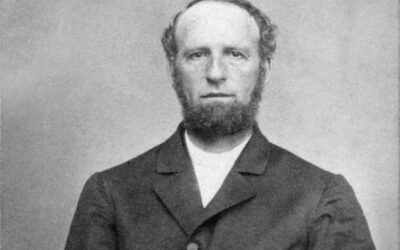
James Springer White, Co-Fundador da Igreja Adventista do Sétimo Dia
James Springer White (1821–1881) foi uma figura chave na Igreja Adventista do Sétimo Dia e marido de Ellen G. White.
James Springer White, cofundador de la Iglesia Adventista del Séptimo Día
James Springer White (1821–1881) fue una figura clave en la Iglesia Adventista del Séptimo Día y el esposo de Elena G. de White.

Kila Kitu Unachohitaji Kujua Kuhusu Chakula cha Siku ya Sabato
Kwa Waadventista Wa Sabato, kushiriki chakula cha Siku ya Sabato pamoja na marafiki na familia ni moja ya sehemu muhimu na ya kumbukumbu ya Sabato.

Nini Maana ya “Mwadventista”?
Waadventista wa Sabato ni dhehebu la Kikristo la Kiprotestanti wanaoshikilia Sabato ya siku ya saba kama ilivyoandikwa katika Biblia.

How to Have a Personal Relationship with Jesus: A 10-Step Guide
How to Have a Personal Relationship with Jesus: A GuideNo matter who you are, you’re surrounded by relationships. Friends, family, colleagues, acquaintances...they all play a part in our lives, for better or worse. So you’re surely aware of a lot of the components...

Biblia Ina Maana Gani Inaposema Yesu ni Mwana wa Mungu?
Biblia inapomwita Yesu Mwana wa Mungu inarejelea uungu wake. Jifunze ni nini kinachofanya hili kuwa muhimu na kinahusianaje na wokovu.

“Go and Sin No More”—What Did Jesus Mean?
These well-known words of Jesus Christ come from two New Testament stories in the book of John—a man healed by the Pool of Bethesda (John 5) and a woman caught in adultery (John 8).

Quais são as Mensagens dos Três Anjos em Apocalipse 14?
As mensagens dos três anjos em Apocalipse 14 advertem o mundo a adorar a Deus, deixar a confusão religiosa e evitar a adoração de tradições humanas em vez dos mandamentos de Deus.

Je! Tunaweza Kuitunza Siku Yoyote ya Wiki Kama Sabato?
Katika sura za kwanza kabisa za Biblia, tunamwona Mungu akianzisha kumbukumbu ya kila wiki na siku ya mapumziko, inayoitwa Sabato (Mwanzo 2:2-3).
¿Cuáles son los mensajes de los tres ángeles en Apocalipsis 14?
Los mensajes de los tres ángeles en Apocalipsis 14 invitan al mundo a adorar a Dios, abandonar la confusión religiosa y evitar la adoración de tradiciones humanas en lugar de los mandamientos de Dios.
Por que muitos Adventistas do Sétimo Dia escolhem uma dieta vegetariana?
Embora nem todo adventista seja vegetariano, muitos evitam completamente o consumo de carne para viver de forma mais saudável, buscando honrar a Deus física, espiritual e mentalmente.

Understanding the Miracles of Jesus Christ
Understanding the Miracles of Jesus ChristWhat do you think of when someone says something is “a miracle”? Maybe you think of an unexpected recovery, surviving a dangerous accident, or getting an answer to a seemingly impossible prayer. Simply put, miracles are...
O que significa “Adventista”?
O que significa "Adventista"?Os Adventistas do Sétimo Dia são uma denominação cristã protestante que observa o sábado bíblico do sétimo dia. A partir dessa crença, eles obtêm a primeira parte de seu nome. Mas e quanto à segunda parte - "Adventista"? “Adventista”...
¿Podemos guardar el sábado bíblico cualquier día de la semana?
En los primeros capítulos de la Biblia, encontramos a Dios estableciendo un memorial semanal y día de reposo, conocido como el sábado (Génesis 2:2-3).
Podemos guardar o Sábado em qualquer dia da semana?
Nos primeiros capítulos da Bíblia, encontramos Deus estabelecendo um memorial semanal e dia de descanso, conhecido como o Sábado (Gênesis 2:2-3).
O que significa a Bíblia quando chama Jesus de Filho de Deus?
Quando a Bíblia chama Jesus de Filho de Deus, está se referindo à Sua divindade. Saiba o que torna isso tão significativo e o que tem a ver com a salvação.
¿Qué creen los Adventistas del Séptimo Día acerca de la Biblia?
La Biblia forma la base de todo lo que los Adventistas del Séptimo Día creen y enseñan.

Legado Duradouro de Ellen G. White
Ellen G. White é um nome bem conhecido entre os Adventistas do Sétimo Dia, mas ela também teve um impacto em muitas outras partes da história, além de ser co-fundadora da Igreja Adventista.

What Does it Mean to Have Faith in Jesus?
What Does it Mean to Have Faith in Jesus?To have faith in Jesus means we place our spiritual hope, trust, belief, and priority in Him as our loving Savior. And that sounds great as an idea. That’s our goal, right? But when we go through difficult times, face...
James Springer White, Mwanzilishi wa Kanisa la Waadventista Wa Sabato
James Springer White (1821–1881) alikuwa mtu muhimu katika Kanisa la Waadventista wa Sabato na mume wa Ellen G. White.
Didn’t find your answer? Ask us!
We understand your concern of having questions but not knowing who to ask—we’ve felt it ourselves. When you’re ready to learn more about Adventists, send us a question! We know a thing or two about Adventists.