
Aunque los campamentos no comenzaron con la Iglesia Adventista del Séptimo Día, son tan propias de los adventistas como las pilas de heno.
Un campamento es un evento extendido para adventistas (y no adventistas) de todas las edades para reunirse y participar en seminarios y actividades espirituales. Durante el evento, los asistentes a menudo acampan en tiendas de campaña, cabañas o vehículos recreativos.
Ya sea un fin de semana o diez días, el enfoque del tiempo es fortalecer la fe personal en Jesús y conectar a la comunidad de creyentes.
Vamos a adentrarnos en los siguientes detalles:
- Cómo comenzaron las reuniones campales
- Cómo son las reuniones campales adventistas hoy en día
- Por qué seguimos celebrando reuniones campales
- Quiénes pueden asistir
- Cómo encontrar una reunión campal cerca de ti
Para empezar, hagamos un breve recorrido por su historia.
Cómo comenzaron los campamentos
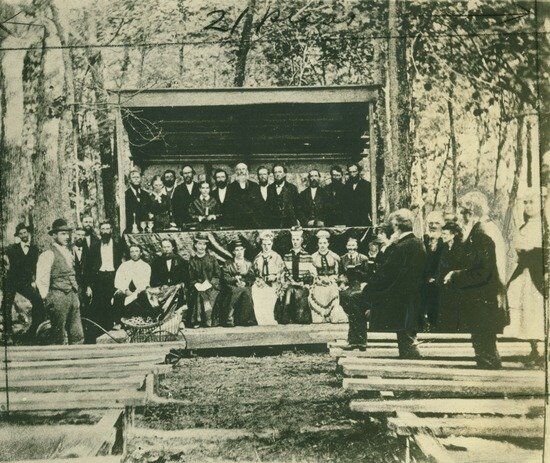
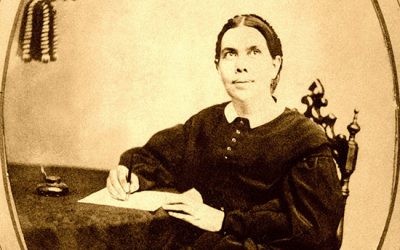
Courtesy of the Ellen G. White Estate, Inc.
Los primeros campamentos, tal como los conocemos hoy, comenzaron durante un avivamiento presbiteriano en Kentucky en el siglo XIX. En ese momento, otro avivamiento protestante, el Segundo Gran Despertar, estaba en marcha.
El evento fue llamado “reunión de campamento” porque los asistentes acamparon en sus carretas y tiendas.
No sabemos cuántos asistieron, pero en la reunión de campamento del año siguiente, entre 20,000 y 30,000 personas acudieron para escuchar a los predicadores.
El fervor se extendió rápidamente a otras denominaciones, que comenzaron a realizar los suyos.
Los adventistas no se quedaron atrás.
Así es como surgieron sus campañas en tiendas de campamento..
La primera sesión de la Conferencia General se llevó a cabo en 1868, pero las personas que asistieron se fueron decepcionadas por lo formal y árido que fue. Esperaban aliento espiritual.
Jaime White, uno de los fundadores de la Iglesia Adventista, captó el sentimiento. Después de reflexionar, sugirió celebrar una “reunión de campamento”, un evento que sería libre de negocios y se enfocaría en asuntos espirituales.
Su plan fue rápidamente puesto en acción.
Un par de meses después, en septiembre de 1868, tuvo lugar el primer campamento adventista en Wright, Michigan. Atrajo a una multitud de más de 2,000 personas, entre ellas Jaime White y Elena de White y J. N. Andrews. La reunión fue tan exitosa que planearon dos más para ese año en otros estados.
Desde entonces, los campamentos adventistas se han convertido en eventos anuales en todo Estados Unidos e incluso en el mundo.
Cómo es un campamento adventista en la actualidad
Los campamentos hoy en día son en muchos aspectos similares a cuando comenzaron. Por lo general, se llevan a cabo en algún momento entre finales de la primavera y principios del verano. La programación todavía se centra en el crecimiento espiritual y el reavivamiento. Y muchas personas todavía acampan también.
Pero a diferencia de los antiguos, los participantes de hoy no siempre se quedan en tiendas de campaña, pueden traer una autocaravana o remolque, o alquilar una cabaña. Muchos también se quedan en hogares de otras personas o en viviendas proporcionadas por la iglesia.
Algunas reuniones tienen lugar en campus escolares, donde acampar no siempre es propicio. Allí, los asistentes podrían alojarse en dormitorios y reunirse en un gimnasio o auditorio en lugar de debajo de grandes carpas blancas.
Longitud
Aunque muchas reuniones siguen teniendo la duración tradicional de una semana, algunas duran hasta nueve días, y otras son solo un fin de semana o una convocatoria de sábado.
Costo
La reunión de campamento puede ser tan económica o costosa como desees. Si vienes solo por el día y traes tu propia comida, o te quedas en casa de alguien, será gratis. Pero para comer en la cafetería, tener un sitio de campamento o unirte a ciertos talleres, probablemente tendrás que pagar una tarifa para ayudar a cubrir los costos.
Programas
Otra característica hoy son los programas para diferentes edades. Los niños pueden participar en clases diseñadas para ellos, mientras que los adultos pueden asistir a clases para adultos. Pero también hay tiempo durante el día para que las familias participen juntas en eventos.
Vamos a tener una idea de cómo podría lucir eso.
Horario típico de un campamento
Cada campamento tendrá sus propias variaciones en la programación y segmentos de tiempo, pero aquí hay un esquema básico de un día:
- Sesión de oración. ¡Levántate y resplandece! Esta es generalmente la primera actividad del día y podría ser tan temprano como las 5:00 de la mañana. Aquí, los participantes oran unos por otros y tienen un tiempo devocional para comenzar el día. Sin embargo, al igual que con cualquier otro evento, esto es opcional, ¡así que no te preocupes si no eres madrugador!
- Desayuno. Los campistas pueden cocinar el suyo propio, y usualmente, la cafetería ofrece algo por un costo.
- Actividades y talleres. Estas actividades se centran en temas prácticos específicos para los cristianos y generalmente se dividen por edad. Pueden durar una o dos horas. El sábado, este horario está reservado para la Escuela Sabática.
- Reunión matutina. Este evento suele durar dos horas y se divide por edad para adaptarse mejor a la amplia gama de personas. Se realizan clases para bebés (0-2), preescolares (3-6), edades primarias (7-9), juveniles (10-12), preadolescentes (13-14), jóvenes (15-18) y adultos jóvenes (19+). Los adultos asisten a la reunión principal y escuchan a un orador invitado. A lo largo de los años, estos oradores invitados han incluido a conocidos evangelistas adventistas como Shawn Boonstra, Doug Bachelor o John Bradshaw. El sábado, este período es el servicio principal de la iglesia.
- Almuerzo. Una vez más, las familias pueden preparar su propia comida del mediodía o ir a la cafetería.
- Talleres de la tarde. Al igual que los talleres de la mañana, esta sección del día podría incluir muchas actividades diferentes para todas las edades.
- Reunión de la tarde. Cada grupo de edad tendrá su propia actividad o seminario por otra hora o dos.
- Cena y tiempo en familia. Este espacio brinda a las familias la oportunidad de pasar tiempo juntas y ponerse al día con amigos.
- Reunión de la noche. Un último evento cierra el día. A veces, es un concierto; a veces, es una reunión como las otras durante el día. Esto suele terminar alrededor de las 9:00 pm aproximadamente.
Los participantes pueden elegir qué actividades y seminarios les gustaría asistir durante el día para aprovechar los muchos beneficios del programa de la reunión campal.
¿Por qué los adventistas siguen celebrando campañas o campamentos?

Photo by Andrea Piacquadio
El evento sirve para muchos propósitos, pero el principal es revivir y enriquecer la vida espiritual de quienes asisten.
A veces, las preocupaciones, frustraciones y angustias de la vida pueden parecer abrumadoras. Pero la reunión de campamento ofrece un respiro de todo eso para enfocarse en lo que realmente importa: tu vida espiritual. Es un momento para descansar y recibir pensamientos alentadores y saludables.
Pero es posible que estés pensando, puedo hacer eso en la iglesia o por mi cuenta. ¿Por qué ir a la reunión de campamento?
El campamento no se trata solo de la espiritualidad individual. También es un gran avivamiento comunitario que conecta al cuerpo de la iglesia para animarse mutuamente, edificarse unos a otros y aprender juntos.
La amistad es un aspecto clave de eso. En eventos como la reunión de campamento, tenemos la oportunidad de ponernos al día con amigos que no vemos a menudo.
También nos brinda la oportunidad de alcanzar a otros. Puede que te encuentres con personas que no son adventistas, e incluso que no sean cristianas. Esta es tu oportunidad de hacer amistad y darles la bienvenida a la comunidad, respondiendo a las preguntas que puedan tener en el camino.
¿Quién puede asistir a la reunión de campamento?
¡Cualquiera! Todos son bienvenidos y animados a venir, ya sea que asistan a una Iglesia Adventista, a otra iglesia, o no asistan a ninguna iglesia en absoluto.
Especialmente para aquellos que son nuevos en la fe cristiana, la reunión de campamento es una excelente manera de conocer a cristianos adventistas en un entorno más informal. No tienes que saber, hacer o ser nada para aprender acerca de Jesucristo y Su amor.
Cómo encontrar una reunión de campamento cerca de ti
La mejor manera de encontrar tu campamento anual más cercano es preguntarle a tu pastor local o a alguien más en tu Iglesia Adventista. También puedes buscar en línea los que hay en tu estado.
Estos son algunos de los que están en la División Norteamericana de los Adventistas del Séptimo Día (NAD):
- Soquel: California Central
- Rocky Mountain: Varias reuniones en Wyoming y Colorado
- Carolina: Carolina del Norte
- Wisconsin
También hay campamentos para diferentes culturas e idiomas, como el Campamento Hispano en varios estados para hispanohablantes o el Campamento de Nativos Americanos.
Y si no puedes asistir en persona, algunos tienen transmisiones en vivo o archivos de video disponibles.
La reunión de campamento ha sido parte de la cultura adventista durante mucho tiempo. Y aunque los tiempos han cambiado y ya no acampamos en carretas, una cosa permanece igual:
La necesidad de los seres humanos de conectarse con Jesús y entre ellos.
Las reuniones de campamento ayudan a satisfacer esa necesidad.
Si te gustaría aprender sobre otros ministerios adventistas que reúnen a las personas,
Páginas relacionadas

- Spangler, J. R., “Workshops for Spiritual Revival,” Review and Herald, May 30, 1968. [↵]
- Poirier, Merle, “Camp Meeting,” Adventist Review.org. [↵]
- Ibid.[↵]
- Ibid. [↵]
- “Why Camp Meetings?” Ministry Magazine. [↵]
- Spangler, J. R., “Workshops for Spiritual Revival,” Review and Herald, May 30, 1968. [↵]
Más respuestas
Ellen G. White’s Lasting Legacy
Ellen G. White is a well-known name among Seventh-day Adventists, but she also made an impact in many other parts of history, aside from being a co-founder of the Adventist Church.

Ellen G. White’s Challenging Health Journey
When it comes to lifelong struggles with health, Ellen White is no stranger. In fact, health challenges set the tone for her life early on—years before she was involved in co-founding the Seventh-day Adventist Church.
“What Was Ellen and James White’s Marriage Like?”
Ellen and James White, cofounders of the Seventh-day Adventist Church, met and married under somewhat unusual circumstances. But it’s a sweet story of partners in ministry becoming partners in life. And their married life continued to center on furthering the spread of the gospel together.

What is the Ellen G. White Estate?
What is the Ellen G. White Estate?Ellen G. White’s contributions to the formation and growth of the Seventh-day Adventist Church are an integral part of its history. As a significant co-founder of the denomination, her writings provided millions of people with...

How Can I Know Ellen White’s Messages Were From God?
It’s natural to be a bit skeptical when you hear about someone being “divinely inspired,” or that something is a “message from God,” etc. And we expect nothing different if you’re hearing about Ellen White, an influential co-founder of the Seventh-day Adventist Church, for the first time. After all, the Bible tells us that we’re supposed to test these things!

Ellen G. White’s Time in Australia
Ellen White traveled to Australia in the later part of her life, and she ended up spending nine years there. In that time, she helped the Australian Seventh-day Adventist Church increase in size and strength.

Ellen G. White’s Time in Europe
When the Seventh-day Adventist Church was still young, a council of the church in Europe requested Ellen White, one of Adventism’s key leaders, to come to Europe. Despite the many obstacles, God led her there to help the new churches and members for two years.

Ellen G. White’s Travels and Worldwide Mission
Though Ellen White, a co-founder of the Seventh-day Adventist Church, is best known for her ministry in the United States, she also traveled to twelve other countries in her lifetime—a big accomplishment in the 19th century when travel was strenuous and long.

Ellen G. White’s Counsel on College Education
Ellen G. (Harmon) White, a significant co-founder of Adventism, is often known for her practical and spiritual guidance for proper childhood education. But she was also significantly involved in the development of Seventh-day Adventist higher education.

8 Pieces of Advice from Ellen White’s Counsel for Families
In this article, we’ll look at the insight Ellen White received from God. We’ll cover 8 major themes she highlighted for families.

Was Everything Ellen White Said Divinely Inspired?
The Seventh-day Adventist Church believes that many of Ellen White’s messages were inspired by God. But that doesn’t mean everything she ever said was prophetic, or meant to be taken as direct instruction from God. So let’s break down how to identify the nature of her many written messages and quotes.
Who Were Ellen White’s Children?
Being the children of a woman with a prophetic calling from God had its blessings and its challenges.
In this overview, we’ll look at the highlights of the lives of Ellen White’s sons during her many years of ministry, as well as the ways each of them decided to serve Jesus Christ:

Ellen White’s Spiritual Counsel on Marriage
As one of the founders of the Seventh-day Adventist Church, Ellen G. White was held in high regard. She was a prolific author and was heavily engaged in the mission of the denomination, prayerfully pursuing the guidance of the Holy Spirit.

Ellen G. White or the Bible—Which is More Important to Adventists?
Ellen G. White or the Bible—Which is More Important to Adventists?The Bible—without a shadow of a doubt—is the most important book. It’s the standard we use to test all other writings, including those of Ellen White. The Seventh-day Adventist Church believes that “the...

Are Any of Ellen G. White’s Prophecies Yet to Come True?
Ellen White, a co-founder of the Seventh-day Adventist Church, demonstrated many times over that she had the spiritual gift of prophecy. Some of her predictions’ timelines have already passed, and those prophecies have been fulfilled. Others have yet to be fulfilled.

What Was Ellen G. White’s Counsel on Music?
Ellen G. White, one of the founders of the Seventh-day Adventist Church, also provided helpful guidance regarding music choices for Christians. She provided sound principles to answer questions the young Adventist Church had.

What Ellen White Said About Using the Bible in Education
Ellen White, one of the founders of the Seventh-day Adventist Church, believed that education was not complete unless it was founded upon the principles of the Bible.
But what does the Bible have to do with math or science? Is it important to integrate the Bible with schoolwork?
What Were Ellen White’s Visions About the Adventist Church?
What Were Ellen White’s Visions About the Adventist Church?Led by the Holy Spirit, Ellen G. White was given many messages, counsel, revelations, and visions about the Bible, history, prophecy, and how we can apply biblical principles to our daily lives. She was also a...
Was Ellen G. White Really a Prophet?
If you look at what Scripture provides as tests for a true prophet, Ellen White meets all the criteria.
What is the Spirit of Prophecy (Books 1–4) by Ellen G. White?
Applying biblical prophecy to history, recent events, and especially the future, can be a daunting task. Even a little scary for some. But even so, we can’t help but want to know more. We want to be prepared—to feel like we know how to weather the storm.

Ellen G. White’s Counsel on Christian Education
Ellen White, a co-founder of the Seventh-day Adventist Church, saw that the U.S. educational system during her time was lacking. And as part of her life of ministry, she sought out practical ways to be better stewards of our minds, bodies, and the lives we’re given.

What Does Ellen White Say About Prayer?
Have you ever had a burden you just had to tell someone, but you were afraid of being judged if you did? Ellen G. White, an important figure in the Seventh-day Adventist Church and a prolific writer, described prayer as talking to God in a personal way—He’s the friend we can tell everything to.
Were All Ellen White’s Visions About the Future?
While the visions God gave Ellen White were often about the distant future or last-day events, she had many others that addressed different topics. They may not be discussed as much as her visions about the Second Coming or the End Times, but they tackled some timely topics for her day.

What Did Ellen White Say About End-Time Prophecy?
We can read in Scripture about the series of events and signs that lead up to the second coming of Jesus Christ. And it sounds pretty intense, to say the least. The symbolic nature of the language of prophecy also can make things tricky to understand at first.

Were All Ellen White’s Books Inspired?
As the most translated female author in the world, Ellen White wrote numerous books, articles, pamphlets, and more. These writings focused on developing Christian character, emphasizing Bible truth, practical tips for living well and staying healthy, and discussing effective methods of delivering the gospel message to the world.

How Ellen White Influenced the Adventist Health Message
Seventh-day Adventists are known for their emphasis on healthy living. And Ellen G. White was a significant influence in the development of this priority and practice among Adventists.

What Did Ellen White Teach About Vegetarianism?
One thing you might have heard about Seventh-day Adventists is their emphasis on a vegetarian lifestyle. If you’re wondering why that is, it goes back to our church’s humble beginnings:

Steps to Christ: A Guide to a Relationship with Jesus
Whether you’re just starting your journey with Jesus Christ, are coming back after some time away, or have had a relationship with Jesus for years, using a book—in addition to the Bible—to guide or supplement that relationship can be helpful, comforting, and joyful.
Ellen White and Adventist Healthcare—Ahead of Their Time
Medical care in the mid-1800s was primitive, to say the least. Basic concepts we take for granted—such as proper handwashing or recognizing the dangers of bloodletting—were nonexistent. And doctors often had little more than nine months of training!