
The Bible—without a shadow of a doubt—is the most important book. It’s the standard we use to test all other writings, including those of Ellen White.
The Seventh-day Adventist Church believes that “the writings of Ellen White are not a substitute for Scripture. They cannot be placed on the same level. The Holy Scriptures stand alone, the unique standard by which her and all other writings must be judged and to which they must be subject.”1
We get why you may be asking this question, though. It’s true that Ellen White is a figure unique to Adventism who has provided us with a lot of insights on various Scriptural topics, such as the Sabbath, the Second Coming, and the great controversy between Christ and Satan that envelops our world.
Inspired by the Holy Spirit, she received and shared insights from God that helped confirm Scriptural truths that later became Adventist doctrine.
But all her writings have pointed back to studying Scripture more deeply to understand these concepts. They originate from the Bible, not from her writings.
She herself wouldn’t have hesitated to say that the Bible is more important than her writings. We’ll unpack some of her own words as we explore these topics:
- Why the Bible is more important
- What Ellen White said about her writings
- How to use Ellen White’s writings in your spiritual journey
Let’s begin.
Why the Bible is more important
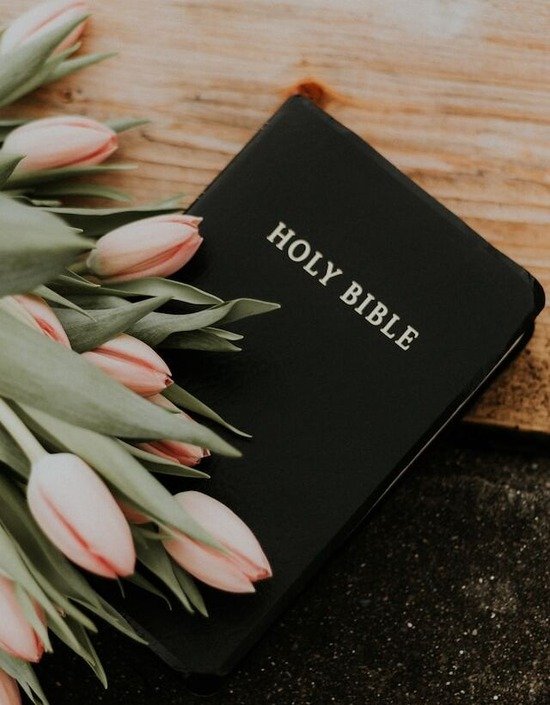
Photo by Priscilla Du Preez on Unsplash
The Bible is the ultimate authority and source of truth. Everything else—including Ellen White’s writings—must be tested by this standard (Isaiah 8:20).
As Adventist historian and author George Knight pointed out in an interview, “Without the Bible, we wouldn’t have any Ellen G. White. Her authority is derived from the authority of Scripture.”2
After all, it’s the Bible that tells us the spirit of prophecy will be one of the spiritual gifts in the last days (Acts 2:17; Ephesians 4:11-13) and that provides us with the tests of a prophet:
“The gift of prophecy is always based upon Scripture and tested by Scripture.”3
The Bible also has a different purpose than Ellen White’s writings.
It’s a timeless book that provides principles applicable throughout history. It’s our standard for evaluating every other aspect of life. And it’s the basis for every doctrine.
On the other hand, Ellen White’s writings were meant for a specific time and purpose—and they must harmonize with the standard of Scripture. They weren’t meant to provide the basis for doctrines but only to provide a greater understanding of the doctrines in the Bible.
Here’s how Gerhard Pfandl, retired associate director of the Adventist Biblical Research Institute, puts it. He said Ellen White’s writings are:
“…God’s messages for a particular people…at a particular time in history—the end time. Her writings are not a new or additional standard of doctrine, but a help for the church in the time of the end.”4
Ellen White herself very clearly understood her role. So let’s look at what she said.
What Ellen White said about her own writings and the Bible

Photo by Priscilla Du Preez on Unsplash
Ellen White saw the Bible—both the Old Testament and the New Testament—as the ultimate authority and guide for every aspect of Christian faith and life. She called her writings “a lesser light to lead men and women to the greater light”—the Scriptures and Jesus Christ.5
She always supported and upheld the Protestant principle of sola scriptura (the Bible only):
“In His word, God has committed to men the knowledge necessary for salvation. The Holy Scriptures are to be accepted as an authoritative, infallible revelation of His will. They are the standard of character, the revealer of doctrines, and the test of experience.”6
“God will have a people upon the earth to maintain the Bible, and the Bible only, as the standard of all doctrines and the basis of all reforms”7
And she recognized that the Bible was the standard to test all her teachings too.8
But sometimes, people who heard Ellen White and read her writings misused them. In these cases, she had to give some pretty stern rebukes—and rightly so.
She never wanted God’s Word to be disregarded or ignored in any way because of what she had said.
Here’s an example of a rebuke she had to write to church leaders at the General Conference because they hadn’t followed God’s guidance:
“Do not quote my words again as long as you live, until you can obey the Bible.
“When you make the Bible your food, your meat, and your drink, when you make its principles the elements of your character, you will know better how to receive counsel from God. I exalt the precious Word before you today. Do not repeat what I have said, saying, ‘Sister White said this,’ and ‘Sister White said that.’ Find out what the Lord God of Israel says, and then do what He commands.”9
One time, she even pointed out that her Testimonies for the Church books wouldn’t have been needed if God’s people had studied the Scriptures!
But because they had neglected His Word, God gave Ellen White messages to point people back to its teachings and show them how to apply them in their lives.10
So, what kind of role should her writings have today?
How to use Ellen White’s writings in your spiritual journey
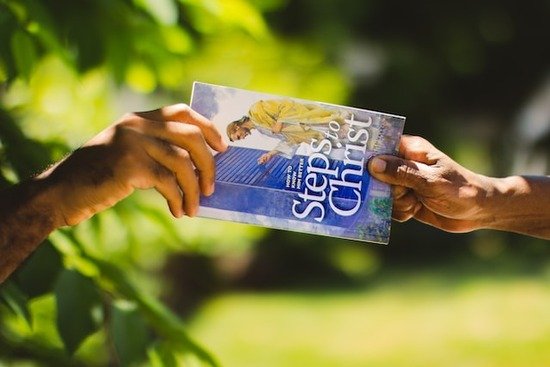
Photo by Emmanuel Phaeton on Unsplash
Ellen White’s writings can provide us with inspired guidance, insight, and encouragement. But they should not take the place of Bible study. Keep the Bible as the basis for your beliefs, decisions, and actions.
If you find that Ellen White’s writings are keeping you from spending time in the Bible, then it may be time to reorient yourself. After all, she wanted us to study our Bibles more and to follow what we find there. That was one of the biggest purposes of her writings to begin with!
But truly, when we use her writings properly, it can increase our appreciation of the Scriptures and lead us to want to study it more. It can also help us in applying it to practical situations.
Here are a few tips for that kind of experience:
- As you learn something new in her books, go back to the Bible and study it out.
- Look for the underlying principles from Scripture. Try to understand the context in which she was writing. She often addressed specific people in specific places and circumstances, so it’s important to find her main point rather than grabbing hold of isolated instructions.
- Don’t create new doctrines off of Ellen White’s statements. She herself said this was not the purpose of her writings.11
These simple steps can go a long way in preventing misunderstanding and keeping Ellen White’s writings in their God-given role.
And if you’re wondering where to start, these books are excellent for seeing how she reflects on the Bible’s truths:
The Bible is the rule of faith and practice for Adventists
If Ellen White were alive today and we asked her about the importance of her writings, she might have responded:
“I recommend to you, dear reader, the word of God as the rule of your faith and practice.”12
Seventh-day Adventists continue to take this counsel to heart.
Though we greatly value her counsel, which was inspired by the Holy Spirit, we build our faith on the Bible and allow her counsel to point us back to it.
But though Adventists don’t hold Ellen White’s writings above the Bible, you may still be wondering whether believing in her prophetic gift is a requirement to be an Adventist. Discover the answer to this question here: “Do I Have to Believe in Ellen White to Be an Adventist?”
- Seventh-day Adventists Believe, p. 227 [↵]
- “Ellen White vs The Bible w. Dr. George Knight | Biblios 14,” SECmedia [↵]
- Ibid. [↵]
- Pfandl, Gerhard, “The Authority of the Ellen G. White Writings” [↵]
- White, Ellen G., The Review and Herald, January 20, 1903, quoted in The Colporteur Evangelist, p. 37 [↵]
- White, Ellen G., The Great Controversy, p. vii [↵]
- Ibid., p. 595 [↵]
- Ibid., p. vii [↵]
- White, Ellen G., Selected Messages, Book 3, p. 33 [↵]
- White, Ellen G., Testimonies for the Church, vol. 5, p. 664 [↵]
- White, Ellen G., A Sketch of the Christian Experience and Views of Ellen G. White, p. 63 [↵]
- Ibid. [↵]
More Answers
Quem Foram os Juízes de Israel no Antigo Testamento?
Quem Foram os Juízes de Israel no Antigo Testamento?Tempos de crise exigem homens e mulheres de ação. Os israelitas, recém-estabelecidos na Terra Prometida, encontraram-se nesses tempos. À medida que nações inimigas atacavam e oprimiam as tribos, eles clamavam a Deus...

¿En qué se diferencian los Adventistas del Séptimo Día de otros protestantes?
¿En qué se diferencian los Adventistas del Séptimo Día de otros protestantes?Como denominación cristiana protestante, la Iglesia Adventista del Séptimo Día considera la Biblia como la regla suprema de fe y a Jesucristo como el único camino a la salvación. Tenemos...
Como os Adventistas do Sétimo Dia São Diferentes de Outros Protestantes?
Como os Adventistas do Sétimo Dia São Diferentes de Outros Protestantes?Como uma denominação cristã protestante, a Igreja Adventista do Sétimo Dia considera a Bíblia como o guia supremo e vê Jesus Cristo como o único caminho para a salvação. Temos algumas diferenças...

O que é ASI (Associação de Empresários e Profissionais Adventistas)?
O que é ASI (Associação de Empresários e Profissionais Adventistas)?ASI, que significa Associação de Empresários e Profissionais Adventistas (tradução adaptada), é uma organização baseada em associação que oferece apoio aos membros adventistas (profissionais...
Jesús y la Mujer en el Pozo: Derribando Barreras
El encuentro de Jesús con la mujer en el pozo revela su sentir por las personas heridas y su deseo de derribar prejuicios. Esta página analiza cómo Jesús se acercó a ella.

Revealing The True Meaning of The Parable of The Rich Man & Lazarus
Learn the real point behind one of Jesus’ most vivid parables.
O que são as Bem-Aventuranças (E o que significam)?
O que são as Bem-Aventuranças (E o que significam)?As Bem-Aventuranças, encontradas no início do Sermão da Montanha de Jesus no Evangelho de Mateus, são o manifesto do reino de Jesus. Elas descrevem a maneira como Seu reino funciona e o que significa ser um de Seus...

Líderes de la iglesia: ¿Cuál es el rol de un pastor Adventista?
Líderes de la iglesia: ¿Cuál es el rol de un pastor Adventista?¿Cuál es el rol de un pastor en la iglesia Adventista? La posición en sí misma, al menos en lo que respecta a una congregación local, no es muy diferente de la de los pastores en otras denominaciones...
ASI ni Nini (Huduma na Viwanda vya Waadventista vya Kibinafsi)?
ASI ni Nini (Huduma na Viwanda vya Waadventista vya Kibinafsi)?ASI, ambayo inayofupisha maneno (Huduma na Viwanda vya Waadventista vya Kibinafsi), ni shirika la uanachama linalotoa msaada kwa wainjilisti wa Kiadventista (wataalamu wa Kanisa la Waadventista wa Sabato...

Ellen White Alisema Nini Kuhusu Unabii wa Nyakati za Mwisho?
Tunaweza kusoma katika Maandiko kuhusu mfululizo wa matukio na dalili zinazoongoza hadi Ujio wa Pili wa Yesu Kristo.

Safari na Utume wa Ellen G. White Ulimwenguni
Safari na Utume wa Ellen G. White UlimwenguniIngawa Ellen White, mwanzilishi mwenza wa Kanisa la Waadventista wa Sabato, anajulikana zaidi kwa huduma yake nchini Marekani, pia alisafiri kwenda nchi nyingine kumi na mbili katika maisha yake—hili lilikuwa jambo kubwa...
Yote Kuhusu Wainjilisti wa Vitabu wa Kiadventista
Kanisa la Waadventista wa Sabato hutumia mbinu mbalimbali kusambaza tumaini la injili duniani.
¿Qué es ASI (Servicios e Industrias de Laicos Adventistas)?
¿Qué es ASI (Servicios e Industrias de Laicos Adventistas)?ASI, que significa Servicios e Industrias de Laicos Adventistas, es una organización basada en membresía que brinda apoyo a los laicos adventistas (profesionales Adventistas del Séptimo Día que no son...
¿Qué dijo Elena G. de White sobre la profecía de los últimos tiempos?
¿Qué dijo Elena G. de White sobre la profecía de los últimos tiempos?Podemos leer en las Escrituras acerca de la serie de eventos y señales que conducen a la segunda venida de Jesucristo. Y suena bastante intenso, por decir lo menos. La naturaleza simbólica del...
O que Ellen White disse sobre a profecia dos tempos finais?
O que Ellen White disse sobre a profecia dos tempos finais?Podemos ler nas Escrituras sobre a série de eventos e sinais que antecedem a segunda vinda de Jesus Cristo. E, para dizer o mínimo, isso soa bastante intenso. A natureza simbólica da linguagem da profecia...

Meaning of the Parable of the Two Sons in Matthew 21
Meaning of the Parable of the Two Sons in Matthew 21The parable of the two sons in Matthew 21:28-32 is about a father who instructs his sons to work in the family vineyard. The first son refuses to work but later has a change of heart and obeys. The second son says...
Viagens e Missão Mundial de Ellen G. White
Viagens e Missão Mundial de Ellen G. WhiteEmbora Ellen White, cofundadora da Igreja Adventista do Sétimo Dia, seja mais conhecida por seu ministério nos Estados Unidos, ela também viajou para outros doze países durante sua vida — uma grande conquista no século XIX,...
Joseph Bates na Nafasi Yake katika Kanisa la Waadventista
Joseph Bates na Nafasi Yake katika Kanisa la WaadventistaJoseph Bates alikuwa baharia aliyegeuka kuwa mhubiri ambaye alijiunga na Harakati ya Miller na kusubiri Ujio wa Pili wa Yesu kutokea mwaka 1844. Licha ya kukatishwa tamaa wakati hili halikutokea, Bates...

Je, Wasabato Husherehekea Sikukuu?
Je, Wasabato Husherehekea Sikukuu?Je unajiuliza ikiwa mwanafunzi mwenzako au mfanyakazi mwenzako Mwadventista husherehekea sikukuu kama wewe? Labda ungependa kumshirikisha kwenye sherehe fulani, lakini pia unataka kuheshimu imani yake. Kwa hiyo, huna uhakika wa jinsi...

O Que a Bíblia Diz Sobre a Segunda Vinda de Jesus Cristo
Curioso para saber o que a Bíblia diz sobre a Segunda Vinda de Jesus Cristo? Vamos abordar os versículos-chave e o que eles significam.

Waadventista Wanaamini Nini Kuhusu Imani na Matendo?
Waadventista Wanaamini Nini Kuhusu Imani na Matendo?Waadventista wanaamini tunaokolewa kwa imani, ambayo ni imani na tumaini tulilonalo kwa Yesu Kristo kutuokoa kutoka dhambini. Yesu, basi, anatupa uwezo wa kuishi kwa utii wa amri za Mungu na kuwahudumia wengine kwa...
Todo sobre los colportores Adventistas del Séptimo Día
Todo sobre los colportores Adventistas del Séptimo DíaLa Iglesia Adventista del Séptimo Día utiliza una variedad de métodos para difundir la esperanza del evangelio al mundo. Una de estas formas es a través del colportaje, también llamado “venta puerta a puerta” o...
Tudo Sobre Colportores Adventistas do Sétimo Dia
A Igreja Adventista do Sétimo Dia usa uma variedade de métodos para espalhar a esperança do evangelho ao mundo.
Los viajes y la misión mundial de Elena G. de White
Los viajes y la misión mundial de Elena G. de WhiteAunque Elena G. de White, cofundadora de la Iglesia Adventista del Séptimo Día, es más conocida por su ministerio en los Estados Unidos, también viajó a otros doce países durante su vida, un gran logro en el siglo XIX...

Mikutano ya Injili ya Waadventista ni Nini?
Kanisa la Waadventista wa Sabato linaweka mkazo mkubwa katika kushiriki injili kupitia uinjilisti, yaani kushiriki injili kupitia mahubiri, mafundisho, na ushuhuda.
Joseph Bates y su papel en la Iglesia Adventista del Séptimo Día
Joseph Bates y su papel en la Iglesia Adventista del Séptimo DíaJoseph Bates fue un marinero que se convirtió en predicador, se unió al Movimiento Millerita y esperó que ocurriera la Segunda Venida de Jesús en 1844. A pesar de sentirse decepcionado cuando esto no...
Joseph Bates e Seu Papel na Igreja Adventista do Sétimo Dia
Joseph Bates foi um marinheiro que se tornou pregador, juntou-se ao Movimento Millerita e esperou pela Segunda Vinda de Jesus em 1844.
¿Los Adventistas del Séptimo Día celebran las fiestas?
¿Los Adventistas del Séptimo Día celebran las fiestas?¿Te preguntas si tu compañero de clase o de trabajo adventista celebra las mismas fiestas que tú? Tal vez quieres incluirlo en algunas festividades, pero también deseas respetar sus creencias. Entonces, no estás...
Os Adventistas do Sétimo Dia Celebram Feriados?
Está se perguntando se seu colega de classe ou de trabalho adventista celebra os mesmos feriados que você?
Didn’t find your answer? Ask us!
We understand your concern of having questions but not knowing who to ask—we’ve felt it ourselves. When you’re ready to learn more about Adventists, send us a question! We know a thing or two about Adventists.