
Prayer is how human beings reach out to a higher power. For Christians, it’s how we communicate with God.
But does it really work? Is it true that God actually intervenes in situations when we call out to Him for help? And why are some prayers answered immediately, while others seem to go unanswered or not get answered for a long time?
The Bible is emphatic: Yes, prayer works. But it may not be in the way we expect. God sees so much more than we can, so He answers our prayers according to what is best for us.
Sometimes, He says yes to our exact request. But many other times, due to our limited perspective, He has different plans that will work out better in the end. And sometimes, that involves Him saying no to a certain way we were hoping our prayer to be answered.
In this post, we’ll learn more about the “mechanism” of prayer based on the Bible and modern science.
We’ll explore:
- Modern studies on prayer
- Does prayer really work—according to the Bible?
- What does the Bible say about how prayer works?
- Does God always answer our prayers exactly as we ask?
Let’s begin by looking at recent scientific studies on the effects and benefits of prayer.
Modern studies on prayer

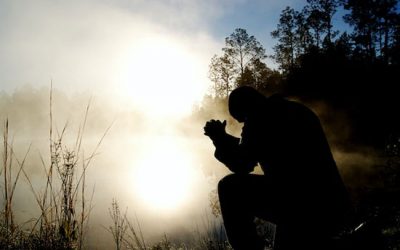
Image by reenablack from Pixabay
You might be surprised at the ways modern science has helped us understand prayer. Recent research has given us some fascinating insight.
Social scientists have found that prayer works in three dimensions:1
- The upward connection with a higher power
- The inward experience of self-reflection
- The outward drive to “connect with others and the material experiences of life”
And studies like those funded by the Templeton Foundation have attempted to use scientific methods to understand how prayer works and what its effects are.
Here are some of their conclusions:
1. Prayer has a calming effect
Some studies have shown that various forms of prayers may have a calming effect similar to meditation.
Dr. David H. Rosmarin is an assistant professor of psychology at Harvard Medical School and director of the Spirituality and Mental Health Program at a hospital in Massachusetts.
He says that “prayer can calm your nervous system, shutting down your fight or flight response. It can make you less reactive to negative emotions and less angry.”2
2. Prayer has a placebo effect
Other studies have shown that prayer has a placebo effect.3 The placebo effect occurs in patients when they experience healing because they believe that something will help them, regardless of whether the medical treatment itself is actually effective.
In the case of prayer, the patient’s body produces chemical reactions with healing effects because the patient believes prayer will help.4
3. Prayer benefits relationships
In the study “The Science of Prayer: Opportunities and Limits,” Kevin Ladd, a psychology professor at Indiana University, South Bend, found that praying helps us decide which goals are worth pursuing, especially in intimate relationships.
This has a positive effect because once we have a specific goal in mind, we’ll likely adopt the behaviors needed to achieve the goal.
So, “prayer may not move a rock, but it often inspires people to move rocks.”5
Ladd also found that those who prayed for the wellbeing of their partners or friends were more likely to forgive than those who didn’t.6
4. Impersonal intercessory prayer may not work7
Impersonal intercessory prayer refers to praying for someone unfamiliar—such as when you are asked to pray for someone you don’t know at all who’s in the hospital.
Harvard professor Herbert Benson carried out an experiment called the “Templeton Foundation Prayer Study” or the “Great Prayer Experiment.” It involved three groups of patients scheduled for heart surgery.
Two groups were told they may be prayed for, but only one of the two was prayed for. A third group was informed that they would have people praying for them, and they did.
This was a double-blind experiment in which neither the patients nor healthcare providers knew which group would have prayers said on their behalf. And those who prayed for the patients only had their names but didn’t know who they were.
The results?
There were no significant differences in the outcomes of the first two groups.
Surprisingly, the third group that knew for sure they were being prayed for had more post-surgery complications. The researchers admitted that the reason is not clear and that the complications may have had nothing to do with prayer.
Ultimately, they concluded that this type of impersonal prayer doesn’t work—at least not in an immediate or observable way. However, they still stated that “private or family prayer is widely believed to influence recovery from illness.”
But another very similar study had much different results.
This time, the participants were women having in-vitro fertilization and embryo transfers in South Korea. Those who received intercessory prayer had a much higher success rate compared to those who didn’t.8
These mixed results in studies about prayer remind us that scientific methods can be hard to apply to the supernatural. There aren’t always sufficient methods or mechanisms to provide measurable data.
But with the pervasiveness of faith prayer in varying cultures, locations, and lifestyles, there’s definitely room to remain curious about it.
On that note, let’s consider what the Bible has to say.
Does prayer really work—according to the Bible?

Photo by Humble Lamb on Unsplash
The quick answer is yes. The Bible shows that prayer does work because God hears and answers prayer.
But the truth is that it can be confusing.
You may have seen people ask for prayers for a loved one on social media—followed by amazing testimonies of answered prayers. And you may have been convinced that it does work.
Then you may have heard of someone who had people around the world praying for their situation—only for everything to take a turn for the worse. You may have wondered if you were mistaken about prayer.
Maybe these two opposite experiences have even happened in your own prayer life.
Countless resources—books, media platforms, and respected pastors—have tried to answer this question. But let’s go straight to the Word of God for answers.
For one, the Bible assures us that “all things you ask in prayer, believing, you will receive” (Matthew 21:22, NASB). It doesn’t matter what the need is or when or where you pray.
And John tells us that we can be confident that God hears us:
“This is the confidence which we have before Him, that, if we ask anything according to His will, He hears us” (1 John 5:14, NASB).
Though God’s answers may not be exactly as we asked or expected, no prayer goes unnoticed by Him.
He answers according to what would be for our good. Sometimes, He may give us what we need rather than what we want. Or He may say no, because we asked for something rooted in selfish motives that wouldn’t ultimately provide the outcome we desire. (We’ll talk more on this later.)
But you may wonder: if prayer is talking to God, how is it possible for humans on earth to have their voices heard by a God in an invisible spiritual realm? And how does the answer to our prayer get back to us?
What does the Bible say about how prayer works?

Photo by Elisabeth Wales on Unsplash
When we pray to God, all the beings in heaven cooperate with us to bring our requests to Him.
Prayer is a way for humans to connect with God. But the Bible says that our “iniquities have separated [us]” from Him (Isaiah 59:2, NKJV).
So we need a link between us and God.
Here’s how we get linked to Him:
First, the Holy Spirit helps us to present the prayer before God in an acceptable way. He “makes intercession for us.”
He does this by working on our hearts, helping us to pray with sincerity, gratitude, and a willingness to accept God’s will (Romans 8:26–27, NKJV).
Then angels carry our prayers to heaven. The Bible refers to them as “ministering spirits sent forth to minister to [us] who will be heirs of salvation” (Hebrews 1:14, NKJV).
Even the seemingly insignificant needs of little children are carried to heaven by angels.
That’s why Jesus cautioned that little children should not be despised because “in heaven their angels do always behold the face of My Father” (Matthew 18:10, NKJV).
After the angels take our prayers to God, Jesus presents them as our only “mediator before God and men” (1 Timothy 2:5, NKJV).
And this is all happening instantaneously and constantly! No prayer is too small.
In the Old Testament sanctuary or temple, the priests would burn incense while the people prayed outside the sanctuary (Luke 1:10), so the sweet smell of the incense would ascend together with the prayers. It was an object lesson of how Christ mixes our prayers with His righteousness—goodness—to make them acceptable before God.
See, God’s love for us is unconditional. And no matter how good we are, we could never earn such great love from Him; He gives us this love freely. So, it’s not because of our goodness that we are accepted before God but because of Christ’s goodness.
He shows that He paid the price for our sins, reconnecting us to God by His blood that was shed on the cross.
This is what makes us “accepted in the beloved” (Ephesians 1:6, NKJV).
So now we can understand why Jesus said, “Whatever you ask of the Father in My name, He may give it to you” (John 15:16, NKJV). He’s our only mediator before the Father.
When you pray, God the Father is eagerly waiting to hear you talk to Him because He “Himself loves you” (John 16:27, NKJV).
He’s just like a father who enjoys hearing his children talk to him about anything. They can talk about their little joys and frustrations. Or their love and appreciation for their father’s care, protection, and comforting presence.
You too can talk to God about the simplest or most complicated things in your life. You can tell Him what you need, and He gets it. He’ll gladly answer you according to His great wisdom.
In the book of Hebrews, we read that we can “come boldly unto the throne of grace, that we may obtain mercy, and find grace to help in time of need” (Hebrews 4:16, NKJV).
Then, the answers to the prayers follow the same cycle from God, to Jesus, to the angels, and lastly to you (Revelation 1:1).
Human intervention isn’t needed in the prayer cycle. The Bible doesn’t ask us to pray through saints or priests. Also, it warns us against praying to or worshiping through the dead, even if they were considered saints (Isaiah 8:19).
We don’t have to repeat ourselves and perform all kinds of rituals to communicate with God, either. In fact, Jesus warned against “empty repetitions” in prayer because they don’t make our prayers any more acceptable to God (Matthew 6:7, ESV).
Many religions or cultures have prayer practices like prayer beads, such as the rosary or a misbaha, to help provide structure and focus to their prayers. Or some people use prayer “templates” like ACTS (Adoration, Confession, Thanksgiving, Supplication) as part of their personal prayer routines. But while these things can be helpful, it’s important to know that they’re not necessary to communicate with God.
He will hear any prayer uttered at any time, in any place, by any person. And He answers them according to His will and what would benefit us most.
Does God always answer our prayers exactly as we ask?

Photo by Silvana Carlos on Unsplash
God answers all our prayers, though sometimes the answers aren’t exactly what we specified. But that doesn’t mean we didn’t get what we needed.
Think about a child who asks their parents for a very specific toy. As far as the child is concerned at that moment, that toy is the key to their happiness! But it could be that what that child really wants is something to impress their friends, or a reason to invite a friend over to play, or something that nurtures their own creativity and talent. And the child’s parents might know of several other things that will actually make their child happier in the long run.
Of course, our daily life struggles and desires aren’t usually as simplistic as a kid’s toy. But the idea is the same. We have a limited perspective, but we recognize that we have a desire. Or a challenge. Or a fear. And we submit that to God.
We may have a specific outcome in mind that we’re hoping for. We may even logically piece together what we see as the optimal solution. But God is too wise and loving to give us things that would fall short of our best interest. He sees all and knows all, and knows the best way to answer our heartfelt prayers.
So instead of giving us what we asked for, He gives us what’s good for us.
And as disappointing as this can be sometimes, the seemingly unanswered prayer is often a blessing in disguise.
God also delays answering our requests sometimes. It may be that the timing is not right yet. But when it is, He’ll come through just when we need it most.
Blessings delayed are not blessings denied. The Bible assures us that “no good thing will He withhold from them that walk uprightly” (Psalms 84:11, NKJV).
But we need patience. And to recognize that we cannot see the big picture. There’s always more going on than we know of.
And with time, we learn that the purpose of prayer isn’t always to get what we asked for. Sometimes, prayer is about teaching us to give up our desires and embrace the will of God. Sometimes it’s about communicating with our loving Father, learning more about ourselves, and being guided toward blessings beyond our wildest dreams.
Our role is to pray—to ask.
And even as we wait on God or try to understand His plan, He will give us peace (Philippians 4:6–7).
Prayer helps us align with God’s will
As we’ve seen from the Bible, prayer does work.
And though the answer may not always be exactly what we want, we can trust that our prayers are heard, understood, and answered.
In the end, we’ll understand it all. But until then, we can rest in the contentment of knowing God is in control and wants what’s best for us.
We can trust Him and the power of prayer.
And whenever your faith is shaken because your prayers seem to go unanswered, look back on times when they were answered. Or read stories in the Bible of answered prayers, while remembering that your story is still being written!
And if you’d like to have someone pray for you, you can share your request here.
Choose an Online Bible Study
Want to keep learning? Find out more about Jesus, humanity, the plan of salvation, and how God loves you enough to sacrifice everything, just to give you a chance to choose Him.
Sometimes it can be hard to know where to start, that’s why we offer free, user-friendly, online Bible study options you can do anytime, anywhere, and at your own pace.
This online Bible school will take you through the major themes of Scripture, breaking down the Bible’s complex concepts into bite-sized pieces, which can lead you toward the answers of life’s more challenging questions.
Related Articles



- “Research: The Surprising Power of Prayer in Relationships,” John Templeton Foundation. [↵]
- “The Science of Prayer,” Association for Psychological Science, May 20, 2020. [↵]
- Jantos and Kiat, “Prayer as Medicine: How Much Have We Learned?” The Medical Journal of Australia 186 (10), May 21, 2007. [↵]
- Saling, Joseph, “What Is the Placebo Effect?” WebMD. [↵]
- “Research: The Surprising Power of Prayer in Relationships,” John Templeton Foundation. [↵]
- Ibid. [↵]
- Benson et al., “Study of the Therapeutic Effects of Intercessory Prayer in Cardiac Bypass Patients,” American Heart Journal 151(4), April 2006. [↵]
- Jantos and Kiat, “Prayer as Medicine: How Much Have We Learned?” [↵]
More Answers

Como os Ensinos de Ellen White Podem Melhorar Sua Saúde
Como os Ensinos de Ellen White Podem Melhorar Sua SaúdeAssistência médica no século XIX era dito deixar "mais doenças do que levava embora" com o uso de sangrias e "remédios" como mercúrio e arsênico.1 À medida que as pessoas questionavam esses métodos, novas...
Cómo las enseñanzas de Elena G. de White pueden mejorar tu salud
La atención médica en el siglo XIX se decía que dejaba “más enfermedades de las que eliminaba” con su uso de sangrías y “medicamentos” como el mercurio y el arsénico.

All About the Gospel of Matthew
The Book of Matthew is one of the four Gospel narratives in the Bible
Descanso e Reconexão: O Que Realmente Significa Guardar o Sábado
A Bíblia nos diz que guardamos o Sábado evitando o trabalho. Deus fez essa lei porque sabia que ela nos fortaleceria e nos traria alegria, além de nos dar tempo para nos reconectar com Ele e recarregar das nossas vidas ocupadas.
Descanso y reconexión: lo que realmente significa guardar el sábado
La Biblia nos dice que guardamos el sábado evitando el trabajo. Dios hizo esta ley porque sabía que nos fortalecería y nos traería alegría, además de darnos tiempo para reconectarnos con Él y recargar energías de nuestras vidas ocupadas.

Todo lo que necesitas saber sobre la Escuela Sabática
La Escuela Sabática es el componente de estudio bíblico del programa de la iglesia en la mayoría de las Iglesias Adventistas del Séptimo Día.

O que os Adventistas do Sétimo Dia acreditam sobre a autoridade da Bíblia?
Saiba como um livro realmente antigo (a Bíblia) é o único fundamento para todas as crenças dos Adventistas do Sétimo Dia.
¿Qué creen los Adventistas sobre la autoridad de la Biblia?
Puede hacerte sentir intimidado o frustrado. Podrías pensar en un líder de iglesia que parecía arruinar toda tu diversión cuando eras niño, o un jefe que supervisa cada uno de tus movimientos en el trabajo…

¿Qué es un médico misionero adventista?
Un médico misionero en la Iglesia Adventista es alguien que cuida de las necesidades médicas de las personas como una forma de mostrar el amor de Jesús. Pueden viajar a otro país, o incluso simplemente servir en su ciudad natal.
Ni nini Mtaalam wa Matibabu wa Kiadventista?
Mmishonari wa matibabu katika Kanisa la Waadventista ni mtu anayejali mahitaji ya matibabu ya watu kama njia ya kuonyesha upendo wa Yesu.
O que é um missionário médico adventista?
Um missionário médico na Igreja Adventista é alguém que cuida das necessidades médicas das pessoas como uma forma de mostrar o amor de Jesus. Eles podem viajar para outro país, ou até mesmo servir em sua cidade natal.

Guía definitiva para el estudio personal de la Biblia
¿Alguna vez has sentido que estudiar la Biblia es un desafío y simplemente no estás seguro de por dónde empezar? ¿O estás buscando ideas nuevas para mejorar tus hábitos actuales de estudio bíblico?
O Guia Definitivo para o Estudo Pessoal da Bíblia
Já sentiu que estudar a Bíblia é desafiador e não tem certeza por onde começar? Ou está procurando ideias novas para melhorar seus hábitos atuais de estudo da Bíblia?

¿Los Adventistas del Séptimo Día observan festividades relacionadas con la Pascua?
La resurrección de Jesús, celebrada en muchas festividades relacionadas con la Pascua, es central para las creencias de la Iglesia Adventista del Séptimo Día.

10 Bible Teachings Adventists Believe About the Devil
10 Bible Teachings Adventists Believe About the DevilSeventh-day Adventists believe the devil (or Lucifer-turned-Satan) is real and active. He is the sole adversary of God and humanity (1 Peter 5:8), making him the opposing force in the cosmic conflict between good...

¿Los Adventistas del Séptimo Día creen que solo ellos irán al cielo?
No, los adventistas definitivamente no creen que son los únicos que irán al cielo. De hecho, no creemos que la admisión al cielo se base en la iglesia o denominación a la que pertenecemos.
Waadventista Wa Sabato Wanaamini Nini Kuhusu Mamlaka ya Biblia?
Jifunze jinsi kitabu kimoja cha zamani sana (Biblia) kilivyo msingi pekee wa imani zote za Waadventista wa Sabato.
Mwongozo Bora Katika Kujifunza Biblia Binafsi
Umewahi kuhisi kwamba kusoma Biblia ni jambo gumu, na hujui uanzie wapi? Au unatafuta mawazo mapya ya kuboresha tabia yako ya usomaji wa Biblia.
Je, Waadventista Wasabato Wanasherehekea Siku Kuu Zinazohusiana na Pasaka?
Kufufuka kwa Yesu, kunakoadhimishwa katika siku kuu nyingi zinazohusiana na Pasaka, ni muhimu katika imani za Kanisa la Waadventista wa Sabato.
Je, Waadventista Wasabato Wanaamini Wao Pekee Ndiyo Watakao Kwenda Mbinguni?
Hapana, Waadventista hakika hawaamini kwamba wao ndio pekee watakao kwenda mbinguni. Kwa kweli, hatuamini kwamba kupokelewa mbinguni kunategemea kanisa au madhehebu tunayohusiana nayo.

Chakula cha Pamoja Katika Kanisa la Kiadventista: Mahali Ambapo Chakula na Urafiki Vinakutana
Mara nyingi, kawaida kwenye ratiba inayotofautiana kutoka mara moja kwa wiki hadi mara moja kwa mwezi hadi mara moja kwa robo, kanisa la Waadventista litakuwa na “karamu za ushirika,” mara nyingi zikiitwa chakula cha mchana cha pamoja.

Je, Waadventista Wa Sabato Wanaamini Nini Kuhusu Uumbaji Katika Biblia?
Waadventista Wa Sabato wanaamini kwamba Mungu ndiye Muumbaji wa ulimwengu. Wanafikia hitimisho hili kutoka kitabu cha kwanza cha Biblia—Mwanzo.

Jinsi Ellen White Alivyochangia Ujumbe wa Afya wa Waadventista
Jinsi Ellen White Alivyochangia Ujumbe wa Afya wa WaadventistaWaadventista wa Sabato wanajulikana kwa kusisitiza maisha yenye afya bora. Na Ellen G. White alikuwa na ushawishi mkubwa katika maendeleo ya kipaumbele hiki na utekelezaji wake miongoni mwa Waadventista....
Os Adventistas do Sétimo Dia observam feriados relacionados à Páscoa?
Os Adventistas do Sétimo Dia observam feriados relacionados à Páscoa?A ressurreição de Jesus, celebrada em muitos feriados relacionados à Páscoa, é central para as crenças da Igreja Adventista do Sétimo Dia. E isso significa que buscamos todas as oportunidades para...
Os Adventistas do Sétimo Dia acreditam que apenas eles irão para o Céu?
Não, os Adventistas definitivamente não acreditam que são os únicos que irão para o céu. Na verdade, não acreditamos que a admissão no céu dependa de qual igreja ou denominação pertencemos.

Ellen White anasema nini kuhusu Maombi?
Je, umewahi kuwa na mzigo ambao ulihitaji kumwambia mtu, lakini uliogopa kuhukumiwa ikiwa ungefanya hivyo?

Nani Aliyebadilisha Sabato kwenda Jumapili?
Nani Aliyebadilisha Sabato kwenda Jumapili?Ikiwa Biblia haijawahi kutaja mabadiliko ya Sabato, kwa nini leo wengi wanaenda kanisani Jumapili? Nani alibadilisha siku hiyo? Lakini hilo sio swali sahihi la kuuliza. Sabato haijabadilika. Kilichobadilika ni uamuzi wa...

Is It Okay to Worship On Sunday Instead of Saturday?
If there’s no wrong time to worship God, why are there different ideas on the day churches meet?

Ellen G. White au Biblia—Kipi ni Muhimu Zaidi kwa Waadventista?
Biblia—bila shaka—ndiyo kitabu muhimu zaidi. Ni kipimo tunachotumia kupima maandishi mengine yote, ikiwa ni pamoja na yale ya Ellen White.
Didn’t find your answer? Ask us!
We understand your concern of having questions but not knowing who to ask—we’ve felt it ourselves. When you’re ready to learn more about Adventists, send us a question! We know a thing or two about Adventists.