
In Ephesians 6, the Apostle Paul was helping people understand what it means to defend themselves within a spiritual war (Ephesians 6:10-18).
What does that mean?
In referencing the armor of God, Paul is not encouraging a physical war or physical armor. We are to defend ourselves against Satan or the Devil, who’s primary mission is to turn people away from God.
So let’s look more closely at what this spiritual war entails, and what this whole “armor” consists of. We’ll cover:
- The armor’s meaning and purpose
- Pieces of the armor of God
- Prayer as part of this armor
- What this means for us today
Let’s start by looking at what these verses say.
What does the armor of God mean?
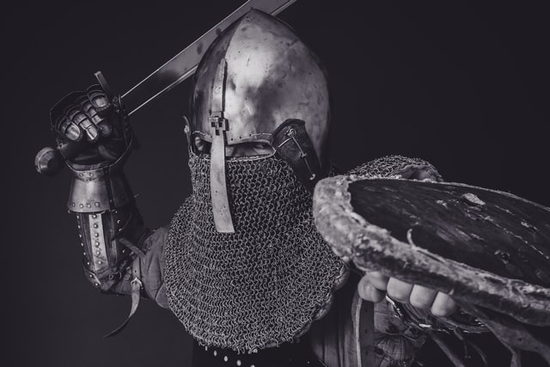
Photo by Henry Hustava on Unsplash
The choice of words in Ephesians to describe this armor is a direct reference to Isaiah 11:4-5 and Isaiah 59:17. The symbolism might seem odd today, but these words are meant to speak to each of us.
“Put on the whole armor of God, that you may be able to stand against the wiles of the devil. For we do not wrestle against flesh and blood, but against principalities, against powers, against the rulers of the darkness of this age, against spiritual hosts of wickedness in the heavenly places. Therefore take up the whole armor of God, that you may be able to withstand in the evil day, and having done all, to stand” (Ephesians 6:11-13, NKJV).
These “powers” and “spiritual hosts of wickedness” are the continued efforts of Satan. He doesn’t fight with conventional weapons but with influence. He sows deception, distraction, and temptation.
We are told in Matthew, “And do not fear those who kill the body but cannot kill the soul. But rather fear Him who is able to destroy both soul and body in hell” (Matthew 10:28, NKJV).
(By the way, do not be deceived by the enemy into believing in a hell where people are punished forever. Paul tells us, “For the wages of sin is death, but the gift of God is eternal life in Christ Jesus our Lord” (Romans 6:23, NKJV).
Death is final, not an eternal torture (Ecclesiastes 9:5). We are offered protection from eternal destruction by faith in God and wearing His armor.)
The full armor of God allows us to defend ourselves against these kinds of forces. We have a God that loves us and wants to protect us. He wants us to live forever with Him.
Pieces of the full armor of God
So let’s look at the individual pieces of the armor of God (Ephesians 6:14-18).
- Belt of truth (holds up the armor of God).
- Breastplate of righteousness (shields the heart, among other important parts of our bodies).
- Shoes of the gospel/sandals with the gospel of peace (to stand firm).
- Shield of faith (protection against direct attacks).
- Helmet of salvation (knowledge).
- Sword of the spirit (direct defense).
- And also prayer (by which we obtain His strength and protection).
Paul used words and images that were understood by his audience at the time.
This is exactly how Jesus spoke to people during His time on earth.
When Jesus called the first disciples who were fishermen, He said, “Follow Me, and I will make you fishers of men” (Matthew 4:19, NKJV).
Paul’s method was similar. The people he addressed in Ephesus understood war. They knew the pieces of armor worn by Roman soldiers at the time.
Belt of truth1
“Stand therefore, having girded your waist with truth” (Ephesians 6:14, NKJV).
Belts of Roman soldiers were crafted from strong metal and leather. It was sturdy enough to hold a sword and keep everything else in order.
Think of the belt as a foundation for all other pieces of the armor.
The belt must be worn first to balance and hold the rest.
For the believer, this foundational piece represents truth.
What is the truth?
The truth is that we desperately need Jesus. The truth is that He died to protect us from eternal death. And we regard God’s word as true above all else.
“Jesus said to him, ‘I am the way, the truth, and the life. No one comes to the Father except through Me’” (John 14:6, NKJV).
Using this truth as the foundation of our spiritual armor, we are able to stand against deception and temptation and be used by God. We are assured protection and salvation.
Jesus also said, “And you shall know the truth, and the truth shall make you free” (John 8:32, NKJV).
With the belt of truth, we are free to live the life God intended for us. This truth is found in Jesus’ saving grace.
Jesus’ teaching proclaimed the truth. We must know this to guard ourselves against the enemy of this war, Satan, the father of lies (John 8:44).
The truth is that God is love, and sin is the opposite of love. We are saved through Jesus Christ, through His sacrifice and promised Second Coming. Truth is His forgiveness of sins. These truths prevail against Satan’s lies.
Believers hold fast to truth.
Just like the belt of truth holds tight the armor of God.
Breastplate of righteousness
“Having put on the breastplate of righteousness” (Ephesians 6:14, NKJV).
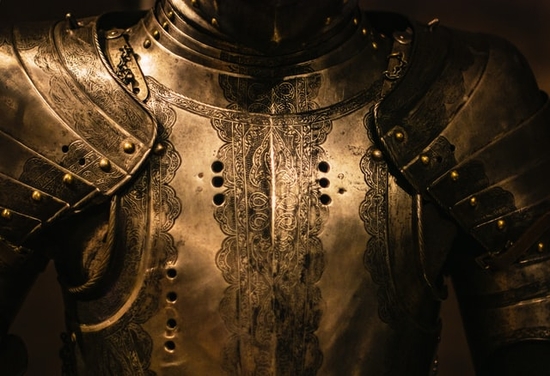
Photo by Nik Shuliahin on Unsplash
For Roman soldiers, this piece of the armor was large-scale protection during battle.
After all, it protected essential organs of a soldier, particularly the heart.
Of course, the “heart” protected by the breastplate of righteousness is not our physical heart. The heart is where we maintain our sense of self, feel emotions, and gather our sense of morality. That’s why we say it’s so important for God to “dwell in our hearts.”
In spiritual battle, the breastplate of righteousness protects our heart. Proverbs 4:23 tells us, “Keep thy heart with all diligence; for out of it are the issues of life” (NKJV).
We are not “upright” or moral without Jesus. Human beings do not have righteousness aside from what He has given us.
The breastplate of righteousness is His protection, and it never fails. We are protected from Satan’s attacks through Christ’s righteousness.
There is nothing we can do to earn righteousness. We can not be righteous without Him (Romans 3:10). When we accept Jesus as Savior, it is a gift He gives abundantly (2 Corinthians 5:21; Ephesians 2:8, 9; Philippians 3:9). And we can use this righteousness from God to protect our hearts.
Shoes of the gospel/sandals with the gospel of peace2
“And having shod your feet with the preparation of the gospel of peace” (Ephesians 6:15, NKJV).
Sandals were equipped to protect the feet of Roman soldiers. They provided comfort while marching into battle. The sandals helped soldiers “stand firm” during battle. The soles were thick. The ankle straps protected against blisters.
Believers in Jesus are called to walk as He walked (1 John 2:6). We must march where He leads. Jesus said, “My sheep hear My voice, and I know them, and they follow Me” (John 10:27, NKJV).
Believers are called to follow Him and also must stand firm when needed. That firm standing comes from understanding the gospel. With that understanding, the rest can fall into place.
Shield of faith
“Above all, taking the shield of faith with which you will be able to quench all the fiery darts of the wicked one” (Ephesians 6:16, NKJV).
The Roman soldier’s shield, or scutum, was a complex piece of the armor. It was made of solid wood, leather, and metal. It provided a hefty barrier. Then the shields were covered with animal skin soaked with water.
With this wet skin, fiery darts could be smothered on impact.
What does this have to do with a believer? What are the “fiery darts” against the shield of faith?
Faith is our shield in a spiritual war. Faith in Jesus gives us His protection.
Jesus said, “He who believes in Me, as the Scripture has said, out of his heart will flow rivers of living water” (John 7:38, NKJV).
The shield of faith needs to be dipped in the living water of His word.
To the woman at the well, Jesus said, “whoever drinks of the water that I shall give him will never thirst. But the water that I shall give him will become in him a fountain of water springing up into everlasting life” (John 4:14, NKJV).
We are told that “in the beginning was the Word, and the Word was with God, and the Word was God” (John 1:1, NKJV).
What exactly is this faith which we are called to hold like a shield? “Now faith is the substance of things hoped for, the evidence of things not seen” (Hebrews 11:1, NKJV).
We do not see God, but we have evidence of His love and works. We did not witness Jesus’ life and sacrifice, but we have testimony of it in the Word—the Bible.
And we can place our faith in God because the truth is in the Word.
Helmet of salvation
“And take the helmet of salvation…” (Ephesians 6:17, NKJV).
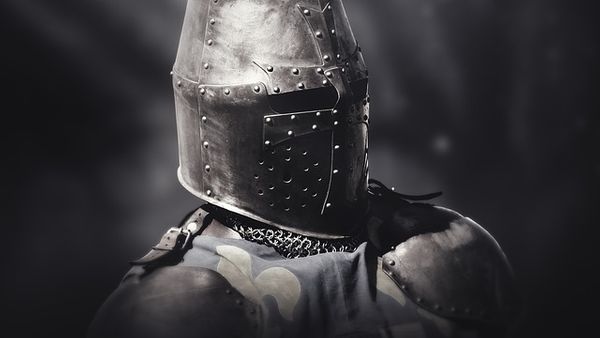
While each piece of armor is crucial, the helmet protects the head. The helmet of a Roman soldier shielded the entire head, face, and eyes.
In battle, these could be the most vulnerable parts of the body. The helmet of salvation is perhaps one of the most critical pieces of the armor for a believer.
The head is considered the source of knowledge, and we are called to know the salvation Jesus offers.
We are granted salvation when we believe and trust in Jesus’ death and resurrection for our sins (I John 1:9, NKJV).
The knowledge of this salvation gives us strength to fight. “And this is the testimony: that God has given us eternal life, and this life is in His Son” (1 John 5:11-12, NKJV).
Sword of the Spirit
“And the sword of the Spirit, which is the word of God” (Ephesians 6:17, NKJV).
The sword can be used for fighting or protection.
The word of God is the sword of the believer. The word gives us faith to use it defensively, when we’re being attacked with lies, or to use it proactively, by letting the word of God be evident in how we live our lives.
How did Christ battle Satan when tempted? He used Scripture with each response (Luke 4: 1-13).
God’s word is called “living and powerful, and sharper than any two-edged sword, piercing even to the division of soul and spirit, and of joints and marrow, and is a discerner of the thoughts and intents of the heart” (Hebrews 4:12, NKJV).
The more time we spend reading God’s word, the more we will understand. The more we understand God’s word, the more we can apply it to our daily lives.
Prayer
“Praying always with all prayer and supplication in the Spirit, being watchful to this end with all perseverance and supplication for all the saints” (Ephesians 6:18, NKJV).
Cloaked in the armor of God, prayer is what powers everything. It’s our connection to God.
Prayer allows us communication with God, and to be consciously relying on Him to guide us and strengthen us.
We are advised to, “be anxious for nothing, but in everything by prayer and supplication, with thanksgiving, let your requests be made known to God; and the peace of God, which surpasses all understanding, will guard your hearts and minds through Christ Jesus” (Philippians 4:6-7, NKJV).
So even if prayer isn’t a piece of the armor, it’s still part of the whole outfit.
What does the idea of God’s armor mean for us today?
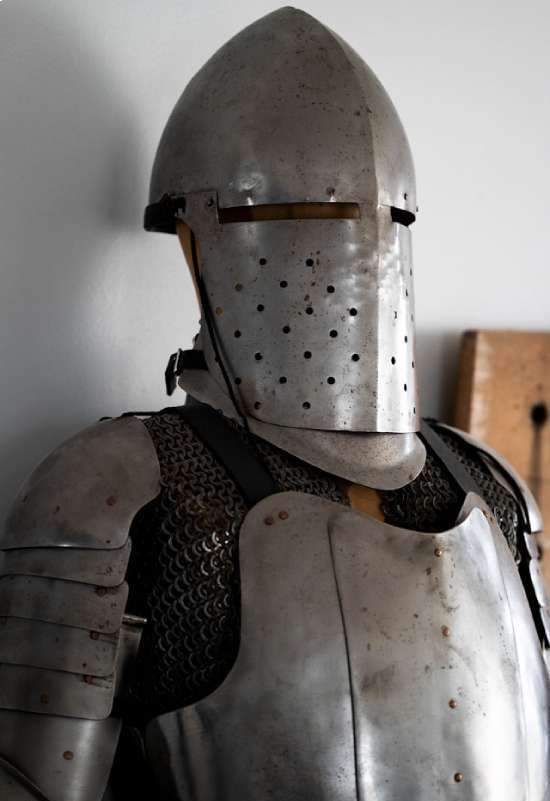
How does one “put on” the armor of God?
Fortunately, this doesn’t require heavy lifting. Wearing this armor starts in the simplest of ways: believing. When we accept Jesus’ sacrifice, we have begun our journey with Him. We live as a new creation, born-again, pursuing righteousness.
And even if we’re still learning how everything works, the armor of God is something God will freely give. Our part is to acknowledge that He is the source of our strength, and in Him is where we find growth.
In a way, we can polish and reinforce our spiritual armor when we read and study Scripture. And every time we pray, watch for God’s small blessings in life, and look at the world through the lens of the Bible, our armor’s effectiveness only increases.
This doesn’t mean we are to live life as if it’s a war. Paul wasn’t calling all humans to become like drill sergeants or berserker warriors when it comes to living Christian lives.
It’s true the enemy is real, and sin is a struggle for every human being. But we’re given the armor, not weapons, to deal with these spiritual attacks.
We can also find comfort in knowing that the armor of God is the only armor we need when it comes to this great controversy against good and evil. We don’t need to make our own. God will “supply all your needs according to His riches in glory in Christ Jesus” (Philippians 4:19, CSB).
His truth tells us what we need to know. His righteousness protects our hearts, and His salvation gives us life with Him. He’s given us support to stand and go where He leads. Faith in Him shields us from deception, and the Holy Spirit fights for us and parries surprise attacks.
Want to learn more about the concepts with the Armor of God?
- Editor in Chief, “The 7 Pieces of the Armor of God and How to Use Them,” https://connectusfund.org/7-pieces-of-the-armor-of-god, 2 December, 2019. [↵]
- Bibleinfo.com, “Armor of God: What is it?,” https://www.bibleinfo.com/en/questions/armor-of-god, last accessed 13 December, 2021. [↵]
More Answers
What Does the Parable of the 10 Virgins Teach Us?
The story of the 10 virgins found in Matthew 25:1-13 is a well-recognized parable of Jesus, and one with a profoundly important message for all of humanity.

Sabato katika Maisha na Mafundisho ya Ellen White
Sabato katika Maisha na Mafundisho ya Ellen WhiteSabato ni mada muhimu katika Kanisa la Waadventista wa Sabato. Sio jambo la kushangaza, basi, kwamba Ellen G. White, mwanzilishi mwenza wa kanisa, alisoma mafundisho ya Biblia kuhusu Sabato na akaandika kiasi kikubwa...

Una visión general de la educación superior Adventista del Séptimo Día
Una visión general de la educación superior Adventista del Séptimo DíaLa Iglesia Adventista del Séptimo Día tiene alrededor de 118 instituciones de educación superior en todo el mundo.1 Aunque muchas de ellas se encuentran en América del Norte, también encontrarás...
Uma Visão Geral da Educação Superior Adventista do Sétimo Dia
Uma Visão Geral da Educação Superior Adventista do Sétimo DiaA Igreja Adventista do Sétimo Dia tem cerca de 118 escolas terciárias ao redor do mundo.1 Embora muitas delas estejam localizadas na América do Norte, você também encontrará universidades Adventistas em...
Jesús y Juan el Bautista: Su relación y ministerio
Juan el Bautista y Jesús eran primos, amigos y colaboradores cercanos en el ministerio. Aprende la significancia duradera de su relación.

The Parable of the Unforgiving Servant—A Walk-through
Through this somewhat alarming story, Jesus teaches us about forgiveness, mercy, and human nature.

Comprendiendo la vida y el ministerio de Elena G. de White
Comprendiendo la vida y el ministerio de Elena G. de White Ellen Gould White fue una de las cofundadoras de la Iglesia Adventista del Séptimo Día. Y aunque vivió la mayor parte de su vida en el siglo XIX, el impacto de su vida y ministerio continúa hoy. Viviendo su...
Compreendendo a Vida e o Ministério de Ellen G. White
Saiba quem Ellen G. White realmente foi e o papel que desempenhou ao guiar a Igreja Adventista do Sétimo Dia primitiva por meio de seu ministério e escritos inspirados.

Explorando la profecía de las 2300 tardes y mañanas y el juicio investigador
¿De qué se trata la profecía de las 2300 tardes y mañanas? Nos enfocaremos especialmente en qué eventos marcaron su cumplimiento y en qué tiene que ver con el juicio investigador.
Explorando a Profecia dos 2300 Dias e o Juízo Investigativo
Sobre o que se trata a profecia dos 2300 dias? Vamos analisar especialmente quais eventos marcaram o seu cumprimento e qual a sua relação com o Juízo Investigativo.
El sábado en la vida y enseñanzas de Elena de White
El sábado es un tema importante en la Iglesia Adventista del Séptimo Día.
O Sábado na Vida e Ensinos de Ellen White
O Sábado na Vida e Ensinos de Ellen WhiteO sábado é um tópico importante na Igreja Adventista do Sétimo Dia. Não deve surpreender você, então, que Ellen G. White, uma co-fundadora da igreja, tenha estudado os ensinamentos bíblicos sobre o sábado e escrito extensamente...

La armadura de Dios como se describe en Efesios 6
La armadura de Dios como se describe en Efesios 6En Efesios 6, el Apóstol Pablo estaba ayudando a las personas a entender lo que significa defenderse en una guerra espiritual (Efesios 6:10-18). ¿Qué significa eso? Al hacer referencia a la armadura de Dios, Pablo no...

Todo lo que necesitas saber sobre las comidas del Sábado.
Para los Adventistas del Séptimo Día, compartir una comida en sábado con amigos y familiares es una de las partes más especiales y memorables de este día.

What Does the Parable of the Pearl of Great Price Mean?
Here’s what Jesus taught about the kingdom of heaven through this short parable about a merchant who finds a priceless pearl.
¿Qué significa “Adventista”?
¿Qué significa "Adventista"?Los Adventistas del Séptimo Día son una denominación cristiana protestante que sostiene el sábado bíblico que es el séptimo día. De esta creencia, obtienen la primera parte de su nombre. Pero, ¿qué hay de la segunda parte, "Adventista"?...

Ujumbe wa Malaika Watatu Katika Ufunuo 14 Ni Upi?
Ujumbe wa malaika watatu katika Ufunuo 14 unawaonya ulimwengu kuabudu Mungu, kuacha mchafuko wa kidini, na kuepuka ibada za tamaduni za kibinadamu badala ya amri za Mungu.
¿Quiénes fueron los hijos de Elena G. de White?
Elena G. de White, probablemente la cofundadora más conocida de la Iglesia Adventista del Séptimo Día, tuvo cuatro hijos con su esposo, James: Henry Nichols, James Edson, William Clarence y John Herbert.

Kwa nini Wadventista wa Sabato Wengi wanachagua Lishe Inayotokana na Mimea?
Ingawa siyo kila Mwadventista anatumia vyakula vya mimea pekee, wengi hujiepusha kabisa na nyama ili kuishi maisha yenye afya katika juhudi za kumheshimu Mungu, kimwili, kiroho, na kiakili.
![Understanding the Book of Mark [An Overview]](https://devsite.askanadventistfriend.com/wp-content/uploads/2026/02/bible-open-to-mark-400x250.jpg)
Understanding the Book of Mark [An Overview]
Understanding the Book of Mark [An Overview]The Book of Mark is one of the four Gospel accounts that begin the New Testament, and its author is widely believed to be John Mark, a relative of Barnabas who worked with both Peter and Paul. It’s the shortest Gospel...
An Overview of Romans: Faith, Righteousness, and Relationships
Here’s a breakdown and background of Paul’s longest epistle.
Tudo o que você precisa saber sobre as refeições do Sábado
Tudo o que você precisa saber sobre as refeições do Sábado.Para os Adventistas do Sétimo Dia, compartilhar uma refeição de sábado com amigos e família é uma das partes mais especiais e memoráveis do sábado. É por isso que queremos compartilhar com você tudo sobre as...
Yesu na Yohana Mbaptisti: Uhusiano Wao na Huduma
Yohana Mbatizaji na Yesu walikuwa ndugu wa damu, marafiki, na wafanyakazi wa karibu katika huduma. Jifunze umuhimu wa kudumu wa uhusiano wao.
Muhtasari wa Elimu ya Juu ya WaAdventista wa Sabato
Muhtasari wa Elimu ya Juu ya WaAdventista wa SabatoKanisa la WaAdventista Wasabato lina takribani shule za sekondari 118 ulimwenguni kote.1 Ingawa nyingi zipo ndani ya Amerika Kaskazini, pia utapata vyuo vikuu vya WaAdventista katika nchi mbalimbali duniani—mahali...
The Book of John: An Overview
Here’s a study companion for the Gospel according to John.

Waadventista wa Sabato Wanaamini Nini Kuhusu Pambano Kuu (Wema na Uovu)?
Pambano Kuu” ni msemo ambao Waadventista wa Sabato kawaida huutumia kuelezea mgogoro wa kiroho wa ulimwengu kati ya nguvu za mema (Mungu) na nguvu za uovu au dhambi (Shetani/iblis).
Silaha Zote za Mungu Kama Ilivyoelezwa Katika Waefeso 6
Katika Waefeso 6, Mtume Paulo alikuwa akisaidia watu kuelewa maana ya kujilinda katika vita vya kiroho (Waefeso 6:10-18).
A Armadura de Deus conforme Descrita em Efésios 6
Em Efésios 6, o Apóstolo Paulo estava ajudando as pessoas a entender o que significa se defender em uma guerra espiritual (Efésios 6:10-18).
¿Qué creen los Adventistas del Séptimo Día sobre el gran conflicto (bien vs. mal)?
El “gran conflicto” es la frase que los Adventistas del Séptimo Día suelen usar para describir el conflicto espiritual cósmico entre las fuerzas del bien (Dios) y las fuerzas del mal o del pecado (Satanás/el diablo).
Didn’t find your answer? Ask us!
We understand your concern of having questions but not knowing who to ask—we’ve felt it ourselves. When you’re ready to learn more about Adventists, send us a question! We know a thing or two about Adventists.