
Peter’s ladder of virtues is a phrase that refers to eight characteristics to be developed as a person grows in their relationship with Jesus Christ. It can be found in 2 Peter 1.
In short, these Christian virtues are faith, goodness, knowledge, self-control, perseverance, godliness, kindness, and love.
We can all agree that these are excellent principles to live by. But this is supposed to be more than just a list of good things. There’s a reason it’s called a “ladder.”
Let’s look more closely at how Peter listed and explained these principles to the believers he wanted to encourage.
First, let’s go straight to the Bible verses themselves.
The “rungs” on Peter’s ladder of virtues
The book of 2 Peter begins as an encouragement to the early church, most likely including several new converts. He outlines the sincere character development that comes with knowing and following Jesus, showing how these virtues build upon one another in important ways.
“For this very reason, make every effort to supplement your faith with goodness, goodness with knowledge, knowledge with self-control, self-control with endurance, endurance with godliness, godliness with brotherly affection, and brotherly affection with love” (2 Peter 1:5-7, CSB).
These virtues are commonly called a “ladder” because each one naturally follows and supplements the previous one.
The foundation is faith—our common starting point. We acknowledge our desire to believe and grow in Christ, then the Holy Spirit helps us grow from there. And as we grow, each step up this ladder brings us closer to the ultimate ideal of perfect love—the essence of God Himself (1 John 4:8).
Let’s learn more about what each of these virtues truly mean, and how they have a compounding effect on one another.
Faith

Photo by Marcos Paulo Prado on Unsplash
Faith is the first and most important step. Even if it’s a small step, it gets us on the ladder.
Without faith, there would be no sincere progression through all these virtues.
Peter describes how faith enables Christians to partake in the divine nature God promises. We have to make the decision to believe, even if we can’t see how it all fits together yet. That’s how faith works.
According to Hebrews 11:1, it is “the substance of things hoped for, the evidence of things not seen” (NKJV).
In everyday language, it means you are acknowledging God as sovereign and accepting Jesus Christ as the one who saves us, loves us, and guides us through His Holy Spirit.
Faith is how we accept the salvation Jesus offers us. Even if our starting “amount” of belief is as small as a mustard seed (Matthew 17:20-21), that’s all God needs. That’s also how we know that God is the one saving us, not our own efforts.
Ephesians 2:8-9 says,
“For by grace you have been saved through faith, and that not of yourselves; it is the gift of God, not of works, lest anyone should boast” (NKJV, emphasis added).
And it’s good to remember that even though faith is the foundational experience of being a Christian, it might look and feel different for every person. It depends on how we have experienced the world and how we came to accept Jesus.
But after that first step of faith, we can begin to experience a deepening of virtue as we get to know what true “goodness” is all about.
Goodness
Some Bible versions use the word “virtue” itself here, and this principle can also be described as “moral excellence.”1 It’s all about recognizing how God’s Law is perfect and beneficial, and how it sets the right conditions for love to flourish.
While summed up in the Ten Commandments, (Exodus 20:1-17; Matthew 22:35-40), God has given us instructions all throughout the Bible. And making it a priority to follow His Law, even if we mess up at times, cultivates goodness within us. We begin to recognize it more and more as we continually work toward it.
We can see goodness demonstrated by Joseph in the Old Testament. Even though he was bullied, mistreated, neglected, and wrongfully accused and imprisoned (Genesis 37, 39-42), he always did his best to be good to others even while dealing with his own frustrating circumstances.
Knowledge
Faith and goodness grow as we gain further knowledge, or wisdom—which the Bible has a lot to say about.
“Wisdom is the principal thing; therefore get wisdom. And in all your getting, get understanding” (Proverbs 4:7, NKJV).
The idea here is that there is always more to learn. We serve an infinite God who is continuously revealed through Scripture, people, and the world around us.
And by keeping up the pursuit of the knowledge of God, it only adds to all the other aspects of our spiritual development.
Self-control

Photo by cottonbro studio
And as we learn more and more, new challenges and temptations arise as well. That’s where self-control comes in.
Self-control—also called “temperance” in the King James Version—encompasses the principles of moderation, restraint, balance, and using God’s Law to set our boundaries. It is one of the fruits of the spirit the apostle Paul mentions in Galatians 5:22-23.
A person who exercises self-control is better able to fight against the temptations of sin, or letting our actions be motivated by greed, pride, sexual immorality, hate, gluttony, etc.
Self-control doesn’t mean that a person isn’t tempted at all, but that when temptation is experienced, it is also recognized, prayed about, and willfully put aside, with the help of the Holy Spirit.
We can see self-control modeled in various stories in the Bible, such as in the Old Testament with David and King Saul.
Saul had become extremely jealous of David and his abilities—so much so that he intended to kill him. During one of his pursuits of David, Saul rested in a cave, away from his men (1 Samuel 24:3). What Saul didn’t know was that David and his men were also hiding in the back of the same cave.
David’s men saw their opportunity. They tried to convince him that now was the perfect time to kill Saul. After all, God had promised David he would one day be king (1 Samuel 24:4).
David undoubtedly felt the temptation to end that struggle with Saul once and for all. But he knew that wasn’t what God wanted him to do. He knew that Saul’s ultimate fate should be in God’s hands, not his.
So instead of killing him, or even injuring him, David quietly cut off the corner of Saul’s robe (1 Samuel 24:4). He told his men, “The Lord forbid that I should do this thing to my master, the Lord’s anointed, to stretch out my hand against him, seeing he is the anointed of the Lord” (1 Samuel 24:6, NKJV).
Then he felt guilty even of that. Later he confessed to Saul—putting himself in danger to do it—and reminded Saul he could have killed him, but chose not to (1 Samuel 24:11).
By exercising self-control, David allowed everything to happen in God’s timing. Israel later experienced prosperity because David trusted in God, which gave him the willpower and self-control he needed for the tough situations he encountered.
Perseverance/Endurance

Photo by Brian Erickson on Unsplash
As we continue in faith, pursue goodness, and exercise self-control (with God’s help), we develop perseverance.
This trait can also be expressed as steadfastness,2 endurance,3 or patience.4 But all these words express the concept of strength across time. An ongoing process. Consistency. Fighting discouragement and not giving up.
Even when things take a really long time. Even when things get difficult. Even when things seem impossible.
There will be no shortage of challenges for a true Christian. But prayerfully cultivating perseverance will help us get through those struggles—sometimes in ways that amaze us and strengthen our faith.
“And not only that, but we also glory in tribulations, knowing that tribulation produces perseverance; and perseverance, character; and character, hope” (Romans 5:3-4, NKJV).
Perseverance builds character. It’s a key ingredient in a godly Christian character that reflects the love and strength of Jesus Christ.
Naturally, that would lead us toward godliness.
Godliness
This is a significant step of the ladder because it signals a turning point. We’re moving from developing our personal character to actively trying to emulate the character of God.
Godliness comes from the Greek word eusebeia, which means “well worship.”5 Practically, it means deep reverence toward God that motivates action, as well. So this refers to a genuine, profound worship of God that also involves the goal of reflecting His character.
Godliness also requires an understanding of the bigger picture. Our desires start to match God’s desires, and we are less enticed by the frivolous things the world constantly tries to offer.
John the Baptist made a statement that exemplified an interesting angle of godliness:
“He must increase, but I must decrease” (John 3:30, CBS).
And this doesn’t mean we have to “decrease” who we are. This isn’t about identity, but about recognizing God’s perfect will and perfect character, and fixing our minds’ eyes upon Him.
Then, as we embrace and reflect Christ’s character, it will be evident in how we relate with others.
Brotherly kindness

Photo by Zac Durant on Unsplash
Brotherly kindness is just what it sounds like: showing kindness and affection to our brothers and sisters, or our neighbors, in Christ. It means treating everyone like we’re all part of the same family.
It’s often described by the Greek word philadelphia.6
Here’s one way the apostle Paul describes kindness:
“Be kindly affectionate to one another with brotherly love, in honor giving preference to one another” (Romans 12:10, NKJV).
We don’t just look out for ourselves, we also consider the needs and perspectives of others.
This is exemplified in stories like the “Good Samaritan” (Luke 10:25-37), Ruth taking care of Naomi (Ruth 1), and Paul feeding and healing others after being shipwrecked, all while he was a prisoner (Acts 27:9-44, 28:1-10).
So kindness is much more than just “being nice.” Kindness involves compassion, generosity, empathy, and humility.
And as kindness becomes our way of life, God’s love can be revealed through us.
Love
Love is the ultimate expression of the Christian life, represented as the last rung on Peter’s ladder. God is love (1 John 4:8), and Jesus said that showing love is the way to demonstrate that we follow Him.
“By this everyone will know that you are my disciples, if you love one another” (John 13:35, CSB).
And this love is to be shown to everyone, whether they share our beliefs or not. Whether they’re kind to us or not. Even if they’re our enemies (Luke 6:27).
This is the love God has for us. In Greek, it’s called agape, and it can be described as “a giving love, entirely unselfish.”7
This is the type of love that led Jesus to sacrifice His life for each and every one of us—even those who put Him on the Cross—so that we might someday spend our eternal life with Him.
Love encapsulates every other virtue on Peter’s ladder, as we can see from 1 Corinthians 13. This is commonly called the “love chapter” because it describes all the qualities that make up this true love. The chapter ends, “And now abide faith, hope, love, these three; but the greatest of these is love” (1 Corinthians 13:13, NKJV).
God works with us through the Holy Spirit to develop this trait in our lives. And as He does, we also become closer and closer with Him.
Cultivating these eight virtues in life

Photo by Noah Buscher on Unsplash
When Peter laid out the ladder of virtues, he was penning a letter to the early Christian church. He was describing the divine nature of God, and how these qualities were developed and strengthened in a Christian. And how the people’s growth in these virtues would help the Gospel to be shared everywhere.
These qualities are timeless. They’ll never waver in importance, and they’ll always be expressions of Christ’s character.
And in today’s world, torn apart by pride, greed, anger, violence…these things are needed more than ever.
So how do we do this?
None of us are perfect, but we still have the same goal—love.
And the journey toward love can start with just a mustard-seed amount of faith. Once we decide to get on this ladder, the Holy Spirit will help us, step by step, as we go.
Cultivating the virtues of “Peter’s ladder” is a life-long process, no matter when we start it.
And even though it is a very personal, inward process, it isn’t something we can do on our own. It’s a process of growth that happens as we grow closer to God.
And even though it’s portrayed as a ladder, it doesn’t mean that we have to master each step before we can move on to the next. All these virtues build upon one another, but that doesn’t mean we can’t develop our kindness if we’re still working on our faith.
This isn’t a formula or a checklist.
And sometimes, it might be a daily climb we have to do over and over.
On hard days, it might be all we can do just to place our feet on the bottom rung. But even so, that step of faith puts us on the right path and opens our minds to the Holy Spirit, who can lead us upward.
There are also additional things we can do to cultivate these values in our lives.
- We can strengthen our faith by praying and reading the Bible.
- We can practice goodness when we volunteer our time, or even when we stop to help a friend. Or a stranger.
- We can grow our knowledge with Bible study, and by approaching life with a mindset that’s always ready to learn.
- We can exercise self-control by building good habits and setting goals.
- We can develop perseverance by keeping up our devotional practice, even when we lose motivation or get discouraged. And if we do get stuck, we know we can always start things up again, and God will meet us where we’re at.
- We can reflect godliness by prayerfully staying open to the promptings of the Holy Spirit.
- We can practice kindness by intentionally thinking about the people around us, being willing to listen, and helping out whenever an opportunity arises.
- And we experience and grow in love by doing any and all of these things, and keeping our eyes open for how God shows His love with us.
All in all, the closer we draw to God, the more we will be aware of, experience, and emulate these virtues.
It just takes a step of faith to get started.
Looking for more tips to improve your relationship with Jesus?
Related Articles



- 2 Peter 1:5, New American Standard Bible. [↵]
- 2 Peter 1:6, English Standard Version. [↵]
- 2 Peter 1:6, Christian Standard Bible. [↵]
- 2 Peter 1:6, King James Version. [↵]
- “Godliness (2150) eusebeia,” Sermon Index.net, [↵]
- “Philadelphia,”Strong’s, G5360 [↵]
- “Agape,” Cambridge Dictionary, [↵]
More Answers

Where Do We Go When We Die?
For those of us who’ve lost loved ones or faced serious health issues, we can’t help but wonder about life after death.

What is the Difference Between Grace and Mercy in the Bible?
Even in day-to-day life, we can see glimpses of grace and mercy—like when someone offers an angry, impatient person their spot in a line or when a parent hugs their child after a heated argument.

Waadventista Wasabato Wanatafsiri Vipi Unabii wa Biblia?
Jifunze zaidi kuhusu jinsi Waadventista wanavyotafsiri unabii katika Biblia—hasa katika vitabu kama Danieli na Ufunuo.

Urithi wa Kudumu wa Ellen G. White
Urithi wa Kudumu wa Ellen G. WhiteEllen G. White ni jina linalojulikana sana miongoni mwa Waadventista wa Sabato, lakini pia aliathiri sehemu nyingi za historia, mbali na kuwa mwanzilishi wa Kanisa la Waadventista wa Sabato. Ndiyo maana Jarida la Smithsonian...

¿Cómo interpretan la profecía bíblica los Adventistas del Séptimo Día?
Aprende más sobre cómo los Adventistas interpretan la profecía en la Biblia, especialmente en libros como Daniel y Apocalipsis.
Como os Adventistas do Sétimo Dia interpretam a profecia bíblica?
Saiba mais sobre como os Adventistas abordam a interpretação da profecia na Bíblia—especialmente nos livros como Daniel e Apocalipse.

Lo que necesitas saber sobre la tentación y cómo resistirla
¿Alguna vez has sentido que enfrentas la misma tentación día tras día? ¿La tentación que siempre parece resurgir?
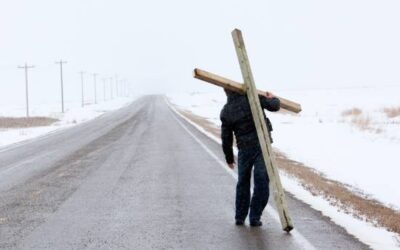
What Jesus Meant by “Take Up Your Cross”
Whether you’ve spent a day or a decade around Christian circles, you’ve probably heard the phrase, “Pick up your cross.”

Je, Waadventista Wasabato Wana “Sheria”?
Tunashikilia kanuni tunazoamini zitasaidia kuweka uhusiano wa karibu na Yesu na Neno lake. Jifunze jinsi kanuni hizi zinavyo-ongoza mtindo wa maisha wa Waadventista.
El legado de Elena G. de White
El legado de Elena G. de WhiteyElena G. de White es un nombre muy conocido entre los Adventistas del Séptimo Día, pero también tuvo un impacto en muchas otras partes de la historia, además de ser cofundadora de la Iglesia Adventista. Por eso, la revista Smithsonian la...

All of Jesus’ Warnings and Encouragements in the Bible
Here’s a comprehensive list of every warning and encouragement from the words of Jesus, as well as how they can benefit our lives today.
¿Los Adventistas del Séptimo Día tienen “reglas”?
Sostenemos principios que creemos que nos ayudarán a mantener una relación más cercana con Jesús y su Palabra. Aprende cómo estos principios guían los estilos de vida adventistas.
Os Adventistas do Sétimo Dia têm “regras”?
Defendemos princípios que acreditamos nos ajudar a manter um relacionamento mais próximo com Jesus e com Sua Palavra. Saiba como esses princípios orientam o estilo de vida adventista.

Películas Adventistas: donde la fe y el cine se encuentran
La misión de la Iglesia Adventista del Séptimo Día desde el principio ha sido compartir la verdad de Dios en la Biblia.
Filmes Adventistas: Onde a Fé e o Cinema se Encontram
A missão da Igreja Adventista do Sétimo Dia desde o início tem sido compartilhar a verdade de Deus na Bíblia.

¿Por qué algunas Biblias tienen más libros que otras?
Los cristianos consideran la Biblia como sus escrituras sagradas. Pero dentro del cristianismo, diferentes denominaciones utilizan Biblias con cantidades diferentes de libros.
Por que algumas Bíblias têm mais livros do que outras?
Os cristãos consideram a Bíblia como suas escrituras sagradas. Mas dentro do Cristianismo, diferentes denominações usam Bíblias com números diferentes de livros.
O que você precisa saber sobre a tentação e como resistir a ela
Já se sentiu como se enfrentasse a mesma tentação dia após dia? Aquela tentação que sempre parece ressurgir?

O que os Adventistas do Sétimo Dia acreditam sobre a Bíblia?
A Bíblia forma a base de tudo o que os Adventistas do Sétimo Dia acreditam e ensinam.

Waadventista Wa Sabato wanaamini nini kuhusu Ubatizo?
Kama Wakristo wengi wa Kiprotestanti ulimwenguni kote na katika historia, Kanisa la Waadventista wa Sabato linaamini katika ubatizo, sherehe ambapo watu huzamishwa ndani ya maji kudhihirisha hadharani “kufa kwa maisha ya zamani” na “kuanza kwa maisha mapya katika Kristo”.

Jinsi Waadventista Wanavyoshughulikia Kifo na Mazishi
Mazishi mengi ya Waadventista wa Sabato yanafanana na yale ya madhehebu mengine ya Kiprotestanti, kama vile Wamethodisti, Wabatisti, au Wapresbiteri, lakini unaweza kupata tofauti chache au taratibu za pekee.
O que os Adventistas do Sétimo Dia acreditam sobre o batismo?
Assim como muitos cristãos protestantes em todo o mundo e ao longo da história, a Igreja Adventista do Sétimo Dia crê no batismo por imersão
¿Qué creen los Adventistas del Séptimo Día sobre el bautismo?
Al igual que muchos cristianos protestantes en todo el mundo y a lo largo de la historia, la Iglesia Adventista del Séptimo Día cree en el bautismo por inmersión

Does Jesus Really Care About Me?
Does Jesus Really Care About Me?Short answer: yes, Jesus really does care about you, specifically (1 Peter 5:7, ESV). But if you’re wondering whether Jesus Christ really, truly cares about you, you aren’t alone. Gideon, Abraham and Sarah, Job, Jeremiah, Elijah, even...
Filamu za Kiadventista: Mahali Imani na Filamu Zinapokutana
Tangu mwanzo, lengo la Kanisa la Waadventista wa Sabato limekuwa kueneza kweli ya Mungu katika Biblia.
Kwanini Baadhi ya Biblia Zina Vitabu Vingi Kuliko Zingine?
Wakristo wanachukulia Biblia kama maandiko yao matakatifu. Lakini ndani ya Ukristo, madhehebu tofauti hutumia Biblia zenye idadi tofauti ya vitabu.

Fe y obras: ¿Importan ambas en la vida de un cristiano?
En tantas religiones a lo largo del tiempo, los individuos trabajan hacia la iluminación, la salvación o el favor de una deidad.
Cómo los Adventistas manejan la muerte y los funerales
La mayoría de los servicios funerarios Adventistas del Séptimo Día son similares a los de otras denominaciones protestantes, como los metodistas, bautistas y presbiterianos, pero podrías encontrar algunas diferencias o matices únicos.
Didn’t find your answer? Ask us!
We understand your concern of having questions but not knowing who to ask—we’ve felt it ourselves. When you’re ready to learn more about Adventists, send us a question! We know a thing or two about Adventists.