
The most accurate Bible possible would be one that’s printed in its original languages—Hebrew and Greek. But since most of us are not Hebrew or Greek scholars, the next best option is an English Bible translation that most closely reflects the original language and intent while also presenting these ideas in a practical and understandable way.
You might feel overwhelmed with all the options out there—about 900 in the English language.1 That’s almost like a GPS giving you hundreds of routes to choose from!
But the process doesn’t have to be difficult. By understanding the three main categories of Bibles, you’ll find a version that suits your needs and helps you come to know Jesus better.
Here, we’ll cover:
- Why are there so many Bible versions?
- What are the different types of Bible translations?
- How to choose the best Bible version for you
Let’s first touch on why we have so many versions in the first place.
Why are there so many Bible versions?

Photo by Tim Wildsmith on Unsplash
The number of different Scripture translations has mushroomed in the past centuries as original manuscripts have been discovered and repeatedly translated.
The Old Testament was written in Hebrew, and the New Testament in Greek and Aramaic. After the first century, these languages became less and less common because Latin was the primary language of the Roman Empire.
And with the spread of Christianity to different countries, the Hebrew and Greek texts soon needed to be translated into those languages as well.
The result was many different manuscripts that have been used in recent centuries for modern translations.
As we’ll see next, those versions are divided into three main categories. The most accurate ones will be those translated from the original Hebrew and Greek manuscripts.
What are the different types of Bible translations?
Bible translations fall into three categories based on how closely they reflect the original wording of Greek and Hebrew manuscripts. They are:
1. Literal translations
2. Dynamic equivalents
3. Paraphrases
Literal translations
Literal, or word-for-word, translations seek to translate each Hebrew and Greek word in as literal a manner as possible. They are also called formal equivalents.
This can result in text that’s a little more clunky or difficult for modern readers to understand.
The reason for this is the differences between the Bible’s original languages and English. Sometimes, Greek and Hebrew words have multiple meanings in English, making it challenging for translators to know which English word to use.
And there are more than just word differences between these languages. There are variations in sentence structure, emphasis, and punctuation, too.
Even so, literal translations are the most accurate Bibles for in-depth study. Having additional resources on hand can also help with understanding what the original Bible writers meant. Try out a Strong’s Exhaustive Concordance of the Bible or Hebrew-English and Greek-English lexicons.
The following are some of the most popular translations in this category.
The King James Version (KJV)

Photo by Humble Lamb on Unsplash
Date translated: 1611
- Translated/produced by: Bible scholars of the Church of England; commissioned by King James
- Pros:
- Poetic writing style
- Traditional Bible for centuries
- Most popular Bible in use today
- Considered the most accurate translation for its time
- Cons:
- An old English version with archaic language. Some words had very different connotations back then.
- Harder to understand
The Revised Standard Version (RSV)
- Date published: 1952
- Translated/produced by: National Council of the Churches of Christ
- Pros:
- First translation to use the Dead Sea Scrolls
- Updated language
- Cons:
- Possible concerns about the theological viewpoints of the translators and bias in the text
- Can be hard to find printed copies
The New American Standard Bible (NASB)
- Date published: 1963
- Translated/produced by: The Lockman Foundation
- Pros:
- Highly accurate
- Contemporary English
- Translation notes with literal meanings of words and other possible translations
- Con:
- More literal wording that may not flow like modern wording
- Read the NASB for free.
The Amplified Bible (AMP)
- Date published: 1965
- Translated/produced by: Zondervan and the Lockman Foundation
- Pros:
- Additional meanings of words and phrases within the text to enhance the understanding
- One of the most easy-to-understand literal translations
- Con:
- The extra phrasing in brackets and parentheses can make the text feel cluttered, especially when reading out loud
The New King James Version (NKJV)
- Date published: 1982
- Translated/produced by: 130 Bible scholars, pastors, and theologians; published by Thomas Nelson
- Pros:
- Updated version of the KJV (updated grammar and wording while retaining the traditional poetic beauty of the KJV)
- Easier read with the older style
- Con:
- Still contains many archaic phrases
The English Standard Version (ESV)
- Date published: 2001
- Translated/produced by: Crossway; over 100 scholars and pastors
- Pros:
- More modern wording
- Keeps some of the most-loved verses close to the KJV translation
- Cons:
- Some hard-to-read sentence structure
- Concerns about possible theological bias (since the RSV was referenced in translations)
Dynamic equivalents
Dynamic equivalents, or thought-for-thought translations, convey the message of the Bible’s text rather than the exact words. Scholars have sought to use cultural, linguistic, and historical background to express in modern language what the original author intended.
While these translations are generally easier to read and understand, they’re not perfect. Every scholar comes to their work with a theological bias, so these translations may potentially express more bias than word-for-word translations.
But this fact doesn’t mean we should avoid dynamic equivalents.
Instead, they can make for enjoyable devotional reading in conjunction with other Bible study tools and more literal translations.
Check out these ones:
The New International Version (NIV)
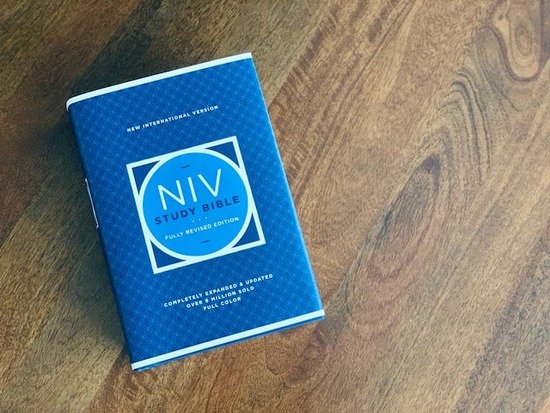
Photo by Tim Wildsmith on Unsplash
Date published: 1978
- Translated/produced by: Biblica (International Bible Society)
- Pros:
- One of the most popular, easy-to-read, modern versions of the Bible
- Uses word-for-word and thought-for-thought translation, striking a balance between
- Cons:
- Wording isn’t always the most poetic
- Translators sometimes added words that weren’t original, making it seem interpreted rather than translated
The New Living Translation (NLT)
- Date published: 1996
- Translated/produced by: Tyndale House Publishers
- Pros:
- A highly accessible version
- Changes traditional metaphors or terms to modern-day equivalents for easier understanding
- Cons:
- The colloquial language can make it seem far away from the original text
- Its use of modern terms and metaphors may change the originally intended meaning
God’s Word Translation (GW)
- Date published: 1995
- Translated/produced by: God’s Word to the Nations Society
- Pros:
- Printed in a single-column format for easy reading.
- Displays the reading in the way the Bible writers would speak if they lived today
- Con:
- Sometimes interprets phrases instead of translating them
- Read the GW translation for free.
The Christian Standard Bible (CSB)
- Date published: 2017
- Translated/produced by: Holman Bible Publishers
- Pros:
- An updated version of the Holman Christian Standard Bible, which is known as an “optimal equivalence” because it contains both word-for-word and thought-for-thought translation throughout
- Uses gender-neutral terms when the original language would also refer to both genders
- Easy-to-read text
- Con:
- Uses some unconventional translating ideas, like translating “beer” for “strong drink”
Paraphrases
Paraphrases are not translations in the strictest sense. Rather, they involve interpretation, rewording, and expanding upon the original text of the Bible to make it more understandable.
Paraphrases tend to have a greater potential for bias, particularly since they’re often the work of one individual rather than a committee of Bible scholars.
For these reasons, they work best when combined with more literal translations. But they can be a great addition to a devotional routine or study.
Here are four common paraphrases:
The Living Bible (TLB)
- Date published: 1971
- Produced by: Kenneth Taylor
- Pro:
- Seeks to communicate the meaning of each passage in as simple a way as possible
- Cons:
- Less poetic
- Potential bias and interpretation that may not be accurate to the originally-intended meaning
Good News Translation (GNT)
- Date published: 1976
- Produced by: Dr. Robert Bratcher together with a committee appointed by the American Bible Society
- Pros:
- Accessible to non-native English speakers
- Easy to read and understand
- Con:
- Potentially strays too far from the original meaning of the text
The Clear Word
- Date published: 1994
- Produced by: Jack J. Blanco
- Pro:
- A devotional paraphrase from an Adventist perspective
- Con:
- Not an actual Bible
- Learn more about the Clear Word.
The Message (MSG)
- Date published: 2002
- Produced by: Eugene H. Peterson
- Pros:
- Easy-to-read, colloquial language
- Can give a different perspective to verses
- Cons:
- A very loose translation of the original with heavy interpretation
- Some of the idioms used are American
How to choose the best Bible version for you

Photo by Kelly Sikkema on Unsplash
As we’ve already mentioned, the best Bible translation will be as close as possible to the originally intended meaning of its authors. Generally, word-for-word translations fit this criterion best.
Your purpose will also affect which one you should choose.
Let’s go through a few different purposes and the Bible versions that might work best for you:
- Bible study. If you are looking to dig deep into the Bible, a word-for-word translation (such as the NASB or the KJV) is ideal since it sticks closest to the original language. Though not always the easiest to read, Bible dictionaries and concordances can help remedy that challenge.
- Devotional reading. When looking for simple encouragement for your day and ways to connect with God, pick a Bible you can easily understand. Depending on what you are most used to hearing, this version could be a word-for-word translation or a dynamic equivalent.
- Memorization. Remember Psalm 23’s classic “thy rod and thy staff they comfort me”? Some versions are written very poetically and are the standard you hear quoted. The King James Version is one of the most famous.
- Reading aloud. Choose a translation that allows the words to easily roll off your tongue and that is easy for listeners to understand. Thought-for-thought translations usually fit this bill because they are written in modern English.
- Secondary Bible. You may already have a favorite Bible but want another for comparison. A good way to balance your selection is to pick the opposite type of Bible from the one you have now. If you use a thought-for-thought version, pick a word-for-word translation and vice versa.
- Children’s Bible. A thought-for-thought version with simpler language may be the best for children who might struggle with more literal wording.
The key is getting to know the ultimate author of the Bible
Due to the challenges of translating from language to language, no Bible translation will ever be able to fully convey the originally intended meaning of all its passages.
After all, Scripture was written by finite humans about an infinite God. So there’s always more to learn.
But the good news is that this fact hasn’t obscured the message in the Word of God. Through the years, God has used His people to preserve this valuable book so that it could continue to be transformative in the lives of many.
So instead of getting hung up on the details, use the principles listed here to pick an accurate and readable Bible.
Then, focus on what’s most important: getting to know the author of the Bible. He has promised to give us the Holy Spirit to guide us to all truth (John 16:13).
- “Number of English Translations of the Bible,” American Bible Society. [↵]
Related Articles


More Answers

What Does the Parable of the 10 Virgins Teach Us?
The story of the 10 virgins found in Matthew 25:1-13 is a well-recognized parable of Jesus, and one with a profoundly important message for all of humanity.

Sabato katika Maisha na Mafundisho ya Ellen White
Sabato katika Maisha na Mafundisho ya Ellen WhiteSabato ni mada muhimu katika Kanisa la Waadventista wa Sabato. Sio jambo la kushangaza, basi, kwamba Ellen G. White, mwanzilishi mwenza wa kanisa, alisoma mafundisho ya Biblia kuhusu Sabato na akaandika kiasi kikubwa...

Una visión general de la educación superior Adventista del Séptimo Día
Una visión general de la educación superior Adventista del Séptimo DíaLa Iglesia Adventista del Séptimo Día tiene alrededor de 118 instituciones de educación superior en todo el mundo.1 Aunque muchas de ellas se encuentran en América del Norte, también encontrarás...
Uma Visão Geral da Educação Superior Adventista do Sétimo Dia
Uma Visão Geral da Educação Superior Adventista do Sétimo DiaA Igreja Adventista do Sétimo Dia tem cerca de 118 escolas terciárias ao redor do mundo.1 Embora muitas delas estejam localizadas na América do Norte, você também encontrará universidades Adventistas em...

Jesús y Juan el Bautista: Su relación y ministerio
Juan el Bautista y Jesús eran primos, amigos y colaboradores cercanos en el ministerio. Aprende la significancia duradera de su relación.

The Parable of the Unforgiving Servant—A Walk-through
Through this somewhat alarming story, Jesus teaches us about forgiveness, mercy, and human nature.

Comprendiendo la vida y el ministerio de Elena G. de White
Comprendiendo la vida y el ministerio de Elena G. de White Ellen Gould White fue una de las cofundadoras de la Iglesia Adventista del Séptimo Día. Y aunque vivió la mayor parte de su vida en el siglo XIX, el impacto de su vida y ministerio continúa hoy. Viviendo su...
Compreendendo a Vida e o Ministério de Ellen G. White
Saiba quem Ellen G. White realmente foi e o papel que desempenhou ao guiar a Igreja Adventista do Sétimo Dia primitiva por meio de seu ministério e escritos inspirados.

Explorando la profecía de las 2300 tardes y mañanas y el juicio investigador
¿De qué se trata la profecía de las 2300 tardes y mañanas? Nos enfocaremos especialmente en qué eventos marcaron su cumplimiento y en qué tiene que ver con el juicio investigador.
Explorando a Profecia dos 2300 Dias e o Juízo Investigativo
Sobre o que se trata a profecia dos 2300 dias? Vamos analisar especialmente quais eventos marcaram o seu cumprimento e qual a sua relação com o Juízo Investigativo.
El sábado en la vida y enseñanzas de Elena de White
El sábado es un tema importante en la Iglesia Adventista del Séptimo Día.
O Sábado na Vida e Ensinos de Ellen White
O Sábado na Vida e Ensinos de Ellen WhiteO sábado é um tópico importante na Igreja Adventista do Sétimo Dia. Não deve surpreender você, então, que Ellen G. White, uma co-fundadora da igreja, tenha estudado os ensinamentos bíblicos sobre o sábado e escrito extensamente...

La armadura de Dios como se describe en Efesios 6
La armadura de Dios como se describe en Efesios 6En Efesios 6, el Apóstol Pablo estaba ayudando a las personas a entender lo que significa defenderse en una guerra espiritual (Efesios 6:10-18). ¿Qué significa eso? Al hacer referencia a la armadura de Dios, Pablo no...

Todo lo que necesitas saber sobre las comidas del Sábado.
Para los Adventistas del Séptimo Día, compartir una comida en sábado con amigos y familiares es una de las partes más especiales y memorables de este día.

What Does the Parable of the Pearl of Great Price Mean?
Here’s what Jesus taught about the kingdom of heaven through this short parable about a merchant who finds a priceless pearl.

¿Qué significa “Adventista”?
¿Qué significa "Adventista"?Los Adventistas del Séptimo Día son una denominación cristiana protestante que sostiene el sábado bíblico que es el séptimo día. De esta creencia, obtienen la primera parte de su nombre. Pero, ¿qué hay de la segunda parte, "Adventista"?...

Ujumbe wa Malaika Watatu Katika Ufunuo 14 Ni Upi?
Ujumbe wa malaika watatu katika Ufunuo 14 unawaonya ulimwengu kuabudu Mungu, kuacha mchafuko wa kidini, na kuepuka ibada za tamaduni za kibinadamu badala ya amri za Mungu.

¿Quiénes fueron los hijos de Elena G. de White?
Elena G. de White, probablemente la cofundadora más conocida de la Iglesia Adventista del Séptimo Día, tuvo cuatro hijos con su esposo, James: Henry Nichols, James Edson, William Clarence y John Herbert.

Kwa nini Wadventista wa Sabato Wengi wanachagua Lishe Inayotokana na Mimea?
Ingawa siyo kila Mwadventista anatumia vyakula vya mimea pekee, wengi hujiepusha kabisa na nyama ili kuishi maisha yenye afya katika juhudi za kumheshimu Mungu, kimwili, kiroho, na kiakili.
![Understanding the Book of Mark [An Overview]](https://devsite.askanadventistfriend.com/wp-content/uploads/2026/02/bible-open-to-mark-400x250.jpg)
Understanding the Book of Mark [An Overview]
Understanding the Book of Mark [An Overview]The Book of Mark is one of the four Gospel accounts that begin the New Testament, and its author is widely believed to be John Mark, a relative of Barnabas who worked with both Peter and Paul. It’s the shortest Gospel...

An Overview of Romans: Faith, Righteousness, and Relationships
Here’s a breakdown and background of Paul’s longest epistle.
Tudo o que você precisa saber sobre as refeições do Sábado
Tudo o que você precisa saber sobre as refeições do Sábado.Para os Adventistas do Sétimo Dia, compartilhar uma refeição de sábado com amigos e família é uma das partes mais especiais e memoráveis do sábado. É por isso que queremos compartilhar com você tudo sobre as...
Yesu na Yohana Mbaptisti: Uhusiano Wao na Huduma
Yohana Mbatizaji na Yesu walikuwa ndugu wa damu, marafiki, na wafanyakazi wa karibu katika huduma. Jifunze umuhimu wa kudumu wa uhusiano wao.
Muhtasari wa Elimu ya Juu ya WaAdventista wa Sabato
Muhtasari wa Elimu ya Juu ya WaAdventista wa SabatoKanisa la WaAdventista Wasabato lina takribani shule za sekondari 118 ulimwenguni kote.1 Ingawa nyingi zipo ndani ya Amerika Kaskazini, pia utapata vyuo vikuu vya WaAdventista katika nchi mbalimbali duniani—mahali...
The Book of John: An Overview
Here’s a study companion for the Gospel according to John.

Waadventista wa Sabato Wanaamini Nini Kuhusu Pambano Kuu (Wema na Uovu)?
Pambano Kuu” ni msemo ambao Waadventista wa Sabato kawaida huutumia kuelezea mgogoro wa kiroho wa ulimwengu kati ya nguvu za mema (Mungu) na nguvu za uovu au dhambi (Shetani/iblis).
Silaha Zote za Mungu Kama Ilivyoelezwa Katika Waefeso 6
Katika Waefeso 6, Mtume Paulo alikuwa akisaidia watu kuelewa maana ya kujilinda katika vita vya kiroho (Waefeso 6:10-18).
A Armadura de Deus conforme Descrita em Efésios 6
Em Efésios 6, o Apóstolo Paulo estava ajudando as pessoas a entender o que significa se defender em uma guerra espiritual (Efésios 6:10-18).
¿Qué creen los Adventistas del Séptimo Día sobre el gran conflicto (bien vs. mal)?
El “gran conflicto” es la frase que los Adventistas del Séptimo Día suelen usar para describir el conflicto espiritual cósmico entre las fuerzas del bien (Dios) y las fuerzas del mal o del pecado (Satanás/el diablo).
Didn’t find your answer? Ask us!
We understand your concern of having questions but not knowing who to ask—we’ve felt it ourselves. When you’re ready to learn more about Adventists, send us a question! We know a thing or two about Adventists.