
The most accurate Bible possible would be one that’s printed in its original languages—Hebrew and Greek. But since most of us are not Hebrew or Greek scholars, the next best option is an English Bible translation that most closely reflects the original language and intent while also presenting these ideas in a practical and understandable way.
You might feel overwhelmed with all the options out there—about 900 in the English language.1 That’s almost like a GPS giving you hundreds of routes to choose from!
But the process doesn’t have to be difficult. By understanding the three main categories of Bibles, you’ll find a version that suits your needs and helps you come to know Jesus better.
Here, we’ll cover:
- Why are there so many Bible versions?
- What are the different types of Bible translations?
- How to choose the best Bible version for you
Let’s first touch on why we have so many versions in the first place.
Why are there so many Bible versions?

Photo by Tim Wildsmith on Unsplash
The number of different Scripture translations has mushroomed in the past centuries as original manuscripts have been discovered and repeatedly translated.
The Old Testament was written in Hebrew, and the New Testament in Greek and Aramaic. After the first century, these languages became less and less common because Latin was the primary language of the Roman Empire.
And with the spread of Christianity to different countries, the Hebrew and Greek texts soon needed to be translated into those languages as well.
The result was many different manuscripts that have been used in recent centuries for modern translations.
As we’ll see next, those versions are divided into three main categories. The most accurate ones will be those translated from the original Hebrew and Greek manuscripts.
What are the different types of Bible translations?
Bible translations fall into three categories based on how closely they reflect the original wording of Greek and Hebrew manuscripts. They are:
1. Literal translations
2. Dynamic equivalents
3. Paraphrases
Literal translations
Literal, or word-for-word, translations seek to translate each Hebrew and Greek word in as literal a manner as possible. They are also called formal equivalents.
This can result in text that’s a little more clunky or difficult for modern readers to understand.
The reason for this is the differences between the Bible’s original languages and English. Sometimes, Greek and Hebrew words have multiple meanings in English, making it challenging for translators to know which English word to use.
And there are more than just word differences between these languages. There are variations in sentence structure, emphasis, and punctuation, too.
Even so, literal translations are the most accurate Bibles for in-depth study. Having additional resources on hand can also help with understanding what the original Bible writers meant. Try out a Strong’s Exhaustive Concordance of the Bible or Hebrew-English and Greek-English lexicons.
The following are some of the most popular translations in this category.
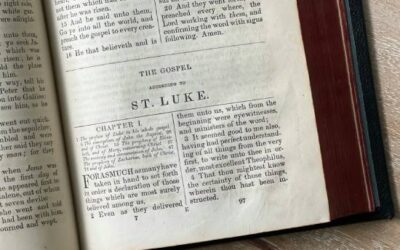
The King James Version (KJV)

Photo by Humble Lamb on Unsplash
Date translated: 1611
- Translated/produced by: Bible scholars of the Church of England; commissioned by King James
- Pros:
- Poetic writing style
- Traditional Bible for centuries
- Most popular Bible in use today
- Considered the most accurate translation for its time
- Cons:
- An old English version with archaic language. Some words had very different connotations back then.
- Harder to understand
The Revised Standard Version (RSV)
- Date published: 1952
- Translated/produced by: National Council of the Churches of Christ
- Pros:
- First translation to use the Dead Sea Scrolls
- Updated language
- Cons:
- Possible concerns about the theological viewpoints of the translators and bias in the text
- Can be hard to find printed copies
The New American Standard Bible (NASB)
- Date published: 1963
- Translated/produced by: The Lockman Foundation
- Pros:
- Highly accurate
- Contemporary English
- Translation notes with literal meanings of words and other possible translations
- Con:
- More literal wording that may not flow like modern wording
- Read the NASB for free.
The Amplified Bible (AMP)
- Date published: 1965
- Translated/produced by: Zondervan and the Lockman Foundation
- Pros:
- Additional meanings of words and phrases within the text to enhance the understanding
- One of the most easy-to-understand literal translations
- Con:
- The extra phrasing in brackets and parentheses can make the text feel cluttered, especially when reading out loud
The New King James Version (NKJV)
- Date published: 1982
- Translated/produced by: 130 Bible scholars, pastors, and theologians; published by Thomas Nelson
- Pros:
- Updated version of the KJV (updated grammar and wording while retaining the traditional poetic beauty of the KJV)
- Easier read with the older style
- Con:
- Still contains many archaic phrases
The English Standard Version (ESV)
- Date published: 2001
- Translated/produced by: Crossway; over 100 scholars and pastors
- Pros:
- More modern wording
- Keeps some of the most-loved verses close to the KJV translation
- Cons:
- Some hard-to-read sentence structure
- Concerns about possible theological bias (since the RSV was referenced in translations)
Dynamic equivalents
Dynamic equivalents, or thought-for-thought translations, convey the message of the Bible’s text rather than the exact words. Scholars have sought to use cultural, linguistic, and historical background to express in modern language what the original author intended.
While these translations are generally easier to read and understand, they’re not perfect. Every scholar comes to their work with a theological bias, so these translations may potentially express more bias than word-for-word translations.
But this fact doesn’t mean we should avoid dynamic equivalents.
Instead, they can make for enjoyable devotional reading in conjunction with other Bible study tools and more literal translations.
Check out these ones:
The New International Version (NIV)
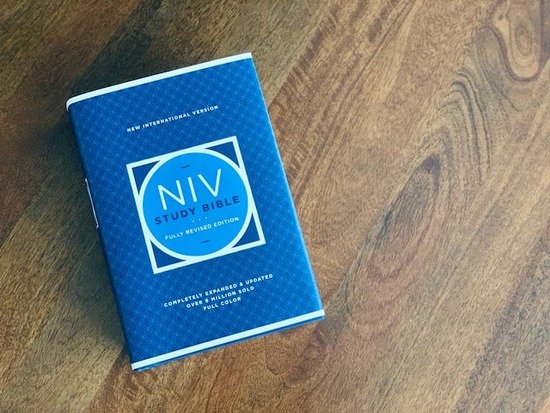
Photo by Tim Wildsmith on Unsplash
Date published: 1978
- Translated/produced by: Biblica (International Bible Society)
- Pros:
- One of the most popular, easy-to-read, modern versions of the Bible
- Uses word-for-word and thought-for-thought translation, striking a balance between
- Cons:
- Wording isn’t always the most poetic
- Translators sometimes added words that weren’t original, making it seem interpreted rather than translated
The New Living Translation (NLT)
- Date published: 1996
- Translated/produced by: Tyndale House Publishers
- Pros:
- A highly accessible version
- Changes traditional metaphors or terms to modern-day equivalents for easier understanding
- Cons:
- The colloquial language can make it seem far away from the original text
- Its use of modern terms and metaphors may change the originally intended meaning
God’s Word Translation (GW)
- Date published: 1995
- Translated/produced by: God’s Word to the Nations Society
- Pros:
- Printed in a single-column format for easy reading.
- Displays the reading in the way the Bible writers would speak if they lived today
- Con:
- Sometimes interprets phrases instead of translating them
- Read the GW translation for free.
The Christian Standard Bible (CSB)
- Date published: 2017
- Translated/produced by: Holman Bible Publishers
- Pros:
- An updated version of the Holman Christian Standard Bible, which is known as an “optimal equivalence” because it contains both word-for-word and thought-for-thought translation throughout
- Uses gender-neutral terms when the original language would also refer to both genders
- Easy-to-read text
- Con:
- Uses some unconventional translating ideas, like translating “beer” for “strong drink”
Paraphrases
Paraphrases are not translations in the strictest sense. Rather, they involve interpretation, rewording, and expanding upon the original text of the Bible to make it more understandable.
Paraphrases tend to have a greater potential for bias, particularly since they’re often the work of one individual rather than a committee of Bible scholars.
For these reasons, they work best when combined with more literal translations. But they can be a great addition to a devotional routine or study.
Here are four common paraphrases:
The Living Bible (TLB)
- Date published: 1971
- Produced by: Kenneth Taylor
- Pro:
- Seeks to communicate the meaning of each passage in as simple a way as possible
- Cons:
- Less poetic
- Potential bias and interpretation that may not be accurate to the originally-intended meaning
Good News Translation (GNT)
- Date published: 1976
- Produced by: Dr. Robert Bratcher together with a committee appointed by the American Bible Society
- Pros:
- Accessible to non-native English speakers
- Easy to read and understand
- Con:
- Potentially strays too far from the original meaning of the text
The Clear Word
- Date published: 1994
- Produced by: Jack J. Blanco
- Pro:
- A devotional paraphrase from an Adventist perspective
- Con:
- Not an actual Bible
- Learn more about the Clear Word.
The Message (MSG)
- Date published: 2002
- Produced by: Eugene H. Peterson
- Pros:
- Easy-to-read, colloquial language
- Can give a different perspective to verses
- Cons:
- A very loose translation of the original with heavy interpretation
- Some of the idioms used are American
How to choose the best Bible version for you

Photo by Kelly Sikkema on Unsplash
As we’ve already mentioned, the best Bible translation will be as close as possible to the originally intended meaning of its authors. Generally, word-for-word translations fit this criterion best.
Your purpose will also affect which one you should choose.
Let’s go through a few different purposes and the Bible versions that might work best for you:
- Bible study. If you are looking to dig deep into the Bible, a word-for-word translation (such as the NASB or the KJV) is ideal since it sticks closest to the original language. Though not always the easiest to read, Bible dictionaries and concordances can help remedy that challenge.
- Devotional reading. When looking for simple encouragement for your day and ways to connect with God, pick a Bible you can easily understand. Depending on what you are most used to hearing, this version could be a word-for-word translation or a dynamic equivalent.
- Memorization. Remember Psalm 23’s classic “thy rod and thy staff they comfort me”? Some versions are written very poetically and are the standard you hear quoted. The King James Version is one of the most famous.
- Reading aloud. Choose a translation that allows the words to easily roll off your tongue and that is easy for listeners to understand. Thought-for-thought translations usually fit this bill because they are written in modern English.
- Secondary Bible. You may already have a favorite Bible but want another for comparison. A good way to balance your selection is to pick the opposite type of Bible from the one you have now. If you use a thought-for-thought version, pick a word-for-word translation and vice versa.
- Children’s Bible. A thought-for-thought version with simpler language may be the best for children who might struggle with more literal wording.
The key is getting to know the ultimate author of the Bible
Due to the challenges of translating from language to language, no Bible translation will ever be able to fully convey the originally intended meaning of all its passages.
After all, Scripture was written by finite humans about an infinite God. So there’s always more to learn.
But the good news is that this fact hasn’t obscured the message in the Word of God. Through the years, God has used His people to preserve this valuable book so that it could continue to be transformative in the lives of many.
So instead of getting hung up on the details, use the principles listed here to pick an accurate and readable Bible.
Then, focus on what’s most important: getting to know the author of the Bible. He has promised to give us the Holy Spirit to guide us to all truth (John 16:13).
- “Number of English Translations of the Bible,” American Bible Society. [↵]
Related Articles


More Answers

Jinsi ya Kuwa na Uhusiano Binafsi na Yesu: Mwongozo
Haijalishi wewe ni nani, umezungukwa na mahusiano.

Vito—Kwanini Waadventista Wasabato Wengi Huchagua Kutovivaa?
Ni kanuni zipi zilizo nyuma ya uamuzi wa Waadventista wengi kutovaa vito? Vito vyenyewe si vibaya, lakini hebu tuone Biblia inasema nini kuhusu kujipamba.

¿Qué son los Evangelios sinópticos? ¿Y Juan?
Aprende qué son los Evangelios Sinópticos y por qué Juan no está incluido.

“Vete y no peques más”, ¿Qué quiso decir Jesús?
Aprende el significado profundamente aplicable del mandato de Jesús al hombre en Juan 5 y a la mujer en Juan 8 de “vete y no peques más.”

Parable of the Wedding Feast: Lessons From a Royal Invitation
Discover the beautiful Gospel invitation behind this parable of Jesus.
Entendiendo el libro de Marcos: Una visión general
Un recorrido por el Evangelio según Marcos, incluyendo información de contexto y referencias.
O Livro de João: Uma Visão Geral
Aqui está um companheiro de estudo para o Evangelho segundo João.
El mensaje del libro de Lucas: Jesús ama a todos
Aprende todo sobre el libro de Lucas: contexto, temas, diferencias y conclusiones.
El Libro de Juan: Una Visión General
Aquí tienes un compañero de estudio para el Evangelio según Juan.
Como Ter um Relacionamento Pessoal com Jesus: Um Guia
No importa quién seas, estás rodeado de relaciones.

Kile Waadventista wa Sabato Wanaamini Kuhusu Uwakili (na Maana Yake)
Kile Waadventista wa Sabato Wanaamini Kuhusu Uwakili (na Maana Yake)Upendo kwa Mungu na kwa wanadamu wenzetu ndiyo kanuni kuu ya imani ya Waadventista wa Sabato. Na tunaonyesha upendo huo kwa njia kuu kupitia jinsi tunavyosimamia mambo—ya kimwili na yasiyo ya...
Cómo Tener una Relación Personal con Jesús
No importa quién seas, estás rodeado de relaciones.
Joyería: ¿Por qué muchos adventistas del séptimo día eligen no usarla?
Joyería: ¿Por qué muchos adventistas del séptimo día eligen no usarla?Si entras a un servicio de la Iglesia Adventista del Séptimo Día, podrías notar que muchas personas no usan aretes, pulseras, collares o a veces ni siquiera anillos de matrimonio. Es común en las...
Joias—Por Que Muitos Adventistas do Sétimo Dia Escolhem Não Usá-las?
Quais são os princípios por trás da escolha de muitos adventistas de não usar joias? As joias em si não são erradas, mas vamos ver o que a Bíblia diz sobre o adorno.

Lo que los Adventistas del Séptimo Día creen sobre la mayordomía (y qué significa)
El amor a Dios y a nuestros semejantes es el principio fundamental de la fe adventista del séptimo día.
O Que os Adventistas do Sétimo Dia Acreditam Sobre Mordomia (e o Que Isso Significa)
O Que os Adventistas do Sétimo Dia Acreditam Sobre Mordomia (e o Que Isso Significa)O amor a Deus e ao próximo é o princípio fundamental da fé Adventista do Sétimo Dia. E expressamos esse amor de forma abrangente através de como administramos as coisas — materiais e...

Oración: ¿Cómo lo hago?
Oración: ¿Cómo lo hago?La oración es comunicación intencional con Dios. Y la forma en que lo haces es muy parecida a cómo te comunicarías con tu mejor amigo. Puedes acercarte en cualquier momento y lugar, de la manera que sea más natural entre ustedes dos. De la misma...
Oração—Como Eu Faço?
Oração é comunicação intencional com Deus.

Wafalme 42 (na Malkia 1) wa Israeli na Yuda katika Biblia
Umewahi kujiuliza ni akina nani wote waliokuwa wafalme wa Israeli na Yuda katika Biblia? Wafahamu wote 42 (pamoja na malkia 1) na ujifunze masomo ya kina na yasiyotarajiwa kutoka kwenye hadithi zao.

The Lamp on a Stand Parable—What Does it Mean?
Going through the main points, major themes, and takeaways for this parable.

Wanavyoamini Waadventista wa Sabato Kuhusu Meza ya Bwana (Ushirika)
Wanavyoamini Waadventista wa Sabato Kuhusu Meza ya Bwana (Ushirika)Kama Wakristo wengi wa Kiprotestanti, Waadventista wa Sabato wanaamini katika tendo linalojulikana kama Meza ya Bwana au Ushirika Mtakatifu. Wanakunywa divai ya zabibu na kula mkate usiotiwa chachu...
Lo que los Adventistas del Séptimo Día creen sobre la Cena del Señor (Comunión)
Lo que los Adventistas del Séptimo Día creen sobre la Cena del Señor (Comunión)Como muchos cristianos protestantes, los Adventistas del Séptimo Día creen en la práctica comúnmente llamada la Cena del Señor o Santa Comunión. Ellos beben jugo de uva y comen pan sin...
O Que os Adventistas do Sétimo Dia Acreditam Sobre a Santa Ceia (Comunhão)
O Que os Adventistas do Sétimo Dia Acreditam Sobre a Santa Ceia (Comunhão)Como muitos cristãos protestantes, os Adventistas do Sétimo Dia acreditam na prática comumente chamada de Santa Ceia ou Santa Comunhão. Eles bebem suco de uva e comem pão ázimo em obediência às...
Maombi—Ninawezaje Kuomba?
Maombi—Ninawezaje Kuomba?Na jinsi unavyofanya ni sawa na vile unavyo wasiliana na rafiki yako wa karibu. Unaweza kuwasiliana naye wakati wowote na mahali popote, kwa namna ya kawaida kati yenu wawili. Vivyo hivyo, unaweza kuomba kwa Mungu wakati wowote, mahali popote,...

Bible Verses That Mention “Heaven” (and How to Tell What They Mean)
Here’s every occurrence of the word “heaven” in the Bible, as well as the root words and original definitions.

Understanding the Parable of the Hidden Treasure (Matthew 13:44)
Here’s what the “Hidden Treasure” parables shows us about God’s love.

The Parable of the Persistent Widow—What it Means for Your Prayer Life
Find out what the Persistent Widow parable actually means.

15 Exemplos de Oração na Bíblia
A oração é a principal forma de mantermos nosso relacionamento com Deus.
Mifano 15 Ya Maombi katika Biblia
Maombi ndiyo njia kuu ambayo kwayo tunadumisha uhusiano wetu na Mungu.
Didn’t find your answer? Ask us!
We understand your concern of having questions but not knowing who to ask—we’ve felt it ourselves. When you’re ready to learn more about Adventists, send us a question! We know a thing or two about Adventists.