
How to Really Read and Understand the Bible
If you’ve never read the Bible before, or it’s been a while, you might be looking at it wondering where to start.
What does it all mean? What do you need to know?
The Bible doesn’t read like other books, and it is ancient literature—how do its stories and advice apply to modern-day life?
This article will equip you to not only read the Bible but also understand it for what it truly is, God’s living message to us. We’ll find that the Bible is different than other books because it puts us in connection with the Holy Spirit, and its ultimate purpose is to transform our lives. Then, we’ll get practical with how to know the context of what you’re reading and uncover practical lessons.
Find all of that in these sections:
How to approach the Bible
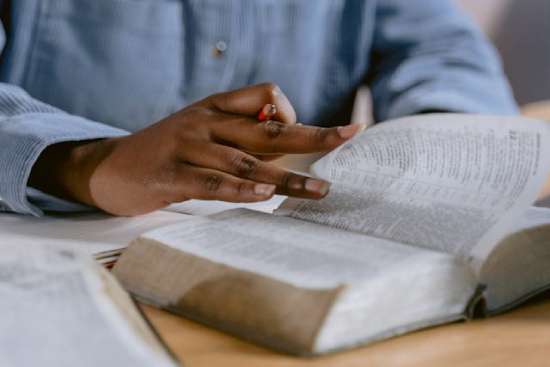
Photo by Miroshnichenko
The Bible is God’s Word. Through His Holy Spirit, He impressed upon each of its authors the message He wanted them to write. Understanding this can help us approach the Bible differently than we would other books. We come to it with care and reverence because the Holy Spirit is speaking to us through it.
One of the writers of the Bible describes its purpose this way:
“All Scripture is inspired by God and is profitable for teaching, for rebuking, for correcting, for training in righteousness, so that the man of God may be complete, equipped for every good work” (2 Timothy 3:16-17, CSB).
The Bible isn’t just a storybook for enjoyment.
Or a textbook to analyze.
Or even a self-help book with good advice that you might take or leave.
Rather, it presents itself as the authority—the test of truth (Isaiah 8:20). In other words, what we learn in the Bible sets the tone and shapes every other aspect of our lives.
Hebrews 4:12 says that it is “living and effective and sharper than any double-edged sword.” And “it is able to judge the thoughts and intentions of the heart” (CSB). It reaches down to our very motives.
Could one book really accomplish all that?
It comes back to the fact that the Bible isn’t just any book. Because the Holy Spirit was its ultimate author, we still get to have that author with us today as we read. He guides us and impresses its truths on our hearts, convicting us of things we may need to change.
So, when we read the Bible and apply it to our lives, asking God to speak to us, it’s a transformative experience.
The major narrative and theme of the Bible
While not organized chronologically, the Bible’s 66 books tell a connected story, a story of a God of love who is doing everything to bring an end to the sin and evil in this world.
The narrative begins with a rebellion in heaven that results in an angel named Lucifer being cast to the earth with his angels (Revelation 12:7-9). From that point on, he’s known as Satan, which literally means “enemy.” That’s why in the first book of the Bible, soon after the creation of a perfect world, we find Satan disguised as a serpent. There, he tempts the first humans, Adam and Eve, to distrust and disobey God (Genesis 3:1-5). When they choose to listen to his voice, they plunge this world into sin and its resulting heartache.
But from the moment sin entered our world, God had a plan to save humanity. He gave Adam and Eve a promise in Genesis 3:15 to send someone who would crush the head of the serpent. This was the promise of a Savior.
In this way, all of the Old Testament traces God’s re-telling of this promise to generations after. The New Testament shows how He kept that promise through Jesus Christ.
Within this overarching story are smaller stories that reflect the main narrative. They are purposely included to reveal the pain and hardship of sin while showing the grace and love of God.
The format and organization of the Bible
Photo by Tima Miroshnichenko
The Bible is a unique book because it’s a compilation of 66 small books, containing historical accounts, letters, poems, prophecies, and more.
When you open a novel, you expect to start at the front cover and read your way to the back cover. The story builds until you reach the climax of the book. At the end, you come away with the intended point the book made.
The Bible is a little different.
If you opened its first pages, you’d start with the story of Creation and a perfect world before the fall into sin, then travel through time with stories of people and the nation they became. That would be interrupted by poetry, songs, proverbs, and prophecy. Then you’d immediately jump into four sections about Jesus Christ, followed by several letters. The final book includes many prophecies and symbols about Jesus and concludes with God’s re-creation of the world to perfection once again.
The order might not make sense to the casual observer.
But that’s because the Bible is actually a compilation of books written by many people over 1500 years.1 It’s separated into two sections called the Old Testament and the New Testament.
The Old Testament tells the story of the Israelites and demonstrates the need humanity has for a Savior. It’s comprised of 39 books, which are arranged by type:
- Books of the Law (also called the Pentateuch or the Torah): Genesis-Deuteronomy
- Historical books: Joshua-Esther
- Poetic books: Job-Song of Solomon
- Prophetic books: Isaiah-Malachi
The New Testament is smaller, containing 27 books. It focuses on that promised Savior, Jesus, and the work His disciples and others did in spreading the good news—or Gospel—of His grace to the whole world. It’s divided into these sections:
- The Gospels: Matthew-John
- Historical book: Acts
- Epistles (or letters): Romans-Jude
- Prophetic book: Revelation
But as we’ve acknowledged, the Bible is big, and it’s not organized like a normal book. How do you know where to start?
Where to start in the Bible
It depends on your goals. If you want to learn about Jesus’ life on earth, reading the book of John is one of the best ways to do that. If you want to know more about biblical history, start at Genesis and work your way through. A desire to know about prophecy might land you in Daniel or Revelation.
Note that there are many different ways to read the Bible. But it’s best to start in a place that will help you understand the purpose of the Bible and help you get to know the one it’s all about—Jesus.
So, if you’ve never read the Bible before, consider starting in the New Testament, perhaps Matthew or John. These books will introduce you to Jesus and give you a good foundation to take with you as you explore the rest of the Bible.
What version of the Bible to use

Photo by Tim Wildsmith on Unsplash
The original languages the Bible was written in are Hebrew and Greek, so ideally, those would be the best versions to use! But before you hurry back to language school, let’s talk a little about why there are so many Bible versions and how you can use them to your benefit.
Like the English language, Hebrew and Greek have sayings, metaphors, and words with multiple meanings.
That means translation isn’t a simple process, especially if you want to understand the message! Add to this the fact that many hundreds of manuscripts of the Bible have been discovered over the years. As a result, we have the many versions of the Bible you might see in the Christian book store today.
These translations can be divided into three categories:
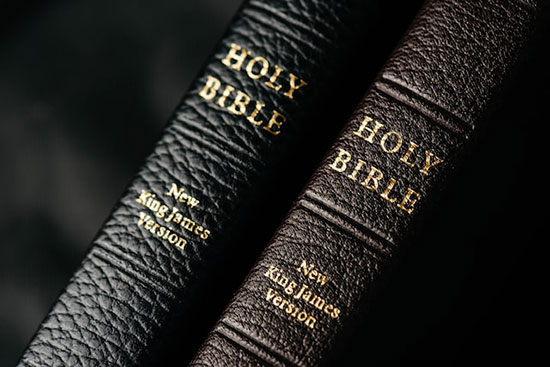
- Literal or word-for-word translations: These translate the Bible from the Hebrew and Greek in as literal of a way as possible. They include the King James Version (KJV), New King James Version (NKJV), Revised Standard Version (RSV), and English Standard Version (ESV).
- Dynamic equivalents or thought-for-thought translations: These seek to convey the message of the original Hebrew and Greek rather than the exact words. They include the New Internation Version (NIV), the New Living Translation (NLT), and the Christian Standard Bible (CSB).
- Paraphrases: These involve interpretation and rewording of the text into modern language, and typically reflect the beliefs of the paraphraser. Some examples of paraphrases are The Living Bible (TLB) and The Message.
Each type of translation has its advantages and disadvantages, but combined together, they can provide a well-rounded picture of the Bible’s message. Bible apps and online resources like BibleGateway.com make it easy to access many translations.
(For a bigger breakdown of the various translations, head to our page, “Bible Translations—Which Version is ‘Best’?”)
Once you have your Bible or Bible app, you’re ready to jump into some practical steps. Let’s head there next.
6 simple steps to read and understand the Bible
Understanding what the Bible has to say requires intentional reading, rather than skimming through it or reading large chunks at once. Quality of reading is much more important than quantity. As we’ll explain below, you’ll want to keep in mind the genre, context, culture, and audience as you read.
Most importantly, before you even open your Bible, ask God for the Holy Spirit to guide you as you read. He will open your eyes and mind to gain a fuller understanding of the text.
So, let’s get started! Here are some steps to jumpstart your Bible reading:
1. Understand the genre you’re reading
Not only does the Bible consist of many books, it also contains numerous genres. Knowing which one you’re reading can help you understand the writer’s intended meaning.
For example, if you’re reading the Psalms, it’s helpful to know it’s poetry, and not a documentation of history or prophecy. The lines often repeat themselves in different words for emphasis—which can help with understanding their meaning.
The book of Revelation contains a lot of prophetic writing, which is full of symbols. Knowing this will prevent you from taking everything it says literally—the way you might when reading a historical account in the Bible.
Here are the most common genres you’ll run into:
- Parables: Parables are short fictional stories that explain a spiritual doctrine or point. You’ll find many of these in the Gospels.
- Maxims/wisdom. These are sections of godly advice and guidance for our lives. This genre is generally found within Proverbs and Ecclesiastes.
- Monologue. A monologue is a long speech by one person. The book of Job is an excellent example of a monologue. Job, his friends, and God all speak at great lengths on the calamities Job is facing.
- Letters. The Bible contains written communications that were sent to individuals or churches. Many of these are found in the New Testament. Romans, 1 and 2 Corinthians, Philemon, and James are all examples of letters written to groups of Christians in the first century AD.
- Poetry. Psalms, Song of Solomon, and Lamentations all contain poetry, which likely would have rhymed in the original Hebrew.
- Prophecy. Prophecy is a prediction of future events, given by God to humans. Some prophecies are symbolic; others are not. Books like Daniel, Joel, Ezekiel, Isaiah, Jeremiah, and Revelation are full of prophecies about the nation of Israel, the whole world, and the last days. The books aren’t necessarily all prophecy, but many passages in them are.
- The Law. The law refers to instructions for living that God gave to the Israelites, as well as ceremonial laws. This genre is found in the first five books of the Bible—Genesis through Deuteronomy.
- Narrative (historical). These passages tell stories and recount genealogies and names. Books like 1 and 2 Samuel, Kings, Chronicles, the Gospels, and Acts are all narratives.
If you aren’t quite sure what genre you’re reading, try searching the passage’s genre online or in a Bible commentary (a book in which theologians comment on verses or sections of the Bible with interpretation and other useful information).
2. Look at the context
If you’re focusing on just a few verses or a chapter, it can be hard to grasp the full meaning of it. To help you get a better picture, read a couple chapters before and after the passage you’re in to help you grasp what the author is saying.
Sometimes, the author may seem to be saying one thing in a passage, but once you zoom out, you’re able to understand the surrounding points and how your passage fits in the bigger scheme.
3. Understand the audience
The Bible’s principles are applicable to people in every culture in every century, but that doesn’t mean every specific instruction applies to us. Some instructions were situational.
As you read a section, ask yourself who was its intended audience.
For example, let’s say you read the follow rebuke that Jesus gave:
“Therefore I say to you, every sin and blasphemy will be forgiven men, but the blasphemy against the Spirit will not be forgiven men” (Matthew 12:31, NKJV).
This warning refers to what people often call the “unpardonable sin,” and it can sound pretty frightening.
This is where understanding Jesus’ audience comes into play.
He was specifically addressing the Pharisees, who had accused Him of casting out demons in Satan’s name. The Pharisees were hardening their hearts, refusing to accept Jesus’ miracles as divine. They had rejected Jesus’ claim as the Messiah, and this was what Jesus was addressing.
This verse, then, wouldn’t apply to Christians who sincerely follow Jesus. And it means we don’t have to live in fear of committing the unpardonable sin.
4. Learn about the culture
Scripture was written within the context of ancient Middle Eastern culture. People back then used different figures of speech and had different customs than we do today.
By doing some basic research on the culture of that time, you’ll have a broader context to the Bible.
Some things might take on a whole new level of understanding, like what it means when the Bible talks about “making your enemies a footstool” (Psalm 110:1).
This phrase might not make much sense to us in the 21st century. But after a bit of digging into the culture of the time, we learn that it was a common practice back then for conquering kings to walk over the necks of those they conquered (see Joshua 10:24). This signified complete defeat of the enemy. The footstool was a symbol of this practice.2
Another example is the verses where both Paul and Peter seemingly tell us that we should not braid our hair. Peter advises,
“Do not let your adorning be external—the braiding of hair and the putting on of gold jewelry, or the clothing you wear” (1 Peter 3:3-4, ESV).
And Paul instructs:
“In like manner also, that the women adorn themselves in modest apparel, with propriety and moderation, not with braided hair or gold or pearls or costly clothing” (1 Timothy 2:9, NKJV).
While the principle of modesty applies to us today, some of these details, including braided hair, reflect cultural attitudes of the time that Paul was addressing. Back then, people viewed braided hair as an elaborate hairstyle that conveyed wealth and personal pride—very different from a simple braid today.3
You can learn about these cultures through Bible encyclopedias, archeological resources, history books, or online videos.
5. Look for repeating themes, ideas, and words

Photo by Priscilla Du Preez 🇨🇦 on Unsplash
The Bible is full of repetition, which the writers used to emphasize their points. Look for these repeating words, phrases, or ideas.
Repetition can help you understand the overarching theme of the passage or see something differently than you may have before. It could also be the start of a study on that word or phrase.
For example, take 1 Corinthians 13.
This is known as the “love chapter” because it talks so much about it. And it repeats the word love in almost every verse. Noticing when the word is used and what it’s talking about gives you the theme for the passage and a very precise and all-encompassing definition of love.
You could even use this chapter and the word love to start your own Bible study about love—looking for where it pops up in Scripture and studying how it’s used.
6. Write down any questions or confusions
If you come to something in your Bible reading that doesn’t make sense to you or doesn’t line up with what you’ve read before, it can become like a wall. You may feel like you can’t get past it or be able to understand other concepts that build on it.
Take time to write down your question or the idea you don’t understand. Doing so allows your mind to move on without forgetting those thoughts.
Later, when you’re around other believers, ask them for their thoughts. Or, set aside time to study that question yourself. You can search the passage online or look through Bible commentaries or concordances (books that list all the words found in the Bible and where you can find them) for that passage.
Or, turn to online Bible studies or resources for help.
Bible reading methods
Because the Bible is such a large and diverse book, you can approach it in many different ways.
You could read the Bible through from cover to cover, or chronologically. Or you could focus on different themes, different books, or different series of books. Sometimes, it may be helpful to use a devotional (a book with short inspirational Bible readings), a study Bible (a Bible with additional components to enrich study), commentaries, or other companion books to help you along.
Here are a several Bible reading methods to consider:
- Read through the Bible in a year: Start in Genesis and read straight through to Revelation.
- A chronological reading: This reading plan takes you through the entire Bible in order of historical occurrence.
- 90-day reading plan: This is a big commitment requiring a lot of daily reading, but you get a straightforward overview in a short amount of time.
- Redemptive-historical plan: This reading plan parallels readings from the Old and New Testaments to show you the overarching point of the Bible.
- 5x5x5 New Testament reading: The plan anyone can do! Read for five minutes, five days a week, using five ways to dive into the reading.
- The Old Testament in a year: Explore the depths of the Old Testament for a whole year!
- The New Testament in a year: Become deeply acquainted with the New Testament with this plan.
- The Gospels: Explore the four books that tell the story of Jesus’ life on earth. This plan is three months long.
- The Major Prophets: In two months, read through all the Old Testament books of Isaiah, Jeremiah, Lamentations, Ezekiel, and Daniel.
- The Minor Prophets: Read all the minor prophet books of the Old Testament, including Malachi, Hosea, and Jonah, in under a month.
The journey of Bible reading

Photo by Kelly Sikkema on Unsplash
The Bible is a book like no other. It isn’t merely an anthology of stories, poetry, and teachings. It holds words of life and power—power that Jesus has to save us and transform our lives. Jesus Himself said:
“The words that I speak to you are spirit, and they are life” (John 6:63, NKJV).
The Bible’s words are life because they teach us about God’s character of love and guide us to eternal life through Jesus. In turn, they show us how to live out that love on this earth.
But as you’re coming to the Bible for (perhaps) the first time, remember, it’s okay to start small and start slowly. Even if it feels difficult or discouraging at first, continue to seek God, even if it means reading just a couple verses a day and spending time thinking and praying about them.
Like a miner seeking for gold, it can be a slow process.
But ask God for wisdom, and you can be sure that over time, you’ll discover the beautiful gems in this book.
Looking for more Bible study tips?
Related Articles.

- Milton, Michael A. “When Was the Bible Written? The History of God’s Word,” Bible Study Tools, October 23, 2023. [↵]
- “Psalm 110:1,” Bible Hub Commentaries. [↵]
- Notes to 1 Peter 3:3-4, Seventh-day Adventist Bible Commentary. [↵]
More Answers

The Barren Fig Tree Parable: What It Means to Bear Fruit
Find out what the Parable of the Barren Fig Tree really means.

¿Qué son las reuniones evangelísticas adventistas?
¿Qué son las reuniones evangelísticas adventistas?La Iglesia Adventista del Séptimo Día pone un gran énfasis en compartir el evangelio mediante la evangelización, o compartir el evangelio a través de la predicación, la enseñanza y el testimonio. Una de las formas en...
O que são os Encontros Evangelísticos Adventistas?
O que são os Encontros Evangelísticos Adventistas?A Igreja Adventista do Sétimo Dia dá grande ênfase ao compartilhamento do evangelho por meio da evangelização, ou seja, compartilhar o evangelho através da pregação, ensino e testemunho. Uma das formas de realizarmos...

O Que os Adventistas Acreditam Sobre Fé e Obras?
O Que os Adventistas Acreditam Sobre Fé e Obras?Os adventistas acreditam que somos salvos pela fé, que é a crença e confiança que temos em Jesus Cristo para nos salvar dos nossos pecados. Jesus, então, nos capacita a viver em harmonia com os mandamentos de Deus e a...
¿Qué creen los Adventistas sobre la fe y las obras?
¿Qué creen los Adventistas sobre la fe y las obras?Los adventistas creen que somos salvos por la fe, que es la creencia y confianza que tenemos en Jesucristo para salvarnos de nuestros pecados. Jesús, entonces, nos capacita para vivir en armonía con los mandamientos...

Je, Ninahitaji Kuwa Mwadventista Ili Niokolewe
Je, Ninahitaji Kuwa Mwadventista Ili Niokolewe?Jibu la swali hili ni rahisi, “hapana.” Linapokuja swala la wokovu katika Yesu Kristo, kinachohitajika kwa mtu ni kukiri dhabihu ya Yesu kwa ajili yetu, kuamini kwamba Ametuokoa, na kudai zawadi ya bure ya wokovu ambayo...
¿Necesito ser adventista para ser salvo?
¿Necesito ser adventista para ser salvo?La respuesta a esta pregunta es simplemente, “no.” Cuando se trata de la salvación en Jesucristo, todo lo que se requiere de una persona es reconocer el sacrificio de Jesús por nosotros, creer que Él nos ha salvado y reclamar el...
Preciso ser Adventista para ser salvo?
A resposta para essa pergunta é simplesmente: “não.”

Lo que la Biblia dice sobre la Segunda Venida de Jesucristo
¿Tienes curiosidad sobre lo que la Biblia dice acerca de la Segunda Venida de Jesucristo? Cubriremos los versículos clave y su significado.

¿Quién fue Mateo, el apóstol, en la Biblia?
En el primer libro del Nuevo Testamento, encontramos la historia del Evangelio desde la perspectiva de Mateo.
2 Corinthians: An Overview of Paul’s Most Personal Letter
Discover Paul’s lessons on forgiveness, reconciliation, generosity, and more. It’s all in the book of 2 Corinthians!
Quem Foi Mateus, o Apóstolo, na Bíblia?
Quem Foi Mateus, o Apóstolo, na Bíblia?No primeiro livro do Novo Testamento, encontramos a história do Evangelho sob a perspectiva de Mateus. Ele era um coletor de impostos judeu de Cafarnaum, no primeiro século d.C., e provavelmente era desprezado pelos outros judeus...

The Pharisee and the Tax Collector Parable: Its Meaning Made Simple
The Meaning of the Pharisee and the Tax Collector ParableIn Luke 18:9-14, Jesus told a parable about two men who went to the temple to pray. One was a Pharisee and the other a tax collector. The Pharisee prayed (well, bragged) about his own good works compared to the...
Biblia Inasema Nini Kuhusu Ujio wa Pili wa Yesu Kristo
Unajuliza Biblia inasema nini kuhusu Kurudi kwa Yesu Kristo Mara ya Pili? Tutajadili aya kuu na maana zake.

The Story of the Widow’s Mite—What It Really Means
The Story of the Widow’s Mite—What It Really MeansPeople often assume bigger is better, but the Bible turns this concept on its head with the story of the Widow’s Mite. Of all the donations Jesus sees at the temple, the gift that draws His attention is not the...

Consejo de Elena G. de White sobre la Educación Universitaria
Consejo de Elena G. de White sobre la Educación UniversitariaElena G. de White, una cofundadora importante del Adventismo, es conocida a menudo por su orientación práctica y espiritual para la educación infantil adecuada. Pero también estuvo significativamente...
Mathayo Alikuwa Nani Katika Biblia?
Mathayo Alikuwa Nani Katika Biblia?Katika kitabu cha kwanza cha Agano Jipya, tunapata simulizi la Injili kutoka kwa Mathayo. Alikuwa mtoza ushuru Myahudi kutoka Kapernaumu katika karne ya kwanza MK, na huenda alichukiwa na Wayahudi wenzake kwa kuchagua kazi hiyo....

¿Cuáles son los beneficios de vivir en el campo?
¿Cuáles son los beneficios de vivir en el campo?Visitar el campo puede ofrecer un descanso muy necesario del típico ajetreo y bullicio de la ciudad. Muchos incluso han decidido mudarse a zonas rurales para disfrutar de un ritmo más lento, espacios amplios, aire...
Quais São os Benefícios de Viver no Campo?
Visitar o campo pode oferecer uma pausa muito necessária do típico agito da cidade.

¿Qué significa la parábola de la perla de gran precio?
Esto es lo que Jesús enseñó sobre el reino de los cielos a través de esta breve parábola sobre un comerciante que encuentra una perla invaluable.
O Que Significa a Parábola da Pérola de Grande Valor?
Aqui está o que Jesus ensinou sobre o reino dos céus por meio desta parábola curta sobre um comerciante que encontra uma pérola inestimável.

Por Que Muitos Adventistas Querem Viver no Campo
Por Que Muitos Adventistas Querem Viver no CampoViver em áreas rurais é algo que os adventistas têm valorizado historicamente, embora as necessidades da vida moderna nem sempre tenham tornado isso possível. Convenhamos, as vantagens da vida na cidade são bastante...
Uma Visão Geral de Romanos: Fé, Justiça, Relacionamentos
Uma Visão Geral de Romanos: Fé, Justiça, RelacionamentosO livro de Romanos é uma das 21 epístolas, ou cartas abertas, do Novo Testamento. E embora seja um texto bíblico antigo, ainda tem uma relevância significativa (até surpreendente) para nossas vidas hoje. O...

Jesus é o Mesmo Ser que Miguel, o Arcanjo?
Jesus é o Mesmo Ser que Miguel, o Arcanjo?Muitos cristãos têm se perguntado sobre a misteriosa identidade de Miguel, o Arcanjo. Desde os primórdios do cristianismo, muitos interpretaram Miguel como o Messias identificado com a figura do Anjo do Senhor. O reformador...
Je, Faida za Kuishi Vijijini ni Zipi?
Kutembelea maeneo ya vijijini kunaweza kutoa mapumziko yanayohitajika sana kutoka kwenye pilikapilika za kawaida za mijini.
Je, Mfano wa Lulu ya Thamani Kubwa Unamaanisha Nini?
Hivi ndivyo Yesu alivyofundisha kuhusu ufalme wa mbinguni kupitia mfano huu mfupi wa mfanyabiashara aliyepata lulu ya thamani isiyo na kifani.
Kwa Nini Waadventista Wengi Wanataka Kuishi Vijijini
Kwa Nini Waadventista Wengi Wanataka Kuishi VijijiniKuishi maeneo ya vijijini ni jambo ambalo Waadventista wamekuwa wakilithamini kihistoria, ingawa mahitaji ya maisha ya kisasa hayafanyi iwezekane kila wakati. Tukubali, faida za kuishi mjini zinaonekana wazi: fursa...
Muhtasari wa Kitabu cha Warumi: Imani, Haki, Mahusiano
Hapa kuna muhtasari na historia ya waraka mrefu zaidi wa Paulo.

Sobre o que é a Parábola do Semeador de Jesus?
A parábola do semeador é, em última análise, sobre como as pessoas responderam a Jesus Cristo e Sua mensagem do reino de Deus—o Evangelho.
Didn’t find your answer? Ask us!
We understand your concern of having questions but not knowing who to ask—we’ve felt it ourselves. When you’re ready to learn more about Adventists, send us a question! We know a thing or two about Adventists.