
They’re both great, of course! But depending on where you’re at and what your goals are, it’s worth looking into the different benefits of each.
Individual Bible study allows you—the individual—to dig into a Bible passage on your own time, in a place you choose, without distractions or an agenda. It’s valuable for reflection and meditation, and stopping to pray at any point.
But it requires some self-discipline and time management, and if you run into a passage of Scripture you have questions about, sometimes it can stall your momentum a bit.
Group Bible study, on the other hand, merges study with a sense of community and allows for discussion. Group members keep each other accountable and can share insights or even testimonies.
However, you’re also tied to a specific topic and sometimes you might want to move a little faster…or a little slower.
So could it be that combining these two approaches is the best way to experience the pros and avoid the cons of both?
See what you think as we look at the following:
- What makes an enriching individual Bible study?
- What are the typical components of a group Bible study?
- Similarities and differences between the two approaches
- How to have an effective group Bible study
We’ll make sure each type is properly defined before we get into the comparisons.
What makes an enriching individual Bible study?

Photo by Kelly Sikkema on Unsplash
Individual Bible study gives you time to privately dig into a topic or passage in the Bible, or you can read it through at your own pace.
In this kind of study, you may choose to follow a study guide that contains questions and directs you to certain passages. Or you might pick a passage and go through it verse by verse, writing down questions you have and comparing it with other passages.
For more depth, you may have a Bible dictionary or historical references that help you understand the text in its original context.
Some people also like to use a concordance to look up other passages that have the same keywords or phrases.
Learn more about the different study methods by reading our page about starting an individual Bible study.
What are the typical components of a group Bible study?
A group Bible study usually involves about three to twelve people getting together regularly to study. Oftentimes, the group will agree on a topic to study or use a pre-made study guide to follow. One person will take the lead each time you meet, and that duty may rotate depending on the group.
This group leader, who is more of a facilitator rather than a teacher, will make some preparations ahead of time to be able to direct the discussion to hit all the key points. They will often begin with an introduction to engage the group members. Then, they lead them through the study guide or Bible passage and ask thought-provoking questions.
Some Bible study groups may have some homework. The members might decide to go through a certain passage that will be discussed during the study. That can be helpful in formulating questions beforehand, or taking note of some interesting things you’d like to point out.
Regardless of the exact details, the purpose of a group study is to create an open and safe space for people to learn more about the Word of God together. The format and dynamics will of course differ from group to group, but many will follow similar models. It might almost feel like a book club meeting in some ways. (Because in most ways, it is!)
Biblical examples
Though people in the Bible didn’t have the Scriptures all collected in a book the way we do today, they still gathered together to learn more about God.
Jesus Himself had a small group that He trained and taught—His twelve disciples (Mark 3:13-19).
And when the early Christian church started, believers met in homes for fellowship, prayer, and learning about the doctrines of the Scriptures (Acts 2:42-47).
The apostle Paul encouraged this practice—an encouragement we can take to heart today:
“Let us consider how to stir up one another to love and good works, not neglecting to meet together, as is the habit of some, but encouraging one another, and all the more as you see the Day drawing near” (Hebrews 10:24-25, ESV).
Bible study groups are one way that we can meet together to encourage each other and “stir up…love and good works.” They allow us to support one another, hold one another accountable, and grow together.
Different kinds of group Bible studies

Photo by Small Group Network on Unsplash
Group Bible studies come in all kinds of varieties and formats.
Many of them are categorized by age group or stage of life. There are Bible studies for men, women, new parents, and young adults—to name a few.
For Adventists, group studies happen in different settings too, such as:
- Within a small group in someone’s home
- During Sabbath School (the Adventist version of Sunday School) at church every week
- During a midweek gathering (often known as “prayer meeting”) at church
Sometimes, the group Bible study might have a special purpose, such as preparing the members for baptism. These studies, called baptismal studies, are often led by a pastor or a trained Bible instructor.
To learn more about getting involved with baptismal studies, reach out to your local church’s pastor.
Now that we know a bit more about group Bible studies, let’s see how they compare to individual ones.
What are the similarities and differences between a group Bible study and an individual Bible study?
Both group and individual Bible studies usually involve an in-depth dive into the Word of God, and a study guide may be used in either case. But the biggest difference is the change in dynamics from studying alone to studying in a group.
Being in a small group provides a sense of community. It allows people to connect with like-minded individuals and learn together about God’s Word. They’re able to encourage each other.
A group study will also have more structure—which can be a pro or a con. Often, the study will be based on pre-prepared material, so you may not get to choose the topic. As a result, you may not get to study something you’d like to study, and perhaps the discussion heads in a different direction than you were hoping.
In the process, however, you might learn something new and interesting!
And though individual study can lead to some incredible discoveries, people in a group setting get to share insights from their diverse backgrounds and experiences. You may reach conclusions you wouldn’t have thought of on your own.
Proverbs 27:17 puts it this way: “Iron sharpens iron, and one person sharpens another” (CSB).
Part of this sharpening occurs as the group offers the motivation and accountability for applying the insights from the Word of God.
When we’re on our own, we can spend a lot of time in prayer and make efforts to journal, or if we want to keep on reading, we can. But sometimes we need some external motivation to help us grow. Sometimes we’re hesitant to tackle some challenging concepts on our own, and it can be tempting to skip over some parts. But a group can stretch and challenge us beyond our comfort zones and broaden our perspectives.
So, how can we experience these benefits?
How to have an effective Bible study group
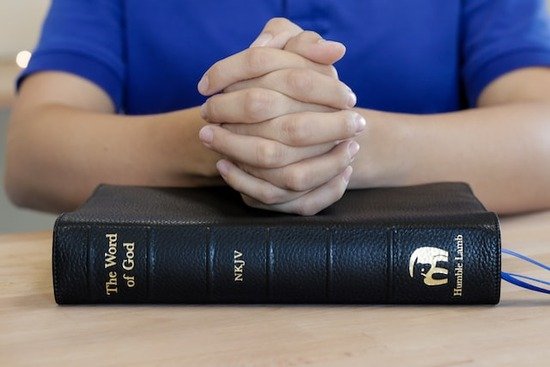
Photo by Humble Lamb on Unsplash
A Bible study group doesn’t have to be difficult to start. It simply takes some intentionality to create an engaging experience for everyone involved.
Here are some basic principles:
Pray
Prayer should be the foundation of every Bible study group. As you plan your first one, pray for the Holy Spirit to guide your decisions. And pray for the personal growth of each of the individuals who will be in the group.
Decide on a purpose
Consider what you want the group’s focus and target audience to be.
Will it be about getting acquainted with the different aspects of God’s character? Or learning relevant lessons from lesser-known Bible stories? Or finding biblical wisdom for parenting?
Once you’ve decided your purpose, it’s time to get practical.
Make a plan
Decide when and where the study will take place. Be sure to develop a consistent schedule—such as weekly, biweekly, or monthly—so the members will come to expect the study.
Also, pick a topic to study or a workbook to use. What you choose will depend on the purpose you decided for your group.
Prepare
If you plan to facilitate the study, take some time to pray and prepare ahead of time. You’ll want to be familiar with the contents of the weekly plan or lesson.
Highlight important points or questions you want to ask. Make a list of the passages you want the group to read. And think of experiences and insights you could share to help get the ball rolling.
If you feel uncomfortable with leading the study, you could also ask someone else to facilitate it. That’s totally okay too! You could even create a rotating facilitator list.
Create a nurturing environment
A key to an enjoyable Bible study atmosphere is providing an opportunity for everyone to share thoughts without feeling judged. When people know their ideas won’t be immediately shot down, they will be more willing to take part in a discussion and explore the concepts.
Encourage your group to be open and accepting of different perspectives while gently directing them to the Word of God for answers. We all come from different backgrounds and experiences, and it can be easy to take for granted the things we’ve already learned. It’s best to take on each concept, each question, each story, with an open heart and mind that can look at it in a new way each time.
Stay grounded in Scripture
At times, Bible study groups can veer away from their purpose, becoming discussions about opinions rather than what the Bible says. That’s why it’s so important for the facilitator to guide the discussion back toward Scripture passages so that all the members are nurtured in their relationship with Christ.
At the same time, it’s not wrong to be open to the Holy Spirit’s leading. Sometimes “rabbit trail” discussions can lead to unexpected insights of biblical truth, or new ways to apply the concepts you’ve been learning about.
And that’s the value of a small group study—experiencing those organic discussions and striving together to understand the truth in a practical way. It can also bond you as a group in ways other activities can’t.
The two types of Bible studies meet different needs
Individual or group Bible studies? Both have their place!
Someone who is new to the Word of God and wants to study its teachings may prefer to study alone to have time to think through concepts.
If you’re a busy mom with young children, it may be easier to study early in the mornings when the kids are asleep.
Or maybe you’re fresh out of college and would love the social aspect of a group that meets weekly.
Depending on your personality, interests, and needs, one may be more relevant to you at a certain season in your life than the other. Or, you may find both beneficial for different aspects of your spiritual growth.
Curious to learn more about Bible study groups in the Adventist Church? Reach out to your local church to find out if it offers any groups like this. If not, maybe you can help start one, using the steps above.
Also, learn more about Sabbath School, a weekly Bible study group that happens at nearly every Adventist Church each Saturday.
Choose an Online Bible Study
Want to keep learning? Find out more about Jesus, humanity, the plan of salvation, and how God loves you enough to sacrifice everything, just to give you a chance to choose Him.
Sometimes it can be hard to know where to start, that’s why we offer free, user-friendly, online Bible study options you can do anytime, anywhere, and at your own pace.
This online Bible school will take you through the major themes of Scripture, breaking down the Bible’s complex concepts into bite-sized pieces, which can lead you toward the answers of life’s more challenging questions.
Related Articles



More Answers

Where Do We Go When We Die?
For those of us who’ve lost loved ones or faced serious health issues, we can’t help but wonder about life after death.

What is the Difference Between Grace and Mercy in the Bible?
Even in day-to-day life, we can see glimpses of grace and mercy—like when someone offers an angry, impatient person their spot in a line or when a parent hugs their child after a heated argument.

Waadventista Wasabato Wanatafsiri Vipi Unabii wa Biblia?
Jifunze zaidi kuhusu jinsi Waadventista wanavyotafsiri unabii katika Biblia—hasa katika vitabu kama Danieli na Ufunuo.

Urithi wa Kudumu wa Ellen G. White
Urithi wa Kudumu wa Ellen G. WhiteEllen G. White ni jina linalojulikana sana miongoni mwa Waadventista wa Sabato, lakini pia aliathiri sehemu nyingi za historia, mbali na kuwa mwanzilishi wa Kanisa la Waadventista wa Sabato. Ndiyo maana Jarida la Smithsonian...

¿Cómo interpretan la profecía bíblica los Adventistas del Séptimo Día?
Aprende más sobre cómo los Adventistas interpretan la profecía en la Biblia, especialmente en libros como Daniel y Apocalipsis.
Como os Adventistas do Sétimo Dia interpretam a profecia bíblica?
Saiba mais sobre como os Adventistas abordam a interpretação da profecia na Bíblia—especialmente nos livros como Daniel e Apocalipse.

Lo que necesitas saber sobre la tentación y cómo resistirla
¿Alguna vez has sentido que enfrentas la misma tentación día tras día? ¿La tentación que siempre parece resurgir?

What Jesus Meant by “Take Up Your Cross”
Whether you’ve spent a day or a decade around Christian circles, you’ve probably heard the phrase, “Pick up your cross.”

Je, Waadventista Wasabato Wana “Sheria”?
Tunashikilia kanuni tunazoamini zitasaidia kuweka uhusiano wa karibu na Yesu na Neno lake. Jifunze jinsi kanuni hizi zinavyo-ongoza mtindo wa maisha wa Waadventista.
El legado de Elena G. de White
El legado de Elena G. de WhiteyElena G. de White es un nombre muy conocido entre los Adventistas del Séptimo Día, pero también tuvo un impacto en muchas otras partes de la historia, además de ser cofundadora de la Iglesia Adventista. Por eso, la revista Smithsonian la...

All of Jesus’ Warnings and Encouragements in the Bible
Here’s a comprehensive list of every warning and encouragement from the words of Jesus, as well as how they can benefit our lives today.
¿Los Adventistas del Séptimo Día tienen “reglas”?
Sostenemos principios que creemos que nos ayudarán a mantener una relación más cercana con Jesús y su Palabra. Aprende cómo estos principios guían los estilos de vida adventistas.
Os Adventistas do Sétimo Dia têm “regras”?
Defendemos princípios que acreditamos nos ajudar a manter um relacionamento mais próximo com Jesus e com Sua Palavra. Saiba como esses princípios orientam o estilo de vida adventista.

Películas Adventistas: donde la fe y el cine se encuentran
La misión de la Iglesia Adventista del Séptimo Día desde el principio ha sido compartir la verdad de Dios en la Biblia.
Filmes Adventistas: Onde a Fé e o Cinema se Encontram
A missão da Igreja Adventista do Sétimo Dia desde o início tem sido compartilhar a verdade de Deus na Bíblia.

¿Por qué algunas Biblias tienen más libros que otras?
Los cristianos consideran la Biblia como sus escrituras sagradas. Pero dentro del cristianismo, diferentes denominaciones utilizan Biblias con cantidades diferentes de libros.
Por que algumas Bíblias têm mais livros do que outras?
Os cristãos consideram a Bíblia como suas escrituras sagradas. Mas dentro do Cristianismo, diferentes denominações usam Bíblias com números diferentes de livros.
O que você precisa saber sobre a tentação e como resistir a ela
Já se sentiu como se enfrentasse a mesma tentação dia após dia? Aquela tentação que sempre parece ressurgir?
O que os Adventistas do Sétimo Dia acreditam sobre a Bíblia?
A Bíblia forma a base de tudo o que os Adventistas do Sétimo Dia acreditam e ensinam.

Waadventista Wa Sabato wanaamini nini kuhusu Ubatizo?
Kama Wakristo wengi wa Kiprotestanti ulimwenguni kote na katika historia, Kanisa la Waadventista wa Sabato linaamini katika ubatizo, sherehe ambapo watu huzamishwa ndani ya maji kudhihirisha hadharani “kufa kwa maisha ya zamani” na “kuanza kwa maisha mapya katika Kristo”.

Jinsi Waadventista Wanavyoshughulikia Kifo na Mazishi
Mazishi mengi ya Waadventista wa Sabato yanafanana na yale ya madhehebu mengine ya Kiprotestanti, kama vile Wamethodisti, Wabatisti, au Wapresbiteri, lakini unaweza kupata tofauti chache au taratibu za pekee.
O que os Adventistas do Sétimo Dia acreditam sobre o batismo?
Assim como muitos cristãos protestantes em todo o mundo e ao longo da história, a Igreja Adventista do Sétimo Dia crê no batismo por imersão
¿Qué creen los Adventistas del Séptimo Día sobre el bautismo?
Al igual que muchos cristianos protestantes en todo el mundo y a lo largo de la historia, la Iglesia Adventista del Séptimo Día cree en el bautismo por inmersión

Does Jesus Really Care About Me?
Does Jesus Really Care About Me?Short answer: yes, Jesus really does care about you, specifically (1 Peter 5:7, ESV). But if you’re wondering whether Jesus Christ really, truly cares about you, you aren’t alone. Gideon, Abraham and Sarah, Job, Jeremiah, Elijah, even...
Filamu za Kiadventista: Mahali Imani na Filamu Zinapokutana
Tangu mwanzo, lengo la Kanisa la Waadventista wa Sabato limekuwa kueneza kweli ya Mungu katika Biblia.
Kwanini Baadhi ya Biblia Zina Vitabu Vingi Kuliko Zingine?
Wakristo wanachukulia Biblia kama maandiko yao matakatifu. Lakini ndani ya Ukristo, madhehebu tofauti hutumia Biblia zenye idadi tofauti ya vitabu.
Fe y obras: ¿Importan ambas en la vida de un cristiano?
En tantas religiones a lo largo del tiempo, los individuos trabajan hacia la iluminación, la salvación o el favor de una deidad.
Cómo los Adventistas manejan la muerte y los funerales
La mayoría de los servicios funerarios Adventistas del Séptimo Día son similares a los de otras denominaciones protestantes, como los metodistas, bautistas y presbiterianos, pero podrías encontrar algunas diferencias o matices únicos.
Didn’t find your answer? Ask us!
We understand your concern of having questions but not knowing who to ask—we’ve felt it ourselves. When you’re ready to learn more about Adventists, send us a question! We know a thing or two about Adventists.