
Yes, the Old Testament is important because it kicks off the story that is continued by the New Testament. Without it, we wouldn’t have the vital background to Jesus’ first coming and the other accounts of the New Testament.
It’s natural for us as Christians to want to focus on the parts of the Bible that talk about Jesus’ life and sacrifice on the cross.
But without the foundation of the Old Testament, we risk misunderstanding some crucial things Jesus said and did.
This page will help you avoid those misunderstandings and understand how essential the Old Testament is. We’ll cover:
- The Old Testament matters because it’s the Word of God
- The Old Testament is the foundation for the New Testament
- 5 steps to study the Old Testament stories
Let’s first look at why this part of the Bible still matters.
The Old Testament matters because it’s the Word of God
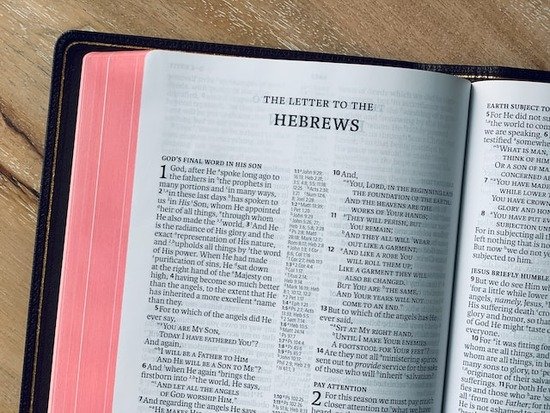
Photo by Tim Wildsmith on Unsplash
The Old Testament, which makes up about 75% of the Bible, was inspired by God. It’s His message to us—just as much as the New Testament is. Here’s what the apostle Paul had to say about it:
“All Scripture is given by inspiration of God, and is profitable for doctrine, for reproof, for correction, for instruction in righteousness” (2 Timothy 3:16, NKJV).
When Paul wrote these words, the Old Testament was the only Bible.
Similar to Paul, Jesus recognized the lasting importance of the Old Testament. In Matthew 5:17–18, He specifically said His purpose was not to “destroy [do away with] the Law or the Prophets” (NKJV). The Law and the Prophets were terms used by the Jews to refer to different sections of the Hebrew Scriptures—their Bible.
After His death and resurrection, Jesus used the same Scriptures to show His followers that His sacrifice had been foretold by the prophets (Luke 24:27). And in His own words, all the Scriptures testify of Him (John 5:39).
If Jesus thought the Old Testament was significant in revealing Himself, then we too can better understand Him through the whole story of the Bible.
The Old Testament is the foundation for the New Testament
To understand the importance of the Old Testament, we have to realize that the Bible is a narrative from the creation of the world in Genesis all the way to the end of the world and its re-creation in Revelation. The New Testament completes that story, and over 10% of its contents are quotes from the Old Testament.1
Thus, it wouldn’t make any sense alone. The Old and New Testaments are inseparable.
Think about it this way:
If you were sitting down to read a book, you wouldn’t start it in the middle, would you?
It’s no different with the Bible.
If you start most of the way in, you won’t have any idea who Abraham and Moses are. Jesus’ allusions to the Israelites and other accounts in the Old Testament won’t make sense. And you wouldn’t even know why He had to come in the first place.
But seen as a whole story, the details fall into place—including the foundational details of life.
It answers basic life questions
The Old Testament answers the age-old questions humans have always wondered about:
- Why are we here?
- Where did we come from?
- And how did we get into such a mess?
Genesis 1–3 shows us a God of love who created this earth and made humans in His image to rule over it. Being formed by the very hands of God gives our lives incredible value and meaning.
God placed the first couple, Adam and Eve, in the Garden of Eden, where He provided for their every need—physical, mental, social, and spiritual. They could have lived forever in selfless love and harmony with one another. And in face-to-face connection with God.
But for love to exist, God also had to give humans free will—the choice to follow His ways or not (Genesis 2:16–17).
Sadly, Adam and Eve chose to disobey God and believe the insinuations about Him (Genesis 3:1–5). By choosing a knowledge of evil, they experienced relational breakdown immediately—with one another and with God. They plunged our world into the chaos, suffering, and pain we see today.
But God didn’t give up on humans at this point.
He set in place a plan to send a Deliverer, someone who would show us who God really is and free humans from the mess they’d gotten themselves into.
It foreshadows Jesus Christ
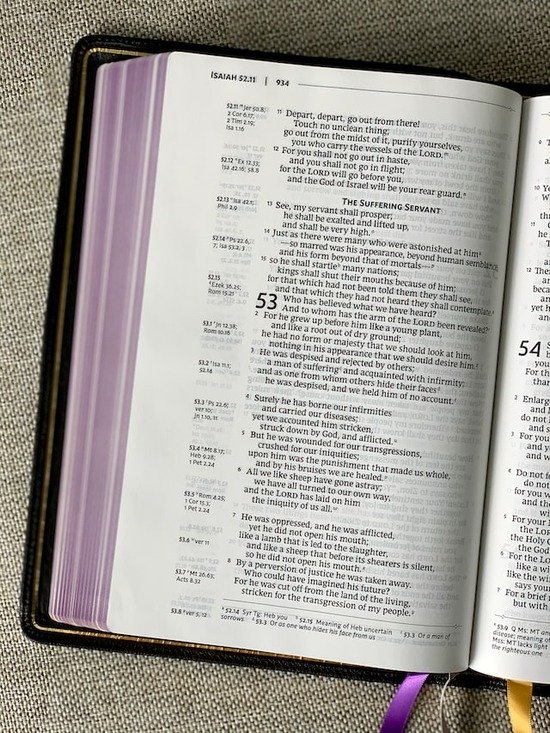
Photo by Tim Wildsmith on Unsplash
The New Testament is all about Jesus coming to this earth as our Savior. But the Old Testament helps us to see why we need that Savior.
After detailing the Fall of humanity, it shows us how God gave a special promise, called a covenant, to send a Deliverer and to restore His people. He longs to be reconnected with us.
He made this covenant with many people—Noah, Abraham, Isaac, Jacob, and then the nation of Israel, His chosen people who would share the truth of the Messiah with all nations. As a part of this covenant, He also gave them a special sanctuary, or temple, that foreshadowed how God would bring an end to sin and be with His people once again (Exodus 25:8). God instructed the people to make animal sacrifices for sin, symbolizing how Jesus would come and die for the consequences of our sins (John 1:29).
God remained faithful to His end of the covenant, but often, the Israelites drifted, or outrightly turned from God.
But God didn’t throw up His hands in disgust.
Instead, He was patient with His people, sending prophets to guide them, warn them, and remind them of the coming Messiah.
That’s why the Old Testament contains hundreds of prophecies that identified who the Messiah would be and what He would accomplish.
Here are just a few examples:
- Isaiah 53 and Daniel 9:24–27 both prophesied the sacrifice Jesus would make to pay the penalty for sins.
- Micah 5:2 foretold the name of the town Jesus would be born in.
- Isaiah 7:14 revealed who Jesus would be born to.
- Psalm 78:1–2 predicted that Jesus would tell parables.
- Isaiah 6:9–10 describes how people would struggle to believe what Jesus taught.
- Psalm 22 predicted the events of Jesus’ death.
- Psalm 16:10 speaks of His resurrection.
The fulfillment of these prophecies in the New Testament gives us another reason to spend time in both the Old and New Testaments of the Bible. More on that next.
It gives us confidence in God
As we see how the Old Testament prophecies came true, we gain confidence in God as a keeper of His promises. His Word is reliable.
Many of the prophecies—over 300 of them—had to do with Jesus. And there were others too:
God promised Noah that He would save him and his family from the flood. As a result, Noah’s family survived the global catastrophe and rebuilt society and civilization afterward (Genesis 6–9).
Then, God promised Abraham that his family would be numerous, despite the fact that he was old and childless and his wife was infertile (Genesis 15:1–6). Indeed, God gave Abraham a son, who became the nation of Israel and whose family line would eventually lead to Jesus. Through Jesus, Abraham became a spiritual father to everyone who chooses to follow God (Galatians 3:29).
And then there are some of the incredible prophecies in the book of Daniel, such as the 70-week prophecy and the 2,300-day prophecy, all of which have come to pass (Daniel 8–9).
Seeing the fulfillment of the things God promised helps us to have faith in the other things He has told us. We can trust that He will be faithful to His Word.
Because God is not just the God of the people in Bible times.
He wants to be our God today.
Let’s look at how we can study the Old Testament in a way that is relevant to our relationship with Him in the here and now.
5 steps to study the Old Testament stories
The Old Testament may seem a little more challenging to read than, say, the Gospels. But it doesn’t have to be. When we keep the narrative arc of Scripture in mind, remembering that the Old Testament is just the first part of the story, we’ll better see God’s plan and how we fit into that picture.
Here’s how you can get started:
1. Choose a passage
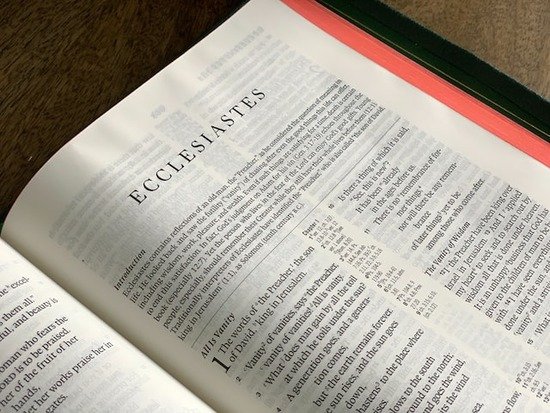
Photo by Tim Wildsmith on Unsplash
Decide on the passage you want to study. You could pick a book, a chapter, or a story you want to follow.
Where you start doesn’t really matter, but if you’re new to the Bible, consider starting in Genesis to get the whole picture from the beginning. Genesis contains mostly narratives, which also make it an engaging read.
The Old Testament contains 39 books of the Bible that are divided into five sections:
1. The Five Books of Moses (also called the Law or the Torah): From Genesis to Deuteronomy, these books cover the origins of this world, early history, and the experiences of Israel. Leviticus and Numbers contain laws that God gave to Moses for the people of Israel.
2. History: Consisting of twelve books from Joshua to Esther, this section encompasses the history of Israel, starting with their conquest of Canaan and going all the way to their captivity and release.
3. Wisdom or Poetry: This section, from Job to Song of Solomon, contains songs, proverbs, and other inspiration.4. The Major Prophets: These books go from Isaiah to Daniel and cover major predictions written to the declining and captive Israelites.
5.The Minor Prophets: The minor prophets (Hosea through Malachi) are smaller books with prophecies for Israel, Judah, and even the surrounding nations. Many of them plead with the people to turn back to God.
2. Take note of details
As you read your passage of choice, notice things that are emphasized or repeated throughout it (you may even want to write them down). And ask yourself these questions:
- What’s the setting of the story?
- What events happened before and after?
- Who are the main characters?
- What’s the plot?
- What’s the narrator’s point of view?
One thing to remember is that the Old Testament contains many typologies. Typologies are events or people that represent future events or people.
For example, Adam was a typology, or type, of Jesus (Romans 5:14–15). Elijah was a type of John the Baptist (Matthew 17:11–13). And the way the Israelites left Egypt and went through the Red Sea parallels the way Jesus came from Egypt and was baptized when beginning His ministry.
These are just a few to get you going. Keeping an eye out for these typologies can be an intriguing activity as you read.
3. Understand the context
A passage might seem to indicate one thing when you read it on its own, but it could mean something entirely different when you understand the big picture—the whole story of Scripture.
For instance, the ceremonial law of Moses and guidelines given to the Israelites seem pretty strange. And you may wonder why God gave these laws. Why were some of the punishments so harsh, and why did God give instructions about war?
The key is recognizing that these laws were God’s way of working with a people who had come out of slavery and had lost sight of what it means to live by His law of love.
They needed specific guidance to transition into God’s ideal.
We see God’s ideal in the first couple chapters of Genesis: a world based on His law of love. But because of humanity’s fall into sin, God has to find ways to deal with the sinful situations humans get themselves into.
Sometimes, those methods may not reflect God’s ideal, but they’re the best way to get us back to that ideal.
Another aspect people struggle with is the way God is sometimes portrayed in the Old Testament. He may seem judgmental or wrathful—and not like the Jesus of the Gospels.
In this case, we have to keep in mind that God doesn’t change between Malachi and Matthew.
What we see in Jesus is a reflection of God (John 14:9).
And even in the Old Testament, God is merciful, forgiving, and compassionate, just like Jesus (Exodus 34:6–7; Psalm 86:15). His greatest longing was to free His people from sin and its harmful consequences so that He could reconnect with them.
At times, this longing may come across as “tough love,” but it’s ultimately God navigating sin and evil to bring us back to the best world possible.
4. Look for God’s perspective
Just because something happened in a Bible account doesn’t mean God approved of the action.
After all, it contains stories of people who did things that were immoral, violent, and downright disgusting—such as violence, murder, and rape.
But this doesn’t mean God approves of such actions. The Bible writers were simply describing the events that happened—not endorsing them.
As you read some of these accounts, try to figure out God’s perspective on the situation. What did He think about the actions of the characters?
If it isn’t clear in the story, it helps to back up and remember the big picture: God is dealing with evil to bring us back to His ideal of other-centered love.
5. Apply the principles to your life
Don’t miss this step! Here is where the things you’ve read and noted can now be applied to your life in practical ways.
You may want to answer some of these prompts:
- What principles can you draw from the story? Was there a promise to claim, an action to take, or an action to avoid?
- What are some practical takeaways that could be relevant to your day-to-day life?
- How did the story shape your picture of God?
Fresh insights from an old book
The Old Testament is more than just a collection of history books. It is crucial to understand God’s ultimate purpose for humanity and His promise to restore our connection with Him. It lays the foundation for Jesus’ life and ministry and gives a glimpse into how God is dealing with sin.
And its lessons can still guide our lives today. As you ask the Holy Spirit to be with you in your reading, He will impress your heart with its freshness and relevance for daily life.
To dig deeper into the themes in the Old Testament and the picture of God we find there, head over to our intro guide to the Old Testament.
Choose an Online Bible Study
Want to keep learning? Find out more about Jesus, humanity, the plan of salvation, and how God loves you enough to sacrifice everything, just to give you a chance to choose Him.
Sometimes it can be hard to know where to start, that’s why we offer free, user-friendly, online Bible study options you can do anytime, anywhere, and at your own pace.
This online Bible school will take you through the major themes of Scripture, breaking down the Bible’s complex concepts into bite-sized pieces, which can lead you toward the answers of life’s more challenging questions.
- Nicole, Roger, “New Testament Use of the Old Testament,” reproduced from Revelation and the Bible, ed. Carl. F. H. Henry (Grand Rapids, Baker, 1958), pp. 137–151. [↵]
Related Articles


More Answers

What Does the Parable of the 10 Virgins Teach Us?
The story of the 10 virgins found in Matthew 25:1-13 is a well-recognized parable of Jesus, and one with a profoundly important message for all of humanity.

Sabato katika Maisha na Mafundisho ya Ellen White
Sabato katika Maisha na Mafundisho ya Ellen WhiteSabato ni mada muhimu katika Kanisa la Waadventista wa Sabato. Sio jambo la kushangaza, basi, kwamba Ellen G. White, mwanzilishi mwenza wa kanisa, alisoma mafundisho ya Biblia kuhusu Sabato na akaandika kiasi kikubwa...

Una visión general de la educación superior Adventista del Séptimo Día
Una visión general de la educación superior Adventista del Séptimo DíaLa Iglesia Adventista del Séptimo Día tiene alrededor de 118 instituciones de educación superior en todo el mundo.1 Aunque muchas de ellas se encuentran en América del Norte, también encontrarás...
Uma Visão Geral da Educação Superior Adventista do Sétimo Dia
Uma Visão Geral da Educação Superior Adventista do Sétimo DiaA Igreja Adventista do Sétimo Dia tem cerca de 118 escolas terciárias ao redor do mundo.1 Embora muitas delas estejam localizadas na América do Norte, você também encontrará universidades Adventistas em...
Jesús y Juan el Bautista: Su relación y ministerio
Juan el Bautista y Jesús eran primos, amigos y colaboradores cercanos en el ministerio. Aprende la significancia duradera de su relación.

The Parable of the Unforgiving Servant—A Walk-through
Through this somewhat alarming story, Jesus teaches us about forgiveness, mercy, and human nature.

Comprendiendo la vida y el ministerio de Elena G. de White
Comprendiendo la vida y el ministerio de Elena G. de White Ellen Gould White fue una de las cofundadoras de la Iglesia Adventista del Séptimo Día. Y aunque vivió la mayor parte de su vida en el siglo XIX, el impacto de su vida y ministerio continúa hoy. Viviendo su...
Compreendendo a Vida e o Ministério de Ellen G. White
Saiba quem Ellen G. White realmente foi e o papel que desempenhou ao guiar a Igreja Adventista do Sétimo Dia primitiva por meio de seu ministério e escritos inspirados.

Explorando la profecía de las 2300 tardes y mañanas y el juicio investigador
¿De qué se trata la profecía de las 2300 tardes y mañanas? Nos enfocaremos especialmente en qué eventos marcaron su cumplimiento y en qué tiene que ver con el juicio investigador.
Explorando a Profecia dos 2300 Dias e o Juízo Investigativo
Sobre o que se trata a profecia dos 2300 dias? Vamos analisar especialmente quais eventos marcaram o seu cumprimento e qual a sua relação com o Juízo Investigativo.
El sábado en la vida y enseñanzas de Elena de White
El sábado es un tema importante en la Iglesia Adventista del Séptimo Día.
O Sábado na Vida e Ensinos de Ellen White
O Sábado na Vida e Ensinos de Ellen WhiteO sábado é um tópico importante na Igreja Adventista do Sétimo Dia. Não deve surpreender você, então, que Ellen G. White, uma co-fundadora da igreja, tenha estudado os ensinamentos bíblicos sobre o sábado e escrito extensamente...

La armadura de Dios como se describe en Efesios 6
La armadura de Dios como se describe en Efesios 6En Efesios 6, el Apóstol Pablo estaba ayudando a las personas a entender lo que significa defenderse en una guerra espiritual (Efesios 6:10-18). ¿Qué significa eso? Al hacer referencia a la armadura de Dios, Pablo no...

Todo lo que necesitas saber sobre las comidas del Sábado.
Para los Adventistas del Séptimo Día, compartir una comida en sábado con amigos y familiares es una de las partes más especiales y memorables de este día.

What Does the Parable of the Pearl of Great Price Mean?
Here’s what Jesus taught about the kingdom of heaven through this short parable about a merchant who finds a priceless pearl.

¿Qué significa “Adventista”?
¿Qué significa "Adventista"?Los Adventistas del Séptimo Día son una denominación cristiana protestante que sostiene el sábado bíblico que es el séptimo día. De esta creencia, obtienen la primera parte de su nombre. Pero, ¿qué hay de la segunda parte, "Adventista"?...

Ujumbe wa Malaika Watatu Katika Ufunuo 14 Ni Upi?
Ujumbe wa malaika watatu katika Ufunuo 14 unawaonya ulimwengu kuabudu Mungu, kuacha mchafuko wa kidini, na kuepuka ibada za tamaduni za kibinadamu badala ya amri za Mungu.
¿Quiénes fueron los hijos de Elena G. de White?
Elena G. de White, probablemente la cofundadora más conocida de la Iglesia Adventista del Séptimo Día, tuvo cuatro hijos con su esposo, James: Henry Nichols, James Edson, William Clarence y John Herbert.

Kwa nini Wadventista wa Sabato Wengi wanachagua Lishe Inayotokana na Mimea?
Ingawa siyo kila Mwadventista anatumia vyakula vya mimea pekee, wengi hujiepusha kabisa na nyama ili kuishi maisha yenye afya katika juhudi za kumheshimu Mungu, kimwili, kiroho, na kiakili.
![Understanding the Book of Mark [An Overview]](https://devsite.askanadventistfriend.com/wp-content/uploads/2026/02/bible-open-to-mark-400x250.jpg)
Understanding the Book of Mark [An Overview]
Understanding the Book of Mark [An Overview]The Book of Mark is one of the four Gospel accounts that begin the New Testament, and its author is widely believed to be John Mark, a relative of Barnabas who worked with both Peter and Paul. It’s the shortest Gospel...

An Overview of Romans: Faith, Righteousness, and Relationships
Here’s a breakdown and background of Paul’s longest epistle.
Tudo o que você precisa saber sobre as refeições do Sábado
Tudo o que você precisa saber sobre as refeições do Sábado.Para os Adventistas do Sétimo Dia, compartilhar uma refeição de sábado com amigos e família é uma das partes mais especiais e memoráveis do sábado. É por isso que queremos compartilhar com você tudo sobre as...
Yesu na Yohana Mbaptisti: Uhusiano Wao na Huduma
Yohana Mbatizaji na Yesu walikuwa ndugu wa damu, marafiki, na wafanyakazi wa karibu katika huduma. Jifunze umuhimu wa kudumu wa uhusiano wao.
Muhtasari wa Elimu ya Juu ya WaAdventista wa Sabato
Muhtasari wa Elimu ya Juu ya WaAdventista wa SabatoKanisa la WaAdventista Wasabato lina takribani shule za sekondari 118 ulimwenguni kote.1 Ingawa nyingi zipo ndani ya Amerika Kaskazini, pia utapata vyuo vikuu vya WaAdventista katika nchi mbalimbali duniani—mahali...
The Book of John: An Overview
Here’s a study companion for the Gospel according to John.

Waadventista wa Sabato Wanaamini Nini Kuhusu Pambano Kuu (Wema na Uovu)?
Pambano Kuu” ni msemo ambao Waadventista wa Sabato kawaida huutumia kuelezea mgogoro wa kiroho wa ulimwengu kati ya nguvu za mema (Mungu) na nguvu za uovu au dhambi (Shetani/iblis).
Silaha Zote za Mungu Kama Ilivyoelezwa Katika Waefeso 6
Katika Waefeso 6, Mtume Paulo alikuwa akisaidia watu kuelewa maana ya kujilinda katika vita vya kiroho (Waefeso 6:10-18).
A Armadura de Deus conforme Descrita em Efésios 6
Em Efésios 6, o Apóstolo Paulo estava ajudando as pessoas a entender o que significa se defender em uma guerra espiritual (Efésios 6:10-18).
¿Qué creen los Adventistas del Séptimo Día sobre el gran conflicto (bien vs. mal)?
El “gran conflicto” es la frase que los Adventistas del Séptimo Día suelen usar para describir el conflicto espiritual cósmico entre las fuerzas del bien (Dios) y las fuerzas del mal o del pecado (Satanás/el diablo).
Didn’t find your answer? Ask us!
We understand your concern of having questions but not knowing who to ask—we’ve felt it ourselves. When you’re ready to learn more about Adventists, send us a question! We know a thing or two about Adventists.