
Yes, the Old Testament is important because it kicks off the story that is continued by the New Testament. Without it, we wouldn’t have the vital background to Jesus’ first coming and the other accounts of the New Testament.
It’s natural for us as Christians to want to focus on the parts of the Bible that talk about Jesus’ life and sacrifice on the cross.
But without the foundation of the Old Testament, we risk misunderstanding some crucial things Jesus said and did.
This page will help you avoid those misunderstandings and understand how essential the Old Testament is. We’ll cover:
- The Old Testament matters because it’s the Word of God
- The Old Testament is the foundation for the New Testament
- 5 steps to study the Old Testament stories
Let’s first look at why this part of the Bible still matters.
The Old Testament matters because it’s the Word of God
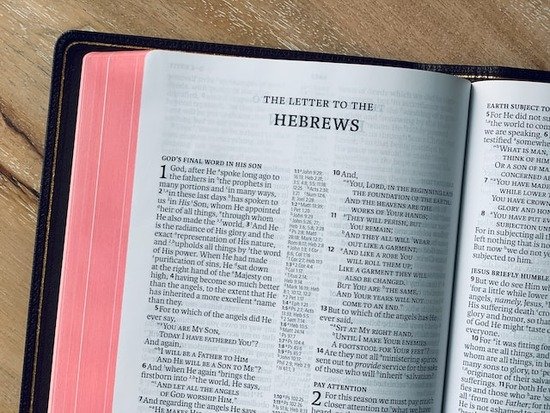
Photo by Tim Wildsmith on Unsplash
The Old Testament, which makes up about 75% of the Bible, was inspired by God. It’s His message to us—just as much as the New Testament is. Here’s what the apostle Paul had to say about it:
“All Scripture is given by inspiration of God, and is profitable for doctrine, for reproof, for correction, for instruction in righteousness” (2 Timothy 3:16, NKJV).
When Paul wrote these words, the Old Testament was the only Bible.
Similar to Paul, Jesus recognized the lasting importance of the Old Testament. In Matthew 5:17–18, He specifically said His purpose was not to “destroy [do away with] the Law or the Prophets” (NKJV). The Law and the Prophets were terms used by the Jews to refer to different sections of the Hebrew Scriptures—their Bible.
After His death and resurrection, Jesus used the same Scriptures to show His followers that His sacrifice had been foretold by the prophets (Luke 24:27). And in His own words, all the Scriptures testify of Him (John 5:39).
If Jesus thought the Old Testament was significant in revealing Himself, then we too can better understand Him through the whole story of the Bible.
The Old Testament is the foundation for the New Testament
To understand the importance of the Old Testament, we have to realize that the Bible is a narrative from the creation of the world in Genesis all the way to the end of the world and its re-creation in Revelation. The New Testament completes that story, and over 10% of its contents are quotes from the Old Testament.1
Thus, it wouldn’t make any sense alone. The Old and New Testaments are inseparable.
Think about it this way:
If you were sitting down to read a book, you wouldn’t start it in the middle, would you?
It’s no different with the Bible.
If you start most of the way in, you won’t have any idea who Abraham and Moses are. Jesus’ allusions to the Israelites and other accounts in the Old Testament won’t make sense. And you wouldn’t even know why He had to come in the first place.
But seen as a whole story, the details fall into place—including the foundational details of life.
It answers basic life questions
The Old Testament answers the age-old questions humans have always wondered about:
- Why are we here?
- Where did we come from?
- And how did we get into such a mess?
Genesis 1–3 shows us a God of love who created this earth and made humans in His image to rule over it. Being formed by the very hands of God gives our lives incredible value and meaning.
God placed the first couple, Adam and Eve, in the Garden of Eden, where He provided for their every need—physical, mental, social, and spiritual. They could have lived forever in selfless love and harmony with one another. And in face-to-face connection with God.
But for love to exist, God also had to give humans free will—the choice to follow His ways or not (Genesis 2:16–17).
Sadly, Adam and Eve chose to disobey God and believe the insinuations about Him (Genesis 3:1–5). By choosing a knowledge of evil, they experienced relational breakdown immediately—with one another and with God. They plunged our world into the chaos, suffering, and pain we see today.
But God didn’t give up on humans at this point.
He set in place a plan to send a Deliverer, someone who would show us who God really is and free humans from the mess they’d gotten themselves into.
It foreshadows Jesus Christ
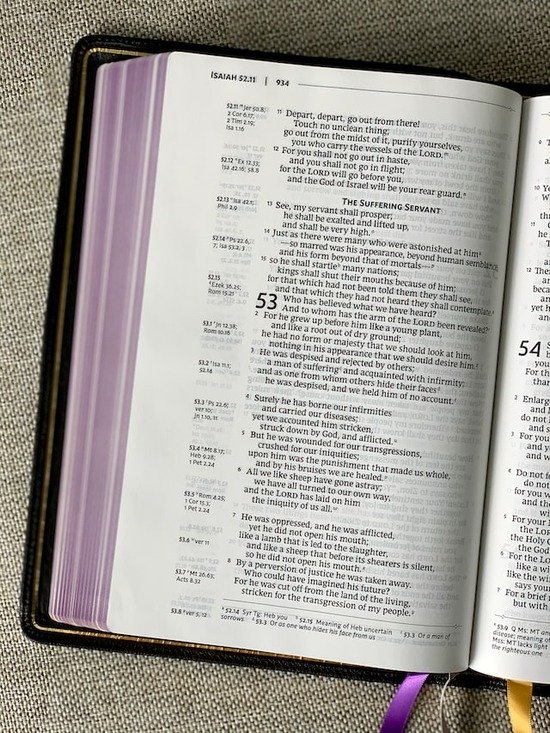
Photo by Tim Wildsmith on Unsplash
The New Testament is all about Jesus coming to this earth as our Savior. But the Old Testament helps us to see why we need that Savior.
After detailing the Fall of humanity, it shows us how God gave a special promise, called a covenant, to send a Deliverer and to restore His people. He longs to be reconnected with us.
He made this covenant with many people—Noah, Abraham, Isaac, Jacob, and then the nation of Israel, His chosen people who would share the truth of the Messiah with all nations. As a part of this covenant, He also gave them a special sanctuary, or temple, that foreshadowed how God would bring an end to sin and be with His people once again (Exodus 25:8). God instructed the people to make animal sacrifices for sin, symbolizing how Jesus would come and die for the consequences of our sins (John 1:29).
God remained faithful to His end of the covenant, but often, the Israelites drifted, or outrightly turned from God.
But God didn’t throw up His hands in disgust.
Instead, He was patient with His people, sending prophets to guide them, warn them, and remind them of the coming Messiah.
That’s why the Old Testament contains hundreds of prophecies that identified who the Messiah would be and what He would accomplish.
Here are just a few examples:
- Isaiah 53 and Daniel 9:24–27 both prophesied the sacrifice Jesus would make to pay the penalty for sins.
- Micah 5:2 foretold the name of the town Jesus would be born in.
- Isaiah 7:14 revealed who Jesus would be born to.
- Psalm 78:1–2 predicted that Jesus would tell parables.
- Isaiah 6:9–10 describes how people would struggle to believe what Jesus taught.
- Psalm 22 predicted the events of Jesus’ death.
- Psalm 16:10 speaks of His resurrection.
The fulfillment of these prophecies in the New Testament gives us another reason to spend time in both the Old and New Testaments of the Bible. More on that next.
It gives us confidence in God
As we see how the Old Testament prophecies came true, we gain confidence in God as a keeper of His promises. His Word is reliable.
Many of the prophecies—over 300 of them—had to do with Jesus. And there were others too:
God promised Noah that He would save him and his family from the flood. As a result, Noah’s family survived the global catastrophe and rebuilt society and civilization afterward (Genesis 6–9).
Then, God promised Abraham that his family would be numerous, despite the fact that he was old and childless and his wife was infertile (Genesis 15:1–6). Indeed, God gave Abraham a son, who became the nation of Israel and whose family line would eventually lead to Jesus. Through Jesus, Abraham became a spiritual father to everyone who chooses to follow God (Galatians 3:29).
And then there are some of the incredible prophecies in the book of Daniel, such as the 70-week prophecy and the 2,300-day prophecy, all of which have come to pass (Daniel 8–9).
Seeing the fulfillment of the things God promised helps us to have faith in the other things He has told us. We can trust that He will be faithful to His Word.
Because God is not just the God of the people in Bible times.
He wants to be our God today.
Let’s look at how we can study the Old Testament in a way that is relevant to our relationship with Him in the here and now.
5 steps to study the Old Testament stories
The Old Testament may seem a little more challenging to read than, say, the Gospels. But it doesn’t have to be. When we keep the narrative arc of Scripture in mind, remembering that the Old Testament is just the first part of the story, we’ll better see God’s plan and how we fit into that picture.
Here’s how you can get started:
1. Choose a passage
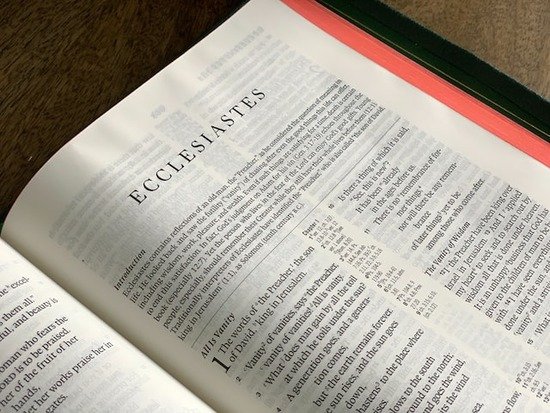
Photo by Tim Wildsmith on Unsplash
Decide on the passage you want to study. You could pick a book, a chapter, or a story you want to follow.
Where you start doesn’t really matter, but if you’re new to the Bible, consider starting in Genesis to get the whole picture from the beginning. Genesis contains mostly narratives, which also make it an engaging read.
The Old Testament contains 39 books of the Bible that are divided into five sections:
1. The Five Books of Moses (also called the Law or the Torah): From Genesis to Deuteronomy, these books cover the origins of this world, early history, and the experiences of Israel. Leviticus and Numbers contain laws that God gave to Moses for the people of Israel.
2. History: Consisting of twelve books from Joshua to Esther, this section encompasses the history of Israel, starting with their conquest of Canaan and going all the way to their captivity and release.
3. Wisdom or Poetry: This section, from Job to Song of Solomon, contains songs, proverbs, and other inspiration.4. The Major Prophets: These books go from Isaiah to Daniel and cover major predictions written to the declining and captive Israelites.
5.The Minor Prophets: The minor prophets (Hosea through Malachi) are smaller books with prophecies for Israel, Judah, and even the surrounding nations. Many of them plead with the people to turn back to God.
2. Take note of details
As you read your passage of choice, notice things that are emphasized or repeated throughout it (you may even want to write them down). And ask yourself these questions:
- What’s the setting of the story?
- What events happened before and after?
- Who are the main characters?
- What’s the plot?
- What’s the narrator’s point of view?
One thing to remember is that the Old Testament contains many typologies. Typologies are events or people that represent future events or people.
For example, Adam was a typology, or type, of Jesus (Romans 5:14–15). Elijah was a type of John the Baptist (Matthew 17:11–13). And the way the Israelites left Egypt and went through the Red Sea parallels the way Jesus came from Egypt and was baptized when beginning His ministry.
These are just a few to get you going. Keeping an eye out for these typologies can be an intriguing activity as you read.
3. Understand the context
A passage might seem to indicate one thing when you read it on its own, but it could mean something entirely different when you understand the big picture—the whole story of Scripture.
For instance, the ceremonial law of Moses and guidelines given to the Israelites seem pretty strange. And you may wonder why God gave these laws. Why were some of the punishments so harsh, and why did God give instructions about war?
The key is recognizing that these laws were God’s way of working with a people who had come out of slavery and had lost sight of what it means to live by His law of love.
They needed specific guidance to transition into God’s ideal.
We see God’s ideal in the first couple chapters of Genesis: a world based on His law of love. But because of humanity’s fall into sin, God has to find ways to deal with the sinful situations humans get themselves into.
Sometimes, those methods may not reflect God’s ideal, but they’re the best way to get us back to that ideal.
Another aspect people struggle with is the way God is sometimes portrayed in the Old Testament. He may seem judgmental or wrathful—and not like the Jesus of the Gospels.
In this case, we have to keep in mind that God doesn’t change between Malachi and Matthew.
What we see in Jesus is a reflection of God (John 14:9).
And even in the Old Testament, God is merciful, forgiving, and compassionate, just like Jesus (Exodus 34:6–7; Psalm 86:15). His greatest longing was to free His people from sin and its harmful consequences so that He could reconnect with them.
At times, this longing may come across as “tough love,” but it’s ultimately God navigating sin and evil to bring us back to the best world possible.
4. Look for God’s perspective
Just because something happened in a Bible account doesn’t mean God approved of the action.
After all, it contains stories of people who did things that were immoral, violent, and downright disgusting—such as violence, murder, and rape.
But this doesn’t mean God approves of such actions. The Bible writers were simply describing the events that happened—not endorsing them.
As you read some of these accounts, try to figure out God’s perspective on the situation. What did He think about the actions of the characters?
If it isn’t clear in the story, it helps to back up and remember the big picture: God is dealing with evil to bring us back to His ideal of other-centered love.
5. Apply the principles to your life
Don’t miss this step! Here is where the things you’ve read and noted can now be applied to your life in practical ways.
You may want to answer some of these prompts:
- What principles can you draw from the story? Was there a promise to claim, an action to take, or an action to avoid?
- What are some practical takeaways that could be relevant to your day-to-day life?
- How did the story shape your picture of God?
Fresh insights from an old book
The Old Testament is more than just a collection of history books. It is crucial to understand God’s ultimate purpose for humanity and His promise to restore our connection with Him. It lays the foundation for Jesus’ life and ministry and gives a glimpse into how God is dealing with sin.
And its lessons can still guide our lives today. As you ask the Holy Spirit to be with you in your reading, He will impress your heart with its freshness and relevance for daily life.
To dig deeper into the themes in the Old Testament and the picture of God we find there, head over to our intro guide to the Old Testament.
Choose an Online Bible Study
Want to keep learning? Find out more about Jesus, humanity, the plan of salvation, and how God loves you enough to sacrifice everything, just to give you a chance to choose Him.
Sometimes it can be hard to know where to start, that’s why we offer free, user-friendly, online Bible study options you can do anytime, anywhere, and at your own pace.
This online Bible school will take you through the major themes of Scripture, breaking down the Bible’s complex concepts into bite-sized pieces, which can lead you toward the answers of life’s more challenging questions.
- Nicole, Roger, “New Testament Use of the Old Testament,” reproduced from Revelation and the Bible, ed. Carl. F. H. Henry (Grand Rapids, Baker, 1958), pp. 137–151. [↵]
Related Articles


More Answers

Como os Ensinos de Ellen White Podem Melhorar Sua Saúde
Como os Ensinos de Ellen White Podem Melhorar Sua SaúdeAssistência médica no século XIX era dito deixar "mais doenças do que levava embora" com o uso de sangrias e "remédios" como mercúrio e arsênico.1 À medida que as pessoas questionavam esses métodos, novas...
Cómo las enseñanzas de Elena G. de White pueden mejorar tu salud
La atención médica en el siglo XIX se decía que dejaba “más enfermedades de las que eliminaba” con su uso de sangrías y “medicamentos” como el mercurio y el arsénico.

All About the Gospel of Matthew
The Book of Matthew is one of the four Gospel narratives in the Bible
Descanso e Reconexão: O Que Realmente Significa Guardar o Sábado
A Bíblia nos diz que guardamos o Sábado evitando o trabalho. Deus fez essa lei porque sabia que ela nos fortaleceria e nos traria alegria, além de nos dar tempo para nos reconectar com Ele e recarregar das nossas vidas ocupadas.
Descanso y reconexión: lo que realmente significa guardar el sábado
La Biblia nos dice que guardamos el sábado evitando el trabajo. Dios hizo esta ley porque sabía que nos fortalecería y nos traería alegría, además de darnos tiempo para reconectarnos con Él y recargar energías de nuestras vidas ocupadas.

Todo lo que necesitas saber sobre la Escuela Sabática
La Escuela Sabática es el componente de estudio bíblico del programa de la iglesia en la mayoría de las Iglesias Adventistas del Séptimo Día.

O que os Adventistas do Sétimo Dia acreditam sobre a autoridade da Bíblia?
Saiba como um livro realmente antigo (a Bíblia) é o único fundamento para todas as crenças dos Adventistas do Sétimo Dia.
¿Qué creen los Adventistas sobre la autoridad de la Biblia?
Puede hacerte sentir intimidado o frustrado. Podrías pensar en un líder de iglesia que parecía arruinar toda tu diversión cuando eras niño, o un jefe que supervisa cada uno de tus movimientos en el trabajo…

¿Qué es un médico misionero adventista?
Un médico misionero en la Iglesia Adventista es alguien que cuida de las necesidades médicas de las personas como una forma de mostrar el amor de Jesús. Pueden viajar a otro país, o incluso simplemente servir en su ciudad natal.
Ni nini Mtaalam wa Matibabu wa Kiadventista?
Mmishonari wa matibabu katika Kanisa la Waadventista ni mtu anayejali mahitaji ya matibabu ya watu kama njia ya kuonyesha upendo wa Yesu.
O que é um missionário médico adventista?
Um missionário médico na Igreja Adventista é alguém que cuida das necessidades médicas das pessoas como uma forma de mostrar o amor de Jesus. Eles podem viajar para outro país, ou até mesmo servir em sua cidade natal.

Guía definitiva para el estudio personal de la Biblia
¿Alguna vez has sentido que estudiar la Biblia es un desafío y simplemente no estás seguro de por dónde empezar? ¿O estás buscando ideas nuevas para mejorar tus hábitos actuales de estudio bíblico?
O Guia Definitivo para o Estudo Pessoal da Bíblia
Já sentiu que estudar a Bíblia é desafiador e não tem certeza por onde começar? Ou está procurando ideias novas para melhorar seus hábitos atuais de estudo da Bíblia?
¿Los Adventistas del Séptimo Día observan festividades relacionadas con la Pascua?
La resurrección de Jesús, celebrada en muchas festividades relacionadas con la Pascua, es central para las creencias de la Iglesia Adventista del Séptimo Día.

10 Bible Teachings Adventists Believe About the Devil
10 Bible Teachings Adventists Believe About the DevilSeventh-day Adventists believe the devil (or Lucifer-turned-Satan) is real and active. He is the sole adversary of God and humanity (1 Peter 5:8), making him the opposing force in the cosmic conflict between good...

¿Los Adventistas del Séptimo Día creen que solo ellos irán al cielo?
No, los adventistas definitivamente no creen que son los únicos que irán al cielo. De hecho, no creemos que la admisión al cielo se base en la iglesia o denominación a la que pertenecemos.
Waadventista Wa Sabato Wanaamini Nini Kuhusu Mamlaka ya Biblia?
Jifunze jinsi kitabu kimoja cha zamani sana (Biblia) kilivyo msingi pekee wa imani zote za Waadventista wa Sabato.
Mwongozo Bora Katika Kujifunza Biblia Binafsi
Umewahi kuhisi kwamba kusoma Biblia ni jambo gumu, na hujui uanzie wapi? Au unatafuta mawazo mapya ya kuboresha tabia yako ya usomaji wa Biblia.
Je, Waadventista Wasabato Wanasherehekea Siku Kuu Zinazohusiana na Pasaka?
Kufufuka kwa Yesu, kunakoadhimishwa katika siku kuu nyingi zinazohusiana na Pasaka, ni muhimu katika imani za Kanisa la Waadventista wa Sabato.
Je, Waadventista Wasabato Wanaamini Wao Pekee Ndiyo Watakao Kwenda Mbinguni?
Hapana, Waadventista hakika hawaamini kwamba wao ndio pekee watakao kwenda mbinguni. Kwa kweli, hatuamini kwamba kupokelewa mbinguni kunategemea kanisa au madhehebu tunayohusiana nayo.

Chakula cha Pamoja Katika Kanisa la Kiadventista: Mahali Ambapo Chakula na Urafiki Vinakutana
Mara nyingi, kawaida kwenye ratiba inayotofautiana kutoka mara moja kwa wiki hadi mara moja kwa mwezi hadi mara moja kwa robo, kanisa la Waadventista litakuwa na “karamu za ushirika,” mara nyingi zikiitwa chakula cha mchana cha pamoja.

Je, Waadventista Wa Sabato Wanaamini Nini Kuhusu Uumbaji Katika Biblia?
Waadventista Wa Sabato wanaamini kwamba Mungu ndiye Muumbaji wa ulimwengu. Wanafikia hitimisho hili kutoka kitabu cha kwanza cha Biblia—Mwanzo.

Jinsi Ellen White Alivyochangia Ujumbe wa Afya wa Waadventista
Jinsi Ellen White Alivyochangia Ujumbe wa Afya wa WaadventistaWaadventista wa Sabato wanajulikana kwa kusisitiza maisha yenye afya bora. Na Ellen G. White alikuwa na ushawishi mkubwa katika maendeleo ya kipaumbele hiki na utekelezaji wake miongoni mwa Waadventista....
Os Adventistas do Sétimo Dia observam feriados relacionados à Páscoa?
Os Adventistas do Sétimo Dia observam feriados relacionados à Páscoa?A ressurreição de Jesus, celebrada em muitos feriados relacionados à Páscoa, é central para as crenças da Igreja Adventista do Sétimo Dia. E isso significa que buscamos todas as oportunidades para...
Os Adventistas do Sétimo Dia acreditam que apenas eles irão para o Céu?
Não, os Adventistas definitivamente não acreditam que são os únicos que irão para o céu. Na verdade, não acreditamos que a admissão no céu dependa de qual igreja ou denominação pertencemos.

Ellen White anasema nini kuhusu Maombi?
Je, umewahi kuwa na mzigo ambao ulihitaji kumwambia mtu, lakini uliogopa kuhukumiwa ikiwa ungefanya hivyo?

Nani Aliyebadilisha Sabato kwenda Jumapili?
Nani Aliyebadilisha Sabato kwenda Jumapili?Ikiwa Biblia haijawahi kutaja mabadiliko ya Sabato, kwa nini leo wengi wanaenda kanisani Jumapili? Nani alibadilisha siku hiyo? Lakini hilo sio swali sahihi la kuuliza. Sabato haijabadilika. Kilichobadilika ni uamuzi wa...

Is It Okay to Worship On Sunday Instead of Saturday?
If there’s no wrong time to worship God, why are there different ideas on the day churches meet?

Ellen G. White au Biblia—Kipi ni Muhimu Zaidi kwa Waadventista?
Biblia—bila shaka—ndiyo kitabu muhimu zaidi. Ni kipimo tunachotumia kupima maandishi mengine yote, ikiwa ni pamoja na yale ya Ellen White.
Didn’t find your answer? Ask us!
We understand your concern of having questions but not knowing who to ask—we’ve felt it ourselves. When you’re ready to learn more about Adventists, send us a question! We know a thing or two about Adventists.