
What Does God Look Like According to the Bible?
As human beings, it’s natural for us to wonder about God’s appearance. But the Bible says very little about it.
It’s not hard to understand why, though. As the Creator of the entire universe, His existence transcends our perception.
John 4:24 tells us that “God is Spirit” (NKJV), which means He’s not confined to the same physical limitations we are.1 He can take different forms, and most characteristics of His appearance may very well be far beyond our understanding.
But the Bible does give us insight into what God is like in many other ways. And some of these details involve physical attributes, even though they’re mostly symbolic.
So, more than knowing what He looks like, God wants us to know who He is.
But as visual beings, sometimes it can help us understand God better when we have some ideas for our mind’s eye.
Let’s look at some glimpses the Bible gives us of all three members of the Godhead. We’ll cover:
- God the Father’s appearance
- Jesus’ appearance
- The Holy Spirit’s appearance
- Why the Bible doesn’t tell us much about God’s appearance
Let’s start with God the Father.
God the Father’s appearance
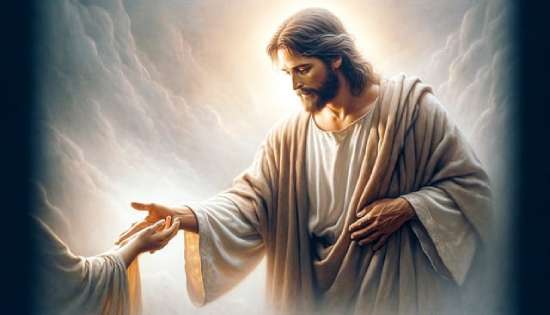
As already pointed out, the Bible doesn’t say much about God’s physical appearance, but this is especially true when it comes to God the Father. John 1:18 tells us that no one has seen God face to face at any time NKJV, clearly a reference to the Father and His “undimmed Glory” since Jesus Christ was seen by many when He took human form.2
But did Jesus reveal the physical appearance of God the Father? Or just His character?
Let’s look at some Bible verses that offer us clues to what God the Father might’ve looked like.
The first possible clue is in Genesis 1:27, which tells us that humans were made in the image of God. The word for image in this passage can refer to external appearance, but it can also refer to character or spiritual nature.
Commentators on this passage write,
“That image was most evident in terms of [Adam’s] spiritual nature. He became a ‘living soul,’ or rather living being, endowed with a free will, a self-conscious personality.”
But could it be that God also takes a physical form similar to that of humans?
Scripture doesn’t provide a direct indication of such, but numerous passages speak of Him having physical characteristics like:
- Arms and hands (Isaiah 40:10; Psalm 110:1)
- Fingers (Exodus 31:18)
- Eyes (Proverbs 15:3)
- Nose and a mouth (Psalm 18:8)
Some scholars, though, refer to these descriptions as anthropomorphism—familiar human characteristics that are used to explain a non-physical being.
We even do this with inanimate objects or our pets sometimes. We give them human characteristics because it helps us understand them better.
So, these references to physical body parts were a way of explaining the character of an infinite God.
Notice Isaiah 41:10 as one example:
“Fear not, for I am with you; be not dismayed, for I am your God; I will strengthen you, I will help you, I will uphold you with My righteous right hand” (ESV).
The purpose of this passage is not to tell us that God has hands. Rather, it uses language familiar to humans to explain how God is there to strengthen and support His people.
Even so, there are some instances in the Bible in which God reveals Himself and seems to give us insight into His physical appearance. We’ll walk through some of those next.
Moses’ request to see God’s glory (Exodus 33:18-23)

Photo by Jeremy Thomas on Unsplash
While in God’s presence, Moses makes a request for God to show him His glory. God’s response is that He will make His goodness pass before Moses—an emphasis on character.
“But,” God says, “you cannot see My face, for man shall not see Me and live” (Exodus 33:20, ESV).
Then, He continues,
“Behold, there is a place by Me where you shall stand on the rock, and while My glory passes by I will put you in a cleft of the rock, and I will cover you with My hand until I have passed by. Then I will take away My hand, and you shall see My back, but My face shall not be seen” (Exodus 33:21-23, ESV).
Here, we see God specifically mentioning physical characteristics: His face, His hand, and His back—strong evidence that He does indeed have these qualities, or that He takes their form.
Isaiah’s vision of God (Isaiah 6:1)
At the start of His ministry, Isaiah had a vision of God in His temple. Does this mean he saw God?
Not exactly. We have to remember that seeing someone in vision is like seeing a representation of them. Isaiah saw a representation of God, but not God Himself.3
And in this vision, little is said about God’s appearance except that He was sitting on a throne and had a robe that filled the temple.
Ezekiel’s vision of God (Ezekiel 1:26-28)
Like Isaiah’s vision, Ezekiel didn’t actually see God. But he saw “a likeness with a human appearance” on a throne (Ezekiel 1:26, ESV).
Ezekiel adds:
“Upward from what had the appearance of His waist I saw as it were gleaming metal, like the appearance of fire enclosed all around. And downward from what had the appearance of His waist I saw as it were the appearance of fire, and there was brightness around Him” (verse 27, ESV).
With his human explanation, Ezekiel tries to help his readers understand what he saw. But in the end, words fall short of expressing God in His entirety.
Vision of the Ancient of Days (Daniel 7:9)
In Daniel 7, the prophet Daniel has a vision of a judgment scene in heaven involving both God the Father (called “the Ancient of Days”) and God the Son (called “the Son of Man”).
The vision, though focused on conveying the judgment scene, mentions that God the Father has hair “like pure wool” and clothing that is “white as snow.”
We’ll notice in the next section that visions of Jesus in heaven include similar characteristics.
Jesus’ appearance
When we talk about what Jesus looked like, we have to consider three different aspects: His appearance in the Old Testament, His appearance in the New Testament during His time on earth, and His appearance once glorified in heaven again. In each case, He shows up in human form to relate to those He is seeking to reach.
The apostle Paul points out in Colossians 1:15 that Jesus is “the image of the invisible God” (ESV). This means that when we see Jesus, He must be, to some extent, a reflection of God the Father.
Jesus in the Old Testament
As the “Word” who was present in the beginning (John 1:1-3), Jesus appears throughout the Old Testament, most often in human form.
Let’s look at some examples. Though the following passages don’t specifically state that they refer to Jesus, we can gather that they’re Him since no one can see God the Father’s face and live (Exodus 33:20).
- The visit of three men to Abraham and one man’s discussion with Abraham about the destruction of Sodom (Genesis 18)
- Jacob wrestles with God (Genesis 22-30)
- Joshua’s encounter with the commander of the Lord’s army (Joshua 5:13-15)
Jesus while on earth
Isaiah 53, a prophecy about the Messiah, seems to indicate that Jesus didn’t have anything about His physical appearance that would’ve attracted people to Him:
“He had no form or majesty that we should look at Him, and no beauty that we should desire Him” (verse 2, ESV).
It was His character, not His looks, that drew people to Him.
Jesus probably looked like an ordinary Jewish Middle Eastern individual of that time.
If that’s the case, he would, as one scholar suggests, have had “dark-brown to black hair, deep brown eyes, [and] olive-brown skin,” and He may have been around 5 foot 5 inches tall—the average height then.4
He also would’ve worn the common clothing of a lower-class individual. John 19:23-24 mentions that he had a one-piece tunic, which probably would’ve been knee-length. He may also have had a mantle, made out of woolen material, to wear on top, as was common for men then (Mark 10:50).5
Jesus after His ascension
The Bible mentions two different visions of Jesus.
The first one is a vision Daniel had of “a man clothed in linen” (Daniel 10:5, ESV).
This Man had a body “like beryl” (verse 6, ESV)—which Easton’s Bible Dictionary describes as a precious stone or a “gold-coloured gem.”6 He also had a face like lightning, “eyes like torches of fire,” and arms and feet “like burnished bronze in color” (verse 6, NKJV).
John’s vision of the Son of Man in Revelation 1:13-15 reveals similar characteristics and a few additional ones:
- A long robe
- “A golden sash around His chest” (verse 13, ESV)
- White hair (like wool or snow)
- Eyes like a flame of fire
- Feet “like burnished bronze, refined in a furnace” (verse 15, ESV)
- A face “shining like the sun in its strength” (verse 16, ESV)
So the typical physical features listed in this passage (chest, eyes, hair, feet, face) are accompanied by supernatural attributes that communicate strength, rulership, purity, and brightness.
The Holy Spirit’s appearance

Image by Kiều Trường from Pixabay
The Scriptures don’t describe the Holy Spirit as having a specific physical appearance, but as being similar to various forms like a dove, the wind, or tongues of fire.
These forms are human attempts to explain what the Holy Spirit is like.
Jesus described the Holy Spirit like the wind (John 3:8). We can’t see the Spirit, but we can see His effect in people’s lives as they reflect the fruit or specific gifts of the Spirit (Galatians 5:22-24; 1 Corinthians 12:1-11).
When Jesus was baptized, Matthew 3:16 describes the “Spirit of God descending like a dove and coming to rest on Him” (ESV).
Again, this passage isn’t saying the Spirit is a dove but rather is like a dove. It’s using something familiar to explain something unfamiliar.
This happens also in the book of Acts at Pentecost when the Holy Spirit comes upon Jesus’ followers. The Bible says:
“And suddenly there came from heaven a sound like a mighty rushing wind, and it filled the entire house where they were sitting. And divided tongues as of fire appeared to them and rested on each one of them” (Acts 2:2-3, ESV).
The Seventh-day Adventist Bible Commentary points out:
“Not that they were actual flames of fire, but ‘like as of fire,’ that is, ‘resembling fire.’ … Divinity and fire are often linked in Scripture … doubtless because of the power, glory, and purifying effects of fire.”7
So, does the Holy Spirit have an appearance?
We don’t really know. Our best attempt at explaining it may be that the Holy Spirit is not limited to or by a single physical form.
This whole topic of God’s appearance holds a lot of uncertainty. And there are some possible reasons for that, as we’ll find out next.
Why doesn’t the Bible say much about God’s appearance?

The Bible isn’t a comprehensive textbook with every bit of information about God to satisfy our curiosity. Rather, it gives us everything we need to understand what’s most important—the narrative of God’s plan to save us and bring us back into a relationship with Him. The Bible focuses on giving us an understanding of who He is rather than what He looks like.
In the Great Controversy—the battle between good and evil in our world—Satan has attacked God’s character, insinuating that He’s selfish, uncaring, and unjust. We see this as early as Genesis 3 when Satan tried to get Eve to distrust God and eat from the Tree of the Knowledge of Good and Evil (Genesis 3:1-6).
And these attacks continued throughout Old Testament history.
But Jesus came to earth, living among humanity, to reveal the true character of God, as John 1:14 points out:
“And the Word became flesh and dwelt among us, and we have seen His glory, glory as of the only Son from the Father, full of grace and truth” (ESV).
We learn to trust God and His plan to save us when we understand who He really is. That’s why, even when Moses asked to see God’s glory, God emphasized His character qualities, speaking them out loud (see Exodus 33-34).
God knew that physical appearances could distract us from what’s most important. That’s part of why God didn’t want His people to carve images or idols, as expressed in the second commandment (Exodus 20:4-5). Even if these images were meant to depict or represent God, they would be reductive and limiting.
But what’s likely the biggest reason God hasn’t told us much about His appearance is that He’s an infinite God who is far beyond our understanding.
He says in Isaiah 40:25,
“To whom then will you compare Me, that I should be like him?” (ESV)
Just like it’s difficult for the human mind to grasp a three-in-one Godhead, it makes sense that we would also struggle to grasp other aspects of God. After all, He wouldn’t be God if we could understand everything about Him.
The most important knowledge about God
The Bible hints at God’s appearance—that He may have some physical characteristics like us since we’re made in His own image.
But in the end, God’s majesty and glory are far beyond our ability to grasp. Words and things familiar to humans can only go so far in explaining an infinite, almighty God.
And that’s okay.
We may not understand everything about Him. As 1 Corinthians 13:12 says, we “know in part” right now (ESV). We know what’s most important: His loving character and His desire to have a relationship with us.
And throughout all eternity, we’ll continue to learn more about Him and His greatness.
Related Articles


- Nichol, F. D., ed., Seventh-day Adventist Bible Commentary, vol. 5, comments on John 4:24. [↵]
- Nichol, F. D., ed., Seventh-day Adventist Bible Commentary, vol. 1, comments on Exodus 33:22. [↵]
- Nichol, F. D., ed., Seventh-day Adventist Bible Commentary, vol. 4, comments on Ezekiel 1:26 [↵]
- Taylor, Joan, “What Did Jesus Really Look Like, as a Jew in 1st-Century Judaea?” The Irish Times, Feb. 9, 2018. [↵]
- Ibid. [↵]
- Easton, Matthew George, “Beryl,” Easton’s Bible Dictionary. [↵]
- Nichol, F. D., ed., Seventh-day Adventist Bible Commentary, vol. 6, comments on Acts 2:3. [↵]
More Answers

Where Do We Go When We Die?
For those of us who’ve lost loved ones or faced serious health issues, we can’t help but wonder about life after death.

What is the Difference Between Grace and Mercy in the Bible?
Even in day-to-day life, we can see glimpses of grace and mercy—like when someone offers an angry, impatient person their spot in a line or when a parent hugs their child after a heated argument.

Waadventista Wasabato Wanatafsiri Vipi Unabii wa Biblia?
Jifunze zaidi kuhusu jinsi Waadventista wanavyotafsiri unabii katika Biblia—hasa katika vitabu kama Danieli na Ufunuo.

Urithi wa Kudumu wa Ellen G. White
Urithi wa Kudumu wa Ellen G. WhiteEllen G. White ni jina linalojulikana sana miongoni mwa Waadventista wa Sabato, lakini pia aliathiri sehemu nyingi za historia, mbali na kuwa mwanzilishi wa Kanisa la Waadventista wa Sabato. Ndiyo maana Jarida la Smithsonian...

¿Cómo interpretan la profecía bíblica los Adventistas del Séptimo Día?
Aprende más sobre cómo los Adventistas interpretan la profecía en la Biblia, especialmente en libros como Daniel y Apocalipsis.
Como os Adventistas do Sétimo Dia interpretam a profecia bíblica?
Saiba mais sobre como os Adventistas abordam a interpretação da profecia na Bíblia—especialmente nos livros como Daniel e Apocalipse.

Lo que necesitas saber sobre la tentación y cómo resistirla
¿Alguna vez has sentido que enfrentas la misma tentación día tras día? ¿La tentación que siempre parece resurgir?

What Jesus Meant by “Take Up Your Cross”
Whether you’ve spent a day or a decade around Christian circles, you’ve probably heard the phrase, “Pick up your cross.”

Je, Waadventista Wasabato Wana “Sheria”?
Tunashikilia kanuni tunazoamini zitasaidia kuweka uhusiano wa karibu na Yesu na Neno lake. Jifunze jinsi kanuni hizi zinavyo-ongoza mtindo wa maisha wa Waadventista.
El legado de Elena G. de White
El legado de Elena G. de WhiteyElena G. de White es un nombre muy conocido entre los Adventistas del Séptimo Día, pero también tuvo un impacto en muchas otras partes de la historia, además de ser cofundadora de la Iglesia Adventista. Por eso, la revista Smithsonian la...

All of Jesus’ Warnings and Encouragements in the Bible
Here’s a comprehensive list of every warning and encouragement from the words of Jesus, as well as how they can benefit our lives today.
¿Los Adventistas del Séptimo Día tienen “reglas”?
Sostenemos principios que creemos que nos ayudarán a mantener una relación más cercana con Jesús y su Palabra. Aprende cómo estos principios guían los estilos de vida adventistas.
Os Adventistas do Sétimo Dia têm “regras”?
Defendemos princípios que acreditamos nos ajudar a manter um relacionamento mais próximo com Jesus e com Sua Palavra. Saiba como esses princípios orientam o estilo de vida adventista.

Películas Adventistas: donde la fe y el cine se encuentran
La misión de la Iglesia Adventista del Séptimo Día desde el principio ha sido compartir la verdad de Dios en la Biblia.
Filmes Adventistas: Onde a Fé e o Cinema se Encontram
A missão da Igreja Adventista do Sétimo Dia desde o início tem sido compartilhar a verdade de Deus na Bíblia.

¿Por qué algunas Biblias tienen más libros que otras?
Los cristianos consideran la Biblia como sus escrituras sagradas. Pero dentro del cristianismo, diferentes denominaciones utilizan Biblias con cantidades diferentes de libros.
Por que algumas Bíblias têm mais livros do que outras?
Os cristãos consideram a Bíblia como suas escrituras sagradas. Mas dentro do Cristianismo, diferentes denominações usam Bíblias com números diferentes de livros.
O que você precisa saber sobre a tentação e como resistir a ela
Já se sentiu como se enfrentasse a mesma tentação dia após dia? Aquela tentação que sempre parece ressurgir?

O que os Adventistas do Sétimo Dia acreditam sobre a Bíblia?
A Bíblia forma a base de tudo o que os Adventistas do Sétimo Dia acreditam e ensinam.

Waadventista Wa Sabato wanaamini nini kuhusu Ubatizo?
Kama Wakristo wengi wa Kiprotestanti ulimwenguni kote na katika historia, Kanisa la Waadventista wa Sabato linaamini katika ubatizo, sherehe ambapo watu huzamishwa ndani ya maji kudhihirisha hadharani “kufa kwa maisha ya zamani” na “kuanza kwa maisha mapya katika Kristo”.

Jinsi Waadventista Wanavyoshughulikia Kifo na Mazishi
Mazishi mengi ya Waadventista wa Sabato yanafanana na yale ya madhehebu mengine ya Kiprotestanti, kama vile Wamethodisti, Wabatisti, au Wapresbiteri, lakini unaweza kupata tofauti chache au taratibu za pekee.
O que os Adventistas do Sétimo Dia acreditam sobre o batismo?
Assim como muitos cristãos protestantes em todo o mundo e ao longo da história, a Igreja Adventista do Sétimo Dia crê no batismo por imersão
¿Qué creen los Adventistas del Séptimo Día sobre el bautismo?
Al igual que muchos cristianos protestantes en todo el mundo y a lo largo de la historia, la Iglesia Adventista del Séptimo Día cree en el bautismo por inmersión

Does Jesus Really Care About Me?
Does Jesus Really Care About Me?Short answer: yes, Jesus really does care about you, specifically (1 Peter 5:7, ESV). But if you’re wondering whether Jesus Christ really, truly cares about you, you aren’t alone. Gideon, Abraham and Sarah, Job, Jeremiah, Elijah, even...
Filamu za Kiadventista: Mahali Imani na Filamu Zinapokutana
Tangu mwanzo, lengo la Kanisa la Waadventista wa Sabato limekuwa kueneza kweli ya Mungu katika Biblia.
Kwanini Baadhi ya Biblia Zina Vitabu Vingi Kuliko Zingine?
Wakristo wanachukulia Biblia kama maandiko yao matakatifu. Lakini ndani ya Ukristo, madhehebu tofauti hutumia Biblia zenye idadi tofauti ya vitabu.

Fe y obras: ¿Importan ambas en la vida de un cristiano?
En tantas religiones a lo largo del tiempo, los individuos trabajan hacia la iluminación, la salvación o el favor de una deidad.
Cómo los Adventistas manejan la muerte y los funerales
La mayoría de los servicios funerarios Adventistas del Séptimo Día son similares a los de otras denominaciones protestantes, como los metodistas, bautistas y presbiterianos, pero podrías encontrar algunas diferencias o matices únicos.
Didn’t find your answer? Ask us!
We understand your concern of having questions but not knowing who to ask—we’ve felt it ourselves. When you’re ready to learn more about Adventists, send us a question! We know a thing or two about Adventists.