
The Parable of the Pearl, or the Pearl of Great Price, is an object lesson from Jesus about the kingdom of God. It’s found only once in the New Testament, in Matthew 13:45-46. And it has two prevailing interpretations.
One positions Jesus Christ as the merchant, sacrificing everything to save His people. And the second positions individuals as the merchant in search of a Savior.
So which interpretation is correct—or could it be both?
There’s more to this power-packed little parable than meets the eye.
To understand the key takeaways, let’s look more closely at:
As we go, the parable’s meaning will make it clear how valuable we are to God, and the value of His kingdom to us.
Let’s start with a recap of the story itself.
The Parable of the Pearl In Context
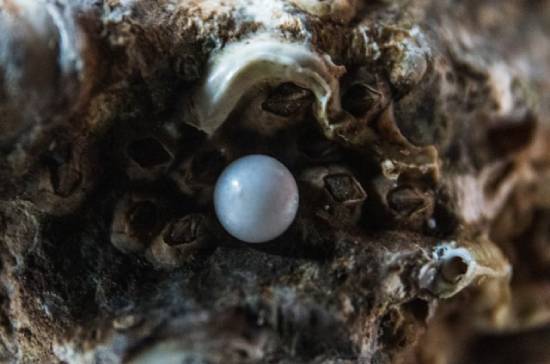
Photo by Marin Tulard on Unsplash
The Pearl of Great Price is only recorded in the Gospel account of Matthew. And it’s surrounded by several other parables that are all part of the same theme: the “kingdom of heaven,” or the “kingdom of God.”
The entire parable is only one sentence long, split into two verses:
“Again, the kingdom of heaven is like a merchant seeking beautiful pearls, who, when he had found one pearl of great price, went and sold all that he had and bought it” (Matthew 13:45-46, NKJV).
Jesus told this parable from a boat (likely on the Sea of Galilee) to a large crowd standing on shore (Matthew 13:1-3). It was the second year of His public ministry, and He was shifting the focus of His teaching.
Jesus had explained to His disciples why He was now speaking in parables (Matthew 1:10-17):
To reveal spiritual truth to those seeking it with earnest hearts.
1. To conceal the truth from people with hardened hearts.
2. Paul echoed this reasoning in 1 Corinthians 2:14:
“The natural person does not accept the things of the Spirit of God, for they are folly to him, and he is not able to understand them because they are spiritually discerned” (ESV).
Now here’s a quick background on the “kingdom of heaven” that Jesus spoke about so often.
It’s a kingdom of two parts. God’s unseen kingdom is already established because of Jesus Christ, who gave us the Holy Spirit so we can stay in prayerful communion with Him (Luke 17:20–21; Colossians 1:3, Matthew 12:28). But it’s also the promise of a future hope when Jesus will return to establish His physical kingdom forever (Revelation 11:15).
Jesus told eight parables in Matthew 13. And six of them start with the phrase, “The kingdom of heaven is like…” And all eight parables illustrate different aspects of God’s kingdom, as well as how humans can interact with it:
1. Parable of the Sower (13:1-9; 18-23): Our mindsets determine how we receive and respond to the truth about God.
2. Wheat and Tares (13:24-30; 36-43): We’re all living our lives in the same world, and we all ultimately face the same choice: follow God or not. And at the end, everyone’s decisions will be made clear.
3. Mustard Seed (13:31-32): God’s kingdom starts in small ways, but grows beyond measure.
4. The Leaven (13:33): God’s power works in us and through us to grow His kingdom.
5. Hidden Treasure (13:44): When we discover the real value of life in Jesus, nothing else can compare.
6. The Pearl of Great Price (13:45-46): The Savior seeks out His people above all else, and once we meet our Savior, nothing else matters.
7. The Dragnet (13:47-50): One day, God’s kingdom will eventually require a reckoning. Jesus will recognize who truly wants to be part of the kingdom, and who doesn’t.
8. The Householder (13:52): Some consider this a summary rather than a standalone parable. But it’s about sharing the value of the kingdom with others.1
Jesus covered a lot of ground when it came to the kingdom of heaven.
Why?
Because His whole mission was to bring the hope of heaven and eternal life to fallen humanity. He wants us to understand the value of what He offers and how it will transform our lives.
You also might’ve noticed that the Parable of the Pearl has a twin: The Parable of the Hidden Treasure. In the Bible, repetition often shows emphasis on importance.
Clearly, Jesus wanted to make sure we understand this defining detail of His kingdom.
What the Pearl of Great Price Parable Teaches
While Jesus said directly that the Pearl of Great Price tells us something about the kingdom of heaven (verse 45), viewpoints differ when it comes to the finer details.
Some say it’s about Jesus seeking to restore His relationship with humanity, because He loves us more than we can fathom.
And some say this short story helps us understand what humans will experience when discovering salvation in Jesus.
Still others believe it can represent both at the same time.
To understand these perspectives, let’s see what the details could represent:
The merchant:
A. Jesus
B. Humans seeking Jesus
Beautiful pearls:
A. God’s children (fallen humanity)
B. Everything humans chase after to fulfill their lives
The Pearl of Great Price:
A. Jesus and His gift of life
B. Human beings Jesus died on the Cross to save
Sold all he had:
A. Jesus’ sacrifice for us
B. Us choosing Jesus over anything on earth
These two different perspectives actually complement one another.
(So, we could say that, rather than choosing between perspective A and perspective B, we can choose perspective C: all of the above.)
To further unpack this, let’s break it down both ways.
Here’s how it looks with Jesus as the merchant:
Jesus (merchant) searches for lost and fallen humans (pearls). In hopes of saving even one of God’s children (a single, priceless pearl), He gave up His life (all He had).
Now, let’s look through the lens of fallen humanity as the merchant:
A person (merchant) searches for something (pearls) to fulfill a deep longing. This person discovers Jesus (a single, priceless pearl). And in response, they give up any attachments to this world (all they have) and claim Jesus as their Savior.
Now, let’s see what else we can discover in the parable’s details.
The Merchant
It doesn’t take a leap of the imagination to think of Jesus as the merchant man. Jesus seeking God’s lost children is a common theme in the Bible. Even in the Old Testament.
In Matthew 18:12-14, Jesus compares Himself to a shepherd and us to lost sheep that He seeks. In Malachi 3:17, God refers to us as His “jewels” (NKJV). 1 Corinthians 6:20 says we were “bought with a price” (ESV). And John 3:16 tells of Jesus’ sacrifice to save us.
It’s also not a stretch to think of humans in the merchant role, seeking “goodly pearls.” We see countless reminders in the Bible to seek Christ with all our hearts, and that what He gives us is so much more than what this broken world could ever give us.
We also see this sentiment in earlier verses:
“You will seek Me and find Me, when you seek Me with all your heart” (Jeremiah 29:13, ESV).
“Ask, and it will be given to you; seek, and you will find; knock, and it will be opened to you” (Matthew 7:7, NASB).
And stories like the Parable of the Prodigal Son show our human tendency to seek countless other things before realizing only Jesus can give us complete fulfillment (Luke 15:11-32).
It seems like both perspectives on the merchant are biblical.
Now let’s look into the “beautiful pearls.”
Beautiful Pearls

Photo by Paige Johnson on Unsplash
Let’s start with the significance of pearls in Jesus’ time, and why it works as an effective metaphor in this parable:
“Pearls…were considered by the ancients among the most precious of gems, and were highly esteemed as ornaments. The kingdom of heaven is compared to a ‘pearl of great price.’ In Matt. 7:6 pearls are used metaphorically for anything of value, or perhaps more especially for “wise sayings.”2
From one perspective, the beautiful pearls can represent God’s precious children—filled with potential, and each one of uniquely priceless value. Jesus, as the merchant, seeks the only thing of true value on this earth: us. Every one of us is a masterpiece created with care and intention by a loving Creator (Psalms 139:13-14).
Jesus never stops pursuing us, embracing anyone who longs for His love. So whenever any one of us accepts Him as our Savior, it’s like a merchant finding a priceless pearl.
This also ties into the viewpoint of humans as the merchant in the parable.
We also live alongside other merchants searching for valuable things, and it’s easy to become blinded by all the shiny pearls of lesser price in this life. We often struggle to see what has true worth. Sometimes we’ll get fixated on money, houses, careers, status, and so on. But all of that is short-term. None of it has eternal value.
When we open our hearts to Jesus and realize He’s been searching for us all along, we stop searching for fine pearls. We readily give up all the short-term pearls of lesser price as we embrace the one eternal pearl that makes any shine from other pearls fade.
The single pearl of great value
God sees a precious pearl in each of us. But the pearl can also represent the discovery of Jesus as our Savior and the promise of heaven.
So what does it look like to discover the Pearl of Great Price?
Here’s a beautiful description, according to one Bible commentary:
“He who finds in Christ the answer to all the longings of his heart, who finds in Him the way of life more perfectly, who finds in Him the goal of life, has found life’s greatest treasure.”3
When we experience Jesus and His true character for ourselves, we never want to let Him go. He fills the emptiness—the thing we can’t pinpoint that’s always missing. He opens our eyes to what matters, and it puts everything else in perspective.
That must’ve been what Martin Luther meant when he said:
“Faith takes hold of Christ, holding on to him like a ring holds its gem.”4
Sold All He Had

Image by lifeforstock on Freepik
Let’s face it—this is the hardest part to wrap our heads around when we view ourselves as the merchant. We can handle Jesus sacrificing His life in heaven and dying to redeem us. It’s already done. But what does it mean for you and me to “sell all we have” when we find Jesus?
Is it about earning salvation? Not a chance. We know Jesus taught salvation by faith (John 5:24; 6:28-29; Luke 7:50).
And it’s also not about giving everything away and living in poverty.
Yes, it might bring to mind the rich young ruler, who decided that immediate wealth outweighed a future in heaven (Matthew 19:16-26). But it’s one of the only cases in the Bible where Jesus actually told someone to give everything away.
Jesus knows our hearts, so He knows what has a hold on each one of us. And wealth was what kept this man from relying on God.
Paul recognized that following Christ wasn’t about sacrificing wealth, but about complete surrender:
“But whatever gain I had, I counted as loss for the sake of Christ. Indeed, I count everything as loss because of the surpassing worth of knowing Christ Jesus my Lord. For His sake I have suffered the loss of all things and count them as rubbish, in order that I may gain Christ” (Philippians 3:7-8, ESV).
He’d found what he was missing. Jesus fulfilled His deepest needs. And nothing else mattered.
That’s why in the parable, the merchant would rather let go of all the pearls he’d ever found for a single, valuable pearl.
We also find this commentary on Paul’s reaction to finding the Pearl of Great Price:
“Although salvation cannot be purchased, nevertheless it costs all that a man has. Like Paul he who truly ‘finds’ Christ will ‘count all things but loss for the excellency of the knowledge of Christ Jesus,’ and be willing to suffer ‘the loss of all things’ in order to ‘win Christ’ (Phil. 3:8). To know Christ is to fill a void in the life that nothing else can supply. To know Him is life eternal (John 17:3).”5
Earlier in His ministry, Jesus warned listeners not to get hung up on earthly “treasures.” He said to focus on the future treasure of eternal life in heaven (Matthew 6:19-20).
He also reminded us that, “For where your treasure is, there your heart will be also” (Matthew 6:21).
When we understand the infinite value of eternal life with Jesus, He becomes our focus and our Treasure.
Whatever it feels like we’re sacrificing to follow Jesus, God promises much more (Philippians 4:19). He’s able to do “far more abundantly than all that we ask or think” (Ephesians 3:20, ESV).
That’s why Martin Luther said,
“I have held many things in my hands, and I have lost them all; but whatever I have placed in God’s hands, that I still possess.”6
But what could that look like in our daily lives?
How does the Parable of the Pearl apply today?

Photo by LEONARDO DOURADO
The pearl merchant’s effort to claim his precious pearl reminds us to focus on what’s important. It’s not about our success or failure in this world. None of it will matter once Jesus returns. What matters is this:
1. Jesus values His children more than His own life.
2. When we recognize who Jesus is and what He offers, everything else dims by comparison.
Jesus searched for us and found us—His pearls. Now it’s up to us to accept what He offers: a new life in Him. That’s why the two meanings are complementary.
Jesus is of greater value than anything else we’ve been chasing after. He gives us:
- Perfect peace, even amid chaos (Isaiah 26:3; Philippians 4:6-7)
- The Holy Spirit to guide and empower us (John 14:26, John 16:13, Acts 1:8)
- Adoption by the King of Kings (Ephesians 1:5)
- An inheritance waiting in heaven (1 Peter 1:3-4)
- A new and fulfilling life now (John 10:10)
- The most powerful being to fight for you (Deuteronomy 20:4)
- Eternal life when Jesus returns (1 Thessalonians 4:16-17)
Yes, there’s often sacrifice and surrender involved.
Salvation is a free gift. But if we’ve truly accepted it, we’ll start to make Christ the center of our lives and let Him transform us.
We can’t hold onto a sinful world and our Savior at the same time (Matthew 6:24; James 4:4; Galatians 2:20). That doesn’t mean we should become hermits on a mountain top. It means when we commit our lives to Christ, we’ll start letting go of anything that could hurt that commitment.
God’s kingdom and our fallen world are like two ends of a magnet that naturally repel each other. An example might be that as we let the Holy Spirit transform us, our humility will grow as we let go of our pride.
A more tangible example is a new believer who starts adding new habits and dropping old habits. And sometimes friends or family might give them a hard time…especially if they were somehow involved in the old habits. A lot of these types of things might feel like a sacrifice at first. But we can know that God’s eternal kingdom is 100% worth giving up anything that could come between us and Him.
If we’re born again in Christ Jesus, healthy change and spiritual growth will follow. And God will work with us as we surrender anything that holds us back from growing.
It might feel different at first, but it can be very freeing!
It’s like a husband and wife committing to become parents. That’s definitely a sacrifice. Their focus will forever change. It won’t always be easy, but they’ll experience a type of profound joy that can only come from being parents.
And when you think about it, any time we commit to something we value, we have less time and attention for other things. It’s a natural trade-off, and it’s governed by what we consider important in our lives. And sometimes, it doesn’t even feel like a huge sacrifice because compared to that thing we value, nothing else brings us the same kind of joy or fulfillment.
When we start experiencing life with Jesus, we discover that anything He asks us to surrender will make life better—not worse. Even if it doesn’t feel that way at first.
That’s why He says, “My burden is light” (Matthew 11:30, ESV).
When we trust Him with our lives, He promises to give us “exceeding abundantly beyond what we can ask or think” (Ephesians 3:20, NKJV).
The reward for surrendering to Christ might not be measurable on this earth. And it won’t make sense to those who don’t know Christ (1 Corinthians 1:18). But it always leads to joy and peace.
Only Jesus “satisfies the longing soul” (Psalms 107:9, NKJV). He fills that empty space in all of us.
That’s why King David said:
“You will show me the path of life; in Your presence is fullness of joy; at Your right hand are pleasures forevermore” (Psalms 116:11, NKJV).
He had discovered the Pearl of Great Price.
And it’s there for you to find, too.
Found: The Pearl of Great Price
In the end, the Parable of the Pearl of Great Price is about the value of God’s people and the value of the kingdom of heaven. To God, we are jewels of infinite value. And He sent Jesus to claim us out of a sinful world at unimaginable cost to Himself.
The Pearl of Great Price is also about searching for truth, accepting salvation, and surrendering to Jesus, trusting that He will lead us and care for us.
And the best part is, even though this Pearl is of unimaginable value, it’s not difficult to find:
- Open your heart to God in prayer. Any time, any place.
- Tell Jesus you want to accept His gift of salvation.
- Ask Him for help in surrendering whatever might be holding you back.
- Let the Holy Spirit transform and guide you.
- Seek Christian community, like joining a Bible study.
- Read God’s Word every day to keep growing in Christ.
Want to read about other stories that describe the kingdom of heaven?
- Wahlen, Clinton, PhD. “Lessons from Matthew 13.” Biblical Research Institute. [↵]
- Smith, William L.L.D., Nelson’s Quick Reference Bible Dictionary (1993), pp. 494-495. [↵]
- Nichol, Francis, The Seventh-day Adventist Bible Commentary, Vol. 5 (1956), p. 411. [↵]
- Luther, Martin. Commentary on St. Paul’s Epistle to the Galatians, translated by Theodore Graebner. Zondervan Publishing House (1949). Originally delivered as lectures in 1535 at the University of Wittenberg. [↵]
- Seventh-day Adventist Bible Commentary, p. 411. [↵]
- Luther, Martin. Letter to Justus Jonas, June 29, 1530, in D. Martin Luthers Werke: Kritische Gesamtausgabe, Briefwechsel, vol. 5 (Weimar: Hermann Böhlau, 1934), p. 409. [↵]
More Answers

What Does the Parable of the 10 Virgins Teach Us?
The story of the 10 virgins found in Matthew 25:1-13 is a well-recognized parable of Jesus, and one with a profoundly important message for all of humanity.

The Parable of the Unforgiving Servant—A Walk-through
Through this somewhat alarming story, Jesus teaches us about forgiveness, mercy, and human nature.

What is Jesus’ Parable of the Sower About?
The parable of the sower is ultimately about how people responded to Jesus Christ and His message of the kingdom of God—the Gospel.

Understanding The Parable of The Lost Sheep
The parables of Jesus teach object lessons about the kingdom of God. And three parables in particular, the parable of the lost sheep, the parable of the lost coin, and the parable of the prodigal son, specifically teach about God’s unconditional, redemptive love.
What Does the Story of the Prodigal Son Really Mean?
The Parable of the Prodigal Son tells the story of a wayward son, a jealous brother, and a father with unconditional love. Let’s see what we can learn from it today.

The Parables of Jesus
Have you ever been on the verge of sleep in the middle of a long lecture or sermon when suddenly the speaker takes a turn and begins to tell a story?