
The parable of the sower is ultimately about how people responded to Jesus Christ and His message of the kingdom of God—the Gospel.
It’s one of Jesus’s most famous short stories in the New Testament and it’s recorded in all three synoptic Gospel accounts (Matthew 13:1-23; Mark 4:1-20; Luke 8:4-15). It’s also one of the few parables Jesus directly interprets.
But even though Jesus explained the parable, we still have deeper to dig. There’s a lot to think about as we aim to identify and apply these concepts in our own daily lives.
Sometimes this parable can be portrayed in ways that emphasize salvation and condemnation, or even “good people” vs. “bad people.” But at the center of it all, this story is about how our mindsets affect our receptiveness to the Gospel message. It’s applicable to every single human being in existence, because we’ve all been all four types of soil at different times in our lives.
So let’s unpack:
- The overview—what’s going on in the story?
- The parable’s background and context
- The purpose, meaning, and significance
- Finer key points in the parable
- How we can apply it today
Let’s start with a brief review of what happens in the parable of the sower.
Overview of the parable
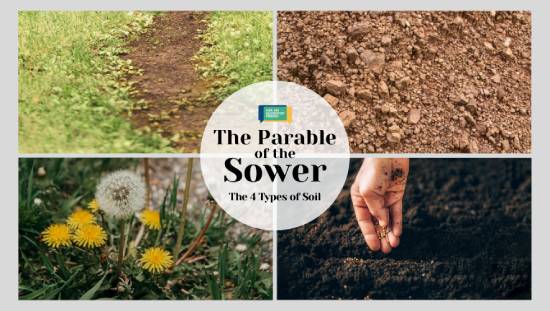
In the parable of the sower, a farmer spreads seeds all over the place. The seeds fall on several types of soil:
- A beaten-down path (packed, untilled soil)
- Rocky soil
- Soil with lots of weeds and thorns
- Fertile soil—ready to receive seeds
Three of the soils experience difficulty producing harvests.
Birds devour the seed on the wayside.
The plants that sprout in the rocky soil quickly wither away, because it was too shallow for the seeds to grow roots. And the thorns in the third type of soil choke out the sprouts before they can reach maturity.
But all is not lost—the seed that landed in healthy soil gave an abundant crop.
Makes sense—any farmer or casual gardener can agree that this is how things generally work. Now let’s look at what all of this means.
What’s the parable’s context?
The parable of the sower is one of the first short stories that teach about the kingdom of God (or kingdom of heaven, in Matthew). The kingdom of heaven is the ideal community between God and humanity. It gives us a foretaste of what life in heaven and on the new earth will be like.
By the time Jesus taught this parable, He had already gone throughout the land, teaching, healing, and preaching about the kingdom of heaven (Luke 8:1).
Jesus had been known in the area enough by this point that many people were following Him, and many others opposed Him and His influence.
Those who had accepted and loved Him included His disciples, Samaritans from Sychar, and people who witnessed His compassion and miracles, such as a nobleman and a Roman centurion.1
Others didn’t care for His challenges to the status quo and rejected Him. The people from His hometown in Nazareth almost threw Him over a cliff (Luke 4:24-30). And that wasn’t the first time people thought about killing Him (John 5:15-18)! Religious leaders also accused Him of being in league with Satan (Matthew 9:34; Mark 3:22).
Many others didn’t know what to think or didn’t care. His own people thought He was out of His mind when He was beginning His public ministry (Mark 3:20-21).
And it would get more complicated after His parable series on the kingdom of God (Matthew 13).
Jesus’ identity and mission would remain misunderstood by many, and religious leaders would become more determined to silence Him. Later on, several even turned their backs on Him after the miraculous feeding of the 5,000 (John 6:64-66).
So, though He healed and strengthened so many people and developed deep friendships, and even though people outside of Israel would believe in Him, He would also experience betrayal and abandonment by His disciples.
So it makes sense that the parable of the sower illustrates how people’s mindsets affect how they receive the Gospel message, or how they receive and perceive the kingdom of God.
The parable’s meaning, purpose, and significance
On the surface, the parable is about someone putting seeds into the earth. The seed lands in different types of soil that produce different results. But many of Jesus’s listeners sensed this was more than just a story about agriculture. And when the disciples asked Jesus to explain, He revealed the deeper meaning (Mark 4:10).
Why did Jesus give the parable of the sower?
Jesus’s parable was a call to action, encouraging the listeners to search their own hearts and evaluate their mindsets.
As we just covered, Jesus got mixed reactions to His message about the kingdom of heaven. Bible scholar Tim Mackie, PhD, explains how knowing this helps us understand the point of this story about seeds and soil:
“What that parable is doing is giving a commentary on what Jesus is doing in Israel, announcing the kingdom of God in the very moment that He’s giving the parable… Jesus is explaining why some people reject Him, some people are not sure, some people love Him. And it has to do [with] the condition of their hearts, or as He says, the condition of their ears…”2
“The parables are not about some other story or set of ideas floating above Jesus in the ether, [or] a theology of salvation. They are stories that Jesus used to explain what He was doing on the ground in the moment. So the soils represent how people of Jesus’ generation responded to Him and His message. To Israel. And so that’s the first layer of its meaning.”3
So now we have an idea of what the parable of the sower is addressing, let’s look at the key points.
Digging deeper
Jesus’s parables invited His listeners to dig deeper to learn their spiritual truths. Examining the parable’s details can give us a better understanding of what Jesus was getting at.
To help us see what the story is meant to teach us, we’ll look at:
- What the four soils represent
- The idea that the heart can change
- Another possible aspect of the story
What do the four soils represent?
The packed pathway, rocky, and thorny soils represent how people in Jesus’s day reacted to His message based on their mindsets—and these are mindsets that we can all experience no matter what time period we live in.4 So, rather than being types of people, the conditions of the soils represent the conditions of our hearts, which affect how we interact with God’s Word.
That’s why it’s important to understand that Jesus didn’t teach about the different soils to put people into neatly categorizable boxes. The soil types aren’t predetermined conditions that decide human destiny, and they’re not cookie-cutter labels that we can use to assess others. Instead, this parable is meant to be introspective. The only mindsets we can truly observe, assess, or change are our own.
Jesus used this story to illustrate the mindsets that anyone can have toward God or the Gospel message, regardless of their background or belief system. This analogy helps us be honest with ourselves and grow spiritually. And He wanted to warn His listeners about what humans are susceptible to.
The first soil he warns about is the wayside.
Wayside
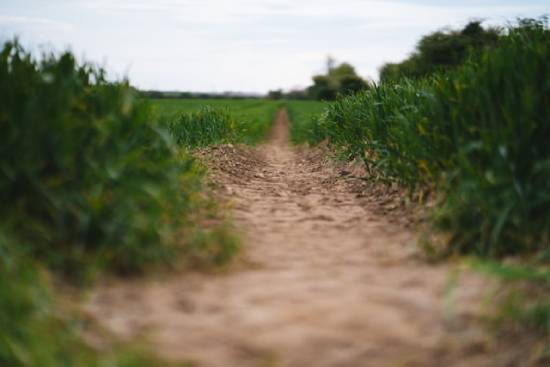
Photo by Phil Hearing on Unsplash
Also called the “path” or “road,” the wayside is made up of firm, untilled soil that has been packed down repeatedly by foot traffic. So the seeds can’t penetrate the soil and take root—they can only rest on top of it.
This represents a closed-off mindset that struggles to understand God’s Word because there’s no willingness to take it in. There is no effort to understand it.
There could be a variety of reasons for this mindset, such as indifference, fear, distraction, misconceptions, biases, resistance, unresolved pain, or anything that makes us want to shut out or disregard new or different information.
Maybe we’re in a state of mind that’s fixated on one thing and not allowing room for anything else. It could be because we don’t want to have to change something, or we don’t want to open ourselves up and become spiritually vulnerable.
This is a state anyone can experience. Those who persecuted Jesus the most were religious leaders who taught the law of God and about the coming Messiah. But the Messiah who came didn’t match the Messiah they had believed in. They weren’t willing to change their minds, so they closed themselves off from what Jesus offered and kept making choices that would lead to His crucifixion.
Mackie points out that if we reject the message of the kingdom of God—which is about being rescued through Jesus—we reject our only source of hope. As a result, we let ourselves be vulnerable to spiritual forces trying to destroy love, hope, and goodness. The birds represent Satan’s interference, hoping to keep us from understanding the truth of the Gospel and being changed by it.5
God is on a mission to save as many of us as possible, while Satan’s objective is to take as many down as he can. He harbors resentment and contempt toward God, so he takes out his fury on humans because we’re precious to God.
And the wayside path isn’t the only vulnerable ground. Rocky soil has its challenges too.
Rocky ground
Also called the stony ground, this soil represents a heart that eagerly accepts God’s Word at first, but only allows for a shallow religious experience. The happy feelings wither away, and the commitment weakens when it becomes time to make choices.6
This shallow soil that lacks the texture and nutrients for growth shows us that Jesus’s teachings require both willingness and commitment to understand and live out. Just like it takes time and consistent care for seeds to germinate and grow their roots, we need time, effort, and experience to cultivate our Christian journey.
The Bible says we’ve all been given “a measure of faith” (Romans 12:3, NKJV). And while faith the size of a mustard seed can move mountains, the seed still needs to be planted and tended. Faith is meant to grow (Luke 17:5-6; Matthew 17:20).
The best way to strengthen faith is to exercise it the same way we exercise to strengthen muscles. Genuine faith grows best through continued use, and gains strength as it faces challenges.
But it’s easy to feel vulnerable under the pressure of temptations, stressful situations, and opposition to our faith. It doesn’t help when some challenges last longer than others, wearing us down to the point of exhaustion.
The good news is that God understands our frailty (Psalm 103:13-14). He’s also confident that we can have solid faith. The Bible wouldn’t encourage us to be strong and courageous if God didn’t know it was possible (Joshua 1:9; Luke 1:37).
The apostle Paul prayed for the churches:
“As you therefore have received Christ Jesus the Lord, so walk in Him, rooted and built up in Him and established in the faith, as you have been taught, abounding in it with thanksgiving” (Colossians 2:6-7, NKJV, bold added).
“That Christ may dwell in your hearts through faith; that you, being rooted and grounded in love, may be able to comprehend… what is the width and length and depth and height—to know the love of Christ which passes knowledge; that you may be filled with all the fullness of God” (Ephesians 3:17-19, NKJV, bold added).
We’ll examine how God works with us to strengthen our faith in a later section. For now, let’s look into the soil with thorns.
Thorny ground
The soil with thorns represents a heart that’s open to God’s Word at first, but gets distracted, scared, or smothered. Like the rocky ground, this soil receives the seed and is not initially closed off to it. But in this case, thorns grow unchecked around the seeds and crowd them out, preventing them from being nourished from above or putting down roots below.
It demonstrates how what we prioritize also affects how we respond to the kingdom of heaven. Jesus warned His listeners against several “thorns” that compete for our attention and priority:
- Cares of this world—anxiety (Matthew 13:22)
- Seeking wealth (Matthew 13:22)
- “Pleasures of life” (Luke 8:14, NKJV)
- “The desires for other things” (Mark 4:19, NKJV)
It’s only natural for us to invest time, effort, energy, and resources into what matters most to us. So even if we receive God’s Word, something else can push it out of our lives if our relationship with God isn’t our priority.
It’s also about who we trust. Each “thorn” tries to persuade us to trust something other than God for our needs and fulfillment.
It’s a common mindset for us to get stuck in simply because we live in a sinful world with a deceitful devil trying to lead us astray. Sometimes the thorny ground develops from fearfulness, misguided ambitions, or bad experiences.
No matter what our distractions are, they become unchecked growing thorns when we treat them as more important or more powerful than God or our spiritual life, or when we let them govern our choices.
Now these three soil types are the ones Jesus warned His listeners about. And let’s remember once again that He didn’t intend these soils to be accusations or condemnations. The resistance we experience, the tendency to crumble under pressure, and the distractions this life throws at us are all like traps and hurdles we have to navigate.
But the fourth type of soil reveals that overcoming these is possible.
Good soil
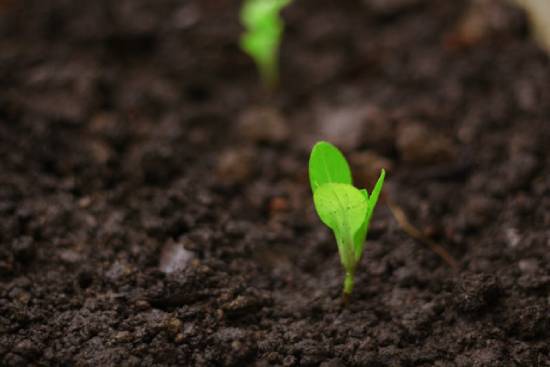
Photo by Daniel Dan on Unsplash
The good soil represents a full-hearted acceptance of Jesus’s message. The listener has heard and received the Word of God and lets it change them for the better.
Jesus says this mindset keeps the Word and bears fruit through patience (Luke 18:15). This is an example of a “hearer” becoming a “doer” by being willing to put effort into making God the center of their lives (James 1:21-25). We can have this personal experience with God and that will help our faith take root and build character (John 15:4-5).
How we live, then, becomes the evidence that the Holy Spirit is working in our hearts.
The “fruit” we bear is Jesus’s character, also called the “fruit of the Spirit.”
“But the fruit of the Spirit is love, joy, peace, longsuffering, kindness, goodness, faithfulness, gentleness, self-control…” (Galatians 5:22-23, NKJV).
As the message of the Gospel changes our hearts, we reflect Christ more and more in our behavior, lifestyle, and even in our thoughts.
Now Luke’s account says the good soil represents a “noble and good heart.” The King James version of the Bible says “honest and good.” What does that mean?
Ellen G. White, co-founder of the Adventist Church, gives us some insights:
“The ‘honest and good heart’ of which the parable speaks, is not a heart without sin; for the gospel is to be preached to the lost… He has an honest heart who yields to the conviction of the Holy Spirit. He confesses his guilt, and feels his need of the mercy and love of God. He has a sincere desire to know the truth, that he may obey it. The good heart is a believing heart, one that has faith in the word of God.”7
And in the Greek language, words like “noble” and “good” applied to people who had noble aims (what we might think of as good intentions) and put those intentions to use through the pursuit of wisdom and serving others. This was to describe people who wanted something beyond life’s fleeting pleasures and were determined to work toward it.8
Good soil is a heart that wants to receive God’s message and live according to His principles. The desire is for a sincere, lasting relationship with Jesus.
Let’s consider some examples from the Bible. Mary Magdalene was once possessed by seven demons. But Jesus healed her, and she became one of His most dedicated followers (Luke 8:2). She was there for Jesus at His crucifixion and possibly the first to see Jesus after His resurrection (John 20:11-18).
Another example is Matthew, or Levi, Jesus’ disciple. His old life as a tax collector made him an outcast. The Jews thought he was a traitor because tax collectors worked for the Roman government, and many took more money than was necessary. But when Jesus told Matthew to follow Him, he quit his job on the spot and never looked back. Now he’s known as one of the writers of the Gospel accounts!
These followers received Jesus and continued learning from Him. They loved him and wanted to know more. As a result, their hearts changed, and they became representatives of the kingdom of God.
There’s something about the good soil that can be overlooked when reading this parable for the first time. The good soil was receptive to seed because it had been tilled and fertilized. In other words, it took intentional preparation to receive the seed and let it produce life. This implies the state of the soil can be changed.
Which leads us to ask…
Are we truly able to change our mindsets?

Photo by Håkon Grimstad on Unsplash
Yes! Hidden in this parable is the hope of transformation. Jesus didn’t suggest that any of these spiritual mindsets were unchangeable. As anyone familiar with farming or gardening knows, the common problem with all three unfavorable soil types is that they weren’t prepared to grow seeds. They needed work.
And God is ready to help us overcome whatever it is that affects our soil quality, whether that’s vulnerability, distraction, stubbornness, worry, or conflicting ambitions.
The Bible affirms this with promises of God giving us new hearts:
“I will give you a new heart and put a new spirit within you; I will take the heart of stone out of your flesh and give you a heart of flesh. I will put My Spirit within you and cause you to walk in My statutes, and you will keep My judgments and do them” (Ezekiel 36:26-27 NKJV, bold added).
“Then I will give them a heart to know Me, that I am the LORD; and they shall be My people, and I will be their God, for they shall return to Me with their whole heart” (Jeremiah 24:7, NKJV, bold added).
“Sow righteousness for yourselves and reap faithful love; break up your unplowed ground. It is time to seek the LORD until he comes and sends righteousness on you like the rain” (Hosea 10:12, CSB).
The hope of the Gospel is that we receive a new life when we receive Jesus (2 Corinthians 5:17). Learning about the kingdom of God helps us see where we’re at and shows us how we can change and grow.
And the structure of the parable demonstrates that.
Personal growth—another application
The parable’s order can show us how a person grows in their faith.
It starts with the wayside, then the rocky ground and thorny ground, and ends with the good soil.
Many of us have had our Christian experience reflect that order.
We may have resisted the Gospel in some way, or we weren’t ready to think beyond our immediate cares or circumstances. And those things get in the way of the Holy Spirit’s influence taking root or producing fruit.
Then we might reach a place where we finally receive the Word, but we have to learn how to keep our faith strong and wrestle with our fearful, sinful human nature.
But the resistance we experience, the tendency to crumble under pressure, or the distractions this life throws at us are not more powerful than the Sower Himself. So eventually, as we grow in Christ and let God help us with our “stones” and “thorns,” we produce fruit through our actions and our character.
So now let’s talk about what that looks like.
How can we apply this parable?

Photo by Yosi Prihantoro on Unsplash
The first thing this parable does is prompt us to consider the state of our hearts—our spiritual mindsets. Maybe we notice a resistance of sorts when it comes to what we think we’re supposed to do, or how we’re supposed to be. Or maybe we’re not sure how what we’re learning about God and His Word will affect our lives. If that’s the case, we can be honest with God about it and take steps to encourage change.
We’ll look at some ways we can prepare our hearts for the Gospel.
How we can prepare our hearts
In gardening and agriculture, soil often doesn’t produce crops just anywhere. It takes work to till the ground, remove invasive things like weeds, thorns, and rocks, and nourish it so it can in turn nourish the seeds.
And the best way to prepare our hearts is by sincerely seeking God.
If we feel resistance toward such a personal, introspective process, we can seek His help to trust Him and understand His Word.
If we feel overwhelmed by distractions, temptations, or opposition, we can seek Him for grace to strengthen our faith. Even if we’ve messed up, He wants to help us. He encourages us to turn to Him.
We can always ask Him for wisdom to discern whatever is pulling us away from Him and how we can refocus.
We can start with baby steps, if need be. We can try taking in God’s Word bit by bit, looking for practical ways to apply what we learn, which provides opportunities for our faith to grow (Romans 10:17; Matthew 4:4).
Overall, willingness is the key to a prepared heart. God can work with that, even if we’re not sure what to start with or how to move forward.
How we can receive and keep the Word
To receive God’s Word means that aside from just listening or reading, we put intentional effort into processing what it means. We look for ways to take it to heart and apply what we learn, being willing to let it shape us. And in doing so, we deepen our knowledge of God and His character and guard our hearts against sin.
But how can truly we do that? How can we encourage God’s Word to stick? Here are some ways to get started:
- Prayer. Prayer gives God permission to make His Word come alive in us. We can also use Bible passages to help us pray. (Many of the Psalms are prayers.)
- Bible study. Studying the Bible lets God communicate with us through His Word. And it helps us understand what He’s trying to communicate.
- Group studies. Studying the Bible with others helps us see different perspectives and gives us a chance to share what we’re learning.
- Memorizing Scripture and biblical meditation. Rather than emptying the mind, biblical meditation engages our minds to consider God’s Word by noticing its depth, meaning, and application. Memorizing Bible verses can help us study the Word, and God can help bring these things to mind when we need them.
If you’re not sure how to begin this process, just start with one verse. Then steadily build on it. You may be surprised by how fast the brain can pick up on this!
- Listening to sermons or podcasts. Similar to group studies, listening to someone work through the Scriptures can gives us insights.
- Teaching/Expression. Sharing what we know can actually help us better understand what we’re learning! Of course, we don’t have to teach a class or preach a sermon. It can be as simple as telling a friend or posting on social media. Some people even create videos, songs, stories, or artwork to express what they’ve learned.
Final takeaways
The parable of the sower shows us the human conditions that can receive or reject the Word of God. Jesus told this parable to show how our minds, no matter the place or time, can react to His powerful message. It shows what’s behind the different ways people have treated the idea of God or those who follow Him.
To put it simply, those who are open to Jesus will naturally learn more from Him, and those who close off their hearts to Him will struggle to grasp the truth of His teachings.
But let’s also remember that this isn’t a story meant to encourage an “us vs. them” mindset. It’s not a tool we’re supposed to use to “diagnose” the spiritual condition of other people.
It’s supposed to help us look inward, not outward. Because that’s the only way it can be effective in warning us against the mentalities that hinder our relationship with God, while also encouraging us to put sincere effort into our spiritual growth.
- Luke 6:12-16; 8:1-3; John 4:28-30, 39-42; John 4:46-53; Matthew 8:5-13; Matthew 4:23-25 [↵]
- Mackie Tim, PhD, “Parables in Context – Parables Q+R”, The BibleProject Podcast Series: Parables, BibleProject, April 23, 2020, p. 9, brackets added https://d1bsmz3sdihplr.cloudfront.net/media/Podcast%20Transcripts/TBP%20Transcripts/parablese7parables-in-context-parables-qr-transcript.pdf [↵]
- Ibid., p. 10, brackets added [↵]
- Mackie,Tim, PhD, “Parables in Context – Parables Q+R”, p. 10 [↵]
- Tim Mackie, PhD, “1. How We Listen [Parables of the Kingdom] Tim Mackie (The Bible Project)” [↵]
- Ibid. [↵]
- White, G. Ellen, Christ’s Object Lessons, (Review and Herald Publishing Association, 1900), p. 58. [↵]
- Pulpit Commentary, “Luke 8”, Bible Hub, https://biblehub.com/commentaries/pulpit/luke/8.htm. [↵]
More Answers

What Does the Parable of the 10 Virgins Teach Us?
The story of the 10 virgins found in Matthew 25:1-13 is a well-recognized parable of Jesus, and one with a profoundly important message for all of humanity.

The Parable of the Unforgiving Servant—A Walk-through
Through this somewhat alarming story, Jesus teaches us about forgiveness, mercy, and human nature.

What Does the Parable of the Pearl of Great Price Mean?
Here’s what Jesus taught about the kingdom of heaven through this short parable about a merchant who finds a priceless pearl.

Understanding The Parable of The Lost Sheep
The parables of Jesus teach object lessons about the kingdom of God. And three parables in particular, the parable of the lost sheep, the parable of the lost coin, and the parable of the prodigal son, specifically teach about God’s unconditional, redemptive love.

What Does the Story of the Prodigal Son Really Mean?
The Parable of the Prodigal Son tells the story of a wayward son, a jealous brother, and a father with unconditional love. Let’s see what we can learn from it today.

The Parables of Jesus
Have you ever been on the verge of sleep in the middle of a long lecture or sermon when suddenly the speaker takes a turn and begins to tell a story?