
Abraham is known for being the first patriarch of the Hebrew people.
God communicated directly with Abraham and made a covenant with him that would provide land, protection, and fruitfulness for his descendants. And he indeed became the father of many nations, making him a foundational figure in three monotheistic world religions: Judaism, Islam, and Christianity (Genesis 17:5, 19-20; Genesis 25:1-6, 12-18).
He’s the first person Scripture focuses on in depth after Noah’s family and the great Flood, even though there were many generations between them. He came from the line of Noah’s son, Shem.
And even though Abraham’s story is told in Genesis, he is mentioned throughout the entire Bible. He is regarded as a model of faithfulness, following God alone and opposing the worship of idols, which was common in his time.
Two of his sons, Isaac and Ishmael, also hold both biblical and historical significance.
So what was it about Abraham’s life and faith that made him such a well-known and well-respected prophet throughout all of Scripture?
Here we’ll go through the significant themes and events of Abraham’s story, as well as the timeless truths we can apply to our own lives.
- Who was Abraham?
- What was God’s covenant with him?
- What legacy did he leave behind?
- What are the key lessons from his life?
Let’s learn more about Abraham’s heritage.
Who was Abraham?
Abraham, first known as Abram, was a man who came from the Ur of the Chaldeans (present-day Iraq)1 around 2000 BCE. His father, Terah, who Jewish texts suggest was an idol-maker,2 had settled in Haran.
But Abraham received a special call to go to the land of Canaan, where God promised to bless him and make his descendants into a great nation (Genesis 11:27–12:3). This meant leaving his relatives and culture, and following God in complete faith.
And it’s at this point in his life that we start getting to know him through Scripture.
Let’s look at his influence throughout the three major faiths that recognize him as a significant patriarch.
A father of the faith to Jews through Isaac
Those of the Jewish faith consider Abraham their founder and call him “Abraham our Father.” They revere him because through him, God’s covenant came to the nation of Israel, and later the Jewish people.
A father of the faith to Muslims through Ishamel

Photo by Utsman Media on Unsplash
The Islamic faith began through descendants of Abraham’s first-born son Ishmael, whom God also promised to make into a great nation (Genesis 16:10–12; 21:17–21).
He is an important figure in Islam both historically and as a revered prophet. His name appears 69 times in the Quran,3 more than any other biblical figure (except for Moses).4 Muslims call him “Ibrahim.”
Though Abraham isn’t considered a Muslim, they uphold his role as a prophet and believe that all other prophets, including Muhammad, descend from him.
A father of the faith to Christians
At the very beginning of the New Testament, we see how the genealogy of Jesus is traced back to Abraham (Matthew 1:1).
But while the blood lineage of Abraham was emphasized throughout the Old Testament, from the time of Jesus’ earthly ministry onward, Abraham is primarily referenced as an example of faith (Hebrews 11:8, 17).
The apostle Paul describes him as one who received salvation through faith (Romans 4:3, 13), and that all who choose to accept Jesus Christ as their Savior are part of that heritage (John 8:39; Galatians 3:6-7, 15, 26-29).
“For those of you who were baptized into Christ have been clothed with Christ. There is no Jew or Greek, slave or free, male and female; since you are all one in Christ Jesus. And if you belong to Christ, then you are Abraham’s seed, heirs according to the promise” (Galatians 3:27-29, CSB, emphasis added).
God’s covenant with Abraham

Photo by Pro Church Media on Unsplash
God made a special covenant with Abraham to bless him and his descendants, to make him a great nation, and to give him the land of Canaan. It’s sometimes known as the Abrahamic covenant or everlasting covenant.
God’s love and patience for His children is demonstrated as He repeated and enlarged that covenant many times throughout Abraham’s life. We’re going to look at each of those experiences and see how they apply to us today. Though given to Abraham, that covenant comes down to our time with promises of blessing through Jesus Christ.
The call to leave his home (Genesis 12)
The first time God comes to Abraham, He asks Abraham to leave his home and family in Haran.
God knew that Abraham needed to get away from an environment of idolatry in order to become a man of faith (Joshua 24:2).
He promised Abraham that his descendants would become a great nation, and in him “all the families of the earth [would] be blessed” (Genesis 12:3, NASB).
This promise was an echo of God’s promise to Adam and Eve—that one of their descendants would become the deliverer of the people from sin and evil (Genesis 3:15).
Eventually, Jesus would be born from this family line as its greatest blessing.
The restatement of the covenant (Genesis 13)
Abraham obeyed God’s command and went to the land of Canaan, but challenges abounded. A famine forced him and his family to find help in Egypt. There, Abraham failed to have complete faith in God and lied to protect himself. But despite his mistake, God led Abraham out of Egypt and then reassured him of the covenant.
This time, God emphasized His promise to give the land of Canaan to Abraham’s descendants. He said:
“Arise, walk about in the land through its length and width” (Genesis 13:17, NASB).
The words “walk about” were words of dominion. Because of Adam and Eve’s fall into sin, Satan had claimed the earth as his dominion (Job 1:7). But here, God is promising that it would belong to Abraham and God’s people once again.
God’s pledge to keep the covenant (Genesis 15)
Abraham struggled with fears and doubts—just like we do. Instead of giving up on him, God gave him tangible assurances of the covenant.
Here’s what happened.
Back in Canaan, Abraham receives news that his nephew Lot’s camp has been captured by an alliance of kings. Abraham gathers together a small army and, with God’s help, defeats these kings and rescues Lot.

Photo by Klemen Vrankar on Unsplash
Despite the victory, Abraham is unsettled. Will the Canaanite kings return and attack him?
That’s when God comes to him with these words:
“Do not be afraid, Abram. I am your shield, your exceedingly great reward” (Genesis 15:1, NKJV).
But Abraham continues to question. With all these great nations in Canaan, how will this land become his? And he doesn’t even have a son that could become a great nation!
God took Abraham out under the night sky, blanketed in stars. All those stars? That’s how many descendants Abraham would have.
But in his humanness, Abraham questions again: “Lord GOD, how shall I know that I will inherit [the land]?” (Genesis 15:8, NKJV).
To answer this question, God instructed Abraham to perform a special tradition used for establishing a covenant (Genesis 15:9–18). Through it, God pledged to uphold every word that He had spoken. He understood Abraham’s doubts and gave him the needed assurance.
New names and the symbol of circumcision (Genesis 17)
God gave Abraham another reminder of the covenant and added the rite of circumcision as a symbol of it.
See, Abraham had become a little impatient. He and his wife were both getting old. What if Abraham had a child with her servant Hagar instead? Culturally, this wasn’t an unusual practice when a woman was not able to conceive. As a result, he had a son with Hagar and named him Ishmael.
Abraham had rushed ahead of God, but God still didn’t give up on him. It was at this time that God changed his name from Abram to Abraham (Genesis 17:5), which means “father of a multitude.”
He gave Abraham the rite of circumcision as a symbol of the covenant. It represented having a sensitive heart toward God instead of being hardhearted.
He showed Abraham some tough love too by telling him that Ishmael was not the promised child. Sarah would still have a child. To emphasize this, God changed Sarah’s name from Sarai to Sarah to symbolize her role as the mother of a nation (Genesis 17:15–16).
But Abraham’s greatest test was still to come.
The testing sacrifice of Isaac (Genesis 22)
At last, the promised child—Isaac—arrived. But Abraham had struggled to trust God up to this point. Now, God gave him a final test, asking him to sacrifice his only son on Mount Moriah. Imagine Abraham’s agony and confusion!
You may read this story and think that this test doesn’t sound like something a loving God would require.
But keep in mind:
This was not Abraham’s first experience with God. Abraham knew God’s heart and had seen His mercy and faithfulness over and over again.

Photo by Paxson Woelber on Unsplash
Thus, he didn’t hesitate to obey. In fact, it seems that he believed God was going to provide in another way (Genesis 22:5, 8; Hebrews 11:19).
That’s just what happened.
Before Abraham could use his knife to slay his son, an angel stopped him. It was enough.
Abraham had been victorious through faith. And through the experience, he caught a glimpse of the greatest sacrifice to come—God the Father giving His Son Jesus Christ for us (John 3:16).
One last time, God repeated the promise of that blessing to him and his descendants (Genesis 22:15–18).
Abraham’s family and legacy
Abraham died at 175 years of age, from old age, and was buried in the same cave as his wife, Sarah.5 He left behind a legacy through his children: Isaac, Ishmael, and his six sons from his second wife Keturah (he married her after Sarah died).
His son Isaac had two sons: Esau and Jacob. While they were still in the womb, God promised that they would both become nations (Genesis 25:32).
Esau’s descendants became the Edomites.
Jacob was later renamed “Israel” by God (Genesis 35:10), and became the patriarch of the nation of Israel, fathering the namesakes of its twelve tribes. And later on, this lineage would be the one Jesus was born into (Matthew 1:11-17).
As Christians, we believe that the connection between Jesus and Isaac was hinted at as early as the story of the attempted sacrifice of Isaac, which fits as a parallel of how God the Father sacrificed His Son, Jesus, to save us from our sins.
Now let’s look at the descendants of Abraham’s first-born son, Ishmael.
As we mentioned earlier, Ishamael’s descendants went on to become the Arab tribes and nations in the Middle East.
And finally, Abraham’s six other sons (Genesis 25:1-2)—Zimran, Jokshan, Medan, Midian, Ishbak, and Shuah—formed other people groups. We don’t know much about their descendants, except that Midian’s family became the Midianites.
But greater than Abraham’s bloodline is the example he left behind for us.
Lessons from Abraham’s life
Let’s look at three key lessons we can learn from what Scripture tells us about Abraham.
Patience for God’s timing

Photo by Osama Saeed on Unsplash
The virtue of “waiting on the Lord” is a common concept because human timing is so vastly different from God’s perfect timing.
Impatience is part of our fallen nature. It’s not easy to trust in God when we can’t see the outcome.
Abraham and Sarah had to deal with the need for patience when they still remained childless into old age, even though God had promised that Abraham would be “the father of many nations” (Genesis 17:5, CSB).
And even though they took matters into their own hands at first, God still came through. He gave a son to him and Sarah, as promised.
So when we find ourselves waiting for God to act in our lives, remember Abraham’s experience. Let’s resist the urge to rush the process or fulfill God’s plan in the way our limited vision sees fit. Instead, trusting in God and focusing on what He has placed in front of us is the best way to adhere to His will. We can rest in the assurance that He is active in our lives and has our best interests at heart, even if we can’t always see it.
Obedience to God, even when it doesn’t make “sense”
Sometimes, obeying God can seem contrary to what we think is best. But we can choose to continue to believe in Him and act accordingly (Genesis 15:6).
Yes, He gives us evidence to hold onto, but we still have to take steps of faith, like Abraham did when called to leave his homeland or asked to sacrifice the very son God promised him (Hebrews 11:17; Genesis 22).
God’s faithfulness to His promises
Continuing on the theme of patience, sometimes, God’s promises seem to be delayed. But He always fulfills them. His timing is perfect.
The covenant God made with Abraham had nothing to do with Abraham’s promises. It was all based on God’s promise. And God came through. It was fitting, then, that Abraham called the place where he was asked to sacrifice Isaac “Yahweh provides” (Genesis 22:14).
His life is testimony to this fact.
And through this, we learn that salvation is all about what God has promised, not what we do or promise. Salvation from sin and victory comes through Jesus and everything that He has done for us (Ephesians 2:8–10).
The promise to Abraham is for us too
We see Abraham as a great patriarch, and he was—as three of the world’s major religions would agree.
But Christians also understand that Abraham was human. He made mistakes and struggled to trust God, just like we do.
Though that could seem disappointing, this is actually encouraging. It means that Abraham’s story has relevant lessons for us and that God can use us too, even when we struggle with our faith.
God is always faithful to His covenant and still longs to give us the blessing through Jesus that He promised to Abraham.
Liked this character sketch of Abraham?
Related Articles


- “Ur,” Brittanica Encyclopedia, https://www.britannica.com/place/Ur. [↵]
- Solomin, Rachel M, “Stories of Our Ancestors,” My Jewish Learning, https://www.myjewishlearning.com/article/stories-of-our-ancestors/ [↵]
- Wheeler, Brannon, “Abraham and Islam,” Society of Biblical Literature, https://wwww.bibleodyssey.org/people/related-articles/abraham-and-islam/. [↵]
- Ibid. [↵]
- Genesis 23:19; Genesis 25:7–8; Genesis 49:31 [↵]
More Answers

¿Por qué muchos Adventistas del Séptimo Día eligen una dieta vegetariana?
¿Por qué muchos Adventistas del Séptimo Día eligen una dieta vegetariana?Puede que tengas un amigo adventista que sea vegetariano, o tal vez estés asistiendo a una Iglesia Adventista del Séptimo Día por primera vez y notes que en la comida compartida no hay carne....

What is Jesus’ Parable of the Sower About?
The parable of the sower is ultimately about how people responded to Jesus Christ and His message of the kingdom of God—the Gospel.

O que os Adventistas do Sétimo Dia acreditam sobre o Grande Conflito (Bem vs. Mal)?
O “Grande Conflito” é a frase que os Adventistas do Sétimo Dia normalmente usam para descrever o conflito espiritual cósmico entre as forças do bem (Deus) e as forças do mal ou do pecado (Satanás/o diabo).

Was Jesus Ever Hypocritical? Learn What the Bible Says.
Was Jesus Ever Hypocritical? Learn What the Bible SaysMany undesirable traits are associated with hypocrisy. But overall, hypocrites intentionally try to make others believe they uphold or represent a certain belief system, character trait, lifestyle, etc., when in...

Kukatishwa Tamaa Kukuu na Kile Tunachojifunza
Wafuasi wa Miller walitabiri kurudi kwa Kristo Oktoba 22, 1844, lakini Yesu hakuja kamwe. Tukio lingine lilitokea. Gundua kilichotokea kweli na Kukatishwa Tamaa Kukuu kunaweza kutufundisha leo.

When in Doubt: 7 Ways Christians Can Manage Uncertainty
When in Doubt: 7 Ways Christians Can Manage UncertaintyFew things in life are truly certain. And no matter how convinced some people can appear on the surface, no one is immune to doubt. And this isn’t a bad thing. Doubt has a purpose. A role to serve. (Just imagine...
El gran chasco y las lecciones que nos enseña
Los Milleritas predijeron el regreso de Cristo el 22 de octubre de 1844, pero Jesús nunca llegó. Ocurrió otro evento. Descubre lo que realmente sucedió y qué puede enseñarnos hoy El gran chasco.

Is Jesus the Same Being as Michael the Archangel?
Many Christians have wondered at the mysterious identity of Michael the Archangel.
A Grande Desapontamento e Lições que nos Ensina
Os Milleritas previram o retorno de Cristo em 22 de outubro de 1844, mas Jesus nunca chegou. Outro evento ocorreu. Descubra o que realmente aconteceu e o que o Grande Desapontamento pode nos ensinar hoje.
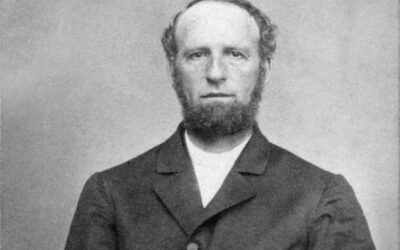
James Springer White, Co-Fundador da Igreja Adventista do Sétimo Dia
James Springer White (1821–1881) foi uma figura chave na Igreja Adventista do Sétimo Dia e marido de Ellen G. White.
James Springer White, cofundador de la Iglesia Adventista del Séptimo Día
James Springer White (1821–1881) fue una figura clave en la Iglesia Adventista del Séptimo Día y el esposo de Elena G. de White.

Kila Kitu Unachohitaji Kujua Kuhusu Chakula cha Siku ya Sabato
Kwa Waadventista Wa Sabato, kushiriki chakula cha Siku ya Sabato pamoja na marafiki na familia ni moja ya sehemu muhimu na ya kumbukumbu ya Sabato.

Nini Maana ya “Mwadventista”?
Waadventista wa Sabato ni dhehebu la Kikristo la Kiprotestanti wanaoshikilia Sabato ya siku ya saba kama ilivyoandikwa katika Biblia.

How to Have a Personal Relationship with Jesus: A 10-Step Guide
How to Have a Personal Relationship with Jesus: A GuideNo matter who you are, you’re surrounded by relationships. Friends, family, colleagues, acquaintances...they all play a part in our lives, for better or worse. So you’re surely aware of a lot of the components...

Biblia Ina Maana Gani Inaposema Yesu ni Mwana wa Mungu?
Biblia inapomwita Yesu Mwana wa Mungu inarejelea uungu wake. Jifunze ni nini kinachofanya hili kuwa muhimu na kinahusianaje na wokovu.

“Go and Sin No More”—What Did Jesus Mean?
These well-known words of Jesus Christ come from two New Testament stories in the book of John—a man healed by the Pool of Bethesda (John 5) and a woman caught in adultery (John 8).

Quais são as Mensagens dos Três Anjos em Apocalipse 14?
As mensagens dos três anjos em Apocalipse 14 advertem o mundo a adorar a Deus, deixar a confusão religiosa e evitar a adoração de tradições humanas em vez dos mandamentos de Deus.

Je! Tunaweza Kuitunza Siku Yoyote ya Wiki Kama Sabato?
Katika sura za kwanza kabisa za Biblia, tunamwona Mungu akianzisha kumbukumbu ya kila wiki na siku ya mapumziko, inayoitwa Sabato (Mwanzo 2:2-3).
¿Cuáles son los mensajes de los tres ángeles en Apocalipsis 14?
Los mensajes de los tres ángeles en Apocalipsis 14 invitan al mundo a adorar a Dios, abandonar la confusión religiosa y evitar la adoración de tradiciones humanas en lugar de los mandamientos de Dios.
Por que muitos Adventistas do Sétimo Dia escolhem uma dieta vegetariana?
Embora nem todo adventista seja vegetariano, muitos evitam completamente o consumo de carne para viver de forma mais saudável, buscando honrar a Deus física, espiritual e mentalmente.

Understanding the Miracles of Jesus Christ
Understanding the Miracles of Jesus ChristWhat do you think of when someone says something is “a miracle”? Maybe you think of an unexpected recovery, surviving a dangerous accident, or getting an answer to a seemingly impossible prayer. Simply put, miracles are...
O que significa “Adventista”?
O que significa "Adventista"?Os Adventistas do Sétimo Dia são uma denominação cristã protestante que observa o sábado bíblico do sétimo dia. A partir dessa crença, eles obtêm a primeira parte de seu nome. Mas e quanto à segunda parte - "Adventista"? “Adventista”...
¿Podemos guardar el sábado bíblico cualquier día de la semana?
En los primeros capítulos de la Biblia, encontramos a Dios estableciendo un memorial semanal y día de reposo, conocido como el sábado (Génesis 2:2-3).
Podemos guardar o Sábado em qualquer dia da semana?
Nos primeiros capítulos da Bíblia, encontramos Deus estabelecendo um memorial semanal e dia de descanso, conhecido como o Sábado (Gênesis 2:2-3).
O que significa a Bíblia quando chama Jesus de Filho de Deus?
Quando a Bíblia chama Jesus de Filho de Deus, está se referindo à Sua divindade. Saiba o que torna isso tão significativo e o que tem a ver com a salvação.
¿Qué creen los Adventistas del Séptimo Día acerca de la Biblia?
La Biblia forma la base de todo lo que los Adventistas del Séptimo Día creen y enseñan.
Legado Duradouro de Ellen G. White
Ellen G. White é um nome bem conhecido entre os Adventistas do Sétimo Dia, mas ela também teve um impacto em muitas outras partes da história, além de ser co-fundadora da Igreja Adventista.

What Does it Mean to Have Faith in Jesus?
What Does it Mean to Have Faith in Jesus?To have faith in Jesus means we place our spiritual hope, trust, belief, and priority in Him as our loving Savior. And that sounds great as an idea. That’s our goal, right? But when we go through difficult times, face...
James Springer White, Mwanzilishi wa Kanisa la Waadventista Wa Sabato
James Springer White (1821–1881) alikuwa mtu muhimu katika Kanisa la Waadventista wa Sabato na mume wa Ellen G. White.
Didn’t find your answer? Ask us!
We understand your concern of having questions but not knowing who to ask—we’ve felt it ourselves. When you’re ready to learn more about Adventists, send us a question! We know a thing or two about Adventists.