
 Bartholomew is a lesser-known character in the New Testament who is mentioned in each of the lists of the twelve disciples of Jesus Christ (Matthew 10:2-4; Mark 3:14-19; Luke 6:13-16). He is most likely the same individual as Nathanael (see John 1), someone who was sincerely studying the Scriptures and waiting for the Messiah to come.
His wait was no doubt rewarded when Jesus appointed him as one of the twelve, and he had the opportunity to witness the Messiah’s healing, teaching, and preaching ministry. He also experienced the outpouring of the Holy Spirit at Pentecost, spurring his work as a missionary for Jesus.
So, let’s dig deeper into what the Bible and historical Christian traditions can teach us about Bartholomew. We’ll cover:
Bartholomew’s background
The first we read about Bartholomew is in Matthew 10:2-4:
“The names of the twelve apostles are these: first, Simon, who is called Peter, and Andrew his brother; James the son of Zebedee, and John his brother; Philip and Bartholomew; Thomas and Matthew the tax collector; James the son of Alphaeus, and Thaddaeus; Simon the Zealot, and Judas Iscariot, who betrayed him” (ESV).
The name Bartholomew gives us hints about his lineage. Bartholomew is Aramaic, meaning “son of Tolmai” or “son of Talmai” (in Aramaic, bar means “son”).1
Scholars believe that Bartholomew is the same character as Nathanael (mentioned in John 1:45). Here’s what Bible commentators say about it:
“Nathanael was probably his own personal name. The Synoptic Gospels [Matthew, Mark, and Luke] make no mention of Nathanael, and the Gospel of John says nothing of Bartholomew. John mentions Nathanael, together with others of the Twelve, in a setting where it seems that none but disciples of the inner circle of Twelve were present (see ch. 21:2). Thus there is no valid reason for doubting that the two names Bartholomew and Nathanael refer to the same person.”2
In this case, Bartholomew was likely his family name, and Nathanael, his first name. And this makes sense, since it wasn’t uncommon for Jews in the first century to have two names.
According to John 21:2, he came from Cana of Galilee. And it’s there that his friend Philip found him and invited him to meet Jesus (John 1:43-45).
Bartholomew’s discipleship
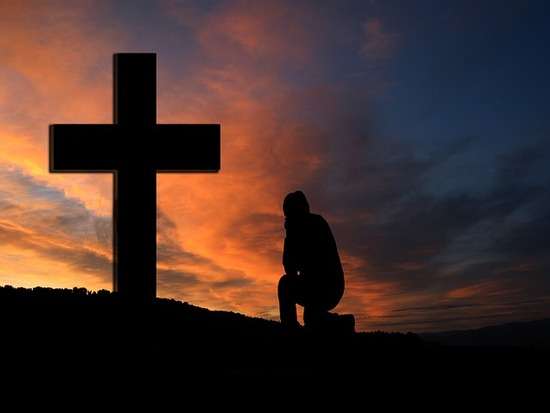
Image by Gerd Altmann from Pixabay
Bartholomew is mentioned only a handful of times in the Gospel accounts. Still, because he was part of the twelve disciples, he would’ve been with them through many key events of Jesus’ ministry, such as the feeding of the 5,000, Jesus’ healing miracles, and the crucifixion.
Jesus would also have appointed him together with the other disciples to go out and preach, heal, and cast out demons (Mark 3:14-19).
The most we know about Bartholomew, though, comes from his first encounter with Jesus.
The account gives us evidence of a close connection between Bartholomew and Philip, the disciple who invited him to meet Jesus. Interestingly, Bartholomew is also always listed right after Philip when the disciples are named in the Bible (Matthew 10:2-4; Mark 3:14-19; Luke 6:13-16).
When Philip found Bartholomew, he exclaimed:
“We have found him of whom Moses in the Law and also the prophets wrote, Jesus of Nazareth, the son of Joseph” (John 1:45, ESV).
This tells us that both Philip and Bartholomew were earnest students of the Scriptures. They were eager for the promised Messiah of the Old Testament.
And yet, Bartholomew was a bit skeptical: “Can anything good come out of Nazareth?” (John 1:46, ESV).
Rather than arguing with him, Philip simply invited him to come and see (John 1:47). And so, Bartholomew did.
He wasn’t disappointed.
When Jesus saw Bartholomew coming toward Him, He said, “Behold, an Israelite indeed, in whom there is no deceit!” (John 1:47, ESV).
What a high compliment! Jesus recognized the sincerity in him. Bible commentators note:
“Nathanael was one of that small but devout group who earnestly waited for ‘the consolation of Israel’ (see Luke 2:25) and aspired to the high ideals set before them by God.”3
Bartholomew was taken aback. “How do You know me?” he asked (John 1:48, NKJV).
Jesus responded, “Before Philip called you, when you were under the fig tree, I saw you” (John 1:48, NKJV).
Jesus had taken notice of Bartholomew’s sincere longing for the Messiah. He knew him inside and out. This realization made Bartholomew exclaim:
“Rabbi, You are the Son of God! You are the King of Israel” (John 1:49, ESV).
And so began his faithful discipleship with Jesus. Though he would experience the disappointment of the crucifixion with the other disciples, he would emerge courageous and hopeful, empowered by the Holy Spirit.
Bartholomew’s life after Jesus’ ascension

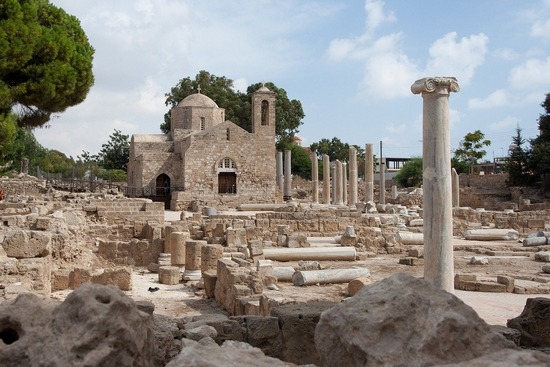
Photo by Amaury Gutierrez on Unsplash
Bartholomew was there with the other disciples (except Judas) after Jesus’ resurrection. He would’ve heard Jesus’ promise and commission: “But you will receive power when the Holy Spirit has come upon you, and you will be My witnesses in all Judea and Samaria, and to the end of the earth” (Acts 1:8, ESV).
Together with the other disciples, Bartholomew took those words to heart.
Acts 1:12-13 records that he went to Jerusalem and joined the disciples in the upper room. There, they prayed and waited for the outpouring of the Holy Spirit.
Acts 2 tells us the revolutionary results of those prayers. The disciples received the Holy Spirit “like a rushing mighty wind,” and began to preach the good news of Jesus (verse 1, NKJV). All their fears were quieted, and they boldly shared about the one they loved.
Though we don’t know the details, we can assume that Bartholomew, like the other disciples, went from there and began to preach the gospel.
According to a tradition taught by the church father Eusebius of Caesarea, Bartholomew went to India, taking with him a gospel account of Matthew in Hebrew.4
Other traditions say he went to Armenia, Ethiopia, Mesopotamia, Parthia (modern-day Iran), and Lycaonia (modern-day Turkey).5
Again, the Bible and history don’t tell us for sure, but it’s most likely that he died a martyr for his faith.
Here’s what Foxe’s Book of Martyrs says about Bartholomew’s death:
“Preached in several countries, and having translated the Gospel of Matthew into the language of India, he propagated it in that country. He was at length cruelly beaten and then crucified by the impatient idolaters.”6
Bartholomew remained sincere in his faith to the end—leaving an example for us.
Bartholomew’s legacy

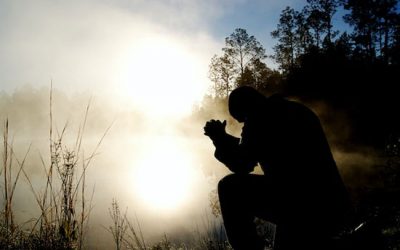
Photo by Fa Barboza on Unsplash
We may not know much about Bartholomew—his life before following Christ, his time as a disciple, or his accomplishments as an apostle—but what we do know about him leaves us a beautiful legacy.
He shows us what it looks like to have a heart sincerely seeking truth.
Bartholomew was searching the Scriptures, wanting to be led by the Holy Spirit, wanting to see the Messiah. And Jesus took notice, commending him.
His simple faith guided his journey as a disciple and later a missionary sharing the gospel. And his possible martyrdom means that he was making enough of a difference for Jesus that people would have taken notice.
But above all, Bartholomew’s example is a promise to us that Jesus indeed notices those who seek Him in sincerity and humility.
Because in the end, regardless of our life accomplishments, it’s our relationship with Jesus that truly matters.
Want to learn more about the other disciples of Jesus? See what they were like and how Jesus led each one of them.
Related pages


- Metzger, Bruce, and Coogan, Michael, ed., The Oxford Companion to the Bible, pp. 75, 45. [↵]
- Seventh-day Adventist Bible Commentary, vol. 5, comment on Mark 3:18. [↵]
- Ibid., vol. 5, comment on John 1:47. [↵]
- “Saint Bartholomew,” Encyclopedia Britannica. [↵]
- Ibid. [↵]
- Foxe, John, Foxe’s Book of Martyrs, chapter 1. [↵]
More Answers

Como os Ensinos de Ellen White Podem Melhorar Sua Saúde
Como os Ensinos de Ellen White Podem Melhorar Sua SaúdeAssistência médica no século XIX era dito deixar "mais doenças do que levava embora" com o uso de sangrias e "remédios" como mercúrio e arsênico.1 À medida que as pessoas questionavam esses métodos, novas...
Cómo las enseñanzas de Elena G. de White pueden mejorar tu salud
La atención médica en el siglo XIX se decía que dejaba “más enfermedades de las que eliminaba” con su uso de sangrías y “medicamentos” como el mercurio y el arsénico.

All About the Gospel of Matthew
The Book of Matthew is one of the four Gospel narratives in the Bible
Descanso e Reconexão: O Que Realmente Significa Guardar o Sábado
A Bíblia nos diz que guardamos o Sábado evitando o trabalho. Deus fez essa lei porque sabia que ela nos fortaleceria e nos traria alegria, além de nos dar tempo para nos reconectar com Ele e recarregar das nossas vidas ocupadas.
Descanso y reconexión: lo que realmente significa guardar el sábado
La Biblia nos dice que guardamos el sábado evitando el trabajo. Dios hizo esta ley porque sabía que nos fortalecería y nos traería alegría, además de darnos tiempo para reconectarnos con Él y recargar energías de nuestras vidas ocupadas.

Todo lo que necesitas saber sobre la Escuela Sabática
La Escuela Sabática es el componente de estudio bíblico del programa de la iglesia en la mayoría de las Iglesias Adventistas del Séptimo Día.

O que os Adventistas do Sétimo Dia acreditam sobre a autoridade da Bíblia?
Saiba como um livro realmente antigo (a Bíblia) é o único fundamento para todas as crenças dos Adventistas do Sétimo Dia.
¿Qué creen los Adventistas sobre la autoridad de la Biblia?
Puede hacerte sentir intimidado o frustrado. Podrías pensar en un líder de iglesia que parecía arruinar toda tu diversión cuando eras niño, o un jefe que supervisa cada uno de tus movimientos en el trabajo…

¿Qué es un médico misionero adventista?
Un médico misionero en la Iglesia Adventista es alguien que cuida de las necesidades médicas de las personas como una forma de mostrar el amor de Jesús. Pueden viajar a otro país, o incluso simplemente servir en su ciudad natal.
Ni nini Mtaalam wa Matibabu wa Kiadventista?
Mmishonari wa matibabu katika Kanisa la Waadventista ni mtu anayejali mahitaji ya matibabu ya watu kama njia ya kuonyesha upendo wa Yesu.
O que é um missionário médico adventista?
Um missionário médico na Igreja Adventista é alguém que cuida das necessidades médicas das pessoas como uma forma de mostrar o amor de Jesus. Eles podem viajar para outro país, ou até mesmo servir em sua cidade natal.

Guía definitiva para el estudio personal de la Biblia
¿Alguna vez has sentido que estudiar la Biblia es un desafío y simplemente no estás seguro de por dónde empezar? ¿O estás buscando ideas nuevas para mejorar tus hábitos actuales de estudio bíblico?
O Guia Definitivo para o Estudo Pessoal da Bíblia
Já sentiu que estudar a Bíblia é desafiador e não tem certeza por onde começar? Ou está procurando ideias novas para melhorar seus hábitos atuais de estudo da Bíblia?
¿Los Adventistas del Séptimo Día observan festividades relacionadas con la Pascua?
La resurrección de Jesús, celebrada en muchas festividades relacionadas con la Pascua, es central para las creencias de la Iglesia Adventista del Séptimo Día.
10 Bible Teachings Adventists Believe About the Devil
10 Bible Teachings Adventists Believe About the DevilSeventh-day Adventists believe the devil (or Lucifer-turned-Satan) is real and active. He is the sole adversary of God and humanity (1 Peter 5:8), making him the opposing force in the cosmic conflict between good...

¿Los Adventistas del Séptimo Día creen que solo ellos irán al cielo?
No, los adventistas definitivamente no creen que son los únicos que irán al cielo. De hecho, no creemos que la admisión al cielo se base en la iglesia o denominación a la que pertenecemos.
Waadventista Wa Sabato Wanaamini Nini Kuhusu Mamlaka ya Biblia?
Jifunze jinsi kitabu kimoja cha zamani sana (Biblia) kilivyo msingi pekee wa imani zote za Waadventista wa Sabato.
Mwongozo Bora Katika Kujifunza Biblia Binafsi
Umewahi kuhisi kwamba kusoma Biblia ni jambo gumu, na hujui uanzie wapi? Au unatafuta mawazo mapya ya kuboresha tabia yako ya usomaji wa Biblia.
Je, Waadventista Wasabato Wanasherehekea Siku Kuu Zinazohusiana na Pasaka?
Kufufuka kwa Yesu, kunakoadhimishwa katika siku kuu nyingi zinazohusiana na Pasaka, ni muhimu katika imani za Kanisa la Waadventista wa Sabato.
Je, Waadventista Wasabato Wanaamini Wao Pekee Ndiyo Watakao Kwenda Mbinguni?
Hapana, Waadventista hakika hawaamini kwamba wao ndio pekee watakao kwenda mbinguni. Kwa kweli, hatuamini kwamba kupokelewa mbinguni kunategemea kanisa au madhehebu tunayohusiana nayo.

Chakula cha Pamoja Katika Kanisa la Kiadventista: Mahali Ambapo Chakula na Urafiki Vinakutana
Mara nyingi, kawaida kwenye ratiba inayotofautiana kutoka mara moja kwa wiki hadi mara moja kwa mwezi hadi mara moja kwa robo, kanisa la Waadventista litakuwa na “karamu za ushirika,” mara nyingi zikiitwa chakula cha mchana cha pamoja.

Je, Waadventista Wa Sabato Wanaamini Nini Kuhusu Uumbaji Katika Biblia?
Waadventista Wa Sabato wanaamini kwamba Mungu ndiye Muumbaji wa ulimwengu. Wanafikia hitimisho hili kutoka kitabu cha kwanza cha Biblia—Mwanzo.

Jinsi Ellen White Alivyochangia Ujumbe wa Afya wa Waadventista
Jinsi Ellen White Alivyochangia Ujumbe wa Afya wa WaadventistaWaadventista wa Sabato wanajulikana kwa kusisitiza maisha yenye afya bora. Na Ellen G. White alikuwa na ushawishi mkubwa katika maendeleo ya kipaumbele hiki na utekelezaji wake miongoni mwa Waadventista....
Os Adventistas do Sétimo Dia observam feriados relacionados à Páscoa?
Os Adventistas do Sétimo Dia observam feriados relacionados à Páscoa?A ressurreição de Jesus, celebrada em muitos feriados relacionados à Páscoa, é central para as crenças da Igreja Adventista do Sétimo Dia. E isso significa que buscamos todas as oportunidades para...
Os Adventistas do Sétimo Dia acreditam que apenas eles irão para o Céu?
Não, os Adventistas definitivamente não acreditam que são os únicos que irão para o céu. Na verdade, não acreditamos que a admissão no céu dependa de qual igreja ou denominação pertencemos.

Ellen White anasema nini kuhusu Maombi?
Je, umewahi kuwa na mzigo ambao ulihitaji kumwambia mtu, lakini uliogopa kuhukumiwa ikiwa ungefanya hivyo?

Nani Aliyebadilisha Sabato kwenda Jumapili?
Nani Aliyebadilisha Sabato kwenda Jumapili?Ikiwa Biblia haijawahi kutaja mabadiliko ya Sabato, kwa nini leo wengi wanaenda kanisani Jumapili? Nani alibadilisha siku hiyo? Lakini hilo sio swali sahihi la kuuliza. Sabato haijabadilika. Kilichobadilika ni uamuzi wa...

Is It Okay to Worship On Sunday Instead of Saturday?
If there’s no wrong time to worship God, why are there different ideas on the day churches meet?

Ellen G. White au Biblia—Kipi ni Muhimu Zaidi kwa Waadventista?
Biblia—bila shaka—ndiyo kitabu muhimu zaidi. Ni kipimo tunachotumia kupima maandishi mengine yote, ikiwa ni pamoja na yale ya Ellen White.
Didn’t find your answer? Ask us!
We understand your concern of having questions but not knowing who to ask—we’ve felt it ourselves. When you’re ready to learn more about Adventists, send us a question! We know a thing or two about Adventists.