
Who Was Luke the Evangelist in the Bible?
 We might be familiar with the New Testament’s third Gospel account, known as “the Gospel of Luke” or the “Gospel According to Luke.” But how much do we understand about the man who wrote it?
Today, Luke is recognized as a physician, evangelist, author, and missionary. He wasn’t a part of the 12 disciples, but he demonstrated his interest in following Jesus Christ and sharing the Gospel through his connection with the apostle Paul and his authorship of two books of the Bible.
So let’s take a closer look through the known details about:
Let’s start by finding out where he came from.
Luke’s background
There is some mystery surrounding Luke’s early life.
Some believe he may have been a Hellenistic Jew, or a Jew who lives among Greek culture, speaks the language, and may adopt various parts of Greek life.1 But most believe he was born Greek.2 This is suggested by Scripture in several areas:
- The apostle Paul refers to Luke alongside a group of Gentiles (Colossians 4:10-14).
- Luke speaks about the Jew’s language as if it is not his own (Acts 1:19).
- Luke’s writings reveal a high level of skill in the Greek language as if it was his first language.
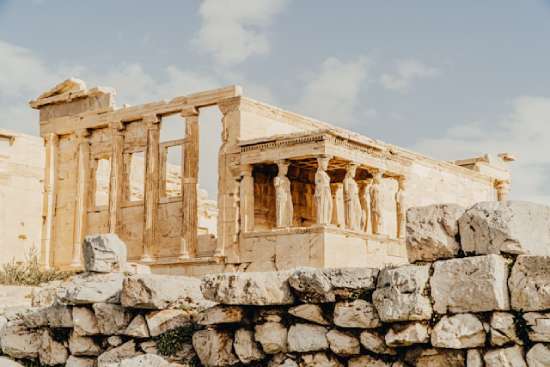
Photo by Dawid Tkocz on Unsplash
If Luke was indeed Greek, he would be the only Gentile, or non-Jew, to write a book of the Bible.3
One thing that is clear from biblical information is that Luke was a doctor. Paul referred to Luke as, “the beloved physician” (Colossians 4:14). And we can also see indications of Luke’s profession in his writings.
The Greek translation of Luke’s Gospel account provides proper medical terminology for ailments like dropsy and inflammation.4 The book of Acts also uses proper terminology for fever and dysentery, among other things.5
His writings also provide a high level of detail, with the style and precision of someone with a formal education (Luke 1:1-4).
And in addition to his professional and educational qualities, Luke served God as an evangelist and missionary.6 He made it a priority in his life to tell the world about Jesus Christ, the Son of God (Luke 2).
What was Luke’s relationship with Jesus?
It is typically believed that Luke did not know Jesus personally, but more likely heard about Him through others who followed Him.
This seems likely, since the Bible doesn’t provide any mention of Luke and Jesus meeting.
Luke even opens his Gospel account by explaining that it is based on the firsthand accounts of others (Luke 1:2). This suggests that all Luke wrote about in the book of Luke wasn’t experienced by him but by the people he interviewed.
And for an author as detailed as Luke was, surely he would have included any firsthand interactions he had with the man his whole book was about.
In fact, there’s only one instance in his writings where he seemed to be recording a firsthand account. And it isn’t in his Gospel account, but in Acts when he talked about his ministry work alongside Paul (Acts 28:16; Acts 16:10-17).
What was Luke’s relationship with other followers of Christ?
We find in Philemon 1:24 that Luke worked alongside Paul and other Christians, including Mark, who wrote another account of the Gospel story.
The Bible doesn’t specify whether Luke ever met the 12 disciples. But, given that he often traveled with Paul (who met some of the disciples), and that his writings include some of the disciples’ personal experiences, it’s likely that Luke spoke to at least a few of them at some point.
Paul, however, is the person the biblical evidence suggests he was closest to. Paul referred to him among those he called co-workers or fellow workers (Colossians 4:10-14), and in later chapters of Acts, when talking about Paul’s ministry, Luke frequently uses “we” as though he was serving closely alongside Paul and those with him.7
Luke went on many missionary journeys with Paul, also facing dangerous situations like potential imprisonment, a harsh storm, and a shipwreck. But he stayed by Paul’s side to spread the Gospel in Troas, Macedonia, Jerusalem, and Rome (Acts 27:1-44).8
He even stayed by Paul when others left, when he was again imprisoned. In what’s believed to be one of Paul’s final letters,9 he made note of Luke’s loyalty, saying:
“Make every effort to come to me soon, because Demas has deserted me, since he loved this present world, and has gone to Thessalonica. Crescens has gone to Galatia, Titus to Dalmatia. Only Luke is with me…” (2 Timothy 4:9-11, CSB, emphasis added).
It’s not hard to deduce Luke’s dedication as a missionary. No wonder he was called the “beloved” physician by Paul. He must have been a significant resource help to Paul and those he traveled with.
Luke’s writings
As for Luke’s authorship of both his Gospel account and the Acts of the Apostles (more commonly known as the Book of Acts), this information isn’t stated directly in Scripture. But these books are generally attributed to him together because:
- There is little if any question that Luke the Evangelist wrote the book of Luke. Even the earliest manuscripts of Luke’s Gospel account do include “according to Luke” in the title.10 And the dedication of both the Gospel of Luke and Acts to Theophilus frames them as a two-volume work.
- In the first chapter of Acts, the author references his “first narrative” about “all that Jesus began to do and teach until the day He was taken up…” (Acts 1:1-2, CSB). That is a summation of the Gospel story.
- The author of Acts talks about going with Paul on his missionary journeys, and Paul confirms Luke as one who served by his side (Colossians 4:14; 2 Timothy 4:11). Historians and early church leaders also describe Luke as a co-worker in ministry with Paul.11
- Many Bible writers don’t use proper medical terminology because they weren’t educated to be doctors. Luke, however, was. It makes sense that he’d be responsible for writing two books that contained proper medical language.12
With these things in mind, let’s go over the noteworthy elements of Luke’s account of the Gospel story.
The Gospel According to Luke

Photo by Tim Wildsmith on Unsplash
After Matthew and Mark’s Gospel accounts, Luke’s telling of Jesus’ life and ministry is the final synoptic Gospel, or one that is expressed as a historical summarization.
Luke began by addressing a man named Theophilus. And since Luke addressed Theophilus as “most excellent,” a common phrase of respect, some believe this could mean Luke was writing this for a high-ranking official.13
And considering the style and depth of Luke’s writing, it seems he wrote with people like Theophilus in mind, to help them better understand and accept the Gospel.
Others believe Theophilus might have been the one who sponsored the creation of Luke’s books so he and other Gentile readers could learn more about Jesus.14
The fact that Luke was writing for a Gentile audience is further supported by how he focused more on Jesus’ ministry to Gentiles than any other Gospel account.15 Additionally, Luke “translates Aramaic terms with Greek words and explains Jewish customs and geography to make his Gospel more intelligible to his original Greek readership.”16
In addition to offering more understanding to Gentile readers, Luke provided more context and depth by mentioning stories and parables that aren’t found in other accounts of the Gospel.
Some of these include the parables of The Good Samaritan, The Prodigal Son, and The Rich Man and Lazarus.17
The parable of the Good Samaritan tells the story of a Jewish man who was helped by a kind and generous Samaritan (Luke 10:25-37). The Jewish man was robbed and beaten on the roadside. Different people, including a priest and a Levite, saw him lying injured on the ground but didn’t stop to help him. But then a Samaritan, whose people were at bitter odds with Jews, did stop to help. Jesus used this parable to illustrate how the kingdom of God wasn’t limited to the Jews, but to everyone who does His will through loving their neighbor.
The parable of the prodigal son tells the story of how a son foolishly wasted his inheritance only to come back to his father, humbled and begging for a job (Luke 15:11-32). But instead of being angry or rejecting his son, the father welcomes him with open arms. This story illustrates how God will gladly forgive us when we come back to Him.
Finally, the parable of the rich man and Lazarus tells the story of a rich man who withheld any charity to a poor beggar named Lazarus (Luke 16:19-31) after their deaths. Lazarus was brought to “Abraham’s Bosom,” a fictional place to represent a good afterlife. And the rich man was brought to Hades, representing a punitive afterlife. Though the story wasn’t meant to accurately portray what happens after people die, the story is used to convey the idea that the kind of character people nurture in their earthly lives will also affect their eternal circumstances. In other words, people will be held accountable for failing to show compassion and mercy to one another as Jesus did, which also shows a lack of acceptance of Jesus as the Savior and Son of God.
All in all, these parables help convey God’s great love for us and the love we’re called to have for others, no matter who they are.
Luke also focused on the humanity of Jesus Christ, giving readers a more complete picture of the nativity scene by mentioning surrounding events like the angel Gabriel’s appearance to Mary (Luke 1:26-38), Mary’s visit to her cousin, Elizabeth (Luke 1:39-45), and the birth of John the Baptist (Luke 1:57-66).
Luke also emphasized Jesus’ role as the prophesied Son of Man from the Old Testament by showing how he overcame human struggles and lived a sinless life.18
The Acts of the Apostles

Photo by Kyle Glenn on Unsplash
The Book of Acts explains how the early church of Christianity embraced the mission to spread the Gospel across the globe.
Like Luke’s Gospel account, Acts is also dedicated to Theophilus (Acts 1:1) and is written with a similar style and wording. These two books together, according to the Seventh-day Adventist Bible Commentary, could be appropriately titled, “The Origin and Development of Christianity.”19
His accounts are also supported by archeological evidence.20 He used names, terminology, and descriptions that match the information found on monumental inscriptions.21
So how was Luke able to gather so much information for his books?
Likely due to his highly educated background, Luke must have made the most of his missionary journeys and recorded important details, consulted eyewitnesses, and conducted additional research.22 And some parts of his writings included his own observations.
He witnessed Paul cast out demons and raise someone back to life (Acts 16:16-18; Acts 20:7-12).
He witnessed the power of the Holy Spirit at work at Pentecost, reminding us of how far the Holy Spirit has brought the Christian Church since then (Acts 2:1-4).
Luke got to witness the early church grow from a small group of Jewish followers to a movement that spread across the Mediterranean.
Key themes in Luke’s writings
Now that we’ve talked about Luke’s role in writing Luke and Acts, let’s look into the themes and lessons these books give us.
These include
- Compassion to all:
- Luke focuses on the stories of outcasts more than any other Gospel account. He wrote of widows and the poor, and he made sure to mention women as well, which was not the norm of the time.23 But he humanized these people, showing that they need a Savior in the same way as everyone else. He also wrote about showing kindness and forgiveness to criminals.24
- Salvation for all:
- Luke also focused on the theme of salvation for all people—particularly the Gentiles. This was groundbreaking for the time as the Jews had been thought of as God’s chosen people for so long. The Jews believed the Messiah would come to save Israel and Judea. They never imagined He had come to save the Gentiles, too.
- And yet, Luke recounts occasions where the Lord Jesus responds to the needs of Gentiles, even those who were considered enemies of the Jews—like Samaritans or people from the Roman empire.25 They professed their faith in Him and He helped them. The disciples continued this work in Acts when they sought to bring the good news of Christ to all parts of the world. We see this in the example of Paul’s missionary travels to far-off lands and how Peter became convicted to reach Gentiles like Cornelius (Acts 10:1-36).
- The outpouring of the Holy Spirit:
- One other central theme of Luke’s writings is the Holy Spirit. Luke’s writings introduce how the Holy Spirit was given to the apostles on the day of Pentecost (Acts 2:1-4). But Luke didn’t stop there. He continued to chronicle how the Holy Spirit guided the early Christian Church through visions, miracles, and other spiritual gifts.26
- The fact that the Holy Spirit didn’t just operate through Jewish men revealed that the Spirit does not discriminate by gender or ethnicity. Instead, it was given to anyone who was willing to accept it (Acts 21:9; Acts 10:44-48).
As a doctor, Luke may have felt a special inclination to alleviate the suffering of others by showing them care and compassion. It makes sense that he would be interested in helping those in need.
These themes also support how Luke was interested in ministering to Gentiles as well as Jews. This would make sense with him being a Gentile himself. This makes Luke stand out among early church leaders who were more focused on ministering to Jews, or to others within their own circle, rather than prioritizing Gentiles or social outcasts like the poor, diseased, or widowed.
But Luke encouraged the early Christians to break these barriers, sharing Jesus with anyone who would listen.
And that’s how Luke lived out the rest of his life.
The death and legacy of Luke the Evangelist
The Bible doesn’t tell us how Luke died.
The last thing the Bible mentions about his life is that he traveled with Paul on his missionary journey to Rome (2 Timothy 4:11).27
Some suggest he was killed for his faith by being nailed to a living olive tree in Greece.28 Others believe he died in Bithynia.29
While we can’t know for sure how Luke died, it’s safe to assume that he lived out the rest of his life teaching others about Jesus.
And the words of his books continue to inspire us today.
He gave us one of the most thorough stories on the life of Jesus, all the way to the beginnings of the early Christian Church. He introduced us to important figures in early Christianity like Paul and showed us how the Holy Spirit guided Jesus’ followers.
The helpful information he provided and his unique perspective on the ministry of Christ strengthens our understanding of early church history while emphasizing that the good news of Jesus Christ is for everyone—including Gentiles:
“Then He said to them, “Thus it is written, and thus it was necessary for the Christ to suffer and to rise from the dead the third day, and that repentance and remission of sins should be preached in His name to all nations, beginning at Jerusalem.” (Luke 24:46-47, NKJV, emphasis added).
Luke might have faced the same exclusion that other Gentiles dealt with. But he didn’t let that stop him from being willing to serve God. And he used his unique position to give other Gentiles hope that they could follow Jesus, too.
Interested to learn about other writers of the Gospel story? Read about Matthew, Mark, or John.
Tracing Luke’s Missionary Journey
- Left Troas with Paul (Acts 16:11).
- Traveled with Paul to Phillipi (Acts 16:12).
- Witnessed the conversion of Lydia (Acts 16:13-15).
- Watched Paul cast a demon out of a girl (Acts 16:16-18).
- Stayed in Philippi; inferred from the resumption of “we” sections when Paul returns to Philippi (Acts 20:5-6).
- Watched Paul bring a man back to life (Acts 20:7-12).
- Met the disciples in Tyre (Acts 21: 3-4).
- Met Philip the evangelist and his daughters (Acts 21:8-9).
- Watched a prophet named Agabus warn Paul (Acts 21:10-11).
- Pleaded with Paul not to go to Jerusalem (Acts 21:12).
- Joined him on his journey to Jerusalem (Acts 21:17).
- Survived a shipwreck and landed on Malta (Acts 27:1-44; Acts 28:1).
- Witnessed Paul miraculously heal from a snake bite (Acts 28:3-6).
- Watched Paul heal the people of Malta (Acts 28:7-10).
- Accompanied Paul to Rome and stayed with him there (Acts 28:14-16).
- Supported Paul during his imprisonment (2 Timothy 4:11).
Related Articles



- The Remnant Study Bible, Remnant Publications, 2009. pp. 1205. [↵]
- Ibid. [↵]
- Ellis, Earle E., “Saint Luke,” Britannica, August 5, 2024. [↵]
- Hubbard, Reuben A., “Medical Terminology in Luke,” May 1977, Ministry Magazine. [↵]
- Ibid. [↵]
- Philemon 1:24; 2 Timothy 4:11; Acts 28:16; Acts 16:10-17; Acts 20:6; Acts 27:1. [↵]
- Ellis [↵]
- Acts 27:1-44; Philemon 1:24; 2 Timothy 4:11; Acts 28:16; Acts 16:10-17; Acts 20:6; Acts 27:1. [↵]
- Ibid. [↵]
- Nichol, Francis D. Seventh-day Adventist Bible Commentary And Bible Students’ Source Book, Vol. 5 , 1978, p. 663. [↵]
- Ibid. [↵]
- Hubbard. [↵]
- “Who is Theophilus in the Bible books of Luke and Acts?” Bible Info; “The Gospel According to Luke.” Britannica. [↵]
- Remnant Study Bible, p. 1205. [↵]
- Seventh-day Adventist Bible Commentary, Vol. 5 . p. 665. [↵]
- Remnant Study Bible, p. 1205. [↵]
- Luke 10:25-37; Luke 15:11-32; Luke 16:19-31. [↵]
- Remnant Study Bible, p. 1206. [↵]
- Seventh-day Adventist Bible Commentary, Vol. 5, p. 665. [↵]
- Remnant Study Bible, p. 1288. [↵]
- Edwards, James R., “Archaeology Gives New Reality to Paul’s Ephesus Riot,” Biblical Archaeology Society, 2016. [↵]
- Ibid. [↵]
- Luke 16:19-31; Luke 1:39-56; Luke 18:1-8. [↵]
- Luke 23:39-43. [↵]
- Luke 7:2-3, 9-10; Luke 17:11-19. [↵]
- Acts 2:4; Acts 3:6-8; Acts 4:30-31; Acts 10:9-23. [↵]
- “Saint Luke,” [↵]
- Seventh-day Adventist Bible Commentary, Vol. 5, p. 663. [↵]
- “Saint Luke,” [↵]
More Answers

¿Por qué muchos Adventistas del Séptimo Día eligen una dieta vegetariana?
¿Por qué muchos Adventistas del Séptimo Día eligen una dieta vegetariana?Puede que tengas un amigo adventista que sea vegetariano, o tal vez estés asistiendo a una Iglesia Adventista del Séptimo Día por primera vez y notes que en la comida compartida no hay carne....

What is Jesus’ Parable of the Sower About?
The parable of the sower is ultimately about how people responded to Jesus Christ and His message of the kingdom of God—the Gospel.

O que os Adventistas do Sétimo Dia acreditam sobre o Grande Conflito (Bem vs. Mal)?
O “Grande Conflito” é a frase que os Adventistas do Sétimo Dia normalmente usam para descrever o conflito espiritual cósmico entre as forças do bem (Deus) e as forças do mal ou do pecado (Satanás/o diabo).

Was Jesus Ever Hypocritical? Learn What the Bible Says.
Was Jesus Ever Hypocritical? Learn What the Bible SaysMany undesirable traits are associated with hypocrisy. But overall, hypocrites intentionally try to make others believe they uphold or represent a certain belief system, character trait, lifestyle, etc., when in...

Kukatishwa Tamaa Kukuu na Kile Tunachojifunza
Wafuasi wa Miller walitabiri kurudi kwa Kristo Oktoba 22, 1844, lakini Yesu hakuja kamwe. Tukio lingine lilitokea. Gundua kilichotokea kweli na Kukatishwa Tamaa Kukuu kunaweza kutufundisha leo.

When in Doubt: 7 Ways Christians Can Manage Uncertainty
When in Doubt: 7 Ways Christians Can Manage UncertaintyFew things in life are truly certain. And no matter how convinced some people can appear on the surface, no one is immune to doubt. And this isn’t a bad thing. Doubt has a purpose. A role to serve. (Just imagine...
El gran chasco y las lecciones que nos enseña
Los Milleritas predijeron el regreso de Cristo el 22 de octubre de 1844, pero Jesús nunca llegó. Ocurrió otro evento. Descubre lo que realmente sucedió y qué puede enseñarnos hoy El gran chasco.

Is Jesus the Same Being as Michael the Archangel?
Many Christians have wondered at the mysterious identity of Michael the Archangel.
A Grande Desapontamento e Lições que nos Ensina
Os Milleritas previram o retorno de Cristo em 22 de outubro de 1844, mas Jesus nunca chegou. Outro evento ocorreu. Descubra o que realmente aconteceu e o que o Grande Desapontamento pode nos ensinar hoje.
James Springer White, Co-Fundador da Igreja Adventista do Sétimo Dia
James Springer White (1821–1881) foi uma figura chave na Igreja Adventista do Sétimo Dia e marido de Ellen G. White.
James Springer White, cofundador de la Iglesia Adventista del Séptimo Día
James Springer White (1821–1881) fue una figura clave en la Iglesia Adventista del Séptimo Día y el esposo de Elena G. de White.

Kila Kitu Unachohitaji Kujua Kuhusu Chakula cha Siku ya Sabato
Kwa Waadventista Wa Sabato, kushiriki chakula cha Siku ya Sabato pamoja na marafiki na familia ni moja ya sehemu muhimu na ya kumbukumbu ya Sabato.

Nini Maana ya “Mwadventista”?
Waadventista wa Sabato ni dhehebu la Kikristo la Kiprotestanti wanaoshikilia Sabato ya siku ya saba kama ilivyoandikwa katika Biblia.

How to Have a Personal Relationship with Jesus: A 10-Step Guide
How to Have a Personal Relationship with Jesus: A GuideNo matter who you are, you’re surrounded by relationships. Friends, family, colleagues, acquaintances...they all play a part in our lives, for better or worse. So you’re surely aware of a lot of the components...

Biblia Ina Maana Gani Inaposema Yesu ni Mwana wa Mungu?
Biblia inapomwita Yesu Mwana wa Mungu inarejelea uungu wake. Jifunze ni nini kinachofanya hili kuwa muhimu na kinahusianaje na wokovu.

“Go and Sin No More”—What Did Jesus Mean?
These well-known words of Jesus Christ come from two New Testament stories in the book of John—a man healed by the Pool of Bethesda (John 5) and a woman caught in adultery (John 8).

Quais são as Mensagens dos Três Anjos em Apocalipse 14?
As mensagens dos três anjos em Apocalipse 14 advertem o mundo a adorar a Deus, deixar a confusão religiosa e evitar a adoração de tradições humanas em vez dos mandamentos de Deus.

Je! Tunaweza Kuitunza Siku Yoyote ya Wiki Kama Sabato?
Katika sura za kwanza kabisa za Biblia, tunamwona Mungu akianzisha kumbukumbu ya kila wiki na siku ya mapumziko, inayoitwa Sabato (Mwanzo 2:2-3).
¿Cuáles son los mensajes de los tres ángeles en Apocalipsis 14?
Los mensajes de los tres ángeles en Apocalipsis 14 invitan al mundo a adorar a Dios, abandonar la confusión religiosa y evitar la adoración de tradiciones humanas en lugar de los mandamientos de Dios.
Por que muitos Adventistas do Sétimo Dia escolhem uma dieta vegetariana?
Embora nem todo adventista seja vegetariano, muitos evitam completamente o consumo de carne para viver de forma mais saudável, buscando honrar a Deus física, espiritual e mentalmente.

Understanding the Miracles of Jesus Christ
Understanding the Miracles of Jesus ChristWhat do you think of when someone says something is “a miracle”? Maybe you think of an unexpected recovery, surviving a dangerous accident, or getting an answer to a seemingly impossible prayer. Simply put, miracles are...
O que significa “Adventista”?
O que significa "Adventista"?Os Adventistas do Sétimo Dia são uma denominação cristã protestante que observa o sábado bíblico do sétimo dia. A partir dessa crença, eles obtêm a primeira parte de seu nome. Mas e quanto à segunda parte - "Adventista"? “Adventista”...
¿Podemos guardar el sábado bíblico cualquier día de la semana?
En los primeros capítulos de la Biblia, encontramos a Dios estableciendo un memorial semanal y día de reposo, conocido como el sábado (Génesis 2:2-3).
Podemos guardar o Sábado em qualquer dia da semana?
Nos primeiros capítulos da Bíblia, encontramos Deus estabelecendo um memorial semanal e dia de descanso, conhecido como o Sábado (Gênesis 2:2-3).
O que significa a Bíblia quando chama Jesus de Filho de Deus?
Quando a Bíblia chama Jesus de Filho de Deus, está se referindo à Sua divindade. Saiba o que torna isso tão significativo e o que tem a ver com a salvação.

¿Qué creen los Adventistas del Séptimo Día acerca de la Biblia?
La Biblia forma la base de todo lo que los Adventistas del Séptimo Día creen y enseñan.

Legado Duradouro de Ellen G. White
Ellen G. White é um nome bem conhecido entre os Adventistas do Sétimo Dia, mas ela também teve um impacto em muitas outras partes da história, além de ser co-fundadora da Igreja Adventista.

What Does it Mean to Have Faith in Jesus?
What Does it Mean to Have Faith in Jesus?To have faith in Jesus means we place our spiritual hope, trust, belief, and priority in Him as our loving Savior. And that sounds great as an idea. That’s our goal, right? But when we go through difficult times, face...
James Springer White, Mwanzilishi wa Kanisa la Waadventista Wa Sabato
James Springer White (1821–1881) alikuwa mtu muhimu katika Kanisa la Waadventista wa Sabato na mume wa Ellen G. White.
Didn’t find your answer? Ask us!
We understand your concern of having questions but not knowing who to ask—we’ve felt it ourselves. When you’re ready to learn more about Adventists, send us a question! We know a thing or two about Adventists.