
 In the first book of the New Testament, we find the Gospel story from the perspective of Matthew. He was a Jewish tax collector from Capernaum in the first century AD, and he was likely despised by fellow Jews for choosing that profession.
Despite his beginnings, Matthew was willing to be uniquely used by God. To begin with, he was a converted tax collector—that alone was rare. And He served as one of Jesus Christ’ twelve disciples, wrote one of the synoptic Gospel accounts, continued to serve as an apostle after Jesus returned to heaven, and likely died a martyr’s death.
Matthew was able to see beyond his circumstances and realize Jesus could save him and forgive him—just as Jesus can for any of us.
So let’s get into the details of Matthew’s story:
- Life before discipleship
- Life as Jesus’ disciple
- Life after Jesus’ ascension
- Lessons from Matthew’s life
We’ll start by examining what his life was like before he encountered Jesus Christ.
Matthew’s life as a tax collector, before discipleship

Photo by Pixabay
There isn’t a detailed biographical record of what Matthew’s early life was like. And in the book he wrote about the Gospel story, he certainly wasn’t focused on what happened in his own life before meeting Jesus.
But since we know his occupation, that has sparked a lot of interest and speculation in religious media. For example, The Chosen series about all the disciples has taken a few creative liberties with his character.
Here are the specific facts about Matthew we can get straight from the Bible:
- He was also called the son of Alphaeus (Mark 2:14).
- He was also known as Levi (Mark 2:14; Luke 5:27).
- He was a tax collector, or “publican” (Matthew 9:9; 10:3).
Just knowing he was a tax collector, however, provides us with more contextual likelihoods about Matthew:
- He worked for the Roman government, which ruled over the Jewish nation of Israel at that time
- He was probably wealthy, at least compared to most other Jews
- He was more than likely detested by his own people
Here’s why.
The Jews were currently living under the rulership of the Roman Empire, which ruled with a heavy hand over the nations it conquered. One of the “features” of this Roman authority was that Jews had to pay hefty taxes to the Roman government.
But unlike the taxation systems we’re used to today, which are supposed to pay for a country’s infrastructure, government programs, education, etc., Roman taxes benefited none but Rome, making them even more powerful and rich.1 Today we’d call it taxation without representation.
And to make matters worse, the Roman government contracted with locals to do their dirty work of collecting those fees—one of the jobs available for Jews to sign up for.
So when a Jew opted to make a living this way, you can see how that wouldn’t go over well with their fellow Hebrews.
That made tax collectors and taxes the object of bitter loathing for the Jewish nation. They were regarded as traitors, getting their livelihood from the very government that was oppressing their own people.2
Perhaps living with the disdain of their own people made it easier for them to justify the other reason they were despised. They often took advantage of their position and lined their own pockets by collecting more than was necessary, or arbitrarily charging fees for things like crossing a certain bridge or using a busy road.3
And while we don’t have any kind of exact record of how or if Matthew also cheated his fellow Jews like other tax collectors did, there’s a strong likelihood that he would have taken advantage of the people at some point.
Then how did a man in such a despised and dishonest profession become one of Jesus Christ’s closest companions?
Matthew’s calling

The books of Matthew, Mark, and Luke4 document Matthew’s call to discipleship. Like any other day, he was sitting in his tax booth in Galilee. Jesus, who had just drawn the attention of many by healing a paralyzed man, passed by Matthew’s post.
All Jesus said was, “Follow Me” (Matthew 9:9, NKJV).
But those words must have captivated Matthew. This man had chosen him? Matthew could have easily thought, “Why me?” But he didn’t question Jesus’ choice.
Without hesitation, Matthew got up and left everything—the money, the job, the security, the favor of the Romans. He gave it all up to become Jesus’ disciple.
He also threw a party for Jesus, inviting Him, all His disciples, and other tax collectors to be among his guests (Luke 5:29).
And at this party comes another pivotal moment in Matthew’s life.
The Pharisees, in line with their character, complained about Jesus associating with these types of people. They said to Jesus,
“‘Why do You eat and drink with tax collectors and sinners?’” (Luke 5:30, NKJV).
They had identified Matthew as a sinner of sinners. But notice Jesus’ response:
“‘Those who are well have no need of a physician, but those who are sick. I have not come to call the righteous, but sinners, to repentance’” (Luke 5:31-32, NKJV).
Jesus threw the Pharisees’ grumblings right back in their faces. He wanted to be with these sinners, these people who wanted to follow Him. These were the people who could be saved, because they humbled themselves and looked to Jesus for direction.
The fact that Matthew recognized his shortcomings and was willing to move beyond them reveals his strength.
It was the Pharisees who were farthest away from salvation at that point, if they continued to believe they were too good for what Jesus had to say.
Sometimes a redemption story can be the most powerful kind.
Life as Jesus’ disciple
While Matthew was one of Jesus’ disciples and undoubtedly got involved with important tasks during Jesus’ ministry, his calling is actually the only story about him in Scripture. Any other times he resurfaces in the New Testament are merely in listings of the disciples:
- Matthew 10:3
- Mark 3:18
- Luke 6:15
- Acts 1:13
But that doesn’t diminish his importance. As we’ll see in a bit, his talents helped preserve Jesus’ time on earth forever.
If you read the verses before Luke’s account of the party put on by Matthew, you might have noticed something strange: Jesus called a man named Levi, and this Levi hosted the party (Luke 5:27, 29).
Isn’t his name Matthew?
Levi may well have been his Hebrew name, while Matthew was his Greek name. But in any case, one person having multiple names was not uncommon in those days. For example, Peter was also known as Simon, and Bartholomew was also called Nathanael.
And considering how identical the conversion stories are in the first three Gospel accounts, it’s unlikely that “Levi” would have referred to a separate person altogether. Luke even calls Matthew “Levi” (verse 27). But a few verses later, when listing all the disciples, he calls him Matthew (Luke 6:15).
Throughout most of what we can read about Jesus’ earthly ministry, Matthew silently accompanies Jesus and isn’t often mentioned specifically. But that doesn’t mean his role wasn’t important. He was likely a captivated narrator, focusing more on what was happening around him and having little need to mention his own name in his documentation.
Life after Jesus’ ascension
Matthew, now an apostle, continued to work with the other apostles to share Christianity with others after Jesus returned to heaven. But when it comes to this part of his life, not much is recorded in the Bible itself.
Other sources from the early centuries suggest that his travels took him to Persia, Macedonia, Syria, or a region below the Caspian Sea then called Ethiopia.5 We don’t know exactly what he did, but we can assume he worked among the Gentiles as an evangelist, telling them the wonderful news of Jesus.
It’s also not officially known how he died. Many different accounts have emerged from different early Christian writers, ranging from natural death to various types of martyrdom. Foxe’s Book of Martyrs, written in the 1500s by a Protestant historian, offers this fate for Matthew:
“He afterwards traveled to Parthia, where he met his death, being slain with the sword, about the year 60.”60
He would have been an older man by this time. From the abundance of stories about his martyrdom, we can assume that Matthew remained faithful to Jesus up until his last breath.
And not only was Matthew a faithful apostle, carrying on the ministry of Christ, but he also wrote down his account of the Gospel story, bringing believers together for ages to come: the Gospel of Matthew.
Writing the book of Matthew
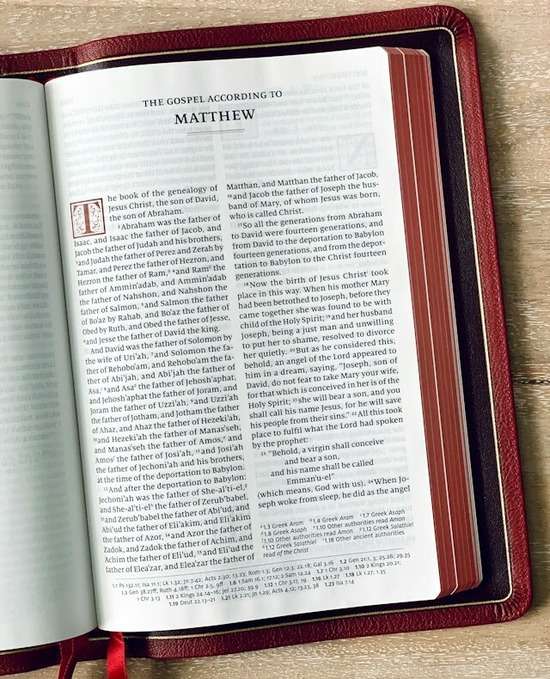
Photo by Tim Wildsmith on Unsplash
There are some scholars who debate whether the apostle Matthew truly was the author of the Gospel of Matthew, which was believed to be written somewhere in the 50s-60s AD.7 Early church writers like Papias and Eusebius generally ascribed the book to him, but he also seems to share a lot of material from Mark, who was not an eyewitness.8
However, most of the evidence points to Matthew as the author of the Gospel.
First, the church of the first few centuries AD believed he authored it. Though we’ve seen from Matthew’s numerous death accounts that they don’t always get it right, there’s something to be said for so many people of his time believing in his authorship.
Second, the Gospel of Matthew itself presents numerous clues. Compare these portions of the Lord’s prayer from Luke and Matthew:
“And forgive us our sins, for we also forgive everyone who is indebted to us” (Luke 11:4, NKJV).
“And forgive us our debts, as we forgive our debtors” (Matthew 6:12, NKJV).
Matthew heard the words through the lens of his financial background, so that could be why he expressed them this way.
Also, Matthew’s Gospel account is the only one to include Jesus’ parable about the talents (Matthew 18:23-35). A story about money and investment would have special appeal to someone who regularly handled money as a career.
And Matthew tailored his writing to be read and accepted by the Jews. He begins with a genealogy of Jesus, connecting him to King David and Abraham, and quotes numerous Messianic prophecies in his Gospel, all designed to help the Jews believe that Jesus was indeed the Messiah.
Lessons from Matthew’s life
While we don’t have a detailed life sketch of Matthew, there’s still a lot we can learn from His time as an apostle.
A big takeaway from Matthew’s life is that no lifestyle is too hard to change. A tax collector like Matthew was like the scum of the earth in the eyes of his fellow Jews. He probably had many material possessions, but few friends. Perhaps one part of him felt guilty for the life he led, but the other part was too deeply mired in it to stop.
But he gave up all that to become a follower of Jesus, and one of Jesus’ closest companions.
Jesus doesn’t care how badly we’ve messed up. No matter what we’ve done, we’re all equal in His eyes. He loves us, sees our potential, and wants to be our closest friend.
We can also see from Matthew’s story that you don’t have to travel to a foreign country as part of a big effort to bring others to Christ. There’s nothing wrong with that, and Matthew certainly did his share of it. But his telling of the Gospel story was written for his own people. We, too, can help our neighbors and friends come to know Christ in a way they’ll understand.
Matthew, an example for us all
Matthew was an outcast of society. The Jews hated him because he took their money, and he was unforgivable in the Pharisees’ eyes. And for the Romans, he was just a pawn.
Yet Jesus called Matthew. He knew that Matthew’s identity was far more than his life circumstances or what others thought of him.
We don’t have to be popular. We don’t have to be smart. We don’t have to be liked by anyone. But that doesn’t make us unusable to God. Often, the result of God changing our lives for the better can glorify Him even more.
And when we do accept that call, we can allow ourselves to grow and be changed. Matthew’s life was transformed by this event, and he eventually became a powerful witness for Jesus. We too, can become a great witness for Jesus, if we let Him lead us.
Matthew was not the only apostle whose life was changed. Learn about the disciples’ collective experience with Jesus, or
Related pages



- Edersheim, Alfred. Sketches of Jewish social life in the days of Christ, Internet Archive. p.55. [↵]
- Ibid. [↵]
- Ibid. [↵]
- Matthew 9:9, Mark 2:14, Luke 5:27. [↵]
- Foxe, John, Foxe’s Book of Martyrs, Charles Foster Publishing, 1897 [↵]
- Nelson, Ryan, “Who Was Matthew the Apostle? The Beginner’s Guide,” Overview Bible, April 1, 2019. [↵]
- Chilton, Brian, “Who Wrote the Gospel of Matthew?”, CrossExamined.org, June 11, 2017. [↵]
- Ibid. [↵]
More Answers

Como os Ensinos de Ellen White Podem Melhorar Sua Saúde
Como os Ensinos de Ellen White Podem Melhorar Sua SaúdeAssistência médica no século XIX era dito deixar "mais doenças do que levava embora" com o uso de sangrias e "remédios" como mercúrio e arsênico.1 À medida que as pessoas questionavam esses métodos, novas...
Cómo las enseñanzas de Elena G. de White pueden mejorar tu salud
La atención médica en el siglo XIX se decía que dejaba “más enfermedades de las que eliminaba” con su uso de sangrías y “medicamentos” como el mercurio y el arsénico.

All About the Gospel of Matthew
The Book of Matthew is one of the four Gospel narratives in the Bible
Descanso e Reconexão: O Que Realmente Significa Guardar o Sábado
A Bíblia nos diz que guardamos o Sábado evitando o trabalho. Deus fez essa lei porque sabia que ela nos fortaleceria e nos traria alegria, além de nos dar tempo para nos reconectar com Ele e recarregar das nossas vidas ocupadas.
Descanso y reconexión: lo que realmente significa guardar el sábado
La Biblia nos dice que guardamos el sábado evitando el trabajo. Dios hizo esta ley porque sabía que nos fortalecería y nos traería alegría, además de darnos tiempo para reconectarnos con Él y recargar energías de nuestras vidas ocupadas.

Todo lo que necesitas saber sobre la Escuela Sabática
La Escuela Sabática es el componente de estudio bíblico del programa de la iglesia en la mayoría de las Iglesias Adventistas del Séptimo Día.

O que os Adventistas do Sétimo Dia acreditam sobre a autoridade da Bíblia?
Saiba como um livro realmente antigo (a Bíblia) é o único fundamento para todas as crenças dos Adventistas do Sétimo Dia.
¿Qué creen los Adventistas sobre la autoridad de la Biblia?
Puede hacerte sentir intimidado o frustrado. Podrías pensar en un líder de iglesia que parecía arruinar toda tu diversión cuando eras niño, o un jefe que supervisa cada uno de tus movimientos en el trabajo…

¿Qué es un médico misionero adventista?
Un médico misionero en la Iglesia Adventista es alguien que cuida de las necesidades médicas de las personas como una forma de mostrar el amor de Jesús. Pueden viajar a otro país, o incluso simplemente servir en su ciudad natal.
Ni nini Mtaalam wa Matibabu wa Kiadventista?
Mmishonari wa matibabu katika Kanisa la Waadventista ni mtu anayejali mahitaji ya matibabu ya watu kama njia ya kuonyesha upendo wa Yesu.
O que é um missionário médico adventista?
Um missionário médico na Igreja Adventista é alguém que cuida das necessidades médicas das pessoas como uma forma de mostrar o amor de Jesus. Eles podem viajar para outro país, ou até mesmo servir em sua cidade natal.

Guía definitiva para el estudio personal de la Biblia
¿Alguna vez has sentido que estudiar la Biblia es un desafío y simplemente no estás seguro de por dónde empezar? ¿O estás buscando ideas nuevas para mejorar tus hábitos actuales de estudio bíblico?
O Guia Definitivo para o Estudo Pessoal da Bíblia
Já sentiu que estudar a Bíblia é desafiador e não tem certeza por onde começar? Ou está procurando ideias novas para melhorar seus hábitos atuais de estudo da Bíblia?
¿Los Adventistas del Séptimo Día observan festividades relacionadas con la Pascua?
La resurrección de Jesús, celebrada en muchas festividades relacionadas con la Pascua, es central para las creencias de la Iglesia Adventista del Séptimo Día.

10 Bible Teachings Adventists Believe About the Devil
10 Bible Teachings Adventists Believe About the DevilSeventh-day Adventists believe the devil (or Lucifer-turned-Satan) is real and active. He is the sole adversary of God and humanity (1 Peter 5:8), making him the opposing force in the cosmic conflict between good...

¿Los Adventistas del Séptimo Día creen que solo ellos irán al cielo?
No, los adventistas definitivamente no creen que son los únicos que irán al cielo. De hecho, no creemos que la admisión al cielo se base en la iglesia o denominación a la que pertenecemos.
Waadventista Wa Sabato Wanaamini Nini Kuhusu Mamlaka ya Biblia?
Jifunze jinsi kitabu kimoja cha zamani sana (Biblia) kilivyo msingi pekee wa imani zote za Waadventista wa Sabato.
Mwongozo Bora Katika Kujifunza Biblia Binafsi
Umewahi kuhisi kwamba kusoma Biblia ni jambo gumu, na hujui uanzie wapi? Au unatafuta mawazo mapya ya kuboresha tabia yako ya usomaji wa Biblia.
Je, Waadventista Wasabato Wanasherehekea Siku Kuu Zinazohusiana na Pasaka?
Kufufuka kwa Yesu, kunakoadhimishwa katika siku kuu nyingi zinazohusiana na Pasaka, ni muhimu katika imani za Kanisa la Waadventista wa Sabato.
Je, Waadventista Wasabato Wanaamini Wao Pekee Ndiyo Watakao Kwenda Mbinguni?
Hapana, Waadventista hakika hawaamini kwamba wao ndio pekee watakao kwenda mbinguni. Kwa kweli, hatuamini kwamba kupokelewa mbinguni kunategemea kanisa au madhehebu tunayohusiana nayo.

Chakula cha Pamoja Katika Kanisa la Kiadventista: Mahali Ambapo Chakula na Urafiki Vinakutana
Mara nyingi, kawaida kwenye ratiba inayotofautiana kutoka mara moja kwa wiki hadi mara moja kwa mwezi hadi mara moja kwa robo, kanisa la Waadventista litakuwa na “karamu za ushirika,” mara nyingi zikiitwa chakula cha mchana cha pamoja.

Je, Waadventista Wa Sabato Wanaamini Nini Kuhusu Uumbaji Katika Biblia?
Waadventista Wa Sabato wanaamini kwamba Mungu ndiye Muumbaji wa ulimwengu. Wanafikia hitimisho hili kutoka kitabu cha kwanza cha Biblia—Mwanzo.

Jinsi Ellen White Alivyochangia Ujumbe wa Afya wa Waadventista
Jinsi Ellen White Alivyochangia Ujumbe wa Afya wa WaadventistaWaadventista wa Sabato wanajulikana kwa kusisitiza maisha yenye afya bora. Na Ellen G. White alikuwa na ushawishi mkubwa katika maendeleo ya kipaumbele hiki na utekelezaji wake miongoni mwa Waadventista....
Os Adventistas do Sétimo Dia observam feriados relacionados à Páscoa?
Os Adventistas do Sétimo Dia observam feriados relacionados à Páscoa?A ressurreição de Jesus, celebrada em muitos feriados relacionados à Páscoa, é central para as crenças da Igreja Adventista do Sétimo Dia. E isso significa que buscamos todas as oportunidades para...
Os Adventistas do Sétimo Dia acreditam que apenas eles irão para o Céu?
Não, os Adventistas definitivamente não acreditam que são os únicos que irão para o céu. Na verdade, não acreditamos que a admissão no céu dependa de qual igreja ou denominação pertencemos.

Ellen White anasema nini kuhusu Maombi?
Je, umewahi kuwa na mzigo ambao ulihitaji kumwambia mtu, lakini uliogopa kuhukumiwa ikiwa ungefanya hivyo?

Nani Aliyebadilisha Sabato kwenda Jumapili?
Nani Aliyebadilisha Sabato kwenda Jumapili?Ikiwa Biblia haijawahi kutaja mabadiliko ya Sabato, kwa nini leo wengi wanaenda kanisani Jumapili? Nani alibadilisha siku hiyo? Lakini hilo sio swali sahihi la kuuliza. Sabato haijabadilika. Kilichobadilika ni uamuzi wa...

Is It Okay to Worship On Sunday Instead of Saturday?
If there’s no wrong time to worship God, why are there different ideas on the day churches meet?

Ellen G. White au Biblia—Kipi ni Muhimu Zaidi kwa Waadventista?
Biblia—bila shaka—ndiyo kitabu muhimu zaidi. Ni kipimo tunachotumia kupima maandishi mengine yote, ikiwa ni pamoja na yale ya Ellen White.
Didn’t find your answer? Ask us!
We understand your concern of having questions but not knowing who to ask—we’ve felt it ourselves. When you’re ready to learn more about Adventists, send us a question! We know a thing or two about Adventists.