
In the very first chapters of the Bible, we find God establishing a weekly memorial and rest day, known as the Sabbath (Genesis 2:2-3). It fell on the last day of the Creation week—the seventh day—which was then honored by God’s followers every week throughout the rest of the Bible.
But what about now, thousands of years later?
How do we know exactly which day the Sabbath falls on today? And does the specific day matter as long as we keep a Sabbath one day of the week?
In this article, we’ll clear up any confusion about the biblical Sabbath by answering these five questions:
- Why keep a day of worship?
- How do we know which day the Sabbath is?
- Was the Sabbath changed to Sunday?
- Does it matter what day we keep the Sabbath?
- How can we celebrate the Sabbath each week?
Let’s first talk about why keeping a Sabbath rest is so important.
Why keep a day of worship for God?

Photo by Jeremy Bishop
Right after Creation, God set aside one day every week for us to remember Him, worship Him, and rest from weekly obligations (Genesis 2:2-3). And this wasn’t arbitrary on His part. He knew our bodies and minds needed a day set aside from weekly work to reconnect with Him and our friends and family.
And this began when there were only two humans alive. There were not yet any Jews, Hebrews, Egyptians, Midianites, etc. So this weekly memorial wasn’t just a Jewish Sabbath, even though the Jews were instrumental in establishing and preserving many sacred Sabbath traditions. But the Sabbath itself was and is for everyone to benefit from.
Studies now show that a period of rest every week helps your body and mind stay stronger, more focused, and more energetic.1 Our bodies run on a seven-day calendar,2 and if we push the limits, our bodies miss that rest and suffer, even if we don’t feel any effects at first.
But there’s more.
God gave us the Sabbath as a sign of His work of creating us and saving us—something that’s emphasized in the fourth commandment (Exodus 20:8-11; Deuteronomy 5:15). Ezekiel 20:12 shows us that it also signifies how He has set us apart as His people.
Keeping the Sabbath, then, is an act of submission to God in worship, remembering what He has done and is doing for us. It’s a special way to connect with Him without the distractions of daily life.
The Bible specifies this day as “the seventh day” (Genesis 2:2), which many today believe to be Saturday. But how do we really know?
How do we know which day the Sabbath is?
The biblical Sabbath occurs on Saturday, the seventh and last day of the week. Many people think it’s impossible to know this for a fact, but you might be surprised! We find evidence for the Sabbath being on Saturday from the biblical account, Jewish tradition, and the calendar.
Let’s explore each piece of evidence.
1. The Bible and Jesus Christ’s example
Scripture gives us numerous examples to tell us which day of the week the Sabbath is, starting with Creation, where God set the seventh day apart and made it holy.
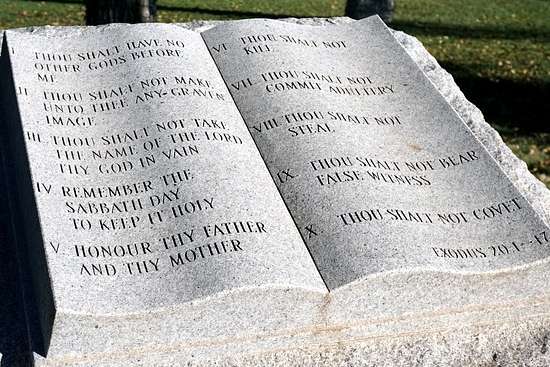
Later on, when God led the Israelites out of slavery in Egypt, He gave them Ten Commandments, of which the fourth commandment—also known as the Sabbath commandment—reminded them of what He had said at Creation. He instructed them on how to set aside the Sabbath as a holy day:
“Six days you shall labor and do all your work, but the seventh day is the Sabbath of the Lord your God” (Exodus 20:9-10, NKJV).
Here God states the location of the Sabbath—the Lord’s Day—on the weekly calendar: the seventh day.
And when God provided manna, a special wafer-like food, for the people of Israel every morning, they were again reminded of the seventh-day Sabbath. Why? The manna would fall every day of the week until the sixth day (Exodus 16:22). On the sixth day, a double amount fell, allowing them to collect enough for Sabbath so they could rest rather than having to work to gather food (verse 23).
In this way, the special characteristics of the seventh day of the week became ingrained in Israelite culture.
Now, you might be thinking, The Israelites didn’t stay loyal to God. They abandoned Him many times for false worship.
What if they lost track of which day the Sabbath was on?
To answer that question, let’s fast forward to the New Testament and first-century Palestine. At this time, Jesus Christ was on earth. He, too, kept the Sabbath. Here’s one example:
“So He [Jesus] came to Nazareth, where He had been brought up. And as His custom was, He went into the synagogue on the Sabbath day, and stood up to read” (Luke 4:16, NKJV).
Jesus habitually kept the Sabbath, just as God had commanded thousands of years before.
What’s more, Jesus, as the Son of Man, declared Himself “the Lord of the Sabbath.” He wasn’t afraid to break down human-made traditions and restore the true teachings of God. In Matthew, He confronted the Pharisees who had created so many restrictions around the Sabbath that it became a burden rather than a day of rest and refreshment for all (Matthew 12:1-8).
If He saw they were worshiping on the wrong day—say, the fifth or sixth day instead—He would have let them know.
But He didn’t.
Later, He honored the Sabbath even in death. After He was crucified, He was buried in a tomb on a day we know as Good Friday. Some women wanted to prepare Him for burial but because it was nearly sunset on Friday—the beginning of the Sabbath—they waited. Luke 23:56 states,
“Then they [the women] returned and prepared spices and fragrant oils. And they rested on the Sabbath according to the commandment” (NKJV).
On Sunday morning, Jesus rose from the dead. So the day in between Good Friday and Sunday, when they celebrated Sabbath rest, was what we know as Saturday today.
Next, let’s examine Jewish traditions and practices and how they help us establish the day the Sabbath falls on.
2. Jewish tradition

Photo by cottonbro studio
Jewish tradition places a very high value on Sabbath or shabbat, as Jews call it—so much so that they wouldn’t have lost track of what day it’s on over the centuries.
For the Jews, both the beginning and of the end of Sabbath, sunset Friday and sunset Saturday, are ceremonious moments to mark the edges of this day. Sabbath is also the day that Jews congregate at the synagogue for worship services.3
In fact, Sabbath is such an integral part of the Jewish religion and lifestyle that Jews often repeat the saying of Hebrew essayist Ahad Ha’am: “More than the Jewish People have kept Shabbat, Shabbat has kept the Jews.”4 They say this to highlight the blessings that come from valuing this day.
With this faithful Sabbath observance and careful recordkeeping, it’s highly unlikely that they would have somehow mixed up which day it falls on.
Even so, you might also be wondering about the calendar. Different calendars have come and gone over the millennia—how do we know the calendar wasn’t changed?
3. The calendar
Over the centuries, different cultures have kept a variety of calendars to track dates and time. Today, we follow the Roman calendar. But was the seventh day on this calendar the same seventh day on the Jewish calendar?
To answer this question, we need to understand the standardization of the Roman calendar.
Before the time of Jesus, many used a seven-day solar calendar handed down from Greek and Babylonian civilizations, but some used shorter-week calendars and some longer.5 The Roman calendar wasn’t consistent.
About the time Jesus walked the earth, the Romans began to standardize the seven-day week, incorporating the names of planets to mark the days (for example, Saturn’s day became Saturday, and the Moon’s day became Monday). This calendar was called the Julian calendar.
When Constantine legalized Christianity in AD 313, he merged the Jewish calendar with the Roman calendar to officially make the week seven days long for his whole kingdom. He also decreed Sunday as the first day of the week, reestablishing what the Jewish calendar already followed.6
By the 1500s, however, this calendar was off by about 10 days. A tiny miscalculation in the length of a year caused a cumulative error.
Here’s where the switch to the Gregorian calendar—our modern calendar—came in. When it was introduced in 1582, it skipped ten days, going directly from October 4 to October 15.7
Did the days of the week get mixed up?
No, skipping ten days really had no bearing on the sequence of the weekdays. October 4, 1582, was a Thursday. The next day, October 15, was a Friday.
The day of the week didn’t change—only the date. The seventh day was still the seventh day, except it was the 16th instead of the 6th.
Here’s what Dr. W. W. Campbell, Director of the Lick Observatory in California, said:
“The week of seven days has been in use ever since the days of the Mosaic dispensation, and we have no reason for supposing that any irregularities have existed in the succession of weeks and their days from that time to the present.”8
Calendars and ways of organizing dates may have changed, but the days themselves haven’t changed. The seventh day today is still the same seventh day from 3,000 years ago.
The name in other languages for the seventh day of the week—Sabbath or Saturday—reflects this. Look at the term for Saturday in the following languages:
- Italian: Sabato
- Portuguese: Sábado
- Polish: Sobota
- Spanish: Sábado
- Indonesian: Sabtu
- Sundanese: Saptu
- Corsican: Sabatu
All of them sound similar to “Sabbath,” subtly pointing back to this special day and its placement on the calendar.
Was the Sabbath changed to Sunday?

The Sabbath, as a day of worship and rest, is much less common to be observed by Christians today than Sunday worship. But this change was not instituted by Jesus, the early church, or anyone else in Bible times. The Bible does not indicate any need for this change, either. Humans changed the day later without direction from God.
As we’ve already seen, Jesus observed the Sabbath on the same day as the other Jews. When He died, the women who wanted to embalm Him still observed the Sabbath, too:
“And the women who had come with Him from Galilee followed after, and they observed the tomb and how His body was laid. Then they returned and prepared spices and fragrant oils. And they rested on the Sabbath according to the commandment” (Luke 23:55-56, NKJV).
If Jesus wanted them to worship on a different day, He would have told them before He died. Then they could have embalmed Him instead of waiting till Sunday.
The apostles didn’t change the day of worship after Jesus ascended into heaven, either. The book of Acts is filled with numerous examples of the apostle Paul going into the synagogue on the Sabbath (Acts 13:14; 18:4).
It even tells us that on the Sabbath, “Paul, as his custom was, went in to [the synagogue]” (Acts 17:1-2, NKJV, emphasis added).
Paul, who had been a Pharisee, had up to this point spent his entire life going to the synagogue on Sabbath. If the day of the Sabbath had been changed, it wouldn’t have been his custom; it would have been a new practice.
Even in Colossians 2, when Paul wrote that believers shouldn’t judge one another regarding sabbaths, he was not referring to the weekly Sabbath; he was talking about new moons, festival sabbaths, ceremonial sabbaths, and agricultural rest periods the ancient Hebrews celebrated (Exodus 23:10-11; Leviticus 23:24, 37-39; 25:8).
It’s true that John, one of the last writers of the New Testament, mentions “the Lord’s day” in Revelation 1:10, but based on the context of the whole New Testament, we don’t have evidence that this was any other day than the seventh-day Sabbath (Isaiah 58:13, Mark 2:28).
Scripture repeatedly points to the Sabbath being the seventh day of the week, our modern Saturday. But does it really matter whether we keep this day or another?
Does it matter what day we keep the Sabbath?

Photo by Joel Rohland on Unsplash
As we can see from the points above, God cares about what day we keep the Sabbath. He created it for our benefit—for our rest, reflection, and celebration of our God and what He made for us. So it makes sense that the way we honor His day would matter to Him.
Think of it this way:
Suppose someone bought you a new cell phone as a gift. In using it, you decide you want to change how it displays something or how it operates. You don’t understand how the hardware inside the phone works, yet you unscrew the back and start fiddling with the wires and computer chips to try to get it to do what you want.
The only result is a messed-up phone that doesn’t work the way it was intended—and perhaps not at all.
The same with the Sabbath. God created it to be on the seventh day, the last day of the week, as a temple of time where we can truly connect with our Creator and rest for the coming week. If we pick other days of the week, we’re trying to mess with the hardware of Sabbath without regarding how it’s intended to work.
Sabbath can’t benefit us in the best way if we’re not enjoying it the way God intended.
So, let’s look at some ways we can take part in the Sabbath every week!
How Christians can celebrate the Sabbath day
As we read earlier, God created the Sabbath as a day to rest from the busy lives we lead the rest of the week. Our bodies get that necessary wind-down time to reset and gear up for another week.
So what exactly does this restful day look like?
One way Seventh-day Adventists celebrate the Sabbath is by attending church and engaging in a worship service. We study the Bible, sing, listen to a sermon, and fellowship with other people. We may stay for a meal after the service, where we can spend more time with others.
In the afternoon, we do a variety of things, including:
- Study the Word of God with others
- Visit sick or elderly church members or family members
- Walk at a park
- Watch a Bible-themed movie
- Read religious material
(See a bigger list of Sabbath activity ideas.)

Photo by Jason Briscoe on Unsplash
Adventists also try to minimize the amount of everyday activities we do on Sabbath. We typically leave things like cleaning the house and washing cars to other days because it’s work that doesn’t have to be done on the Sabbath.
We might cook labor-intensive meals on Friday so all we have to worry about on Sabbath is warming them up. Or we might iron church clothing Friday afternoon to avoid a last-minute rush before church Sabbath morning.
This might all seem a lot to think about, but really, it boils down to this principle: take a break from all the unnecessary, regular activities and use the time to worship God, serve others, and spend time with family and friends.
As Jesus said,
“The Sabbath was made for man, and not man for the Sabbath” (Mark 2:27, NKJV).
God meant the Sabbath to be a delight (Isaiah 58:13), a restful beacon to look forward to every seventh day of the week.
He put it on the seventh day for us to end our week with rest, not work. Numerous examples throughout the Bible and history reveal that He always meant it to be then, never any other day.
And though we may not understand it completely, we can trust it’s for our benefit.
If you’d like to learn more about more practical ways to make the Sabbath a special weekly event,
Choose an Online Bible Study
Want to keep learning? Find out more about Jesus, humanity, the plan of salvation, and how God loves you enough to sacrifice everything, just to give you a chance to choose Him.
Sometimes it can be hard to know where to start, that’s why we offer free, user-friendly, online Bible study options you can do anytime, anywhere, and at your own pace.
This online Bible school will take you through the major themes of Scripture, breaking down the Bible’s complex concepts into bite-sized pieces, which can lead you toward the answers of life’s more challenging questions.
Related pages

- Superville et al., “Sabbath Keeping and Its Relationships to Health and Well-Being,” The International Journal for the Psychology of Religion. [↵]
- Greenaway, Kenneth, “Does the Universal Seven-Day Rhythm in the Function of the Pineal Gland, Have a Biblical Origin? A Review and a Hypothesis,” Scientific Journal of Biology, vol. 5, no. 1, August 13, 2022, pp. 27-32. [↵]
- Roos, Dave, “Why Is Shabbat So Central To Jewish Tradition?” How Stuff Works. [↵]
- Senor, Dan, and Singer, Saul, “How Shabbat Bring Israel Together,” TIME, Dec. 2, 2023. [↵]
- “The Seven-Day Week in the Roman Empire and the Near East,” University College London. [↵]
- “Week,” Britannica. [↵]
- “Ten Days That Vanished: The Switch To The Gregorian Calendar,” Britannica. [↵]
- Quoted in “Was Sabbath Lost Because of a Calendar Change?” BibleInfo. [↵]
More Answers

¿Por qué muchos Adventistas del Séptimo Día eligen una dieta vegetariana?
¿Por qué muchos Adventistas del Séptimo Día eligen una dieta vegetariana?Puede que tengas un amigo adventista que sea vegetariano, o tal vez estés asistiendo a una Iglesia Adventista del Séptimo Día por primera vez y notes que en la comida compartida no hay carne....

What is Jesus’ Parable of the Sower About?
The parable of the sower is ultimately about how people responded to Jesus Christ and His message of the kingdom of God—the Gospel.

O que os Adventistas do Sétimo Dia acreditam sobre o Grande Conflito (Bem vs. Mal)?
O “Grande Conflito” é a frase que os Adventistas do Sétimo Dia normalmente usam para descrever o conflito espiritual cósmico entre as forças do bem (Deus) e as forças do mal ou do pecado (Satanás/o diabo).

Was Jesus Ever Hypocritical? Learn What the Bible Says.
Was Jesus Ever Hypocritical? Learn What the Bible SaysMany undesirable traits are associated with hypocrisy. But overall, hypocrites intentionally try to make others believe they uphold or represent a certain belief system, character trait, lifestyle, etc., when in...

Kukatishwa Tamaa Kukuu na Kile Tunachojifunza
Wafuasi wa Miller walitabiri kurudi kwa Kristo Oktoba 22, 1844, lakini Yesu hakuja kamwe. Tukio lingine lilitokea. Gundua kilichotokea kweli na Kukatishwa Tamaa Kukuu kunaweza kutufundisha leo.

When in Doubt: 7 Ways Christians Can Manage Uncertainty
When in Doubt: 7 Ways Christians Can Manage UncertaintyFew things in life are truly certain. And no matter how convinced some people can appear on the surface, no one is immune to doubt. And this isn’t a bad thing. Doubt has a purpose. A role to serve. (Just imagine...
El gran chasco y las lecciones que nos enseña
Los Milleritas predijeron el regreso de Cristo el 22 de octubre de 1844, pero Jesús nunca llegó. Ocurrió otro evento. Descubre lo que realmente sucedió y qué puede enseñarnos hoy El gran chasco.

Is Jesus the Same Being as Michael the Archangel?
Many Christians have wondered at the mysterious identity of Michael the Archangel.
A Grande Desapontamento e Lições que nos Ensina
Os Milleritas previram o retorno de Cristo em 22 de outubro de 1844, mas Jesus nunca chegou. Outro evento ocorreu. Descubra o que realmente aconteceu e o que o Grande Desapontamento pode nos ensinar hoje.
James Springer White, Co-Fundador da Igreja Adventista do Sétimo Dia
James Springer White (1821–1881) foi uma figura chave na Igreja Adventista do Sétimo Dia e marido de Ellen G. White.
James Springer White, cofundador de la Iglesia Adventista del Séptimo Día
James Springer White (1821–1881) fue una figura clave en la Iglesia Adventista del Séptimo Día y el esposo de Elena G. de White.

Kila Kitu Unachohitaji Kujua Kuhusu Chakula cha Siku ya Sabato
Kwa Waadventista Wa Sabato, kushiriki chakula cha Siku ya Sabato pamoja na marafiki na familia ni moja ya sehemu muhimu na ya kumbukumbu ya Sabato.
Nini Maana ya “Mwadventista”?
Waadventista wa Sabato ni dhehebu la Kikristo la Kiprotestanti wanaoshikilia Sabato ya siku ya saba kama ilivyoandikwa katika Biblia.

How to Have a Personal Relationship with Jesus: A 10-Step Guide
How to Have a Personal Relationship with Jesus: A GuideNo matter who you are, you’re surrounded by relationships. Friends, family, colleagues, acquaintances...they all play a part in our lives, for better or worse. So you’re surely aware of a lot of the components...

Biblia Ina Maana Gani Inaposema Yesu ni Mwana wa Mungu?
Biblia inapomwita Yesu Mwana wa Mungu inarejelea uungu wake. Jifunze ni nini kinachofanya hili kuwa muhimu na kinahusianaje na wokovu.
“Go and Sin No More”—What Did Jesus Mean?
These well-known words of Jesus Christ come from two New Testament stories in the book of John—a man healed by the Pool of Bethesda (John 5) and a woman caught in adultery (John 8).

Quais são as Mensagens dos Três Anjos em Apocalipse 14?
As mensagens dos três anjos em Apocalipse 14 advertem o mundo a adorar a Deus, deixar a confusão religiosa e evitar a adoração de tradições humanas em vez dos mandamentos de Deus.

Je! Tunaweza Kuitunza Siku Yoyote ya Wiki Kama Sabato?
Katika sura za kwanza kabisa za Biblia, tunamwona Mungu akianzisha kumbukumbu ya kila wiki na siku ya mapumziko, inayoitwa Sabato (Mwanzo 2:2-3).
¿Cuáles son los mensajes de los tres ángeles en Apocalipsis 14?
Los mensajes de los tres ángeles en Apocalipsis 14 invitan al mundo a adorar a Dios, abandonar la confusión religiosa y evitar la adoración de tradiciones humanas en lugar de los mandamientos de Dios.
Por que muitos Adventistas do Sétimo Dia escolhem uma dieta vegetariana?
Embora nem todo adventista seja vegetariano, muitos evitam completamente o consumo de carne para viver de forma mais saudável, buscando honrar a Deus física, espiritual e mentalmente.

Understanding the Miracles of Jesus Christ
Understanding the Miracles of Jesus ChristWhat do you think of when someone says something is “a miracle”? Maybe you think of an unexpected recovery, surviving a dangerous accident, or getting an answer to a seemingly impossible prayer. Simply put, miracles are...
O que significa “Adventista”?
O que significa "Adventista"?Os Adventistas do Sétimo Dia são uma denominação cristã protestante que observa o sábado bíblico do sétimo dia. A partir dessa crença, eles obtêm a primeira parte de seu nome. Mas e quanto à segunda parte - "Adventista"? “Adventista”...
¿Podemos guardar el sábado bíblico cualquier día de la semana?
En los primeros capítulos de la Biblia, encontramos a Dios estableciendo un memorial semanal y día de reposo, conocido como el sábado (Génesis 2:2-3).
Podemos guardar o Sábado em qualquer dia da semana?
Nos primeiros capítulos da Bíblia, encontramos Deus estabelecendo um memorial semanal e dia de descanso, conhecido como o Sábado (Gênesis 2:2-3).
O que significa a Bíblia quando chama Jesus de Filho de Deus?
Quando a Bíblia chama Jesus de Filho de Deus, está se referindo à Sua divindade. Saiba o que torna isso tão significativo e o que tem a ver com a salvação.
¿Qué creen los Adventistas del Séptimo Día acerca de la Biblia?
La Biblia forma la base de todo lo que los Adventistas del Séptimo Día creen y enseñan.

Legado Duradouro de Ellen G. White
Ellen G. White é um nome bem conhecido entre os Adventistas do Sétimo Dia, mas ela também teve um impacto em muitas outras partes da história, além de ser co-fundadora da Igreja Adventista.

What Does it Mean to Have Faith in Jesus?
What Does it Mean to Have Faith in Jesus?To have faith in Jesus means we place our spiritual hope, trust, belief, and priority in Him as our loving Savior. And that sounds great as an idea. That’s our goal, right? But when we go through difficult times, face...
James Springer White, Mwanzilishi wa Kanisa la Waadventista Wa Sabato
James Springer White (1821–1881) alikuwa mtu muhimu katika Kanisa la Waadventista wa Sabato na mume wa Ellen G. White.
Didn’t find your answer? Ask us!
We understand your concern of having questions but not knowing who to ask—we’ve felt it ourselves. When you’re ready to learn more about Adventists, send us a question! We know a thing or two about Adventists.