
That’s a great question, and it’s interesting because it has a two-part answer:
- Worshipping God isn’t restricted to a day or time. We can praise Him and “acknowledge His name” throughout the day (Hebrews 13:15, ESV). Any day. That’s what worship is, after all. Going to church is just one of the many ways we can worship God.
- We can indeed worship God any time we choose, but the day we set apart and keep as holy isn’t something that’s up to us. Before sin existed, God placed a special blessing on one specific day: the seventh day (Saturday). He made it holy, carved it in stone with His finger as one of the Ten Commandments, and told us to remember it.
The Bible never mentions God transferring this specific blessing to any other day, including Sunday. The shift to Sunday worship instead of the Saturday Sabbath was initiated by humans (more on that later).
Most Christians can agree on the first answer. But the second answer can take some deeper digging to get the whole picture.
So let’s go through the Bible and the history books to get the answers to questions like:
- Is it okay to go to church on Sunday?
- What’s the difference between worshipping on a day and keeping that day holy?
- Why do many Christians meet on Sunday instead of Saturday?
- Why do some people go to church on Saturday?
- What’s the real question here?
And to start off, let’s clarify one thing up front:
Would it be wrong to attend church on a Sunday?

Photo by Ann H
Attending church on a Sunday (or any day) isn’t an issue—unless it’s meant to replace the keeping of the seventh-day Sabbath (which God Himself established).
God gave us the Sabbath to be experienced both as a memorial and as a gift. He even gave us guidance on how to enjoy it to the fullest.
What’s more, keeping the Sabbath doesn’t require church attendance. It’s a day God asks us to rest from engaging in business and work-related activities (Leviticus 23:3).
It’s a bit like a pause button and a gear shift in one. We shabath,1 or stop/cease work, which enables us to focus on another activity—recognizing, appreciating, and celebrating God and His creation.
Think of it like this. It’s harder to enjoy or fully appreciate something unless we stop the other things we’re doing and focus on it. That’s why the phrase “stop and smell the roses” exists. Humanity has long known that we have to stop and shift focus in order to truly take something in.
That’s also why it’s so much more fulfilling to stop and savor a favorite hot drink than to mindlessly slosh it down during a hurried commute to work.
In this way, Sabbath was meant to be a gift that reminds us to acknowledge and trust in His work as our Creator, Redeemer, and the one who refines us so we reflect His character of love (Exodus 20:11; Deuteronomy 5:15; Ezekiel 20:12).
But couldn’t we do that on any day? To answer that question, let’s spend some time defining what it means to worship God and what it means to keep something holy.
What’s the difference between worshipping on a day and keeping it holy?
These two concepts may look the same at first glance. But keeping something holy is more than just worship. It means setting something apart for a special purpose or recognition.
To worship means to give something or someone our adoration, reverence, and devotion.2 The Bible would call that loving God with all our heart, soul, strength, and mind (Deuteronomy 6:5; Mark 12:33).
Setting something apart means singling it out for a specific reason that’s not for common purposes. This is also called consecration, which is declaring something to be holy, special, and dedicated to sacred purposes.3
Applying this to the seventh-day Sabbath, this means that, while we’re free to worship God at all times, He intended us to dedicate a specific day for a special, profound purpose.
Scripture tells us He chose the seventh day of the week for us to rest and reconnect (Genesis 2:3; Exodus 20:8-11; Deuteronomy 5:12-15; Hebrews 4:3-8).
We can worship God anytime, anywhere. David worshipped God by composing Psalms in various places, from fields to caves to palaces. Enoch walked with God. The prophetess Anna was in the temple all day, every day. Paul and Silas even sang worship songs in prison. Today, we can worship God in a car as we drive, on a trail as we hike, or in a Bible study with our friends. Going to church is just one of those ways.
Any time is a good time to worship God, attend church, and worship with other believers in a faith community. Some churches may hold worship services throughout the week for prayer groups, Bible studies, small group meetings, music-centric gatherings, or evening services (vespers).
So, when God says to remember and observe the Sabbath day, He isn’t saying to worship Him only on one day. Nor is He saying we should only go to church once a week.
He’s giving humanity a gift.
It’s about keeping the Sabbath holy, as He commanded early on in the Old Testament and as Jesus observed while He was on earth, as documented in the New Testament.
We could go to church on any day without necessarily honoring the day itself as holy. Likewise, church attendance isn’t required to keep a day holy, even though it’s a common way to do so.
And regarding one day as sacred doesn’t mean God wants us to ignore Him for the rest of the week. Sabbath-keeping is about having a special day to rest from our obligations and enjoying intentional time with God and others.
Think of it like a date night, of sorts. Date nights don’t mean couples intend to neglect each other for the rest of the week, month, etc. The idea is for them to have a regular opportunity to enjoy a time set apart to focus on each other, free from distractions or other obligations. It also serves as a safeguard in the relationship—especially when life gets so busy that it’s harder to make quality time for each other, even if the desire is there.
In fact, the word holy means “to be set apart.”4
So, while we can always worship God, He’s got a special day for His people—His Bride—to free them up so they can spend quality time with Him, surrendering their worries and work, and refocusing on what really matters.
God gave us the Sabbath as a gift for our delight, our benefit, and our well-being (Isaiah 58:13-14, CSB). And He chose a particular day because it commemorated the world He built for humanity, reminding us that we have a loving Creator who knows us better than anyone else. Like a good Father, everything He does is for our ultimate good.
And when it comes down to it, since God was the one who chose which day to set apart, choosing another day to keep holy instead is like saying that our choice of day is better or more important than His choice of day. And we rob ourselves of enjoying God’s gift the best way He intended.
But many sincere Christians love God deeply, and they certainly don’t keep Sunday with the above reasoning in mind. In fact, they often have a set of very logical reasons to regard the first day of the week as holy. And it’s likely that many of them were raised that way or taught that way, and were never presented with a reason to question it.
Why many Christians gather on Sunday instead of Saturday
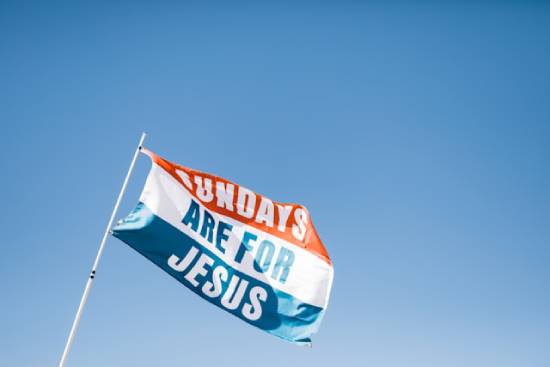
Photo by Grant Whitty on Unsplash
There are several reasons so many Christians worship together on Sunday instead of Saturday, and most of them have to do with the idea of honoring “the Lord’s day,5” or the day of the week Jesus resurrected, instead of (or sometimes in addition to) the original Sabbath as described in Genesis and the Ten Commandments.
There are also people who might regularly attend church on Sunday but still keep Saturday as the Sabbath.
In that case, it’s a bit like celebrating a family member’s April 13 birthday on April 8 because that’s the only day the family can get together that year. Nothing wrong with that, because the family isn’t insisting that the 8th is now the official date of birth for that person. The family still recognizes that they were born on April 13 and still intend to acknowledge their birthday then, and not every year on the 8th instead.
So, if someone attends church on Sunday but still intentionally honors Saturday as the Sabbath, there is no real issue there at all.
But what’s behind the idea that the day of Jesus’ resurrection would have an effect on the day that is honored as the Sabbath?
The reasons given for this shift can vary across denominations, or even individuals. But the most common answers are that keeping “the Lord’s day” has been a long-standing church tradition in both Catholicism and Protestantism (in contrast to what was the early church fathers called the “Jewish Sabbath”6), or because they’ve been taught that since Christ is “Lord of the Sabbath” (Matthew 12:8, CSB) and came to earth to “fulfill the law” (Matthew 5:17, CSB), that Sabbath-keeping doesn’t have to be done to the letter of the law, since the law isn’t what saves us. It’s often regarded as part of the differences between the Old Covenant to the New Covenant.
Early church history reveals that Christians began to regard Sunday as sacred when the Roman Empire made politically- and religiously-based decisions that gradually established Sunday as a holy day. It began when Christians started observing Sunday as a holiday, or feast day, while continuing to observe the seventh-day Sabbath. But when Constantine became the emperor of Rome, he issued a decree that Sunday, or the “venerable day of the sun,” was to be observed as a weekly day of rest.7 By the fourth century, this was mostly solidified as tradition.
Read more about the historical tradition of keeping Sunday as holy.
Some also reference Bible verses that could suggest early Christians started gathering on Sundays. It says in Acts 20:7 that, “on the first day of the week,” the apostle Paul and other disciples “came together to break bread” (NKJV), which reminds many people of the Lord’s Supper.
But the act of “breaking bread” together can also mean having a regular meal together (Acts 2:42, 46; 27:35-37). And since Paul was constantly traveling and taking any opportunity to preach and teach, believers often gathered together and ate while they listened.
Using the method of timekeeping we hear about frequently in the Bible, evenings back then were considered the beginning of the next day,8 so Paul likely preached on Saturday night before he left Sunday morning (Acts 20:11). And this gathering, where they were eating and listening to Paul, doesn’t appear to be regarded as a regular Sabbath-type of worship gathering, but mostly about seizing the last chance to listen to Paul before he had to leave the next day.
Another verse that mentions Sunday is 1 Corinthians 16:2, when Paul asked the believers in Corinth to set aside some money on the first day of the week.
Jews didn’t handle money during the Sabbath, especially during times of worship.9 That would explain why Paul planned it so there wouldn’t be a need for collections when he arrived, as they would have had everything ready by then. So this verse doesn’t appear to be talking about an offering taken during a worship gathering, but about individuals setting aside money on their own.
Let’s look at the primary reasons some churches choose to honor the seventh day as the Sabbath.
Reasons Christians keep the seventh-day Sabbath
Seventh-day Adventists are one denomination that is known for keeping the seventh-day Sabbath. But they aren’t the only Christians who honor Saturday in this way. Seventh-day Baptists, certain branches of the Church of God, and groups with Jewish affiliations are among others who also uphold the fourth commandment.10
They keep the Sabbath on Saturday for many biblical reasons, but especially these four:
- God established it at Creation and “made it holy” (see Genesis 2:2-3, ESV).
- The Ten Commandments remind us to keep it (Exodus 20:8-10; Deuteronomy 5:12-15).
- God hasn’t changed the Sabbath to any other day (Matthew 5:17).
- The Sabbath is a gift from the Lord that offers physical, mental, and spiritual benefits (Mark 2:27)
Likewise, they keep the Sabbath in various ways that usually align with these principles. They “cease” or “pause” weekly work and obligations for the sake of:
- Intentional quality time with our Creator God
- Intentional quality time with others
- Letting ourselves, and those who work for us, have a time of true physical and mental rest (Exodus 20:10)
- Remembrance: celebrating and reflecting on God’s power and artistry throughout His creation
- Preparation for life in God’s kingdom
Those who keep the Sabbath often go to church on that day because it’s the perfect opportunity to worship with others without the burdens of work and to-do lists. Paul regularly went to the synagogues on the Sabbath to share the Gospel with the Jewish community as well as non-Jewish listeners (Acts 13:13-49; 14:1; 17:1-4, 10-17).
Going to church on any other day of the week isn’t wrong. So maybe the question isn’t so much about when to attend church as it is about what it truly means to keep the Sabbath and what it means to worship God.
Read more about what it means to keep the Sabbath in today’s world.
What is true worship?

Photo by Anna Tarazevich
True worship is a matter of the heart. As with other aspects of following God and other forms of worship, the basis of Sabbath-keeping is more about the intention than mere dos and don’ts.
So, simply worshipping on Sunday isn’t “false worship.” Because we’re still legitimately worshiping God as our Savior and Creator. And, as established, worship is something we can always do, regardless of time and place.
It would only become “false” if someone who learns about the truth about the Sabbath and understands the fourth commandment still insists on keeping Sunday as holy because that’s their preference or they choose to instead rely on tradition, etc. So what makes it “false” would be a continual rejection of what they are now aware that God designed for them.
But as far as the worship itself, how can we tell when it’s true?
True worship consists of sincerity and truth as revealed through God’s Word and the Holy Spirit.
That’s what Jesus meant when He told the woman at the well,
“But an hour is coming, and is now here, when the true worshipers will worship the Father in Spirit and in truth. Yes, the Father wants such people to worship Him. God is Spirit, and those who worship Him must worship in spirit and in truth” (John 4:23-24, CSB, emphasis added).
So while sincerity is an essential part of genuine worship, worshipping God is not supposed to be primarily governed by preference, feelings, or habits, even if they are sincere. It’s about what truly shows love, appreciation, recognition, and honor to God. And He even gives us guidance on this.11
Let’s revisit the birthday example. What if someone you really care about said they’d rather celebrate you on another day, and insisted on bringing you flowers to honor you, even though you prefer cake?
That friend may be sincere, and they could say that they’re still acknowledging and celebrating you. But they’re not taking to heart when your actual birthday is, or what you want and how you feel.
It would be similar to couples’ anniversaries—how many spouses would you imagine to be happy if their significant other insisted on celebrating their special days on a different date because they thought it’d be better or more convenient for one of them?
Observing a holy day isn’t the only issue of true vs. false worship.
It’s ultimately about whether we trust God enough to do what He asks.
Let’s look at some examples in the Bible.
Both Cain and Abel presented sacrifices to God. Abel’s was accepted, but Cain’s was rejected (Genesis 4:1-6). Why?
Scripture doesn’t spell it all out exactly, but here’s what we can deduce, keeping in mind what Hebrews 11:4 adds: that “By faith, Abel offered to God a better sacrifice than Cain did” (CSB, emphasis added). Cain brought a sacrifice and gave it to God, but it wasn’t what God asked for, and it lacked the faith that came with Abel’s. Sacrifices were supposed to involve taking the life of an animal, such as a lamb (and supposed to be the firstborn or the best from the flock), because it symbolized the promise of salvation through Jesus, “the Lamb of God who takes away the sins of the world” (John 1:29, NKJV).
It’s not that God didn’t appreciate what Cain had to offer, but Cain chose not to acknowledge something important that God was trying to teach through this practice. He decided to give something he wanted to give, not what God asked for.
Similarly, King Saul attempted to cover up his deliberate disobedience to God by claiming that the livestock he was supposed to destroy could be used as sacrifices. His advisor, the prophet Samuel, warned that “to obey is better than sacrifice, and to heed than the fat of rams” (1 Samuel 15:22, NJKV).
God didn’t need Saul to make an offering to prove his heart. All he had to do was listen and follow God’s instructions.
Jesus warned about the hypocritical spirit that prompted people in His day to make a show out of worship to prove their righteousness to others. It was pride-based. They made sure others could hear their prayers and witness their acts of service, and they made it obvious when they fasted. But Christ instructed His listeners to turn these activities into personal, intimate moments shared between them and God (Matthew 6:5-18).
These examples reveal a connection between trust and obedience.
When we keep God’s commandments as He instructed, we’re declaring by actions that we trust God knows what’s best for us. God chose to make the Sabbath on the seventh day, the end of the week. He kept it Himself to give Adam and Eve the pattern He intended.
An example of this trust is found in Exodus 16, when Moses reintroduced the Sabbath to the Israelites with manna. They had to learn to trust that God would provide for their needs when they were instructed to double up on the sixth day because no manna would be available for Sabbath.
Conclusion
Wrapping it all together, let’s reiterate that it isn’t wrong to attend church on Sunday because church attendance isn’t necessarily the same as keeping a day holy. Many Christians gather throughout the week, and worship isn’t limited to time and location.
When discussing the seventh-day Sabbath, the heart of the matter is keeping a day holy as God meant it. The Sabbath was made for us to spend quality time with God and with others, to rest from our labors, and to trust in His timing and perfect work in our lives.
Though Sunday has been regarded as a holy day for centuries, God’s purpose was for us to observe the seventh day. And while it might seem like a small matter whether we keep one day or another, let’s remember that’s our perspective saying that. God sees the big picture, and He asked humanity to keep the Sabbath on a specific day.
By faith, then, we can recognize that His commandments are designed for our good. He wants us to trust Him and let Him lead, just as a good parent does what is best for their children, even if the kids don’t fully understand.
Going to church on a day other than the Sabbath is only an issue when we are convinced about the Sabbath and yet insist on keeping it differently, whether that’s due to tradition, preference, or anything else. And that’s because worship has to do with our hearts, and true worship involves following God’s lead, trusting His will, and resting in His unsurpassable goodness and love.
And if we’re ever not sure what to do, or if we find ourselves at a crossroads of convictions, thankfully we can always go to God for guidance. He knows our hearts, our situations, and our challenges. He loves us beyond measure, and that’s a big part of why He is worthy of our trust and our worship.
To learn more about the Sabbath, how to enjoy it, or how it was celebrated in the Bible
Related Articles



- “Shabath” https://biblehub.com/hebrew/7673.htm. [↵]
- “Worship.” Noah Webster 1828 Dictionary, https://webstersdictionary1828.com/Dictionary/worship. [↵]
- “Consecrate.” Noah Webster 1828 Dictionary, https://webstersdictionary1828.com/Dictionary/consecrate. [↵]
- Strong’s Concordance, Qāḏaš (H6942), https://www.blueletterbible.org/lexicon/h6942/esv/wlc/0-1/. [↵]
- “The Significance of the Lord’s Day,” Biblehub.com. [↵]
- ed. Schaff, Philip, “Nicene and Post-Nicene Christianity,” History of the Christian Church, vol. II, Socrates and Sozumenus Ecclesiastical Histories, “The Author’s Views respecting the Celebration of Easter, Baptism, Fasting, Marriage, the Eucharist, and Other Ecclesiastical Rites.” [↵]
- ed. Schaff, Philip, “Nicene and Post-Nicene Christianity,” History of the Christian Church, vol. III, (Rev. 5th ed.), accessed via Christian Classics Ethereal Library. [↵]
- Genesis 1:5-31; Exodus 12:6; Leviticus 23:32; Daniel 8:14, 26, ESV; Luke 23:54; John 19:31, 42. [↵]
- Andrews Study Bible, Andrews University Press, p. 1513, comment on 1 Corinthians 16:2. [↵]
- “Find a Church,” Bible Sabbath Association, https://biblesabbath.org/find-a-church/. [↵]
- Psalm 95:1-11; 150-:1-6; 1 Chronicles 16:29; Isaiah 25:1; Hebrews 13:15; Romans 12:1-2; Matthew 4:10; Colossians 3:16; Ephesians 5:19. [↵]
More Answers

How Can We Prepare for Sabbath?
How Can We Prepare for Sabbath?Sabbath is a special, consecrated time of rest each week. And to make sure we can fully embrace it, respect it, enjoy it, and “call the Sabbath a delight” (Isaiah 58:13, CSB), it can be helpful to prepare for it ahead of time. These...

How Do I Begin Observing the Sabbath?
The Sabbath, which comes on the seventh day of the week, is a special day honoring the fourth commandment and God’s creation.

What Counts as “Work” on the Sabbath?
God designed the Sabbath day to be a 24-hour period when we could pause and enjoy the goodness of His creation. We do this by putting aside our regular work so we can focus on spending time with Him and appreciating what He’s created (Exodus 20:8-11).

Who Changed the Sabbath to Sunday?
If the Bible never mentions the change of the Sabbath, why do so many today attend church on Sunday?

What Is Children’s Sabbath School in the Adventist Church?
Children’s Sabbath School is a Bible program offered every Sabbath at Adventist churches for children from birth to age 18. These classes give children the chance to learn Bible stories, make new friends, and participate in fun activities.

What Day Is the Sabbath, and How Do We Know?
The Sabbath is a declaration of weekly rest by God which we find in the Bible (Genesis 2:2-3). But you may be wondering:

Sabbath Keeping: What It Looks Like in the Bible
That Sabbath would not be about a checklist of rules but about a mindset of rest. It’s a day to set aside daily cares and connect with God, our Creator. Out of our love for Him, we take the principles of the Bible and apply them in the way we keep the Sabbath.

13th Sabbath Offering: What It Is and Why It Matters
While the previous 12 Sabbaths of the quarter feature an established Adventist ministry and its current giving needs, the 13th is a rotating spot reserved for current mission projects.
Rest and Reconnection: What It Really Means to Keep the Sabbath
The Bible tells us that we keep the Sabbath by avoiding work. God made this law because he knew it would strengthen us and bring us joy, as well as give us time to reconnect with Him and recharge from our busy lives.

Everything You Need to Know About Sabbath Meals
For Seventh-day Adventists, sharing a Sabbath meal with friends and family is one of the most special and memorable parts of the Sabbath.

Everything You Need to Know about Sabbath School
Sabbath School is the Bible study component of the church program at most Seventh-day Adventist Churches. It’s a time of Bible study on a specific topic or lesson. Instead of listening to a preacher, people interact with one another, making it a great opportunity for building friendships.

Why is the Sabbath Observed from Sunset to Sunset?
If you know of any Adventists, you may have noticed that they stop their work or business activities before sundown on Friday. What’s the reason behind this?

How Important is a Weekly Sabbath as a Day of Rest?
Around the world, different religious groups have had a Sabbath—a day set apart for rest each week. A day to worship together, spend time with loved ones, and to just rest.

Why do Adventists Worship on Saturday?
Adventists worship on the seventh day of the week because God made Saturday a holy day at creation. Learn what makes this day so special to Adventists.