
If the Bible never mentions the change of the Sabbath, why do so many today attend church on Sunday?
Who changed the day?
But that’s actually the wrong question to ask. The Sabbath hasn’t changed.
What has changed is Christians’ decision of what day to worship. And it all started during the first and second centuries. Let’s uncover more of the story by looking at:
- Where the seventh-day Sabbath originated
- How the Sabbath was kept in the Bible
- How Christians shifted to keeping Sunday
Without further ado, here’s a quick refresher on the Sabbath up to New Testament times. From there, we’ll find out what happened in the early centuries of Christianity.

Photo by Javier Miranda on Unsplash
Where the seventh-day Sabbath originated
The seventh-day Sabbath is interwoven into the human fabric from the time God gave it to the newly created humans as a day of rest. People have kept the Sabbath ever since: the Israelites did, Jesus Christ did, the apostles did, and many faithful people after that time did.
But it all began when there were no Jews or varying groups of people or churches. It was just God and the first two humans: Adam and Eve.
When God finished creating the world in six days, “God blessed the seventh day and declared it holy, for on it He rested from all His work of creation” (Genesis 2:3, CSB).
He made the Sabbath as a time to pause—to reorient ourselves to Him and one another. We’re designed for this rhythm.
How the Sabbath was kept in the Bible
Both the Old Testament and New Testament mention examples of people keeping the seventh-day Sabbath.
God reminded His people of the Sabbath when He gave the Ten Commandments to Moses. The fourth commandment about the Sabbath began specifically with the word remember (unlike any of the other commandments).
God had just brought the Israelites out of Egypt, where they had been slaves. Some of them had no doubt lost sight of these principles, but as slaves, they also wouldn’t have been able to enjoy a day off each week. God’s reminder would’ve come as a welcome gift. It also would’ve required them to re-learn what it means to have that weekly rhythm of work and rest.
That’s why among the instructions for loving Him and loving one another (Matthew 22:38–40), He said,
“Remember the Sabbath day, to keep it holy. Six days you shall labor and do all your work…. For in six days the LORD made the heavens and the earth, the sea, and all that is in them, and rested the seventh day. Therefore the LORD blessed the Sabbath day and hallowed it” (Exodus 20:8–11, NKJV).
The people of Israel continued to keep the Sabbath throughout the Old Testament.
Then, in the New Testament, Jesus comes on the scene.
Jesus could very well have changed the Sabbath if He’d wanted to. He definitely wasn’t afraid to show the Pharisees that they’d turned the Sabbath into a day of drudgery and rules rather than mercy and generosity (Mark 3:4).
And yet, Jesus upheld the Sabbath (Luke 4:16), even proclaiming Himself “Lord of the Sabbath” (Mark 2:28, NKJV). He made it clear that He hadn’t come to destroy God’s Law but to live it out in His life, setting an example for us (Matthew 5:17–19).
The apostles in the first century, including Paul, kept the Sabbath too. And they wrote about the importance of the Ten Commandments and the Sabbath rest that remained (James 2:10–11; Hebrews 4:4, 9).
But as human nature so often does, some Christians turned Sabbath into a legalistic practice rather than the joyful celebration it’s meant to be.
This distortion of the Sabbath played a role in the shift to keeping Sunday.
How Christians shifted to keeping Sunday
After Jesus returned to heaven (around AD 31), the disciples and the early Christian church (Jews and Gentiles) continued to keep the Sabbath. They did so all throughout the time of the book of Acts and the first century.
The historian Lyman Coleman in his book Ancient Christianity Exemplified points this out. What he says is significant, considering that he’s not a Sabbath keeper himself:
“No law or precept appears to have been given by Christ or the apostles, either for the abrogation [repeal] of the Jewish Sabbath or the institution of the Lord’s day, or the substitution of the first for the seventh day of the week.”1
Despite not having any instruction from Christ or the apostles, some of the early church fathers (leaders) of the second century began to shift their day of worship from Saturday to Sunday.
Let’s find out the real reason for this shift. We’ll look at historical research for answers.
Church fathers in the first through the third century
The change from Sabbath to Sunday keeping was a slow transition over a few hundred years. It started as Christians incorporated Greek, Roman, and pagan philosophies into Christianity to assimilate with those around them and distance themselves from Judaism.
See, Sunday had long been a holy day for many other religions. For them, it was a festival to worship the sun—which is where we get its name from.2 These practices date back to ancient times and are even mentioned in the Old Testament (Ezekiel 8:15–17).
Christians worshiping on Sunday “dates to the second or third centuries” and was “associated with either Rome or Alexandria.”3
One of the first mentions is in AD 155 by one of the church fathers, Justin Martyr, in a defense of Christianity to the Roman emperor:
“But Sunday is the day on which we all hold our common assembly, because it is the first day on which God, having wrought a change in the darkness and matter, made the world; and Jesus Christ our Savior on the same day rose from the dead.”4
It’s likely he hoped to put Christians in good favor with the emperor and lessen persecution.
Justin Martyr, who spent time in Rome, came from a pagan background and had studied Stoic, Platonic, and other pagan philosophies. During his lifetime, Sunday was a pagan festival to honor the sun god, but Christians had begun celebrating on Sunday as a way to connect with these other religions and hopefully convert them to Christianity.5
But whether the Christians were successful in their outreach is questionable, especially when we read the words of the Christian author Tertullian from about 60 years after Justin Martyr.
Interestingly, Tertullian, another church father, seemed to contradict himself when he talked about the Sabbath. He said the Word of God didn’t give any evidence that the “Creator’s Sabbath” had changed, and he believed it was the enemy’s work to find ways to avoid keeping the Sabbath.
And yet, Tertullian also defended Sunday worship when accused of worshiping the sun rather than God on this day.6
Both Sabbath and Sunday

Photo by Chandan Chaurasia on Unsplash
Pagans in the Roman Empire kept festivals for sun worship every Sunday. Over time, Christians, influenced by Roman ways of thinking, began to worship on both the Sabbath and Sunday.
Even so, Sunday wasn’t really seen as a replacement for the Sabbath—like a “Christian Sabbath.” Instead, it seemed to be an additional festival. The Apostolic Constitutions, a piece of early Christian literature from the fourth century, even instructed this:
“But keep the Sabbath, and the Lord’s day festival; because the former is a memorial of the creation, and the latter of the resurrection.”7
But in the process, the Sabbath was becoming distorted. Much like what happened during the time of Jesus, religious leaders called the Pharisees had placed so many rules and regulations around the Sabbath that its observance became a drudgery rather than the delight it was supposed to be (Isaiah 58:13). Jesus had shown the people a different way of Sabbath keeping, but unfortunately, this was lost sight of in the following centuries.
Here’s how, according to church historian Dr. Charles Hase of Germany:
“While the eastern churches retained the Sabbath, a portion of the western churches, with the church of Rome at their head, turned it into a fast.”8
And while Sabbath became a fast day, Sunday was to be a celebratory day. Thus, it became a day of rejoicing and festivity to look forward to after the Sabbath was over.
And this keeping of both days was quite common until the fifth century.
Notice what the historian Coleman says about it:
“The observance of the Lord’s day as the first day of the week was at first introduced as a separate institution…. Their Sabbath, the last day of the week, was strictly kept in connection with that of the first day, for a long time after the overthrow of the temple and its worship [AD 70]. Down even to the fifth century, the observance of the Jewish Sabbath was continued in the Christian church, with a rigour and solemnity gradually diminishing until it was wholly discontinued.”
Over time, most Christians lost interest in the drudgery and fasting of the Sabbath, making it easier for them to accept what came next.
Constantine’s Sunday law
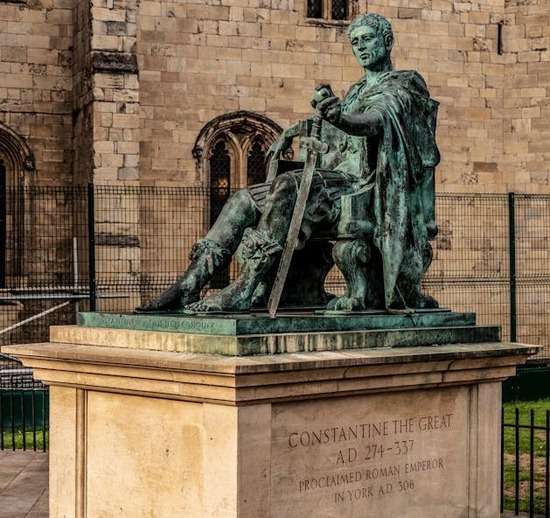
Photo by John Nail
As Christians were compromising and keeping both Sabbath and Sunday, something unusual took place within the Roman Empire. In the early fourth century, Emperor Constantine was in the Battle of the Milvian Bridge, when he had a vision of a flaming cross with the Latin words, “In this sign conquer.”9
As a result, he became a Christian—and so did the Empire. This change marked the beginning of the church being under Roman authority.10
The change was no doubt a relief to Christians who had experienced severe persecution under the reign of Emperor Diocletian.
Up to this point, Constantine had been a devotee of Mithraism, a monotheistic religion that involved worshiping the sun god. It seemed that Mithraism declined as Christianity became more widespread. But in reality, it had simply been repackaged. We see this in Constantine’s decree on March 7, 321:
“On the venerable Day of the Sun let the magistrates and people residing in cities rest, and let all workshops be closed.”11
It was a very political move—a way for Constantine to unite the different religious groups within his empire and bring social stability.
Eusebius, a Christian historian during that time, had close connections with the emperor and no doubt was looking for ways to please him. In his Commentary of the Psalms, he makes this claim:
“And all things whatsoever that it was duty to do on the Sabbath, these we have transferred to the Lord’s day, as more appropriately belonging to it, because it has a precedence and is first in rank, and more honorable than the Jewish Sabbath.”12
Even so, as we already mentioned, Sabbath keeping didn’t stop at this time. It would take another couple hundred years for the Christian church to officially end it.
Fourth-century councils
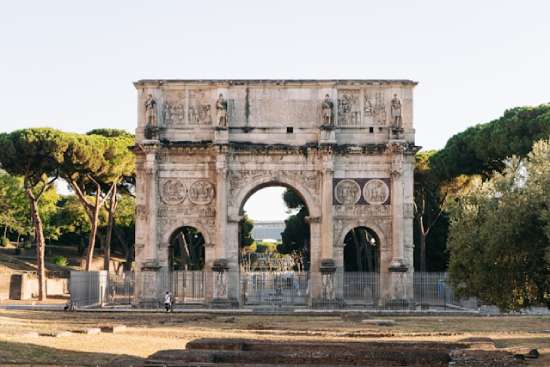
Photo by Fabio Fistarol on Unsplash
Some key fourth-century councils within the Roman-controlled church influenced the way Christians kept the Sabbath. Keeping Sunday rather than the seventh day became a way for them to put distance between themselves and the Jews.
During the Council of Nicaea in AD 325, a discussion arose about whether to keep the Passover as the Jews did. We see an anti-semitic attitude in Constantine’s response, as noted by Eusebius:
“It appeared an unworthy thing that in the celebration of this most holy feast [Passover] we should follow the practice of the Jews…. Let us then have nothing in common with the detestable Jewish crowd.”
Clearly, Constantine had an agenda against Jewish practices, and Christians would have to follow suit to stay in his good graces.
Then, the Council of Laodicea in AD 365 specifically addressed Sabbath keeping. It forbade Christians, particularly in the western church, from keeping it:
“Christians must not judaize by resting on the Sabbath, but must work on that day, rather honouring the Lord’s Day, and, if they can, resting then as Christians. But if any shall be found to be judaizers, let them be anathema from Christ.”13
From the sixth century onward, other edicts and councils by the Roman-controlled church forbade Christians to work on Sunday or keep Sabbath.14 Slowly, Sabbath keepers dwindled.
But they never disappeared completely.
The truth remained alive
The transition from Sunday keeping to Sabbath keeping reveals the human tendency to want to fit in and please other humans over God. We may not readily accept an outright falsehood, but over time, we may make subtle changes that lead us down the path of compromise.
Despite the fact that Christians at large followed the lead of the Roman Church, some small groups, like the Celtic church and the Waldensians of Northern Italy, remained faithful to the teaching and example of Jesus.15
Though hidden from view for many centuries, God’s truth never went completely out.
And it re-emerged as a group of Protestant Christians went to the Scriptures to look for it again.
Related pages



- Coleman, Lyman, Ancient Christianity Exemplified (Lippincott, Grambo & Co, 1853), p. 530. [↵]
- Andrews, John Nevins, The History of the Sabbath, p. 146. [↵]
- McIver, Robert, “When, Where, and Why Did the Change from Sabbath to Sunday Worship Take Place in the Early Church?” [↵]
- Justin Martyr, First Apology 67. [↵]
- Andrews, p. 148. [↵]
- Ibid., p. 155. [↵]
- Ibid., p. 163. [↵]
- Quoted in Andrews, p. 156. [↵]
- Cavendish, Richard, “The Battle of the Milvian Bridge,” History Today. [↵]
- “Constantine the Great – Paganism to Christianity,” Lineage. [↵]
- Codex Justinianus 3.12.3, trans. Philip Schaff, History of the Christian Church, 5th ed. (New York, 1902), 3:380, note 1. [↵]
- Andrews, p. 200. [↵]
- Canon XXIX. [↵]
- Andrews, Chapter 19. [↵]
- “Waldensians: People of the Valleys,” Lineage. [↵]
More Answers

What Does the Parable of the 10 Virgins Teach Us?
The story of the 10 virgins found in Matthew 25:1-13 is a well-recognized parable of Jesus, and one with a profoundly important message for all of humanity.

Sabato katika Maisha na Mafundisho ya Ellen White
Sabato katika Maisha na Mafundisho ya Ellen WhiteSabato ni mada muhimu katika Kanisa la Waadventista wa Sabato. Sio jambo la kushangaza, basi, kwamba Ellen G. White, mwanzilishi mwenza wa kanisa, alisoma mafundisho ya Biblia kuhusu Sabato na akaandika kiasi kikubwa...

Una visión general de la educación superior Adventista del Séptimo Día
Una visión general de la educación superior Adventista del Séptimo DíaLa Iglesia Adventista del Séptimo Día tiene alrededor de 118 instituciones de educación superior en todo el mundo.1 Aunque muchas de ellas se encuentran en América del Norte, también encontrarás...
Uma Visão Geral da Educação Superior Adventista do Sétimo Dia
Uma Visão Geral da Educação Superior Adventista do Sétimo DiaA Igreja Adventista do Sétimo Dia tem cerca de 118 escolas terciárias ao redor do mundo.1 Embora muitas delas estejam localizadas na América do Norte, você também encontrará universidades Adventistas em...
Jesús y Juan el Bautista: Su relación y ministerio
Juan el Bautista y Jesús eran primos, amigos y colaboradores cercanos en el ministerio. Aprende la significancia duradera de su relación.

The Parable of the Unforgiving Servant—A Walk-through
Through this somewhat alarming story, Jesus teaches us about forgiveness, mercy, and human nature.

Comprendiendo la vida y el ministerio de Elena G. de White
Comprendiendo la vida y el ministerio de Elena G. de White Ellen Gould White fue una de las cofundadoras de la Iglesia Adventista del Séptimo Día. Y aunque vivió la mayor parte de su vida en el siglo XIX, el impacto de su vida y ministerio continúa hoy. Viviendo su...
Compreendendo a Vida e o Ministério de Ellen G. White
Saiba quem Ellen G. White realmente foi e o papel que desempenhou ao guiar a Igreja Adventista do Sétimo Dia primitiva por meio de seu ministério e escritos inspirados.

Explorando la profecía de las 2300 tardes y mañanas y el juicio investigador
¿De qué se trata la profecía de las 2300 tardes y mañanas? Nos enfocaremos especialmente en qué eventos marcaron su cumplimiento y en qué tiene que ver con el juicio investigador.
Explorando a Profecia dos 2300 Dias e o Juízo Investigativo
Sobre o que se trata a profecia dos 2300 dias? Vamos analisar especialmente quais eventos marcaram o seu cumprimento e qual a sua relação com o Juízo Investigativo.
El sábado en la vida y enseñanzas de Elena de White
El sábado es un tema importante en la Iglesia Adventista del Séptimo Día.
O Sábado na Vida e Ensinos de Ellen White
O Sábado na Vida e Ensinos de Ellen WhiteO sábado é um tópico importante na Igreja Adventista do Sétimo Dia. Não deve surpreender você, então, que Ellen G. White, uma co-fundadora da igreja, tenha estudado os ensinamentos bíblicos sobre o sábado e escrito extensamente...

La armadura de Dios como se describe en Efesios 6
La armadura de Dios como se describe en Efesios 6En Efesios 6, el Apóstol Pablo estaba ayudando a las personas a entender lo que significa defenderse en una guerra espiritual (Efesios 6:10-18). ¿Qué significa eso? Al hacer referencia a la armadura de Dios, Pablo no...

Todo lo que necesitas saber sobre las comidas del Sábado.
Para los Adventistas del Séptimo Día, compartir una comida en sábado con amigos y familiares es una de las partes más especiales y memorables de este día.

What Does the Parable of the Pearl of Great Price Mean?
Here’s what Jesus taught about the kingdom of heaven through this short parable about a merchant who finds a priceless pearl.
¿Qué significa “Adventista”?
¿Qué significa "Adventista"?Los Adventistas del Séptimo Día son una denominación cristiana protestante que sostiene el sábado bíblico que es el séptimo día. De esta creencia, obtienen la primera parte de su nombre. Pero, ¿qué hay de la segunda parte, "Adventista"?...

Ujumbe wa Malaika Watatu Katika Ufunuo 14 Ni Upi?
Ujumbe wa malaika watatu katika Ufunuo 14 unawaonya ulimwengu kuabudu Mungu, kuacha mchafuko wa kidini, na kuepuka ibada za tamaduni za kibinadamu badala ya amri za Mungu.
¿Quiénes fueron los hijos de Elena G. de White?
Elena G. de White, probablemente la cofundadora más conocida de la Iglesia Adventista del Séptimo Día, tuvo cuatro hijos con su esposo, James: Henry Nichols, James Edson, William Clarence y John Herbert.

Kwa nini Wadventista wa Sabato Wengi wanachagua Lishe Inayotokana na Mimea?
Ingawa siyo kila Mwadventista anatumia vyakula vya mimea pekee, wengi hujiepusha kabisa na nyama ili kuishi maisha yenye afya katika juhudi za kumheshimu Mungu, kimwili, kiroho, na kiakili.
![Understanding the Book of Mark [An Overview]](https://devsite.askanadventistfriend.com/wp-content/uploads/2026/02/bible-open-to-mark-400x250.jpg)
Understanding the Book of Mark [An Overview]
Understanding the Book of Mark [An Overview]The Book of Mark is one of the four Gospel accounts that begin the New Testament, and its author is widely believed to be John Mark, a relative of Barnabas who worked with both Peter and Paul. It’s the shortest Gospel...

An Overview of Romans: Faith, Righteousness, and Relationships
Here’s a breakdown and background of Paul’s longest epistle.
Tudo o que você precisa saber sobre as refeições do Sábado
Tudo o que você precisa saber sobre as refeições do Sábado.Para os Adventistas do Sétimo Dia, compartilhar uma refeição de sábado com amigos e família é uma das partes mais especiais e memoráveis do sábado. É por isso que queremos compartilhar com você tudo sobre as...
Yesu na Yohana Mbaptisti: Uhusiano Wao na Huduma
Yohana Mbatizaji na Yesu walikuwa ndugu wa damu, marafiki, na wafanyakazi wa karibu katika huduma. Jifunze umuhimu wa kudumu wa uhusiano wao.
Muhtasari wa Elimu ya Juu ya WaAdventista wa Sabato
Muhtasari wa Elimu ya Juu ya WaAdventista wa SabatoKanisa la WaAdventista Wasabato lina takribani shule za sekondari 118 ulimwenguni kote.1 Ingawa nyingi zipo ndani ya Amerika Kaskazini, pia utapata vyuo vikuu vya WaAdventista katika nchi mbalimbali duniani—mahali...
The Book of John: An Overview
Here’s a study companion for the Gospel according to John.

Waadventista wa Sabato Wanaamini Nini Kuhusu Pambano Kuu (Wema na Uovu)?
Pambano Kuu” ni msemo ambao Waadventista wa Sabato kawaida huutumia kuelezea mgogoro wa kiroho wa ulimwengu kati ya nguvu za mema (Mungu) na nguvu za uovu au dhambi (Shetani/iblis).
Silaha Zote za Mungu Kama Ilivyoelezwa Katika Waefeso 6
Katika Waefeso 6, Mtume Paulo alikuwa akisaidia watu kuelewa maana ya kujilinda katika vita vya kiroho (Waefeso 6:10-18).
A Armadura de Deus conforme Descrita em Efésios 6
Em Efésios 6, o Apóstolo Paulo estava ajudando as pessoas a entender o que significa se defender em uma guerra espiritual (Efésios 6:10-18).
¿Qué creen los Adventistas del Séptimo Día sobre el gran conflicto (bien vs. mal)?
El “gran conflicto” es la frase que los Adventistas del Séptimo Día suelen usar para describir el conflicto espiritual cósmico entre las fuerzas del bien (Dios) y las fuerzas del mal o del pecado (Satanás/el diablo).
Didn’t find your answer? Ask us!
We understand your concern of having questions but not knowing who to ask—we’ve felt it ourselves. When you’re ready to learn more about Adventists, send us a question! We know a thing or two about Adventists.