
If the Bible never mentions the change of the Sabbath, why do so many today attend church on Sunday?
Who changed the day?
But that’s actually the wrong question to ask. The Sabbath hasn’t changed.
What has changed is Christians’ decision of what day to worship. And it all started during the first and second centuries. Let’s uncover more of the story by looking at:
- Where the seventh-day Sabbath originated
- How the Sabbath was kept in the Bible
- How Christians shifted to keeping Sunday
Without further ado, here’s a quick refresher on the Sabbath up to New Testament times. From there, we’ll find out what happened in the early centuries of Christianity.

Photo by Javier Miranda on Unsplash
Where the seventh-day Sabbath originated
The seventh-day Sabbath is interwoven into the human fabric from the time God gave it to the newly created humans as a day of rest. People have kept the Sabbath ever since: the Israelites did, Jesus Christ did, the apostles did, and many faithful people after that time did.
But it all began when there were no Jews or varying groups of people or churches. It was just God and the first two humans: Adam and Eve.
When God finished creating the world in six days, “God blessed the seventh day and declared it holy, for on it He rested from all His work of creation” (Genesis 2:3, CSB).
He made the Sabbath as a time to pause—to reorient ourselves to Him and one another. We’re designed for this rhythm.
How the Sabbath was kept in the Bible
Both the Old Testament and New Testament mention examples of people keeping the seventh-day Sabbath.
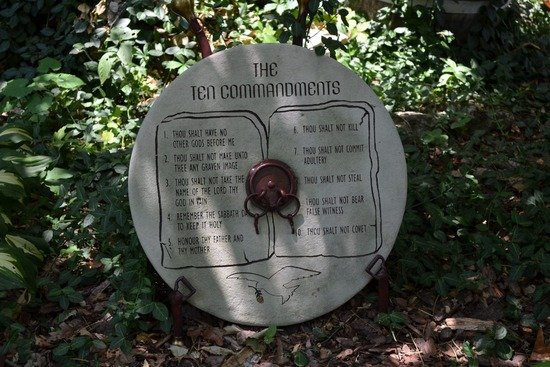
God reminded His people of the Sabbath when He gave the Ten Commandments to Moses. The fourth commandment about the Sabbath began specifically with the word remember (unlike any of the other commandments).
God had just brought the Israelites out of Egypt, where they had been slaves. Some of them had no doubt lost sight of these principles, but as slaves, they also wouldn’t have been able to enjoy a day off each week. God’s reminder would’ve come as a welcome gift. It also would’ve required them to re-learn what it means to have that weekly rhythm of work and rest.
That’s why among the instructions for loving Him and loving one another (Matthew 22:38–40), He said,
“Remember the Sabbath day, to keep it holy. Six days you shall labor and do all your work…. For in six days the LORD made the heavens and the earth, the sea, and all that is in them, and rested the seventh day. Therefore the LORD blessed the Sabbath day and hallowed it” (Exodus 20:8–11, NKJV).
The people of Israel continued to keep the Sabbath throughout the Old Testament.
Then, in the New Testament, Jesus comes on the scene.
Jesus could very well have changed the Sabbath if He’d wanted to. He definitely wasn’t afraid to show the Pharisees that they’d turned the Sabbath into a day of drudgery and rules rather than mercy and generosity (Mark 3:4).
And yet, Jesus upheld the Sabbath (Luke 4:16), even proclaiming Himself “Lord of the Sabbath” (Mark 2:28, NKJV). He made it clear that He hadn’t come to destroy God’s Law but to live it out in His life, setting an example for us (Matthew 5:17–19).
The apostles in the first century, including Paul, kept the Sabbath too. And they wrote about the importance of the Ten Commandments and the Sabbath rest that remained (James 2:10–11; Hebrews 4:4, 9).
But as human nature so often does, some Christians turned Sabbath into a legalistic practice rather than the joyful celebration it’s meant to be.
This distortion of the Sabbath played a role in the shift to keeping Sunday.
How Christians shifted to keeping Sunday
After Jesus returned to heaven (around AD 31), the disciples and the early Christian church (Jews and Gentiles) continued to keep the Sabbath. They did so all throughout the time of the book of Acts and the first century.
The historian Lyman Coleman in his book Ancient Christianity Exemplified points this out. What he says is significant, considering that he’s not a Sabbath keeper himself:
“No law or precept appears to have been given by Christ or the apostles, either for the abrogation [repeal] of the Jewish Sabbath or the institution of the Lord’s day, or the substitution of the first for the seventh day of the week.”1
Despite not having any instruction from Christ or the apostles, some of the early church fathers (leaders) of the second century began to shift their day of worship from Saturday to Sunday.
Let’s find out the real reason for this shift. We’ll look at historical research for answers.
Church fathers in the first through the third century
The change from Sabbath to Sunday keeping was a slow transition over a few hundred years. It started as Christians incorporated Greek, Roman, and pagan philosophies into Christianity to assimilate with those around them and distance themselves from Judaism.
See, Sunday had long been a holy day for many other religions. For them, it was a festival to worship the sun—which is where we get its name from.2 These practices date back to ancient times and are even mentioned in the Old Testament (Ezekiel 8:15–17).
Christians worshiping on Sunday “dates to the second or third centuries” and was “associated with either Rome or Alexandria.”3
One of the first mentions is in AD 155 by one of the church fathers, Justin Martyr, in a defense of Christianity to the Roman emperor:
“But Sunday is the day on which we all hold our common assembly, because it is the first day on which God, having wrought a change in the darkness and matter, made the world; and Jesus Christ our Savior on the same day rose from the dead.”4
It’s likely he hoped to put Christians in good favor with the emperor and lessen persecution.
Justin Martyr, who spent time in Rome, came from a pagan background and had studied Stoic, Platonic, and other pagan philosophies. During his lifetime, Sunday was a pagan festival to honor the sun god, but Christians had begun celebrating on Sunday as a way to connect with these other religions and hopefully convert them to Christianity.5
But whether the Christians were successful in their outreach is questionable, especially when we read the words of the Christian author Tertullian from about 60 years after Justin Martyr.
Interestingly, Tertullian, another church father, seemed to contradict himself when he talked about the Sabbath. He said the Word of God didn’t give any evidence that the “Creator’s Sabbath” had changed, and he believed it was the enemy’s work to find ways to avoid keeping the Sabbath.
And yet, Tertullian also defended Sunday worship when accused of worshiping the sun rather than God on this day.6
Both Sabbath and Sunday

Photo by Chandan Chaurasia on Unsplash
Pagans in the Roman Empire kept festivals for sun worship every Sunday. Over time, Christians, influenced by Roman ways of thinking, began to worship on both the Sabbath and Sunday.
Even so, Sunday wasn’t really seen as a replacement for the Sabbath—like a “Christian Sabbath.” Instead, it seemed to be an additional festival. The Apostolic Constitutions, a piece of early Christian literature from the fourth century, even instructed this:
“But keep the Sabbath, and the Lord’s day festival; because the former is a memorial of the creation, and the latter of the resurrection.”7
But in the process, the Sabbath was becoming distorted. Much like what happened during the time of Jesus, religious leaders called the Pharisees had placed so many rules and regulations around the Sabbath that its observance became a drudgery rather than the delight it was supposed to be (Isaiah 58:13). Jesus had shown the people a different way of Sabbath keeping, but unfortunately, this was lost sight of in the following centuries.
Here’s how, according to church historian Dr. Charles Hase of Germany:
“While the eastern churches retained the Sabbath, a portion of the western churches, with the church of Rome at their head, turned it into a fast.”8
And while Sabbath became a fast day, Sunday was to be a celebratory day. Thus, it became a day of rejoicing and festivity to look forward to after the Sabbath was over.
And this keeping of both days was quite common until the fifth century.
Notice what the historian Coleman says about it:
“The observance of the Lord’s day as the first day of the week was at first introduced as a separate institution…. Their Sabbath, the last day of the week, was strictly kept in connection with that of the first day, for a long time after the overthrow of the temple and its worship [AD 70]. Down even to the fifth century, the observance of the Jewish Sabbath was continued in the Christian church, with a rigour and solemnity gradually diminishing until it was wholly discontinued.”
Over time, most Christians lost interest in the drudgery and fasting of the Sabbath, making it easier for them to accept what came next.
Constantine’s Sunday law
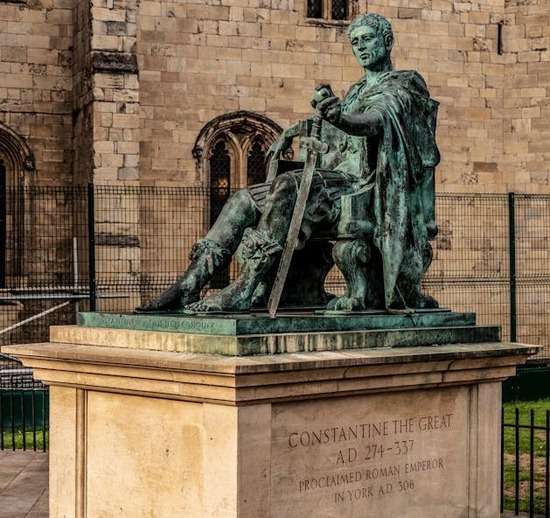
Photo by John Nail
As Christians were compromising and keeping both Sabbath and Sunday, something unusual took place within the Roman Empire. In the early fourth century, Emperor Constantine was in the Battle of the Milvian Bridge, when he had a vision of a flaming cross with the Latin words, “In this sign conquer.”9
As a result, he became a Christian—and so did the Empire. This change marked the beginning of the church being under Roman authority.10
The change was no doubt a relief to Christians who had experienced severe persecution under the reign of Emperor Diocletian.
Up to this point, Constantine had been a devotee of Mithraism, a monotheistic religion that involved worshiping the sun god. It seemed that Mithraism declined as Christianity became more widespread. But in reality, it had simply been repackaged. We see this in Constantine’s decree on March 7, 321:
“On the venerable Day of the Sun let the magistrates and people residing in cities rest, and let all workshops be closed.”11
It was a very political move—a way for Constantine to unite the different religious groups within his empire and bring social stability.
Eusebius, a Christian historian during that time, had close connections with the emperor and no doubt was looking for ways to please him. In his Commentary of the Psalms, he makes this claim:
“And all things whatsoever that it was duty to do on the Sabbath, these we have transferred to the Lord’s day, as more appropriately belonging to it, because it has a precedence and is first in rank, and more honorable than the Jewish Sabbath.”12
Even so, as we already mentioned, Sabbath keeping didn’t stop at this time. It would take another couple hundred years for the Christian church to officially end it.
Fourth-century councils
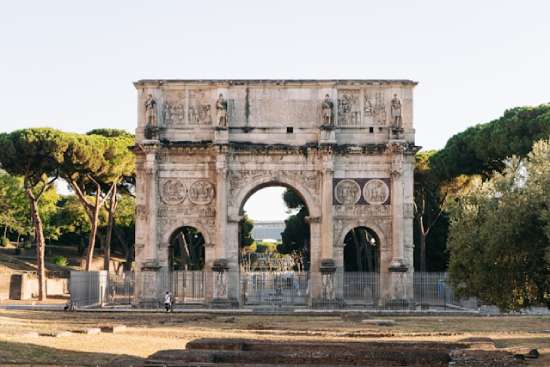
Photo by Fabio Fistarol on Unsplash
Some key fourth-century councils within the Roman-controlled church influenced the way Christians kept the Sabbath. Keeping Sunday rather than the seventh day became a way for them to put distance between themselves and the Jews.
During the Council of Nicaea in AD 325, a discussion arose about whether to keep the Passover as the Jews did. We see an anti-semitic attitude in Constantine’s response, as noted by Eusebius:
“It appeared an unworthy thing that in the celebration of this most holy feast [Passover] we should follow the practice of the Jews…. Let us then have nothing in common with the detestable Jewish crowd.”
Clearly, Constantine had an agenda against Jewish practices, and Christians would have to follow suit to stay in his good graces.
Then, the Council of Laodicea in AD 365 specifically addressed Sabbath keeping. It forbade Christians, particularly in the western church, from keeping it:
“Christians must not judaize by resting on the Sabbath, but must work on that day, rather honouring the Lord’s Day, and, if they can, resting then as Christians. But if any shall be found to be judaizers, let them be anathema from Christ.”13
From the sixth century onward, other edicts and councils by the Roman-controlled church forbade Christians to work on Sunday or keep Sabbath.14 Slowly, Sabbath keepers dwindled.
But they never disappeared completely.
The truth remained alive
The transition from Sunday keeping to Sabbath keeping reveals the human tendency to want to fit in and please other humans over God. We may not readily accept an outright falsehood, but over time, we may make subtle changes that lead us down the path of compromise.
Despite the fact that Christians at large followed the lead of the Roman Church, some small groups, like the Celtic church and the Waldensians of Northern Italy, remained faithful to the teaching and example of Jesus.15
Though hidden from view for many centuries, God’s truth never went completely out.
And it re-emerged as a group of Protestant Christians went to the Scriptures to look for it again.
Related pages


- Coleman, Lyman, Ancient Christianity Exemplified (Lippincott, Grambo & Co, 1853), p. 530. [↵]
- Andrews, John Nevins, The History of the Sabbath, p. 146. [↵]
- McIver, Robert, “When, Where, and Why Did the Change from Sabbath to Sunday Worship Take Place in the Early Church?” [↵]
- Justin Martyr, First Apology 67. [↵]
- Andrews, p. 148. [↵]
- Ibid., p. 155. [↵]
- Ibid., p. 163. [↵]
- Quoted in Andrews, p. 156. [↵]
- Cavendish, Richard, “The Battle of the Milvian Bridge,” History Today. [↵]
- “Constantine the Great – Paganism to Christianity,” Lineage. [↵]
- Codex Justinianus 3.12.3, trans. Philip Schaff, History of the Christian Church, 5th ed. (New York, 1902), 3:380, note 1. [↵]
- Andrews, p. 200. [↵]
- Canon XXIX. [↵]
- Andrews, Chapter 19. [↵]
- “Waldensians: People of the Valleys,” Lineage. [↵]
More Answers

Como os Ensinos de Ellen White Podem Melhorar Sua Saúde
Como os Ensinos de Ellen White Podem Melhorar Sua SaúdeAssistência médica no século XIX era dito deixar "mais doenças do que levava embora" com o uso de sangrias e "remédios" como mercúrio e arsênico.1 À medida que as pessoas questionavam esses métodos, novas...
Cómo las enseñanzas de Elena G. de White pueden mejorar tu salud
La atención médica en el siglo XIX se decía que dejaba “más enfermedades de las que eliminaba” con su uso de sangrías y “medicamentos” como el mercurio y el arsénico.

All About the Gospel of Matthew
The Book of Matthew is one of the four Gospel narratives in the Bible
Descanso e Reconexão: O Que Realmente Significa Guardar o Sábado
A Bíblia nos diz que guardamos o Sábado evitando o trabalho. Deus fez essa lei porque sabia que ela nos fortaleceria e nos traria alegria, além de nos dar tempo para nos reconectar com Ele e recarregar das nossas vidas ocupadas.
Descanso y reconexión: lo que realmente significa guardar el sábado
La Biblia nos dice que guardamos el sábado evitando el trabajo. Dios hizo esta ley porque sabía que nos fortalecería y nos traería alegría, además de darnos tiempo para reconectarnos con Él y recargar energías de nuestras vidas ocupadas.

Todo lo que necesitas saber sobre la Escuela Sabática
La Escuela Sabática es el componente de estudio bíblico del programa de la iglesia en la mayoría de las Iglesias Adventistas del Séptimo Día.

O que os Adventistas do Sétimo Dia acreditam sobre a autoridade da Bíblia?
Saiba como um livro realmente antigo (a Bíblia) é o único fundamento para todas as crenças dos Adventistas do Sétimo Dia.
¿Qué creen los Adventistas sobre la autoridad de la Biblia?
Puede hacerte sentir intimidado o frustrado. Podrías pensar en un líder de iglesia que parecía arruinar toda tu diversión cuando eras niño, o un jefe que supervisa cada uno de tus movimientos en el trabajo…

¿Qué es un médico misionero adventista?
Un médico misionero en la Iglesia Adventista es alguien que cuida de las necesidades médicas de las personas como una forma de mostrar el amor de Jesús. Pueden viajar a otro país, o incluso simplemente servir en su ciudad natal.
Ni nini Mtaalam wa Matibabu wa Kiadventista?
Mmishonari wa matibabu katika Kanisa la Waadventista ni mtu anayejali mahitaji ya matibabu ya watu kama njia ya kuonyesha upendo wa Yesu.
O que é um missionário médico adventista?
Um missionário médico na Igreja Adventista é alguém que cuida das necessidades médicas das pessoas como uma forma de mostrar o amor de Jesus. Eles podem viajar para outro país, ou até mesmo servir em sua cidade natal.

Guía definitiva para el estudio personal de la Biblia
¿Alguna vez has sentido que estudiar la Biblia es un desafío y simplemente no estás seguro de por dónde empezar? ¿O estás buscando ideas nuevas para mejorar tus hábitos actuales de estudio bíblico?
O Guia Definitivo para o Estudo Pessoal da Bíblia
Já sentiu que estudar a Bíblia é desafiador e não tem certeza por onde começar? Ou está procurando ideias novas para melhorar seus hábitos atuais de estudo da Bíblia?
¿Los Adventistas del Séptimo Día observan festividades relacionadas con la Pascua?
La resurrección de Jesús, celebrada en muchas festividades relacionadas con la Pascua, es central para las creencias de la Iglesia Adventista del Séptimo Día.
10 Bible Teachings Adventists Believe About the Devil
10 Bible Teachings Adventists Believe About the DevilSeventh-day Adventists believe the devil (or Lucifer-turned-Satan) is real and active. He is the sole adversary of God and humanity (1 Peter 5:8), making him the opposing force in the cosmic conflict between good...

¿Los Adventistas del Séptimo Día creen que solo ellos irán al cielo?
No, los adventistas definitivamente no creen que son los únicos que irán al cielo. De hecho, no creemos que la admisión al cielo se base en la iglesia o denominación a la que pertenecemos.
Waadventista Wa Sabato Wanaamini Nini Kuhusu Mamlaka ya Biblia?
Jifunze jinsi kitabu kimoja cha zamani sana (Biblia) kilivyo msingi pekee wa imani zote za Waadventista wa Sabato.
Mwongozo Bora Katika Kujifunza Biblia Binafsi
Umewahi kuhisi kwamba kusoma Biblia ni jambo gumu, na hujui uanzie wapi? Au unatafuta mawazo mapya ya kuboresha tabia yako ya usomaji wa Biblia.
Je, Waadventista Wasabato Wanasherehekea Siku Kuu Zinazohusiana na Pasaka?
Kufufuka kwa Yesu, kunakoadhimishwa katika siku kuu nyingi zinazohusiana na Pasaka, ni muhimu katika imani za Kanisa la Waadventista wa Sabato.
Je, Waadventista Wasabato Wanaamini Wao Pekee Ndiyo Watakao Kwenda Mbinguni?
Hapana, Waadventista hakika hawaamini kwamba wao ndio pekee watakao kwenda mbinguni. Kwa kweli, hatuamini kwamba kupokelewa mbinguni kunategemea kanisa au madhehebu tunayohusiana nayo.

Chakula cha Pamoja Katika Kanisa la Kiadventista: Mahali Ambapo Chakula na Urafiki Vinakutana
Mara nyingi, kawaida kwenye ratiba inayotofautiana kutoka mara moja kwa wiki hadi mara moja kwa mwezi hadi mara moja kwa robo, kanisa la Waadventista litakuwa na “karamu za ushirika,” mara nyingi zikiitwa chakula cha mchana cha pamoja.

Je, Waadventista Wa Sabato Wanaamini Nini Kuhusu Uumbaji Katika Biblia?
Waadventista Wa Sabato wanaamini kwamba Mungu ndiye Muumbaji wa ulimwengu. Wanafikia hitimisho hili kutoka kitabu cha kwanza cha Biblia—Mwanzo.

Jinsi Ellen White Alivyochangia Ujumbe wa Afya wa Waadventista
Jinsi Ellen White Alivyochangia Ujumbe wa Afya wa WaadventistaWaadventista wa Sabato wanajulikana kwa kusisitiza maisha yenye afya bora. Na Ellen G. White alikuwa na ushawishi mkubwa katika maendeleo ya kipaumbele hiki na utekelezaji wake miongoni mwa Waadventista....
Os Adventistas do Sétimo Dia observam feriados relacionados à Páscoa?
Os Adventistas do Sétimo Dia observam feriados relacionados à Páscoa?A ressurreição de Jesus, celebrada em muitos feriados relacionados à Páscoa, é central para as crenças da Igreja Adventista do Sétimo Dia. E isso significa que buscamos todas as oportunidades para...
Os Adventistas do Sétimo Dia acreditam que apenas eles irão para o Céu?
Não, os Adventistas definitivamente não acreditam que são os únicos que irão para o céu. Na verdade, não acreditamos que a admissão no céu dependa de qual igreja ou denominação pertencemos.

Ellen White anasema nini kuhusu Maombi?
Je, umewahi kuwa na mzigo ambao ulihitaji kumwambia mtu, lakini uliogopa kuhukumiwa ikiwa ungefanya hivyo?

Nani Aliyebadilisha Sabato kwenda Jumapili?
Nani Aliyebadilisha Sabato kwenda Jumapili?Ikiwa Biblia haijawahi kutaja mabadiliko ya Sabato, kwa nini leo wengi wanaenda kanisani Jumapili? Nani alibadilisha siku hiyo? Lakini hilo sio swali sahihi la kuuliza. Sabato haijabadilika. Kilichobadilika ni uamuzi wa...

Is It Okay to Worship On Sunday Instead of Saturday?
If there’s no wrong time to worship God, why are there different ideas on the day churches meet?

Ellen G. White au Biblia—Kipi ni Muhimu Zaidi kwa Waadventista?
Biblia—bila shaka—ndiyo kitabu muhimu zaidi. Ni kipimo tunachotumia kupima maandishi mengine yote, ikiwa ni pamoja na yale ya Ellen White.
Didn’t find your answer? Ask us!
We understand your concern of having questions but not knowing who to ask—we’ve felt it ourselves. When you’re ready to learn more about Adventists, send us a question! We know a thing or two about Adventists.