
Self-control is defined as the ability to control one’s thoughts, impulses, actions, and desires. And human nature being what it is, this can be a daily struggle.
Fortunately, the Bible offers us wisdom on developing self-control and recognizing situations that call for it. Scripture also provides us with the assurance that even though our human spirits may be weak, God’s Holy Spirit is the source of self-control, and He is ready and willing to help us when we’re in need (Galatians 5:22–23; Romans 7:21–25).
We as humans struggle so much with ourselves and our desires, leading to destruction both personally and professionally. It can directly affect our well-being and that of those around us. Self-control is something you can develop to change your life for the better.
What we will learn:
- How does the Bible talk about self-control?
- Examples from the Bible about self-control
- Important things to remember on our journey toward self-control (with practical tips)
You’ll soon be able to develop your own powerful, prayerful toolbox to help fix life’s leaky faucet of temptations and distractions.
Let’s dive right into some Bible verses..
How does the Bible talk about self-control?
Sometimes the Bible names self-control specifically, and sometimes it talks about the behavioral building blocks and principles that support and enable self-control.
Let’s start with a straightforward passage of Scripture that lists self-control as a positive trait.
Self-control as a fruit of the Holy Spirit
Photo by Unsplash
“But the fruit of the Spirit is love, joy, peace, patience, kindness, goodness, faithfulness, gentleness, self-control; against such things there is no law” (Galatians 5:22–23, NKJV)
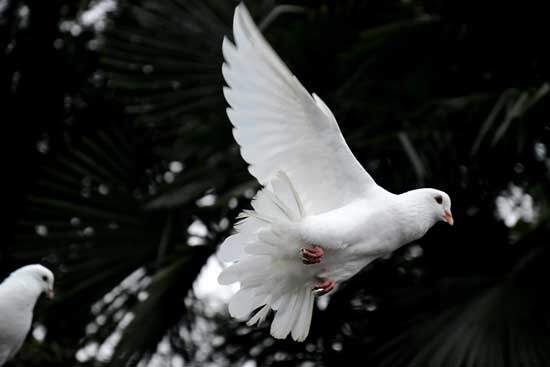
Here, self-control is listed as a “fruit of the Spirit. This “fruit” is positive behaviors or virtues that are evident in us when the Holy Spirit is guiding us. It’s clear how important these are—especially when you read the opposites of these virtues in verses 19–21!
To bear the fruit of the Holy Spirit, we must allow God’s presence in our daily lives. Doing this helps us to overcome all the relentless temptations around us with the help of the Holy Spirit.
By yielding to the Holy Spirit’s influence, we become less influenced by every passing whim or impulse. This kind of self-control helps us be more stable, reliable, efficient, and compassionate.
Self-control as part of a step-by-step process
“For this reason, make every effort to supplement your faith with goodness, goodness with knowledge, knowledge with self-control, self-control with endurance, endurance with godliness, godliness with brotherly affection, and brotherly affection with love” (2 Peter 1:5–7, CSB).
Here we are encouraged to never stop growing. And self-control is an integral part of that process.
In the verse preceding this passage, we’re told that God has invited all of us to claim His promises so we can “share in the divine nature, escaping the corruption that is in the world because of evil desire” (verse 4, CSB).
Self-control is represented here as a necessary addition to the pursuit of faith, knowledge, and love.
Self-control is a commitment to self, keeping the goal in mind
“I have made a covenant with my eyes” (Job 31:1, CSB).
Job talks about keeping a “covenant” with his eyes, telling himself not to look upon a woman with lust. This verse gives us a peek at the internal process that happens when we exercise self-control.
When working on our self-control, it’s important to practice keeping our word first to ourselves.
And as we grow, with God’s help, we can perfect this internal process and learn to “rule our spirit,” as this Proverb describes:
“One who is slow to answer is better than the mighty, and one who rules his spirit, than one who captures a city” (Proverbs 16:32, NASB).
Self-control is possible because God provides us the strength
We have been given the capacity to discipline ourselves, as we let the Holy Spirit lead us.
“For God has not given us a spirit of fear, but one of power, love, and sound judgment” (2 Timothy 1:7, CSB).
“No temptation has come upon you except what is common to humanity. But God is faithful; He will not allow you to be tempted beyond what you are able, but with the temptation He will also provide the way out so that you may be able to bear it” (1 Corinthians 10:13, CSB).
And isn’t it comforting that God never forces us to handle more than we can bear? He always provides a way out of any temptation. We just need to look for it.
We can also claim the assurance that even when we feel weak or drained of willpower, we can “do all things through Christ who strengthens” us (Philippians 4:13, NKJV).
Self-control is about drawing healthy boundaries
“For the grace of God has appeared, bringing salvation to all people, instructing us to deny ungodliness and worldly desires and to live sensibly, righteously, and in a godly manner in the present age” (Titus 2:11, 12, CSB).
This verse talks about saying no to selfish, destructive things and instead relying on God’s guidance.
A key element of “worldliness” is excess. Too much of a good thing may not always be healthy. It’s important to stay in touch with ourselves, recognizing where we might need to say “no” to things.
The Bible describes someone with a lack of self-control like “a city broken into and left without walls” (Proverbs 25:28, ESV).
Setting boundaries is a positive process. It means we are on guard at all times, so God can provide us with the power to resist evil. If our will (or our city wall) is weak, evil can enter easily and destroy everything we’ve worked hard for.
Self-control requires training with the lasting goal in mind: eternal life
“Do you not know that those who run in a race all run, but only one receives the prize?… Everyone who competes in the games exercises self-control in all things. So they do it to obtain a perishable wreath, but we an imperishable.” (1 Corinthians 9:24–25, NASB).
Examples from the Bible

Photo by Aaron Burden on Unsplash
As we continue our journey toward better self-control, the Bible is our helpful companion. Its pages are filled with examples of ordinary people doing extraordinary things with the help of prayerful self-control.
From these examples, we can gather that a deep spiritual connection with God is what fuels our self-control journeys.
Jesus tempted in the wilderness (Matthew 4:1–11)
Before Jesus began His official ministry on earth, He went into the desert to fast and pray for 40 days. There, He was tempted by the devil in three ways:
- Hunger (tempted to turn stones into bread)
- Power (tempted to be reckless because angels would protect Him)
- Wealth (tempted with possession of everything in the world)
Satan used each of these avenues of selfish desire to try to get Jesus to doubt His identity, His strength, His role, and His commitment.
But Jesus exercised self-control in each situation, overcoming it with the spiritual strength which He had from a lifestyle of communing with God, fasting, and prayer.
“Do not be overcome by evil, but overcome evil with good” (Romans 12:21, NKJV ).
The lesson: Jesus is the example we can study to understand how to master “self.” He relied completely on the Father to guide Him, and He prepared Himself to face challenges with fasting and prayer.
“I am the vine, you are the branches. He who abides in Me, and I in him, bears much fruit; for without Me you can do nothing” (John 15:5, NKJV).
Joseph tempted while working for Potiphar (Genesis 39)
Joseph ended up becoming the prime minister of Egypt—but before his rise to fame, he was a servant in the house of a prominent official of the Pharaoh. He was also “handsome in form and appearance” (Genesis 39:6, NKJV). The official’s wife tried to get him to sleep with her, but he refused all her advances.
Joseph’s heart was fixed on keeping himself right in the eyes of God.
As the story reveals, he fled the scene when she grabbed him.
Joseph had to deal with some rocky circumstances after that, but ultimately, God led him to the brightest future possible.
The lesson: Run away from temptation if you feel it’s necessary. Sometimes, if we’re not sure we can rely on our own willpower to do the right thing, it’s best to just remove ourselves from the situation. God can provide a way out.
Daniel and his friends refuse the Babylonian king’s food (Daniel 1:8–21)
Daniel and his friends were taken captive with other Jews to Babylon (modern-day Iraq). They were to eat palace food as part of their grooming to be fit to serve in the kingdom. It would involve them eating food that was either unclean, according to Levitical laws, or sacrificed to false Gods. Whatever the case, Daniel knew that it wouldn’t be a good idea to accept this food—no matter how good it looked.
So even though their lives were in danger, they refused the king’s food. They opted instead for simple, healthy food.
And as it turned out, “at the end of the ten days, they looked better and healthier than all the young men who were eating the king’s food” (verse 15, CSB).
The lesson: Be committed to the ideals God provides us. Good will come out of perseverance and standing our ground. And God promises to be there for us when we need Him.
True self-control only comes from reliance upon God

Photo by ChurchArt Online
While self-control has the word “self” right at the front, one thing we can take away from what the Bible says on this topic is that we don’t have to do this alone. God is our strength when we are weak. And He’s rooting for us the whole way. He will never leave us.
“But He said to me, ‘My grace is sufficient for you, for my power is made perfect in weakness’” (2 Corinthians 12:9, CSB).
“Do not fear, for I am with you; do not be afraid, for I am your God. I will strengthen you; I will help you; I will hold on to you with My righteous right hand” (Isaiah 41:10, CSB).
Self-control is not going to happen overnight. It takes time and practice, but it starts with the willingness and clarity of intention to start and stay committed. And asking for help and guidance won’t make you any less worthy as a human being.
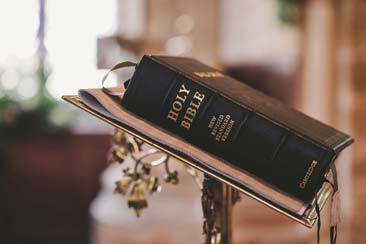
The most important thing to do is to get started. Open your Bible in prayerful study, and allow the Holy Spirit to guide you as you begin your growth toward self-control.
Here are some tips to help you begin.
Practical tips for your self-control journey

Photo by Marcos Paulo Prado on Unsplash
How can we have better self-control in various areas of life? What kinds of things help us develop that?
- Self-inventory: Try keeping a journal for your progress. You can start by noting your areas of difficulty when it comes to self-control (2 Corinthians 13:5). Write down your thoughts and feelings when it comes to these struggles, write out prayers, take note of helpful passages of Scripture, etc.
- Memorize Scripture related to your struggles. Pray and meditate on those Scriptures during some quiet time during the day.
- Remove things from your life that might be negatively affecting your willpower (similar to the sentiment of Matthew 5:29–30). No one is telling you to remove your eyes or cut off your hands, but it could be that something about your environment can be adjusted to make your self-control journey easier.
- Study the life of Jesus and how He responded to those who would provoke Him. Jesus is our ultimate example, and by contemplating Him, we can become more like Him (2 Corinthians 3:18).
- Learn to say no. We cannot pour out of an empty cup, and we are not called upon to do everything. Even Jesus and His disciples took breaks when it was necessary (Mark 6:31).
- Respond vs. react. Pause before you react to things that happen to you. (That’s why people are told to count to ten when they’re angry!) Proverbs 14:29 says that “whoever is slow to anger has great understanding, but he who has a hasty temper exalts folly” (ESV). Sometimes it just takes a little extra thought to stop us from responding in a way we might regret later (James 1:19, 20).
- Practice accountability. Your journal can help you with this. Be honest about what you struggle with and don’t beat yourself up if you make a misstep. You could try an accountability partner who will check in on you and keep you on track.
- Start with small goals and make an action plan for each goal. And reward yourself! We don’t have to deprive ourselves in order to grow.
Remember—God has sent His Holy Spirit to help us on this journey!
- All we have to do is ask for help in our prayers and proceed with faith (Mark 11:24).
- James 4:7 tells us that if we “submit” ourselves to God, it helps us “resist the devil, and he will flee from you”(ESV). Remember that your willpower is like a muscle. The more you exercise it, the stronger it gets.
- We can claim God’s promise that the Holy Spirit will offer us help. “The Holy Spirit, whom the Father will send in my name, He will teach you all things and bring to your remembrance all that I have said to you” (John 14:26, ESV). What’s more, the Holy Spirit is already with us! He dwells within us (1 Corinthians 3:16). Often we just need to pause and be open to listening to Him.
As you seek God for greater self-control in your life, studying the Bible will equip you with promises and open your heart to the Holy Spirit. Why not make our Bible studies part of your self-control journey?
Choose an Online Bible Study
Want to keep learning? Find out more about Jesus, humanity, the plan of salvation, and how God loves you enough to sacrifice everything, just to give you a chance to choose Him.
Sometimes it can be hard to know where to start, that’s why we offer free, user-friendly, online Bible study options you can do anytime, anywhere, and at your own pace.
This online Bible school will take you through the major themes of Scripture, breaking down the Bible’s complex concepts into bite-sized pieces, which can lead you toward the answers of life’s more challenging questions.
More Answers

¿Por qué muchos Adventistas del Séptimo Día eligen una dieta vegetariana?
¿Por qué muchos Adventistas del Séptimo Día eligen una dieta vegetariana?Puede que tengas un amigo adventista que sea vegetariano, o tal vez estés asistiendo a una Iglesia Adventista del Séptimo Día por primera vez y notes que en la comida compartida no hay carne....
What is Jesus’ Parable of the Sower About?
The parable of the sower is ultimately about how people responded to Jesus Christ and His message of the kingdom of God—the Gospel.

O que os Adventistas do Sétimo Dia acreditam sobre o Grande Conflito (Bem vs. Mal)?
O “Grande Conflito” é a frase que os Adventistas do Sétimo Dia normalmente usam para descrever o conflito espiritual cósmico entre as forças do bem (Deus) e as forças do mal ou do pecado (Satanás/o diabo).

Was Jesus Ever Hypocritical? Learn What the Bible Says.
Was Jesus Ever Hypocritical? Learn What the Bible SaysMany undesirable traits are associated with hypocrisy. But overall, hypocrites intentionally try to make others believe they uphold or represent a certain belief system, character trait, lifestyle, etc., when in...

Kukatishwa Tamaa Kukuu na Kile Tunachojifunza
Wafuasi wa Miller walitabiri kurudi kwa Kristo Oktoba 22, 1844, lakini Yesu hakuja kamwe. Tukio lingine lilitokea. Gundua kilichotokea kweli na Kukatishwa Tamaa Kukuu kunaweza kutufundisha leo.

When in Doubt: 7 Ways Christians Can Manage Uncertainty
When in Doubt: 7 Ways Christians Can Manage UncertaintyFew things in life are truly certain. And no matter how convinced some people can appear on the surface, no one is immune to doubt. And this isn’t a bad thing. Doubt has a purpose. A role to serve. (Just imagine...
El gran chasco y las lecciones que nos enseña
Los Milleritas predijeron el regreso de Cristo el 22 de octubre de 1844, pero Jesús nunca llegó. Ocurrió otro evento. Descubre lo que realmente sucedió y qué puede enseñarnos hoy El gran chasco.

Is Jesus the Same Being as Michael the Archangel?
Many Christians have wondered at the mysterious identity of Michael the Archangel.
A Grande Desapontamento e Lições que nos Ensina
Os Milleritas previram o retorno de Cristo em 22 de outubro de 1844, mas Jesus nunca chegou. Outro evento ocorreu. Descubra o que realmente aconteceu e o que o Grande Desapontamento pode nos ensinar hoje.
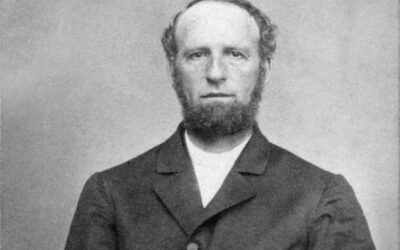
James Springer White, Co-Fundador da Igreja Adventista do Sétimo Dia
James Springer White (1821–1881) foi uma figura chave na Igreja Adventista do Sétimo Dia e marido de Ellen G. White.
James Springer White, cofundador de la Iglesia Adventista del Séptimo Día
James Springer White (1821–1881) fue una figura clave en la Iglesia Adventista del Séptimo Día y el esposo de Elena G. de White.

Kila Kitu Unachohitaji Kujua Kuhusu Chakula cha Siku ya Sabato
Kwa Waadventista Wa Sabato, kushiriki chakula cha Siku ya Sabato pamoja na marafiki na familia ni moja ya sehemu muhimu na ya kumbukumbu ya Sabato.
Nini Maana ya “Mwadventista”?
Waadventista wa Sabato ni dhehebu la Kikristo la Kiprotestanti wanaoshikilia Sabato ya siku ya saba kama ilivyoandikwa katika Biblia.

How to Have a Personal Relationship with Jesus: A 10-Step Guide
How to Have a Personal Relationship with Jesus: A GuideNo matter who you are, you’re surrounded by relationships. Friends, family, colleagues, acquaintances...they all play a part in our lives, for better or worse. So you’re surely aware of a lot of the components...

Biblia Ina Maana Gani Inaposema Yesu ni Mwana wa Mungu?
Biblia inapomwita Yesu Mwana wa Mungu inarejelea uungu wake. Jifunze ni nini kinachofanya hili kuwa muhimu na kinahusianaje na wokovu.

“Go and Sin No More”—What Did Jesus Mean?
These well-known words of Jesus Christ come from two New Testament stories in the book of John—a man healed by the Pool of Bethesda (John 5) and a woman caught in adultery (John 8).

Quais são as Mensagens dos Três Anjos em Apocalipse 14?
As mensagens dos três anjos em Apocalipse 14 advertem o mundo a adorar a Deus, deixar a confusão religiosa e evitar a adoração de tradições humanas em vez dos mandamentos de Deus.

Je! Tunaweza Kuitunza Siku Yoyote ya Wiki Kama Sabato?
Katika sura za kwanza kabisa za Biblia, tunamwona Mungu akianzisha kumbukumbu ya kila wiki na siku ya mapumziko, inayoitwa Sabato (Mwanzo 2:2-3).
¿Cuáles son los mensajes de los tres ángeles en Apocalipsis 14?
Los mensajes de los tres ángeles en Apocalipsis 14 invitan al mundo a adorar a Dios, abandonar la confusión religiosa y evitar la adoración de tradiciones humanas en lugar de los mandamientos de Dios.
Por que muitos Adventistas do Sétimo Dia escolhem uma dieta vegetariana?
Embora nem todo adventista seja vegetariano, muitos evitam completamente o consumo de carne para viver de forma mais saudável, buscando honrar a Deus física, espiritual e mentalmente.

Understanding the Miracles of Jesus Christ
Understanding the Miracles of Jesus ChristWhat do you think of when someone says something is “a miracle”? Maybe you think of an unexpected recovery, surviving a dangerous accident, or getting an answer to a seemingly impossible prayer. Simply put, miracles are...
O que significa “Adventista”?
O que significa "Adventista"?Os Adventistas do Sétimo Dia são uma denominação cristã protestante que observa o sábado bíblico do sétimo dia. A partir dessa crença, eles obtêm a primeira parte de seu nome. Mas e quanto à segunda parte - "Adventista"? “Adventista”...
¿Podemos guardar el sábado bíblico cualquier día de la semana?
En los primeros capítulos de la Biblia, encontramos a Dios estableciendo un memorial semanal y día de reposo, conocido como el sábado (Génesis 2:2-3).
Podemos guardar o Sábado em qualquer dia da semana?
Nos primeiros capítulos da Bíblia, encontramos Deus estabelecendo um memorial semanal e dia de descanso, conhecido como o Sábado (Gênesis 2:2-3).
O que significa a Bíblia quando chama Jesus de Filho de Deus?
Quando a Bíblia chama Jesus de Filho de Deus, está se referindo à Sua divindade. Saiba o que torna isso tão significativo e o que tem a ver com a salvação.
¿Qué creen los Adventistas del Séptimo Día acerca de la Biblia?
La Biblia forma la base de todo lo que los Adventistas del Séptimo Día creen y enseñan.

Legado Duradouro de Ellen G. White
Ellen G. White é um nome bem conhecido entre os Adventistas do Sétimo Dia, mas ela também teve um impacto em muitas outras partes da história, além de ser co-fundadora da Igreja Adventista.

What Does it Mean to Have Faith in Jesus?
What Does it Mean to Have Faith in Jesus?To have faith in Jesus means we place our spiritual hope, trust, belief, and priority in Him as our loving Savior. And that sounds great as an idea. That’s our goal, right? But when we go through difficult times, face...
James Springer White, Mwanzilishi wa Kanisa la Waadventista Wa Sabato
James Springer White (1821–1881) alikuwa mtu muhimu katika Kanisa la Waadventista wa Sabato na mume wa Ellen G. White.
Didn’t find your answer? Ask us!
We understand your concern of having questions but not knowing who to ask—we’ve felt it ourselves. When you’re ready to learn more about Adventists, send us a question! We know a thing or two about Adventists.