
We all know that water is a substance we can’t live without.
It quenches our thirst and keeps us hydrated on the inside. And it’s necessary for hygiene and cleansing on the outside too.
But did you know that the cleansing properties of water are also talked about in the Bible? And because water is such a fundamental need in our lives, Jesus often uses it as a metaphor for how He sustains us and helps us thrive.
Recognizing the importance of water to our physical, mental, and spiritual well-being, Seventh-day Adventists consider water an indispensable aspect of our health message.
Let’s explore this further by looking at:
- Why we need water and how it benefits us
- How much water we need
- Water in the Adventist health message
- What the Bible says about water
Even though we already know of water’s crucial role in our health, let’s cover some of the reasons.
Why we need water and how it benefits us

Photo by Bluewater Sweden on Unsplash
About 60% of the human body is made of water, making hydration an important part of ensuring we have healthy bodies.1
Without water, many vital body functions would stall. Functions such as:2
- Nutrition: Water itself is a vital nutrient to the life of each body cell and acts as a building material. It also acts as a transporting medium for carbohydrates and proteins in the bloodstream.
- Thermoregulation: Water regulates our internal body temperature through sweating and respiration.
- Waste removal: Water helps in flushing out wastes from the body, especially through urination.
- Cushioning of delicate tissue: Water acts as a shock absorber to prevent trauma to the brain, spinal cord, and fetus. It also helps lubricate joints.
Just a few other benefits of staying hydrated include:3
- Quenching thirst
- Lubricating our joints and keeping them healthy
- Preventing kidney stones
- Promoting mental clarity
- Maintaining healthy blood pressure
- Helping us maintain a healthy body weight
- Boosting our mood
Jacqueline Chan, MD, one of the co-researchers of the Adventist Health Study at Loma Linda School of Medicine, reports that just drinking enough water can greatly reduce our risk of heart disease, stroke, and many other health complications.4
With all these scientifically proven benefits of water, you may wonder how much you need to stay healthy.
How much water does your body need?
The ideal daily water intake is about 15.5 cups for men and 11.5 cups of water for women.5 But before you think that’s way more than you could ever drink, please note that some of this water comes in the form of fluids in food like fruits and vegetables. After considering how much water we get from food, healthy adults need about 8 glasses of water.
This number will depend on factors such as activity level, amount of sweating, climate, etc.
A good habit that can help you drink more water is to have a 16 or 32-oz. water bottle that you refill throughout the day. Aim to drink 4 of the 16-oz. water bottles or 2 of the 32-oz. bottles. This is an easy way to keep track of how much water you are drinking and help you meet your daily water needs.
How do you know if you aren’t meeting your daily water intake?
Well, you might experience thirst, headaches, concentrated urine, constipation, or fatigue.6
However, by drinking water and staying hydrated, you can stave off these discomforts and help your body smoothly carry out the things it’s supposed to do.
And beyond maintaining optimal body functions, water treatments (also called hydrotherapy) are used to treat illnesses.
People all over the world turn to contrast baths/showers, saunas, steam rooms, water exercise, mineral baths, and ice treatments to alleviate pain, assist in healing, fight sickness, or even to ease anxiety or other mental health struggles.
And various scientific studies support hydrotherapy’s continued value in both treatment and prevention of illness and various lifestyle-related health conditions.7
It’s because of all these benefits that Adventists have water as one of their eight health essentials.
What do Seventh-day Adventists teach about water?

Photo by Andrea Piacquadio:
Along with a healthful diet, rest, exercise, fresh air, and other principles of healthy living, the Adventist Church emphasizes the importance of water in all its uses.
This is because Adventists advocate for whole-person care.
Whole-person health emphasizes that spiritual, physical, mental, and emotional health are all important and can impact one another.
Since health experts agree on the importance of drinking water, it’s only right for it to be included in a holistic picture of wellness.
But beyond physical health, the Adventist Church is clear that water is an important part of our spiritual health as well.
The Adventist General Conference Sabbath School Department even had a seven-day Bible study lesson on water in 2010 that highlights the physical benefits of water and its spiritual importance. It talks about Jesus as the water of life. And whenever we make sure that we are hydrating ourselves with pure, clean water, we are being good stewards of the bodies God gave us.
Water is definitely an important part of the modern Seventh-day Adventist Church. Now, let’s take a look at how Adventist Church members have embraced water’s important role since the mid-1800s.
How did water first become part of the Adventist health message?
Ellen White, one of the prominent founders of the Adventist Church and an advocate for health reform, wrote extensively about how to be good stewards of our bodies and minds. In her counsels on diet, health, and lifestyle, she frequently mentions the importance of water. She highlights it as a way to keep us well and to acknowledge God’s care for His creation.
In The Ministry of Healing, one of her more popular books about health and wellness, she wrote:
“In health and in sickness, pure water is one of heaven’s choicest blessings. Its proper use promotes health. It is the beverage which God provided to quench the thirst of animals and man. Drunk freely, it helps to supply the necessities of the system and assists nature to resist disease.”8
And she was right.
Today, we know that when the body is hydrated, our organs work better, our blood flows better, and our minds can think more clearly.9
For Ellen White, water was not only important for hydration but also for hygiene and even therapy and treatment of illness.
Hygiene

The first defense against the spread of illness lies in good hygiene practices. While this idea is widely accepted today, it was considered groundbreaking or even outright controversial in Ellen White’s day (mid-to-late 1800s).
Indoor plumbing was largely inaccessible to the general population, and regular bathing or the full washing of clothes was not standard routine.
Because of this, she made it clear in her writings that the use of water for cleanliness is absolutely essential:
“Upon rising in the morning, most people would benefit by taking a sponge or hand bath. This will remove all impurities from the skin, and keep it moist and supple, thereby aiding the circulation. Persons in health should on no account neglect frequent bathing. Whether a person is sick or well, respiration is rendered more free and full by bathing. The mind and body are alike invigorated…. The bath is a soother of the nerves.”10
Now who would disagree that a warm bath can calm frazzled nerves and help us unwind after a hectic day? But back then, things were different. In fact, it wasn’t until the late 1800s that doctors even regularly washed their hands in between patients!11
Hydrotherapy
When water is used in the prevention of illness and treatment of disease, it’s referred to as hydrotherapy. And Ellen White often promoted its use at different Adventist sanitariums (health centers).
One common hydrotherapy treatment was contrast baths. Whenever a patient was ill or had a fever, they would undergo hot and cold water treatments to stimulate white blood cell production and help the body fight infection. During these treatments, a patient would switch between hot and cold water baths.
Nowadays, the way that we fight infections has changed, and though hydrotherapy still exists, we also have access to medications and antibiotics that weren’t available in the mid-19th century.
But hydrotherapy remains an essential form of treatment for many conditions of the body and can even work together with modern medical care.12 Hydration, hygiene, and hot/cold water treatments can still be helpful today.
Now, let’s look at what the Bible says about water, and various spiritual applications we can draw from these lessons.
What does the Bible say about water?
Water is talked about 722 times throughout the Bible, and in several different ways. But let’s focus on a few specific ones:
- Hygiene
- Baptism
- Purification/cleansing
- Quenching thirst/salvation
Hygiene and bathing
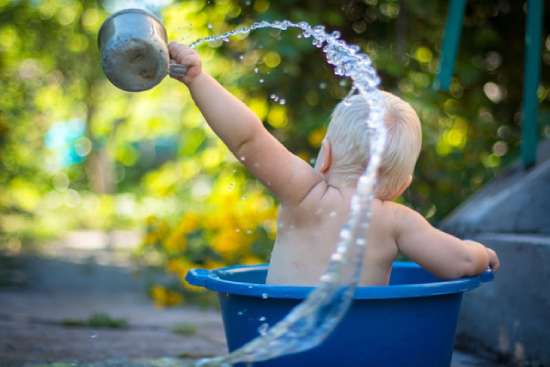
Photo by Lubomirkin on Unsplash
The first references to bathing are casual references in Genesis. People would wash their feet before entering a dwelling area after traveling or working outside. Offering the water for this footbath was also considered an act of hospitality when welcoming travelers inside (Genesis 19:2; 24:32; 43:24).
We find more specific references to bathing, washing, and keeping things clean when the children of Israel had been set free from slavery and were re-learning how to govern themselves in practical, healthy ways.
Among many sets of instructions for avoiding disease and maintaining health, God included the importance of washing their clothes,13 as well as washing themselves with water if they become ceremonially unclean.14
Throughout the rest of the Bible, there are several casual references to bathing. Plus, a few times, its importance is implied because of what it symbolizes.
For example, when Namaan was following the prophet Elisha’s instructions to be cleansed of his leprosy by God’s power, he had to bathe in a river (2 Kings 5:14).
Jesus even brings up bathing while discussing how it’s just as important to be inwardly clean as it is to be outwardly clean (John 13:10).
Baptism
Another way water is discussed in the Bible is in regard to baptism.
Baptism by being immersed in water is a symbolic act of dying to your human self and being resurrected into a new, righteous self by the cleansing power of Jesus.
Jesus Himself displayed this public act of dedication in the Bible by being baptized in the Jordan river by John the Baptist (John 1:29–34).
Baptism by immersion remains a celebration of commitment in Christian churches today, including the Seventh-day Adventist Church.
And the water’s symbolism of cleansing and purity is at the heart of it all. It demonstrates the restorative power of God, serving as a public declaration that the person is claiming Jesus Christ as their Savior.
Cleansing and purification
Similar to the metaphor used in baptism, the Bible also talks about water in relation to events that cleanse or purge sin and disease.
One example is the story about Noah and the ark.
During Noah’s lifetime, the world was so sinful that all people, except for Noah and his family, had rejected God. In order to preserve goodness in the world, and to keep human beings from destroying one another, God sent a flood—a lot of water—to cleanse the earth of the evil that had become rampant (Genesis 6–9).
We can also look at the rituals of the Israelites when they worshiped at the sanctuary in the desert, or later in the temple at Jerusalem. Before doing any rituals or making any sacrifices that symbolized the power and restorative love of God, the priests were instructed to wash their hands and feet first.
Not only did this make sure they were physically clean as they performed their temple tasks, but it also represented spiritual purification.
Another example has to do with cleansing of disease.
In the story of Naaman mentioned earlier, the prophet Elisha told Naaman to wash himself in the river. But he was given specific instructions on how to do that. He had to dunk himself in the Jordan seven times, and after the seventh dip, God healed him from leprosy (2 Kings 5:1–19)—a disease considered untreatable and highly “unclean.”
The literal use of water provided meaning to the spiritual cleansing Naaman experienced.
Thirst and salvation
The Bible talks about water as necessary for satisfying both physical and spiritual thirst.
Some examples of the spiritual thirst include:
- “Therefore with joy you will draw water from the wells of salvation” (Isaiah 12:3, NKJV).
- “I will give of the fountain of the water of life freely to him who thirsts” (Revelation 21:6, NKJV).
- “They have forsaken Me, the fountain of living waters” (Jeremiah 2:13, NKJV).
- “And let him who thirsts come. And whoever desires, let him take the water of life freely” (Revelation 22:17, NKJV).
Jesus also describes Himself as living water that satisfies our deepest needs. One notable moment is when Jesus encountered a woman at a well (John 4).
A Samaritan woman had gone to the well to fetch water in the heat of the day. She was an outcast on several levels—as a Samaritan, she was despised by Jews, and as a woman who’d had five husbands, she was an outcast in her own society.
In fact, the reason she had gone to the well at midday when no one else goes out was so she wouldn’t have to encounter anyone else. But Jesus was there.
After a brief exchange, He offered her water that would permanently quench the thirsting of her soul:
“Whoever drinks of this water will thirst again, but whoever drinks of the water that I shall give him will never thirst. But the water that I shall give him will become in him a fountain of water springing up into everlasting life” (John 4:13–14, NKJV).
And just chapters later, Jesus said,
“If anyone thirsts, let him come to Me and drink. He who believes in Me, as the Scripture has said, out of his heart will flow rivers of living water” (John 7:37–38, NKJV).
The Bible’s use of water as a metaphor helps us understand how we need Christ to live abundantly, just as we need water. David’s Psalms are a good place to start:
“As the deer pants for the water brooks, so my soul pants for you, O God” (Psalms 42:1, NKJV).
There is nothing like the feeling of drinking a cold glass of water when you’re thirsty! Our souls feel that same kind of relief, joy, and fullness when we rely on God.
Water is a vital necessity that we can’t do without, and it’s a resource that God has abundantly supplied—about 71% of earth’s surface is covered by water!15
This fact shows that just like God created us with a thirst for water, He also abundantly supplies that need.
Similarly, He created us with a need to experience His love and to love Him, and He has amply provided for that need through Jesus Christ.
Water is God’s gift to us

Photo by Mariah Hewines on Unsplash
There is no doubt that drinking water and using it for hygiene is absolutely essential to living healthfully.
The first and easiest way to acknowledge the importance of water is to simply drink more!
When we care for our bodies and minds, we are keeping ourselves spiritually healthy as well. Our body is “the temple of the Holy Spirit,” (1 Corinthians 6:19-20, CSB) and part of caring for our bodies is staying clean and hydrated.
As we drink water for physical health, it can remind us that God will sustain us. Just as we depend on water to survive, our souls depend on God for peace, abundance, and salvation.
A substance as simple, common, and natural as water can have endless positive effects in our lives. When we choose to look at ourselves holistically—including our physical, spiritual, mental, and emotional health—we can live lives that honor God.
Want to improve your health and learn more about the Adventist health message?
- “The Water in You: Water and the Human Body,” Water Science School, USGS. [↵]
- Ibid. [↵]
- “Water and Healthier Drinks,” CDC. [↵]
- Williams, DeWitt, “More Water Equals Proportionally Better Health, Say Church Health Leaders,” Adventist News. [↵]
- “Water: How Much Should You Drink Every Day?” Mayo Clinic. [↵]
- “Dehydration,” Cleveland Clinic. [↵]
- “Frequent Sauna Bathing Reduces Risk of Stroke,” University of Finland; “Hydrotherapy,” Textbook of Natural Medicine (Fifth Edition), 2020; “A Study of Hydrotherapy and Its Health Benefits,” International Journal of Research, vol. 1(8), 2014. [↵]
- White, Ellen G., Ministry of Healing (Pacific Press Publishing Association, 1905), p. 237. [↵]
- “How Much Water Should You Drink?” Harvard Health Publishing. [↵]
- White, Christian Temperance and Bible Hygiene (Good Health Publishing Company, 1890), p. 106. [↵]
- Little, Becky, “It Took Surprisingly Long for Doctors to Figure Out the Benefits of Hand Washing,” History; “‘Wash Your Hands’ Was Once Controversial Medical Advice,” National Geographic. [↵]
- “Scientific Evidence-Based Effects of Hydrotherapy on Various Systems of the Body,” North American Journal of Medical Sciences. [↵]
- Exodus 19:10–11; Leviticus 14:8; 15:5, 13. [↵]
- Leviticus 15:11, 16; 16:4; Numbers 19:19; Deuteronomy 23:11. [↵]
- “How Much Water Is There on Earth?” USGS. [↵]
More Answers

Como os Ensinos de Ellen White Podem Melhorar Sua Saúde
Como os Ensinos de Ellen White Podem Melhorar Sua SaúdeAssistência médica no século XIX era dito deixar "mais doenças do que levava embora" com o uso de sangrias e "remédios" como mercúrio e arsênico.1 À medida que as pessoas questionavam esses métodos, novas...
Cómo las enseñanzas de Elena G. de White pueden mejorar tu salud
La atención médica en el siglo XIX se decía que dejaba “más enfermedades de las que eliminaba” con su uso de sangrías y “medicamentos” como el mercurio y el arsénico.

All About the Gospel of Matthew
The Book of Matthew is one of the four Gospel narratives in the Bible
Descanso e Reconexão: O Que Realmente Significa Guardar o Sábado
A Bíblia nos diz que guardamos o Sábado evitando o trabalho. Deus fez essa lei porque sabia que ela nos fortaleceria e nos traria alegria, além de nos dar tempo para nos reconectar com Ele e recarregar das nossas vidas ocupadas.
Descanso y reconexión: lo que realmente significa guardar el sábado
La Biblia nos dice que guardamos el sábado evitando el trabajo. Dios hizo esta ley porque sabía que nos fortalecería y nos traería alegría, además de darnos tiempo para reconectarnos con Él y recargar energías de nuestras vidas ocupadas.

Todo lo que necesitas saber sobre la Escuela Sabática
La Escuela Sabática es el componente de estudio bíblico del programa de la iglesia en la mayoría de las Iglesias Adventistas del Séptimo Día.

O que os Adventistas do Sétimo Dia acreditam sobre a autoridade da Bíblia?
Saiba como um livro realmente antigo (a Bíblia) é o único fundamento para todas as crenças dos Adventistas do Sétimo Dia.
¿Qué creen los Adventistas sobre la autoridad de la Biblia?
Puede hacerte sentir intimidado o frustrado. Podrías pensar en un líder de iglesia que parecía arruinar toda tu diversión cuando eras niño, o un jefe que supervisa cada uno de tus movimientos en el trabajo…

¿Qué es un médico misionero adventista?
Un médico misionero en la Iglesia Adventista es alguien que cuida de las necesidades médicas de las personas como una forma de mostrar el amor de Jesús. Pueden viajar a otro país, o incluso simplemente servir en su ciudad natal.
Ni nini Mtaalam wa Matibabu wa Kiadventista?
Mmishonari wa matibabu katika Kanisa la Waadventista ni mtu anayejali mahitaji ya matibabu ya watu kama njia ya kuonyesha upendo wa Yesu.
O que é um missionário médico adventista?
Um missionário médico na Igreja Adventista é alguém que cuida das necessidades médicas das pessoas como uma forma de mostrar o amor de Jesus. Eles podem viajar para outro país, ou até mesmo servir em sua cidade natal.

Guía definitiva para el estudio personal de la Biblia
¿Alguna vez has sentido que estudiar la Biblia es un desafío y simplemente no estás seguro de por dónde empezar? ¿O estás buscando ideas nuevas para mejorar tus hábitos actuales de estudio bíblico?
O Guia Definitivo para o Estudo Pessoal da Bíblia
Já sentiu que estudar a Bíblia é desafiador e não tem certeza por onde começar? Ou está procurando ideias novas para melhorar seus hábitos atuais de estudo da Bíblia?

¿Los Adventistas del Séptimo Día observan festividades relacionadas con la Pascua?
La resurrección de Jesús, celebrada en muchas festividades relacionadas con la Pascua, es central para las creencias de la Iglesia Adventista del Séptimo Día.

10 Bible Teachings Adventists Believe About the Devil
10 Bible Teachings Adventists Believe About the DevilSeventh-day Adventists believe the devil (or Lucifer-turned-Satan) is real and active. He is the sole adversary of God and humanity (1 Peter 5:8), making him the opposing force in the cosmic conflict between good...

¿Los Adventistas del Séptimo Día creen que solo ellos irán al cielo?
No, los adventistas definitivamente no creen que son los únicos que irán al cielo. De hecho, no creemos que la admisión al cielo se base en la iglesia o denominación a la que pertenecemos.
Waadventista Wa Sabato Wanaamini Nini Kuhusu Mamlaka ya Biblia?
Jifunze jinsi kitabu kimoja cha zamani sana (Biblia) kilivyo msingi pekee wa imani zote za Waadventista wa Sabato.
Mwongozo Bora Katika Kujifunza Biblia Binafsi
Umewahi kuhisi kwamba kusoma Biblia ni jambo gumu, na hujui uanzie wapi? Au unatafuta mawazo mapya ya kuboresha tabia yako ya usomaji wa Biblia.
Je, Waadventista Wasabato Wanasherehekea Siku Kuu Zinazohusiana na Pasaka?
Kufufuka kwa Yesu, kunakoadhimishwa katika siku kuu nyingi zinazohusiana na Pasaka, ni muhimu katika imani za Kanisa la Waadventista wa Sabato.
Je, Waadventista Wasabato Wanaamini Wao Pekee Ndiyo Watakao Kwenda Mbinguni?
Hapana, Waadventista hakika hawaamini kwamba wao ndio pekee watakao kwenda mbinguni. Kwa kweli, hatuamini kwamba kupokelewa mbinguni kunategemea kanisa au madhehebu tunayohusiana nayo.

Chakula cha Pamoja Katika Kanisa la Kiadventista: Mahali Ambapo Chakula na Urafiki Vinakutana
Mara nyingi, kawaida kwenye ratiba inayotofautiana kutoka mara moja kwa wiki hadi mara moja kwa mwezi hadi mara moja kwa robo, kanisa la Waadventista litakuwa na “karamu za ushirika,” mara nyingi zikiitwa chakula cha mchana cha pamoja.

Je, Waadventista Wa Sabato Wanaamini Nini Kuhusu Uumbaji Katika Biblia?
Waadventista Wa Sabato wanaamini kwamba Mungu ndiye Muumbaji wa ulimwengu. Wanafikia hitimisho hili kutoka kitabu cha kwanza cha Biblia—Mwanzo.

Jinsi Ellen White Alivyochangia Ujumbe wa Afya wa Waadventista
Jinsi Ellen White Alivyochangia Ujumbe wa Afya wa WaadventistaWaadventista wa Sabato wanajulikana kwa kusisitiza maisha yenye afya bora. Na Ellen G. White alikuwa na ushawishi mkubwa katika maendeleo ya kipaumbele hiki na utekelezaji wake miongoni mwa Waadventista....
Os Adventistas do Sétimo Dia observam feriados relacionados à Páscoa?
Os Adventistas do Sétimo Dia observam feriados relacionados à Páscoa?A ressurreição de Jesus, celebrada em muitos feriados relacionados à Páscoa, é central para as crenças da Igreja Adventista do Sétimo Dia. E isso significa que buscamos todas as oportunidades para...
Os Adventistas do Sétimo Dia acreditam que apenas eles irão para o Céu?
Não, os Adventistas definitivamente não acreditam que são os únicos que irão para o céu. Na verdade, não acreditamos que a admissão no céu dependa de qual igreja ou denominação pertencemos.

Ellen White anasema nini kuhusu Maombi?
Je, umewahi kuwa na mzigo ambao ulihitaji kumwambia mtu, lakini uliogopa kuhukumiwa ikiwa ungefanya hivyo?

Nani Aliyebadilisha Sabato kwenda Jumapili?
Nani Aliyebadilisha Sabato kwenda Jumapili?Ikiwa Biblia haijawahi kutaja mabadiliko ya Sabato, kwa nini leo wengi wanaenda kanisani Jumapili? Nani alibadilisha siku hiyo? Lakini hilo sio swali sahihi la kuuliza. Sabato haijabadilika. Kilichobadilika ni uamuzi wa...

Is It Okay to Worship On Sunday Instead of Saturday?
If there’s no wrong time to worship God, why are there different ideas on the day churches meet?

Ellen G. White au Biblia—Kipi ni Muhimu Zaidi kwa Waadventista?
Biblia—bila shaka—ndiyo kitabu muhimu zaidi. Ni kipimo tunachotumia kupima maandishi mengine yote, ikiwa ni pamoja na yale ya Ellen White.
Didn’t find your answer? Ask us!
We understand your concern of having questions but not knowing who to ask—we’ve felt it ourselves. When you’re ready to learn more about Adventists, send us a question! We know a thing or two about Adventists.