
You may have an Adventist friend who is vegetarian, or maybe you’re attending a Seventh-day Adventist Church for the first time and notice the potluck doesn’t have any meat.
This isn’t unusual in Adventism.
In fact, about 36% of Adventists are lacto-ovo vegetarians, meaning they don’t eat meat or fish but may eat eggs or dairy. Another 16% eat fish or meat occasionally, according to Adventist Health Studies done by Loma Linda University.1
At any rate, perhaps you’re wondering what their reasons are.
Vegetarianism is popular within Seventh-day Adventism because we value personal health and believe that a vegetarian diet is a good way to care for our bodies, maintain wellness, and honor God (1 Corinthians 6:20; 10:31; Romans 12:1-2). God originally gave human beings a vegetarian diet, according to Genesis 1:29, and today, research is increasingly showing the benefits of a diet low in animal products and high in fruits, vegetables, grains, and nuts.
However, the desire to serve God in this way is not meant to be a means to become “holier” or to somehow earn salvation. Adventists aim to live this way as a response to what God has done for us as human beings.
To further explain why vegetarianism is popular among Adventists, we’ll look at:
To start off, let’s turn to the Bible’s insights.
What the Bible says about a vegetarian diet

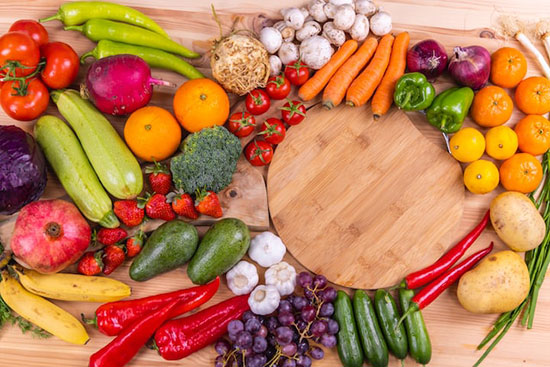
Photo on Pexel
When we read about Adam and Eve living in the Garden of Eden, we find that God’s original plan for humanity included a plant-based diet. He told the new humans:
“See, I have given you every herb that yields seed which is on the face of all the earth, and every tree whose fruit yields seed; to you it shall be for food” (Genesis 1:29, NKJV).
And it makes sense that God would have provided Adam and Eve with food that would sustainably grow for them. And in a perfect world without death of any kind, the slaughter of animals would’ve been incomprehensible.
It wasn’t until after the flood that God directly permitted humans to eat meat (Genesis 9:3-4). After the flood, the earth’s vegetation had been destroyed and would take time to grow back and be able to provide food once again.
For this reason, God instructed Noah to bring on the ark seven of every “clean” animal (Genesis 7:2-3).
(Leviticus 11 and Deuteronomy 14 explain in more detail what is considered “clean” meat.)
After the time of the flood, most people throughout the rest of the Bible ate meat. It was a necessity in a society where fresh food wasn’t always easy to come by and couldn’t be preserved for long periods of time. So to meet their dietary needs, they hunted animals to provide for their families.
In some places today, too, being a vegetarian may not be as practical or provide enough necessary nutrition due to a lack of vegetarian options. But many Adventists who live in places with easy access to fruits, vegetables, grains, and legumes year-round choose a vegetarian diet to eat as closely to the original diet as possible.
And modern science continues to show the benefits of eating this way, as we’ll look at in the next section.
What science says about a vegetarian diet
A balanced vegetarian diet, high in fruits, nuts, vegetables, and legumes, has numerous benefits for physical health, as revealed by research done over the past 20 years. Eating vegetarian is associated with:2
- Lower blood pressure, LDL cholesterol, and BMI
- Lower risk of heart disease
- Lower risk of cancer
- Lower risk of type 2 diabetes
- Lower risk of obesity3
Adventist Health Studies, conducted by Loma Linda University, have looked at the connection between lifestyle and health in Seventh-day Adventists. Adventist Health Study-1 surveyed more than 34,000 individuals over a 14-year period and found significant links between a high-fiber vegetarian diet and lower risks of cancer.
Adventist Health Study-2, which involved over 94,000 respondents, provided even more insight. It found that Adventists who did not eat meat had a smaller chance of developing type 2 diabetes.4
Another analysis of the data from the Adventist Health Study-2 found that Adventists who got protein from foods like lentils, nuts, and seeds had a lower risk of cardiovascular death than those who got protein from meat.5
The longevity of Adventists also speaks for their lifestyle and way of eating.
Researchers found that Adventist men in California who were vegetarian lived almost 10 years longer than their counterparts.6
In fact, Loma Linda, California, an area with a high concentration of Adventists, drew the attention of researcher Dan Buettner when he was studying “Blue Zones,” or places in the world where people live significantly longer (often to over 100 years old) and healthier lives than the average population.
He labeled Loma Linda as one of those Blue Zones because of the many Seventh-day Adventists there who are health conscious and eat a vegetarian or vegan diet.
Though diet is not the only factor for health and longevity in the Blue Zones, it’s a significant one. Most Blue Zone residents eat 95% vegetarian, consuming meat rarely and focusing on unprocessed, whole foods like legumes, vegetables, fruits, nuts, and whole grains. If they do eat meat, it’s generally lean meat, like fish, and little to no red meat.7
The health benefits of being vegetarian coincide with Adventists’ desire to honor God by being good stewards of the bodies God gave us, striving to maintain well-being in as many ways as possible. Let’s look at that next.
Spiritual reasons Adventists choose vegetarianism

Photo by Pablo Merchán Montes on Unsplash
Alongside striving toward eco-friendliness and kindness to animals, Adventists find healthy living to be a good way to serve and honor God to the best of our abilities. One passage we turn to in Scripture is 1 Corinthians 6:19-20:
“Or do you not know that your body is the temple of the Holy Spirit who is in you, whom you have from God, and you are not your own? For you were bought at a price; therefore glorify God in your body and in your spirit, which are God’s” (NKJV).
Because our bodies are “the temple of the Holy Spirit”—the means through which God speaks to our minds—we seek to care for our bodies, mentally, spiritually, and physically. So it makes sense for good health to be a priority.
Eating healthy is one aspect of that. It helps to keep our minds clear, making it easier to grow closer to God and serve Him more effectively.
The apostle Paul sums up this idea of honoring God in his letter to the Corinthian church:
“Therefore, whether you eat or drink, or whatever you do, do all to the glory of God” (1 Corinthians 10:31, NKJV).
And that’s really what it’s all about—serving God and orienting our lives toward Him. Making healthy choices supports that ultimate desire.
Choose an Online Bible Study
Want to keep learning? Find out more about Jesus, humanity, the plan of salvation, and how God loves you enough to sacrifice everything, just to give you a chance to choose Him.
Sometimes it can be hard to know where to start, that’s why we offer free, user-friendly, online Bible study options you can do anytime, anywhere, and at your own pace.
This online Bible school will take you through the major themes of Scripture, breaking down the Bible’s complex concepts into bite-sized pieces, which can lead you toward the answers of life’s more challenging questions.
Related Articles


- “Adventist Health Study–2,” Loma Linda University. [↵]
- “Becoming a vegetarian,” Harvard Health Publishing. [↵]
- “Plant-based nutrition: Exploring Health Benefits for Atherosclerosis, Chronic Diseases, and Metabolic Syndrome—A Comprehensive Review,” Nutrients, July 2023. [↵]
- Sabaté, Joan, et al. “Unscrambling the relations of egg and meat consumption with type 2 diabetes risk,” National Library of Medicine, November 1, 2018. [↵]
- Tharrey, Marion, et al. “Patterns of plant and animal protein intake are strongly associated with cardiovascular mortality: the Adventist Health Study–2 cohort,” National Library of Medicine, October 1, 2018. [↵]
- “Findings for Longevity,” Loma Linda University Health. [↵]
- “Top Reasons Why Blue Zones are the Healthiest Places to Live,” Plant Whys. [↵]
More Answers

What Does the Parable of the 10 Virgins Teach Us?
The story of the 10 virgins found in Matthew 25:1-13 is a well-recognized parable of Jesus, and one with a profoundly important message for all of humanity.

Sabato katika Maisha na Mafundisho ya Ellen White
Sabato katika Maisha na Mafundisho ya Ellen WhiteSabato ni mada muhimu katika Kanisa la Waadventista wa Sabato. Sio jambo la kushangaza, basi, kwamba Ellen G. White, mwanzilishi mwenza wa kanisa, alisoma mafundisho ya Biblia kuhusu Sabato na akaandika kiasi kikubwa...

Una visión general de la educación superior Adventista del Séptimo Día
Una visión general de la educación superior Adventista del Séptimo DíaLa Iglesia Adventista del Séptimo Día tiene alrededor de 118 instituciones de educación superior en todo el mundo.1 Aunque muchas de ellas se encuentran en América del Norte, también encontrarás...
Uma Visão Geral da Educação Superior Adventista do Sétimo Dia
Uma Visão Geral da Educação Superior Adventista do Sétimo DiaA Igreja Adventista do Sétimo Dia tem cerca de 118 escolas terciárias ao redor do mundo.1 Embora muitas delas estejam localizadas na América do Norte, você também encontrará universidades Adventistas em...
Jesús y Juan el Bautista: Su relación y ministerio
Juan el Bautista y Jesús eran primos, amigos y colaboradores cercanos en el ministerio. Aprende la significancia duradera de su relación.

The Parable of the Unforgiving Servant—A Walk-through
Through this somewhat alarming story, Jesus teaches us about forgiveness, mercy, and human nature.

Comprendiendo la vida y el ministerio de Elena G. de White
Comprendiendo la vida y el ministerio de Elena G. de White Ellen Gould White fue una de las cofundadoras de la Iglesia Adventista del Séptimo Día. Y aunque vivió la mayor parte de su vida en el siglo XIX, el impacto de su vida y ministerio continúa hoy. Viviendo su...
Compreendendo a Vida e o Ministério de Ellen G. White
Saiba quem Ellen G. White realmente foi e o papel que desempenhou ao guiar a Igreja Adventista do Sétimo Dia primitiva por meio de seu ministério e escritos inspirados.

Explorando la profecía de las 2300 tardes y mañanas y el juicio investigador
¿De qué se trata la profecía de las 2300 tardes y mañanas? Nos enfocaremos especialmente en qué eventos marcaron su cumplimiento y en qué tiene que ver con el juicio investigador.
Explorando a Profecia dos 2300 Dias e o Juízo Investigativo
Sobre o que se trata a profecia dos 2300 dias? Vamos analisar especialmente quais eventos marcaram o seu cumprimento e qual a sua relação com o Juízo Investigativo.
El sábado en la vida y enseñanzas de Elena de White
El sábado es un tema importante en la Iglesia Adventista del Séptimo Día.
O Sábado na Vida e Ensinos de Ellen White
O Sábado na Vida e Ensinos de Ellen WhiteO sábado é um tópico importante na Igreja Adventista do Sétimo Dia. Não deve surpreender você, então, que Ellen G. White, uma co-fundadora da igreja, tenha estudado os ensinamentos bíblicos sobre o sábado e escrito extensamente...

La armadura de Dios como se describe en Efesios 6
La armadura de Dios como se describe en Efesios 6En Efesios 6, el Apóstol Pablo estaba ayudando a las personas a entender lo que significa defenderse en una guerra espiritual (Efesios 6:10-18). ¿Qué significa eso? Al hacer referencia a la armadura de Dios, Pablo no...

Todo lo que necesitas saber sobre las comidas del Sábado.
Para los Adventistas del Séptimo Día, compartir una comida en sábado con amigos y familiares es una de las partes más especiales y memorables de este día.
What Does the Parable of the Pearl of Great Price Mean?
Here’s what Jesus taught about the kingdom of heaven through this short parable about a merchant who finds a priceless pearl.
¿Qué significa “Adventista”?
¿Qué significa "Adventista"?Los Adventistas del Séptimo Día son una denominación cristiana protestante que sostiene el sábado bíblico que es el séptimo día. De esta creencia, obtienen la primera parte de su nombre. Pero, ¿qué hay de la segunda parte, "Adventista"?...

Ujumbe wa Malaika Watatu Katika Ufunuo 14 Ni Upi?
Ujumbe wa malaika watatu katika Ufunuo 14 unawaonya ulimwengu kuabudu Mungu, kuacha mchafuko wa kidini, na kuepuka ibada za tamaduni za kibinadamu badala ya amri za Mungu.

¿Quiénes fueron los hijos de Elena G. de White?
Elena G. de White, probablemente la cofundadora más conocida de la Iglesia Adventista del Séptimo Día, tuvo cuatro hijos con su esposo, James: Henry Nichols, James Edson, William Clarence y John Herbert.

Kwa nini Wadventista wa Sabato Wengi wanachagua Lishe Inayotokana na Mimea?
Ingawa siyo kila Mwadventista anatumia vyakula vya mimea pekee, wengi hujiepusha kabisa na nyama ili kuishi maisha yenye afya katika juhudi za kumheshimu Mungu, kimwili, kiroho, na kiakili.
![Understanding the Book of Mark [An Overview]](https://devsite.askanadventistfriend.com/wp-content/uploads/2026/02/bible-open-to-mark-400x250.jpg)
Understanding the Book of Mark [An Overview]
Understanding the Book of Mark [An Overview]The Book of Mark is one of the four Gospel accounts that begin the New Testament, and its author is widely believed to be John Mark, a relative of Barnabas who worked with both Peter and Paul. It’s the shortest Gospel...

An Overview of Romans: Faith, Righteousness, and Relationships
Here’s a breakdown and background of Paul’s longest epistle.
Tudo o que você precisa saber sobre as refeições do Sábado
Tudo o que você precisa saber sobre as refeições do Sábado.Para os Adventistas do Sétimo Dia, compartilhar uma refeição de sábado com amigos e família é uma das partes mais especiais e memoráveis do sábado. É por isso que queremos compartilhar com você tudo sobre as...
Yesu na Yohana Mbaptisti: Uhusiano Wao na Huduma
Yohana Mbatizaji na Yesu walikuwa ndugu wa damu, marafiki, na wafanyakazi wa karibu katika huduma. Jifunze umuhimu wa kudumu wa uhusiano wao.
Muhtasari wa Elimu ya Juu ya WaAdventista wa Sabato
Muhtasari wa Elimu ya Juu ya WaAdventista wa SabatoKanisa la WaAdventista Wasabato lina takribani shule za sekondari 118 ulimwenguni kote.1 Ingawa nyingi zipo ndani ya Amerika Kaskazini, pia utapata vyuo vikuu vya WaAdventista katika nchi mbalimbali duniani—mahali...
The Book of John: An Overview
Here’s a study companion for the Gospel according to John.

Waadventista wa Sabato Wanaamini Nini Kuhusu Pambano Kuu (Wema na Uovu)?
Pambano Kuu” ni msemo ambao Waadventista wa Sabato kawaida huutumia kuelezea mgogoro wa kiroho wa ulimwengu kati ya nguvu za mema (Mungu) na nguvu za uovu au dhambi (Shetani/iblis).
Silaha Zote za Mungu Kama Ilivyoelezwa Katika Waefeso 6
Katika Waefeso 6, Mtume Paulo alikuwa akisaidia watu kuelewa maana ya kujilinda katika vita vya kiroho (Waefeso 6:10-18).
A Armadura de Deus conforme Descrita em Efésios 6
Em Efésios 6, o Apóstolo Paulo estava ajudando as pessoas a entender o que significa se defender em uma guerra espiritual (Efésios 6:10-18).
¿Qué creen los Adventistas del Séptimo Día sobre el gran conflicto (bien vs. mal)?
El “gran conflicto” es la frase que los Adventistas del Séptimo Día suelen usar para describir el conflicto espiritual cósmico entre las fuerzas del bien (Dios) y las fuerzas del mal o del pecado (Satanás/el diablo).
Didn’t find your answer? Ask us!
We understand your concern of having questions but not knowing who to ask—we’ve felt it ourselves. When you’re ready to learn more about Adventists, send us a question! We know a thing or two about Adventists.