
You may have an Adventist friend who is vegetarian, or maybe you’re attending a Seventh-day Adventist Church for the first time and notice the potluck doesn’t have any meat.
This isn’t unusual in Adventism.
In fact, about 36% of Adventists are lacto-ovo vegetarians, meaning they don’t eat meat or fish but may eat eggs or dairy. Another 16% eat fish or meat occasionally, according to Adventist Health Studies done by Loma Linda University.1
At any rate, perhaps you’re wondering what their reasons are.
Vegetarianism is popular within Seventh-day Adventism because we value personal health and believe that a vegetarian diet is a good way to care for our bodies, maintain wellness, and honor God (1 Corinthians 6:20; 10:31; Romans 12:1-2). God originally gave human beings a vegetarian diet, according to Genesis 1:29, and today, research is increasingly showing the benefits of a diet low in animal products and high in fruits, vegetables, grains, and nuts.
However, the desire to serve God in this way is not meant to be a means to become “holier” or to somehow earn salvation. Adventists aim to live this way as a response to what God has done for us as human beings.
To further explain why vegetarianism is popular among Adventists, we’ll look at:
To start off, let’s turn to the Bible’s insights.
What the Bible says about a vegetarian diet

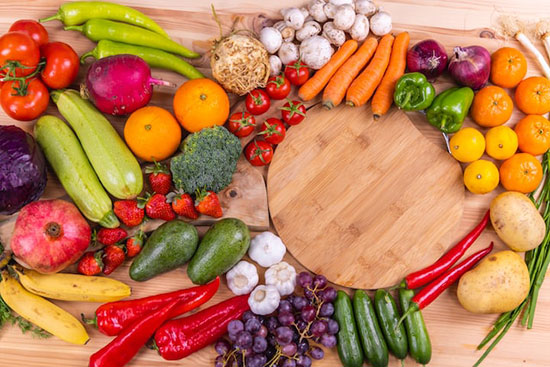
Photo on Pexel
When we read about Adam and Eve living in the Garden of Eden, we find that God’s original plan for humanity included a plant-based diet. He told the new humans:
“See, I have given you every herb that yields seed which is on the face of all the earth, and every tree whose fruit yields seed; to you it shall be for food” (Genesis 1:29, NKJV).
And it makes sense that God would have provided Adam and Eve with food that would sustainably grow for them. And in a perfect world without death of any kind, the slaughter of animals would’ve been incomprehensible.
It wasn’t until after the flood that God directly permitted humans to eat meat (Genesis 9:3-4). After the flood, the earth’s vegetation had been destroyed and would take time to grow back and be able to provide food once again.
For this reason, God instructed Noah to bring on the ark seven of every “clean” animal (Genesis 7:2-3).
(Leviticus 11 and Deuteronomy 14 explain in more detail what is considered “clean” meat.)
After the time of the flood, most people throughout the rest of the Bible ate meat. It was a necessity in a society where fresh food wasn’t always easy to come by and couldn’t be preserved for long periods of time. So to meet their dietary needs, they hunted animals to provide for their families.
In some places today, too, being a vegetarian may not be as practical or provide enough necessary nutrition due to a lack of vegetarian options. But many Adventists who live in places with easy access to fruits, vegetables, grains, and legumes year-round choose a vegetarian diet to eat as closely to the original diet as possible.
And modern science continues to show the benefits of eating this way, as we’ll look at in the next section.
What science says about a vegetarian diet
A balanced vegetarian diet, high in fruits, nuts, vegetables, and legumes, has numerous benefits for physical health, as revealed by research done over the past 20 years. Eating vegetarian is associated with:2
- Lower blood pressure, LDL cholesterol, and BMI
- Lower risk of heart disease
- Lower risk of cancer
- Lower risk of type 2 diabetes
- Lower risk of obesity3
Adventist Health Studies, conducted by Loma Linda University, have looked at the connection between lifestyle and health in Seventh-day Adventists. Adventist Health Study-1 surveyed more than 34,000 individuals over a 14-year period and found significant links between a high-fiber vegetarian diet and lower risks of cancer.
Adventist Health Study-2, which involved over 94,000 respondents, provided even more insight. It found that Adventists who did not eat meat had a smaller chance of developing type 2 diabetes.4
Another analysis of the data from the Adventist Health Study-2 found that Adventists who got protein from foods like lentils, nuts, and seeds had a lower risk of cardiovascular death than those who got protein from meat.5
The longevity of Adventists also speaks for their lifestyle and way of eating.
Researchers found that Adventist men in California who were vegetarian lived almost 10 years longer than their counterparts.6
In fact, Loma Linda, California, an area with a high concentration of Adventists, drew the attention of researcher Dan Buettner when he was studying “Blue Zones,” or places in the world where people live significantly longer (often to over 100 years old) and healthier lives than the average population.
He labeled Loma Linda as one of those Blue Zones because of the many Seventh-day Adventists there who are health conscious and eat a vegetarian or vegan diet.
Though diet is not the only factor for health and longevity in the Blue Zones, it’s a significant one. Most Blue Zone residents eat 95% vegetarian, consuming meat rarely and focusing on unprocessed, whole foods like legumes, vegetables, fruits, nuts, and whole grains. If they do eat meat, it’s generally lean meat, like fish, and little to no red meat.7
The health benefits of being vegetarian coincide with Adventists’ desire to honor God by being good stewards of the bodies God gave us, striving to maintain well-being in as many ways as possible. Let’s look at that next.
Spiritual reasons Adventists choose vegetarianism

Photo by Pablo Merchán Montes on Unsplash
Alongside striving toward eco-friendliness and kindness to animals, Adventists find healthy living to be a good way to serve and honor God to the best of our abilities. One passage we turn to in Scripture is 1 Corinthians 6:19-20:
“Or do you not know that your body is the temple of the Holy Spirit who is in you, whom you have from God, and you are not your own? For you were bought at a price; therefore glorify God in your body and in your spirit, which are God’s” (NKJV).
Because our bodies are “the temple of the Holy Spirit”—the means through which God speaks to our minds—we seek to care for our bodies, mentally, spiritually, and physically. So it makes sense for good health to be a priority.
Eating healthy is one aspect of that. It helps to keep our minds clear, making it easier to grow closer to God and serve Him more effectively.
The apostle Paul sums up this idea of honoring God in his letter to the Corinthian church:
“Therefore, whether you eat or drink, or whatever you do, do all to the glory of God” (1 Corinthians 10:31, NKJV).
And that’s really what it’s all about—serving God and orienting our lives toward Him. Making healthy choices supports that ultimate desire.
Choose an Online Bible Study
Want to keep learning? Find out more about Jesus, humanity, the plan of salvation, and how God loves you enough to sacrifice everything, just to give you a chance to choose Him.
Sometimes it can be hard to know where to start, that’s why we offer free, user-friendly, online Bible study options you can do anytime, anywhere, and at your own pace.
This online Bible school will take you through the major themes of Scripture, breaking down the Bible’s complex concepts into bite-sized pieces, which can lead you toward the answers of life’s more challenging questions.
Related Articles


- “Adventist Health Study–2,” Loma Linda University. [↵]
- “Becoming a vegetarian,” Harvard Health Publishing. [↵]
- “Plant-based nutrition: Exploring Health Benefits for Atherosclerosis, Chronic Diseases, and Metabolic Syndrome—A Comprehensive Review,” Nutrients, July 2023. [↵]
- Sabaté, Joan, et al. “Unscrambling the relations of egg and meat consumption with type 2 diabetes risk,” National Library of Medicine, November 1, 2018. [↵]
- Tharrey, Marion, et al. “Patterns of plant and animal protein intake are strongly associated with cardiovascular mortality: the Adventist Health Study–2 cohort,” National Library of Medicine, October 1, 2018. [↵]
- “Findings for Longevity,” Loma Linda University Health. [↵]
- “Top Reasons Why Blue Zones are the Healthiest Places to Live,” Plant Whys. [↵]
More Answers

Como os Ensinos de Ellen White Podem Melhorar Sua Saúde
Como os Ensinos de Ellen White Podem Melhorar Sua SaúdeAssistência médica no século XIX era dito deixar "mais doenças do que levava embora" com o uso de sangrias e "remédios" como mercúrio e arsênico.1 À medida que as pessoas questionavam esses métodos, novas...
Cómo las enseñanzas de Elena G. de White pueden mejorar tu salud
La atención médica en el siglo XIX se decía que dejaba “más enfermedades de las que eliminaba” con su uso de sangrías y “medicamentos” como el mercurio y el arsénico.

All About the Gospel of Matthew
The Book of Matthew is one of the four Gospel narratives in the Bible
Descanso e Reconexão: O Que Realmente Significa Guardar o Sábado
A Bíblia nos diz que guardamos o Sábado evitando o trabalho. Deus fez essa lei porque sabia que ela nos fortaleceria e nos traria alegria, além de nos dar tempo para nos reconectar com Ele e recarregar das nossas vidas ocupadas.
Descanso y reconexión: lo que realmente significa guardar el sábado
La Biblia nos dice que guardamos el sábado evitando el trabajo. Dios hizo esta ley porque sabía que nos fortalecería y nos traería alegría, además de darnos tiempo para reconectarnos con Él y recargar energías de nuestras vidas ocupadas.

Todo lo que necesitas saber sobre la Escuela Sabática
La Escuela Sabática es el componente de estudio bíblico del programa de la iglesia en la mayoría de las Iglesias Adventistas del Séptimo Día.

O que os Adventistas do Sétimo Dia acreditam sobre a autoridade da Bíblia?
Saiba como um livro realmente antigo (a Bíblia) é o único fundamento para todas as crenças dos Adventistas do Sétimo Dia.
¿Qué creen los Adventistas sobre la autoridad de la Biblia?
Puede hacerte sentir intimidado o frustrado. Podrías pensar en un líder de iglesia que parecía arruinar toda tu diversión cuando eras niño, o un jefe que supervisa cada uno de tus movimientos en el trabajo…

¿Qué es un médico misionero adventista?
Un médico misionero en la Iglesia Adventista es alguien que cuida de las necesidades médicas de las personas como una forma de mostrar el amor de Jesús. Pueden viajar a otro país, o incluso simplemente servir en su ciudad natal.
Ni nini Mtaalam wa Matibabu wa Kiadventista?
Mmishonari wa matibabu katika Kanisa la Waadventista ni mtu anayejali mahitaji ya matibabu ya watu kama njia ya kuonyesha upendo wa Yesu.
O que é um missionário médico adventista?
Um missionário médico na Igreja Adventista é alguém que cuida das necessidades médicas das pessoas como uma forma de mostrar o amor de Jesus. Eles podem viajar para outro país, ou até mesmo servir em sua cidade natal.

Guía definitiva para el estudio personal de la Biblia
¿Alguna vez has sentido que estudiar la Biblia es un desafío y simplemente no estás seguro de por dónde empezar? ¿O estás buscando ideas nuevas para mejorar tus hábitos actuales de estudio bíblico?
O Guia Definitivo para o Estudo Pessoal da Bíblia
Já sentiu que estudar a Bíblia é desafiador e não tem certeza por onde começar? Ou está procurando ideias novas para melhorar seus hábitos atuais de estudo da Bíblia?

¿Los Adventistas del Séptimo Día observan festividades relacionadas con la Pascua?
La resurrección de Jesús, celebrada en muchas festividades relacionadas con la Pascua, es central para las creencias de la Iglesia Adventista del Séptimo Día.

10 Bible Teachings Adventists Believe About the Devil
10 Bible Teachings Adventists Believe About the DevilSeventh-day Adventists believe the devil (or Lucifer-turned-Satan) is real and active. He is the sole adversary of God and humanity (1 Peter 5:8), making him the opposing force in the cosmic conflict between good...

¿Los Adventistas del Séptimo Día creen que solo ellos irán al cielo?
No, los adventistas definitivamente no creen que son los únicos que irán al cielo. De hecho, no creemos que la admisión al cielo se base en la iglesia o denominación a la que pertenecemos.
Waadventista Wa Sabato Wanaamini Nini Kuhusu Mamlaka ya Biblia?
Jifunze jinsi kitabu kimoja cha zamani sana (Biblia) kilivyo msingi pekee wa imani zote za Waadventista wa Sabato.
Mwongozo Bora Katika Kujifunza Biblia Binafsi
Umewahi kuhisi kwamba kusoma Biblia ni jambo gumu, na hujui uanzie wapi? Au unatafuta mawazo mapya ya kuboresha tabia yako ya usomaji wa Biblia.
Je, Waadventista Wasabato Wanasherehekea Siku Kuu Zinazohusiana na Pasaka?
Kufufuka kwa Yesu, kunakoadhimishwa katika siku kuu nyingi zinazohusiana na Pasaka, ni muhimu katika imani za Kanisa la Waadventista wa Sabato.
Je, Waadventista Wasabato Wanaamini Wao Pekee Ndiyo Watakao Kwenda Mbinguni?
Hapana, Waadventista hakika hawaamini kwamba wao ndio pekee watakao kwenda mbinguni. Kwa kweli, hatuamini kwamba kupokelewa mbinguni kunategemea kanisa au madhehebu tunayohusiana nayo.

Chakula cha Pamoja Katika Kanisa la Kiadventista: Mahali Ambapo Chakula na Urafiki Vinakutana
Mara nyingi, kawaida kwenye ratiba inayotofautiana kutoka mara moja kwa wiki hadi mara moja kwa mwezi hadi mara moja kwa robo, kanisa la Waadventista litakuwa na “karamu za ushirika,” mara nyingi zikiitwa chakula cha mchana cha pamoja.

Je, Waadventista Wa Sabato Wanaamini Nini Kuhusu Uumbaji Katika Biblia?
Waadventista Wa Sabato wanaamini kwamba Mungu ndiye Muumbaji wa ulimwengu. Wanafikia hitimisho hili kutoka kitabu cha kwanza cha Biblia—Mwanzo.

Jinsi Ellen White Alivyochangia Ujumbe wa Afya wa Waadventista
Jinsi Ellen White Alivyochangia Ujumbe wa Afya wa WaadventistaWaadventista wa Sabato wanajulikana kwa kusisitiza maisha yenye afya bora. Na Ellen G. White alikuwa na ushawishi mkubwa katika maendeleo ya kipaumbele hiki na utekelezaji wake miongoni mwa Waadventista....
Os Adventistas do Sétimo Dia observam feriados relacionados à Páscoa?
Os Adventistas do Sétimo Dia observam feriados relacionados à Páscoa?A ressurreição de Jesus, celebrada em muitos feriados relacionados à Páscoa, é central para as crenças da Igreja Adventista do Sétimo Dia. E isso significa que buscamos todas as oportunidades para...
Os Adventistas do Sétimo Dia acreditam que apenas eles irão para o Céu?
Não, os Adventistas definitivamente não acreditam que são os únicos que irão para o céu. Na verdade, não acreditamos que a admissão no céu dependa de qual igreja ou denominação pertencemos.

Ellen White anasema nini kuhusu Maombi?
Je, umewahi kuwa na mzigo ambao ulihitaji kumwambia mtu, lakini uliogopa kuhukumiwa ikiwa ungefanya hivyo?

Nani Aliyebadilisha Sabato kwenda Jumapili?
Nani Aliyebadilisha Sabato kwenda Jumapili?Ikiwa Biblia haijawahi kutaja mabadiliko ya Sabato, kwa nini leo wengi wanaenda kanisani Jumapili? Nani alibadilisha siku hiyo? Lakini hilo sio swali sahihi la kuuliza. Sabato haijabadilika. Kilichobadilika ni uamuzi wa...

Is It Okay to Worship On Sunday Instead of Saturday?
If there’s no wrong time to worship God, why are there different ideas on the day churches meet?

Ellen G. White au Biblia—Kipi ni Muhimu Zaidi kwa Waadventista?
Biblia—bila shaka—ndiyo kitabu muhimu zaidi. Ni kipimo tunachotumia kupima maandishi mengine yote, ikiwa ni pamoja na yale ya Ellen White.
Didn’t find your answer? Ask us!
We understand your concern of having questions but not knowing who to ask—we’ve felt it ourselves. When you’re ready to learn more about Adventists, send us a question! We know a thing or two about Adventists.