
“When you can’t breathe, nothing else matters,” the American Lung Association tells us.
And while that’s true, the kind of air you’re breathing will determine the health benefits you experience.
Breathing fresh air—clean air that is free from both indoor and outdoor pollution—is an essential part of caring for our bodies, which God has given us. It gives our bodies the oxygen they need to stay physically healthy. It invigorates our minds. And in turn, the physical and mental benefits help us to be spiritually healthy and better connected to God.
On the other hand, when we’re breathing polluted or smoggy air, we’re at a greater risk of headaches, tiredness, a sluggish mind, coughing, bronchitis, sinusitis, and even cancer.1
Here, we’ll dive into the reasons why fresh air is so essential for overall health, and we’ll look at some ways to make sure we’re getting all the fresh air we need. We’ll cover:
- Physical benefits of fresh air
- Mental benefits of fresh air
- Spiritual benefits of fresh air
- How much fresh air do we need?
- How can we get fresher air?
Physical benefits of fresh air
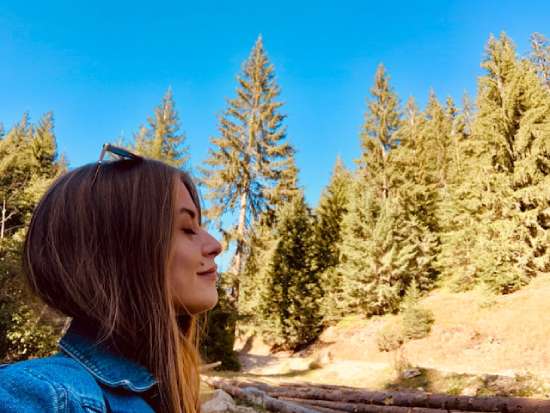
Oxygen is absolutely necessary for our bodies to make energy and keep us alive. Clean air is the best source of this oxygen while providing many other benefits for physical health.
Deep breaths of fresh air increase the concentration of oxygen our lungs take in. It may be one of the reasons fresh air has been shown to improve body temperature, heart rate, and breathing efficiency.2
Fresh air also contains negative ions that energize the air—and us—by increasing the amount of oxygen we take in.
What exactly are these negative ions?
We’re so used to hearing the word “negative” and thinking “bad.” But here we’re talking about molecular polarity. Negative ions result when the air molecules “have gained or lost an electrical charge.” This usually happens when moving air, moving water, or sunlight breaks the molecules apart.3 These negative ions bind together with unhealthy particles, helping to remove them from the air. Think of them like nature’s air purifiers.4
Not surprisingly then, fresh air may have as much as ten times more of these negative ions than stale air!5
And researchers believe that fresh air is also one of the reasons that the Japanese practice of “forest bathing”—spending time in forests—impacts physical health in so many positive ways.6
Forests have a higher concentration of oxygen due to the way trees convert carbon dioxide into oxygen. And that higher concentration of oxygen can mean the following for us:
- Increased energy levels7
- A stronger immune system8
- Lowered stress levels9
- Better function of antioxidants (substances that help protect the cells from damage)10
- Less inflammatory markers related to coronary artery disease and chronic heart failure11
Mental benefits of fresh air

Photo by Japheth Mast on Unsplash
Because of the connection between the mind and the body, the physical benefits of fresh air translate to mental health, too. Though the brain only makes up 2% of the body, it uses 20% of the body’s oxygen supply. Fresh air is vital for the brain.
Have you ever found yourself stuck in a rut when learning something or trying to solve a problem?
In exasperation, you shut your laptop screen and went for a short walk. And when you returned, your mind felt clear and refreshed.
You were experiencing the mental health benefits of fresh air.
The increased oxygen and negative ions combine to help:
- Relax the mind12
- Improve focus and learning ability13
- Improve mood (by increasing levels of serotonin, the brain’s happiness hormone)14
- Decrease stress, anxiety, depression, and anger15
Spiritual benefits of fresh air

Photo by Gift Habeshaw on Unsplash
Adventists believe that we are holistic beings whose physical, mental, and spiritual health are interconnected. Experiencing the benefits of fresh air means that we will have clear minds for connecting with God.
The Bible calls our bodies temples of the Holy Spirit (1 Corinthians 3:16–17) because the body houses the mind, through which we talk with God and perceive the wisdom He’s seeking to give us. This means that what we choose to think about can have eternal consequences:
“For to set the mind on the flesh is death, but to set the mind on the Spirit is life and peace” (Romans 8:6, ESV).
And fresh air? When we experience its benefit on the mind, we also experience its spiritual benefits:
- We’re able to understand God’s Word better
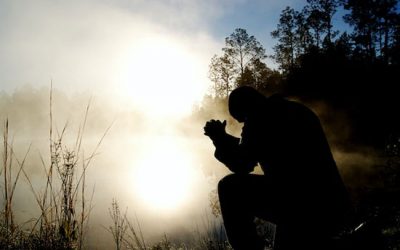
- We have a clearer mind for prayer
- We can focus on God and His Spirit
- We make better decisions
How much fresh air do we need?

Photo by Annie Spratt on Unsplash
When it comes to the amount of fresh air you need, the more, the better! Recent research suggests at least 30–40 minutes per day.
But unfortunately, most Americans spend over 90% of their time indoors, where fresh air tends to be lacking and the air may be polluted by cigarette smoke, paint, chemicals in furniture, household chemicals, and more.
In 2019, researchers surveyed a group of people about the time they spent in nature and their resulting sense of health and wellness.
They found that those who spent between 200 and 300 minutes per week (30 and 40 minutes per day) outdoors had the greatest sense of health and wellbeing.16 Though there were other factors involved (such as spending time in green spaces), fresh air no doubt played a part.
The good news is that fresh air may continue to make a difference in your health even when you can’t be in it all the time! According to one study, the physical benefits of going on a forest bathing vacation lasted for at least seven days afterward.17
How can we enjoy more fresh air?
Follow these simple tips:
- Spend time outdoors in an environment full of negative ions
- Open your windows
- Get some house plants
- Use air purifiers and filters
Participate in outdoor activities
Indoor air can have up to 100 times more pollutants than outdoor air! Doesn’t that make you want to get some clean outdoor air?
Look for places out in nature where the concentration of negative ions is likely to be higher. Places such as waterfalls, creeks, rivers, forests, and the ocean.
Some ideas for spending time outdoors are:
- Walks in the sunshine
- Outdoor exercise
- Working in your yard or garden
- A picnic at a park
- Reading a book outside
But there are ways to improve indoor air quality, too.
Open your windows
Let some of that fresh outdoor air into your home! If the weather is warm and you don’t live in a polluted city, open those windows wide. For better ventilation, run a fan and open the windows on opposite sides of your house to allow a crosswind.
On cold days, even cracking the window for a few minutes can help rejuvenate the indoor air.
Get some house plants

Photo by Kate Darmody on Unsplash
Plants take in carbon dioxide and release oxygen into the air, making them great for improving air quality. They also absorb toxic pollutants that come from carpets, furniture, cleaning products, and paint.18 In fact, one plant alone can remove up to 90% of pollutants in a room.19
Use air purifiers and filters
Air purifiers can help improve indoor air quality by removing unhealthful particles. Also, place air filters in your vents and keep them clean to ensure that the air circulating through your home is clean.
Breathe deep of fresh air and God’s Spirit
God cares about every aspect of our health—including the air we breathe. He designed fresh air to invigorate us physically, mentally, and spiritually. This is why Adventists are intentional about getting out in nature to enjoy the benefits of fresh air.
The Bible uses air as a metaphor for the Holy Spirit. Just like we need fresh air moment by moment, we need the Holy Spirit to help us navigate our daily lives.
So let’s make sure we’re getting deep breaths of both kinds of air—the fresh outdoor air and the air of God’s Spirit. Both are good for you, refreshing your mind, body, and spirit.
For more about how the Bible and health go hand in hand,
Related Articles


- Nedley, Neil, Lost Art of Thinking (Nedley Publishing, Ardmore, OK, 2011), p. 252; “Indoor Air Quality,” OSHA.gov. [↵]
- English, Jim, “The Positive Health Benefits of Negative Ions,” Nutrition Review, nutritionreview.org, April 22, 2013. [↵]
- Mann, Denise, “Negative Ions Create Positive Vibes,” WebMD.com, May 6, 2002. [↵]
- English, “The Positive Health Benefits of Negative Ions.” [↵]
- Nedley, p. 250. [↵]
- Evans, Karin, “Why Forest Bathing Is Good for Your Health,” Greater Good, greatergood.berkeley.edu, August 20, 2018. [↵]
- Nedley, p. 250. [↵]
- Ibid. [↵]
- Li, Qing, “Effect of Forest Bathing Trips on Human Immune Function,” Environmental Health and Preventative Medicine, 15(1), 2010, pp. 9–17. [↵]
- Mao, et al., “The Salutary Influence of Forest Bathing on Elderly Patients with Chronic Heart Failure,” International Journal of Environmental Research and Public Health 14, 4: 368, 2017. [↵]
- Ibid. [↵]
- Nedley, p. 250. [↵]
- Ibid. [↵]
- Mann, Denise, “Negative Ions Create Positive Vibes.” [↵]
- Evans, Karin, “Why Forest Bathing Is Good for Your Health.” [↵]
- White, et al., “Spending At Least 120 Minutes a Week in Nature Is Associated with Good Health and Wellbeing,” Scientific Reports 9, 7730, 2019. [↵]
- Li, “Effect of Forest Bathing Trips on Human Immune Function.” [↵]
- “Using the Right Plants Can Reduce Indoor Pollution and Save Energy,” Science Daily, April 19, 2018. [↵]
- Nedley, p. 251. [↵]
More Answers
Como os Ensinos de Ellen White Podem Melhorar Sua Saúde
Como os Ensinos de Ellen White Podem Melhorar Sua SaúdeAssistência médica no século XIX era dito deixar "mais doenças do que levava embora" com o uso de sangrias e "remédios" como mercúrio e arsênico.1 À medida que as pessoas questionavam esses métodos, novas...
Cómo las enseñanzas de Elena G. de White pueden mejorar tu salud
La atención médica en el siglo XIX se decía que dejaba “más enfermedades de las que eliminaba” con su uso de sangrías y “medicamentos” como el mercurio y el arsénico.
All About the Gospel of Matthew
The Book of Matthew is one of the four Gospel narratives in the Bible
Descanso e Reconexão: O Que Realmente Significa Guardar o Sábado
A Bíblia nos diz que guardamos o Sábado evitando o trabalho. Deus fez essa lei porque sabia que ela nos fortaleceria e nos traria alegria, além de nos dar tempo para nos reconectar com Ele e recarregar das nossas vidas ocupadas.
Descanso y reconexión: lo que realmente significa guardar el sábado
La Biblia nos dice que guardamos el sábado evitando el trabajo. Dios hizo esta ley porque sabía que nos fortalecería y nos traería alegría, además de darnos tiempo para reconectarnos con Él y recargar energías de nuestras vidas ocupadas.

Todo lo que necesitas saber sobre la Escuela Sabática
La Escuela Sabática es el componente de estudio bíblico del programa de la iglesia en la mayoría de las Iglesias Adventistas del Séptimo Día.

O que os Adventistas do Sétimo Dia acreditam sobre a autoridade da Bíblia?
Saiba como um livro realmente antigo (a Bíblia) é o único fundamento para todas as crenças dos Adventistas do Sétimo Dia.
¿Qué creen los Adventistas sobre la autoridad de la Biblia?
Puede hacerte sentir intimidado o frustrado. Podrías pensar en un líder de iglesia que parecía arruinar toda tu diversión cuando eras niño, o un jefe que supervisa cada uno de tus movimientos en el trabajo…
¿Qué es un médico misionero adventista?
Un médico misionero en la Iglesia Adventista es alguien que cuida de las necesidades médicas de las personas como una forma de mostrar el amor de Jesús. Pueden viajar a otro país, o incluso simplemente servir en su ciudad natal.
Ni nini Mtaalam wa Matibabu wa Kiadventista?
Mmishonari wa matibabu katika Kanisa la Waadventista ni mtu anayejali mahitaji ya matibabu ya watu kama njia ya kuonyesha upendo wa Yesu.
O que é um missionário médico adventista?
Um missionário médico na Igreja Adventista é alguém que cuida das necessidades médicas das pessoas como uma forma de mostrar o amor de Jesus. Eles podem viajar para outro país, ou até mesmo servir em sua cidade natal.

Guía definitiva para el estudio personal de la Biblia
¿Alguna vez has sentido que estudiar la Biblia es un desafío y simplemente no estás seguro de por dónde empezar? ¿O estás buscando ideas nuevas para mejorar tus hábitos actuales de estudio bíblico?
O Guia Definitivo para o Estudo Pessoal da Bíblia
Já sentiu que estudar a Bíblia é desafiador e não tem certeza por onde começar? Ou está procurando ideias novas para melhorar seus hábitos atuais de estudo da Bíblia?

¿Los Adventistas del Séptimo Día observan festividades relacionadas con la Pascua?
La resurrección de Jesús, celebrada en muchas festividades relacionadas con la Pascua, es central para las creencias de la Iglesia Adventista del Séptimo Día.

10 Bible Teachings Adventists Believe About the Devil
10 Bible Teachings Adventists Believe About the DevilSeventh-day Adventists believe the devil (or Lucifer-turned-Satan) is real and active. He is the sole adversary of God and humanity (1 Peter 5:8), making him the opposing force in the cosmic conflict between good...

¿Los Adventistas del Séptimo Día creen que solo ellos irán al cielo?
No, los adventistas definitivamente no creen que son los únicos que irán al cielo. De hecho, no creemos que la admisión al cielo se base en la iglesia o denominación a la que pertenecemos.
Waadventista Wa Sabato Wanaamini Nini Kuhusu Mamlaka ya Biblia?
Jifunze jinsi kitabu kimoja cha zamani sana (Biblia) kilivyo msingi pekee wa imani zote za Waadventista wa Sabato.
Mwongozo Bora Katika Kujifunza Biblia Binafsi
Umewahi kuhisi kwamba kusoma Biblia ni jambo gumu, na hujui uanzie wapi? Au unatafuta mawazo mapya ya kuboresha tabia yako ya usomaji wa Biblia.
Je, Waadventista Wasabato Wanasherehekea Siku Kuu Zinazohusiana na Pasaka?
Kufufuka kwa Yesu, kunakoadhimishwa katika siku kuu nyingi zinazohusiana na Pasaka, ni muhimu katika imani za Kanisa la Waadventista wa Sabato.
Je, Waadventista Wasabato Wanaamini Wao Pekee Ndiyo Watakao Kwenda Mbinguni?
Hapana, Waadventista hakika hawaamini kwamba wao ndio pekee watakao kwenda mbinguni. Kwa kweli, hatuamini kwamba kupokelewa mbinguni kunategemea kanisa au madhehebu tunayohusiana nayo.

Chakula cha Pamoja Katika Kanisa la Kiadventista: Mahali Ambapo Chakula na Urafiki Vinakutana
Mara nyingi, kawaida kwenye ratiba inayotofautiana kutoka mara moja kwa wiki hadi mara moja kwa mwezi hadi mara moja kwa robo, kanisa la Waadventista litakuwa na “karamu za ushirika,” mara nyingi zikiitwa chakula cha mchana cha pamoja.

Je, Waadventista Wa Sabato Wanaamini Nini Kuhusu Uumbaji Katika Biblia?
Waadventista Wa Sabato wanaamini kwamba Mungu ndiye Muumbaji wa ulimwengu. Wanafikia hitimisho hili kutoka kitabu cha kwanza cha Biblia—Mwanzo.

Jinsi Ellen White Alivyochangia Ujumbe wa Afya wa Waadventista
Jinsi Ellen White Alivyochangia Ujumbe wa Afya wa WaadventistaWaadventista wa Sabato wanajulikana kwa kusisitiza maisha yenye afya bora. Na Ellen G. White alikuwa na ushawishi mkubwa katika maendeleo ya kipaumbele hiki na utekelezaji wake miongoni mwa Waadventista....
Os Adventistas do Sétimo Dia observam feriados relacionados à Páscoa?
Os Adventistas do Sétimo Dia observam feriados relacionados à Páscoa?A ressurreição de Jesus, celebrada em muitos feriados relacionados à Páscoa, é central para as crenças da Igreja Adventista do Sétimo Dia. E isso significa que buscamos todas as oportunidades para...
Os Adventistas do Sétimo Dia acreditam que apenas eles irão para o Céu?
Não, os Adventistas definitivamente não acreditam que são os únicos que irão para o céu. Na verdade, não acreditamos que a admissão no céu dependa de qual igreja ou denominação pertencemos.

Ellen White anasema nini kuhusu Maombi?
Je, umewahi kuwa na mzigo ambao ulihitaji kumwambia mtu, lakini uliogopa kuhukumiwa ikiwa ungefanya hivyo?

Nani Aliyebadilisha Sabato kwenda Jumapili?
Nani Aliyebadilisha Sabato kwenda Jumapili?Ikiwa Biblia haijawahi kutaja mabadiliko ya Sabato, kwa nini leo wengi wanaenda kanisani Jumapili? Nani alibadilisha siku hiyo? Lakini hilo sio swali sahihi la kuuliza. Sabato haijabadilika. Kilichobadilika ni uamuzi wa...

Is It Okay to Worship On Sunday Instead of Saturday?
If there’s no wrong time to worship God, why are there different ideas on the day churches meet?

Ellen G. White au Biblia—Kipi ni Muhimu Zaidi kwa Waadventista?
Biblia—bila shaka—ndiyo kitabu muhimu zaidi. Ni kipimo tunachotumia kupima maandishi mengine yote, ikiwa ni pamoja na yale ya Ellen White.
Didn’t find your answer? Ask us!
We understand your concern of having questions but not knowing who to ask—we’ve felt it ourselves. When you’re ready to learn more about Adventists, send us a question! We know a thing or two about Adventists.