
Knowing you’re forgiven is a big part of finding freedom in Christianity. The Bible tells us that after we’ve prayed for God’s forgiveness, we can believe we’re forgiven and accept His gift of pardon.
But have you ever prayed for forgiveness, then felt the same after that? The same lingering guilt and remorse, or a sense of unworthiness before God or others?
You might’ve wondered how forgiveness works and how you can know for sure that your sins have been put away.
If that’s you, then here are three points from the Bible to help you have that assurance:
Let’s start by looking at how God views us when we come to Him in sorrow for our sins.
God’s sure promise to forgive you
The Bible has many promises of God’s eagerness to forgive our sins when we ask Him for that gift. He is more than willing to free us from our guilty consciences and give us the opportunity to live for Him (Hebrews 10:22). He doesn’t hold hard feelings toward us.
God longs to be in a close relationship with us.
But the one thing that comes between Him and us is sin. That’s why He made a way to restore that relationship with us through the sacrifice of Jesus.
When we confess our mistakes and receive Jesus’ goodness in place of our wrongdoing, we can be assured of the following promises:
He will blot out all our sins—no matter how bad they are
 The apostle John assures us that “If we confess our sins, [God] is faithful and just to forgive us our sins and to cleanse us from all unrighteousness” (1 John 1:9, NKJV).
In fact, the Psalmist says that God is very merciful and pities us the way a father pities his child. When we make mistakes, He considers our frailty and vulnerability and remembers that we are made of dust. So He is “merciful and gracious.” And though our evil ways break His heart, He is still “slow to anger, and…will [not] keep His anger forever” (Psalm 103:8–9; Psalm 103:14, NKJV).
He invites us, saying, “Come now, and let us reason together,… though your sins are like scarlet, they shall be as white as snow; though they are red like crimson, they shall be as wool” (Isaiah 1:18, NKJV).
He doesn’t treat us the way we deserve
Psalms 103:10 says that God doesn’t deal with us or punish us as our sins deserve.
Though we may feel very sinful and deserving of the worst, He looks at us with compassion. Even when the world around us may think we don’t deserve mercy, God remains gracious toward us and doesn’t handle us as we should be handled.
When He forgives us, He separates us from our sins
The Word of God says that when we ask for forgiveness, He forgives us and removes our sins from us as far as the east is from the west (Psalm 103:12).
The prophet Micah marveled at this incomparable capacity that God has to pardon us:
“Who is a God like You, pardoning iniquity and passing over the transgression of the remnant of His heritage? He does not retain His anger forever, because He delights in mercy. He will again have compassion on us, and will subdue our iniquities. You will cast all our sins into the depths of the sea” (Micah 7:18–19, NKJV).
God sees us without our sins
And beyond forgiving us and separating us from our evil deeds, God says He will not remember them.
It’s not that God forgets our sins. After all, He knows everything. But his purpose in saying this is that He chooses to view us as though we had never committed that sin.
“I, even I, am He who blots out your transgressions for My own sake; And I will not remember your sins” (Isaiah 43:25, NKJV).
“For I will forgive their iniquity, and their sin I will remember no more” (Jeremiah 31:34; Hebrews 8:12, NKJV).
Imagine that you’ve offended a friend, and when you sincerely apologize, the friend forgives you and never brings up that offense again. And they do it every time you make a mistake.
That’s how God relates to us when we ask for pardon.
Let’s see how we can experience this gift that God gives His beloved children.
How to receive forgiveness
 While God’s forgiveness to us is a gift, and there’s nothing we could ever do to deserve it or “make” Him forgive us, here are some steps we can take to receive that gift and be assured that it is ours.
And we don’t have to do it alone! The Holy Spirit walks with us through the whole process.
1. Repent and confess your sins to Him and ask for His forgiveness
God doesn’t force us to let go of our sins and seek reconciliation with Him.
Instead, He tenderly draws us to Himself through His lovingkindness (Jeremiah 31:3).
And as we see His goodness in contrast to our evil ways, we feel sorry for our wrongdoing and sincerely long for a closer walk with Him. This is called repentance.
His Spirit convicts us of our sins and leads us to confess them. As we do so, God receives us and gives us the gift of forgiveness (Romans 2:4; John 16:8).
So while His forgiveness is always available for us, we must feel our need for it and ask for it to receive it.
2. Forgive those who have hurt you
In the Lord’s prayer, Jesus instructed His disciples to pray, “Forgive us our debts, as we also have forgiven our debtors” (Matthew 6:12, CSB).
It’s not that we have to forgive others to earn God’s forgiveness. Rather, forgiving others shows that we have received His forgiveness. He said:
“For if you forgive men their trespasses, your heavenly Father will also forgive you. But if you do not forgive men their trespasses, neither will your Father forgive your trespasses” (Matthew 6:14–15, NKJV).
And we should not just forgive once or twice, but as often as we are wronged (Matthew 18:21–22).
(Remember that forgiveness doesn’t necessarily mean reconciliation, particularly with an abusive individual. Forgiveness is a way of allowing us to let go of bitterness and resentment toward another person while still maintaining healthy boundaries.)
As we receive God’s forgiveness, He asks us to extend that same mercy and grace to others. It’s one way we learn to be like Him as His children (Ephesians 4:32; Colossians 3:13; 2 Corinthians 2:3–11).
Now to the big question in your mind:
After you have asked for forgiveness, how do you know you are forgiven?
What if you don’t feel God has forgiven you?
 Even when we don’t feel like our sins are forgiven, we can remind ourselves that our feelings don’t always tell us the truth. God has indeed promised to forgive us, and He doesn’t change, so we can rest our full weight on that.
But feelings of guilt can seem so real!
They may continue to linger in our minds even after we’ve prayed. We may still feel shame, regret, and, unfortunately, a sense of condemnation from those around us.
In Mark 9, a man brought his demon-possessed son to Jesus for healing. Jesus told him that all he needed was to believe in His power to heal his son.
But the man felt he didn’t know how to overcome his unbelief, despite his deep desire to believe in Jesus. Knowing that so much was at stake for his son, he cried out with this sincere prayer:
“Lord, I believe; help my unbelief!” (Mark 9:24, NKJV).
And his son was healed.
In the same way, we can come to God when our feelings conflict with our desire to believe in His saving grace.
And He encourages us, “Do not be afraid; only believe” (Mark 5:36, NKJV).
Even when we feel like we are drowning in unbelief, God’s Holy Spirit will help us trust His Word above our feelings when He says that the blood of Jesus Christ was shed “for the forgiveness of sins” (Matthew 26:28, ESV).
Commenting on the story in Mark 9, Ellen White, one of the co-founders of the Seventh-day Adventist Church, writes:
“Many feel that they lack faith, and therefore they remain away from Christ. Let these souls, in their helpless unworthiness, cast themselves upon the mercy of their compassionate Savior. Look not to self, but to Christ. He who healed the sick and cast out demons when He walked among men is the same mighty Redeemer today. Faith comes by the Word of God. Then grasp His promise, ‘Him that cometh to Me I will in no wise cast out’ (John 6:37). Cast yourself at His feet with the cry, ‘Lord, I believe; help Thou mine unbelief.’ You can never perish while you do this—never.”1
Believe that your sins are forgiven. God loves you and has secured your salvation. And His promises of eternal life are possible for you.
Live like you’ve been forgiven
With the assurance of forgiveness, you can move forward and live as though you’ve received that gift.
Imagine one thing that you greatly desire but can’t afford. Then someone offers to buy it for you. They buy it, present it to you, and even leave it with you.
The gift is yours.
But if you don’t unpack it and begin enjoying it, then the whole process your friend has gone through to give it to you is useless.
All that’s left to do is accept the gift in a personal way and adjust your mindset and way of life to live as someone who owns the gift.
In the same way, our Lord Jesus has given us the gift of forgiveness at such a great cost. He left the glory of heaven and came to be our Savior from sin.
If you receive it, then you can begin to enjoy the blessings that come with knowing you are forgiven. The experience of peace and freedom is yours.
Forgiveness sets us free from condemnation
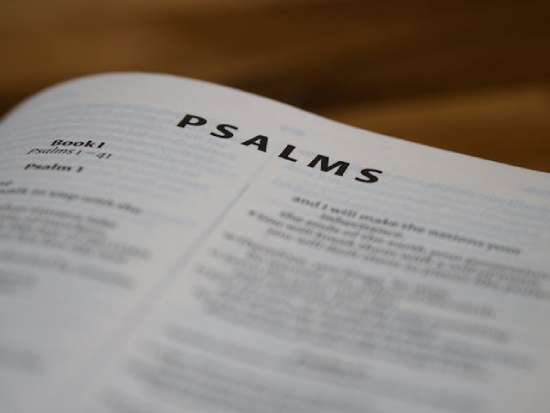
Photo by Brett Jordan
The blessing of knowing you are forgiven can best be described as an experience. And in both the Old Testament and the New Testament of the Bible, we find examples of individuals who experienced it.
Take David for example.
David was one of the greatest kings of Israel. God Himself referred to him as a man after His own heart (1 Samuel 13:14).
But at some point, he messed up—big time. He committed adultery with the wife of one of his faithful soldiers and tried to cover it up by ordering the soldier be murdered (2 Samuel 11).
Soon after, God rebuked him, and David realized the gravity of what he’d done. Overwhelmed with guilt, he went to God with tears of humility and prayed the prayer we find in Psalm 51.
When God forgave him, he described this experience in Psalm 32:
“How joyful is the one whose transgression is forgiven, whose sin is covered! How joyful is a person whom the Lord does not charge with iniquity and in whose spirit is no deceit!” (Psalm 32:1–2, CSB).
Forgiveness transformed him. He was relieved from the torment of sin and could experience the blessed peace of knowing he was forgiven (Psalm 32:3–5).
We may not have made the same mistakes as David, but the results of forgiveness are still the same: peace of mind and knowing in your heart that you are free from the condemnation of sin.
And Paul’s words will become true for you:
“There is therefore now no condemnation to those who are in Christ Jesus” (Romans 8:1, NKJV).
Whenever Satan tries to harass you with feelings of guilt and shame, you can find refuge in these promises.
You can be grounded in the truth that in Christ, “we have…the forgiveness of sins, according to the riches of His grace” (Ephesians 1:7, NKJV).
To learn more about Jesus’ gift of forgiveness and salvation,
Choose an Online Bible Study
Want to keep learning? Find out more about Jesus, humanity, the plan of salvation, and how God loves you enough to sacrifice everything, just to give you a chance to choose Him.
Sometimes it can be hard to know where to start, that’s why we offer free, user-friendly, online Bible study options you can do anytime, anywhere, and at your own pace.
This online Bible school will take you through the major themes of Scripture, breaking down the Bible’s complex concepts into bite-sized pieces, which can lead you toward the answers of life’s more challenging questions.
- White, Ellen G., Desire of Ages, (Pacific Press Publishing Association, 1898), p. 429. [↵]
Related Articles



More Answers

¿Por qué muchos Adventistas del Séptimo Día eligen una dieta vegetariana?
¿Por qué muchos Adventistas del Séptimo Día eligen una dieta vegetariana?Puede que tengas un amigo adventista que sea vegetariano, o tal vez estés asistiendo a una Iglesia Adventista del Séptimo Día por primera vez y notes que en la comida compartida no hay carne....

What is Jesus’ Parable of the Sower About?
The parable of the sower is ultimately about how people responded to Jesus Christ and His message of the kingdom of God—the Gospel.

O que os Adventistas do Sétimo Dia acreditam sobre o Grande Conflito (Bem vs. Mal)?
O “Grande Conflito” é a frase que os Adventistas do Sétimo Dia normalmente usam para descrever o conflito espiritual cósmico entre as forças do bem (Deus) e as forças do mal ou do pecado (Satanás/o diabo).

Was Jesus Ever Hypocritical? Learn What the Bible Says.
Was Jesus Ever Hypocritical? Learn What the Bible SaysMany undesirable traits are associated with hypocrisy. But overall, hypocrites intentionally try to make others believe they uphold or represent a certain belief system, character trait, lifestyle, etc., when in...

Kukatishwa Tamaa Kukuu na Kile Tunachojifunza
Wafuasi wa Miller walitabiri kurudi kwa Kristo Oktoba 22, 1844, lakini Yesu hakuja kamwe. Tukio lingine lilitokea. Gundua kilichotokea kweli na Kukatishwa Tamaa Kukuu kunaweza kutufundisha leo.

When in Doubt: 7 Ways Christians Can Manage Uncertainty
When in Doubt: 7 Ways Christians Can Manage UncertaintyFew things in life are truly certain. And no matter how convinced some people can appear on the surface, no one is immune to doubt. And this isn’t a bad thing. Doubt has a purpose. A role to serve. (Just imagine...
El gran chasco y las lecciones que nos enseña
Los Milleritas predijeron el regreso de Cristo el 22 de octubre de 1844, pero Jesús nunca llegó. Ocurrió otro evento. Descubre lo que realmente sucedió y qué puede enseñarnos hoy El gran chasco.

Is Jesus the Same Being as Michael the Archangel?
Many Christians have wondered at the mysterious identity of Michael the Archangel.
A Grande Desapontamento e Lições que nos Ensina
Os Milleritas previram o retorno de Cristo em 22 de outubro de 1844, mas Jesus nunca chegou. Outro evento ocorreu. Descubra o que realmente aconteceu e o que o Grande Desapontamento pode nos ensinar hoje.
James Springer White, Co-Fundador da Igreja Adventista do Sétimo Dia
James Springer White (1821–1881) foi uma figura chave na Igreja Adventista do Sétimo Dia e marido de Ellen G. White.
James Springer White, cofundador de la Iglesia Adventista del Séptimo Día
James Springer White (1821–1881) fue una figura clave en la Iglesia Adventista del Séptimo Día y el esposo de Elena G. de White.

Kila Kitu Unachohitaji Kujua Kuhusu Chakula cha Siku ya Sabato
Kwa Waadventista Wa Sabato, kushiriki chakula cha Siku ya Sabato pamoja na marafiki na familia ni moja ya sehemu muhimu na ya kumbukumbu ya Sabato.
Nini Maana ya “Mwadventista”?
Waadventista wa Sabato ni dhehebu la Kikristo la Kiprotestanti wanaoshikilia Sabato ya siku ya saba kama ilivyoandikwa katika Biblia.

How to Have a Personal Relationship with Jesus: A 10-Step Guide
How to Have a Personal Relationship with Jesus: A GuideNo matter who you are, you’re surrounded by relationships. Friends, family, colleagues, acquaintances...they all play a part in our lives, for better or worse. So you’re surely aware of a lot of the components...

Biblia Ina Maana Gani Inaposema Yesu ni Mwana wa Mungu?
Biblia inapomwita Yesu Mwana wa Mungu inarejelea uungu wake. Jifunze ni nini kinachofanya hili kuwa muhimu na kinahusianaje na wokovu.

“Go and Sin No More”—What Did Jesus Mean?
These well-known words of Jesus Christ come from two New Testament stories in the book of John—a man healed by the Pool of Bethesda (John 5) and a woman caught in adultery (John 8).

Quais são as Mensagens dos Três Anjos em Apocalipse 14?
As mensagens dos três anjos em Apocalipse 14 advertem o mundo a adorar a Deus, deixar a confusão religiosa e evitar a adoração de tradições humanas em vez dos mandamentos de Deus.

Je! Tunaweza Kuitunza Siku Yoyote ya Wiki Kama Sabato?
Katika sura za kwanza kabisa za Biblia, tunamwona Mungu akianzisha kumbukumbu ya kila wiki na siku ya mapumziko, inayoitwa Sabato (Mwanzo 2:2-3).
¿Cuáles son los mensajes de los tres ángeles en Apocalipsis 14?
Los mensajes de los tres ángeles en Apocalipsis 14 invitan al mundo a adorar a Dios, abandonar la confusión religiosa y evitar la adoración de tradiciones humanas en lugar de los mandamientos de Dios.
Por que muitos Adventistas do Sétimo Dia escolhem uma dieta vegetariana?
Embora nem todo adventista seja vegetariano, muitos evitam completamente o consumo de carne para viver de forma mais saudável, buscando honrar a Deus física, espiritual e mentalmente.

Understanding the Miracles of Jesus Christ
Understanding the Miracles of Jesus ChristWhat do you think of when someone says something is “a miracle”? Maybe you think of an unexpected recovery, surviving a dangerous accident, or getting an answer to a seemingly impossible prayer. Simply put, miracles are...
O que significa “Adventista”?
O que significa "Adventista"?Os Adventistas do Sétimo Dia são uma denominação cristã protestante que observa o sábado bíblico do sétimo dia. A partir dessa crença, eles obtêm a primeira parte de seu nome. Mas e quanto à segunda parte - "Adventista"? “Adventista”...
¿Podemos guardar el sábado bíblico cualquier día de la semana?
En los primeros capítulos de la Biblia, encontramos a Dios estableciendo un memorial semanal y día de reposo, conocido como el sábado (Génesis 2:2-3).
Podemos guardar o Sábado em qualquer dia da semana?
Nos primeiros capítulos da Bíblia, encontramos Deus estabelecendo um memorial semanal e dia de descanso, conhecido como o Sábado (Gênesis 2:2-3).
O que significa a Bíblia quando chama Jesus de Filho de Deus?
Quando a Bíblia chama Jesus de Filho de Deus, está se referindo à Sua divindade. Saiba o que torna isso tão significativo e o que tem a ver com a salvação.
¿Qué creen los Adventistas del Séptimo Día acerca de la Biblia?
La Biblia forma la base de todo lo que los Adventistas del Séptimo Día creen y enseñan.

Legado Duradouro de Ellen G. White
Ellen G. White é um nome bem conhecido entre os Adventistas do Sétimo Dia, mas ela também teve um impacto em muitas outras partes da história, além de ser co-fundadora da Igreja Adventista.

What Does it Mean to Have Faith in Jesus?
What Does it Mean to Have Faith in Jesus?To have faith in Jesus means we place our spiritual hope, trust, belief, and priority in Him as our loving Savior. And that sounds great as an idea. That’s our goal, right? But when we go through difficult times, face...
James Springer White, Mwanzilishi wa Kanisa la Waadventista Wa Sabato
James Springer White (1821–1881) alikuwa mtu muhimu katika Kanisa la Waadventista wa Sabato na mume wa Ellen G. White.
Didn’t find your answer? Ask us!
We understand your concern of having questions but not knowing who to ask—we’ve felt it ourselves. When you’re ready to learn more about Adventists, send us a question! We know a thing or two about Adventists.