
Jesus Christ’s baptism marked the beginning of His earthly ministry. It was God’s big reveal regarding who Jesus is.
But have you ever wondered why Jesus Christ, the Son of God, needed to be baptized? Why was God’s response worth noting? And what does Jesus’ baptism mean for Christians?
Let’s dive into Scripture and learn about the following:
- The setting and context of Jesus’s baptism
- How God responded to it
- Why Jesus was baptized
- What it means for us today
We’ll start with some background details.
The setting and context of Jesus’ baptism

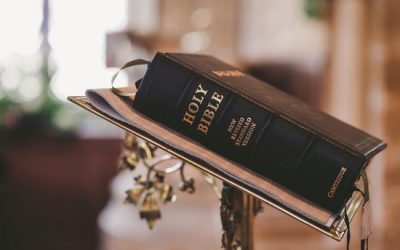
Photo by Sixteen Miles Out on Unsplash
The baptism of Jesus is recorded in the New Testament books of Matthew 3, Mark 1, and Luke 3. He was about 30 years old (Luke 3:23) at the time, and it was before His temptation in the wilderness and before He began His public ministry.
Few events of Jesus’s personal life were recorded before His baptism. The first two chapters of Matthew and Luke give details of His birth and His early experience at the temple in Jerusalem. But other than that, all we know about Him growing up is that He “increased in wisdom and stature, and in favor with God and men” (Luke 2:52, NKJV).
And before the Bible starts talking about the event of Jesus’ baptism, we’re introduced to the person who baptized Him.
Matthew, Mark, and Luke all reference Isaiah 40 to remind us of John the Baptist’s prophetic significance.
“For this is he who was spoken of by the prophet Isaiah, saying: ‘The voice of one crying in the wilderness: “Prepare the way of the LORD; Make His paths straight”’” (Matthew 3:3, NKJV, cf Isaiah 40:3).
So the same person who was called to “prepare the way” for the Messiah’s arrival was also the one Jesus approached with the request for baptism.
Matthew provides the dialogue between Jesus and John:
“Then Jesus came from Galilee to John at the Jordan to be baptized by him. And John tried to prevent Him, saying, ‘I need to be baptized by You, and are You coming to me?’ But Jesus answered and said to him, ‘Permit it to be so now, for thus it is fitting for us to fulfill all righteousness.’ Then he allowed Him” (Matthew 3:13-15 NKJV).
Baptism was already a standard religious practice for Jews as a declaration of faith and commitment, signaling the beginning of a person’s spiritual journey. Additionally, it was considered a “baptism of repentance,” symbolizing the cleansing from and forgiveness of sins1 (Luke 3:3).
That being the case, it’s understandable why John was taken aback at Jesus’ request.
After hearing His reasoning, however, John agreed to it. And Jesus Christ, humanity’s Messiah, was baptized in the same traditional manner as everyone else.
But while the act of His baptism was rather unremarkable, what happened next is miraculous. And it helps us understand what this whole story is really about.
God’s response

Photo by Pixabay
After Jesus was raised up out of the water, Matthew 3:16 tells us that “the heavens were opened…” (NKJV). And here we can notice all three members of the Godhead present.
First, “the Holy Spirit descended on him in bodily form, like a dove” (Luke 3:22, ESV).
Even John the Baptist recalled that he “saw the Spirit descending like a dove, and He remained upon Him” (John 1:32, NKJV).
In fact, John had been told to look out for the manifestation of the Spirit of God: “Upon whom you see the Spirit descending… this is He who baptizes with the Holy Spirit” (verse 33, NKJV).
Second, “a voice came from heaven, ‘You are my beloved Son, in whom I am well pleased’” (Mark 1:11, NKJV).
The voice is often attributed to God the Father because He calls Jesus His Son, and the Gospel accounts record Jesus referring to God as His Father throughout His ministry (Matthew 18:10, 35; John 5:17-18; 20:17).
And in one instance, Jesus asked the Father to glorify His name, and a voice from heaven responded immediately (John 12:20-28).
So this miraculous moment was God the Father’s recognition and declaration of who Jesus is. It was as if God was flashing a neon sign over His Son, saying, “Yes, this is My Chosen One. He is carrying out My plans and going about My business. Pay attention! You don’t want to miss this!”
Why did Jesus need to be baptized?
One of the biggest questions regarding the baptism of Jesus is why. Baptism has been connected with turning away from sin, so why would He need to be baptized if He was “without sin” and “committed no sin” (Hebrews 4:15, 1 Peter 2:22, NKJV)?
Let’s review the story above and look more closely at what Scripture tells us:
- It confirmed His identity as the Son of God and the Messiah
- It marked the beginning of His Messianic mission
- He was our example and shared in our human experiences
- It would “fulfill righteousness”
It confirmed His identity as the Son of God and the Messiah

Photo by Yannick Pulver on Unsplash
As we just read above, Jesus’ baptism validated two important parts of His identity: He was the Son of God and the Messiah.
When John declared Jesus to be the Lamb of God, he explained that he knew this because, prior to Jesus approaching him for baptism, John was informed that the Son of God would be the one the Holy Spirit would come down and remain upon:
“I saw the Spirit descending from heaven like a dove, and he rested on him. I didn’t know him, but he who sent me to baptize with water told me, ‘The one you see the Spirit descending and resting on—he is the one who baptizes with the Holy Spirit.’ I have seen and testified that this is the Son of God” (John 1:32-34, CSB).
Similarly, when Peter shared the Gospel with the Romans, he explained that Jesus was anointed by the Holy Spirit at His baptism, signaling that He was the Messiah, which means “the Anointed One” in Hebrew (Acts 10:37).
It marked the beginning of His work
Especially considering the divine response to Jesus’ baptism, it served as a glorious send-off, an ordination to ministry, and a confirmation that Jesus was ready for His work on earth to officially begin.
Before this humble ceremony of commitment, we know little about Jesus’s life. Afterward—Boom!—the Gospel accounts are packed with His teachings and miracles.
And it’s rather fitting for the simple yet meaningful ritual of baptism to signify the beginning of Jesus’ mission. It parallels with how the Israelite priests in the Old Testament would ceremonially wash their hands in the bronze laver of the sanctuary, as an act of cleansing and purification before beginning their ministry (Exodus 30:18-21; 40:7).
We can see another parallel with the story of the prophet Elijah passing on his ministry to his apprentice, Elisha. Like John the Baptist, Elijah urged God’s people to repent of their wrongdoings and return to God (1 Kings 18:21). He anointed Elisha as his successor in ministry and they crossed the Jordan River. Elijah was later taken up into heaven, and Elisha received “a double portion” of his spirit from God (1 Kings 19:16; 2 Kings 2:6-15). And the depth and reach of Elisha’s ministry would surpass that of his predecessor.
Similarly, John played a role in Jesus’s anointing by baptizing Him at the Jordan River, and Jesus even referred to him later as “the Elijah who is to come” (Matthew 11:14, CSB). And when Jesus received the Spirit and began His work, John’s ministry “decreased” so that Jesus’ ministry could “increase” (John 3:25-30; 4:1-3).
To be our example and share in our experience
In a way, Jesus’s baptism shows that He shares in our experience of spiritual death to sin and resurrection to new life, which Paul understood when he said Christians are baptized into Christ’s death, buried with Him, and rise again to a new life committed to God’s guidance (Romans 6:3-4).
Jesus didn’t die because He was a sinner. He “committed no sin” (1 Peter 2:22, NKJV). He died to rescue us from our sinful ways (Matthew 1:21; 1 John 3:5). And He rose again so we could be saved through Him and have eternal life (Romans 4:25; 6:5-10).
Our baptism publicly declares that we join Jesus in what He accomplished at the Cross and in the tomb, also acknowledging that He joined our human experience and lived in our broken world (Romans 8:37; 1 John 5:4).
Claiming this “new life” is what Jesus called being “born again” or “born from above” (John 3:3-5).
And this is an experience offered to any human being in existence, no matter who they are or where they come from.
“For you are all sons of God through faith in Christ Jesus. For as many of you as were baptized into Christ have put on Christ. There is neither Jew nor Greek… for you are all one in Christ Jesus” (Galatians 3:26-28, NKJV).
For us, baptism is an act of new birth by dying to sin and self, then being restored to life as a “new creation” (2 Corinthians 5:17, NKJV). Jesus didn’t need to be born again like we do, but in living as a human like us, He also participated in the spiritual ceremonies established for our spiritual benefit. So His baptism gives us a glimpse of how He became the “firstborn among many brothers and sisters” (Romans 8:29, NASB).
“Now since the children have flesh and blood in common, Jesus also shared in these, so that through His death he might destroy the one holding the power of death—that is, the devil—and free those who were held in slavery all their lives by the fear of death. … Therefore, he had to be like His brothers and sisters in every way, so that He could become a merciful and faithful high priest in matters pertaining to God, to make atonement for the sins of the people” (Hebrews 2:14-15, 17, CSB, emphasis added).
He did all this for us so “that we, having died to sins, might live for righteousness” (1 Peter 2:24, NKJV).
Speaking of the word “righteousness,” it was featured in Jesus’ answer to John’s question of why he, a sinful human, should baptize his Lord and Savior.
To fulfill righteousness
Jesus’s direct reply to John’s questioning gives us an interesting perspective of what Jesus would accomplish with this baptism. He said to John:
“Allow it for now, because this is the way for us to fulfill all righteousness” (Matthew 3:15, CSB).
Jesus saw His baptism as a necessary part of fulfilling righteousness. But have you ever wondered what He meant by that?
Well, Jesus fulfilled the righteousness we need by meeting the requirements of God’s Law on our behalf.
He did this in two ways:
1) He did what God required while being in the state that is acceptable to God.
This is because righteousness has to do with moral character. Vine’s Expository Dictionary defines “righteousness” as “the character or quality of being right or just.”2
Righteousness can also be described as doing God’s will and as “right action,” or acting with morally pure and unselfish motives.3
Strong’s Concordance also sums up righteousness as being what we’re supposed to be: “the condition acceptable to God.”4
It’s understandable that people might have negative connotations to these definitions. Many have been put off by the “holier than thou” mentality that’s full of hypocrisy and judgment.
But the real deal is absent of pride, selfishness, and hate. Biblical righteousness ultimately seeks what’s best for others and requires making sacrifices with love as the motivation.
The whole reason we need salvation through Jesus is because we are unable to attain a spotless moral character, free from any selfishness, by our own efforts.
And Jesus’s life and character did match descriptions of the full meaning of righteousness, love, and purity. He did everything God required of Him, and He did it with sincere, unselfish intentions—including His baptism. Jesus Christ fulfilled God’s will by living a sinless life through a relationship with the Father.
2) Second, Jesus fulfilled the righteous requirements of the Law for His followers:
“For God has done what the law, weakened by the flesh, could not do. By sending His own Son in the likeness of sinful flesh and for sin, He condemned sin in the flesh, in order that the righteous requirement of the law might be fulfilled in us” (Romans 8:3-4, ESV).
So, not only did Jesus meet the requirements of being righteous, but He also made it possible for us to become righteous through Him.
“For He made Him who knew no sin to be sin for us, that we might become the righteousness of God in Him” (2 Corinthians 5:21 NKJV).
On that note, baptism itself has a righteous purpose that points to Jesus’s saving work.
The Jews originally used baptism as a picture of someone’s heart changing and being cleansed from wickedness. But Jesus adds another layer because His baptism shows that true, perfect righteousness comes through His death, burial, and resurrection.
“Baptism… now saves you (not as the removal of dirt from the body, but the pledge of a good conscience toward God) through the resurrection of Jesus Christ” (1 Peter 3:21, CSB).
When we accept Christ’s death and resurrection, His righteousness covers us. “For as by one man’s disobedience many were made sinners, so also by one Man’s obedience many will be made righteous” (Romans 5:19, NKJV).
So, all that is righteous, all that God wants of us, and all that is acceptable to Him, is fulfilled through Jesus Christ.
What Jesus’s baptism means for each one of us

Photo by Jazmin De Guzman on Unsplash
First, Jesus’s baptism tells us that He came to satisfy the requirements we can’t fulfill on our own. He pointed out that it’s impossible to be saved without God (Matthew 19:23-26). “For all have sinned and fall short of the glory of God” (Romans 3:23, NKJV).
We’re already living in a compromised position—we’ve already failed to keep God’s law, and our natural state does not align with God’s perfect character (Galatians 3:22).
So Jesus took on our sins so that “we might become the righteousness of God in Him” (2 Corinthians 5:21, NKJV). And this includes fulfilling God’s will for those who may not be able to be baptized. He took on our experience so that He fulfilled everything on their behalf (Hebrews 2:10-11).
For example, the thief who died on the cross next to Jesus accepted Him as his Savior, but he wasn’t able to be baptized or live out the new life since he would die in a short while. And yet Jesus assured him of his salvation, saying that they would see each other in paradise (Luke 23:43).
Second, we can be confident that His example is relevant to any and all of our lives as sinners. He demonstrated submission to God and His will as He participated in the established spiritual ceremony of baptism. Then His very life on earth showed the significance of what it means to die and come back to life.
Third, His baptism reminds us of our need to die to our sinful tendencies and move forward in the life He has now made possible for us. And as we continue in that new life, we can be sure that the Spirit will come down to guide us and that God the Father affirms us as His children.
Want to learn more about the origin, method, and spiritual applications of baptism?
Related Articles



- Nichol, F.D., “Matthew”, Seventh-day Adventist Bible Commentary + Bible Students’ Source Book, The Seventh-Day Adventist Church, 1978. p. 35. [↵]
- Vine’s Expository Dictionary on the New Testament, Blue Letter Bible. [↵]
- Ibid. [↵]
- “Strong’s G1343“, Blue Letter Bible. [↵]
More Answers

Where Do We Go When We Die?
For those of us who’ve lost loved ones or faced serious health issues, we can’t help but wonder about life after death.

What is the Difference Between Grace and Mercy in the Bible?
Even in day-to-day life, we can see glimpses of grace and mercy—like when someone offers an angry, impatient person their spot in a line or when a parent hugs their child after a heated argument.

Waadventista Wasabato Wanatafsiri Vipi Unabii wa Biblia?
Jifunze zaidi kuhusu jinsi Waadventista wanavyotafsiri unabii katika Biblia—hasa katika vitabu kama Danieli na Ufunuo.

Urithi wa Kudumu wa Ellen G. White
Urithi wa Kudumu wa Ellen G. WhiteEllen G. White ni jina linalojulikana sana miongoni mwa Waadventista wa Sabato, lakini pia aliathiri sehemu nyingi za historia, mbali na kuwa mwanzilishi wa Kanisa la Waadventista wa Sabato. Ndiyo maana Jarida la Smithsonian...

¿Cómo interpretan la profecía bíblica los Adventistas del Séptimo Día?
Aprende más sobre cómo los Adventistas interpretan la profecía en la Biblia, especialmente en libros como Daniel y Apocalipsis.
Como os Adventistas do Sétimo Dia interpretam a profecia bíblica?
Saiba mais sobre como os Adventistas abordam a interpretação da profecia na Bíblia—especialmente nos livros como Daniel e Apocalipse.

Lo que necesitas saber sobre la tentación y cómo resistirla
¿Alguna vez has sentido que enfrentas la misma tentación día tras día? ¿La tentación que siempre parece resurgir?

What Jesus Meant by “Take Up Your Cross”
Whether you’ve spent a day or a decade around Christian circles, you’ve probably heard the phrase, “Pick up your cross.”

Je, Waadventista Wasabato Wana “Sheria”?
Tunashikilia kanuni tunazoamini zitasaidia kuweka uhusiano wa karibu na Yesu na Neno lake. Jifunze jinsi kanuni hizi zinavyo-ongoza mtindo wa maisha wa Waadventista.
El legado de Elena G. de White
El legado de Elena G. de WhiteyElena G. de White es un nombre muy conocido entre los Adventistas del Séptimo Día, pero también tuvo un impacto en muchas otras partes de la historia, además de ser cofundadora de la Iglesia Adventista. Por eso, la revista Smithsonian la...

All of Jesus’ Warnings and Encouragements in the Bible
Here’s a comprehensive list of every warning and encouragement from the words of Jesus, as well as how they can benefit our lives today.
¿Los Adventistas del Séptimo Día tienen “reglas”?
Sostenemos principios que creemos que nos ayudarán a mantener una relación más cercana con Jesús y su Palabra. Aprende cómo estos principios guían los estilos de vida adventistas.
Os Adventistas do Sétimo Dia têm “regras”?
Defendemos princípios que acreditamos nos ajudar a manter um relacionamento mais próximo com Jesus e com Sua Palavra. Saiba como esses princípios orientam o estilo de vida adventista.

Películas Adventistas: donde la fe y el cine se encuentran
La misión de la Iglesia Adventista del Séptimo Día desde el principio ha sido compartir la verdad de Dios en la Biblia.
Filmes Adventistas: Onde a Fé e o Cinema se Encontram
A missão da Igreja Adventista do Sétimo Dia desde o início tem sido compartilhar a verdade de Deus na Bíblia.

¿Por qué algunas Biblias tienen más libros que otras?
Los cristianos consideran la Biblia como sus escrituras sagradas. Pero dentro del cristianismo, diferentes denominaciones utilizan Biblias con cantidades diferentes de libros.
Por que algumas Bíblias têm mais livros do que outras?
Os cristãos consideram a Bíblia como suas escrituras sagradas. Mas dentro do Cristianismo, diferentes denominações usam Bíblias com números diferentes de livros.
O que você precisa saber sobre a tentação e como resistir a ela
Já se sentiu como se enfrentasse a mesma tentação dia após dia? Aquela tentação que sempre parece ressurgir?
O que os Adventistas do Sétimo Dia acreditam sobre a Bíblia?
A Bíblia forma a base de tudo o que os Adventistas do Sétimo Dia acreditam e ensinam.

Waadventista Wa Sabato wanaamini nini kuhusu Ubatizo?
Kama Wakristo wengi wa Kiprotestanti ulimwenguni kote na katika historia, Kanisa la Waadventista wa Sabato linaamini katika ubatizo, sherehe ambapo watu huzamishwa ndani ya maji kudhihirisha hadharani “kufa kwa maisha ya zamani” na “kuanza kwa maisha mapya katika Kristo”.

Jinsi Waadventista Wanavyoshughulikia Kifo na Mazishi
Mazishi mengi ya Waadventista wa Sabato yanafanana na yale ya madhehebu mengine ya Kiprotestanti, kama vile Wamethodisti, Wabatisti, au Wapresbiteri, lakini unaweza kupata tofauti chache au taratibu za pekee.
O que os Adventistas do Sétimo Dia acreditam sobre o batismo?
Assim como muitos cristãos protestantes em todo o mundo e ao longo da história, a Igreja Adventista do Sétimo Dia crê no batismo por imersão
¿Qué creen los Adventistas del Séptimo Día sobre el bautismo?
Al igual que muchos cristianos protestantes en todo el mundo y a lo largo de la historia, la Iglesia Adventista del Séptimo Día cree en el bautismo por inmersión

Does Jesus Really Care About Me?
Does Jesus Really Care About Me?Short answer: yes, Jesus really does care about you, specifically (1 Peter 5:7, ESV). But if you’re wondering whether Jesus Christ really, truly cares about you, you aren’t alone. Gideon, Abraham and Sarah, Job, Jeremiah, Elijah, even...
Filamu za Kiadventista: Mahali Imani na Filamu Zinapokutana
Tangu mwanzo, lengo la Kanisa la Waadventista wa Sabato limekuwa kueneza kweli ya Mungu katika Biblia.
Kwanini Baadhi ya Biblia Zina Vitabu Vingi Kuliko Zingine?
Wakristo wanachukulia Biblia kama maandiko yao matakatifu. Lakini ndani ya Ukristo, madhehebu tofauti hutumia Biblia zenye idadi tofauti ya vitabu.

Fe y obras: ¿Importan ambas en la vida de un cristiano?
En tantas religiones a lo largo del tiempo, los individuos trabajan hacia la iluminación, la salvación o el favor de una deidad.
Cómo los Adventistas manejan la muerte y los funerales
La mayoría de los servicios funerarios Adventistas del Séptimo Día son similares a los de otras denominaciones protestantes, como los metodistas, bautistas y presbiterianos, pero podrías encontrar algunas diferencias o matices únicos.
Didn’t find your answer? Ask us!
We understand your concern of having questions but not knowing who to ask—we’ve felt it ourselves. When you’re ready to learn more about Adventists, send us a question! We know a thing or two about Adventists.